The ‘best’ books of the last 25 years

Think of the hundreds — no, the thousands upon thousands — of books published in the United States from Jan. 1, 2000 to today (elbow nudge: that’s 25 years). Mounds, mountains, miles of bound pulp, if you consider only traditional paper books that you flip the pages of and place on neatly arranged shelves, while ignoring their electronic ilk. 

Now, pick the best books from that teetering heap, or actually the 100 best books, both fiction and non-fiction. That’s the gargantuan task The New York Times has undertaken this week in its selection of “The 100 Best Books of the 21st Century So Far.” 

We’re talking the smartest, zestiest, funniest, fiercest, most important and most influential tomes over the past 25 years. A gallery of luminaries — writers, actors, critics, editors and more — voted, and you can find them and the whole Times project here, including the final list of the 100 “best” books. 

It’s pure gimmickry. It’s subjective folly. It’s a game. Let’s play.

I’ll give you a taste. Here are the Times’ top 10 picks (spoiler alert): 1. “My Brilliant Friend” by Elena Ferrante. 2. “The Warmth of Other Suns” by Isabel Wilkerson. 3. “Wolf Hall” by Hilary Mantel. 4. “The Known World” by Edward P. Jones. 5. “The Corrections” by Jonathan Franzen. 6. “2666” by Roberto Bolaño. 7. “The Underground Railroad” by Colson Whitehead. 8. “Austerlitz” by W.G. Sebald. 9. “Never Let Me Go” by Kazuo Ishiguro. 10. “Gilead” by Marilynne Robinson.

It’s a robust mix, though heavy on the historical, I think. The top 11-20 is a bit lighter, with titles like Junot Díaz’s funny “The Brief Wondrous Life of Oscar Wao” and Michael Chabon’s delightful “The Amazing Adventures of Kavalier & Clay” (yet it also includes Joan Didion’s grief journal “The Year of Magical Thinking”).

Conveniently, the project provides an online tool that makes it easy to tally how many books you’ve read from its mega-compilation. Me, I’ve read 39 of the 100 chosen titles — not great, not bad. But it’s not a contest. I won’t list all of them here. Instead, I’ve picked five of my favorite books from my personal tally, a peek into my pea brain and what I look for between covers.

  1. “The Human Stain” by Philip Roth — A disgraced professor is smeared by a career-crushing lie all while he’s weighted by his own monumental secret in this shattering portrait of America in 1998. Roth propels the story with tart literary gusto and his patented moral vehemence. One of his best.

2. “The Amazing Adventures of Kavalier & Clay” by Michael Chabon — Gleefully spanning lands and history, this teeming picaresque is about a magician and an escape artist who figure out life by creating globe-trotting comic books. But that’s just a sliver of their “amazing adventures.” Chabon, who won a Pulitzer for his 600-page romp, uses every trick in the book to entertain and edify, and handily succeeds. 

3. “Behind the Beautiful Forevers” by Katherine Boo  — An unvarnished plunge into the slums — and humanity — of Mumbai, India. An award-winning journalist, Boo’s unflinching but empathetic reporting is both devastating and bracing. It sticks with you like a troubling dream.

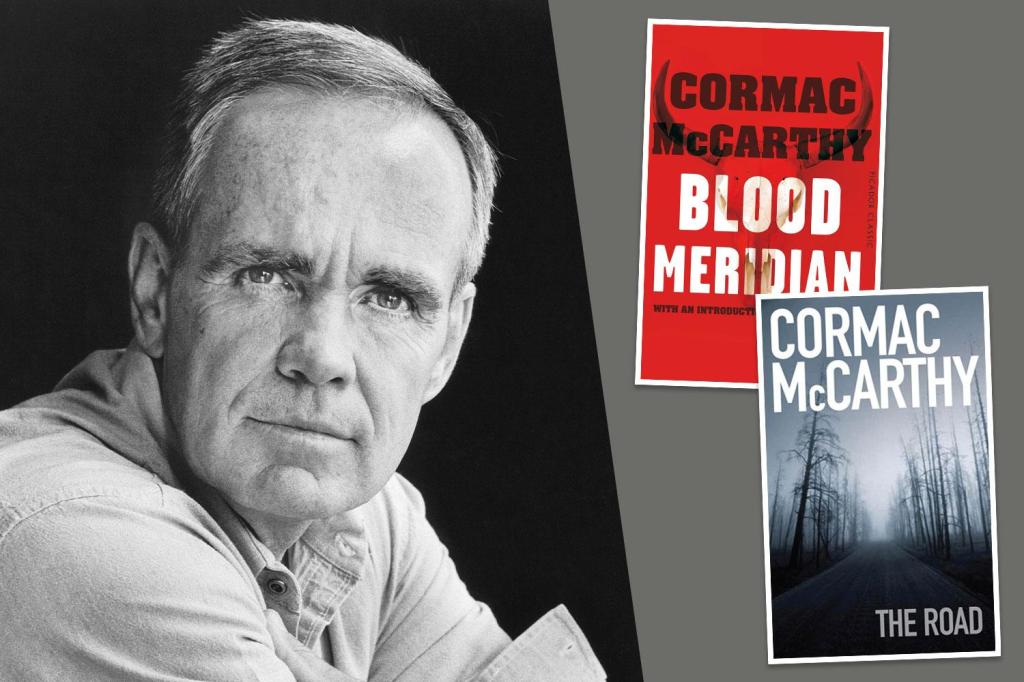
4. “The Road” by Cormac McCarthy — Biblical, apocalyptic, rife with death, despair and cannibalism, McCarthy’s unrelenting opus takes us through hell with ash, blood and savagery, and stingy glints of light. A Pulitzer winner, this riveting knockout is all about being human in the abyss.

5. “Gilead” by Marilynne Robinson — This deeply spiritual Pulitzer-winning novel almost defies description. An epistolary story told in the forms of journals and memoirs, it showcases Robinson’s otherworldly command of language and astute thinking about the divine. Not the easiest read, it still blew me away.

Rounding up to 10: “My Brilliant Friend” by Elena Ferrante; “White Teeth” by Zadie Smith; “The Corrections” by Jonathan Franzen; “Outline” by Rachel Cusk; “Train Dreams” by Denis Johnson.

Back in black

After an unintentional hiatus of chronic brain farts, here are a few bite-size entries:

Tripping over trips

I bought a flight to Chile. And scrapped it. I bought a flight to Toronto. And scrapped it. Fickle? Right. Even after planning and paying I decided neither destination would slake my thirst for culture, art, food, action. So I scotched them in favor of the capital of the European Union’s most populous nation, that mad beehive of historical and cultural abundance, Berlin. Chile would have happened this month, Toronto last month, and Berlin, well, it’s a ways off — October. Yet as with any trip, I’m already committing vigorous reportage, booking tours and meals, boning up on the history and italicizing gotta-see sights, from the fabled Reichstag and remnants of the Wall (now vibrant murals) to Hitler’s bunker (that fetid suicide pit) and the enticing Museum Island — five museums colonizing a mid-city isle on the lovely Spree river. Sounds great, I think. Equally terrific: I got full refunds for the Chile and Toronto trips. Did I mention my brother is coming along? Fine company, he’s also a crack navigator, which is perfect for me who gets hopelessly lost the second I step out of the hotel. I’m the guy holding a huge, creased paper map upside down, battling fluttering winds.

Doggy style

I don’t laugh out loud very often while reading, but I did, a lot, soaking in Miranda July’s new novel “All Fours,” a warm, warped, touching, unashamedly naughty and riotous love story that goes places you’re never quite prepared for. It’s a joy. The story follows the romantic zigzags of a 45-year-old artist who’s a married mother but stumbles upon unlikely love with a much younger man who likes to dance. Sex, perimenopausal panic and motel redecorating ensue. It’s conventional until it’s not, both bawdy and bizarre, with just the right touch of July’s signature kookiness. Never has the writer — who’s also an actress and filmmaker — been more in control of her habitual twee impulses. And never has she been so seamlessly funny.

Doggy style part II

Cubby the magical mutt is, I’m afraid, getting old. The guesstimate age for this chipper rescue pup is seven to eight, solid middle-age in human years — paunches and ear hair, janky joints and jowls, gray and grumbles. Yet while he can be a bit creaky scrambling up the stairs and some tiny warts have mushroomed on his compact body, Cubs still plays chase with his stuffed Yoda and barks with shattering verve at the random car horn and rumbling UPS truck, more than ever in fact. But he’s also more neurotic than he was in his slavering, carefree youth. Sometimes if landscapers are extra noisy or the wind rustles the trees in violent whooshes the dog will quiver and hide under my legs or behind a chair. Also, his outside duties (doodies?) seem harder to coax out of him. Otherwise Cubby’s a hale old boy, snapping up treats and begging for belly rubs. He sleeps well, too, though his snoring can register 7.5 on the Richter scale. Those little earthquakes are a thing of most assured comfort.

His head looks enormous.

Recent tomes I’ve tapped

I’m never not reading a book or two. These are a few new titles I got my grubby paws on: 

Mike Nichols’ 1966 film of Edward Albee’s corrosive play “Who’s Afraid of Virginia Woolf?” remains a dish-rattling, drink-spilling, daggers-in-your-ears delight, all marital earthquakes and social Molotov cocktails. (Cocktails. Of course.) Booze is big in that cracked portrait of a long-wed couple on the rocks. (On the rocks. Of course.) And you get a contact high reading the riveting “Cocktails with George and Martha: Movies, Marriage, and the Making of ‘Who’s Afraid of Virginia Woolf?’” by Philip Gefter, who capably captures the play’s serrated edges, dubious morality and verbal drive-bys, as well as the behind-the-scenes hoopla of making a controversial movie with a controversial couple, no less than Richard Burton and Elizabeth Taylor — Hollywood nitroglycerin. It’s a bracing blast of theater and cinema history.  

“Headshot” is by a woman named Rita Bullwinkel. Let’s get that out of the way. (There, done.) This slim, tightly coiled novel is also a muscular debut, damp with the blood and sweat of a passel of female teenage boxers, zesty characters realized with pointillist panache. Time-leaping and fragmentary, the girls’ stories are told in intense vignettes for a scrappy scrapbook of pugilistic profiles that pounds with humanity and life. If not quite a K.O. — more tonal and rhythmic variety would shake things up — the book is a fleet-footed contender. 

With irksomely precocious flair — at 35, he’s a wizardly wunderkind — poet Kaveh Akbar conjures worlds of art and ideas in his radiant fiction debut “Martyr!” Reeking agreeably of auto-fiction, this dense but delectably readable novel is about an Iranian-American poet scouring past and present, life, death and love with the insight of an artist and the squishy heart of the wounded. Gorgeous language propels you through its lush, gently philosophical thickets. And despite some muddled mysticism near the end — I’m allergic to spiritual allegory — “Martyr!” had me pleasantly reeling. 

Lorrie Moore’s a personal favorite and her latest fiction is the knottily named “I Am Homeless If This is Not My Home.Like all her books, tangy prose festoons the pages (a bite-size sample: “Fluorescent light rinsed the room.”). Yet the novel, with its arch surreal touches, rubbed me wrong. The narrative, centered on a man and his dying brother, is gawky, with sharp elbows and knobby knees. Plus, there’s heaps about chemo, cancer and croaking, and I’m not in a hospice mood. The novel just won the National Book Critics Circle award for fiction, so call me bonkers. In this rare instance, Moore is less.

Not for the feint of heart but perhaps for suckers for sentiment, the bleak memoir “Molly” — breathlessly written by Molly’s husband, Blake Butler, a noted novelist of thrillers — starts with her gunshot suicide and continues with another bang, the crack of bared emotion and tell-all candor. This is the story of Butler and Molly Brodak’s three-year marriage, a melding of art and nature and words and, in her case, bouts of inconsolable darkness. Brodak, a published poet and author who said “I simply wasn’t good enough,” killed herself three weeks before her 40th birthday, in 2020. “Molly” is so much about her and her devastating secrets, yet equally about Butler’s clawing to the other side of grief through deep (and verbose) psychic excavation. He includes Molly’s suicide note (“I don’t love people. I don’t want to be a person”), along with the frantic blow-by-blow action of finding her body in a favorite field of theirs. These passages are tough-going, not only for the forensic particulars, but for Butler’s writerly histrionics as well; he pants on the page. A cult sensation, tugging readers to and fro like emotional taffy and kicking critics into superlative overdrive, “Molly” is a divisive read, by turns lovely, wincing and overheated. It is the first book I’ve read that opens with the phone number for the national suicide hotline. 

‘X’ marks the spot

I recently wrapped Catherine Lacey’s transfixing novel “Biography of X,” and it still haunts me. Published last year, the book is pungent and persistent, banging around my brain, impressions springing up at random moments, all of it fragrant and strangely alluring.

“X” is a big book of ideas and feelings. It has a collage-like texture. It’s about art and the ravenous impulses of the artist; romantic love and its hazards; the fluidity of identity; the slipperiness of selfhood; and the rigors of creation. 

And it’s about the relationship between X, who has died, and her widow CM, the so-called writer of this fictional biography, which of course was written by Lacey in a neat feat of authorial ventriloquism.

X — who went by a swarm of pseudonyms, depending on her setting — was a shape-shifting Zelig, insinuating her self into the realms of art, music and literature, finding creative success and romantic excess, much of it to CM’s dismay and heartbreak as she researches her ex-wife’s half-cloaked life. 

In elegant, unfussy prose, Lacey conjures an alternative world in which X wrote the iconic David Bowie song “Heroes”; Jackson Pollock, Alexander Calder and other major artists are killed in a terrorist bombing; and Bernie Sanders is the President of the United States. Cameos by Patti Smith, Christopher Walken, Susan Sontag and other luminaries arrive with cheeky nonchalance.

Lacey’s command of her literary experiment and the constellation of personalities she so blithely courts sometimes makes you think you’re reading an actual biography of an actual person. It’s a good trick, deft and ambitious, and a delight to plunge into.

At 38, Lacey is a bona fide wunderkind, and her performance in “Biography of X” has me trusting her to lead me farther into her cerebral yet accessible oeuvre. 

This week I got her slim gothic fable “Pew,” from 2020. It’s about an anonymous orphan who’s lacking crucial identifying components — age, name, sex, history — rattling and confounding a small, deeply religious community in the American South. 

I’m half-through this mysterious novel, whose humanity almost blinds. I’m with it all the way, totally sold. Lacey’s virtuosity sings, loud and clear as a bell. I’ll just say it: She is one of the most interesting authors of her generation.

Chick lit

“The idea of meeting someone in a library, in the aisle of a bookstore or while reading on the subway, for instance, remains stubbornly high on the list of many people’s romantic fantasies.” — from The New York Times (link below

I admit there are few things more alluring to me than an attractive woman reading a book or browsing in (or working at) a book shop or library. It’s a smashing combo, a kind of electrifying alchemy that I can’t quite explain.

For instance, in the 1946 noir “The Big Sleep,” I’ve always been partial to the bespectacled bookshop proprietress played by Dorothy Malone than to Bogart’s famous glamor squeeze Lauren Bacall — a nerdy example of my bookish bent.

My personal history of amore is lucky with literature. There was blue-eyed Guen, who brought on our first date a copy of David Mamet’s “Writing in Restaurants,” just for me. Laura, who made my knees buckle from afar, was toting the poems of Herman Hesse (we were soon a couple).

One of my biggest crushes was on the girl who worked at the hippest book store in Austin. Then there was the woman who, after a little wine, insisted we go browse the local used book store and buy each other a volume. Now we’re talking.

On the flip-side, I once invited a date to my place. She looked around at the Rothko print and various vintage movie posters, all without comment. Then she eyed my bookshelves and scoffed, “You have way too many books.” Deal-breaker!

Like movies, books are crucial to me, and a shared passion for them is just that — shared passion. It’s something in common, hot to the touch, and can be the bedrock of something more intense, meaningful and feverish.

All this was stirred up reading the above mentioned story in the Times titled “Is Reading the Hottest Thing You Can Do as a Single Person?” (Answer: yes.) 

Check it out HERE.

Dorothy Malone, bookshop owner, face to face with Bogart in “The Big Sleep”

More marvelous miscellany

1.One of my least favorite things in the world, after e-scooters and ravers, is sweating. Which means I am not a happy fellow. Why? Right. Because I am sweating. And rather a lot, swamp-ass and all. Somehow I thought it’d be a swell idea to take a brisk walk in the 92-degree blech of midsummer. The light sweat I produced outside — a mere film — quickly metastasized into a profuse drenching once inside. Forty minutes later, in powerful AC, it has yet to subside. How bad is it? The dog is licking me avidly, like I’m a giant piece of beef jerky.

2.House of Terror — how kicky is that for the name of a major tourist attraction? It’s real, and it’s not a ride at your local carnival. This daunting museum is in Budapest, where I head this fall, and it isn’t about ghouls and goblins. Or, well, it sort of is. Per its description: “It contains exhibits related to the fascist and communist regimes in 20th-century Hungary and is also a memorial to the victims of these regimes, including those detained, interrogated, tortured or killed in the building.” History writ large. And horrible. I’m so there, with solemn intentions, despite the thrilling name. 

3.Just finished Paul Harding’s newish novel “This Other Eden” on the dazzling strength of his first book, the 2009 Pulitzer Prize-winning “Tinkers,” which is uniquely mesmerizing. “Eden” limns Black American history in its many facets, including, troublingly, eugenics. Harding is an uncompromising stylist, forging gorgeous, gem-cut prose that’s sometimes too infatuated with itself, yet nevertheless tells a fascinating story. Harding writes like few others — Cormac McCarthy and Faulkner come to mind — but he can stumble on his own lush verbiage. He is a flawed master.

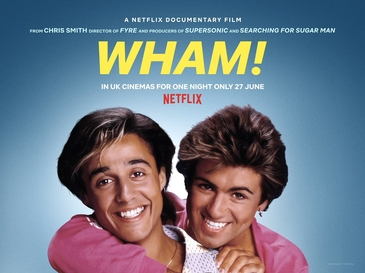
4.The new documentary about massive but short-lived Brit pop duo Wham! — aptly titled “Wham!” — is out on Netflix, and the trailer promises a bubbly, bubblegummy, bing-bang time (“Wake Me Up Before You Go-Go,” anyone?). The movie, a giddy romp directed by crack documentarian Chris Smith, isn’t, alas, as brawny as frontman George Michael’s uncrackable Aqua Net helmet. It’s strictly for googly-eyed fans who can’t be bothered with pop music history, laser-focusing on bandmates’ Michael and Andrew Ridgeley’s frolicsome BFF status and their improbable rise from cheesy teen wannabes to slick arena-fillers. Critically missing in this narrow nostalgia trip is cultural context, as if Wham! exploded in an ‘80s vacuum, with little competition and no help from juggernauts like MTV. And it doesn’t even footnote Michael’s untimely, and seismic, death as a solo artist. Wham! Bam! Thud.  

5. Speaking of the dog (see #1), Cubby was recently shorn like a poor gray sheep, which I documented here. The good news: his hair is growing back in the summer swelter. He no longer resembles a fuzzy Pringles can — he’s not so tubular — and he’s stopped nipping the parts that were so short, pink flesh was exposed. He’s returning to his bushy self, and his attitude is boinging back — a little cocky, vain with a scruffy bedhead sheen, and as fierce around the UPS folk as one can be behind a closed door. His yawps and barks still shatter glassware, but that’s OK. Pretty soon he’s going to look like Slash again and the process will start all over. Our little lamb chop.

6.Then there’s this: I was strolling in the summer heat (see #1 again) and some shitty beat-up compact sedan roared past me, easily doing 50 to 60 in a residential  25 zone. Startled (and pissed), I yelled, “Slow down!” The driver flipped me off and I reflexively returned the gesture. He barreled into oblivion. Then I thought: Smart. That’s a good way to get yourself killed. Jackass might have a gun, might want to turn around and use it. Sweating like a madman, I kept walking, ruffled, looking at the world in a slightly different shade.

How ‘Jaws’ ate me alive

Today was a two-errand day. I was picking up a modern classic potboiler at the library — the one about a ginormous great white shark that terrorizes the bejesus out of a New England beach town — and I was getting my periodic pedicure at the salon. I dubbed the day “ ‘Jaws’ and claws” to amuse myself. (Mission accomplished.)

The book I got really is “Jaws,” Peter Benchley’s 1974 blockbuster that spawned Spielberg’s famous film and a million petrified beachgoers around the world. As a kid, I lived in beachy Santa Barbara when both were released, and I fantasized about flesh-shredding teeth and ominous dorsal fins to unhealthy degrees. It terrified me, and I loved it. 

First I worshipped the movie, which I saw at age 7, then I snatched my parents’ mass market paperback of Benchley’s novel and gobbled it up at age 8. I savored those pages, slashing with vivid, violent writing that helped turn me onto reading for a lifetime. 

I still own that cracked, yellowed paperback, but it’s packed away with other mementos. So, on a whim, I hit the library up for its copy. I quickly located some of my favorite passages, ones that haunted — and excited — me as a young reader.

Just like my own copy

Can you handle it? This horrifying scene is from the opening of the book, when a young woman — recall her from the movie — takes a skinny-dip in the moon-dappled ocean. 

“The fish smelled her now, and the vibrations — erratic and sharp — signaled distress. The fish began to circle close to the surface. Its dorsal fin broke water, and its tail, thrashing back and forth, cut the glassy surface with a hiss. …

“At first, the woman thought she had snagged her leg on a rock or a piece of floating wood. There was no initial pain, only one violent tug on her right leg. She reached down to touch her foot, treading water with her left leg to keep her head up, feeling in the blackness with her left hand.  

“She could not find her foot. She reached higher on her leg. Her groping fingers found a nub of bone and tattered flesh. She knew that the warm, pulsing flow over her fingers in the chill water was her own blood. Pain and panic struck together. The woman threw her head back and screamed a guttural cry of terror.

“This time the fish attacked from below. It hurtled up under the woman, jaws agape. The great conical head struck her like a locomotive, knocking her up out of the water. The jaws snapped shut around her torso, crushing bones and flesh and organs into a jelly.” 

Now, as a young boy, this was about as stupendously visceral as prose could get. (And I omitted the rest of the violence for reasons of taste and space.) “A nub of bone and tattered flesh” — I reread that line over and over, shocked, thrilled, gobsmacked. 

Even today, these opening pages stun. Getting the book at the library, I was hoping Benchley’s eloquence would strike me again, and it did. That’s why I shared some here. 

Call him a hack or a mercenary, but you’d be wrong. Benchley’s a savvy craftsman, expert at tension and thrills, not to mention a vibrant stylist with a painterly (think Francis Bacon) flair. His humans, from Quint to Brody, pop off the page even if the world he confects for them occasionally brushes pulp.

I’m not going to reread the entire novel, which is remarkably short at 278 pages, but it was fun revisiting a book that so influenced my cultural life.

Why “Jaws,” why now? Well, I’m reading an excellent new book about the history of Hollywood and the Academy Awards called “Oscar Wars,” and I’m deep in the chapter focusing on the making of “Jaws” (as well as “Barry Lyndon,” “Dog Day Afternoon,” “One Flew Over the Cuckoo’s Nest” and “Nashville” — 1975 was a hell of a year in American film.)

The lore is notorious: Making the movie “Jaws” was a prolonged ordeal and near-disaster for all involved, including a 26-year-old Steven Spielberg, who was sure his nascent career was finished. We know how that turned out.

If the movie “Jaws” remains one of my all-time favorites — in a crowded field that includes “Heat,” “All About Eve,” “Sweet Smell of Success,” “Manhattan,” “City Lights,” “Seven Samurai,” “Duck Soup” and on and on — the novel “Jaws” is more of a sentimental gem. It’s dear to my heart for reasons that go beyond art. On a nostalgic level, it has — yes, I’ll say it — sunk its teeth in me. And it won’t let go.