Things du jour

Quote of the day

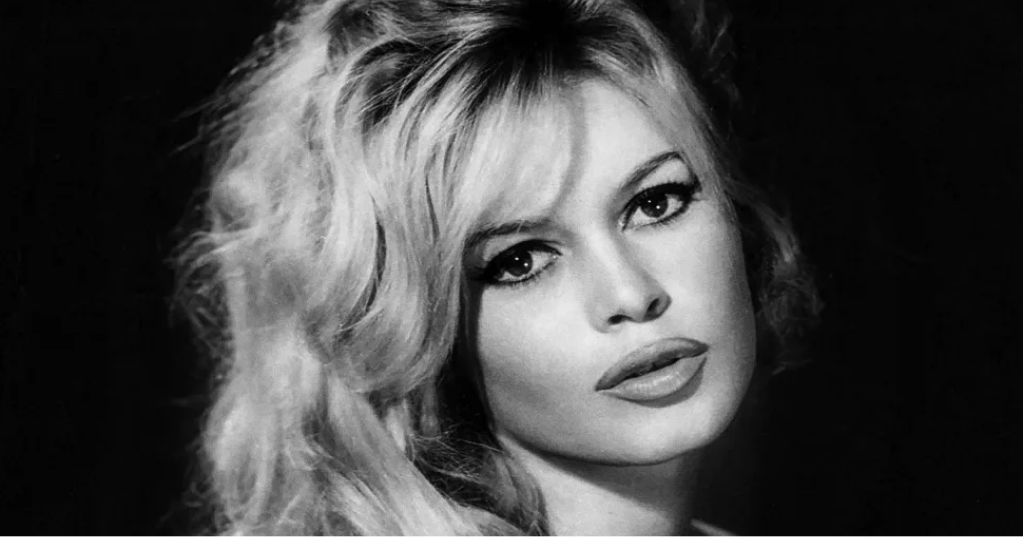
I am not a recluse. I live like an unsociable person; it is different. People get on my nerves.” 

Brigette Bardot, actress, animal activist 
Book of the day

“Bel Canto,Ann Patchett’s 2001 novel about love, opera and hostage-taking, is one of those contemporary classics you should have read but never got around to, and now, 25 years on, it feels too late. It’s not. I started this book five years ago and put it aside for inexplicable reasons. That diss has haunted me and last week I gave “Bel Canto” another shot. The result was transcendent.
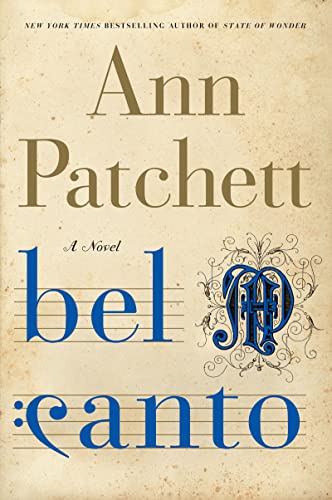
The plot is a small knot that unravels beautifully: A throng of international guests have gathered at the mansion of the vice president of an unnamed South American country for the birthday celebration of a Japanese businessman. A world-famous American opera soprano has been invited to regale the group, and soon, through her exotic talent and beauty, becomes the cynosure of the story. The party is abruptly crashed by leftist guerrillas looking to kidnap the nation’s president, who rather comically skipped the party so he could watch his beloved soap opera at home. Stymied, the invaders take the revelers hostage for what starts as hours, then weeks, then months. Thus the mansion becomes a human incubator, a constellation of international players, some of whom align as unlikely allies, others as peculiar romances fraught with forbidden yearning. It’s a rich tapestry that echoes the diners trapped for months in a similar mansion in “The Exterminating Angel,” Buñuel’s classic takedown of the gilded class. But Patchett is a gentler, less partisan observer, underscoring the universal languages of music, love and language itself for something divine. The book is so meticulously engineered — the many characters are spryly choreographed — and so big of heart that it dashes hopes of ever writing your own novel because it couldn’t brush these literary heights. There’s the hitch: You almost hate “Bel Canto” because it’s so stupid good.

Movie of the day

My love affair with Iranian cinema is long and varied, spanning Jafar Panahi’s charming debut “The White Balloon” to Abbas Kiarostami’s rigorously philosophical “Taste of Cherry.” Spare, talky and played mostly by untrained actors, the films are often covertly political, critical of the Iranian regime in as coded terms possible, secret messages packed with time bombs. But Panahi has used his recent movies for brazen broadsides and as such they are banned in his home country. Yet the director shrewdly snakes around these restrictions and his latest moral thriller “It Was Just an Accident” won the Palme d’Or at the 2025 Cannes Film Festival. It’s a bold gesture tracing what happens when a band of former political prisoners kidnap and confront the man they believe brutally tortured them during their imprisonment. Amid the moral complexities of revenge — do they even have the right man? — comes relief via mordant humor and absurdist touches that goose the overall lunacy. (Note the wry allusions to “Waiting for Godot.”) Panahi has made a tough and moving portrait of keeping one’s humanity in an impossible situation. Its stubborn ambiguity is a hallmark of Iranian cinema, and this one’s a classic. 

Drink of the day

That’d be Mr. Pickles Gin. My newly discovered sip is named for the distiller’s pitt bull rescue, Mr. Pickles, who nobly emblazons the spirit’s label as the official mascot and makes me like it that much more.

Time to taste. Open the senses to a bouquet of dog urine. No. The fragrance is lovely, the gin superb. Its aroma is juniper, citrus, pepper, with a whiff, I think, of dill. It owns a strong herbal flavor with earthy undertones and tinges of orange, pepper and, aptly, a speck of dill pickle. And I swear on Mr. Pickles’ fuzzy head that is not just the power of suggestion. Made in Oregon by Wolf Spirit Distillery, the drink features 12 botanicals, including green tea, blood orange, pink peppercorns and marshmallow root (I have no idea). If it’s not as grand and complex as my revered Monkey 47, which boasts a whopping 47 botanicals and that I drink neat, Mr. Pickles will be a snappy refresher during the dog days of summer.

Photo of the day

They say a picture speaks a thousand words. This one speaks four words: I am so screwed.
Books I’m not ambivalent about

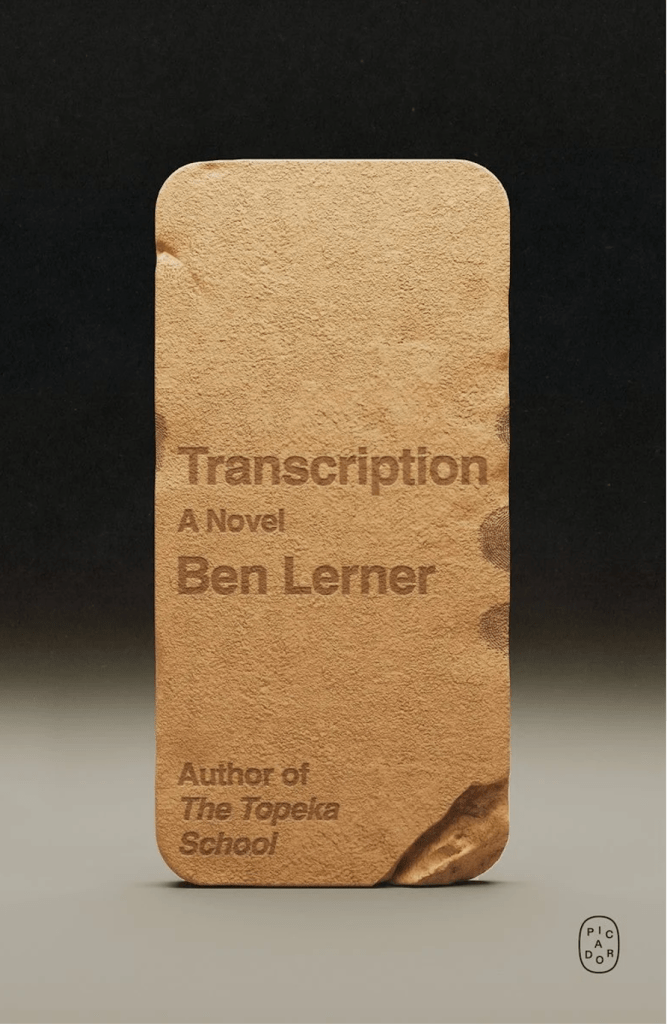
“Transcription”

I could see this happening to me: On the way to interview a very important person, you drop your phone, i.e. your recording device, into a sink filled with water. Phone ruined, you are forced to interview the person without a recorder, a fact you fudge by reconstructing the confab from memory for your article, a high-wire act and any writer’s nightmare. Novelist Ben Lerner — who’s also a gifted poet and has been dubbed the “most talented writer of his generation” — uses this premise as a springboard to something timely, profound and ineffably transfixing. A novel in name only — think the brainy consciousness streams of Rachel Cusk — the 130-page “Transcription” presents a nameless narrator and two other men in conversations about art, life, friendship, fatherhood and technology amid the backdrop of early Covid. Plot is nebulous and tricky to summarize, but the brilliance at work is distinctly Lerner’s. (I’m an avid fan of his novels “Leaving the Atocha Station” and “10:04.”) Lerner writes deceptively plain prose with a wizard’s wand — simple on the surface, yet each hypnotic line peels layers of insight and meaning. It’s all mesmerizingly meandering, to a destination both uncommon and rewarding. 

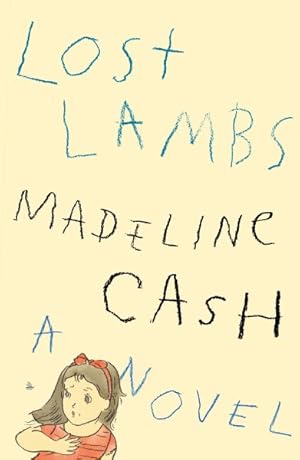
Lost Lambs”

In this sharp and irreverent new novel, Madeline Cash flips notions of family, marriage, community, church and capitalism to expose their crawly underbellies. It’s prickly, spot-on, strange. And hilarious. The book’s many moving parts include an open marriage that veers to amorous calamity; star-crossed trysts; a trio of precocious teens that grazes danger in a vile adult world; a tech billionaire whose dealings are creepy at best; and a church Father whose hands may be scandalously dirty. Cash trains a compassionate bullseye on those creatures called teenagers and a cynic’s bead on the perilous pact of matrimony. (“The biggest conspiracy of all? This whole love thing,” a character sniffs.) But Cash isn’t cruel. She exudes empathy and openly likes her characters — the ones that deserve it. “Lost Lambs” is frothy literary fiction, until it’s not. It is droll and buoyantly written yet lands the well-placed left hook. I can imagine it becoming a four-part Netflix series, a smart, soapy, surreal dramedy starring Ben Stiller and Laura Linney. If it happens, I won’t watch it. I’ll stick to the book. The book is always better.

Three humor collections by Sloane Crosley

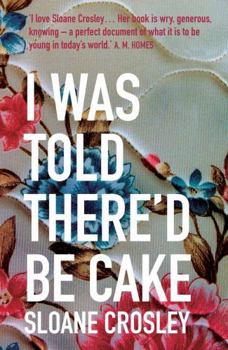
David Sedaris is the standard-bearer of comic essays. I believe this is wrong. I believe he is drastically overrated. I believe he is rarely actually funny. I believe his prose is limp. I believe his professional persona is as confected as a Girl Scout Samoa. You know who’s wittier, hipper and more stylish? Sloane Crosley, who’s written three collections of humor essays that impressed me enough to sit down and commit hosannas. Her first collection, “I Was Told There’d Be Cake,” is best. It also has the best title. Although “How Did You Get This Number,” her second book, and “Look Alive Out There,” her latest collection (from 2018), also have wry, hooky titles. Part-journalism, part-memoir, Crosley’s essays are first-person escapades, experiential and anecdotal and typically relatable. They bristle with razor observation and social commentary. Here, she mordantly muses about her only slightly embarrassing collection of plastic toy ponies. There, she riffs on her fraught city-girl excursion to Alaska, where, in an SUV, there is one guy among many women: “He is our lone star of testosterone in a galaxy of chick.” She deconstructs the bizarro experience of playing herself on “Gossip Girl” and takes merciless stock of her dating life. It’s not all playtime. Crosley doesn’t duck drama and high stakes (her queasy adventures in altitude sickness are almost contagious). Like Sedaris, some of Crosley’s situations and interactions smack of exaggeration or plot-propelling fancy. Such is the plight of the mass-consumed writer — feed the beast. Though the humor is a soft weave, coolly conversational, she can be overtly jokey, and the jokes rarely clank. Her voice is reliably amusing, cut with a measure of snark that gives her sweet prose a tangy kick.

“Flesh”

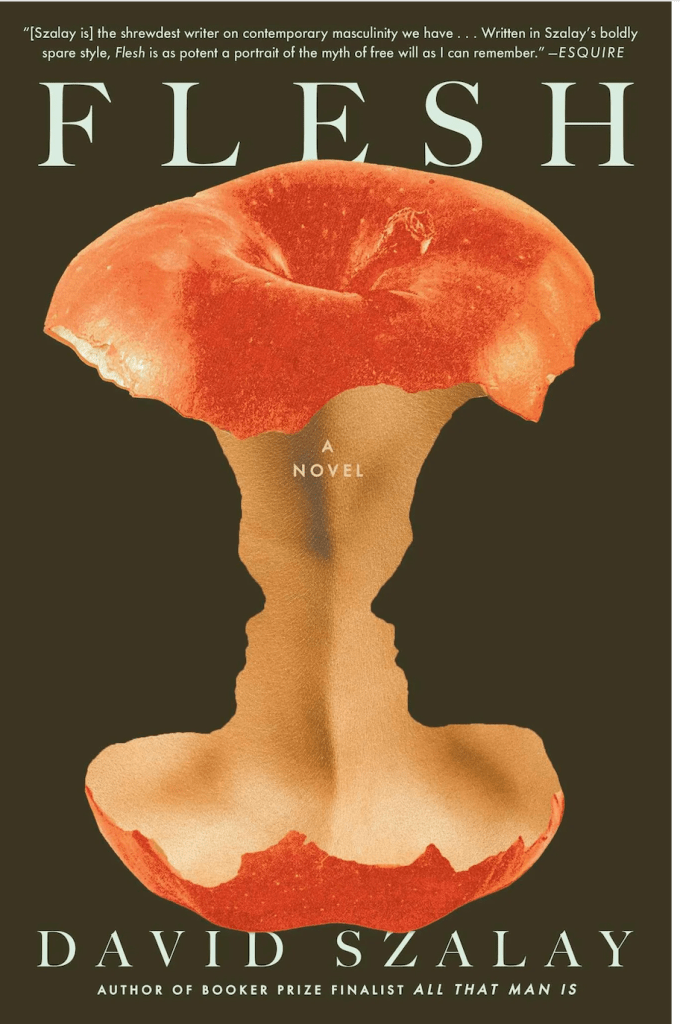
In minimalist language so parched it’s practically puckered, David Szalay spins a story of the classic Solitary Man, a Hungarian immigrant in England named István who embraces a nearly non-verbal solitude as a shield against a world of discomfort. We follow this modern existential character from his cringey deflowering as a teen to his coupling with a rich married woman and decades beyond. Szalay’s tensed prose mirrors the character’s isolation, which occasionally sees shafts of light. While his interior life remains unexamined — his disaffection can be frosty — István is no cipher. He’s a well-drawn loner, a compelling picture of alienation. He’s also something of a symbol, a metaphor for class, urban malaise, the gesture of empty sex and deep loss. (It’s telling that his extravagant cigarette habit is a key character trait.) István fascinates by dint of what he shows as much as by what he withholds. What’s so remarkable about “Flesh,” which won the Booker Prize in 2025, is a descriptive precision and drum-tight realism that would make Hemingway beam. Grim and gripping, it’s a master class in control.

‘X’ marks the spot

I recently wrapped Catherine Lacey’s transfixing novel “Biography of X,” and it still haunts me. Published last year, the book is pungent and persistent, banging around my brain, impressions springing up at random moments, all of it fragrant and strangely alluring.

“X” is a big book of ideas and feelings. It has a collage-like texture. It’s about art and the ravenous impulses of the artist; romantic love and its hazards; the fluidity of identity; the slipperiness of selfhood; and the rigors of creation. 

And it’s about the relationship between X, who has died, and her widow CM, the so-called writer of this fictional biography, which of course was written by Lacey in a neat feat of authorial ventriloquism.

X — who went by a swarm of pseudonyms, depending on her setting — was a shape-shifting Zelig, insinuating her self into the realms of art, music and literature, finding creative success and romantic excess, much of it to CM’s dismay and heartbreak as she researches her ex-wife’s half-cloaked life. 

In elegant, unfussy prose, Lacey conjures an alternative world in which X wrote the iconic David Bowie song “Heroes”; Jackson Pollock, Alexander Calder and other major artists are killed in a terrorist bombing; and Bernie Sanders is the President of the United States. Cameos by Patti Smith, Christopher Walken, Susan Sontag and other luminaries arrive with cheeky nonchalance.

Lacey’s command of her literary experiment and the constellation of personalities she so blithely courts sometimes makes you think you’re reading an actual biography of an actual person. It’s a good trick, deft and ambitious, and a delight to plunge into.

At 38, Lacey is a bona fide wunderkind, and her performance in “Biography of X” has me trusting her to lead me farther into her cerebral yet accessible oeuvre. 

This week I got her slim gothic fable “Pew,” from 2020. It’s about an anonymous orphan who’s lacking crucial identifying components — age, name, sex, history — rattling and confounding a small, deeply religious community in the American South. 

I’m half-through this mysterious novel, whose humanity almost blinds. I’m with it all the way, totally sold. Lacey’s virtuosity sings, loud and clear as a bell. I’ll just say it: She is one of the most interesting authors of her generation.

Chick lit

“The idea of meeting someone in a library, in the aisle of a bookstore or while reading on the subway, for instance, remains stubbornly high on the list of many people’s romantic fantasies.” — from The New York Times (link below

I admit there are few things more alluring to me than an attractive woman reading a book or browsing in (or working at) a book shop or library. It’s a smashing combo, a kind of electrifying alchemy that I can’t quite explain.

For instance, in the 1946 noir “The Big Sleep,” I’ve always been partial to the bespectacled bookshop proprietress played by Dorothy Malone than to Bogart’s famous glamor squeeze Lauren Bacall — a nerdy example of my bookish bent.

My personal history of amore is lucky with literature. There was blue-eyed Guen, who brought on our first date a copy of David Mamet’s “Writing in Restaurants,” just for me. Laura, who made my knees buckle from afar, was toting the poems of Herman Hesse (we were soon a couple).

One of my biggest crushes was on the girl who worked at the hippest book store in Austin. Then there was the woman who, after a little wine, insisted we go browse the local used book store and buy each other a volume. Now we’re talking.

On the flip-side, I once invited a date to my place. She looked around at the Rothko print and various vintage movie posters, all without comment. Then she eyed my bookshelves and scoffed, “You have way too many books.” Deal-breaker!

Like movies, books are crucial to me, and a shared passion for them is just that — shared passion. It’s something in common, hot to the touch, and can be the bedrock of something more intense, meaningful and feverish.

All this was stirred up reading the above mentioned story in the Times titled “Is Reading the Hottest Thing You Can Do as a Single Person?” (Answer: yes.) 

Check it out HERE.

Dorothy Malone, bookshop owner, face to face with Bogart in “The Big Sleep”

Writing relentlessly

Joyce Carol Oates has written roughly six-thousand books. I’ve read one. I’m currently working on number two, a slim novel titled “Black Water.” Boy is it boring. Dry and colorless as a sun-baked cow skull. It’s not even trying to pull me in. It’s stingy like that.  

“Wonderland” is the other Oates book I read, some time ago. Unlike “Black Water,” which runs 154 pages, it’s unmistakably Oatesian, meaning it’s fat, multi-chambered and densely populated. It’s also pretty great, an epic family drama spanning generations that quakes with urgent, thrumming incident. It’s known as one of her best books and was a finalist for some big award or another. 

Oates is famously prolific. I call her relentless. Her torrential output, starting in 1963, includes 58 novels, numerous plays and novellas and several volumes of short stories, poetry and nonfiction. The novels are rarely anorexic. They are epics pushing 500, 700, even 900 pages or more. When I see her shelf in bookstores, I quietly scamper past. 

That’s why I picked up the acclaimed “Black Water”: it’s a finger sandwich next to the author’s standard ten-course feasts. A modern retelling of Senator Ted Kennedy’s infamous Chappaquiddick incident, the book toggles through time to trace a young woman’s life and death by drowning in a Toyota that crashed upside-down in a lake.

The novel purports to be a scathing statement about women who are tragically drawn to powerful men, which I suppose it is. But that doesn’t interest me, at least not right now. It doesn’t help that Oates’ breathless, jagged prose feels awkwardly stylized, hardly the case with the lyrical “Wonderland.”

A force of nature, Oates is the epitome of a writing machine, matching the creative incontinence of Stephen King. She poops out literary doorstops with boggling regularity, making her contemporaries look downright slothful. I’m not knocking it. It’s something to envy. To be so productive would be miraculous, if exhausting.

A sliver of Joyce Carol Oates’ output

But such churning industry casts a light on the idea of consistency: how many of those piles of books are really, truly good? Surely a lot, or the author wouldn’t be the celebrated bestseller she is. Yet there’s probably a mountain of misfires there, too, which perhaps dilutes such voluminous achievement. 

In a 2015 essay, King himself confronts the notion “that prolific writing equals bad writing,” citing a truism in literary criticism that goes “the more one writes, the less remarkable one’s work is apt to be.”

He’s rightfully a little defensive, having published some 60 novels since “Carrie” in 1974, including four very thick books in a single year. As a writer, King is admittedly, and unashamedly, possessed. 

He insists it can’t be helped, that once his creative ideas catch fire, there’s no quenching them. “I never had any choice,” he says. “There were days when I literally thought all the clamoring voices in my mind would drive me insane.”

That must be the case with Oates, an artist so overcome with ideas, she has to put them down before they devour her, for good or ill. Her well-publicized work ethic is austere, regimented and, yes, wildly fertile. King writes: “I remember a party where someone joked that Joyce Carol Oates was like the old lady who lived in a shoe, and had so many children she didn’t know what to do.” 

Most good writers work painstakingly — they “bleed,” as Hemingway said — which tends to produce a modest yield. Take Donna Tartt (“The Goldfinch”), who’s written three novels in 25 years. The books were smashes, and she is fabulously rich, but Tartt might represent the other side of the equation: by taking few risks, rarely publishing, can you call yourself a bold and vigorous artist?

Then there’s filmmaker Terrence Malick, who represents both sides. In 25 years, he made only three films, all masterpieces, including “Days of Heaven” and “The Thin Red Line.” Then, starting in 2005 with the sublime “New World,” he went on a tear of productivity, making almost a film a year that returned six back-to-back stinkers that he’s yet to recover from. (Let’s not even start with Woody Allen’s late, lame film-a-year output.)  

There’s a cautionary tale in there somewhere. It seems moderation — not too slow, not too fast — is the way to dole out one’s art. Still, if Oates, as the party wag cracked, “had so many children she didn’t know what to do,” I wouldn’t mind being that old lady who lived in a shoe, writing and creating and making magic by the ton, no matter how imperfect. We should be so lucky.

Going down darkly with Denis Johnson

Denis Johnson — novelist, poet, playwright — wrote mad sentences. The author of the swooning novella “Train Dreams,” harrowing Vietnam War epic “Tree of Smoke” and, most famously, the indelible stories in “Jesus’ Son,” left behind a pageant of ravishing prose, much of it festooning the darkly lyrical stories in “The Largesse of the Sea Maiden,” released last year after his death in 2017 at age 67.

I was reminded of his genius when I saw that this last book is a finalist for the National Book Critics Circle Award, whose winner will be announced next month.

I ran across a couple of brief, bleakly reverberating quotes from “Sea Maiden” that I’d scribbled in my journal. If Johnson could be grim, his poetics were reliably heartrending.

I’m getting depressed … you forgot to say prepare to fall down through a trap door in the bottom of your soul.”

Yeah boy he dragged me down to his jamboree. Dragged me down through the toilet formerly known as my life. Down through this nest of talking spiders known as my head. Down through the bottom of my grave with my name spelled wrong on the stone.”

largess.jpg

The acrid bite of literary realism, in brief

Realism rules. Consider the first 10 words in Richard Yates’ novel “The Easter Parade”:

“Neither of the Grimes sisters would have a happy life”

Sting, sizzle. 

This opener is massively effective. Knifelike, it plunges into the story, ducking preliminaries or decorous setups cluttered with background frills and bunting. Before we’ve even met the protagonists we are told in the chilliest terms how things will unspool for them tonally, if not dramatically. It’s a great entrance, pungent, punchy.

51N-fpgePTL._SX331_BO1,204,203,200_

I broach this because I’m half-way through “The Easter Parade” and its satisfactions are abundant, much like those in Yates’ corrosive classic of marital dissolution “Revolutionary Road.” That masterpiece of American realism is fiction with fangs, casting an unsparing eye on mainstream domestic rituals.

And it’s part of a 20th-century literary tradition, stories and novels, mostly by male writers, that scrutinize the age of anxiety, explicit sex, cynicism, malaise, regret, envy, jobs, kids, homes, husbands, wives, lovers, losers, drunks, the city and the mirage of the white suburban dream.

Highlights in this unofficial canon of realism include: Yates’ “Revolutionary Road”; Philip Roth’s “American Pastoral”; John Cheever, Ann Beattie, Raymond Carver and Tobias Wolff’s unflinching stories; James Salter’s “Light Years”; John Updike’s “Rabbit” tetralogy; Richard Ford’s “Bascombe” trilogy; and so many more.

51dfJ7pwjDL._SX331_BO1,204,203,200_

Disillusionment, loss, heartbreak and disappointment are fragrant themes of these authors. But strangely the stories don’t feel forlorn. They almost feel consoling, perversely empathic — even when the human condition is laid bare and loneliness, our worst fear, takes hold.

”If my work has a theme,” Yates said, “I suspect it is a simple one: that most human beings are inescapably alone, and therein lies their tragedy.”

These realists serve up banality without bathos, unnerving wisdom in unfussy, largely conventional language. They are bleak and blunt, sometimes cruel in their honesty.

A (bitter) tasting:

“The hell with this aching, suffering, callow, half-assed delusion that he was in ‘love’ with her. The hell with ‘love’ anyway, and with every other phony, time-wasting, half-assed emotion in the world.”  — Richard Yates, “Revolutionary Road”

“He had learned the worst lesson that life can teach — that it makes no sense. And when that happens the happiness is never spontaneous again. It is artificial and, even then, bought at the price of an obstinate estrangement from oneself and one’s history.” — Philip Roth, “American Pastoral”

“She perceived vaguely the pitiful corruption of the adult world; how cruel and frail it was, like a worn piece of burlap, patched with stupidities and mistakes, useless and ugly, and yet they never saw its worthlessness.” — John Cheever, “Stories of John Cheever”

“There is no complete life. There are only fragments. We are born to have nothing, to have it pour through our hands.” — James Salter, “Light Years”

“Any time spent with your child is partly a damn sad time, the sadness of life a-going, bright, vivid, each time a last. A loss. A glimpse into what could’ve been.” — Richard Ford, “Independence Day”

51aBkOQUbQLThese are acid words. They are tough and unsentimental. I gravitate to them, and I can’t recommend them enough. They are beautiful. In them I locate unembellished truth. I’ve lived a little (Christ, I’m starting to sound like a grizzled cowboy) and none of these sentiments rings false or fabricated. They sound snipped from life in all its tarnished glories and burnished failures, and it is intoxicating.