Things du jour

Quote of the day

I am not a recluse. I live like an unsociable person; it is different. People get on my nerves.” 

Brigette Bardot, actress, animal activist 

Book of the day

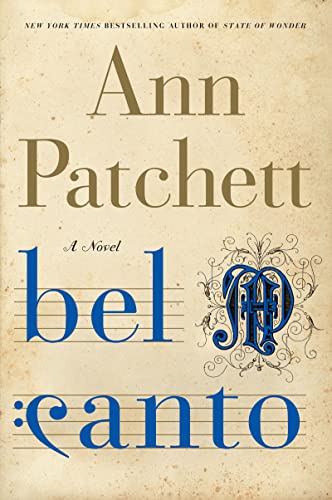
“Bel Canto,Ann Patchett’s 2001 novel about love, opera and hostage-taking, is one of those contemporary classics you should have read but never got around to, and now, 25 years on, it feels too late. It’s not. I started this book five years ago and put it aside for inexplicable reasons. That diss has haunted me and last week I gave “Bel Canto” another shot. The result was transcendent.

The plot is a small knot that unravels beautifully: A throng of international guests have gathered at the mansion of the vice president of an unnamed South American country for the birthday celebration of a Japanese businessman. A world-famous American opera soprano has been invited to regale the group, and soon, through her exotic talent and beauty, becomes the cynosure of the story. The party is abruptly crashed by leftist guerrillas looking to kidnap the nation’s president, who rather comically skipped the party so he could watch his beloved soap opera at home. Stymied, the invaders take the revelers hostage for what starts as hours, then weeks, then months. Thus the mansion becomes a human incubator, a constellation of international players, some of whom align as unlikely allies, others as peculiar romances fraught with forbidden yearning. It’s a rich tapestry that echoes the diners trapped for months in a similar mansion in “The Exterminating Angel,” Buñuel’s classic takedown of the gilded class. But Patchett is a gentler, less partisan observer, underscoring the universal languages of music, love and language itself for something divine. The book is so meticulously engineered — the many characters are spryly choreographed — and so big of heart that it dashes hopes of ever writing your own novel because it couldn’t brush these literary heights. There’s the hitch: You almost hate “Bel Canto” because it’s so stupid good.

Movie of the day

My love affair with Iranian cinema is long and varied, spanning Jafar Panahi’s charming debut “The White Balloon” to Abbas Kiarostami’s rigorously philosophical “Taste of Cherry.” Spare, talky and played mostly by untrained actors, the films are often covertly political, critical of the Iranian regime in as coded terms possible, secret messages packed with time bombs. But Panahi has used his recent movies for brazen broadsides and as such they are banned in his home country. Yet the director shrewdly snakes around these restrictions and his latest moral thriller “It Was Just an Accident” won the Palme d’Or at the 2025 Cannes Film Festival. It’s a bold gesture tracing what happens when a band of former political prisoners kidnap and confront the man they believe brutally tortured them during their imprisonment. Amid the moral complexities of revenge — do they even have the right man? — comes relief via mordant humor and absurdist touches that goose the overall lunacy. (Note the wry allusions to “Waiting for Godot.”) Panahi has made a tough and moving portrait of keeping one’s humanity in an impossible situation. Its stubborn ambiguity is a hallmark of Iranian cinema, and this one’s a classic. 

Drink of the day

That’d be Mr. Pickles Gin. My newly discovered sip is named for the distiller’s pit bull rescue, Mr. Pickles, who nobly emblazons the spirit’s label as the official mascot and makes me like it that much more.

Time to taste. Open the senses to a bouquet of dog urine. No. The fragrance is lovely, the gin superb. Its aroma is juniper, citrus, pepper, with a whiff, I think, of dill. It owns a strong herbal flavor with earthy undertones and tinges of orange, pepper and, aptly, a speck of dill pickle. And I swear on Mr. Pickles’ fuzzy head that is not just the power of suggestion. Made in Oregon by Wolf Spirit Distillery, the drink features 12 botanicals, including green tea, blood orange, pink peppercorns and marshmallow root (I have no idea). If it’s not as grand and complex as my revered Monkey 47, which boasts a whopping 47 botanicals and that I drink neat, Mr. Pickles will be a snappy refresher during the dog days of summer.

Photo of the day

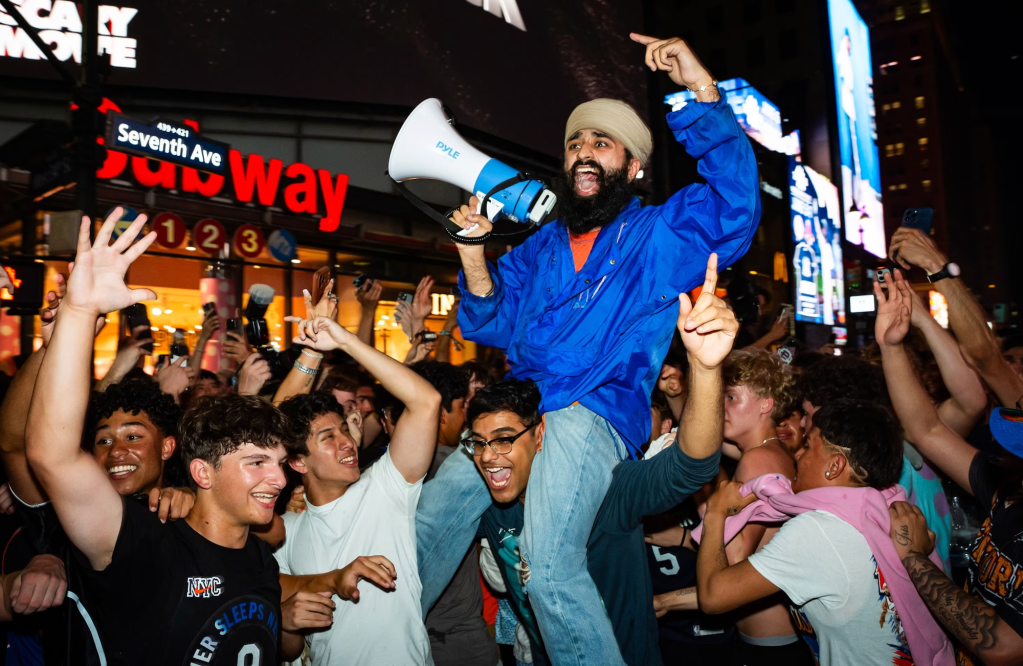
They say a picture speaks a thousand words. This one speaks four words: I am so screwed.

Books I’m not ambivalent about

“Transcription”

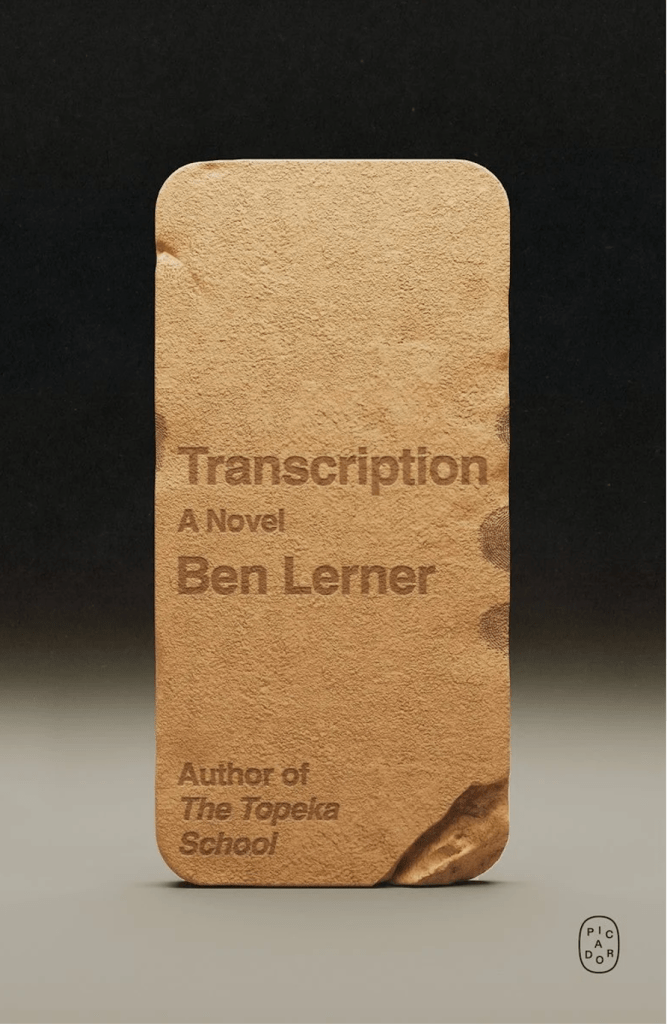
I could see this happening to me: On the way to interview a very important person, you drop your phone, i.e. your recording device, into a sink filled with water. Phone ruined, you are forced to interview the person without a recorder, a fact you fudge by reconstructing the confab from memory for your article, a high-wire act and any writer’s nightmare. Novelist Ben Lerner — who’s also a gifted poet and has been dubbed the “most talented writer of his generation” — uses this premise as a springboard to something timely, profound and ineffably transfixing. A novel in name only — think the brainy consciousness streams of Rachel Cusk — the 130-page “Transcription” presents a nameless narrator and two other men in conversations about art, life, friendship, fatherhood and technology amid the backdrop of early Covid. Plot is nebulous and tricky to summarize, but the brilliance at work is distinctly Lerner’s. (I’m an avid fan of his novels “Leaving the Atocha Station” and “10:04.”) Lerner writes deceptively plain prose with a wizard’s wand — simple on the surface, yet each hypnotic line peels layers of insight and meaning. It’s all mesmerizingly meandering, to a destination both uncommon and rewarding. 

Lost Lambs”

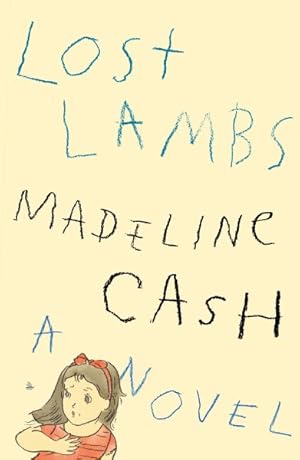
In this sharp and irreverent new novel, Madeline Cash flips notions of family, marriage, community, church and capitalism to expose their crawly underbellies. It’s prickly, spot-on, strange. And hilarious. The book’s many moving parts include an open marriage that veers to amorous calamity; star-crossed trysts; a trio of precocious teens that grazes danger in a vile adult world; a tech billionaire whose dealings are creepy at best; and a church Father whose hands may be scandalously dirty. Cash trains a compassionate bullseye on those creatures called teenagers and a cynic’s bead on the perilous pact of matrimony. (“The biggest conspiracy of all? This whole love thing,” a character sniffs.) But Cash isn’t cruel. She exudes empathy and openly likes her characters — the ones that deserve it. “Lost Lambs” is frothy literary fiction, until it’s not. It is droll and buoyantly written yet lands the well-placed left hook. I can imagine it becoming a four-part Netflix series, a smart, soapy, surreal dramedy starring Ben Stiller and Laura Linney. If it happens, I won’t watch it. I’ll stick to the book. The book is always better.

Three humor collections by Sloane Crosley

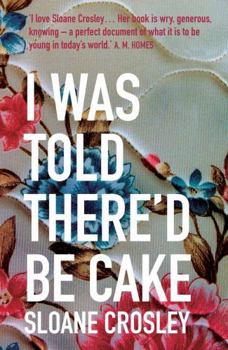
David Sedaris is the standard-bearer of comic essays. I believe this is wrong. I believe he is drastically overrated. I believe he is rarely actually funny. I believe his prose is limp. I believe his professional persona is as confected as a Girl Scout Samoa. You know who’s wittier, hipper and more stylish? Sloane Crosley, who’s written three collections of humor essays that impressed me enough to sit down and commit hosannas. Her first collection, “I Was Told There’d Be Cake,” is best. It also has the best title. Although “How Did You Get This Number,” her second book, and “Look Alive Out There,” her latest collection (from 2018), also have wry, hooky titles. Part-journalism, part-memoir, Crosley’s essays are first-person escapades, experiential and anecdotal and typically relatable. They bristle with razor observation and social commentary. Here, she mordantly muses about her only slightly embarrassing collection of plastic toy ponies. There, she riffs on her fraught city-girl excursion to Alaska, where, in an SUV, there is one guy among many women: “He is our lone star of testosterone in a galaxy of chick.” She deconstructs the bizarro experience of playing herself on “Gossip Girl” and takes merciless stock of her dating life. It’s not all playtime. Crosley doesn’t duck drama and high stakes (her queasy adventures in altitude sickness are almost contagious). Like Sedaris, some of Crosley’s situations and interactions smack of exaggeration or plot-propelling fancy. Such is the plight of the mass-consumed writer — feed the beast. Though the humor is a soft weave, coolly conversational, she can be overtly jokey, and the jokes rarely clank. Her voice is reliably amusing, cut with a measure of snark that gives her sweet prose a tangy kick.

“Flesh”

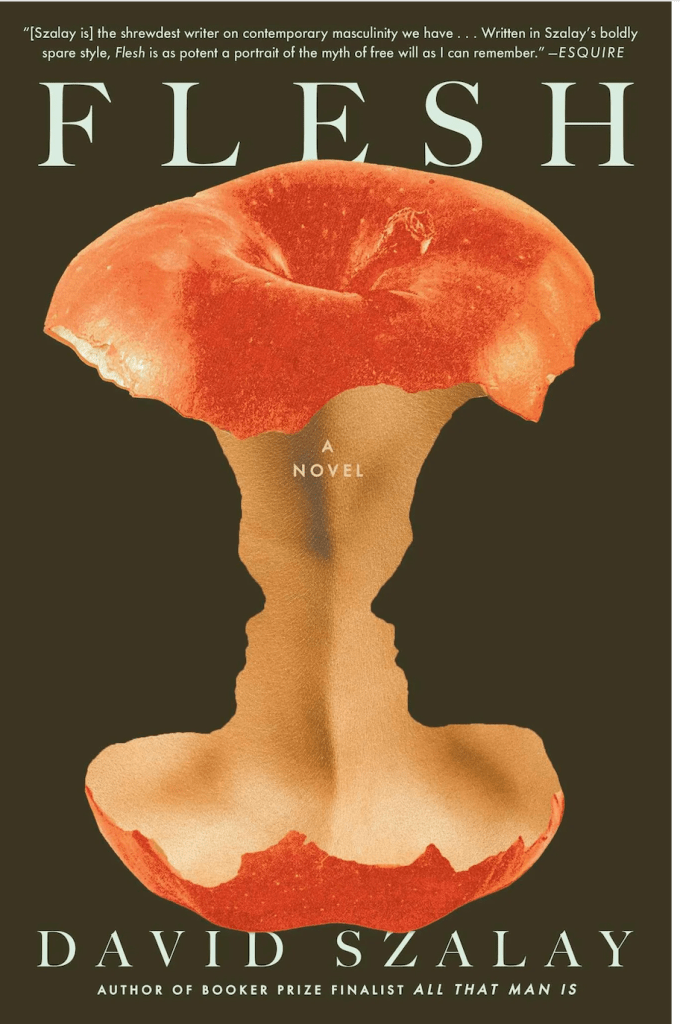
In minimalist language so parched it’s practically puckered, David Szalay spins a story of the classic Solitary Man, a Hungarian immigrant in England named István who embraces a nearly non-verbal solitude as a shield against a world of discomfort. We follow this modern existential character from his cringey deflowering as a teen to his coupling with a rich married woman and decades beyond. Szalay’s tensed prose mirrors the character’s isolation, which occasionally sees shafts of light. While his interior life remains unexamined — his disaffection can be frosty — István is no cipher. He’s a well-drawn loner, a compelling picture of alienation. He’s also something of a symbol, a metaphor for class, urban malaise, the gesture of empty sex and deep loss. (It’s telling that his extravagant cigarette habit is a key character trait.) István fascinates by dint of what he shows as much as by what he withholds. What’s so remarkable about “Flesh,” which won the Booker Prize in 2025, is a descriptive precision and drum-tight realism that would make Hemingway beam. Grim and gripping, it’s a master class in control.

A petrified pup, a brilliant book, a nip of neurosis

The dog keeps staring at me. 

Outside, gusty winds render trees, shrubs and bushes lashing percussion fit for a Nine Inch Nails concert. I’m gazing into the helpless eyes of a small Schnauzer-terrier that’s terrified of the thrashing flora this warm spring day has unleashed.

Cubby the Super Hound — he should have a cape and rubber suit with nipples on it — has his kryptonites, and one of them is blustery winds that rattle objects into outdoor cacophonies. There goes a recycling bin and all its clattering innards. Whoosh-bang, a gate door swings open and shut, on repeat. And those whipping, whistling trees are declamations of the devil. For him, it must be like dwelling in a haunted house, terrorized by loud, chilling sounds of unseen provenance.

As long as the wind blows, he follows closely wherever I go, as if my pockets are stuffed with treats (they are not). At rest, he cautiously climbs on my lap and quakes like a 25-cent motel bed. 

He looks up at me, pleadingly. I look back at him, pitifully. It’s a staring contest between man and beast. Alas, the poor pup wins every time.

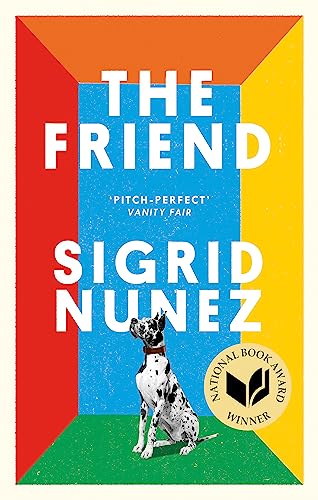
I’m re-reading a deep, delightful little novel titled “The Friend,” which is about writers and writing, friendship, dogs and suicide — a perfect brew of the contemplative, canine and emotionally punchy. It stars a nameless narrator, a middle-aged writer, who’s in a ghostly, one-sided conversation with her close friend, also a writer, who killed himself. It also stars a depressed Great Dane the size of a zebra. The 2018 book won the National Book Award and the author, Sigrid Nunez, has a wry, gently profound way with words and ideas. She has a lot to say about creativity, loss and bonding and does so with chiseled economy washed in a beauty that’s unshowy but electric. “The Friend” runs a mere 212 pages — a wisp, a wonder — but contains worlds of hilarious, heartbreaking humanity. It was made into a movie starring Bill Murray and Naomi Watts, but I won’t watch it. I don’t want to upset the novel’s unruffled perfection.

The South Korea trip — that again — is creeping closer and the old pre-trip jitters are manifesting. Things like: Will I get through customs with Xanax in my luggage? The anti-anxiety meds are a controlled substance and bringing them into Korea requires reams of draconian paperwork, including an absurd handwritten note from your doctor. I’m going to chance it; they don’t always ask. If they do stop me and confiscate it, well, I hope they enjoy. It’s a blast!

I’m also getting flustered, a churning storm in my gut, about possible TSA lines that run longer than a Frederick Wiseman documentary. I can’t stand long lines, and for some reason airport security lines make me irrationally nervous. I find them stressful, mania-inducing, like I did something wrong and I’m about to get busted by some granite-faced goon. I’ve purchased TSA PreCheck, which allows small security short cuts (e.g., you don’t have to take off your Nikes) and theoretically provides shorter waits. We’ll see about that during this latest Congressional crisis. Where’s the Xanax?

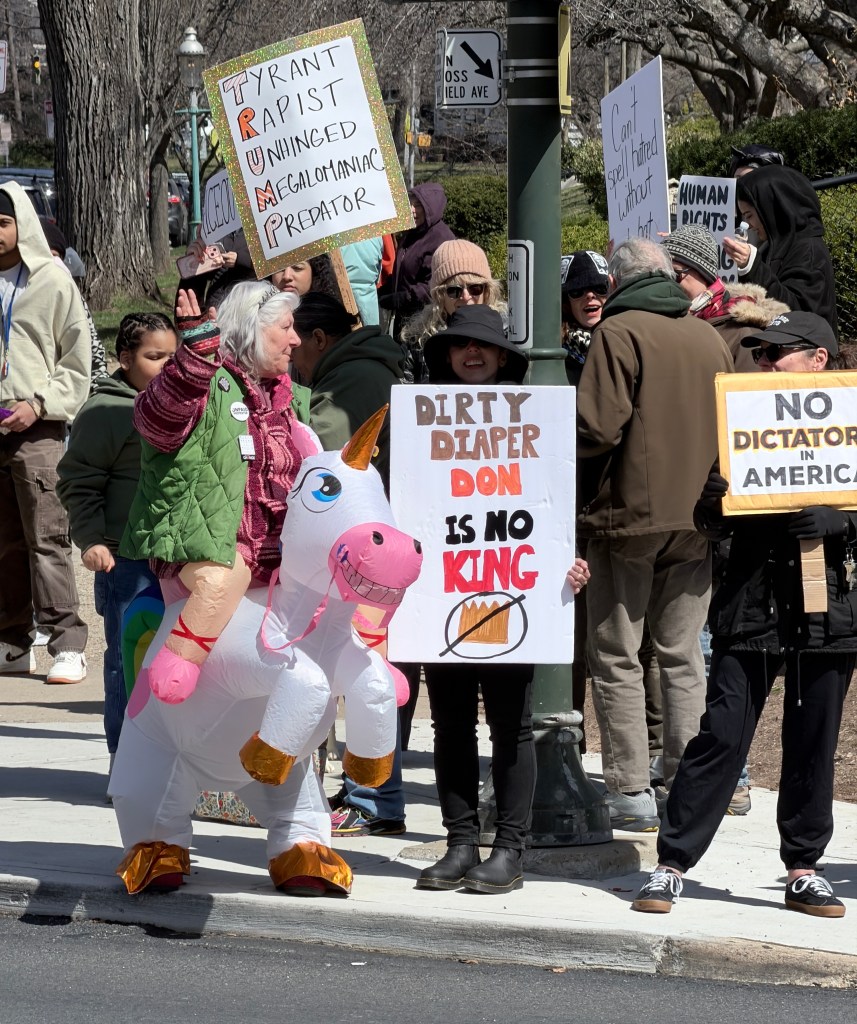
How I spent last Saturday, all cheers, jeers and blaring car horns. The signage — priceless:

It was cathartic.

Bin there, done that

“I love to travel. I just hate the travel part.” — old axiom

Why is boarding a plane so unpleasant? It’s unnecessarily stressful, for me at least, riddled with confusing queuing rules, mumbly loudspeaker instructions that sound like the adults in Charlie Brown specials, brazen line-cutters, and the overall sense of sweaty barnyard herding.

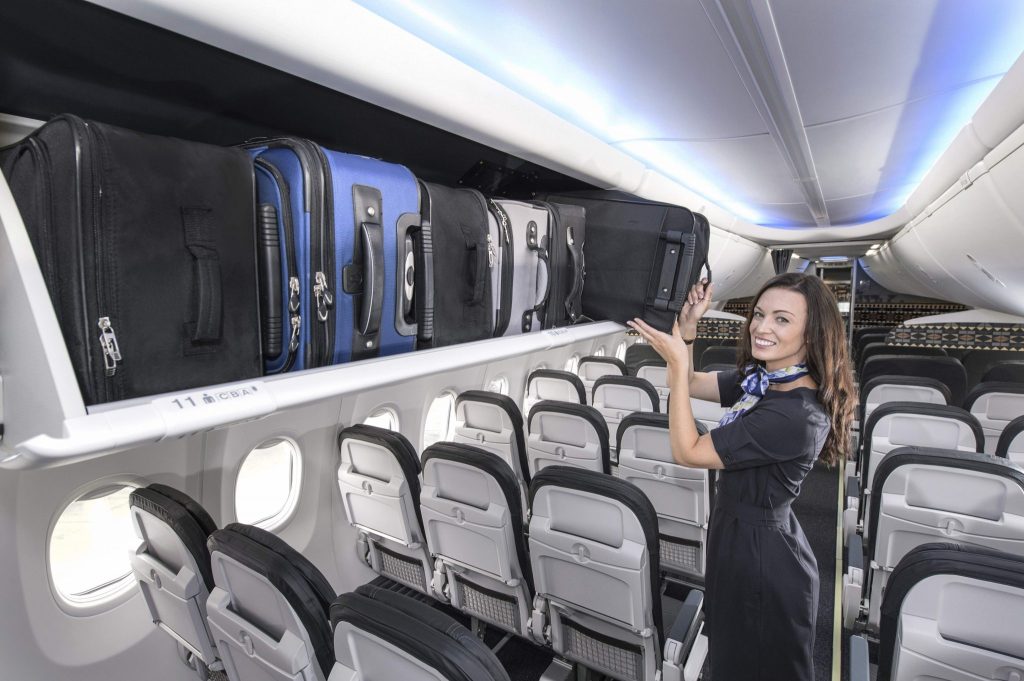
My biggest stress point is the overhead bins and making sure I find a space for my small carry-on roller that’s not in row 57 when I’m in row 22. So now, on United, I pay a $24 fee for “priority boarding” largely to avoid overhead bin combat. (Though passenger jostling is an amazing spectacle.) Even then it can be a hassle to locate an empty bin that some moron hasn’t stuffed with jackets and backpacks that belong under the seat.

I’ve never tussled with a fellow passenger for bin space, but once while struggling I murmured “shit” under my breath and a flight attendant heard me (what is he, a cocker spaniel?) and said aloud, “Oh, we’ve got a live one here,” which of course only pissed me off more.

Paying for priority boarding is worth it. It places you in line 2, just behind the first-class bigwigs, meaning you board in the second group instead of the saps in 3 through 5, who shed bitter tears as they futilely seek space in the already packed overhead bins while you coolly, regally read your book, your carry-on stowed directly above you, snug and smug.

But that, of course, is only the beginning of the journey. The rest is its own kind of nightmarish diabolical shitty hell. The cramped, crowded quarters. Seat backs that bonk you on the forehead. Mealy meals — chicken or pasta, always. Drenched, toilet paper-strewn lavatories (their term, not mine). Butts constantly bumping you in the aisle seat as people scrunch by. Chiclet-size pillows made of gauze. And so forth in the untold litany of awful air travel platitudes.

The tradeoff for this misery is why you do it. Flights will wreck you with stress and redeye fatigue. They are, frankly, a pain in the ass. My post-flight recovery time is cosmic. But then I rebound, ready for days of stuff in a new city, until it’s time for the dreaded return flight. I steel myself for this phenomenon.

The going-back blues are knee-buckling, a gut punch of leaving a place at which you seemingly just arrived. Oh, the banality of home! The only remedy is to begin mapping your next trip, including — and this is critical, really, listen — strategizing how to snag the perfect overhead bin, a forward-thinking start to any vacation.

Joy to the world.

In the throes of snow

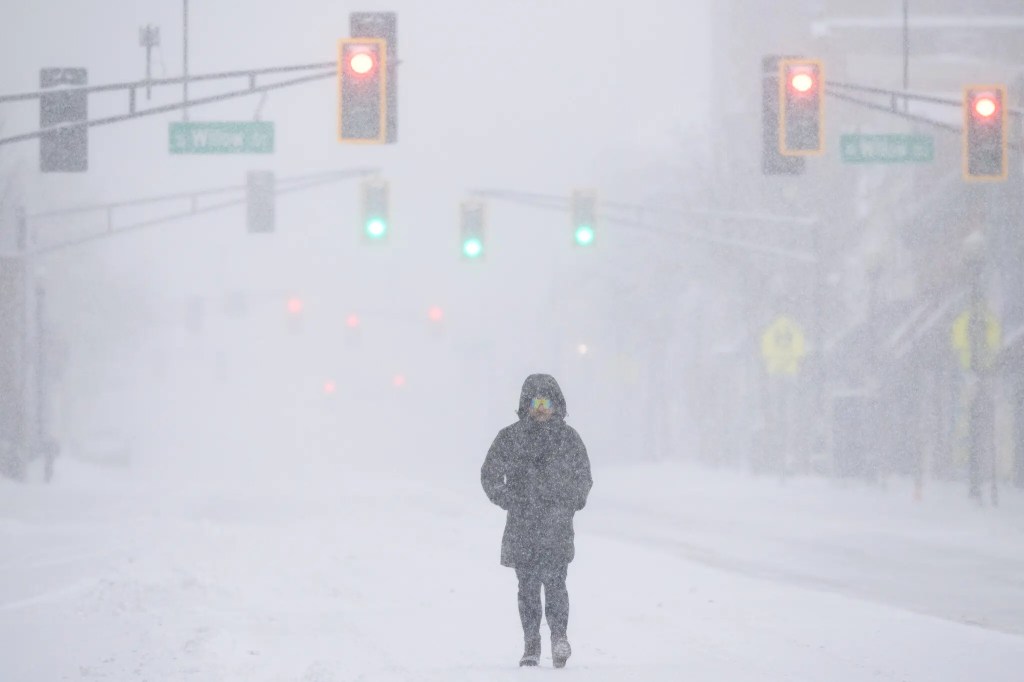
It came down hard, in a swirling nocturnal swoop, the white stuff, upholstering everything in its voracious colditude. So pretty! Yes, adorable. The abominable snow mess. Ain’t it cute?

So it’s bad, 12 inches bad, but it’s actually rather doable. This isn’t Quebec or the South, so we deal. Yet a pain it remains, digging out cars, shoveling walkways, taking care not to slip on your derriere and, perhaps most perilous, wearing caps with fuzzy balls on top.

It’s cold. Often when it snows the temperature stays reasonable, but it’s downright frigid and the combo compounds the icy aura. Is this what Moscow is like? Walking Cubby the dog is a polar expedition and the poor pup has to sport a Christmas-themed sweater that he finds humiliating. I find it humiliating. Anyway, my snow boots are killing me. I need a dog sled.

The kids dig the downy manna. Even now, in the darkness of 8 p.m., they’re sledding down the longer, steeper driveways, laughing and hooting. “Cooper, you get in the front this time!” a boy hollers, setting up his friend for a suicide mission.

The city plows the streets as fast as possible — i.e. a crawl — and neighbors shovel and snow-blow their sidewalks, so getting around is a little less precarious. Still, it’s a slalom course, weaving and leaping around the ice, metastasizing puddles and soufflés of snow. It’s ground-level climatic chaos. (And for all this, I still abhor summer.) Car tires crunch and slush, rolling through the slurry.

It will take days, weeks, for the mounds to melt. Someone built a sweet miniature snowman in the front yard, maybe eight inches tall. The dog dutifully urinated on it and it partially caved in. Is that what we need to rid all of this stuff? Cubby, your work is cut out for you.

One town away from me. (Photo: NYT)

A few things hijacking my brain

During the post-holiday malaise, things poke and peck at my addled brain, fretting about the good, the bad, the grotesque …

Starting with the latter — the elaborate idiocy, the vomit-inducing venality of the so-called Donroe Doctrine, whose cutesy moniker makes me wonder: Who is he kidding with this crap? The perverted man-child is not kidding with, in his words, “my own morality,” which includes everything from ICE to Iran, a rogue’s gallery of revulsion. I pray that crippling tragedy looms in his wretched future. His crew of groveling lapdogs? Same.

On the good side, I’ve cracked a newish book that’s been called by critics “a magnificent vision,” “transcendent,” “spectacular” and “not so much a novel as a marvel.” That would be Kiran Desai’s “The Loneliness of Sonia and Sunny,” which is relatively slim for its daunting 700 pages. Yet what it lacks in girth it makes up in thudding weight. I could curl it and achieve Himalayan biceps.

I’m only on page 50 in this (let the publisher describe it) “story of two young people whose fates intersect and diverge across continents and years — an epic of love and family, India and America, tradition and modernity,” and I’m hooked. 

It’s one of those chunky novels with character/family trees for a prologue, like “War and Peace” or “One Hundred Years of Solitude,” which can trigger the scram instinct in me. I don’t relish flipping back every twenty pages to recount who’s who.

But so far, very good. Desai conjures scenes and characters with creamy eloquence and imagery as supple as a Degas. The prose is wise and true, and funny, too. I only have 650 pages to go (sound of me lifting a cinder block).

Planning for two imminent journeys — Southern France in February and, implausibly, Nashville in March — continues unabated. It’s kind of a chore, but, like cooking or Lego building, it becomes a stimulating hobby, a minor challenge with low stakes.

I’m doing well so far in this First World folly, but the fine tuning feels endless. A Nashville restaurant I booked just emailed to say, sorry, your reservation is canceled because we are now “permanently closed.” The same happened with the Patsy Cline Museum (maybe these closings qualify for the “bad” in my opening paragraph), which a dear friend hinted is better than the popular Johnny Cash Museum. Call me “Crazy,” but I’m more interested in Cline than Cash. Bummer. 

I voluntarily bailed on a street-art tour in Marseille, France, as I came to my senses that $194 is obscenely too much for a two and half-hour stroll amidst what’s essentially glorified graffiti. I don’t even know how I got myself tangled in that scam.

But I do that a lot. I plan trips with wide eyes and a growling stomach at first, and then, as the dates approach, I reel myself in and get sensible. Like, do I really want to do that whiskey distillery tour and tasting in Nashville? Well, yes. Yes, I do.

Denis Johnson’s “Train Dreams,” an exquisite novella I’ve read twice, once some years ago, once this winter, has been adapted for the small screen (Netflix) with mostly luminous results. Directed and co-scripted by Clint Bentley, the movie tells the story of a lumberjack razing towering forests in the Pacific Northwest to make way for the nation’s railroads. He marries. He has a child. Life intrudes.

Honoring the book’s ethereal touch, the movie aches to be a Terrence Malick epic: languid voice-overs, long traveling shots, fetishized natural beauty, breezes blowing through rustling trees, time-jumping episodes in place of linear plot. 

It’s commanded by sylvan abundance and the honed, minimalistic performance by Joel Edgerton, whose eerie quietude is near-tragic if well-earned. Though cast in shadow, there is joy here — family, friends, sharp epiphanies. I was moved by the story’s rich poignancy and tender humanity. It’s as delicate as a dandelion. 

Midsummer miscellany

Four mini-blogs, bite-size essays, from eyewear to dog hair …

Shopping for new eye frames is about as thrilling as shopping for underwear — a little fun, but mostly a utilitarian ritual for a deadly pedestrian accessory. I got new frames this week to go with new prescription lenses, making me feel very old. I’ve had my current blue frames and lenses for two years and I felt like underwear shopping. Yesterday I took my new (burgundy) frames to the optician to get the fresh lenses. The whole deal cost an eye-singeing fortune — around $1,200 for frames, lenses and exam. The nice guy helping me said, “You don’t seem old enough for progressive lenses.” I sort of thanked him, then thought to myself, ha!

When it comes to a big juicy novel, I’m a restless reader. My standards are unreasonably high, and if a book hasn’t hooked me by page 70 or so, I close it and move on. I am not one of those chumps who strains to finish a book once they start it, no matter the quality. That’s obscene. I just closed Rebecca Makkai’s wildly praised novel “The Great Believers.” The Pulitzer finalist about a group of friends impacted by the AIDS crisis was worse than overly familiar and a mite trite, it was dull as dirt. So I started the also-acclaimed Adam Haslett novel “Imagine Me Gone,” a substantial (356 pages) story about a family of five facing mental and physical challenges that upend the unit and try the bonds of love. On page 89, I’m with it for now. But every so often it sags and I give it the stink-eye. Book, you are on perilous ground. Watch it.

Puffs and curlicues erupting over his face and body, the dog at last got a summer haircut. A professional groomer came to the house, bathed him in the sink, then took the razor to him good for more than an hour. Cubby now looks like a bewildered sea otter and it’s fabulous. Everything about him has shrunk — my, what tiny ears you have! — and it’s adorable. Thing is, now he’s licking his butthole and nether regions with frantic intensity, like he’s infested. It’s merely razor burn and getting used to the lack of locks, and if the past is any indication, he’ll stop licking presently. But it sort of drives everybody crazy, not least of all himself. Why are haircuts such trauma? Cubby and I both want to know.

My brother’s radar is exquisite. He knows my dubious tastes, my oddball obsessions, my disgusting fetishes. So it was Christmas in July when he recently gave me a gift of surpassing thrillingness: an immaculate wax double-wick candle of deformed conjoined twins skulls. Craig, my only sibling, said he got it for a Christmas present but couldn’t resist bestowing it now. He bought it at a local taxidermy/tattoo shop called Unlucky Rabbit that deals in deer heads to “Lesbians and Taco Trucks” bedroom candles. My kind of place. I’m a freak fanatic, sideshows, medical curiosities, monsters on down. For now, the Siamese twins skulls are on proud display, and I have no plans to torch them, they’re so gruesomely perfect. Still, lighting them and watching them melt into bone-colored goo would be its own grotesque beauty. Where’s the matches?

The terrible twos


Busload of memory

In grade school, my friends and I would take one of those long yellow school buses that picked us up at the bottom of our street. The interior of the bus was lined with green leather benches — they fit three kids, to hell with seatbelts — and it smelled funny. A little sweet but musty, like diesel and kid funk.

The bus driver was an amiable but firm 50-ish woman named Mrs. Pelton. She had short dark hair and wore a yellow polo shirt everyday like a school-district uniform. 

I don’t know what her pants were like because she was always sitting down in that lone, boxed-in driver’s seat, the one with the huge steering wheel and hissing, hydraulic lever that operated the folding door we kids clambered through.

I don’t recall Mrs. Pelton ever hollering at me to settle down and be quiet or anything like that, but once she alarmed me in a way I can’t forget. She was driving down a sloped street and something happened — what, I’m not sure. She didn’t crash or swerve or brake hard. 

But she was shaken, and she said, “I’d rather hit a dog than a child.” A cannonball hit my belly. I couldn’t believe it. Rather hit a DOG than a child? I was stricken, my callow little head not appreciating the value of human life. Like now, I was partial to animals, loved and worried about them unabashedly. 

“Rather hit a dog than a child.” I suppose I thought she should run down some snot-nosed kid instead of a poor, innocent pup. What a guy. That moment has followed me all these years. It’s the biggest thing I remember about Mrs. Pelton, who has surely passed on by now, unless she’s like 250. 

Memories, good and bad, are strange like that — random, sticky. I have a storehouse of them, and many seem to pop up daily. Like when Tom Rainbolt peed all over my back in the boy’s bathroom in third grade, or when I learned to ski, or when I kicked a hole in our hallway wall (so busted), or when my best grade-school friend, reckless Gene, hurled live shotgun shells into a bonfire, or working at the exotic dance club or landing my first newspaper job, or …

Often, when whacked with insomnia, a dusty reel of life memories unspools in a long, disjointed movie of the irrepressible past. Some of it’s joyful, a lot of it’s painful. The things done right and the endless bruising regrets. It’s the id unleashed. (Of course everybody does this.)

I have a strong memory muscle — I recall much of my childhood in blinding Technicolor — marred by minor spells of amnesia. It’s not like I forget who I am — though that would be tremendous (temporarily) — but more like I’m not as mindful, drifting off. This is bad. Memories are magic, if I can be any cornier, a pass key to the past, illuminating the present (lessons learned, etc.). Attention must be paid. OK, the homily is over.

Beyond the life-molding experiences — playing in bands, fizzled romances, getting peed on — it’s the people from the past who stand out: Mom, Dad, first-grade teacher Ms. Brose, Brandon, Janice, Roxanne, high school English teacher Mrs. Condon, Guen, Sativa, Nettie, Shannon, Laura, Nicky the dwarf — and, of course, ole Mrs. Pelton, who’d rather hit a dog than a kid, bless her sweet, sensible heart. With those few words, she locked a place in my long, crowded bus of memory.

The drudgery, and joy, of writing

Last month or so, I was reading a terrific book about the making of the classic movie “Chinatown” titled “The Big Goodbye: ‘Chinatown’ and the Last Years of Hollywood,” by Sam Wasson, and I had to grin at this quote from legendary screenwriter Robert Towne: “So much of writing is trying to avoid facing it.”

That’s hardly the most original thing uttered about the writer’s penchant for procrastination and craven dread of the blank page — Hemingway summed it up: “There is nothing to writing. All you do is sit down at a typewriter and bleed.” — but it was a reassuring reminder that cooking up stuff for a readership, a nervously performative act, isn’t always a joyride, or particularly easy. It can be a grind. It can be depressing. It can sap the soul. 

But it can also be exhilarating and, when things are flowing, a blast. Well, let’s not get carried away. How about … satisfying? Said great journalist Russell Baker: “I’ve always found that when writing is fun, it’s not very good. If you haven’t sweated over it, it’s probably not worth it.”

I don’t know how you reconcile that dichotomy, the yin and yang of good and rotten, delight and drudgery, but they seem to jibe. There’s a fruitful friction. Good days, bad days, middling days. (That last line? Lazy writing. Bad writing. I left it there as a specimen of what can go wrong.) 

I always want to write, but once I sit down and face the empty page that sneers, “Go ahead, try and fill me,” I tend to constrict, choke, unless I’m especially inspired and know how I’ll begin and where I’m (generally) going. Those days are the exception. Right now, I’m winging it. I had that Robert Towne quote in my head and started riffing. (Help!) 

There’s no map. There’s only this: Get it down. The prose may be raw and bloody — embarrassing, eye-sizzling — but the ideas matter and the words, those painstakingly chosen few, will be chiseled out of the viscous blob of verbiage. Editors are helpful at this stage, and I’ve worked with many who have saved my prolix ass. But here on this free-floating blog I’m on my own. I am judge, jury, executioner. And I probably should have executed that sentence. 

Point is, writing, like any creative endeavor, is a messy enterprise, hard to do but at times truly rewarding (I have ten journalism awards that bear that out, he crowed). You have to dive in head first, and toil to make a splash. Taking pride in your work is mandatory — read tons, write multiple drafts, and use spell check for chrissakes — the only way you’ll do anything worth a damn.

First you must conquer that blank page, which requires actually facing the music, not dodging it, as Towne noted. I’m working on a writing project that I approach tentatively, with baby steps, not because I’m indolent but because I am, frankly, a little scared. 

There’s a cure for that. It’s simple yet courageous: Sit down, stare at the page, and bleed.

You must win the staring contest with the blank page. Despair is likely. So is reward.