Picturing people, peripatetically

IMG_2773.JPG
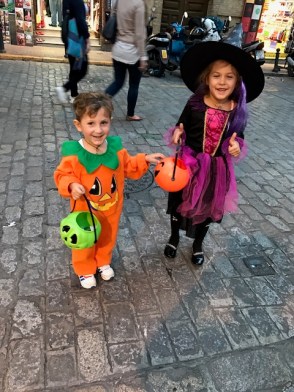
Harajuku girl, Tokyo, Japan.

When I travel abroad, once or twice a year, I keep my digital point-and-shoot camera in my outer coat pocket or untangled in my messenger bag, always at the ready, grabbable, right there for the right shot.

P1010393
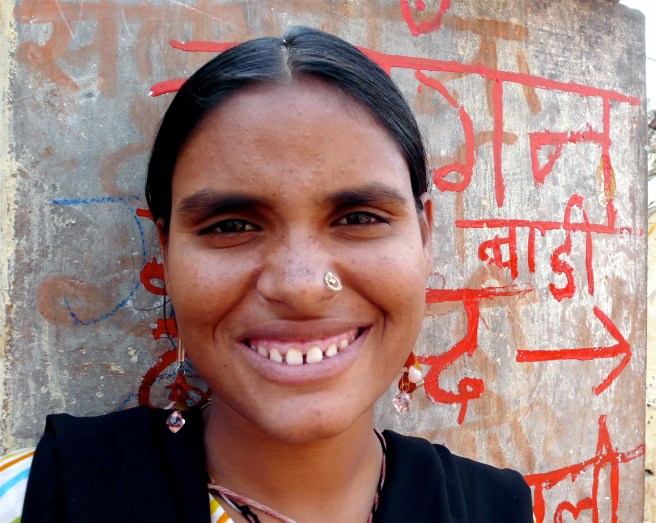
Beggar girl, Old Dehli, India.

I’m something of a shutterbug, a total amateur driven by the blameless enthusiasm of a self-taught neophyte, toting a picture-taking toy. But I learn fast, and one of the early lessons in my journeys was how dull so many of my photos were. They were dry, clichéd, postcardy, filled with stolid buildings and objects and places you’re supposed to photograph just because you’re there and you want indelible proof that you did indeed behold the Mount of Olives, Ghiberti’s bronze doors or the Hanoi Hilton.

They weren’t awful, but they were lifeless, generic. What they missed were people and faces — humanity. I almost always travel solo, and, anyway, I’m not a big fan of pictures of friends and family standing robotically in front of oceanfronts and monuments.

So I started seeking locals for my shots. The approach not only improved my photographs but also improved my travels. Suddenly I was paying more attention to the daily activities of people, their work, play, drudgery and joys. Observing residents in action literally put a face on a place and deepened the cultural experience.

P1010792
Religious man, Jaipur, India.

Sometimes I “sneak” photos of people engaged in everyday life — men bathing in the Ganges in Varanasi, India; a man selling prayer beads to a customer in Istanbul; a student bicycling in Beijing — yet as a general rule I approach subjects who have a striking face or are wearing an arresting outfit or are doing something vaguely exotic and ask permission to take their picture.

This requires a spot of nerve, especially for an introvert like me. But I’ve found that in many places, if you’re courteous, low-key and smiling, people are receptive, even eager.

P1020932.JPG
Girl, Istanbul, Turkey.

I’ve had great success in Asian nations, where residents display a friendly excitement and curiosity toward the dopey American who wants their photo. Children in developing countries are especially agreeable to having their picture taken, mugging, posing, snatching at the camera to see their image. (Though, with both young and old, you should be prepared to drop a couple of coins into outstretched hands when you’re through.)

IMG_2124.JPG
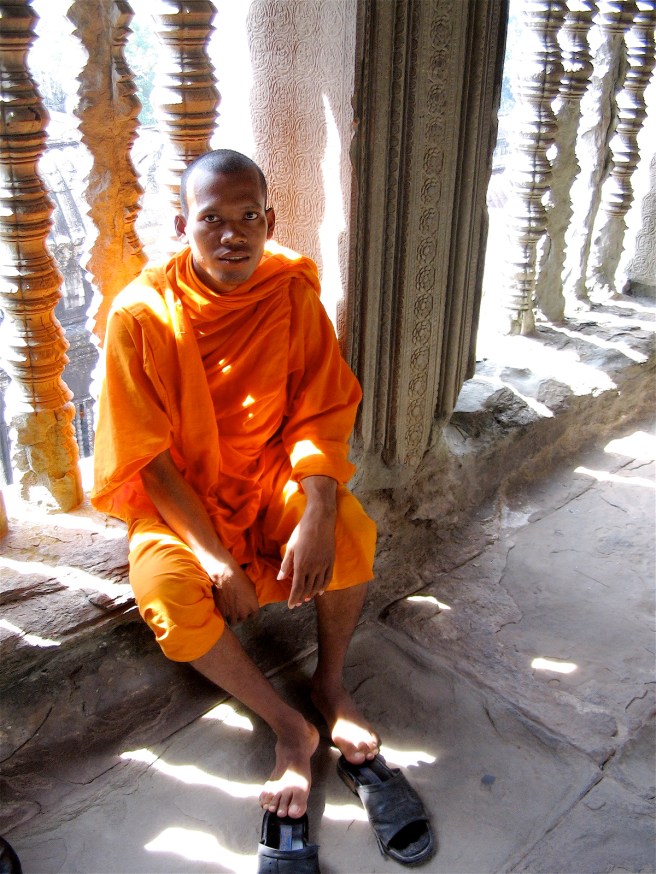
Buddhist monk, Angkor Wat, Cambodia.

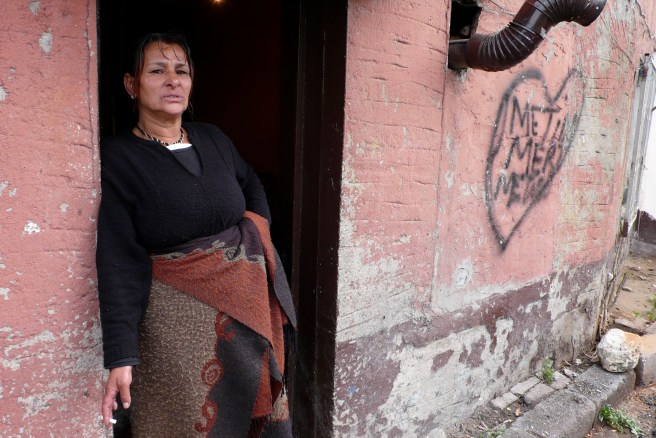
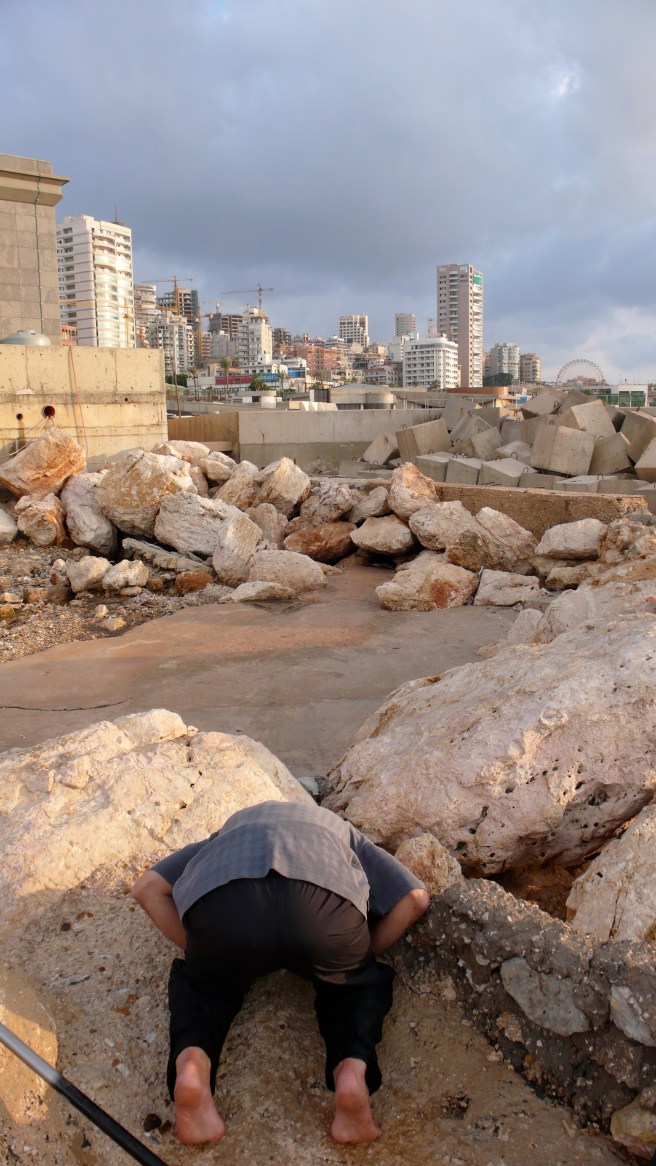
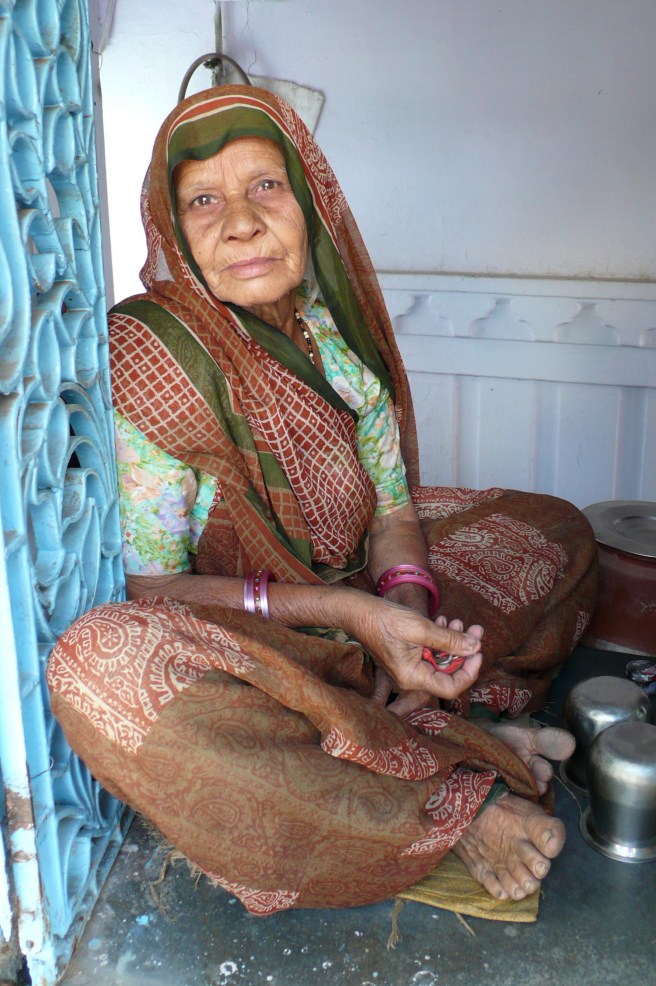
This is a selection of portraits I’ve taken around the world. They are the simplest of snapshots done with basic consumer digital cameras, not phones. They are carefully framed, yet quickly shot. I take only one picture of my subjects as a matter of speed and courtesy. There are no re-dos.

P1010372.JPG
Old Delhi, India.
P1010325.jpg
New Delhi, India.
IMG_2373.JPG
Hanoi, Vietnam.
IMG_2153.JPG
Siem Reap, Cambodia.
P1020909.JPG
Boys, Istanbul.
P1010689.JPG
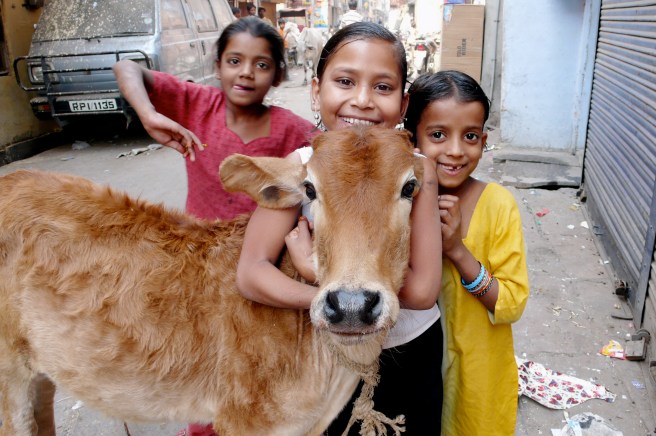
Kids and cow, New Delhi.
P1030271_1.JPG
Smoking woman, Istanbul.
P1010760.JPG
Udaipur, India.
P1030285_1.JPG
Praying man, Beirut, Lebanon.
P1010782.JPG
Udaipur, India.
P1020572.JPG
Istanbul.

Drinking and striving

A Cucumber Rickey? That’s a thing?

It is a thing, evidently, an alcoholic thing, a thing that tastes like a wonderful thing.

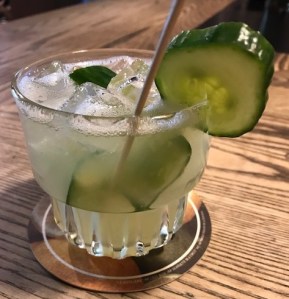
I recently discovered the Cucumber Rickey (yes, I now know the drink’s been around since Tutankhamun) at the Montreal bar La Distillerie, a packed, ultra-trendy but relievedly casual spot that specializes in inspired, palate-thrilling cocktails without the pretense and rigamarole of highfalutin mixology, and does so at gulpingly cheap prices. My Cucumber Rickey — Bombay Sapphire gin, a truckload of fresh cucumbers, lime juice, simple syrup, and orange and mandarin bitters — was $7.50 in U.S dollars. Another, please.

IMG_0704
Gin, cukes, paradise.

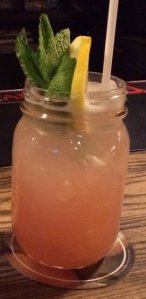
A poor specimen of  a cocktail connoisseur — a kicky gin and tonic does me fine — I’m still keenly curious about and eager to try new alcoholic concoctions. I regret I didn’t have time to sample more from La Distellirie’s festive menu, which boasts 27 specialty drinks, though I did try the toothsome Mohawk — Bombay Sapphire gin, peach purée, lemon juice, elderflower cordial, homemade jasmine tea syrup, soda water — a fragrant sweet and sour pleasure. (What in the hell is elderflower cordial?)

That menu is something else, a disarming, user-friendly catalog tailored to individual thirsts. For instance, if you’re in the mood for a “Herbal, Fresh, Refreshing” drink you can choose from four cocktails, including the ubiquitous Mojito, as well as my dear Cucumber Rickey and Mohawk.

o
the Mohawk — sweet, sour, sublime

If you require a “Robust-Intense Powerful Concentrated” drink, select from the Mad Man, Rollercoaster and three others. A quartet of neon-tinged beverages with long French names are located in the “Accessible, Delicate, Light-Soft” category. And so on. There are six categories total.

La Distellirie has three locations in Montreal. I was at the smallest and most popular spot — got there early, beat the crush — in the city’s Latin Quarter (make that Quartier-Latin) on Rue Ontario East. Two doors down from La Distillerie is Pub Quartier-Latin, a ridiculously friendly, semi-dive bar, with a cheery staff, cheap drinks, heaping greasy food and reliable WiFi. I hung out there a lot, writing on my laptop and sipping passable gin and tonics.

My drinking preferences have evolved over time. Fifteen years ago I’d keep a 12-pack of Rolling Rock in my fridge and stock no distilled spirits. A few years later I always had cheap Yellowtail merlot on hand, but still no hard booze, which I drank almost entirely at bars (mostly, blush, vodka cranberries). My beer and wine period seems to have lasted forever, and my liquor sophistication remained downright uncivilized.

IMG_0738.JPG
Where zesty cocktails are found in Montreal’s Latin Quarter.

Until, at last, my brother introduced me to the nuanced grandeur of Scotch — the peat, smoke, vanilla, grass, fruit, even hay — all those swirling notes that begin in the nostrils and finish in a slightly seared gullet. He enlightened me by pouring The Glenlivet, Laphroaig and Talisker, single malts reserved for special occasions. (Our everyday Scotch is the smooth, blended, wholly unpretentious Dewar’s White Label.)

We sample gins for the best G&T’s, as we call them, and have graduated from Schweppes to Fever-Tree premium tonic. Our favorite gin to date: The Botanist. Least favorite: New Amsterdam. (Only later did we learn it was distilled in Modesto, Calif., explaining scads.) We quickly realized that Gordon’s London Dry beats out Bombay Sapphire in taste and price.

We make easy Scotch and sodas, the occasional Cape Cod, and try out new ryes and bourbons, Woodford Reserve being a standout.

negroni
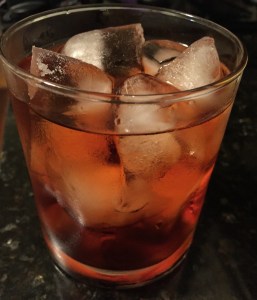
My brother’s dreaded Negroni.

As I said before, I’m a cocktail dilettante. My brother’s the aspiring mixologist, who, like a driven chef, derives myriad satisfactions from confecting a complex libation, step by step, following a strict recipe. He’s especially partial to Old Fashioneds and the bitter, face-scrunching Negroni, which offers a delightful finish of ear wax.

When done creating, he always clinks glasses and often smacks his lips after the first sip of success.

He’s particular about his brands and demands his ice cubes just so. This self-anointed beverage snob, a real liquid dandy, won’t drink at any bar that sprays its tonic from a push-button nozzle, or soda gun. That’s commitment.

I don’t care if they fire my tonic out of a gun. Yet I do crave quality, like the tasty bracers at La Distellerie, which take skill and a little heart. I make modest drinks as best I can — my G&Ts, when I slice up some fresh fruit, are really not bad — and I like to think I could pull off my own Mohawk or Cucumber Rickey. All that, even if I do pour my wine from a cardboard box.


Gross anatomy: the marvelously macabre Mütter Museum

Pathologies are my thing. Twisted limbs. Fleshy protrusions. Faces swathed in nappy hair, Chewbacca-like. Conjoined twins. Horns curling from foreheads. Extra heads — those are always fun.

I don’t revel in the maladies of others; I revel in the Other. People are fascinating. People are more fascinating with three legs.

This foible of mine, this adorable morbidity, came early on, delighting my parents, who stood back, weighed adoption strategies and ever so gingerly catered to my wiggier curiosities. For my eighth birthday I requested and received the illustrated book “Very Special People: The Struggles, Loves and Triumphs of Human Oddities.” Since then, many have believed I belong in this book.

These outré fascinations have grown to include death and the dead, and have led me to abnormal forays in my frequent travels. There I was at the Royal London Hospital, sleuthing with the grace and aptitude of Inspector Clouseau for the skeleton of Joseph Merrick, aka the Elephant Man. (Mission: failed.) At the Golders Green Crematorium in London I witnessed roaring ovens and jars of fresh ashes, some heartbreakingly labeled “baby.”

There was the blech-fest of the Meguro Parasitological Museum in Tokyo, where all squirm and squiggle of microbe-y monster were displayed in clear, fluid-filled cases, sometimes feasting on animal innards.

At the Museum of Forensic Medicine in Bangkok, medical students dissecting cadavers giggled when they saw me spying in the doorway, pointing my camera. I repaired upstairs to the musty exhibit of bottled fetuses, crumbling bones and full-length cadavers floating in dishwater liquid like humongous pickles.

My two noble efforts to see the freak show at Coney Island were thwarted by poor timing. Yanking on the bearded lady’s follicular abundance will have to wait.

Yet, for a constant traveler of my tastes and temperament, the Taj Mahal of the morbid has long been the famed Mütter Museum, a repository of anatomical horrors and shrine to primitive, rusty-tooled medicine in the College of Physicians of Philadelphia. It is where, at last, after years gazing at its web site, I recently visited. Disappointment was not in the cards.

Part edifying scientific journey, part powerful appetite suppressant, the Mütter is smack in Philly’s city center, a brisk walk from the Philadelphia Museum of Art. Inside, once through the deceptively donnish foyer, the museum is cool and musty, packed with old wood and glass cases revealing the historically pertinent — Florence Nightingale’s sewing kit — and the surgically slimy — a mammary tumor afloat in liquid, resembling a buttery dessert.

muttermuseum.jpg

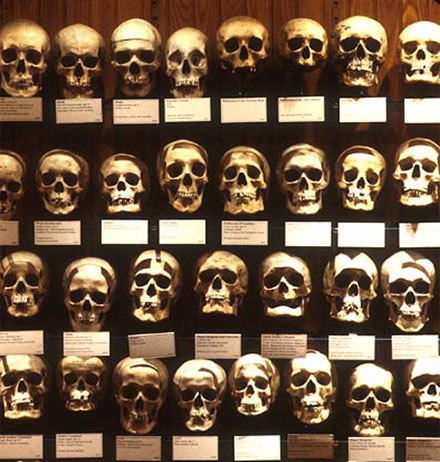
Human skulls — some intact, some cracked or bullet-pocked — checker an entire wall, each tagged with the cause of death, be it hanging, suicide or disease. The brownish heads came to the Mütter from Central and Eastern Europe in 1874, a major acquisition for the medical institute, which boasts 62,000 visitors a year, many of them children on school field trips. (I want to go to their school.)

Founded in 1849 and named 10 years later for surgery professor Thomas Dent Mütter, the museum throws open in graphic, naturalistic detail the ranging possibilities of the human body, and the havoc that can befall it from within and without. Diseases, injuries, birth defects — it’s an elaborate temple to the slings and arrows of outrageous fortune.

Much of it is not pretty. This is a given. It can be ghastly, grisly, unimaginable. (The “wet specimens” section is home to a jar labeled “Moist Gangrene of the Hand.” In it sits a human hand rotted black, the skin tattered like a torn leather glove, bones poking from the wrist.)

But to merely recoil at the exhibits is to shut out a world of contemplation, and to allow an emotional reflex to override a rare opportunity for understanding.

Not that emotions wither in the objective, secular hothouse of science and medicine. We are human, after all. And the museum unpeels the tangible layers of our humanness, down to the bones in many cases.

Strolling the more than 3,500 square feet of tidy halls and floors, I experienced kaleidoscopic feelings, be it excitement or queasiness or, in the presence of deformed human fetuses, such as the child with “46 twists in the umbilical cord,” great sadness at life so cruelly muffled before it even whimpered.

The upward of 1,700 sticky specimens — a sliver of John Wilkes Booth’s thorax; a full skeleton encrusted in its owner’s ossified sinew and organs — and 20,000 objects — an archaic penile syringe, leech jar and bleeding bowl — demand gawkers to question our flesh-and-blood frailty and peer across the accepted borders of what constitutes normalcy.

Some guests will ponder God’s inscrutable will and the crap-shoot of birth; others might mull our fleshly finiteness, staring at them at every turn, and thank their lucky stars.

“The museum challenges visitors in a way that few American museums do,” says Dick Levinson, Mütter spokesman. “It’s impossible to visit here without confronting issues of sickness, mortality and human sexuality. We’re the museum young people love because we don’t preach, we don’t sugarcoat and we have no agenda except for allowing the voice of science to speak.”

That voice speaks loudly, but with fitting respect and as much dignity as a naked cadaver can possess. There’s humor in the macabre, as horror movies show, so a giggle of shock or a throwaway quip (“Hey, Tom, that skull has your cheekbones”) won’t ruffle the contemplative oxygen of the galleries. It eases the mood. Remember, school kids come here. By now, them bones and body parts understand the various responses of the living to the so forthrightly dead.

chang_eng.jpg

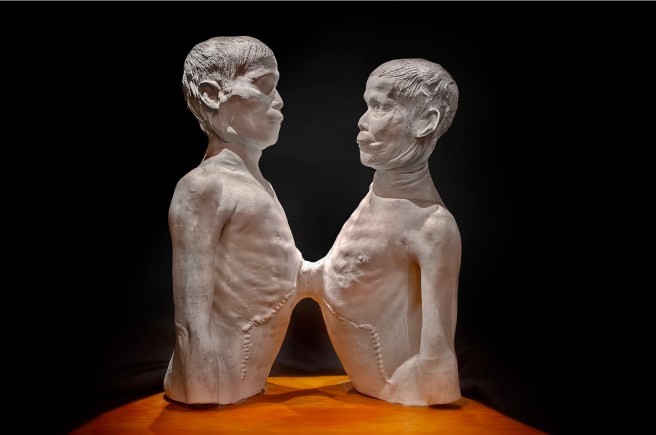
Some of us get giddier than others at such places. I was most thrilled that the autopsy of the original Siamese twins, Chang and Eng Bunker, was performed at the Mütter in the 1870s, and that the museum kept some nifty souvenirs for display. I examined the plaster cast of the twins’ bound torsos and, below it, their connected liver, a chalky, scabby island bobbing in a pan of fluid.

That’s an island this world traveler and seeker of the strange calls one thing: paradise.