
I’m the worst. I’m impatient. I’m mean. I’m discerning. I have taste. When it comes to books, I am ruthless. I’m even worse with movies. Most don’t stand a chance.
I have put down four books, closed them for good well before the 100-page mark, in the past two and a half weeks. Suffused with sorta-guilt — ah, not really — I swan to the next book, hoping for gems and genius. I am an optimist garbed as a very dark pessimist.
Mining this small stack I located gold — the books are by literary heavyweights, after all, and they do often gleam — but I also found fool’s gold, which I will not abide.
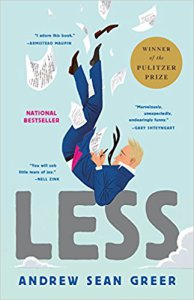
The yeasty comic novel “Less” was the chintziest of the four. It won the Pulitzer Prize this year for fiction. What are you gonna do? I read, I shrugged, I shut.
With wan humor tangled in wry, hackneyed observations about gays and straights and executed in lite-beer fizzy prose — “a quick, easy summer read,” said one critic, as if that’s a compliment — “Less,” by Andrew Sean Greer, reminded me of a gay-themed comedy series on HBO, one of those middling shows no one watches. The novel, says Greer, is “a love story, a satire of the American abroad, a rumination on time and the human heart.” Thanks, Mr. Greer, for defining “generic.”
I read some 75 pages of “Less” and I must agree with this writer who actually finished the book: It’s “chock-full of gay clichés that feel outdated, and the tone is generally one of superficial, unearned cynicism that sometimes drifts into cattiness.”
Yup. Even The New York Times, in an upbeat review, called it “too sappy by half.”
Zadie Smith writes with a magic wand; her language and storytelling gifts are things celestial (and she makes me gush floridly). I’m an ardent fan of her fiction — “White Teeth” glitters — but her 2012 novel “NW,” a typically vibrant latticework of people and place, didn’t grab me by the lapels, no matter that I don’t have lapels. As exceptional as the writing is, the story has a matte finish when I yearned for glossy.

Wade into Rivka Galchen’s hailed stories “American Innovations” and it’s clear why she is one of America’s hottest young fiction writers. She’s crisp, funny and fanciful, with a biting originality and a smidge of the surreal. But as much as I appreciated the collection, I put it down. I almost fell for it, then fashioned a one-word review: meh.
While there’s no shame in not finishing a book — I can’t believe people who feel they have to get to the last page even if it’s a slog — I can’t help but gulp and blush at this failure: Edith Wharton’s 1920 Pulitzer-winning classic “The Age of Innocence.”
I did not get far in the rather slim novel. I found the prose cluttered and perfumey, chokingly Austenian (though without the giggling), and fustily 19th-century for my contemporary palate. (Oddly, I loved Wharton’s 1911 “Ethan Frome.”) Wharton weaves long, highly populated sentences of lace and crushed velvet, many of them woozy and lovely.
Problem: I kept picturing doilies.
Antidotes to these literary losers are a trio of new fiction by some of the most acclaimed women authors around: “Kudos” by Rachel Cusk, “How Should a Person Be” by Sheila Heti and “Homesick for Another World” by Ottessa Moshfegh.

I’m knee-deep in that last title, a 2017 collection of stories by the precocious Moshfegh, whose novel “Eileen,” a darkly off-kilter character study, impressed and troubled me — just how I like it.
Moshfegh’s stories are spare and wicked, laced with a perfect pinch of transgression, enough to fill an eye-dropper. They are comic and you laugh, but there’s dried blood in them.
Some excerpts:
“He thought that the drugs we bought in the bus-depot restroom were intended to expand his mind, as though some door could be unlocked up there and he would greet his own genius — some glowing alien in glasses and sneakers, spinning planet Earth on its finger. Clark was an idiot.”
“Our repartee would be rich with subtlety and sarcasm, as smart and funny as mid-career Woody Allen. Our fucking, like Werner Herzog, serious and perplexing.”
“I hated my boyfriend but I liked the neighborhood.”
To me, that is dreamy writing, all at once blithely sardonic, intelligently aloof and drolly perceptive, attached to the stinger of a scorpion.


 GNASHING.