Italy finito, beautifully

As I write this, 35,000 feet in the sky on a jet back to the States from nine fine days in Italy, I’m swollen with that cruddy reverse homesickness in which you miss the place you visited instead of your actual home. Rome and Naples were wonderful and I wasn’t ready to leave and I wanna go back. I’ve got the home-bound blues.

Still, my last rueful day in Rome was brilliant, quite literally — balmy mid-60s, cloudless, cerulean skies, sunglass weather. The kind of conditions that make people dress way too skimpily for the actual temperature. I was perfect in jeans, a light jacket and t-shirt. The guy in the short-shorts and tank top, not so much. 

Especially if he wanted to get into the Pantheon, the almost 2,000-year-old Roman temple turned Catholic church, where modest dress is a must. Leaders, popes and artists, including Raphael, are buried in the cylindrical building, which is famous for its oculus (or big hole) at the tip of its dome, shooting down a thick beam of sunlight like a celestial Bat-Signal.

Our lovely tour guide in Naples told us he gets chills whenever he enters the shrine. I did not get chills, but I was aptly awed by the ambient beauty and unimaginable feats of engineering. So often in Italy, if you regard your surroundings for just a moment, astonishment floods in and you wonder what hit you. It’s called the sublime.

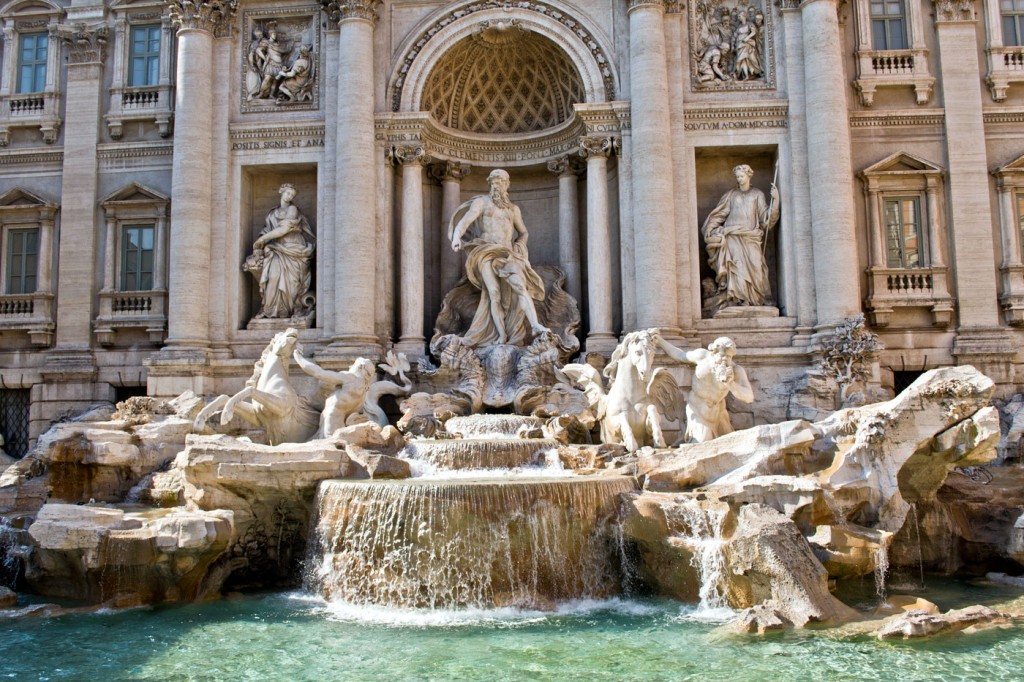
I didn’t care if I found it or not, but fate planted an unmistakable sign in front of me — a literal street sign — so I ambled over to the vacantly majestic Trevi Fountain, where mugging selfie dolts and preening sun-worshippers congregate on days like this, as if Nicola Salvi’s pompous 1735 fountain is a swimming pool or the beach and not just a glorious repository for Bernini-style sculpture. I do respect this extravagant splash machine, but it’s a brief pitstop, not a gawk spot, despite its iconic role in Fellini’s “La Dolce Vita,” a personal favorite. 

A local beer, a prosciutto and mozzarella sandwich, and a cappuccino later, I headed to the Vatican for a guided tour of the Vatican Museum, a riot of artistic riches. Our tour guide barely made it on time, and my mood was starting to curdle. But she materialized at last, a petite Italian who used a plush Woodstock doll dangling from a stick in lieu of the boring old tourist-group flag for us to follow amid the crushing, claustrophobic crowds (many of them terrible teenagers, lolling, laughing and leering). 

She gave each of us little radios with ear buds so we could hear her literate narration of highlights in the museum. But the contraptions were on the fritz, all buzz, fizz and crackle — sonic flatulence that drowned out her spiels about each grand piece of art, from writhing statues of men and lions and Raphael’s “The School of Athens,” to the visual commotion of Michelangelo’s peerless Sistine Chapel ceiling. The works spoke for themselves.

As we finished, I asked the guide for the nearest taxi line, and she warned me to be careful with them, that they quote outlandish prices and don’t use the meter. And so it was. I approached a driver and told him my address and he promptly said it would cost 40 euros because of, you know, that zany Tuesday traffic. I scoffed and said, “You’re crazy,” and he responded, “You’re crazy.” Genius.

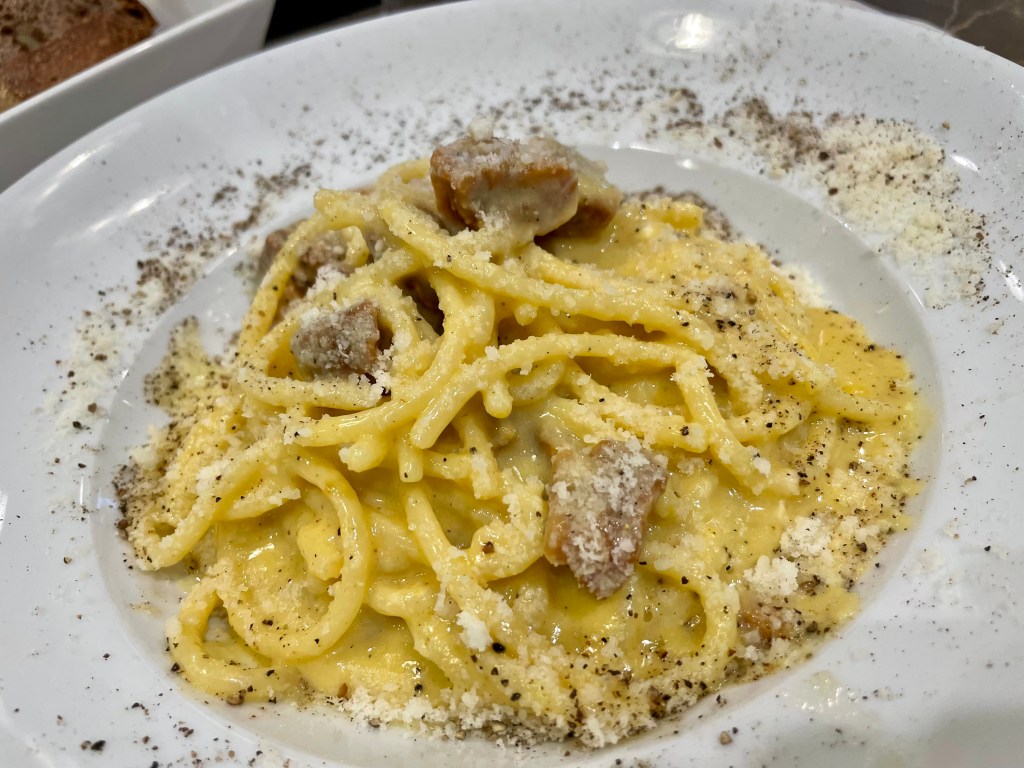
I hailed a passing cab, got in, and paid 14 euros back to my hotel, where I wound down, went out and ate pasta, sipped wine, and, reflecting on the past nine days, sighed: perfetto. Which in English translates simply as: damn

Even travel letdowns are worth it

I’m a jaded traveler, asking much, with high expectations and a low threshold for disappointment. 

So naturally I’ve at times been disillusioned during my many journeys around the world. It happens. And it’s not a terrible thing. After all, how letdown can you be by, say, Madrid, a great city that pales a bit compared to its more lustrous and colorful cousins, Sevilla and Barcelona? Not much.

In a previous post I told how I recently unpacked piles of my travel journals from cold storage after several years. Written in blue ink in black notebooks — usually on barstools after long days wending wide-eyed through cobblestone streets and spindly alleyways — the pages are filled with the magic of travel, the mirth of discovery, the shock of the new, amazing people and far-out food (like the whole cobra I ate in Vietnam). 

The journals are also laced with descriptions of those isolated times when I was dissatisfied, underwhelmed or — what! — plain bored. I’ve re-read these bits with a kind of dismayed surprise: Really? That’s how I felt about Rome? Rome? 

Well, yeah, on that particular day. Travel experiences are colored by everything from jet lag to daily frustrations (taxi rip-offs, getting lost, language hassles). They are mutable. What deflates one day might electrify the next. 

My journals reminded me of this in bold strokes. These are some examples of thwarted expectations and little letdowns on travel’s twisty, rugged road: 

In 2000 I went to Israel a hardened agnostic bordering on a true atheist. Astounded by religion and the mindset of its believers, I wanted to go to the desert nation that’s home to the big three, Judaism, Christianity and Islam, and see what makes them tick. Scenes from my journal:

“Today in Bethlehem I arrived at the perhaps blasphemous idea that the region is a historical Disneyland, a realm of fairy tales. ‘Here’s where Jesus was crucified and resurrected.’ ‘This is where Mary slept.’ We might as well be told, ‘This is where Snow White ate the fateful apple,’ or ‘Behold the tomb of Cinderella’s stepsisters.’ It’s psychotic that pilgrims succumb to the fanciful whims of Constantine’s mother, who randomly appointed holy designations to places here. Paraphrasing something I actually heard on a tour: ‘Here’s King David’s tomb and the site of the Last Supper, but, uh, not really, because they’re lost somewhere far below the city.’ And people eat this stuff up.”

Later I noted:

“Believers hoisting giant wooden crosses follow ‘Christ’s final footsteps’ on the Via Dolorosa in Jerusalem’s Old City. It’s maniacal, and not half as fascinating as you’d think. That’s how religion is for me now. Just silly, impossible to be contemplated in the higher regions of the mind. It absolutely fails to astonish. So this trip, which is wonderful thus far — peaceful, pleasant, edifying — is innocent of any celestial wallop, of a blinding halo glow and spiritual intervention. I am unmoved. I am unchanged.”

Then there’s Prague, which I visited with inflated enthusiasm in 2002. I should have known better, especially since so many blinkered Americans just love the tourist-clogged Czech capital and callow expats infest the place. I got there and sighed, writing:

“Not entirely impressed by the city. Like an Eastern Amsterdam: beautifully antiquated, charmingly European, painted with time and soot, tired but proud. And yet rather vacant. It’s all show, with a familiar, generic Euro tang. My true feelings are stifled from sleepless flights. My impressions are, for now, Cubist — fragmented, jumbled, unreliable. But, so far, a fine, sturdy European city of great charm and Old World wealth. A Disneyland-like anachronism, bursting with pastel façades and fairy-book antiquity, tourist throngs and souvenir kitsch.” 

Two days later I wrote: 

“I like Prague, and yet needing to write that means I’m working at liking it as much as I’m supposed to.”

On my second trip to Italy, in 2003, I revisited Florence and Rome, with a day trip to Pisa to see that teetering tower. My scribbled impressions:

“Pisa is a university town with a tower. Not sure why Italy doesn’t touch or connect with me the way Paris does. It’s less refined, more brusque. Its virile, violent history isn’t as deep and textured. It’s less intellectual, less progressive and less interesting. It’s about gelato and church.”

And about Rome specifically:

“Rome is OK. Trevi Fountain, Vatican, St. Peter’s — all numbingly familiar and inert, just there, edifices radiating gray. The city is sort of like Madrid or Berlin — popped expectations.”

What’s notable about the Italy trip is that when my girlfriend finally arrived to meet me there, everything shimmered to life with a giddy radiance. The Trevi Fountain at night was a splashy thrill, the Sistine Chapel an almost spiritual swoon. I loved my girl, and I loved Italy. 

I’ve learned that the fluctuating charms of travel cannot be underestimated. They should be greedily embraced. Up, down, it’s all about the ride, the swirling ecstatic journey.

To hell with Hell

Pope Francis was quoted last week saying there is no Hell. 

Beautiful, or blasphemous?

Bad souls “are not punished,” the pope told an atheist Italian journalist. “Those who do not repent and cannot therefore be forgiven disappear. There is no hell, there is the disappearance of sinful souls.”

Whatever that means. Poof, sinful souls just vanish? They’re off the hook? No eternal rotisserie of mortal flesh and soul? Is Dante discredited? Did my heavy metal records lie? 

The Vatican quickly denied Francis uttered such sacrilege, rebuking the whole conversation, which happened to be between a writer who has historically put words into the papal pie hole. Perhaps the unscrupulous scribe will get a taste of the writhing pits himself. (Or maybe he’ll just disappear. Poof!)

“Had the pope been speaking as the vicar of Christ on earth, he would be contradicting 2,000 years of Catholic doctrine, rooted in the teachings of Christ himself,” writes unreconstructed right-winger Pat Buchanan. “It would be rank heresy.”

APP-033018-POPEI sincerely doubt the pope declared there is no Hell. But I wish he did. Why? Because, I humbly offer: There is no Hell. (Now it’s my turn in Beelzebub’s barbecue. Pass the sunscreen, SPF 50,000.)

The proof is paltry. Yet maybe there is a Hell of the sort Dante depicted in his “Inferno” with such wondrous, gruesome gusto. If so, then there should be a Heaven, too, and I really can’t go that far. All dogs go to Heaven, it’s said. True that. People? I think not, for a panoply of reasons. For one, they’re stinkers. 

Dante limned Nine Circles of Hell for sinners: First Circle (Limbo); Second (Lust); Third (Gluttony); Fourth (Greed); Fifth (Wrath); Sixth (Heresy); Seventh (Violence); Eighth (Fraud); Ninth (Treachery). 

He ticked most of the boxes, though he could be more specific (treachery?). And a little more lenient (gluttony?). And where are rape and murder? Do they fall under the violence rubric? He should have added a Tenth Circle for man buns. I’m afraid Dante’s prioritizing is scattershot.

6-horrific-facts-about-hell-you-need-to-know-sheol-hades-gehenna.jpg

Trying to figure with certitude if Hell exists is a fool’s errand. Unless, I suppose, you listen to an evangelical site I tripped and fell upon, chipping a tooth. It talks about people who have had “hellish near-death experiences in which the individual descends into a hellish location — an otherworldly place so frightening, desolate and horrible that it changed their lives instantly” and put them on a path to Christ. 

I shudder. With my luck, if I have a near-death experience, I’ll land at a Celine Dion concert. I’ll return, eyes bulging, screaming the Lord’s name.

But that’s not possible, because I don’t buy any of it. Belief in Heaven or Hell goes hand in hand with belief in the mythological overlords of those domains, God and Satan. They’re like cartoon characters to me, figments of desperate human imagination, magically supervising our collective conscience from an airbrushed ether. 

And Jesus? Well, I’m certain he was an actual historical figure, a masterful personality and a brilliant and wildly charismatic rabbi. He was executed on a Roman cross, for no one’s sins. He never rose from the dead. He was the son of mortals — mom, no virgin — not of gods. He was human, not divine. And he was just one of countless so-called messiahs of his time. But he got the most press. He had an amazing agent.

Queasily, as I type all this, I keep thinking (or am I praying?): I really hope the pope actually said there is no Hell. If not, I’m probably cooked.