No folly with Dolly

Some years ago my brother and I took a road trip through the Deep South, a six-day vacation doubling as a brush-up on American history and twangy regionalism. Civil rights, the Civil War, Graceland, Sun Records, the Lorraine Motel — we squeezed in a lot. Much of it moved us, spiritually, morally and musically. 

But there was one stop that did its own crazy thing. It awed, confounded and regaled. There were history, banjos and biscuits. There were rollercoasters, glass-blowers and fiddlin’ fools. There were fried catfish and frilly cowboy boots. There were lots of overalls. 

We had found ourselves deep in the Smoky Mountains of Tennessee in a gilded wonderland made of corn dogs and mascara. We were at … Dollywood.

That is, of course, Dolly Parton’s personal theme park, 160 acres of thrill rides, country cooking, burly craftsmen, glitzy shows, nostalgic displays, Dolly shrines, all with a pinch of Christianity and patriotism. At opening hour, the National Anthem is blared before patrons, hands on hearts, can enter.

And there’s ole Dolly, her rhinestone-studded likeness beaming around every corner — that shiny blonde bouffant, dimply red-wax smile and those famous Frankenboobs — in all its campy resplendence. Luckily she’s in on the joke or the place would be unbearable in its lack of self-awareness. It would be a cruel punchline, not a family paradise.

But for us wiseacre city boys it was something else. Like an anthropological artifact unearthed in the soft southern soil to be puzzled over. It was our duty to stifle our snickers and suss out what makes this deeply red (politically), aggressively white (racially), boot-kicking (musically) environment tick. 

Well, we never did get to the bottom of it, not surprisingly. We got too swept up in the nine rollercoasters and the luxuriantly bearded dudes doing woodwork and the beans and brisket and the dewy video presentations about Dolly’s fabulous rags-to-riches life. 

Dolly’s no dip. Self-aggrandizement is her kryptonite; she never pulls a Kardashian, despite being something of a glam ham. She’s a giver, not a taker. Indeed, she pays full college tuition for all the park’s employees. That’s on top of her other well-documented, deep-pocket altruism.

Dollywood’s no joke, either. It’s the number one theme park in the country, according to TripAdvisor (really?). Along with the nine rollercoasters (nine!) there’s a water park, wads of wholesome live shows, 25 dining spots and a trillion shops (I bought a gaudy Dollywood coffee mug with my name on it). Go when the fall leaves turn in the scenic Smokies, or now when light snow falls. I’m starting to sound like a Parton pitchman. 

Condescension is too easy, and Dollywood is too big a target. Have your fun — we did — then surrender to the facile charms of another bombastically artificial playland that at least offers a different theme than the formulaic movie characters of Disneyland and Six Flags. It’s rustic, it’s corny, it’s unassuming. (A spokesman recently told The Times that they’re working on the park’s lack of diversity. So there’s that.) 

It’s not unlike Kenny Rogers Roasters (where we actually ate in Nashville), Sammy Hagar’s Cabo Wabo (where I will never eat), Reba McEntire’s Reba’s Place or Billy Cyrus’ Car Wash and Detailing (now I’m making stuff up). Branding is hot, but Dolly — who smartly took a moment to invent a clever name for her venture — started Dollywood in the ‘80s. Ahead of the curve as always, working way more than 9 to 5. 

So there we were, part-way through our whirlwind tour of the American South. Dollywood was on our list. We made it. At first we chuckled, assuming the camp quotient would be too delicious. We weren’t Dolly diehards — I did like “Jolene,” “Here You Come Again” and “9 to 5” — but our respect for the country icon was true. 

Hokum is what we sought. But we were wrong. The craftsmen stuff was mildly interesting — whoa, he just carved out a birdhouse in like five minutes! — the Dolly stuff was tasteful if sometimes maudlin, and the overall setting was handsome and top-tier.

I spotted one of the bigger, meaner rollercoasters and we ran for it. I noticed that water sprayed up on some of the turns and curves. I hate that. I don’t like getting drenched at theme parks, not even on those splashy log-ride thingies.

We got on. It was a corker, a great, rumbling ride. I was having a blast. Until the end, the final corkscrew. The goddam thing soaked me good. The joke, at last, was on me.

I own a Dollywood mug just like this gorgeous thing.

Have yourself a weary little Christmas

Lurching towards Christmas, I slowly fill with queasy dread. This is strictly an adult thing. As a child, I was crackpot for Christmas, weren’t we all. I even tolerated the Christmas Eve Mass jive to keep in the spirit of all things magical, moral and Mattel. It was ecstatic, intoxicating. My eyes were pinwheels. A messiah in the manger? I mused. More like Rock ‘em Sock ‘em Robots and a Huffy bike!

But now, not so much. It’s fine — my Grinchy shades of green flash only occasionally (like when a relative tried to make us all play kazoos on Christmas morning) — yet any magic is vanishingly rare. I have no kids (maybe there is a wish-making Santa Claus), but I have nephews I’ve watched for years do the woo-hoo reindeer dance, ripping open presents faster and faster, barely registering what the prior package was, just go go go. 

That’s how we were as kids, too, of course. It’s like a hot dog eating contest — inhale as much as you can as fast as you can, then raise a fist in triumph. Burp.

Still, as a wee one, I was transfixed by the legend, the myth, the psychotic balderdash of jolly St. Nick and his reindeer, an octet of forest dwellers that inevitably released droppings over the entire planet as they flew from continent to continent (er, rather incontinent). I bought it hook, line and sucker. 

When I was about seven I swore I spotted Santa in his sled, pulled by a team of reindeer. The vision was on a hilltop, thrillingly close to our house. I got piss-pants excited and my parents wisely scooted me off to bed so as not to scare Santa away — and so as not to vaporize the obvious mirage I was experiencing. (No, wait! I saw him. I did! To this day I will never know … )

I wish Santa was real. Without the tubby, ruddy one, it isn’t the same. And so the dread sets in. The kids are much older and they chuckle off memories of believing. The human circle near the fireplace is the same as it has been for a lifetime, but it’s smaller. We’ve lost key faces over the years. Presents are presented and unwrapped, but the frenzy is gone. Dull-eyed expectation eclipses the tinsel’s glittery glow.

About now I’m supposed to sum up with a heartwarming message, gushing how splendorous Christmas remains, how un-mechanical it feels, how suffused with blinding joy and world peace it is. You know I can’t do that. I don’t even think it’s legal. 

Christmas is good. At some point, after the little ones’ heads are done exploding in overwhelming rapture, you might have to lower your expectations. Santa still hovers, belly jiggling, though he’s probably playing a different tune. Ho-ho-hum, he mutters.

A little help from my friends

Lying in bed last night, listening to music low on my AirPods, the lights as dim as can be, I somehow started thinking about my junior high school and high school years with an emotional lucidness that made me inexplicably misty-eyed. 

I mean, I didn’t give a crap about those school years, especially high school, which was a cliquish crucible of morons, meatheads and motley malcontents. Not to mention the perennially sunny, laughing, smiling ones, who only made the experience more of a four-year inferno.

But last night I was thinking about the good ones, the handful of cool, kind, thoughtful kids who were caring and courteous, interested and concerned. They were fonts of effortless empathy, tolerant of my long hair and penchant for metal, my love of books and Woody Allen, and my dark streak that could express itself as juvenile misanthropy. 

Simone, Susie, Ann, Todd, Jamie, Jennifer … I could name them all — about 15 total — but there’s no need. Yet I won’t leave out my 11th grade English teacher, Mrs. Condon, whose radical, rigorous teachings literally changed my life. 

These people moved me, gave me hope for my fellow humans. Like Leah, who brought me back a big, silly Mickey Mouse keychain from Disneyland. Or Todd, who saved me when I was about to get my ass kicked. Or Ann, who consoled me when I was suffering existential gloom. Or Susie, who wrote a lovely note on the back of a black-and-white Woody Allen postcard. And so forth. How great are they? 

I don’t know why this all came rushing back to me one random night. It was odd and overwhelming. Maybe a particular song on the AirPods triggered lightly buried memories. Maybe I was feeling sentimental. Maybe I took too much Clonazepam. 

It’s unusual but not uncharacteristic, such a mood. I can get sappy about people, as we all can. But I tend to view our species from a glass half-empty stance. My faith in us is shaky. I can be hopelessly pessimistic. Years ago, Apple offered free engravings on its iPods. I chose Sartre’s famous maxim: “Hell is other people.” I thought it was funny. Sort of.

Last night was eye-opening. It just reminded me: People are terrible. People are sublime. 

I’m going, no matter what

Am I getting sick, dammit? Is this portentous throb in my brain the on-ramp to a massive cold? Is that familiar scratch in my throat a tease to a burning ribbit? Do those worrisome pangs in my limbs augur aches across my entire body?

Am I pissed about all this?

Yes, I am!

For one, I hate being sick — and that, reader, is the winner of the most unoriginal statement in the history of the world. 

Two, I have a date. With Philadelphia to be exact. This week. A three-day assignation with some fine art, that’s what it is. And excellent food. And an unapologetic dive bar named Dirty Frank’s. That is correct: Dirty Frank’s

Philly is only two hours away. And there happens to be two art shows worth some time there: “Matisse in the 1930s” at the Philadelphia Museum of Art (the place with the mountainous steps that Sylvester Stallone scales in “Rocky” — and why did I feel I had to mention that?), and “Modigliani Up Close” at the peerless Barnes Foundation, one of my very favorite venues for aesthetic astonishments.

And food. I will indulge in delicious vittles (and drink) at Village Whiskey (burgers, the eponymous hooch, and oodles of class) and The Dandelion, a “sophisticated homage to the British pub.” Last time I was there, I ate right next to a crackling fireplace.

We can’t overlook Dirty Frank’s, that famous cash-only, no-nonsense skank bar just around the corner from my hotel. It’s a neat, neon-splashed, Bud-in-the-bottle joint, replete with a hard-rocking jukebox, darts, pinball and miles of tats. Vice magazine calls it “a gleaming oasis of weird in a town beset by 21st-century slickening that’s always made people its primary business, no matter who those people are.” Word-for-word, my cold seems to fade at that description.

But is it actually fading? My head still thumps, my throat slightly sizzles. It’s time for three more Advils. I got a flu shot in September, so it can’t be the flu, can it? And I’ve had Covid and I don’t have any respiratory symptoms. And yet …

Take it easy, I tell myself. As I gulp down the pills, I toast good riddance to any sick and hello to Matisse, Modigliani — and Frank. Now, as further deterrence, I plop down for a nap. And I dream of Philadelphia.

A few years ago at Dirty Frank’s. The pooch and his pilsner.

One of the hottest books of the year is cool to the touch

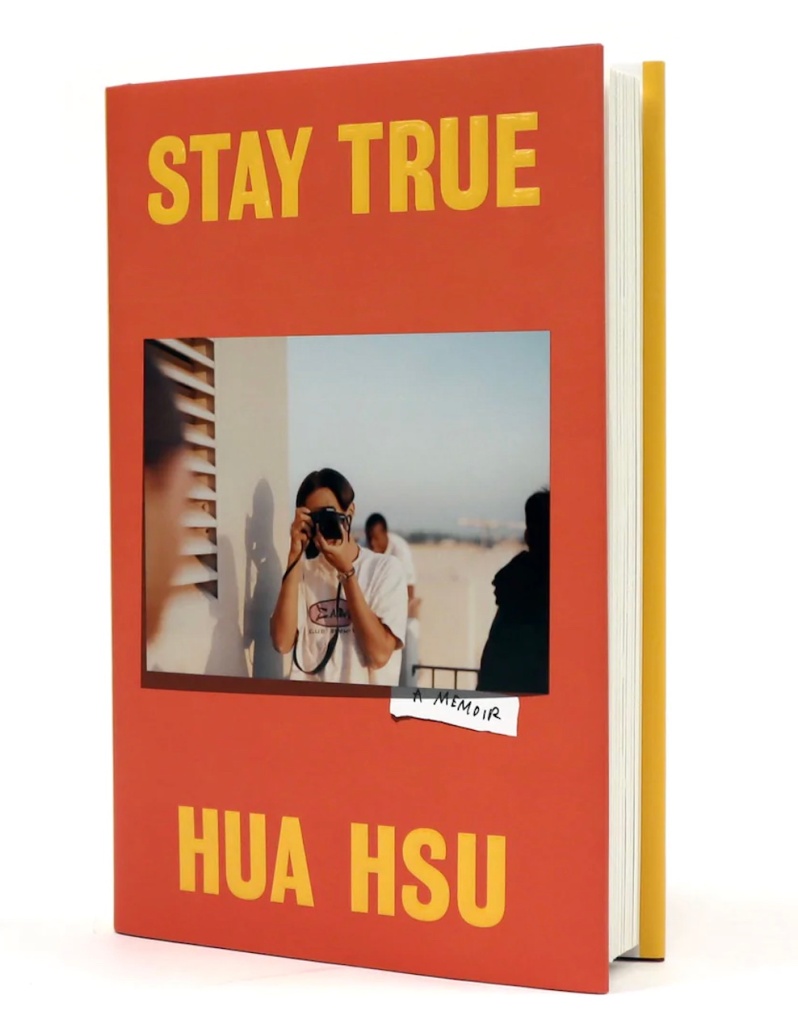
Funny how you can admire a book without fully liking it. That’s the case with the lavishly overpraised memoir “Stay True” by New Yorker writer Hua Hsu, which was named one of the 10 best books of the year by The New York Times and made book reviewers get all moist.  

It’s a baffling response to a book whose prose contains no electricity, no buzz. A book that rather lies there, dry, ho-hum and humorless. 

And yet Hsu reveals authorial gifts by showing what even a mildly engaging story can do: carry you along with raw pathos, stripped of punch and pyros. Though the book sputters at the half-way point — Hsu’s early years at UC Berkeley in the ‘90s aren’t as novel or riveting as he thinks they are — it occasionally grazes the profound with ranging reflection that delivers a spurt of substance. 

Still, missteps abound. Women, for instance, are almost totally absent for most of the book, noted in passing by first names only, granted the vaporous texture of ciphers. I don’t recall one speaking, even when Hsu at last finds a dimly sketched girlfriend.

Not even his Asian identity issues (he’s Taiwanese American), his mania for alt-music, or especially the zines he publishes pop off the page. These are exciting topics, but we’re left thirsting. While a huge fan, I find most New Yorker writing to be self-consciously restrained and prim. Staff writer Hsu suffers from a chronic case of New Yorker-itis.

But at least it feels real, which memoirs like Mary Karr’s aptly titled “The Liars’ Club” definitely do not. Which makes “Stay True” also aptly titled. (I find pretty much all memoirs to be 15-20% made up — there’s simply no way such decades-spanning reportage can be true — but that’s pulp for another blog.)

This book is about friendship and the violent loss of it and the hole it leaves. Hsu meets his friend Ken —  who’s mostly depicted as a one-dimensional cut-out — at college and they become best bros (Ken is in a frat, something initially anathema to the “outsider” Hsu). Ken is soon ripped from the narrative and we’re supposed to be crushed. 

But the loss of a character we barely knew is treated with a remove that makes it hard to share an emotional wallop. Believing otherwise, Hsu writes: “I was a storyteller with a plot twist guaranteed to astound and destroy.”

Not quite. “Stay True” misses its mark, but by feet, not yards. A few sentences jiggle with magic — “Their beats sounded like death rearranging furniture in the underworld,” Hsu notes about a rap group — and the closing passages of this slim volume emanate a cathartic warmth that’s AWOL in the gangly prose of the first 100-plus pages.

In the end, Hsu wants the truth to pierce. Here, it merely pinches. 

***

Ten books I really liked this year:

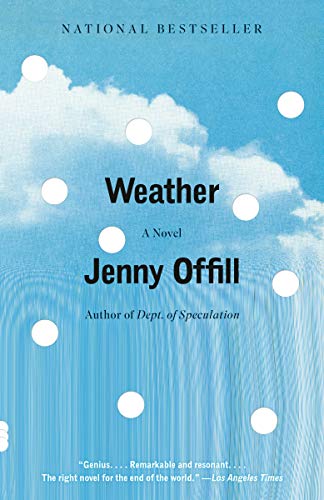
“Asymmetry” (Lisa Halliday); “Eleven Kinds of Loneliness” (Richard Yates); “The Copenhagen Trilogy” (Tove Ditlevsen); “Heat 2” (Michael Mann and Meg Gardiner); “Either/Or” (Elif Batuman); “How Should a Person Be?” (Sheila Heti); “Weather” (Jenny Offill); “Wildlife” (Richard Ford); “A Manual for Cleaning Women” (Lucia Berlin); “The Idiot” (Elif Batuman).  

The wow of Bilbao

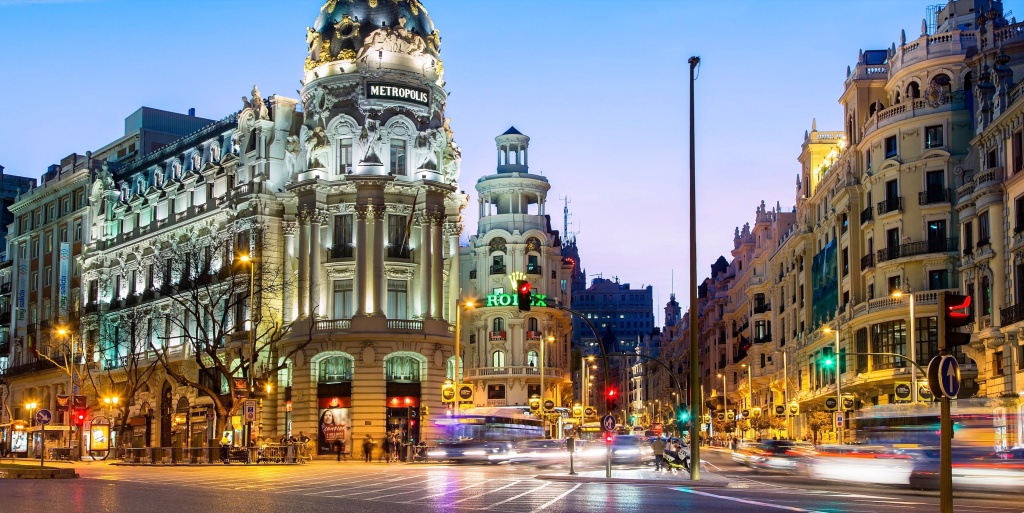
In a fight, Madrid beats Barcelona. That’s my take. I’ve been to both Spanish cities twice now — I returned this week from the capital, Madrid — and conclude that Madrid is the real charmer, the metropolis of less sprawl, less dazzle, less tourists. If it has perhaps fewer bucket-list attractions — despite the marvelous Prado and its trove of Goyas and El Grecos, and Picasso’s overwhelming “Guernica” at the Reina Sofía — it compensates in sheer street-level charisma.   

Madrid is about its distinct, vibrant, supremely walkable barrios, humming with old-world quirks and character. Tapas, flamenco, doggies, blue-chip ham that’s cured for years, wonderful locals, seductive atmosphere. There’s something more intimate, more personal, more special about Madrid compared to big chest-thumping Barcelona. Both are world-class — I do love my Gaudí — but I could live in Madrid.

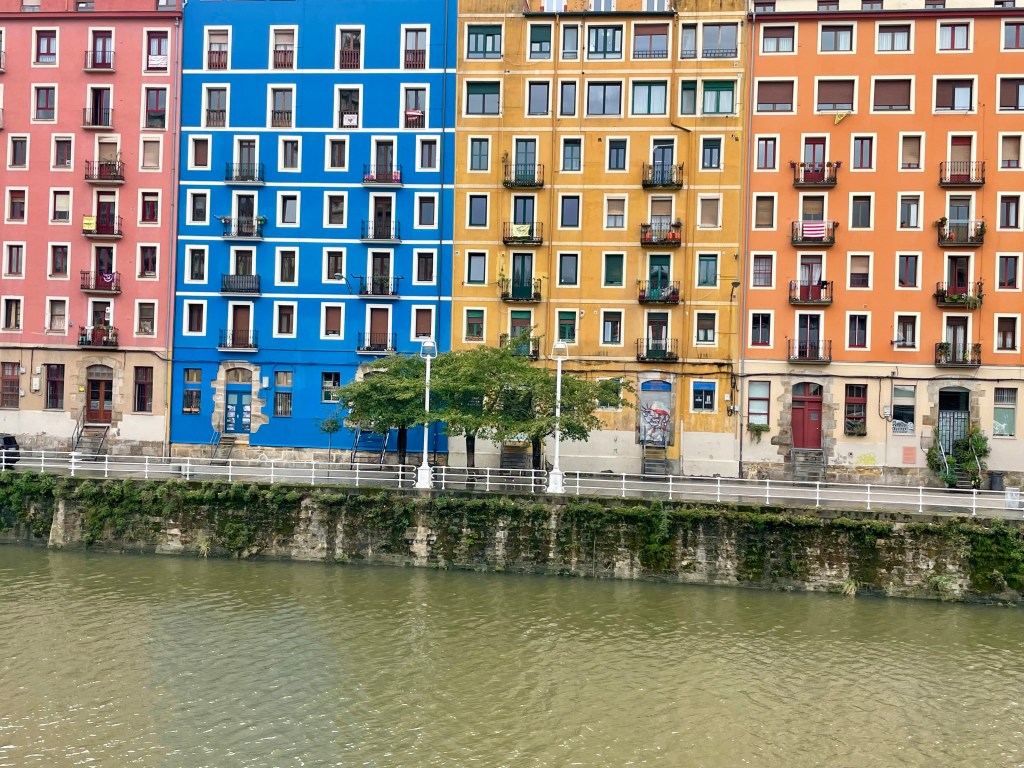
On another high note, one of my trip’s tippy-top joys was a two-day jaunt to Bilbao, far north in hilly Basque Country. If you know Bilbao, a bustling bayside city of 350,000, it’s probably because of the famous Guggenheim art museum, which is celebrating 25 years as a ridiculously successful tourist magnet.

The Guggenheim, designed with playful splendor by architect Frank Gehry, is a shimmering shrine for modern art, from Serra and Rothko to Warhol and Bourgeois. It’s a succinctly curated spread of visual greatest hits, a tantalizing survey that’s intelligently to the point. You leave filled, not fatigued. 

Naturally the Guggenheim’s star is Gehry’s woozy vessel for the art — all shiny, warped grandeur — which is not only gorgeous, but mind-boggling. How does he conjure such elaborate beauty? (Er, genius.) And how in the world was it actually built — by elves and sorcerers? It’s all so breathtaking, a fun, lavish, almost Escherian modern marvel that vaults gawkers into fits of selfie euphoria. 

Here’s a few more angles:

Louise Bourgeois’ giant spider teetering on the museum waterfront.
Inside the museum, Richard Serra’s extraordinary space-bending steel sculptures.

And some shots of Bilbao and Madrid:

Madrid flamenco. So much boot-stomping, hand-clapping, sweat-flying drama. Operatically physical.
Madrid
Bilbao
Old Bilbao
Old Bilbao
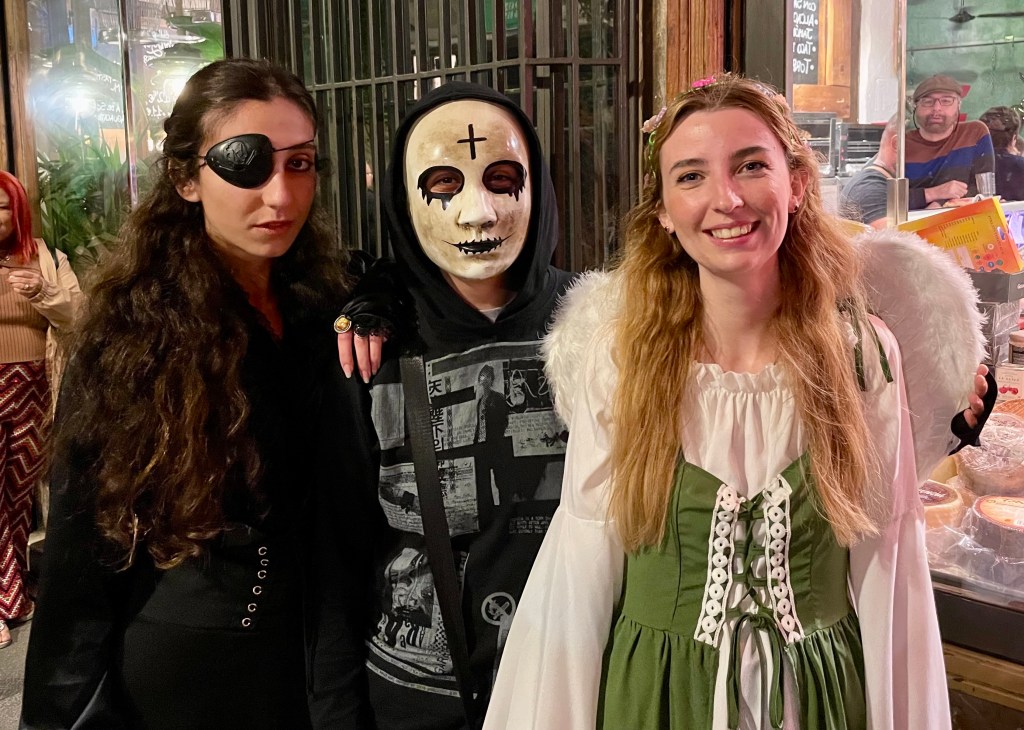
Halloweeners in Madrid (a rare sight)
Street-art dog, Madrid
Real dog, Madrid

Life, in no particular order

1. I don’t do dragons. I think they’re silly. For all their fiery tantrums and wing-flapping fury, I can’t take them seriously. Humans ride on their scaly backs like they’re horsies and fly through the sky. I crack up whenever I see that. 

So needless to say I’m not watching HBO’s “House of the Dragon” or Amazon’s “The Lord of the Rings: The Rings of Power,” big ticket fantasy orgies that by turns bore and baffle me. I don’t even know if “Rings of Power” features dragons — halitosis-impaired Smaug looms large in Tolkien’s Hobbit-verse — but I also don’t do elves or wizards, Orcs or even swords, so I’m pretty much locked out of those good times. 

But I’m not a complete dragon-phobe. My favorite dragon movie is easily “Reign of Fire,” starring Christian Bale and a bald Matthew McConaughey as gnarly post-apocalyptic dragon slayers. If you haven’t seen it, do. It’s a blast. McConaughey chews on a big fat cigar throughout. There’s fire and volcanic sludge and dragons all over the place. It’s also pretty grim. And nobody rides a dragon.

2. My brother and his wife just got back from Madrid — precisely where I am headed 20 days from now. No conspiracies, no subtext, we just happened to agree that Spain’s capital is the place to be this month, this year, right now.

What’s great is that I sent the lovely couple on a sort of expedition to scope the city, suss out all the hot tapas bars and cocktail bars, the most electric neighborhoods, what sights to see and what to skip. 

And they delivered resoundingly, finding me a better hotel in a livelier area, several hip restaurants and bars, a shrine to Goya, and a slew of invaluable practicalities. Teamwork! High five! Madrid is famous for its blaring all-night carousing. You still hear people banging bongos in the street at five in the morning. I land on Halloween. I hope it’s batshit. 

3. The ongoing saga of my misadventures in sneaker shopping — the subject of a prior post — is finally winding down. I spent the summer agonizing over what shoes to get to replace my moldered, moth-eaten collection of casual kicks. 

Halt. Mere minutes ago, after I wrote that paragraph, I ordered the final pair of sneakers I will order this year. (I hope.) Just as I was getting comfortable with some slick new Cole Haans, I stumbled on a pair of rare New Balance sneaks that I fell for instantly. Now what? I put the Cole Haans back in their box (for the moment) and clicked “Place My Order” on the New Balance. 

Which means I’ve now, since July, bought seven pairs of sneakers, an unholy sum that has me and my Visa doing barfy loop-the-loops. What else: I got another pair of New Balance, two pairs of Italian-made Oliver Cabells, a cheap pair of white Adidas Stan Smiths, and some Asics that I promptly returned. Incidentally, one pair of the Oliver Cabell shoes are all but unwearable, causing oozing blisters at each step. And it’s too late to return them. My Visa is writhing.

The indulgence is appalling. I’m no sneaker-head. I don’t collect footwear. I am not Imelda Marcos. I just need a fresh fleet of shoes to replenish the worn and rejected. If the latest New Balance are good, I will return the Cole Haans. That will mean I will own only five new pairs of sneakers. One of those causes blisters. So that means four new pairs. Not so dramatic after all. But still: really?

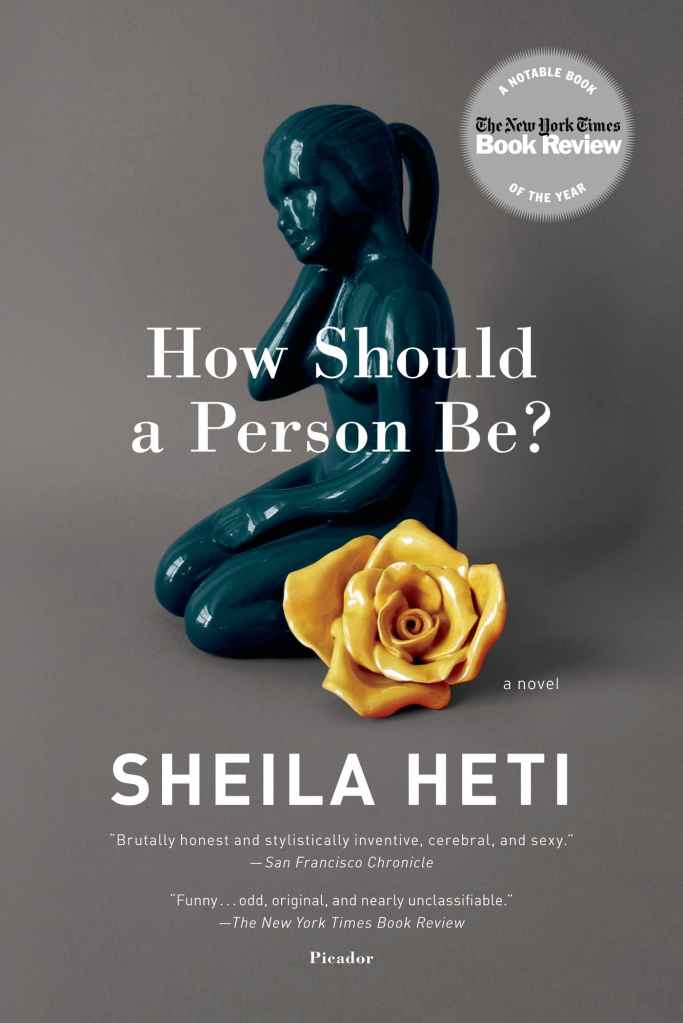
4. Next to Michael Mann’s cop thriller “Heat 2,” a brilliant, blistering, book-form sequel to his 1995 crime movie masterpiece “Heat,” with Robert De Niro and Al Pacino among other badasses, the best book I read this summer was Sheila Heti’s “How Should a Person Be?” — sticky auto-fiction that giddily pinballs through its meandering idiosyncrasies. This jagged, brainy book functions with the itchy buzz of life. It’s hilarious. Awkward. Wincing. Wonderful. Yeah, life.

Narrated by a 30-ish Heti, it’s aptly described as “part literary novel, part self-help manual, and part vivid exploration of the artistic and sexual impulse.” It happily recalls the sui generis first-person fictions of Rachel Cusk, Jenny Offill and Elif Batuman, currently my favorite writers. They kind of drop you mid-thought into their lives, then roll on from there with chatty, funny, unembarrassed realism. The works revel in their mundanity, which becomes a kind of magnificence.

Heti’s 2012 novel was named one of 15 “remarkable books by women that are shaping the way we read and write in the 21st century” by The New York Times. A bold but clear choice I wholly endorse. Heti has a new novel, “Pure Colour,” that I wasn’t bonkers about, but you might find worth a peek. For now, “How Should a Person Be?” is what I’m bellowing about from the mountaintop. (Me. Megaphone. A towering crag.)  

5. If you want to know something about me, read this tart and telling passage from Elizabeth McCracken’s new novel “The Hero of This Book”:

“Myself, I loathe having my picture taken. I have for as long as I can remember, even in the old days when you could go weeks without somebody trying. In all group shots I am not pictured. It’s beyond vanity and in the realm of superstition. I don’t like people looking at me. I don’t like being the center of attention except under very specific conditions. … I will not stop for a photo. I will not look at myself in a mirror for you. I will not watch myself pass in a plane-glass window.”

There. Now you know a bit more about me. Also, I’m not big on dragons. 

Autumn ecstasy, briefly

Summer is officially dead. Yes!

Yesterday, the first day of fall, landed with a beautiful bang — low 70s, intermittent cloudbursts, followed by the gauzy autumnal light that streaks so nicely through the clouds and on breeze-blown trees. I almost wept. Today’s forecast: sunshine and 63 degrees. The soundtrack: rustling leaves. Be still my beating heart.  

I banish sweat and sun, beach parties, barbecues and Birkenstocks. People moan about seasonal depression right about now. I get that in the spring; setting the clock forward is a ritual of exquisite distress. It was George Harrison who sang that euphoric earworm of misguided seasonal optimism, “Here Comes the Sun.” Damn him. 

Harrison, in my book, is inviolable. Then there are the real musical scofflaws, whose seemingly every tune is a cloying summer anthem, trilling about sand, surf, girls, cars and other frolicsome “fun.” That’s why the Beach Boys are the worst band ever.

Fall is when I shop for clothing, like a trio of chilly-ready shirts and a Bond-worthy waxed jacked from Barbour (on sale, natch). They’re perfect for my annual fall journey, this one to Spain happening the day before that quintessential fall-iday, Halloween. Face it: Halloween beats Easter, July 4th and Labor Day in any back alley brawl. 

I fall for fall. I embrace shorter days, cool weather, scattered leaves and natty scarves, while spurning the obnoxiousness of football and cutesy orgies of pumpkin-flavored confections. I read today there are people who suffer “autumnal existential dread.” The article said: “The melancholy we feel is a form of grief, mourning the lost sunlight, the ease of summertime, and the greenery that abounds in the warm weather.” Boo-hoo.

I pity you not. In fact I kick up my heels and do a leprechaun jig to the staccato rhythm of my own gleeful chuckles. Fall is here. And guess what? Winter, that frosty front of misery for most, is right around the corner. Bring it on. I’ve got the jacket for it. 

Paradise.

Bark! Bark! (Shush!)

Whenever the dog senses someone is at the front door he explodes in an ear-shattering commotion of vocal violence and door-clawing destruction. Deafness commences and paint is scraped off in neat vertical lines by furious, and improbably artistic, paws. 

At these times, the pup is something of a monster, a fleecy, compact gremlin with the screeching pipes of an F-16 taking off. The transformation from hound to hellion is startling, obnoxious, and comprehensively annoying.

Paint peeled off with house-guarding gusto

Cubby is a good dog. Cubby is a bad dog. He is both — say, 94.2% good, 3% bad, and the rest is murky amorality. But, Jesus, he is loud

His lightning-jag meltdowns — crack! — upend your equilibrium with the sharp jolt of a car crash. They scare the holy crap out of you. And that just pisses you off more.

It’s not unlike a child throwing a tantrum, but those horrible scenes are strictly selfish displays — look at me, gimme me what I want! — whereas what we have here are exhibitions of the dog’s innate sense of protecting his home and humans.

Maybe he gets something out of it — a shudder of heroism, a surge of purpose — though I doubt it’s a conscious ego grab. And for that I reserve steadfast respect. He has integrity.

Still, the outbursts are grating and hair-raising. Imagine a swarm of bees loosed in your living room at 150 decibels, and instead of buzzing, it’s bark-yapping. (Bark-rapping — now that would be something else entirely.) Voices are never raised at Cubby, until he goes batshit for the poor, unwitting FedEx guy. 

In a semi-controlled roar we chastise the dog: Cubby! No! Stop! Shush! And my stand-by: Shut the HELL up! (Throw in another expletive for spice, and accuracy.)

He understands none of it. The dog yelps away, scratching the door, bounding  from chair to couch, having a rousing old time. Or maybe he’s scared, or chasing attention. I visited a couple of dog-expert sites and they were oddly lame and unhelpful. (Although they did say that yelling at the dog is counterproductive. Whoops.)

Thing is, Cubby has no intention of attacking whoever is visiting, be it the Jehovah’s Witnesses or a friendly guest. When the door opens, he stops barking, tail wagging wildly, muzzle madly sniffing. It seems he just wants to mark his territory with the sonic boom of a trusty guard dog. Considering his size, this is both sweet and sad.

Of course Cubby most of the time is chill, adoring and delightfully docile. Belly rubs are his drug of choice. His joyous, jumpy greetings lift you up. You should see the old boy sleeping, nostrils fluttering, legs kicking. It kinda cracks your heart. Silence.

The beast at rest

Sole searching

Sneaker shopping — it happened. And I’m sore. I have remorse. Yet it was exciting. Like a bar fight. 

About every other year I feel the need for new kicks, specifically sneakers, or, as we called them in California, tennis shoes. 

This year is the year for new ones, as I’ve been wearing out my Stan Smith Adidas (still gleaming white and criminally comfortable) and I put aside a pair of blue Nothing New sneakers, a wincing waste, despite their reasonable price tag and the fact they’re made of recycled materials. (Specifically, water bottles.) I’m just not feeling them.

So, I am lacking. I forgot to mention the retro Reeboks I wore for a year and finally got sick of (they are fugly). And the black Reeboks that sprouted a substantial and premature hole in the toe. So, really, I am, truly, lacking.

I don’t spend a lot on shoes. Until I do. But first: I don’t. For example, those Reeboks I got sick of? $45. The Stan Smiths? $70. The Nothing News? $98. 

When I start grazing $100 for shoes, I quiver. But, as clichés go, you get what you pay for. So I am, so to speak, stepping it up. I have help. One helper is my brother, a well-connected, dedicated, sort of fiendish shopaholic. He has taste. Sometimes expensive taste. But, looking at his feet, it pays off. 

I tried shopping on my own recently, and I tanked. I came this close to ordering a pair of Adidas Sambas, then a pair of Adidas Gazelles. I was being uber-retro, and uber-cheap. Worse, I actually ordered a pair of retro-style Asics sneakers, then promptly cancelled the order, red-faced, shame-faced. 

Then my brother pointed me to a spiffy pair of New Balance that I rather immediately fancied. So I bought them. They were pricey. Like double what I usually pay. But I dig them. (And so does my dentist, who gushed about them, and assumed I was a “sneaker-head,” which she professes herself to be. That almost makes it all worth it.)

I got the bug. A month or so later, my brother showed me some kicks by the Italian-made boutique brand Oliver Cabell — I’d never heard of them either. Scanning the shoes online, I noted several compelling pairs that were unique, unusual, slick, stylish. And queasily expensive. I ordered a pair anyway thinking that will be that for a couple years.

Ha. Once I shelved the Reeboks with the hole in them, I realized I no longer had a pair of basic black sneakers, my go-to style. And there, sitting regal and righteous, were a pair of black leather Oliver Cabells that made my heart race. Now. There. We. Go.

I bought them, but it was a struggle. My brain reeled with drama and guilt. My wallet wheezed. The price, too shameful to share, is stressing me out. The kicker: I ordered them a week ago and they won’t be ready for at least two more weeks. They are “currently being made” in Italy, I am told. A little suspense with my sneakers. I really need that. 

So, for me, shopping for sneakers is more than an act. It’s a procedure, prolonged and painstaking. Like surgery. And, lately, almost as costly. I need to find a better way. I am not waiting for the other shoe to drop.