“If I had sought counseling, I might have become a more mature, emotionally well-adjusted human being. But I preferred becoming a writer.” — author Viet Thanh Nguyen

WONDERING. WANDERING. WHATEVERING.

“If I had sought counseling, I might have become a more mature, emotionally well-adjusted human being. But I preferred becoming a writer.” — author Viet Thanh Nguyen
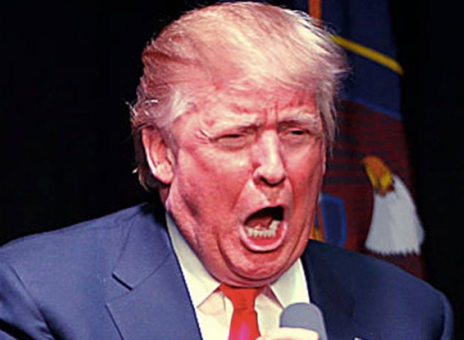
“We are tethered to a buffoon. He rages and veers, spreading ugliness, like an oil slick smothering everything in its viscous mantle. … Trump can’t think, read or reflect; he compensates with urges.” — Roger Cohen, The New York Times
“Every intimacy engenders expectation and every expectation some unknown disappointment.”
— filmmaker Hal Hartley
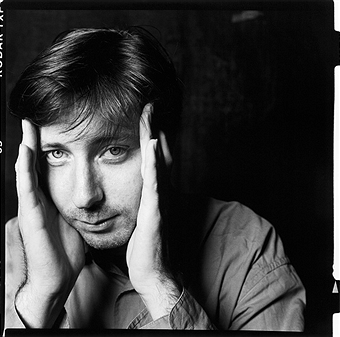
“What is the past, after all, but a vast sheet of darkness in which a few moments, pricked apparently at random, shine?” — John Updike

“He had learned the worst lesson that life can teach — that it makes no sense. And when that happens the happiness is never spontaneous again. It is artificial and, even then, bought at the price of an obstinate estrangement from oneself and one’s history.”
— Philip Roth, “American Pastoral”

A non-sports fan of the most unreconstructed order, I found this bit in an op-ed in yesterday’s New York Times so very fitting on whatever today is, some big sports thingamajig I hear people give a disproportionate bleep about (bold-faced italics mine):
(George) Orwell noted that sports faded in prominence after the fall of Rome, only to surge again in the 19th century, in England and the United States, where games became “a heavily financed activity, capable of attracting vast crowds and rousing savage passions.”
For Orwell, the rise of sports was bound up with the rise of nationalism, both of them examples of “the lunatic modern habit of identifying oneself with large power units and seeing everything in terms of competitive prestige.”


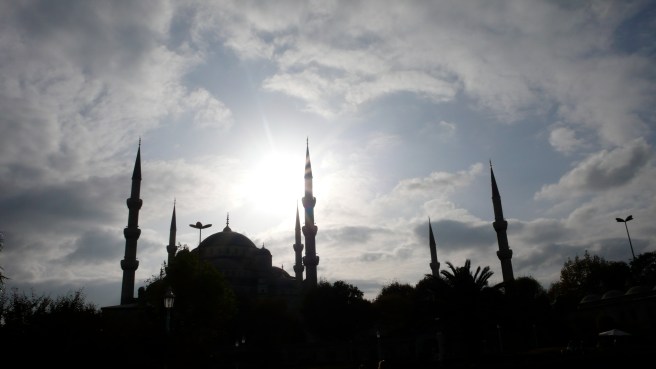
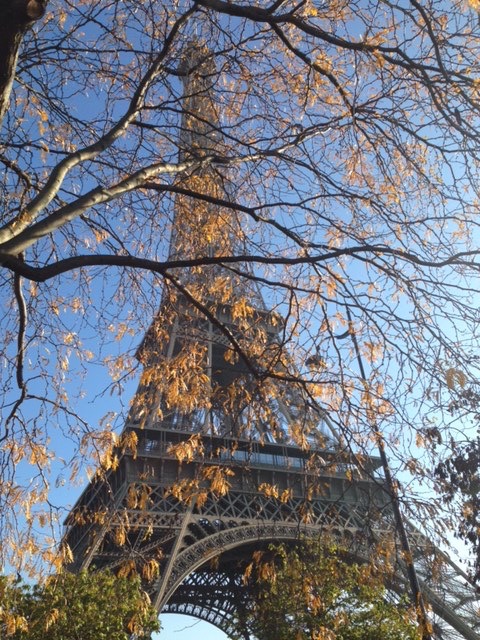
“Traveling is the great true love of my life. I have always felt that to travel is worth any cost or sacrifice. I am loyal and constant in my love of travel, as I have not always been loyal and constant in my other loves. I feel about travel the way a happy new mother feels about her impossible, colicky, restless newborn baby — I just don’t care what it puts me through. Because I adore it. Because it’s mine. Because it looks exactly like me. It can barf all over me if it wants to — I just don’t care.” — Elizabeth Gilbert
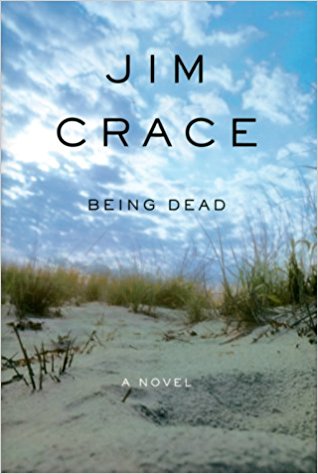
“The world’s small, breathing denizens, its quaking congregations and its stargazers, were fools to sacrifice the flaring briefness of their lives in hopes of paradise or fears of hell. No one transcends. There is no future and no past. There is no remedy for death — or birth — except to hug the spaces in between. Live loud. Live wide. Live tall.’’
— Jim Crace, “Being Dead”
These are a few quotes about the arts that I’ve carried around for a while. I believe they’re intellectual gold:
On art:
“Art, love and God — they’re dumb words, and probably the dumbest is art. I don’t know what it is, art. But I believe in it, so far.” — Damien Hirst
*
“The last hope is that art may transmute the disappointments of life into something more radiant and stable; the lasting bitterness is that although art may guide ‘what pangs there be/Into a bearable choreography,’ it does not repair the original life-rift.” — Helen Vendler, with excerpts from poet James Merrill
*
On theater and art:
“The new generation of theatergoers are suburban know-nothings dumbed down to the point of expecting art to be some kind of inclusive, fraudulently life-affirming group-grope, instead of what it is: arrogant, autocratic, and potentially monstrous!” — David Hirson, “Wrong Mountain”
*
On acting:
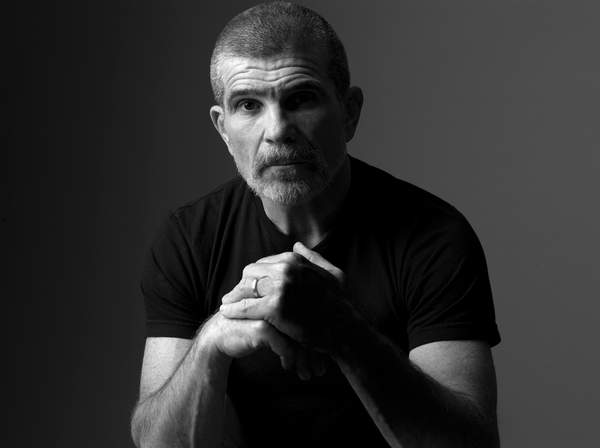
“If you intend to follow the truth you feel in yourself — to follow your common sense, and force your will to serve you in the quest for discipline and simplicity — you will subject yourself to profound despair, loneliness, and constant self-doubt. And if you persevere, the Theatre, which you are learning to serve, will grace you, now and again, with the greatest exhilaration it is possible to know.” — David Mamet
*
On writing:
“One must be drenched in words, literally soaked in them, to have the right ones form themselves into the proper patterns at the right moment.” — Hart Crane

“What writers hear when they are trying to write is something more like singing than like speaking. Inside your head, you’re yakking away to yourself all the time. Getting that voice down on paper is a depressing experience. When you write, you’re trying to transpose what you’re thinking into something that is less like an annoying drone and more like a piece of music.” — Louis Menand
*
“More than ever, critical authority comes from the power of the critic’s prose, the force and clarity of her language; it is in the art of writing itself that information and knowledge are carried, in the sentences themselves that literature is preserved. The secret function of the critic today is to write beautifully, and in so doing protect beautiful writing.” — Katie Roiphe
Today’s New York Times looks into the new movement called “antifa,” a “controversial force on the left.”
Antifa, the paper explains, is “a contraction of the word ‘anti-fascist'” and “describes the loose affiliation of radical activists who have … openly scuffled with white supremacists, right-wing extremists and, in some cases, ordinary supporters of President Trump.”
 “You need violence in order to protect nonviolence. … It’s full-on war, basically,” antifa activist Emily Rose Nauert told the Times.
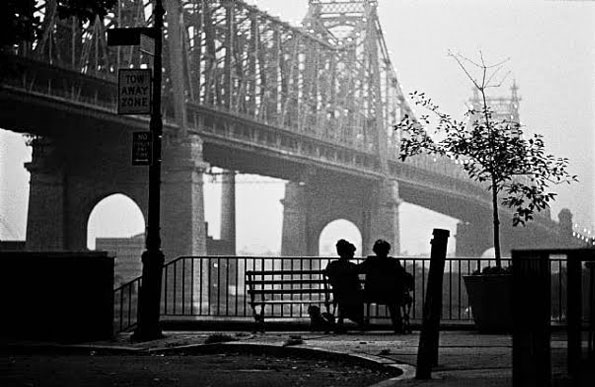
In a life imitates art moment, this brings to mind a startlingly prescient scene from Woody Allen’s masterpiece “Manhattan,” from 1979:
Issac (played by Allen): Has anybody read that Nazis are going to march in New Jersey, you know? I read this in the newspaper. We should go down there, get some guys together, you know, get some bricks and baseball bats and really explain things to them.
Man: There was this devastating satirical piece on that on the op-ed page of the Times. It is devastating.
Isaac: Well, well, a satirical piece in the Times is one thing, but bricks and baseball bats really gets right to the point.
Woman: Oh, but really biting satire is always better than physical force.
Isaac: No, physical force is always better with Nazis. Because it’s hard to satirize a guy with shiny boots.
Watch the scene here.
 GNASHING.