No baloney about Bologna

Strolling and gawking among the glass-encased medical curiosities, from a face smothered in smallpox pustules to deformed conjoined twins, I was thinking of tortellini. Specifically, tortellini in brodo, stuffed pasta curls boiled and served in a zesty meat broth. Dinner. Yes. That’s what I was thinking.

I was at the Museo delle Cere Anatomiche — the anatomical museum — in Bologna, Italy, last week, and not even the bulging tumors and gleeful spreads of glistening guts could suppress my appetite for the city’s star cuisine. 

Tortellini in all its shapes and sizes, broths and sauces, is but one of the celebrated dishes in Bologna, which is renowned as Italy’s rightful food capital, or “La Grassa,” the well-fed or, more directly, the tubby. It’s one of the reasons I chose to go there. That and twisted, amputated limbs.

And, well, pasta bolognese. And Parmesan. And the world’s finest balsamic vinegar. And, naturally, Mortadella, which would almost pass as American baloney (Bologna, baloney — you see?) if it weren’t for the spots of white fat that marbles the Italian variety, as well as the way it’s sliced, paper-thin, like prosciutto. Oscar Mayer can only weep in shame.

Tortellini in brodo. Pasta ‘bellybuttons’ swimming in hearty meat broth.

It was a foodie trip, based in the region of Emilia-Romagna in northern Italy. The area’s medieval capital of Bologna is the seventh most populous city in Italy, and a mere thirty-minute train from Florence. The region boasts the city of Parma, known for Parmesan cheese and Parma ham, as well as the headquarters for such auto royalty as Ferrari and Lamborghini.

But sports cars don’t impress me — they’re like appliances, refrigerators or blenders, no matter if they’re painted a neon-pee yellow and can go 200 mph. So I skipped them for Modena, a small city (that has a Ferrari museum) best known for opera and balsamic vinegar (and, OK, Ferrari). 

The ancient, rustic region is where I booked a long lunch and balsamic “experience” that happened to take place deep in the wintry countryside on a sprawling family estate where mom, dad, son, daughter and cousin each produce their own balsamic vinegars, totally artisanal, completely blue ribbon. To reach the marketplace, a balsamic must be officially approved in strict quality control tastings by experts. These folks pass with a neat, and humble, familial pride. 

I was with a genial group of about ten fellow travelers. We feasted. Salumi (a spread of Italian deli meats), Parmesan of various ages, ricotta, risotto, quiche and more. We drizzled homemade, world-class balsamic on all of it. There was wine, too. Stuffed, we easily got our money’s worth (about $90). A long, edifying tour of the balsamic-making process — like wine, it’s made of grapes — preceded the pig-out. Ask me about the thick, tangy, reddish-brown liquid and I could likely answer with cocky erudition. 

Back to the university town of Bologna — it was more than I expected. My hotel was a twenty-second lope to the main city square, the yawning Piazza Maggiore, the kind of history-encrusted space that has you marveling as you sip a beer at a sidewalk cafe. 

The centerpiece is the Basilica of San Petronio, a stunning slab of Italian Gothic whose construction began in 1390 (the facade remains unfinished, the slackers). I can do a full-blown travelogue here, but we know how that goes — like listening to someone carry on about their “crazy” dream last night. Really, it was mostly about the food, and a breathtaking cocktail bar, Le Stanze Càfe, designed with real ancient frescoes, where I had lovely libations as I drank in the dazzling decor. 

I will say the anatomical museum, filled with miserable disease and morbid delights, created specifically for university medical students (yet it’s free for anyone), was a highlight of my stay. Human anomalies, freak shows, mystifying medical malformations, the two-headed, the three-legged, the Elephant Man fascinate me. It’s not amusing; generally it’s appalling. But curiosity is piqued, wonder is conjured, pathos pours forth. I kind of love it.

Thing is, I might love tortellini more.

Meat and cheese plate during a food tour in Bologna. That’s Mortadella on the left.

Pasta bolognese, a signature dish in Bologna. Noodles topped with beef, pork, wine, carrots, etc. Dynamite.

At the anatomical museum. Don’t worry. They’re made of wax.

Quote of the day: Trump? Thank these numbskulls

 “In recent decades, young men have regressed educationally, emotionally and culturally. Among women matriculating at four-year public colleges, about half will graduate four years later; for men the rate is under 40 percent. This disparity surely translates to a drop-off in the number of novels young men read, as they descend deeper into video games and pornography. Young men who still exhibit curiosity about the world too often seek intellectual stimulation through figures of the ‘manosphere’ such as Andrew Tate and Joe Rogan.” — David J. Morris

Quote of the day: travel’s travails

“When I finally arrived at my door, I was thinking about the willful blindness of travel. We must forget the aches of travel — the discomfort of the middle seat and the tedious crawl at border control; the missed trains and the bad meals; the slog from the airport. You un-remember those things and elevate the happy memories because if you didn’t, you would never travel again.” 

Paris-based writer Caitlin Gunther

Pill pals

I’m an anxious person, shaky and fretful, and when anxiety gets the best of me, I pop a pill. I hold out as long as I can before grabbing the amber prescription bottle, but when the physical jitters and mental goblins won’t blow off, then it’s time for Clonazepam. Swallow, wait, ahh.

Sort of. But the meds — those sedatives, so tiny and pink they’re almost cute — can blunt the edge, like sanding a jagged thumbnail on an emery board. Magic? Hardly. Mellow? Kinda. 

I’ve blabbed about this, my fun, adorable neuroses, on these pages before. But it’s been a long time and things evolve. 

No. No they do not. 

I’m exactly in the same place I was in 2020, or, for that matter, 2010. I remain a quaking Jell-O mold, gulping pharmaceuticals to stanch dramatized grief. Get a therapist! you scream. Exactly a dozen therapists later, starting at age 13, I’ve sworn off them. They’ve been as helpful as talking to my dear Aunt Gladys, who’s deaf in one ear and has narcolepsy.

Meditation has been my most recent move. Like many novices, my frantic, hamster-wheel mind — Did I pay that bill? Should I call her? Do I have a brain tumor? — has so far derailed any quality concentration, but I’m working on it. Anything to snuff my mind’s overactive orgy of tripe and trivia.

The tiniest shard of unresolved thought can keep me up all night. So angst often translates to sheet-tearing insomnia. I will toss, turn, cuss up a storm. I finally convinced my doctor to prescribe me Xanax expressly for insomnia, as it is worrisomely habit-forming. (A previous doctor scoffed, “That stuff is crack.”) 

My sleep success rate with Xanax so far is about seventy percent, which I consider worthy of confetti and party horns. Yet when it doesn’t work, look out. My pillow becomes a cloud of fluttering feathers. I chew it. 

I take other meds for mental “stability” (insert: laugh track), but the anxiety tabs yield the most direct effect. The other ones are like background Muzak, a calm, ubiquitous hum. In thirty minutes or less, my low-dosage Clonazepam is like a mental muffle, quieting the chaos. (I’ve also tried cannabis gummies, but they just make me woolly and irrationally hungry. A whole box of Kraft Mac & Cheese, at midnight — not a good look.)

As I travel a lot, I’m blessed my anxiety is rarely a stowaway; it was never issued a passport. I’m sure that’s because I’m relieved of quotidian complaints and overblown worries, transported to a scrubbed reality. I’ve written: “In my travels, my angst all but evaporates. I am unshackled, life’s daily detritus dispersed by an existential leaf blower.” 

I don’t need the pills in, say, Paris, though I bring them along for backup in case life kicks in and I start pacing and perspiring through the hallowed halls of Musée d’Orsay. 

Who needs all this? It must stop. It’s not so easy, of course. I’m resigned to being wired this way, though nostrums like meditation and mindfulness and all that cognitive crap pave avenues of mild hope.

Meantime I have the sweet companionship of Clonazepam, itty pink pills that chirp, “It’s okay, pal. I’m here to soothe the dread and iron out life’s pesky wrinkles.”

I’ve heard it all before. Almost daily. I don’t believe a word of it.

Guzzling round the globe

“Drink well and travel often.” — Anonymous 

Read, write, gab and guzzle — those are my priorities when I hit the bar scene on my world travels. I do this often, with gusto and curiosity and, of course, thirst. 

Bars, lounges, pubs, with their discrete quirks and personalities, present windows into a country, its culture and people. Dim and cozy, they are places in which to unwind after long days of investigation and staggering amounts of relentless walking. Drop on a stool, plop into a banquette, the body at rest. Let the slurping begin.  

In my travels I become quite the barfly — using the excuse, Hey, I’m on vacation! — bopping between the dive and the divine, the joint with the jukebox, brews and “Pulp Fiction” posters and the immaculate, high-design haven where cocktails shimmer in candlelight. I won’t deny a fine old-fashioned pub. There, Guinness is god, soccer roars on a Times Square of screens and that aroma is deep-fried you name it. I smell nirvana.

Teetotaler or tippler? Dry January — keep it. This is drenched January, considering how my brother and I behaved on our recent jaunt to Hong Kong. We drank not to excess, but often, be it at a bar, a restaurant, a hole in the wall, like the Japanese-themed joint with 10 seats next to our hotel. (We adamantly don’t do clubs. We’re not teenagers.)

Drinking is a spiritual event — spirits abound. Getting wasted is far from the point and is the poor man’s demolition of brain cells and his dignity, not to mention his liver. (“The liver is evil, it must be punished.” — Anonymous) Drunk? No, just buzz me in.

I like bars that allow dogs. They’re good company and rarely slur their words. 

Soccer may flicker on screens in some bars, but people-watching is my spectator sport. If luck abides, it can lead to meeting locals and fellow travelers, which I’ve done countless times. Some of my acquaintances remain email pen pals years on. They hail from Turkey, Vietnam, France, Japan, Lebanon, India and Spain. 

I’m not the most people-ly person, but these contacts are nourishing, even edifying. There was, for instance, lovely Lina in Beirut, a non-drinker who wound up driving me up the coast of Lebanon for a full-day tour that I never would have managed on my own. No strings attached.

I’m a promiscuous sipper, be it bourbon or beer, though I prefer my cocktails on the sweet and sour side, a little sting. My brother prefers the bite of bitters and high-proof browns. Gin and tonic is my go-to, but I enjoy perusing, and sampling, an inspired cocktail menu, and quality lagers are always an option (IPAs, not so much). I had a gin drink, the Pickled Cucumber Gimlet, at the suave, view-dazzling Avoca bar in Hong Kong that featured pickles and “fire tincture.” It was delicious — sweet, sour, a zap of spice. I ordered it again.

The stylishly casual bar in the Château Royal hotel in Berlin boasts of its “artistry, dedication and genuine hospitality,” and it earns those bragging rights. My brother and I liked it so much last October, and became friendly with the servers over six days, that we even had our morning coffee on its velvet barstools.

And that’s the thing. What makes a bar extra special, what makes you yearn to go back, are the people tending it, from the wildly tattooed and the wisecrackers, to the terse, humble and the tidily dressed, who (hopefully) have an impish twinkle in their eye.

Chatting with them you learn their names, where they’re from, how long they’ve worked there, and what, if any, are their day jobs (usually it’s something admirably offbeat and artistic). And it’s a mutual, symbiotic relationship. “You wanna be where everybody knows your name” goes the song. Well, yeah.

You might think these dimly lit haunts are precipitants of mortality, death’s lubricants. I counter they are refuges of relief, little saviors on life’s pocked avenues, pitstops of pleasure, at best taken in moderation. I drink, therefore I am.

Those great bars, whose names, courtesy of coaster and cards, we always remember. And those great bartenders, real heroes whose names we always get, and always, alas, forget. 

“Drink. Travel. Books. I went broke, but I had a hell of a time.” — Anonymous 

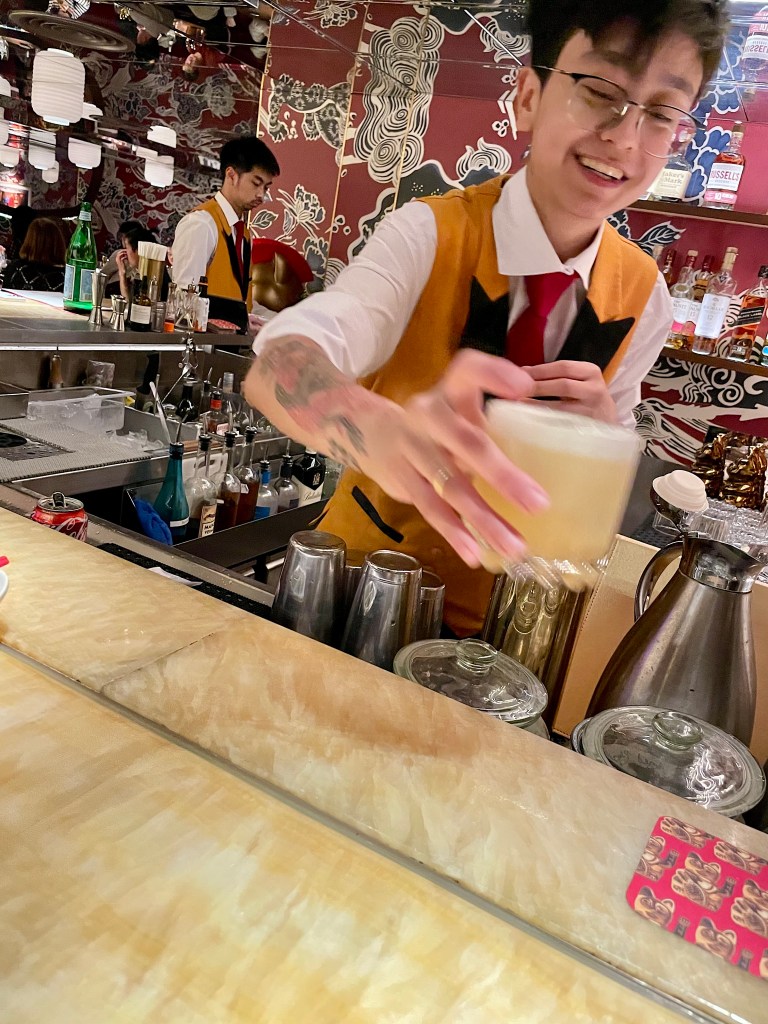
A fantastic bartender at the great Hong Kong restaurant Ho Lee Fook (a pun, say it slowly) serves me a zesty whiskey sour. She also created her own cocktail that she serves in tiny glasses gratis, a nice post-meal touch. We liked it so much, she joined us in another swig.
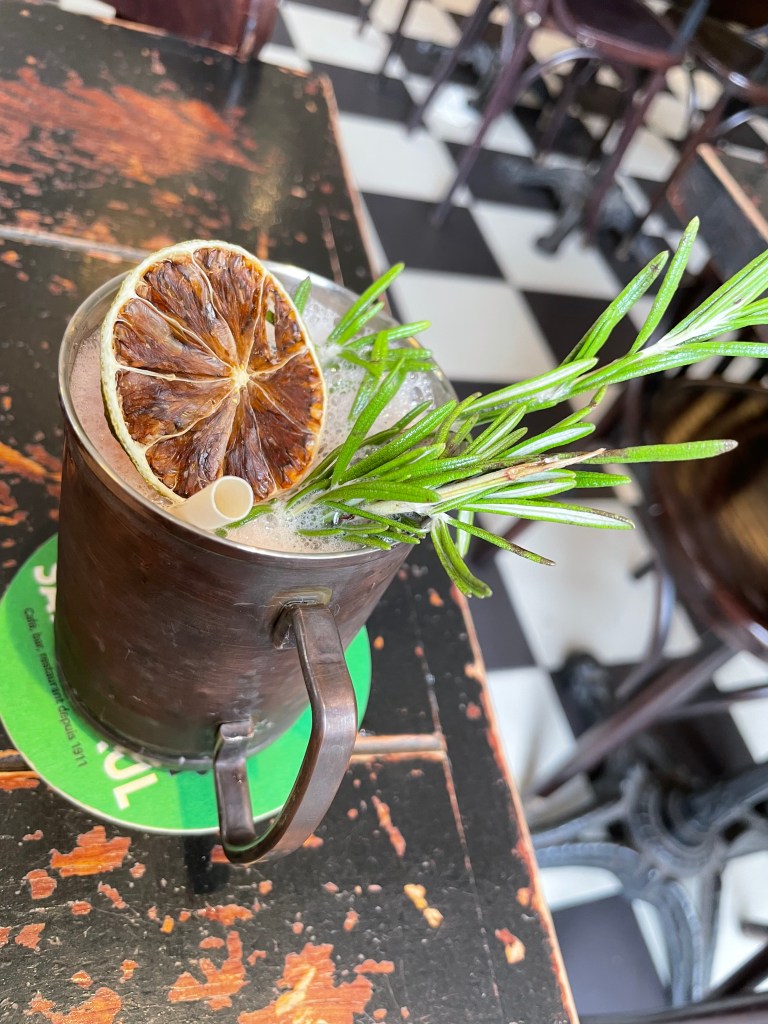
Knockout gin and tonic in Paris. A little frou-frou, but yum-yum.
Mixing our drinks at famed Italian restaurant Carbone in Hong Kong. That spread of food is the dessert cart.
Alkymya is a sublime little bar in Naples, Italy. That extravagant plate of bites is complimentary, and all the more amazing for it.
.
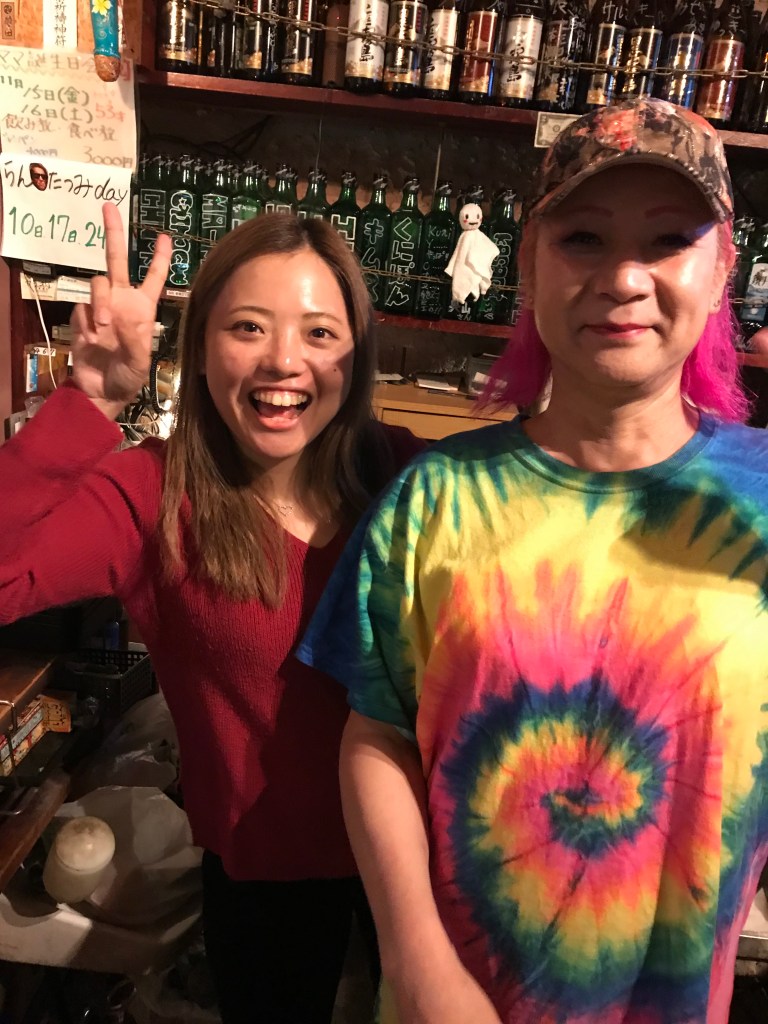
Tiny bar in Tokyo — maybe eight stools — that I haunted often. Fun bartender on the left, and the colorful owner.
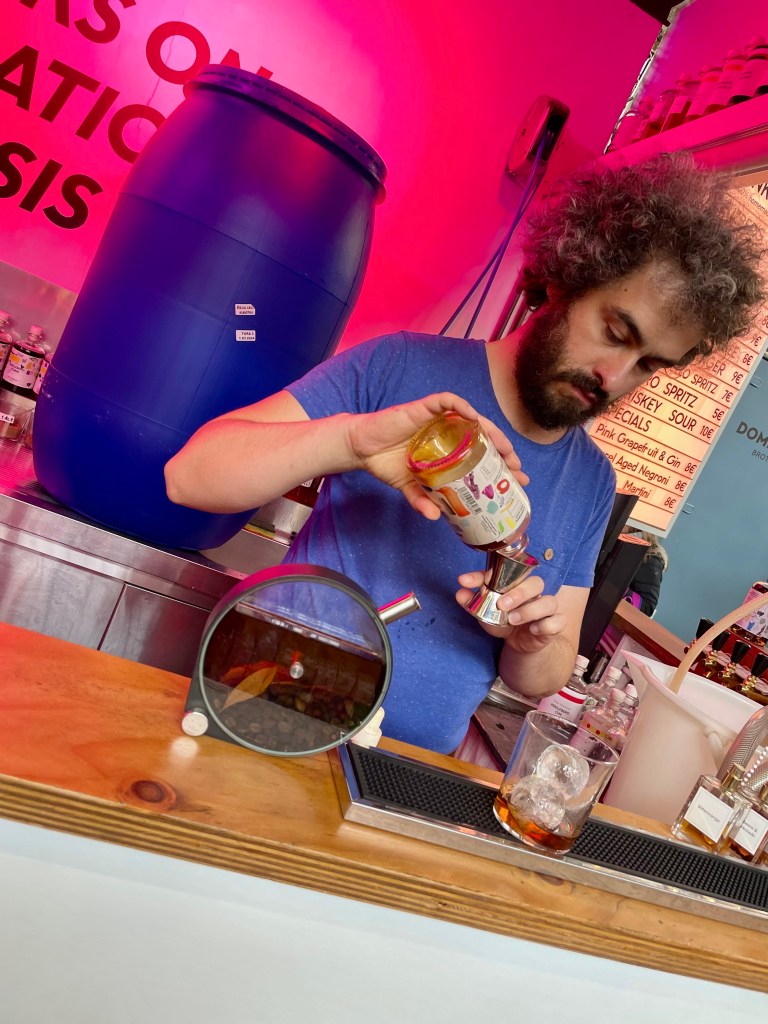
This friendly guy in Berlin makes his own top-notch gin — the name of it eludes me, but the recipe includes coffee — and he’s concocting a superb G&T for me.
At this lesbian bar in Hong Kong, The Pontiac, the signature cocktail is the Hobnail — blended Scotch, ginger, Averna, bitters and orange oil. Excellent. That what she’s making.

Wine tasting — look at the size of that “tasting” pour! — in Goreme, a small town in the region of Cappadocia, Turkey.
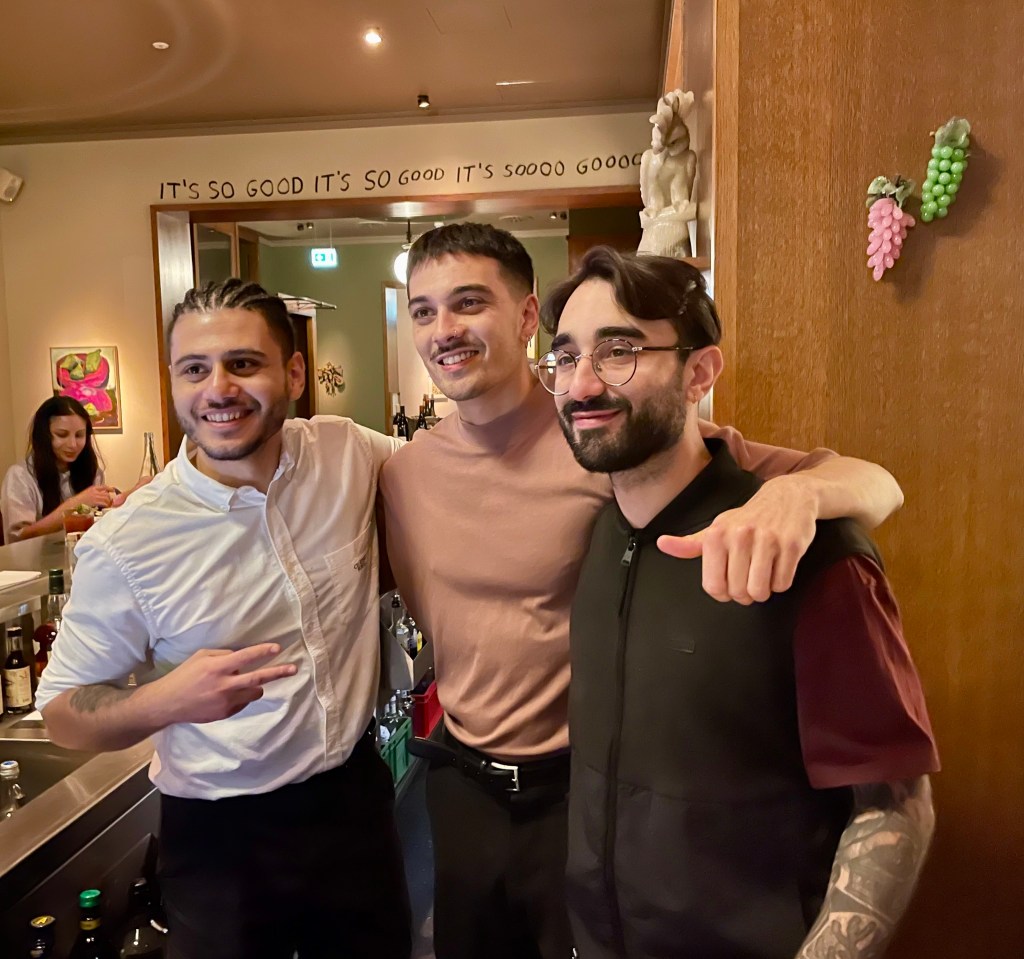
Our heroic bartending crew at the hotel bar at Chateau Royal in Berlin. True pros. True mensches.
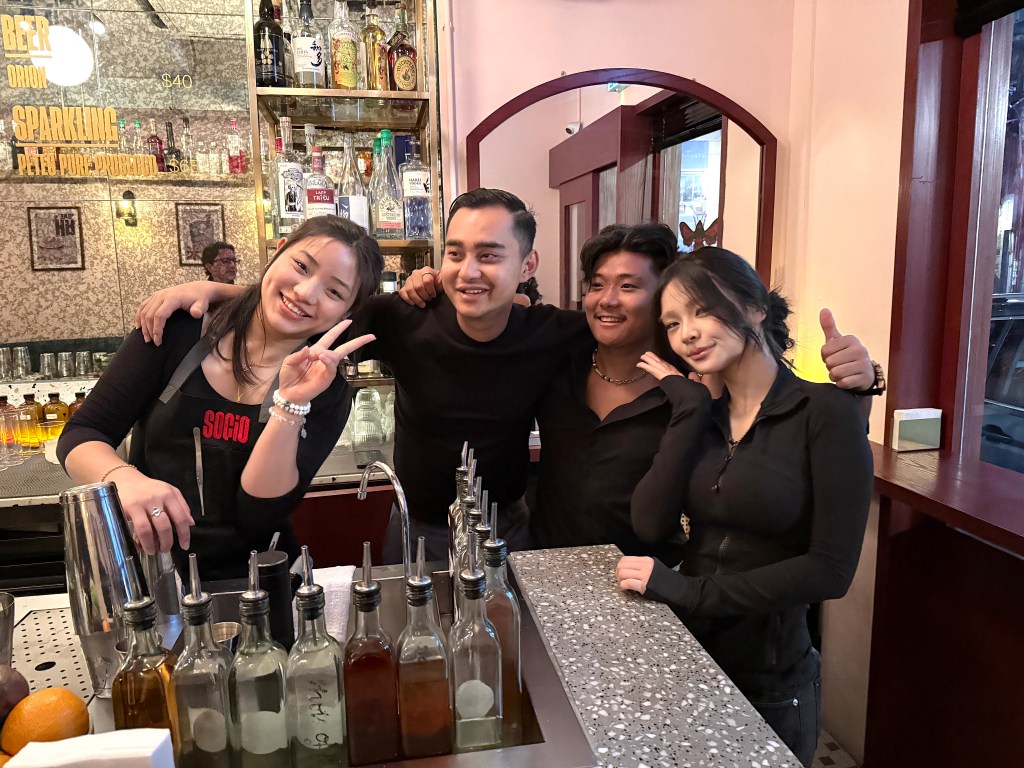
Wonderfully friendly and accommodating bar gang at the barely year-old Socio in Hong Kong, which focuses on libations from the South Pacific. They gave us a generous sample of a unique Australian whiskey when we asked about it. Great drinks, lovely people.

Very cool bartender pouring my drink at Avoca, on the 38th floor of our Hong Kong hotel. He’s only been bartending for three months. Already he’s a master.
Owner/bartender at Bar Jake in Tokyo. The tiny place is a liquid tribute to “The Blues Brothers.” It’s goofy.

Hong Kong hustle

Bustling, blinding Kowloon, Hong Kong (the only photo here I didn’t take)

The last time I was in Hong Kong it was the early aughts, swamp-butt sweltering in May and as crowded and jostling as Times Square on a swarming summer night.

Laptop open, I write this on my return to the sprawling urban archipelago, propped on my hotel bed, gazing out at floor-to-ceiling views of striking Victoria Harbor and about ten thousand skyscrapers, a glass and steel thicket that plays exuberantly off the verdant, low-slung mountains that make Hong Kong’s terrain so famously picturesque — columns of concrete hugged by lavish foliage. 

On one side of the narrow harbor is the at once lush and deliriously vertical Hong Kong Island; on the other side is Kowloon, all crackling neon bustle, where I’m staying. It’s January and a merciful 65 degrees and the colorful crowds are maddening and unbudging and beautiful. It’s a blast, really.

Politically, Hong Kong is of course a complicated place, a “special administration region” of mainland China, operating with the constitutional principle of “one country, two systems.” If you follow the news you know how that’s working out, bumpy at best. I vow not to write anything here that will rankle the tetchy government and get me deported or worse. I’m not a big fan of prison meals.

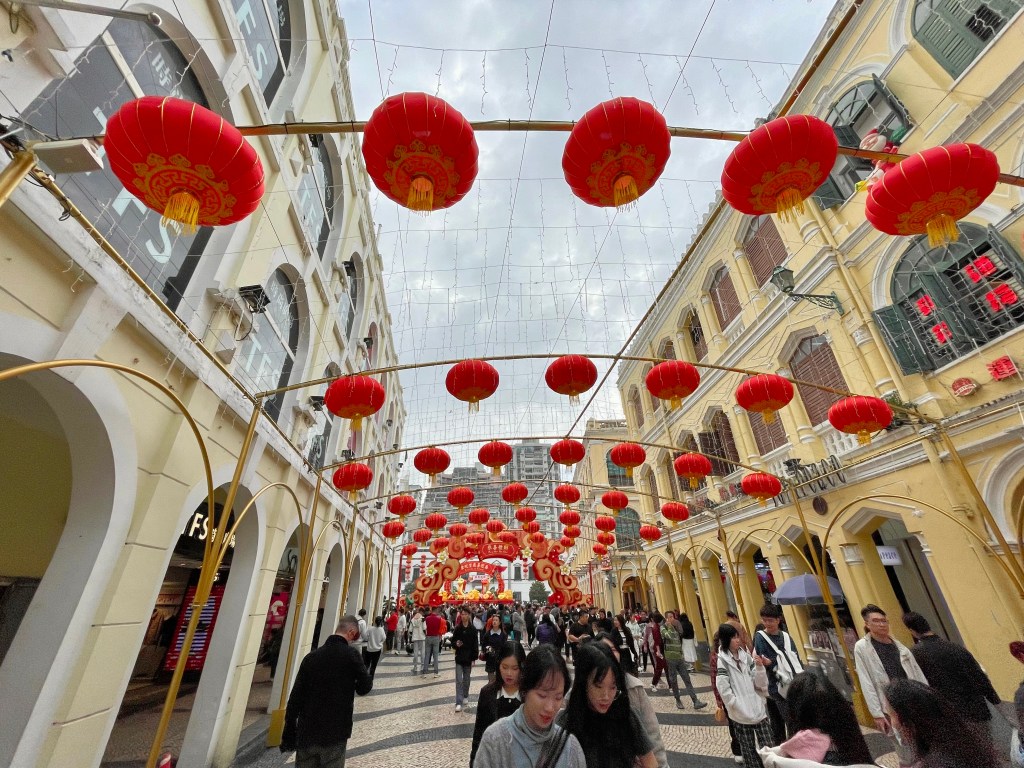
I’m on day four of six, and so far I’ve taken a six-hour walking tour of city highlights; watched the popular Wednesday night horse races at the fabled Happy Valley track; did a day trip to the island of Macau, a Portuguese territory until 1999 and, thanks to its glitzy-kitschy casinos, known as the Las Vegas of Asia; visited two exceptional art galleries and the impressively sleek Hong Kong Museum of Art; relished a private three-hour food tour with the sweet, dynamic and aptly named guide Angel who offered everything from dim sum to donuts as well as cultural and historical appetizers; and strolled the renown Temple Street Night Market, where heaps of cheap souvenirs, name-brand knock-offs, geriatric karaoke, fortune tellers, and grilled octopus and other exotic street vittles conspire for an electric buzz.

Hong Kong is curious. Its population of 7.5 million — unfailingly polite and helpful are these folks — skews palpably young; every other person looks to be between 15 and 35, though officially the median age is 46, which is young, but still. As a former British colony, English is pervasive. I haven’t spoken a word of Chinese, not even a “hello” or “thank you,” which is about the extent of my local vocabulary when abroad. 

In many ways, from the sheer human density to the boisterous food culture, HK reminds me of Tokyo. Excitement reigns. Weaving among bodies on the skinny sidewalks — many of those bodies staring at their phones — you pass shops hawking chunky beef offal, luxury bags and watches, shark fins and sea cucumbers, medicinal herbs and incense. And scads of busy 7-Eleven stores, like two per block. It’s a carnival of smells, sights, lights and humanity — especially as it’s the Lunar New Year, year of the snake — a heady, bracing brew that fuels my love of travel, my intemperate wanderlust that makes my heart pound and my feet ache with throbbing delight.

Some Hong Kong visuals so far:   

Nan Lian Garden
Dim sum beef balls
Macau island
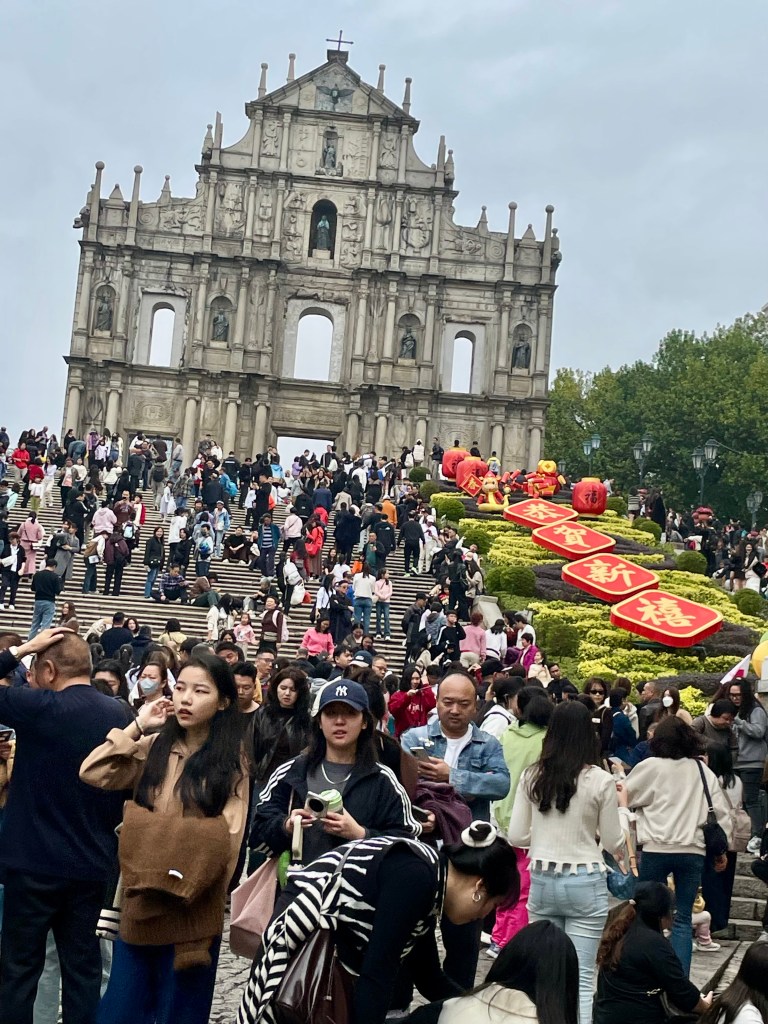
Famed Ruins of St. Paul’s Cathedral, 17th century, on Macau
View from Victoria Peak on HK Island. Kowloon is on the other side of the water.

Lighting prayer incense in Litt Shing Kung Taoist temple on Hollywood Road
Hong Kong Island’s nightly light show, viewed from Kowloon

Into the elusive mind of David Lynch (R.I.P.)

Indelible auteur, quiet crackpot, polite polymath, gentle genius, David Lynch, known mostly for his string of indescribable movies, died today at age 78. A lifelong, unrepentant chain-smoker, the artist/visionary announced he had emphysema last year, and defiantly declared he would not relinquish the pleasures of a good cigarette. And so …

In 2007, on the release of a new film and new book by Lynch, I interviewed him in Austin, Texas. This is how it went: 

Watching a David Lynch movie, you might reasonably think its maker is living somewhere deep in the clouds. Speaking to Lynch only confirms this conceit, but in a charming, even sweet way.

Lynch, creator of some of the most willfully strange, and darkest, American cinema of the past 30 years, comes across as a crypto-naif — a polite, soft-spoken Midwestern gent wearing the mantle of a sophisticated abstract artist obsessed by dark, disturbing and unknowable things. It’s hard to reconcile the voice you hear on the phone — that of a pocket-protector accountant — with the father of “Eraserhead,” “Blue Velvet,” “Twin Peaks” and “Mulholland Drive.”

But cognitive dissonance is the currency of Lynch’s weirdly wonderful, inveterately arcane body of work. Take a look at his new film “Inland Empire.” The three-hour movie and my conversation with Lynch affirm the artist’s unbending faith in the abstract. Abstraction trumps the literal, he reasons, because it gives viewers a participatory role, allowing them to unriddle the conundrums he puts forth.

Lynch refuses to plumb the meaning of his work, asking audiences to approach the films with no prior baggage or knowledge. Which makes our job simpler, as it eases the obligation to write about what the sprawling “Inland Empire” is about.

Some facts: Lynch wrote “Inland Empire” as he went. He shot on digital video for the first time, making him an outspoken convert to the medium. He pieced a lot of it from previous projects, including 2002’s “Rabbits,” a nine-part, 50-minute short featuring actors wearing giant rabbit heads. 

“Inland Empire” stars Laura Dern, who also co-produced, Jeremy Irons and Harry Dean Stanton, and features a handful of cameos. It is a difficult movie.

Lynch, 60, is on the road plumping the new film and his new book “Catching the Big Fish: Meditation, Consciousness and Creativity.” In the slight and gnomic book, the Montana native shines a light on his 30-year devotion to transcendental meditation and its scuba-like potential to let practitioners dive many fathoms into consciousness and make otherwise unavailable discoveries in the mind’s darkest depths.

This, Lynch says, is where he finds his ideas. Lynch recently began the David Lynch Foundation for Consciousness-Based Education, which is aimed at teaching children transcendental meditation, a monument to his creative wellspring.

I recently spoke to Lynch.

The long, piecemeal process of making “Inland Empire” is becoming legend. Can you explain its unusual gestation period?

Well, it was a little bit unusual, but still the same, because it all starts with ideas. I got an idea that started when Laura Dern told me she was my new neighbor and her saying we have to do something together again. Thinking about that, things started rolling out and I started catching ideas and then I would write those ideas down and a scene appeared. Instead of keeping going and writing an entire script, I saw this as a stand-alone thing, not thinking in terms of a feature film at all. We got people together and shot that scene. Then I got an idea for another scene, unrelated to that first scene.

What was that first scene?

I don’t say, because I don’t want to putrefy the experience. Sometimes when people know a bunch of things they just start thinking about that. For me, I like to go into a film not knowing anything and letting it just happen. So I was shooting scene by scene, not thinking it was a feature until a bunch of ideas came that united the things that had come before. At that point I wrote much more and we shot in a more traditional way. Everything comes from ideas.

Watching “Inland Empire” is an often jarring experience and it does feel cobbled together from totally independent ideas. You’ll be in one scene or situation, then suddenly those darn rabbit-headed people pop up again. It’s discombobulating, but I assume you have a master plan holding the logic together.

Well, everything comes from ideas. And every idea starts talking to you and somehow things get together and the whole feels correct. 

Why are you having ideas about people wearing giant rabbit heads?

Why does any idea come along? And why do we fall in love with them? Ideas that you fall in love with and think about and feel start speaking to you in a way that feels correct for the thing. If they’re abstract, you don’t always have a way of putting them into words that make the same feeling. That’s the beauty of cinema. Cinema can conjure things that can’t be said in words, except maybe by the great poets. They can stay abstractions. Many times in a film something pops up and then later the same thing pops up in a continuation. It’s the way stories unfold. It’s just the way it goes.

It sounds very organic put that way, but a critic might argue, “Yeah, you have a lot of ideas, but not all of them are thought through. You put the rabbit people in a satirical sitcom, but now what?”

I understand 100 percent, Chris. But if you just willy-nilly put things in, what is the point? The ideas start feeling correct even though you don’t know the whole story yet. A thing starts happening where the whole thing starts making sense, and it’s saying something for you, and it’s feeling correct. That’s how it goes with all the films. You may not know everything at the beginning, but you’re working on a script and it unfolds. It’s a huge gift, all these ideas holding together for you the filmmaker. And so you go like that, all pumped up with enthusiasm, feeling it and knowing it for yourself. Then you translate that through cinema and you’re rockin.’

Much of “Inland Empire” is easy to follow. Still, one might wonder what it’s about. Your official plot synopsis is just a single phrase: “A woman in trouble.”

That’s what it’s about. Obviously there’s more than that, and it’s there in the film. It’s not that I have fun not telling people things. The analogy I always say is that there are books where the author is long since dead and all that remains is the work. And you read it and the author isn’t around to ask questions of and you make sense of it yourself. To me, there’s a joy in that.

Do you mind that it sometimes seems like your ideas are vaulted in your head, inaccessible to everyone else?

No, because I think if it feels correct for one human being, chances are it can feel correct for others. When it’s abstract the correct feeling can come out in different interpretations. It’s like a long line of viewers stepping up to an abstract painting and each viewer getting a different feeling. If you wanted everybody to get the same thing you would make no room to dream. When things get abstract it’s open to whatever. Viewers know much more than they give themselves credit for. After a film, they go get a cup of coffee and talk to their friends, and before they know it they’re arguing over interpretations. All this stuff comes out, showing that they kind of internally knew (what was going on).

So you don’t mind asking a lot of your audience, particularly with the new film, which is nonlinear, opaque and a whopping three hours long? As one critic has written, it can leave an audience “baffled to the point of numbness.”

Some might feel that way, but if you talk to 10 people, all 10 won’t feel that way. It’s the viewer.

You’ve recently — and eagerly — joined the digital video revolution, and in Austin we have filmmaker Robert Rodriguez, who’s been evangelical about the medium’s virtues.

He’s a hero-champion. Digital video is a runaway train. Look at what people are taking still photos with now and you’ll see what’s happening with all of cinema. It’s digital and it’s here. There’s an opportunity for more and more people to let their voice out and realize their ideas. Freedom.

“Inland Empire” has a meta, film-within-a-film quality, echoing ideas of Hollywood, fame and moviemaking that you explored and critiqued in “Mulholland Drive.”

In a way the films are companion pieces.

That’s exactly how I felt. Can you elaborate?

No.

What are some of your obsessions? Lately you’ve gravitated to ideas about identity, split personas and parallel lives.

What I love are ideas, but not all ideas. How come certain people fall in love with certain ideas? It’s just the way they are. When you’re in love with an idea it’s such a beautiful thing. Then you know what you’re going to do and you can really enjoy the doing and translate that to a medium. It’s not like I say, “OK, I’m going to do something about an identity thing.” You get some ideas and later you realize, “Oh, it’s about that.”

In “Catching the Big Fish,” you are very generous sharing how you feel about transcendental meditation and how it’s transformed you. How has it affected your art?

One definition of human beings I’ve heard is we’re “humanoids reflecting the Being.” The Being is an ocean, unbounded, infinite, eternal, at the base of all matter and all mind. This ocean of pure consciousness, of bliss consciousness — creativity, intelligence, love, energy — is there and always has been there. It’s a human thing to learn how to contact this field and grow in it. And that means growing in creativity and energy. 

The side effect of experiencing that deepest level is negative things start to recede, dissolve. That’s like stress, anger, fear, sorrow, depression all going. So beautiful for the artist or for any human being. It affects all avenues of life, and big understanding starts to come, appreciation for things and people. It’s so important to expand this consciousness and get yourself better equipped to catch ideas at a deeper level and understand them more. 

As I put in the book, the artist doesn’t have to suffer to show suffering. Let the characters do the suffering. People say artists should suffer, they get ideas from suffering and all this. The more the artist is suffering, the less he or she can do. Real depression, real anger are a killer to creativity. So if you really want an edge, really want to do what you really believe in doing and have the power to have huge stressful situations come off your back like water off a duck’s back, just expand this bliss consciousness. The Being, this beautiful, beautiful, beautiful unified field — unity — expand that. Transcending is the only experience that utilizes the full brain.

Wow, whoa. You have your own coffee now, David Lynch Signature Cup. It seems a little gimmicky.

See, there’s the thing. There’s another expression: “The world is as you are.” There are lots of people who have their own coffee and there’s not a problem. We can do anything we want. So to put out a coffee that’s a good coffee to me is a beautiful, beautiful thing. I do love coffee, so roll it out.

Is it a special coffee; did you hand-pick it?

It tastes good to me. It’s the coffee I drink. It’s organic. It’s all fair trade. It’s a beautiful, beautiful thing.

***

Lynch on Lynch

In a game of free-association, I asked Lynch to offer a brief comment — or a single word — about some of his best-known works:

ERASERHEAD (1977): “My most spiritual film.”

THE ELEPHANT MAN (1980): “When I first heard the title an explosion went off in my brain, and I said, ‘That’s it.’ It was a true blessing to get that movie.”

DUNE (1984): “Heartache.”

BLUE VELVET (1986): “Hidden things.”

TWIN PEAKS (TV series, 1990) : “The mystery of the woods.”

WILD AT HEART (1990): “True love in Hell.”

THE STRAIGHT STORY (1999): “Forgiveness and brotherly love.”

MULHOLLAND DRIVE (2001): “A wondrous, hopeful dream of love.”

I’m dreaming of a white … well, sort of

Overnight, unexpectedly, snow fell, making for a delightful slush-fest this afternoon, one that I have to brave in order to walk the dog and neither one of us is gleeful about it, especially me, who can’t find his snow boots and must stroll in wee leather sneakers, ha ha, squish.

The snow, it’s not so bad, a solid inch and half or two, and the sun sliced through before I had to actually pull out the shovel and clear the sidewalk, the kind of toil that kills hundreds of hale men via heart attacks each year. (There’s no way I’m dying from shoveling snow. Manure maybe, snow, no.) Yet, as noted, it’s slushy out there, which beats crunchy. That stuff sticks for days and mocks you as you scrape windshields and, yes, shovel like a chain-gang prisoner.

Snow on Christmas Eve — how can you complain? While this powder is so slight that it won’t really make for the dreamy, coveted white Christmas — get ready for tomorrow’s brown Christmas — it’s still a tiny treat that shouts seasonal sentimentality. I’m getting misty already.

Friends are flung cross-country, from California to Florida, and the immediate family absconded to a Cancun resort for the holidays in order to swim and sweat. So I am, once again, a solo character in this festive narrative. It suits me well.

We opened presents on Sunday and a fine bounty was had, including a giant bottle of my beloved Monkey 47 gin, which goes down smooth if you ignore the price tag. My brother loves 19th century Russian playwright Anton Chekhov, so I got him a finger puppet of him as a stocking stuffer. It was that kind of Xmas exchange — practical and comical.  

So snow. I get it. I got it. The tree is lit. Tonight I’m going to either rewatch the classic ‘70s noir “Chinatown” (I’m reading a book about the making of it) or pop a gummy and watch “The Wizard of Oz,” which seems positively made for gummies. Cubby the dog will be my companion. And I will pour a Monkey 47 and truly have a Christmas on ice. Cheers to all.

Berlin boogie

So there we were, rambling the hip Berlin sidewalks, hopscotching crumpled cigarette packs whose contents the locals so blithely puff, and glancing at the endless walls of colorful graffiti that looks like so much bubble-lettered gobbledygook, when we stumbled on a little shop that sells porcelain pups. Yes: glazed Great Danes and shiny Schnauzers. My brother and I peered in the windows, pointing, laughing, pining. Too bad the damn place was closed. We moved on, slightly crushed. Onward.

Berlin is a beaut. It may not be the prettiest or most charismatic city I’ve been to — you win, Paris, Istanbul and Tokyo — but it is relentlessly amicable, stylish, pulsing. The city, from which I just returned, has a big determined heart, still pulling itself out of the twin muck of Nazism and Communism, that makes it both a little staid and also, wildly, weirdly, the techno-rave dance capital of the world, a pent-up human energy explosion.

It’s an offbeat charmer, animated by a vibrant polyglot and a diverse people, be it leather-clad Eurotrash, Arab falafel slingers, or well-heeled bougies and their primly groomed doggies. It presents an alluring jumble of history and humanity, culture and cuisine, with a dash of decadence and the pesky ghosts of a bleak past that’s shudderingly recent.

We spent six full days stamping the streets, alleyways, museums and squares of this relatively young metropolis, whose US-backed west and USSR-backed east didn’t reconcile till the Wall came tumbling down in the great thaw of 1989. Much of the architecture looks shiny-new, replacements for the rubble left by ferocious Allied bombings during WWII.

Berlin was also rocked by rock ’n’ roll. We took a tour of  the city’s grungy, arty, DIY underbelly in a vintage 1972 Ford Econoline van driven by the shaggy founder of the Ramones Museum Berlin, which is really just a funky bar strewn with punk artifacts. It’s cool. The tour was happily heavy on David Bowie and Iggy Pop’s ‘70s stint in Berlin, which forged a collective creative milestone in rock, including Bowie’s wondrous “Heroes.” We can be heroes, just for one day. Or, in our case, six days.

A side note: For all its diversity — the Turkish and Arab worlds exert strong stakes — Berlin has blind spots. I saw fewer than three Black people in six days, and that’s troubling and hard to fathom for a US visitor. I googled this and read that most of the Black population lives in the so-called African Quarter, an area I’m pretty sure we didn’t hit and whose existence rather unsettles. Ignorance may place me out of my depth here; facts are elusive. And yet.

And now, a smattering of visuals — alas none of those porcelain pups that so capture the whimsy, artistry and dog-love of the bounty that’s Berlin … 

Berlin Cathedral with the famed, kitschy TV tower of East Berlin

Memorial to the Murdered Jews of Europe — stark, contemplative, abstract

My bed at the lovely Chateau Royal Hotel, with mystifying skeleton-emblazoned canopy

The Tiergarten park, a 520-acre urban oasis in West Berlin, where I sipped a stein of lager in a leafy biergarten

Tiergarten

A bar I wish was open when I passed

Cafe Frieda, my favorite restaurant in Berlin, swathed in that glorious graffiti

Some of the bar staff at our arty hotel, a fantastically hospitable crew, slinging mean, creative drinks
Guinea fowl dinner at my second favorite Berlin restaurant, Eins44 Cantine

The iconic Brandenburg Gate, doing its thing, just sitting there, from the 1700s

One of my new Berlin buds

What a prick

When the needle goes prick, lancing flesh and entering my vein, I reflexively turn away to avoid the carnage. I instead picture the syringe slurping up my blood into those glass vials containing the violent harvest, which I also won’t look at, lest I get lightheaded and require smelling salts to keep me from passing out. 

That’s what happened to me as a 12-year-old sick with mono. (The kissing disease. I rule.) I had to get regular bloodwork, but my body and mind weren’t having it. Even lying down so I wouldn’t topple over, I got woozy when the nurse drew blood. More than once she had to fetch smelling salts to prevent a fainting spell. It was a spectacle, drama, like a scene out of  “ER,” pediatric unit.

I’ve gotten much better about being pricked. Getting bloodwork, as I did yesterday, is child’s play of the more mature sort. Pivoting my head from the procedure is merely habit, and if I happen to catch a glance of the needle and the blood, I’m sturdy, acting my age. I even thank the blood-tapping technician when it’s over, like he’s some kind of hero.

I’m also rather effusive to those who jab my arm with flu and Covid vaccines. It’s a thankless job, poking the skin of a nervous needle-phobe who tries to crack jokes to lower the pressure. All business, they rarely laugh. I recently got both vaccinations and thanked them like a madman, even though my jokes tanked.

Incidentally, if you ever need smelling salts, they are amazing. Perk you right up, like a cartoon character.

She’s handling it slightly better than me.