A few things hijacking my brain

During the post-holiday malaise, things poke and peck at my addled brain, fretting about the good, the bad, the grotesque …

Starting with the latter — the elaborate idiocy, the vomit-inducing venality of the so-called Donroe Doctrine, whose cutesy moniker makes me wonder: Who is he kidding with this crap? The perverted man-child is not kidding with, in his words, “my own morality,” which includes everything from ICE to Iran, a rogue’s gallery of revulsion. I pray that crippling tragedy looms in his wretched future. His crew of groveling lapdogs? Same.

On the good side, I’ve cracked a newish book that’s been called by critics “a magnificent vision,” “transcendent,” “spectacular” and “not so much a novel as a marvel.” That would be Kiran Desai’s “The Loneliness of Sonia and Sunny,” which is relatively slim for its daunting 700 pages. Yet what it lacks in girth it makes up in thudding weight. I could curl it and achieve Himalayan biceps.

I’m only on page 50 in this (let the publisher describe it) “story of two young people whose fates intersect and diverge across continents and years — an epic of love and family, India and America, tradition and modernity,” and I’m hooked. 

It’s one of those chunky novels with character/family trees for a prologue, like “War and Peace” or “One Hundred Years of Solitude,” which can trigger the scram instinct in me. I don’t relish flipping back every twenty pages to recount who’s who.

But so far, very good. Desai conjures scenes and characters with creamy eloquence and imagery as supple as a Degas. The prose is wise and true, and funny, too. I only have 650 pages to go (sound of me lifting a cinder block).

Planning for two imminent journeys — Southern France in February and, implausibly, Nashville in March — continues unabated. It’s kind of a chore, but, like cooking or Lego building, it becomes a stimulating hobby, a minor challenge with low stakes.

I’m doing well so far in this First World folly, but the fine tuning feels endless. A Nashville restaurant I booked just emailed to say, sorry, your reservation is canceled because we are now “permanently closed.” The same happened with the Patsy Cline Museum (maybe these closings qualify for the “bad” in my opening paragraph), which a dear friend hinted is better than the popular Johnny Cash Museum. Call me “Crazy,” but I’m more interested in Cline than Cash. Bummer. 

I voluntarily bailed on a street-art tour in Marseille, France, as I came to my senses that $194 is obscenely too much for a two and half-hour stroll amidst what’s essentially glorified graffiti. I don’t even know how I got myself tangled in that scam.

But I do that a lot. I plan trips with wide eyes and a growling stomach at first, and then, as the dates approach, I reel myself in and get sensible. Like, do I really want to do that whiskey distillery tour and tasting in Nashville? Well, yes. Yes, I do.

Denis Johnson’s “Train Dreams,” an exquisite novella I’ve read twice, once some years ago, once this winter, has been adapted for the small screen (Netflix) with mostly luminous results. Directed and co-scripted by Clint Bentley, the movie tells the story of a lumberjack razing towering forests in the Pacific Northwest to make way for the nation’s railroads. He marries. He has a child. Life intrudes.

Honoring the book’s ethereal touch, the movie aches to be a Terrence Malick epic: languid voice-overs, long traveling shots, fetishized natural beauty, breezes blowing through rustling trees, time-jumping episodes in place of linear plot. 

It’s commanded by sylvan abundance and the honed, minimalistic performance by Joel Edgerton, whose eerie quietude is near-tragic if well-earned. Though cast in shadow, there is joy here — family, friends, sharp epiphanies. I was moved by the story’s rich poignancy and tender humanity. It’s as delicate as a dandelion. 
Writing relentlessly

Joyce Carol Oates has written roughly six-thousand books. I’ve read one. I’m currently working on number two, a slim novel titled “Black Water.” Boy is it boring. Dry and colorless as a sun-baked cow skull. It’s not even trying to pull me in. It’s stingy like that.  

“Wonderland” is the other Oates book I read, some time ago. Unlike “Black Water,” which runs 154 pages, it’s unmistakably Oatesian, meaning it’s fat, multi-chambered and densely populated. It’s also pretty great, an epic family drama spanning generations that quakes with urgent, thrumming incident. It’s known as one of her best books and was a finalist for some big award or another. 

Oates is famously prolific. I call her relentless. Her torrential output, starting in 1963, includes 58 novels, numerous plays and novellas and several volumes of short stories, poetry and nonfiction. The novels are rarely anorexic. They are epics pushing 500, 700, even 900 pages or more. When I see her shelf in bookstores, I quietly scamper past. 

That’s why I picked up the acclaimed “Black Water”: it’s a finger sandwich next to the author’s standard ten-course feasts. A modern retelling of Senator Ted Kennedy’s infamous Chappaquiddick incident, the book toggles through time to trace a young woman’s life and death by drowning in a Toyota that crashed upside-down in a lake.

The novel purports to be a scathing statement about women who are tragically drawn to powerful men, which I suppose it is. But that doesn’t interest me, at least not right now. It doesn’t help that Oates’ breathless, jagged prose feels awkwardly stylized, hardly the case with the lyrical “Wonderland.”

A force of nature, Oates is the epitome of a writing machine, matching the creative incontinence of Stephen King. She poops out literary doorstops with boggling regularity, making her contemporaries look downright slothful. I’m not knocking it. It’s something to envy. To be so productive would be miraculous, if exhausting.

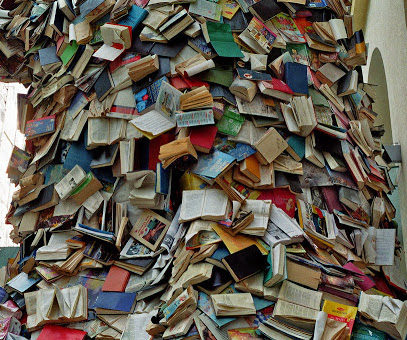
A sliver of Joyce Carol Oates’ output

But such churning industry casts a light on the idea of consistency: how many of those piles of books are really, truly good? Surely a lot, or the author wouldn’t be the celebrated bestseller she is. Yet there’s probably a mountain of misfires there, too, which perhaps dilutes such voluminous achievement. 

In a 2015 essay, King himself confronts the notion “that prolific writing equals bad writing,” citing a truism in literary criticism that goes “the more one writes, the less remarkable one’s work is apt to be.”

He’s rightfully a little defensive, having published some 60 novels since “Carrie” in 1974, including four very thick books in a single year. As a writer, King is admittedly, and unashamedly, possessed. 

He insists it can’t be helped, that once his creative ideas catch fire, there’s no quenching them. “I never had any choice,” he says. “There were days when I literally thought all the clamoring voices in my mind would drive me insane.”

That must be the case with Oates, an artist so overcome with ideas, she has to put them down before they devour her, for good or ill. Her well-publicized work ethic is austere, regimented and, yes, wildly fertile. King writes: “I remember a party where someone joked that Joyce Carol Oates was like the old lady who lived in a shoe, and had so many children she didn’t know what to do.” 

Most good writers work painstakingly — they “bleed,” as Hemingway said — which tends to produce a modest yield. Take Donna Tartt (“The Goldfinch”), who’s written three novels in 25 years. The books were smashes, and she is fabulously rich, but Tartt might represent the other side of the equation: by taking few risks, rarely publishing, can you call yourself a bold and vigorous artist?

Then there’s filmmaker Terrence Malick, who represents both sides. In 25 years, he made only three films, all masterpieces, including “Days of Heaven” and “The Thin Red Line.” Then, starting in 2005 with the sublime “New World,” he went on a tear of productivity, making almost a film a year that returned six back-to-back stinkers that he’s yet to recover from. (Let’s not even start with Woody Allen’s late, lame film-a-year output.)  

There’s a cautionary tale in there somewhere. It seems moderation — not too slow, not too fast — is the way to dole out one’s art. Still, if Oates, as the party wag cracked, “had so many children she didn’t know what to do,” I wouldn’t mind being that old lady who lived in a shoe, writing and creating and making magic by the ton, no matter how imperfect. We should be so lucky.