How ‘Jaws’ ate me alive

Today was a two-errand day. I was picking up a modern classic potboiler at the library — the one about a ginormous great white shark that terrorizes the bejesus out of a New England beach town — and I was getting my periodic pedicure at the salon. I dubbed the day “ ‘Jaws’ and claws” to amuse myself. (Mission accomplished.)

The book I got really is “Jaws,” Peter Benchley’s 1974 blockbuster that spawned Spielberg’s famous film and a million petrified beachgoers around the world. As a kid, I lived in beachy Santa Barbara when both were released, and I fantasized about flesh-shredding teeth and ominous dorsal fins to unhealthy degrees. It terrified me, and I loved it. 

First I worshipped the movie, which I saw at age 7, then I snatched my parents’ mass market paperback of Benchley’s novel and gobbled it up at age 8. I savored those pages, slashing with vivid, violent writing that helped turn me onto reading for a lifetime. 

I still own that cracked, yellowed paperback, but it’s packed away with other mementos. So, on a whim, I hit the library up for its copy. I quickly located some of my favorite passages, ones that haunted — and excited — me as a young reader.

Just like my own copy

Can you handle it? This horrifying scene is from the opening of the book, when a young woman — recall her from the movie — takes a skinny-dip in the moon-dappled ocean. 

“The fish smelled her now, and the vibrations — erratic and sharp — signaled distress. The fish began to circle close to the surface. Its dorsal fin broke water, and its tail, thrashing back and forth, cut the glassy surface with a hiss. …

“At first, the woman thought she had snagged her leg on a rock or a piece of floating wood. There was no initial pain, only one violent tug on her right leg. She reached down to touch her foot, treading water with her left leg to keep her head up, feeling in the blackness with her left hand.  

“She could not find her foot. She reached higher on her leg. Her groping fingers found a nub of bone and tattered flesh. She knew that the warm, pulsing flow over her fingers in the chill water was her own blood. Pain and panic struck together. The woman threw her head back and screamed a guttural cry of terror.

“This time the fish attacked from below. It hurtled up under the woman, jaws agape. The great conical head struck her like a locomotive, knocking her up out of the water. The jaws snapped shut around her torso, crushing bones and flesh and organs into a jelly.” 

Now, as a young boy, this was about as stupendously visceral as prose could get. (And I omitted the rest of the violence for reasons of taste and space.) “A nub of bone and tattered flesh” — I reread that line over and over, shocked, thrilled, gobsmacked. 

Even today, these opening pages stun. Getting the book at the library, I was hoping Benchley’s eloquence would strike me again, and it did. That’s why I shared some here. 

Call him a hack or a mercenary, but you’d be wrong. Benchley’s a savvy craftsman, expert at tension and thrills, not to mention a vibrant stylist with a painterly (think Francis Bacon) flair. His humans, from Quint to Brody, pop off the page even if the world he confects for them occasionally brushes pulp.

I’m not going to reread the entire novel, which is remarkably short at 278 pages, but it was fun revisiting a book that so influenced my cultural life.

Why “Jaws,” why now? Well, I’m reading an excellent new book about the history of Hollywood and the Academy Awards called “Oscar Wars,” and I’m deep in the chapter focusing on the making of “Jaws” (as well as “Barry Lyndon,” “Dog Day Afternoon,” “One Flew Over the Cuckoo’s Nest” and “Nashville” — 1975 was a hell of a year in American film.)

The lore is notorious: Making the movie “Jaws” was a prolonged ordeal and near-disaster for all involved, including a 26-year-old Steven Spielberg, who was sure his nascent career was finished. We know how that turned out.

If the movie “Jaws” remains one of my all-time favorites — in a crowded field that includes “Heat,” “All About Eve,” “Sweet Smell of Success,” “Manhattan,” “City Lights,” “Seven Samurai,” “Duck Soup” and on and on — the novel “Jaws” is more of a sentimental gem. It’s dear to my heart for reasons that go beyond art. On a nostalgic level, it has — yes, I’ll say it — sunk its teeth in me. And it won’t let go.

The reluctant bachelor

In my 30s, a pair of well-meaning coworkers nominated me for a title in a big-city glossy magazine that makes me blush even as I type this so many years later. 

The magazine was a strenuously vapid thing, slathered in food and lifestyle pap, all of it mawkishly upbeat. To attract page after Technicolor page of blaring ad copy, it was shamelessly obsessed with ratings and lists: Best Barbecue! Best Campsites! Best Burgers! Best Places to Get Off!

City magazines with ample ad revenue are like that. They traffic in pretty pictures of manicured affluence, catering to the beauty-salon and doctor’s office crowds. Without being trendy themselves — they are woefully unhip —  they try to manufacture trends. Only dingbats actually pay money for the periodical, which is so cloying, you could barf. 

That said, I admit up front that I participated in this paragon of sub-journalism. My coworkers nominated me for one of those knuckleheaded lists: the city’s Most Eligible Bachelors. I was flattered. I was humbled. I was mortified.

The magazine editor phoned me for a preliminary interview. And I blurted: no. I rejected the nomination. It was way out of my comfort zone. I wasn’t so desperate for a date. And this introvert definitely didn’t need the exposure, my bewildered mug spread next to an ad for the hottest tanning salon or 40 sparkly, smiley real estate agents.

I thanked my deflated pod-mates, the lovely Sarah and Sharon, and also apologized. I was being ungracious, but I didn’t have the stomach for it. 

My dis was apparently a big deal. Friends expressed dismay. My disappointed mother scolded me like I was eight. The topper: Ira Glass of “This American Life” called for a possible segment — man turns down most eligible bachelor nomination, how zany is that? — that, fortunately, never panned out. 

And yet, I’m only human.  

Forward a year: Same routine, but this time, for better or worse, I caved. I did it. I’m not sure why. I was strafed by anxiety. But I thought, what the hell, man up. 

During the in-office interview with the editor, I explained my job (movie critic, which I said wasn’t nearly as glamorous as it’s cracked up to be), noted my hobbies (world travel, books, film, drinks, drums), and things I’m not so crazy about (dancing, reggae). Asked the inevitable question of what I look for in a woman (sigh), I said something like someone bookish, worldly and intellectually curious (what a dope).

This is the story of someone quite bashful scraping himself out of his dark, lonesome shell. A comment the editor solicited for the article from one of my dearest friends, Courtney, included these bits: “His eccentricities are very endearing … Once he lets you in, you discover a kind-hearted soul.”

Yeah. That might be a bit much. But there I was in this glossy magazine with nine other “most eligible bachelors,” practically shaking in my boots with self-consciousness. Each of us filled a full color page, with no ads. In the photo, my head is enormous.

The issue hit the stands (and the beauty salons and doctors’ offices) and I braced for the worst. But instead: crickets. No one called, emailed, berated me, ridiculed me, asked me on a date, nothing. Disappointment? No, massive relief. 

I guess the moral of this tale is to get out of your self-defined — and in my case, distinctly neurotic — safe zones and take a chance on something new, even alien. I ate a whole cobra in Vietnam and got detained by Hezbollah in Beirut. A cheesy little spread in a city magazine is comparably nothing. Really. Nothing.  

Take a risk. It might be gut-wrenching. It might be exhilarating. Or it might be … crickets. 

Farewell, Fido

“I don’t want to be buried in a pet sematary/I don’t want to live my life again!”

“Pet Sematary,” the Ramones 

I once had a pet rat named Becky. After two and a half years of feisty play and impish scampering, tug of wars and belly tickles, she got terminal cancer and I had to put her down. I placed her remains in a decorated wooden box, dug a hole in the hard Texas dirt, and buried her in my backyard.

I repeated this ritual with three other pet rats — Phoebe, Tammy, LaShonda — and it shattered me every time. My yard became a veritable pet cemetery, a rodent resting place, and each grave should have cautioned me: Never again. I didn’t learn.

I also buried a blue betta fish named Alvy in the ad hoc graveyard. He thrived for four swishing years in a big sparkling bowl. I nestled the old man in a matchbox and set him in the ground, saluting him for his gratifying longevity. I miss the fish.

If you care one lick, laying your pet to rest is undiluted trauma. The platitude holds: pets are family, loving and adored, like hairy children who only live to their teens, if that. So integral are they to our lives, you swear they speak English and read minds. (I’m convinced Cubby the dog is really a tiny man in a dog suit. I keep looking for a zipper.) 

And so we honor them in death as in life, with a sentimental flourish and teary respect. Or at least we do in the modern age. There was a time when “people disposed of their dead pets in the river, or might have sold their bodies for meat and skin,” notes a CNN essayist. I know of modern folks subjecting their late Spots and Trixies to taxidermy, which is not only creepy, it’s selfish and disrespectful and twisted. 

Burial and cremation are popular send-offs. Barcelona, Spain, is set to open its first pet cemetery next year, with plans to carry out 7,000 animal cremations a year. Why? “Constant public demand,” they say. Barcelona is home to 180,000 dogs alone. Surely there’s just as many cats. (Rats? I bet.)

In 1983, Stephen King published the popular horror novel “Pet Sematary” about some macabre happenings surrounding a buried cat that is resurrected, or some such nonsense. The book spawned a 1989 movie (with “cemetery” also intentionally misspelled for plot purposes), which featured a cat-chy theme song by the Ramones.

The book and film helped spread the idea of the pet cemetery. And yet pet cemeteries are not some freaky esoteric brainchild of ghoul-meister King. There’s one in London’s Hyde Park, founded in 1881. New York’s legendary Hartsdale pet cemetery was founded in 1896, followed by Paris’ Cimetière des Chiens in 1899. 

About a hundred years later, I founded my own pet cemetery, at age 6, in my family’s pretty and serene Japanese-style garden in Santa Barbara. (This preceded the rat resting place by decades.) Surrounded by bamboo, moss and a statuary fountain, the graveyard contained goldfish, salamanders and other mostly water-bound critters. I’ve been at this a while.

On film, celebrated director Errol Morris made his debut with the acclaimed 1978 documentary “Gates of Heaven,” about the pet cemetery business and the souls who rely on it. It’s alive with vivid characters who are wrenchingly emotional about their dearly departed four-leggers.

Critic Roger Ebert, who named the film one of his 10 all-time favorites, wrote about “the woman who speaks of her dead pet and says, ‘There’s your dog, and your dog’s dead. But there has to be something that made it move. Isn’t there?’ 

“In those words,” Ebert writes, “is the central question of every religion.”

That pretty much says it all.

Becky the rat, at play.
Becky at rest.

Best. Teacher. Ever.

Reading the short bubbly novel “The Prime of Miss Jean Brodie” by Muriel Spark, I’m reminded of my own most extraordinary high school teacher back in California so many years ago. 

In the book, Miss Brodie is a 30-ish instructor of teenage girls in Edinburgh, Scotland, with unorthodox teaching ways that fellow teachers sniff at as “experimental methods.” Weeding out her sharpest pupils from the dolts, Miss Brodie selects six girls to be “the crème de la crème” — the Brodie set.

“Determined to instill in them independence, passion, and ambition, Miss Brodie advises her girls, ‘Safety does not come first. Goodness, Truth, and Beauty come first. Follow me.’”

Miss Brodie goes on: “Art and religion first; then philosophy; lastly science. That is the order of the great subjects of life, that’s their order of importance”

At that, memories tumble forth of how my junior year English teacher, Mrs. Lisa Condon, laser-focused on art, literature, theater, poetry and all things high culture. And how she quietly cherry-picked certain students to be her, for lack of a better word, pets — the Condon set. She knew who would soar amid her unconventional efforts and those who would muddle through a fog of half-assed disinterest.

I went to an unremarkable high school in the flush suburbs of the East Bay near San Francisco, notable for its cloying rah-rah school spirit (Go Wolves!) and outstanding mediocrity, from academics to sports (Go Wolves?). The place sort of asphyxiated your teenage soul.

But there were exceptions in the form of a few teachers — colorful, charismatic, quirky characters who jumpstarted their subjects to phosphoric life. They’d challenge with an uncompromising affection for the material and the students. To name a few, there was Mr. Church, Mr. Weigardt, Mr. Nelson and, above all, the fearsome Mrs. Condon.

Mrs. Condon — always in flowing floral skirts, straight brown hair down her back, peasant blouses, no makeup — was soft but a fierce taskmaster. She could scare the snot-nosed adolescence out of you and make you a college-poised pupil in the first couple weeks of class. Each week we had to write a long essay. They took me five hours, every time. For midterms, we had to memorize the verbatim definitions of 125 vocabulary words.

Mrs. Condon was no martinet. She was warm and human, if tightly wound. She hewed to principle. She knew how things should be done and expected us to follow. There was little room for compromise. At 32, she was in her prime. 

On that crummy campus, her room was an oasis of art, civilization, rules and manners. She was dedicated to culturing us, wiping the philistine smirks off our faces, getting the gears in our sex-addled heads whirring. We studied Picasso, Dalí, Blake, Hemingway, Van Gogh, Dante, DeKooning, even lyrics by Iron Maiden and Pink Floyd. There was so much more. My head exploded. (She later added classical music to her syllabus. I would have killed for that. She would have broken down and cracked open the glories of Beethoven and Mahler with passion and ferocious intelligence and her students would weep.)

And woe to those who didn’t keep up. Mrs. Condon kicked out a jock when he couldn’t identify the ongoing famine in Ethiopia (he was back in class the next day), and ejected a cheerleader for cheating on the weekly vocabulary test (she never returned).

An unreconstructed Berkeley free-spirit, she maintained a rebellious streak — a “Question Authority” bumper sticker was posted by her desk for all to see and ponder — and actually told me what teachers to avoid or enroll with.

Mrs. Condon was a force. None of my college professors grazed her instructional power. Working at my second newspaper job in my mid-20s, I wrote her a note to thank her for the cultural exposure, no matter how demanding, that she instilled in me. She wrote me back, warmly pleased I was still writing. 

A couple years before that, while in college, I ran into Mrs. Condon at a San Francisco Ballet production of Stravinsky’s “Rite of Spring.” It was an awkward reunion, clumsy and blushing and impromptu and all, but nice nonetheless. I can only think she chalked up my attendance as a small triumph. I hope so. 

“What were the main influences of your school days? Were they literary, political, or personal?” a character asks one of the Brodie set in the novel.

The girl responds: “There was a Miss Jean Brodie in her prime.”

I’d say the same, but in my version: “There was a Mrs. Lisa Condon in her prime.”

Dodged a bullet — for now

Health scares have a sly way of wrecking your day, your week, even your month. 

Say you’re awaiting test results, as I was this past week. Each day you wait to hear from the doctor is a kind of water torture, drip drip drip, as you check your phone and email every hour, every minute, to see what the verdict is: Am I sick, or in the clear? It’s aggravating. It’s terrifying.

For six days I’ve been lightheaded, my heart’s been racing, my stomach’s a mess, and I’ve been socked with depression and free-floating angst. I’ve been great fun to be around. Even the dog’s avoiding me.

Last Wednesday, I underwent a pretty invasive procedure to test for a pretty pernicious malady, and it took the doctor till today, Tuesday, to get back to me with results. I’ve been walking around like an anxiety-racked zombie for almost a week. 

At 1 p.m. local time, the goddam doctor called with the report: “Good news,” he said, in a semi-chipper tone. Let’s just keep an eye on it for now, he went on, come to my office for a quick chat, then go ahead with your May trip to Scotland. (Actually, he has no idea about Scotland. I just added that for cheery effect.)

Jesus Christ. I exhaled the breath I’d been holding for 144 hours and made him repeat the words “good news.” I see him Thursday. I may hug him, or bring him an ice cream cone.

The body bites. Its chances of betraying you — indeed, attacking you — are about 98.9 percent. We’re not all doomed, unless you consider dying doomed. But not all of us will be struck with dementia, MS, cancer, heart disease, diabetes, Parkinson’s, you name it. Some will croak in their sleep; some will get smooshed by a speeding autopilot Tesla. 

We live on borrowed time, and I apologize for the gloom (and the cliché). For now, though, it’s good, or at least steady, news for many of us. Rejoice. I am — well, as best as this born pessimist can. I get encouraging news, cheer, then fall back into the abyss of: What does it all mean?

Enough. Bullet dodged. For now. Let’s party. 

The Tao of Nick Cave

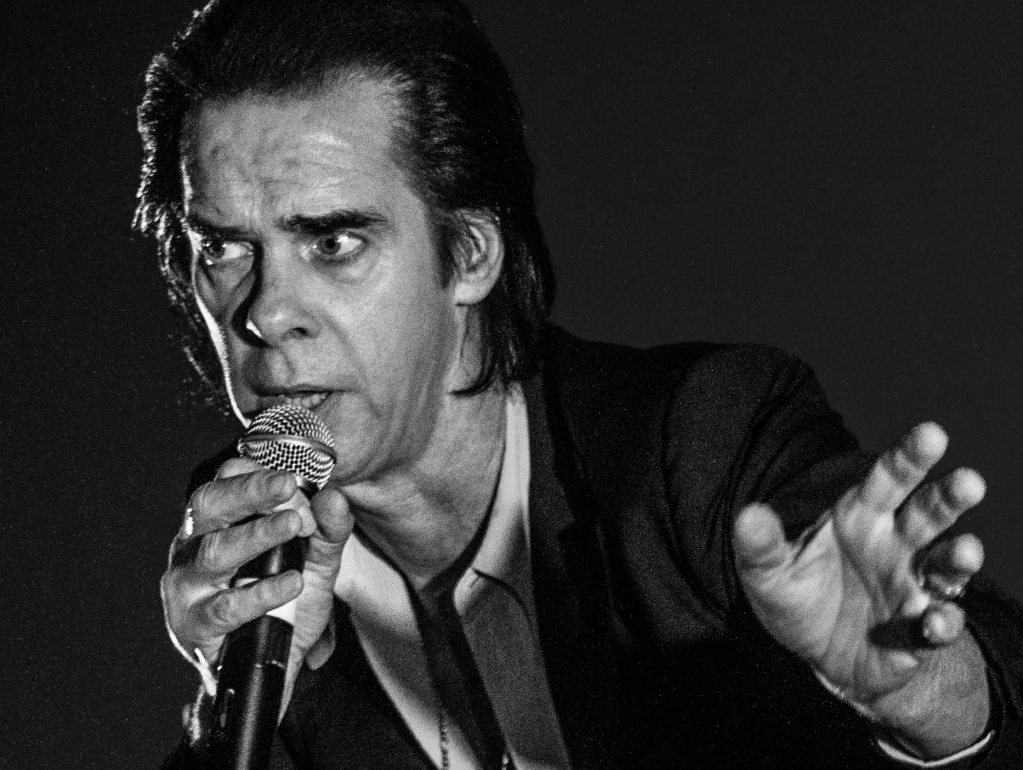
Nick Cave — Australian musician, composer, filmmaker, writer, artist, actor, all-around Renaissance man, with slick black hair and natty suits hanging off a long, pencil-thin frame — runs a sage, funny and heartbreakingly sincere advice column on his website The Red Hand Files. His counsel is so sharp and impassioned, you wonder: What can’t the guy do? I bet he can fly.

Recently, a precocious 13-year-old boy wrote in, asking this: “How do I live life to its absolute fullest, and not waste my potential? Especially as a creative. Also, what is a great way to spiritually enrich myself, in general, and in my creative work?”

I relished Cave’s response so much, I am excerpting a chunk of it here.

These are, to me, words to live by:

“Read. Read as much as possible. Read the big stuff, the challenging stuff, the confronting stuff, and read the fun stuff too. Visit galleries and look at paintings, watch movies, listen to music, go to concerts — be a little vampire running around the place sucking up all the art and ideas you can. Fill yourself with the beautiful stuff of the world. Have fun. Get amazed. Get astonished. Get awed on a regular basis, so that getting awed is habitual and becomes a state of being.”

Nick Cave — bard, baritone, Bad Seed, badass.

Raging with Roth

Last weekend, we hit a panel discussion at the Philip Roth festival in the late novelist’s hometown of Newark, New Jersey. We left it walking on intellectual air. Not smugly, but smilingly. It was heady and engrossing. Fun, funny and fascinating.

Called Philip Roth Unbound, the festival was a three-day celebration of all things Roth, from bus tours around his old Newark haunts to numerous panels parsing the formidable genius that gifted us “Portnoy’s Complaint,” “American Pastoral” and “Sabbath’s Theater,” to name some obvious masterpieces. (Need more? How about “The Human Stain” and “Everyman.”)

Our panel was irresistibly titled “Letting the Repellent In: Philip Roth and the Art of Outrage” — right up my twisted alley. A short description from the festival: 

“[A] panel on the cathartic power of discomfort. With each new novel, Roth predictably delighted and shocked readers with his frank depictions of human frailty and immorality. No aspect of behavior was spared his withering critical eye — sex, gender, race and religion were all fair game.”

I love it.

The panelists, all novelists, were a youngish quartet of publishing stars, award winners and best-sellers: Ayad Akhtar, Susan Choi, Gary Shteyngart and my personal favorite, Ottessa Moshfegh. They comprised a supergroup of sizzling hot writers, gathered to chat up Roth, his transgressive themes, techniques, cultural impact, and personal influence on each writer. 

I won’t recap the 90-minute discussion, but I will say that Choi was supremely poised and verbally chiseled; Akhtar, as moderator, navigated the discussion with shrewd erudition; Shteyngart labored to entertain with cussing and comic schtick, including some mugging (he was often very funny); and Moshfegh, coming across as a cerebral introvert and a smidge neurotic, was refreshing in her sometimes spacey reflections. 

To be surrounded by diehard Roth fans was heartening. Too often I feel that Roth is marginalized. He’s either too dirty, too angry, too offensive or too smart. His books aren’t easy; they are verbally dense, lashed in skeins of urgent ideas about life, marriage, love, sex, Jewishness, morality, death, politics, art. They are mean, unsparing, philosophically violent, crude, passionate and hilarious.

Few writers — Saul Bellow is one — could graze such dazzling complexity, that Rothian exuberance, that volcanic, (sometimes literally) orgasmic prose. “American Pastoral” (1997) is one of my top two favorite novels. It sucked my breath away with its relentless moral and artistic propulsion. It should be banned by sheer dint of how good it is.

“Sabbath’s Theater” — described by one critic as “Roth’s coarsest, frankest, and most exhilarating novel, showing off Roth’s linguistic verve, and his unparalleled ability to stare unblinkingly into the psyche of a depraved scoundrel” — is mandatory reading, a master text of style, for anyone pursuing the art of fiction. (I’m about to read it again.)

Roth died at 85, in 2018, without winning the Nobel Prize (though he received many awards, including the Pulitzer). In later years, he was regularly shortlisted, but was likely too incendiary for the milquetoast committee. Every October I would check the paper to see if it was his turn, then throw it down, crushed, livid. Bellow won it in 1976. Faulkner in 1948. Toni Morrison in 1993. Roth would fit right in that company of trailblazing masters. 

Maybe he was just too much much. Roth fans are zealous and jealous, and to see the capacity crowds at the festival, chatty and excited, reminded me the great one lives on. Or at least his challenging ideas and coruscating wit live on. We at least have that. 

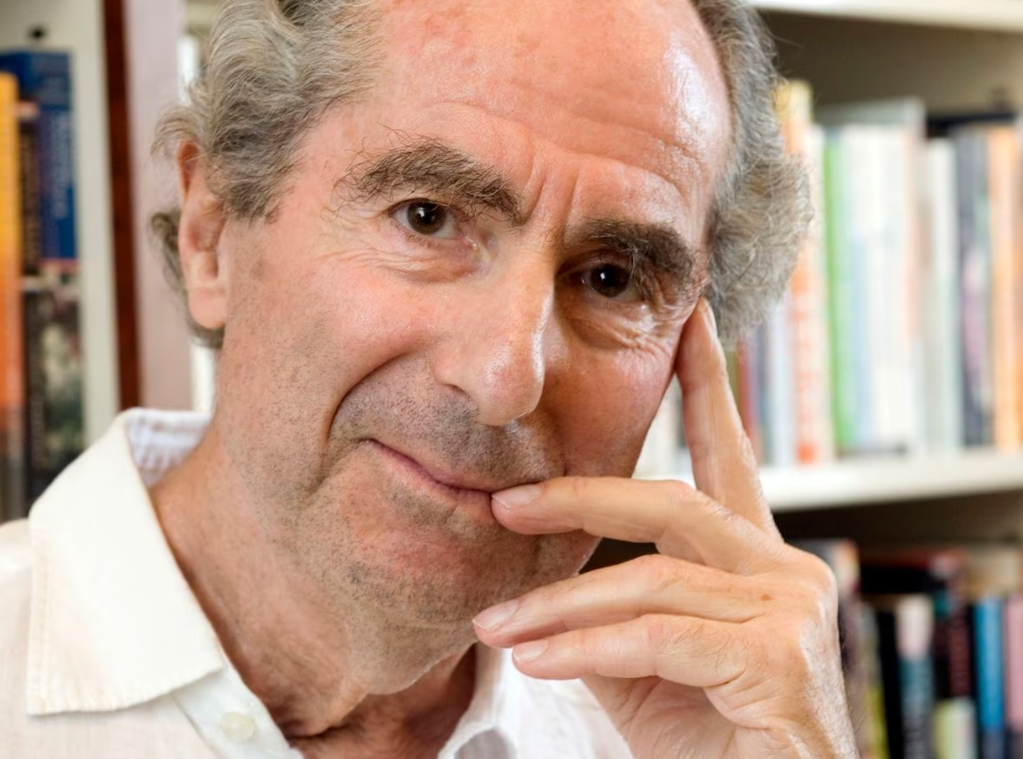
Philip Roth. Such a dirty, furious, brilliant mind.

Gene Simmons and me

Recently, while sifting through thousands of old photos left behind at my late mother’s home, I came across a shot of me on Halloween, age 11. At that time, I was a fanatical follower of rockers KISS — lustily, irretrievably, hoarding trading cards, t-shirts, records, temporary tattoos, magazines, posters, all of it. 

For shits and giggles, I present to you my tween attempt to be KISS frontman/demon Gene Simmons: 

The real deal.
Me. Hey, I tried.

Kilt me now

I’m trying, I really am. 

I’m trying to get super excited about Scotland, much as I tried a year ago to get jazzed about Ireland. 

We know how that turned out: I bought a flight to Dublin only to exchange it a week later for a flight to Paris. It was after I studied the destination with a flea comb, burrowed into my research, only to arrive at the great existential query: What am I thinking? (I ask this frequently in my life.)

I’m sure Ireland is splendid, despite the fact that pubs, pubs and pubs are invariably named the top experience in everything I read. A friend just returned from Dublin and said it’s terrific — for two or three days. Then you run out of things to do. At that point, of course, you rent a car for the verdant countryside and … yawn, you lost me. 

I’m an urban traveler. I seek culture, cuisine, cobblestone. Art, edifices, bustling humanity and idiosyncratic neighborhoods. I also seek cool climates — I’m done sweltering in the tropics — for summer travel. Last July I went to Buenos Aires to, among many reasons, escape our heat. I slipped on my jacket each day with a big grin. 

And so, Scotland. I’m eyeing a May trip to the capital Edinburgh and Glasgow, the largest city in the country, both of which brim with museums, castles, street art, music (here is where I make peace with bagpipes), hearty food (do I dare try haggis?) and, a-ha, whisky. May weather hovers in the mid-50s and below and I’m already happily shivering.

Like Ireland, Scotland is comprised of highlands, lowlands, islands, cliffs, crags, rolling pastures and billowing grass. It’s lousy with forts and castles. It doesn’t look like I’ll get into all that, though I might be whisked away on a day trip. I probably should.

Maybe I’ll spot Nessie, the wondrous Loch Ness Monster, and hitch a ride on her mythical scaly back through the chill waters. (As a kid, I used to love Nessie, that bashful and elusive lake dinosaur. I thought she and Bigfoot should get married.)

I am a wee nervous about the language, specifically the knotty Scottish brogue, which contorts familiar English into musical pretzels and thick-tongued tootles that leave some of us wincing with incomprehension. I once worked with a native Scot named Alan Black and I couldn’t understand a damn word he said. We got along swimmingly, but I’m sure I missed 60 percent of what he was telling me. 

This worries me, the rogue brogue. I’ll be made the fool by cheery locals who will snicker at me between sips of lager and Glenfiddich, doing spit takes. I’ll be the dumb American carrying around an ear funnel, going, “What’s that, mate?”

I can do this. The more I excavate, the more Scotland attracts. I’m thinking seven days between the two cities, yet there’s more to explore. The trip could get longer, epic, out of control. It could go from a jaunt to a journey. I like that. (Cue: “Loch Lomond.”)

Am I sure about this?