Biting into a tangy ‘Cherry’

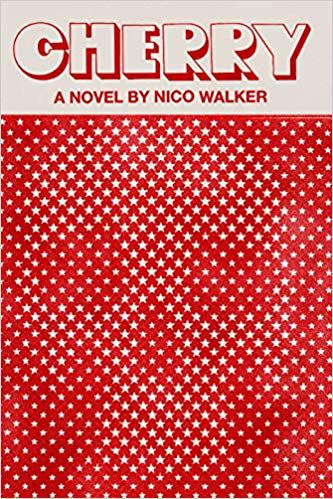
The novel I’m reading now, “Cherry,” is gritty, witty, dirty, funny, grim — and marvelous. Compulsively readable, the rollicking fiction introduces in debut author Nico Walker a natural dynamo equipped with a dazzlingly fresh voice that has a compelling, troubling croak in it. It’s scratchy, a little hoarse, and it sings with a hard rock crunch. 

Almost universally acclaimed, “Cherry,” out this summer, is tough, streetwise and gruesomely war-torn. It is ugly, scabby — drugs, crime, graphic combat violence — yet lovely still, bristling with heart, candor and raw youthful love that throbs unvarnished truth. What emerges is a pungent, probing snapshot of America today, what has been dubbed “(perhaps) the first great novel of the opioid epidemic.”
61wgnjuctll-_sx331_bo1204203200_.jpg

I’m just over half-way into it, so my take on the book isn’t fully formed, but early impressions beguile. Walker traffics in autofiction — like his narrator/antihero, he was a 20-year-old medic in Iraq, pulled bank robberies and battled a heroin habit — so he knows of what he writes. (Walker, 32, boasts a remarkable backstory: He wrote “Cherry” from prison, where he remains.) 

“‘Jesus’ Son’ meets ‘Reservoir Dogs’ in a breakneck-paced debut novel about love, war, bank robberies, and heroin,” notes the publisher.

So far the narrative sizzles with combat action and battalion buffoonery among low-level fuckups, not the slick, seasoned pros of, say, “The Hurt Locker.” The war reportage is colloquial and harrowing; the prose lean and sinewy and almost drolly unsentimental. 

“Cheetah was driving. Cheetah was a shitbag. He was big into Faces of Death and what was almost certainly child pornography. He would buy all the stupid gaudy knives the haji shops sold and mount them on the plywood wall above his bunk. He was driving that morning, and I thought it was stupid since he wasn’t even a grunt. He was the lowest ranking of three supply POGs in the company, and he wasn’t even good at that because he kept getting himself Article-Fifteened for being a moody knife-pulling shitbag.”

Walker’s “language — relentlessly profane but never angry — simmers at the level of morose disappointment, something like Holden Caulfield Goes to War,” says The Washington Post, accurately.

The protagonist’s romance with a girl back home leavens the drama at this point in the novel. Yet meanwhile there is this: unflinching combat that seems as vital to the story’s realism as any of it, and with which I will leave you. Hang tight:

“I said, ‘Where are the casualties?’ He said, ‘They’re all dead, you fucking asshole.’ I looked again at the body of the gunner. He was burned away, scrap of IBAS clung to his torso, legs folded up, femurs and tibias and fibulas with black tissue, arms melted, body eviscerated and lying on its guts, face gone, head a skull. The smell is something you already know. It’s cooled in your blood. The smoke gets into every pore and into every gland, your mouth full of it to where you may as well be eating it.”

No matter how horrible that passage is, it feels strangely and totally essential. “Cherry” is like that: so uncompromisingly true, it rattles you awake.


Ode to a wondrous hair explosion

It was like a solar event radiating from her head, explosive yellow curlicues twirling and boinging into the stratosphere. Flaring, flaming, the bleached helixes formed a magnificent afro that any ethnicity could pull of with high-fashion finesse. It was positively Kaepernickian.

This vision appeared today in a cafe and I oddly did not see the woman’s face, just the back and side of her head. It was plainly a woman, but I have no idea if she was white, black, brown or what. I stared at the flaxen shrubbery from behind. Its corona of frizz entangles you, startles, transfixes. 

edfef30baa823b90dcbebb4aee0c907b--blonde-selfies-girls-selfies.jpg
A lot like this.

It’s so loud, so brash, it’s like a bulletin, a manifesto, a mission statement. Hair, like clothes, is like that: It’s an articulate communicator, revealing much about a person, like the choice of your car or your dog does. It says This is me, and quite a bit more. 

What this gigantic yellow afro says is: YES DAMMIT!

If you want a piece of that, you can buy the big ‘do for $19 from Amazon:

Unknown.jpeg

But that tilts toward offensive, never mind the repugnant artificiality of it. 

I like what I saw, the real deal, the brazen authenticity and screw-you audacity. I like the sheer follicular electricity, all zap and fire.

All packed with nowhere to go (yet)

I’m ready to skedaddle.

I am going to Turkey and my prep-work is a whooshing blur. Look out — I am a trip organizer extraordinaire, a whiz-bang packer, planner and non-procrastinator. I am completely prepared to go to my next destination, namely Istanbul, with a two-day sidelight to the south in Cappadocia. It’s time. I’m ready. Let’s go. 

I’ve booked my round-trip flight between home and Istanbul, and the same for Istanbul and Cappadocia. Reservations are made for three hotels, seven dinners and a chi-chi culinary tour that ambles across both sides of the city, the European and Asian. 

I know where I’m renting a motor scooter in Cappadocia, and I know the price. I’ve purchased and printed my Turkish tourist visa. My passport and credit cards have been photocopied. I’ve selected the book I will take for in-flight reading. And I have procured provisions: No Jet Lag tablets (self-explanatory), Emergen-C immune boosters and a few airplane-size bottles of booze for the red-eye flight to Turkey.

In my head, my wardrobe is totally picked out and as good as packed. I am, I think, more than ready to walk out the door.

I leave in two months.

My readiness is ridiculous. I’ve accomplished all of the above in little less than two weeks since I bought my airline ticket. I book my flight. And I pounce. 

Yet I am not rash and hasty, though I have been on occasion in the past. (I still rue that musty, doll-house-size hotel room in the Latin Quarter. Refund!). I stay up late, often into the wee hours, researching and cross-referencing restaurants and hotels, poring over various reviews.

IMG_1163Budget is always a factor. Quality is too. Email exchanges with tours, eateries and hotels are voluminous. Like a bulldog reporter, I ask pointed questions, suss out better deals, dig for the best room and best price. Don’t hustle this hustler.

I have done this many times. I’ve had practice. Hire me for your next vacation. In a hair-whipping whirlwind I’ll have you booked and vacuum-packed in less time than it takes you to notify your credit cards that you’re leaving the country. (Yes, I’ve already done that, too.)

I’m sure this all appears quite anal and neurotic. And, dammit, it is. But it’s also the breathtaking, otherworldly efficiency of a luxuriantly bearded wizard or a dancing magical elf. I rule.

My brother and his family are going to Spain for Christmas. I see them straining, huffing, puffing, doing the rich, rewarding work of travel planning. Some of that includes reading books about their destinations that aren’t city guides. (OK, I still have a book about Turkey I need to read before I go: “Crescent & Star: Turkey Between Two Worlds.”)

I’ve assisted my brother a little using my almost eerie aptitude for travel research, helping him locate hot restaurants and the like. But four months out, they’re on the ball, doing great work.

My work, as thoroughly noted, is all but done for Turkey. I have two months.

Two months.

Now what do I do?

Drinking outside the box

Summer’s steamy curtain call is almost here (woo-hoo!), but we’re still in a light wine state of mind. Rosé is our go-to beverage in the seasonal swelter — with citrus-laden gin and tonics right behind — almost like sody-pop for the kids: refreshing, quenching, yet still retaining that sneaky bite adults crave (and sometimes require).  

These days we’re getting our rosé from a faintly unorthodox source: We’re drinking from a box. They call it bag in box wine, or simply boxed wine. Either way, you extract a plastic nozzle or spigot from a cardboard box and wine spritzes from it, or more specifically, from a shiny bag inside the box.

It’s resplendently dorky.

And yet …

w5254575tf_1.jpg

After a period of snooty ignominy, boxed wine is back in vogue, shorn of shame and stigma amongst those who know a good deal and, yes, a good wine. Excellent boxed wines abound, including the crack rosé we’re drinking in almost blushing abundance: Lab Rosé, from Casa Santos Lima winery outside of Lisbon, Portugal. (Rosé, incidentally, is defined as “a light pink wine, colored by only brief contact with red grape skins.” It’s exceptionally fruity, just a tad dry, ideal for the hot months.) 

Three reasons boxed wine rules:

— It’s way cheaper. A standard 3-liter box holds as much wine as four regular wine bottles. Our local outlet sells a Lab Rosé box for $17. Do the math and get misty-eyed. Then guzzle. What you lose in sleek glass aesthetics you make up for in sheer value.

— It’s environmentally sound. Say several sources: The production of boxed wine generates about half the emissions per standard bottle of wine.

 It lasts forever (almost). “Thanks to its handy-dandy vacuum-sealed spigot, boxed wine has a longer shelf life after opening than its bottled counterparts,” writes one pro. “And I mean a lot longer. Up to six whole weeks, in fact.”

IMG_1161And that brings me back to Lab Rosé, which is that much more of a bargain because of its prodigious quality. It is, for example, far more luscious and drinkable than its more expensive Provence Rosé counterpart, whose gloppy malty finish is ruinous. And though Bota Box Dry Rosé is quite fine, it too is several dollars more than trusty Lab.

Lab indeed earns consistently strong reviews from wine experts and sundeck sippers alike. Wine Enthusiast bestows Lab Rosé a respectable 86 points, noting, “This is a pale colored, attractively perfumed wine. With red berry fruit flavors, bright acidity and a lively orange zest texture, it is fruity and ready to drink.”

Ready to drink, for sure. Right out of the dorky, yet somehow radically cool, box.

My best fiend: remembering a childhood pal

My best friend between ages 5 and 10 was a freckled scamp named Gene, who even at that age seemed to conduct life on the razor’s edge, courting trouble with a highly evolved sense of mischief and the occasional snap of malice.

Always cooking something up for us to perpetrate, be it leaving dog poop on someone’s porch then doorbell ditching or setting small fires with gun powder in his bedroom, Gene earned the nickname “Gene the Machine” from my dad, who didn’t know the half of it.

Small and short — he sat on a tall step stool at the dinner table — Gene provided my unsentimental education. He taught me every cuss word I know. When he blurted “Go to hell!” at a girl in our fourth-grade class, I was too overcome with snickers to be shocked. He introduced me to nudie magazines, some of which he buried in plastic bags in his backyard. He sold me on the rock band Kiss and the dubious pleasures of pyromania. 

Boy holding burning matchstick

Matches and firecrackers were always on hand. We scorched many things, including, by accident, ourselves. At our mildest we would torment plastic army men, igniting them and watching them melt, black, acrid smoke curling up. Eventually Gene, with another pal, burned down a large field. (That misbegotten episode attracted the authorities.)

Something of a holy terror when he was in form — like the time he tortured to death two frogs he found under a rock — Gene also exposed me to twin thrills: the breathtaking delights of high-impact rollercoasters and the gnarly waves at our Southern California beaches. To this day, a mean, uncompromising rollercoaster is a peerless high.  

And then he’d do something reckless, like toss shotgun shells into a bonfire or pour rubbing alcohol on the garage floor in a circle, light it and stand in the middle of it as if performing some kind of pipsqueak pagan ritual.

We were young and he made me laugh harder than anyone. Yet this incorrigible gremlin exposed me to dangers and things wrong and taboo, even illegal. (Where were our parents amid the devilry?) Once he convinced me to throw rocks off a cliff into dense traffic. A man, enraged, saw us and we ran like hell.

Even Gene’s jokes were warped, naturally. He told me that he was going to stick a firecracker in the neighbor poodle’s butt and light it. Seeing my horror, he admitted he was kidding. Thing was, I didn’t put it past him. (Then again, he was a bleeding heart animal lover, lavishing cooing affection on his dog and pet rat.)

After I moved, at 10, from Santa Barbara to the San Francisco Bay Area, Gene and I kept in touch, seeing each other twice a year to hit the next rollercoaster, smoke cigarettes on the railroad tracks and listen to heavy metal as our teenage years blossomed.

Gene picked up the guitar and played metal like a madman — he was good at whatever he tried, from surfing to skiing — and I continued playing the drums I started as a kid. We jammed, copying riffs we heard on vinyl by the likes of Ozzy Osbourne, Metal Church and Metallica.

And then Gene’s heedless path took him down bum detours, drug addiction being the worst of it. We saw less and less of each other as we hit our 20s — college, jobs. He struggled mightily with his demons, and lost. At 26 he was dead from an overdose. I was a pallbearer at his funeral with a few other guys I’d never met before.

I still have dreams of Gene — impish, funny, alive. He made an enormous imprint on me, shaping and influencing me in ways to live (loud, with a scrap of healthy risk) and not to live (like a kamikaze). Age has tempered, filtered and refined all that. I’m (arguably) well-adjusted, considering the Gene factor.
In the end, Gene was just a neat kid, scrappy and irrepressible, taking a bite out of life with enviable gusto if too little restraint and a sometimes shaky moral code. I facetiously call him that devil child. But, thing is, I don’t think he’s anywhere near hell.

Captivated in Cappadocia (Turkey Part II)

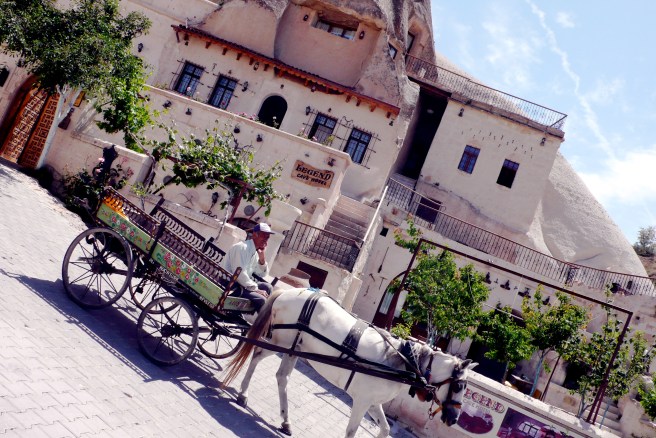
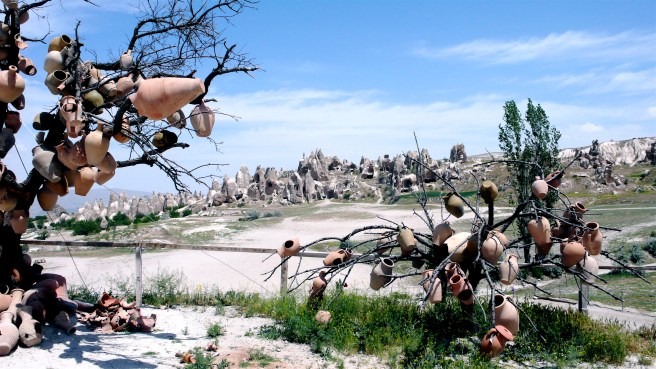
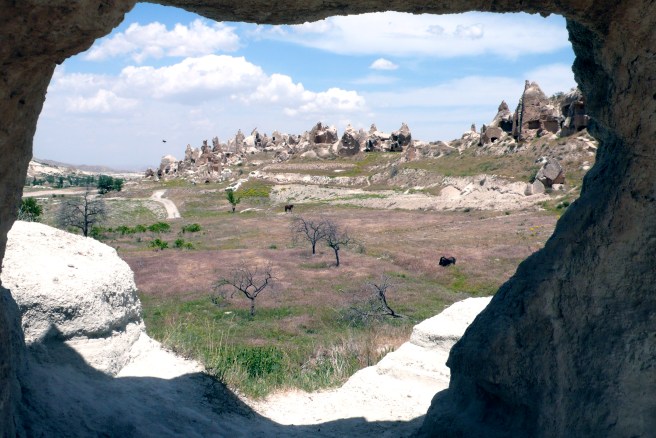
The stony hills don’t roll so much as jag and tumble. Fantastic rock formations — so often called “fairy chimneys” that the term, apt as it is, has become cliché — spiral from the clay-colored earth in tapered towers and stout tepees. 

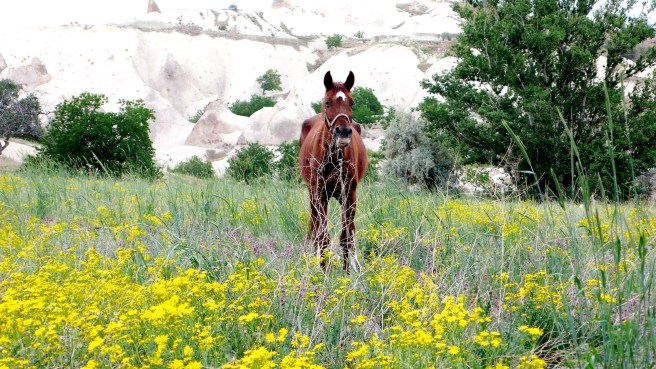
Cave dwellings and ancient cave chapels adorned with shimmeringly preserved Christian frescoes honeycomb hillsides. Phallic boulders and chalky spires erupt out of the arid Anatolian plains. Horses graze amid tall grass and bright wildflowers and horse-pulled carts trundle down steep stone streets.

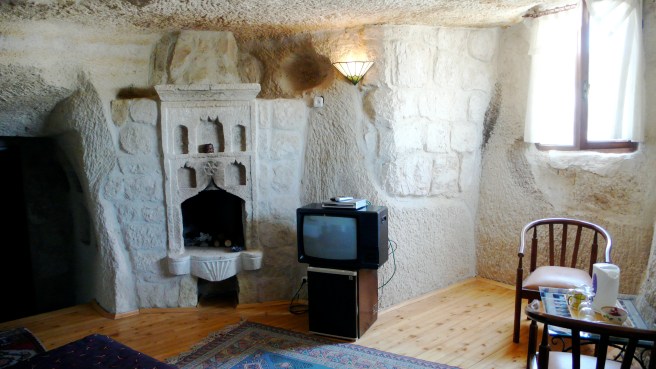
After a long time away, I am soon returning to this otherworldly, almost Martian landscape of Cappadocia, Turkey, where I will rent a motor scooter and buzz the hills, stop and gape at the underground cities and famed Open-Air Museum, stay in the obligatory cave hotel, tuck into lavish Turkish cuisine and partake of the modest nightlife. (I’m partial to the funky Flintstone Bar, which is also, yes, a cave.)

I was last in Cappadocia a decade ago and I marveled then and expect to marvel all over again at the sculpture-like topography — it’s a mushroom! It’s an arrowhead! — molded by the artistic hands of the heavens. This UNESCO World Heritage site, whose pink dawn skies are peppered with flotillas of touristy hot-air balloons, would make an exemplary location for a sci-fi or fantasy movie, and probably has. 

It’s practically a hop-skip from Istanbul to Central Anatolia — a 90-minute flight, that, at $25 each way, is a steal that can’t be denied. So back I go this fall.

These are scenes from my last stay in Cappadocia — looking back while looking forward.

P1020799.jpg
My cave hotel in Goreme, Cappadocia

P1020834.jpg

P1020859.jpg

P1020826.jpg

P1020835.jpg

P1020801.jpg
Cave hotel room

P1020809.jpg

p1020806.jpg

P1020848.jpg

P1020840.jpg

P1020817.jpg

P1020857.jpg

And three bonus photos that really capture the magic, borrowed from the web:

cappadocia-red-tour.jpg

2-day-cappadocia-tours-from-antalya-by-bus-5.jpeg

5900511330595.jpg

The pictures, and pull, of Istanbul (Turkey Part I)

Like regular human ardor, a love affair with a city is complicated — prickly, passionate, vexing, ineffable. We adore our favorite cities, which are not breathing creatures but quasi-animate entities that are unquestionably alive, pulsing and forever mutable.

When pressed, the two cities I enjoy the most intense romances with are Paris and Istanbul. Paris is my baby, but sometimes I think I love them equally. (Sorry, ma chérie.)

I fell in love with Istanbul in the spring and fall of 2008, two trips comprising some of my very peak travel experiences. There were times when I actually lost myself, and, this is spectacularly unusual, crawled out of my muzzy head, breathed a little and existed, if momentarily, in a vacuum of Edenic placidity, even contentment. I flew.

Ten years on, the country has hurtled into political tumult: multiple terrorist attacks, violent anti-government protests, an attempted coup and the burn marks of President Erdogan’s tightening authoritarian chokehold. The guidelines of a culinary walking tour in Istanbul actually state: “We are not responsible for acts beyond our control, including but not limited to …  acts of war, or other unrest caused by state or non-state actors.” Terrific.

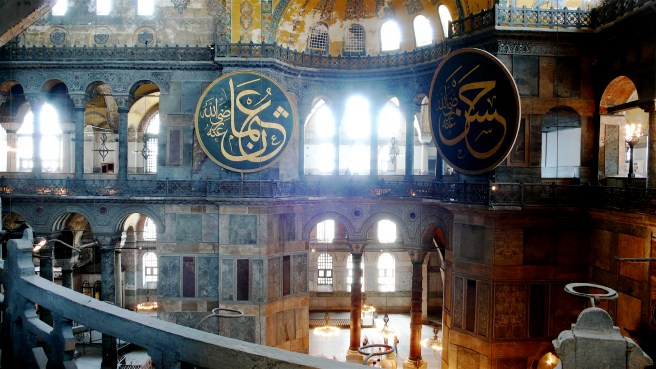
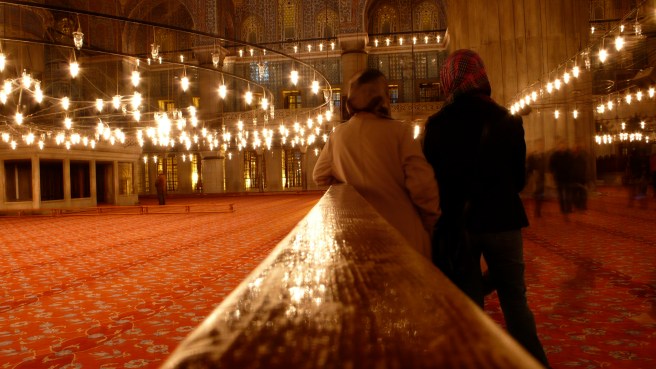
I could boycott Turkey, but that’d be my loss. I miss the generosity of the people, the grandeur of Hagia Sofia and the Blue Mosque, the majesty of the sun-twinkling Bosporus, the exquisite food, the dazzling cultural and religious breadth of East meets West. So I am returning this fall, with a two-day excursion amid the fairytale moonscapes of Cappadocia in Central Anatolia. (See them here. Ignore the festering hot-air balloons.)

These shots of Istanbul, snapped on my long-ago journeys, remind why I’m going back.

P1020703.jpg

P1020982.jpg

P1020932.jpg

P1020622.jpg

P1020728.jpg

P1020629.jpg

P1020604.jpg

P1020909.jpg

P1020769.jpg

P1030582_1.jpg

P1020947.jpg

P1030243_1.jpg

P1020632.jpg

P1020504.jpg

P1020732.jpg

P1020980.jpg

P1020572.jpg

Five irritants that shouldn’t irritate. But do.

1.  The copout final shot in the Chloë Grace Moretz LGBTQ drama “The Miseducation of Cameron Post.” Without resolving anything dramatically, director-writer Desiree Akhavan avoids the hard work of crafting an actual ending, letting her and her characters off the hook by sticking them in the back of a pick-up truck to literally drive off into the sunset, then: fade to black. Such open-ended fade-outs — what will happen to our beloved heroes? — are not only lazy but a rancid cliché of undercooked indie filmdom. (Wait. Was I supposed to say: Spoiler alert!)

miseducationofcameronpost.jpg

2.  The local wallpaper-tattooed hippie-hipster barista who, when asked how he’s doing, invariably replies, “Livin’ the dream!” (Spoken in a groovy Jeff Spicoli cadence.)

3.  Pro sports. I have no stomach for fans’ foaming-at-the-mouth, chest-thumping, near-nationalistic posturing, the players’ obscene paydays, the blanket machismo and braggadocio, the snarling, whooping competitiveness. It’s a gross, alien world that, save the occasional semi-civilized soccer match, I find revolting. Any artistry is sheer brute. I’m a bit like author Roxane Gay: “As a child, I was awkward, unathletic and uninterested in becoming athletic. I was not a team player. I was a dreamer, something of an oddball loner. I wanted to spend all my time with books.” Then there’s the waspish H.L. Mencken who injects venom: “I hate all sports as rabidly as a person who likes sports hates common sense.” Oh goodie: Football season is upon us.

Steelers-Fans.jpg

4.  If you don’t read the weekly book reviews by Dwight Garner in The New York Times, you are missing some of the freshest, funniest, metaphor-drunk reviews in mainstream newspapers. You are, alas, culturally bereft. But I have a pet peeve (even the best aren’t immune): his unfailing penchant to quote other writers in 99-percent of his essays. Not writers he’s reviewing — that’s expected and apropos — but other writers, as if he can’t think up his own ideas. (“As Hunter S. Thompson said about firearms …,” or “To quote Bob Dylan on heartache …”) It’s a crutch he can’t relinquish. I devour his stuff, but his quotation-happy habit stops me cold. (Yes, I use quotes, too, but I’m not writing for the rarefied Times.)

5.  Middling to bad stand-up comedy specials flooding Netflix. Such jollity as the new “Demetri Martin: The Overthinker,” a depressingly anemic stand-up hour showcasing a once-hilarious comic in full sputter. Also schticking up the streaming service: Patton Oswald, who, on stage, is a peg above pedestrian; Judah Friedlander, a wan, wannabe Mitch Hedberg; the meh Noah Trevor; the slick Iliza Shlesinger, all harpy cutes; the shrill, aggressively pregnant Ali Wong (watch how she practically weaponizes that big old baby bump); and floundering fat-joker Gabriel Iglesias.

1526664256163-AWCS2_00619_R
Ali Wong: irritating

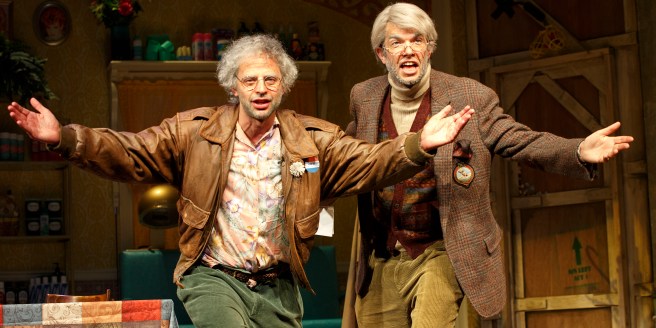
But let’s cool down and depart with a smiley-face emoji, tongue out, winking. Netflix tucks sparkling gems into the mix, like Fred Armisen’s joyfully sui generis “Standup for Drummers,” John Mulaney’s knock-dead “Kid Gorgeous at Radio City,” Aussie comedian Hannah Gadsby’s devastating “Nanette” (caveat: she may change your life), and the beyond-words brilliant “‘Oh, Hello’ on Broadway,” starring John Mulaney and Nick Kroll, whose marksman satire is so inspired and athletically sustained, you’ll be craving the most overstuffed tuna sandwich you’ve ever seen. (Watch the show. Then you’ll know.)

4621-1.jpeg
Not irritating: “‘Oh, Hello’ on Broadway,” with Nick Kroll and John Mulaney

Eight books I’ll never read

Call me a masochist, a philistine, willfully depriving myself of some of world literature’s masterworks. 

I beg to differ. I’ve read wads of wonderful books and have countless more to go, including those which I call my hope-to books, meaning I hope to get around to them in this lifetime: “Don Quixote,” “Middlemarch,” “War and Peace,” “The Portrait of a Lady,” and to finally finish “The Brothers Karamazov” and Don DeLillo’s “Underworld.”

The following eight novels are books I’ve either attempted to read and put down with disappointment or volumes I simply know I won’t find the time for because I’m pretty sure I’ll banish them, deflated, demanding my many reading hours back. In no order:

“Remembrance of Things Past” (1913-1927). And so our hero launches a legendary journey through his past with one bite of a tea-soaked madeleine, a journey that seems, for thousands of pages, unstoppable. Marcel Proust’s seven-volume novel puts the “ick” in epic, warding off the casual reader who’d rather not commit eons to a single novel. I wish I could do it. I started volume one, “Swann’s Way,” but its famed vortex didn’t suck me in. I took a bite of a milk-soaked Oreo, but it didn’t have the same effect.

51e2K0ZM4aL._SX316_BO1,204,203,200_.jpg

“Ulysses” (1922). The most obvious book avoided by literary wussies, the Everest of difficult fiction, which has scuttled so many foolish takers. I’ve dipped into its brambled pages and got instantly lost and tangled in the impregnable modernist foliage. More trouble than it’s worth. While we’re at it, let’s add Joyce’s indecipherable “Finnegans Wake” (1939), another provocation for brawny brains and paragons of patience I will never read.

5117M1qFk9L._SX326_BO1,204,203,200_.jpg

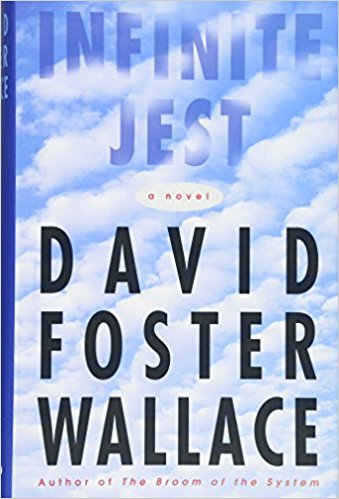
“Infinite Jest” (1996). 1,088 pages of post-modern tomfoolery and intellectual acrobatics, David Foster Wallace’s cult classic daunts and taunts. Not many conquer Wallace’s brilliant, monster challenge to hip, erudite readers, with its formal elasticity, cerebral satire, and devastating commentaries on everything from television to tennis. Another behemoth that I’m afraid I can’t swallow. (Though I relish his non-fiction. Does that count?) 

516Ymv7D7TL._SX337_BO1,204,203,200_.jpg

 “The Goldfinch” (2015). Adult fiction that reads like children’s literature, Donna Tartt’s old-fashioned opus is clammily contrived and wears a twee Dickensian frilliness. (It also, mystifyingly, won a Pulitzer.) I read almost half of its 976 pages, waiting for the story to grow muscle, to grow up. It’s a squishy coming-of-age tale so banal it’s hard to believe. If it was a movie, Chris Columbus would direct. (Actually, John Crowley, of “Brooklyn” fame, is directing the film. What are you going to do?)

41p4amaYISL._SX317_BO1,204,203,200_.jpg

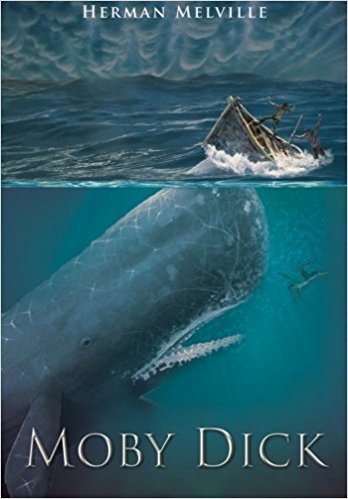
“Moby-Dick” (1851). I read about a fifth of Melville’s whale tale, and after a peppy start, alive with humor and heart and humanity, the slog began. I’ve heard you must muscle through, machete swinging through the anesthetizing filler and maddening digressions, and a grand story will emerge. But it’s simply too hard to focus on a crowded page when your eyes are so glazed over. 

41vnfkc9srl._sx346_bo1204203200_.jpg

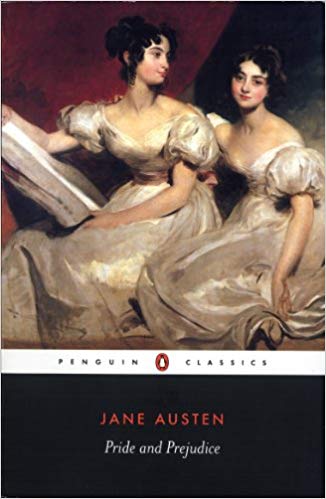
“Pride and Prejudice” (1813). I wrote the following here last summer: “I can’t do Jane Austen’s ‘Pride and Prejudice.’ I’ve tried to read it three times, and each time, at around page 20, I crinkle my nose, toss my head back, issue a fluttering sigh, then slap the book shut. Slap. Pinched and prissy, the prose is like flossy streamers of chirp and chatter, candied and precious and irritating.” Hmm, I’ll stand by that.

41uuHuulc1L._SX324_BO1,204,203,200_.jpg

“Gravity’s Rainbow” (1973). I’ve read some of Thomas Pynchon’s other novels and I am no fan. Here’s how a site described the author’s extravagant, fireworks-shooting, 760-page magnum opus: “Quantum mechanics, mass extinction, speculative metaphysics — heavy stuff. It doesn’t help that Pynchon’s style is free-flowing and flashback-heavy. This has been called the definitive postmodern novel.” I respectfully pass.

61u7TBzQp6L._SX322_BO1,204,203,200_.jpg

Anything by Charles Dickens (lived 1812-1870). I delighted reading “A Christmas Carol” as a child, but since then my relationship with the granddaddy of Victorian fiction has been a frustrating failure. Every so often I will try again to read one of his bloated novels — I picked up “A Tale of Two Cities” three times before I tossed it — but they’re so fussy, so verbose, so cutesy, even, with all those belabored character names. The books aren’t light. They go down like molasses: cloying, thick and sticky.

51sxQn48DPL._SX324_BO1,204,203,200_.jpg

School sucks. ‘Eighth Grade’ doesn’t.

Her chin and forehead dappled with continents of acne — I thought I spotted an inflamed Australia — 13-year-old Kayla is stuck in the excruciating pangs of adolescent metamorphoses. A smidge pudgy with rumpled long blonde hair, she is awkwardly pretty, a butterfly half-jammed in her chrysalis, squirming to soar. Her two front teeth, jumbly-crooked and slightly bucky, will break your heart.

Kayla, played by a preternaturally perfect Elsie Fisher, is the can’t-keep-your-eyes-off lead in Bo Burnham’s indie hit “Eighth Grade,” and she’s a compendium of teen neuroses, a raw nerve that keeps getting pinged. 

06-eighth-grade-review.w710.h473.jpg

I kept wincing, re-feeling those awful transitional days, the insecurities, the free-floating dread, the fluttering anxiety — and the irrepressible excitement of the new.

But that’s not the movie’s point. “Eighth Grade” isn’t about me and my cohorts’ feathered hair, terrycloth polos, flared corduroy Levi’s and those giant combs hanging out our back pockets. Or the flubbed first kisses and mortifying social fumbles. 

As Owen Gleiberman puts it in Variety: “The beauty of ‘Eighth Grade’ is that it’s highly specific and generational. It’s the first movie to capture, in a major way, the teenage experience of those who have only existed on this planet during the digital era.”

In other words, it’s not about us geezers and our times bridging, torturously, eighth-grade and high school. It’s about today’s kids, like my niece, who’s exactly in Kayla’s fashionably beat-up sneakers. She’s 13. She’s glued to her phone. I wish her good luck.  

It’s about forging one’s individuality amidst willful clones who gussy up their insecurities in narcotizing conformity. Kayla, a hero for our times, I truly believe, lives by her words, the dictums she professes on the videos she so bravely records on her phone. It doesn’t always work out, but watch her grow stronger after each posting. 

180711-eighth-grade-se-144p_9d56164edc5f4b008454709c80c2a77a.fit-760w

For all the bracing, spot-on scenes in Burnham’s dynamic debut — the movie is really a 90-minute reel of the smashingly real — I picked out my favorite midway through. Kayla is alone in bed at night and she’s surfing a kaleidoscopic stream of videos, social media, Instagram and whatever kids sift at no attention-span speeds. The music, playing loudly on the soundtrack, is sublime.

It’s the most affecting use of Enya’s 1988 harp-heavy hit “Orinoco Flow (Sail Away)” I’ve ever heard. The scene actually redeems the woozy, New Agey song. Lush, lyrical and frenetically up-to-the-minute, the sequence is a masterpiece of visual-aural agreement. It weirdly moved me, and it encapsulates the undeniable artistry, the tender emotional truth of this excellent film. For a brief moment, Kayla soars. 

See the trailer for “Eighth Grade” HERE.