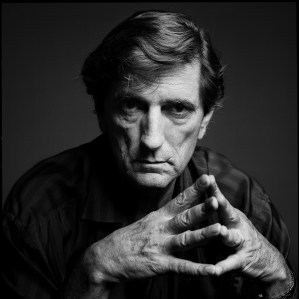
A brief encounter with the late, mighty, forever-old Harry Dean Stanton

A slight, gaunt man, with a mummy’s sunken eyes, Harry Dean Stanton seemed eternally haggard and, in his later days, alarmingly cadaverous. He finally gave way to his looks: Stanton, a reticent, lived-in character actor with a gentle heart beating beneath a leather exterior, died yesterday. He was 91.
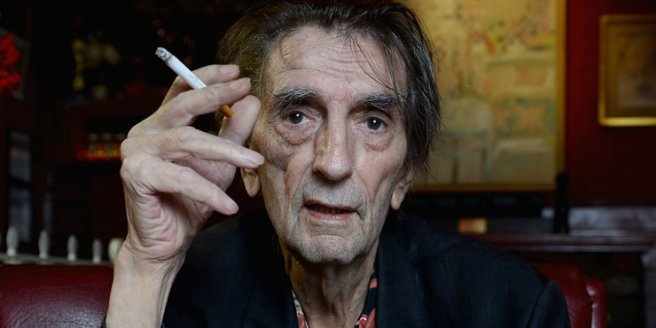
why-did-actor-harry-dean-stanton-age-89-never-get-married-to-any-of-his-girlfriends.jpg

Stanton’s best-known work includes “Paris, Texas,” “Wise Blood,” “Repo Man,” “The Rose,” “Pretty in Pink” and HBO’s “Big Love.” I don’t have much to say about his passing, except that it’s sad and that I have potent memories of his performances, especially his role as doomed Brett in 1979’s unshakable “Alien.” Even then he had a Keith Richards mien going on.

I met Stanton briefly in 2003 at a club concert in Austin, Texas, that Stanton, in town shooting a film, reluctantly attended. This is what I blogged then about the special, if tentative, encounter:

One night at Antone’s nightclub, actress Gina Gershon was rocking and Harry Dean Stanton was frowning. “It’s loud, strident and violent,” Stanton said of the three-chord crunch Gershon and her backup group Girls Against Boys were discharging like the solid bar band they were pretending to be. “It’s an assault on the senses.” (It’s rock ‘n’ roll, Harry.)

Hanging out alone at the end of the bar next to the candy machines, Stanton appeared slightly forlorn during the show, nursing what looked like a whisky sour but might have been ginger ale, skittishly glancing around, producing sweet but wavering smiles when approached by pretty women who would wrap an arm around the black blazer that hung on his slight frame with a vaudevillian droop.

Gershon was on a short club tour, living out her long-held musician’s fantasy, putting down the air-guitar for a Gibson SG. She drew about 400 people to Antone’s, about half appearing to be guest-list rubber-neckers. Including Stanton.
19be0cc37545f38679bfbfc7981a48ba

Stanton, 77, has 100 films to his credit, some of the best being “Cool Hand Luke,” “Paris, Texas” and “Alien.” He was in Austin shooting the Luke Wilson-directed “Wendell Baker Story” and has been spotted at unlikely places like Club Deville, where friends tell me Luke and Owen Wilson enjoy tearing it up. Not sure why Stanton was here, but his “Baker” co-star Seymour Cassel dropped in late during the show, said something to Stanton and waded into the crowd of mostly thirtysomethings.

As the show wound down with a tight cover of The Stooges’ “I Wanna Be Your Dog,” my girlfriend offered Stanton some Reese’s Pieces bought for a quarter from one of the candy machines. He looked into her open palm and asked, “What are those — M&M’s?” He puzzled over the morsels as if studying Martian soil. Then a trio of pretty girls enfolded him in their attentions, and he was gone.

The 20 most alluring actresses from Hollywood’s Golden Age

We love our movie stars, and I love my actresses, especially those indelible bright lights, those sirens, sex pots and sophisticates, from Hollywood’s Golden Age, roughly the 1920s through the early ’60s.

Audiences cultivate complex relationships with the actors on screen. They crush, lust, idolize, envy and hero-worship. They take these visions personally. Sometimes they want to take them home.

With today’s top actresses and starlets, tabloid tastemakers gravitate to the Jolies, J. Los and J-Laws, brassy self-promoters with wicked powers of manipulation.

But the actresses who seize my attention, the ones who have the elusive It factor, an intelligence mingled with integrity, include Rachel Weisz, Marion Cotillard, Anne Hathaway, Cate Blanchett and Nicole Kidman. They recall the stars of Hollywood past, several of whom I celebrate here.

marion_cotillard10
Marion Cotillard

Despite their physical allure — not to fetishize appearances — I appreciate actresses with hauteur, poise and self-possession. They’re sassy and sophisticated, loopy and urbane, glamorous, flirtatious, demure and dangerous. They’re partiers, victims, fatales and floozies. Beautiful, blazing, but armed with multifaceted talent.

You might be shocked by the actresses I shut out, as much as I adamantly adore them: Lauren Bacall, Joan Fontaine, Bette Davis, Barbara Stanwyck, Greta Garbo, Joan Crawford, Norma Shearer, Irene Dunne, Katharine Hepburn. Not even stone-cold goddess Marilyn Monroe makes the cut.

ann-blyth
Ann Blyth

And, with the key exception of Martha Vickers as the narcotized nymphet in “The Big Sleep,” I’ve reluctantly excluded the countless supporting performers who’ve goosed so many screwballs, soaps and noirs, like Ann Blyth in “Mildred Pierce” and Dorothy Malone, who plays the bespectacled bookstore owner in “The Big Sleep.”

Here’s a 20-strong parade of my favorite Golden Age screen sirens, my old-timey It girls. They are presented in no particular order, neither by chronology, talent or pulchritude. (Please add your two cents if you’d like.)

hedy lamarr
Hedy Lamarr: “Ecstasy” (1933), “Samson and Delilah” (1946)
louise brooks
Louise Brooks: “Pandora’s Box” (1929), “Diary of a Lost Girl” (1929)
VICKERS.jpg
Martha Vickers: “The Big Sleep” (1946)
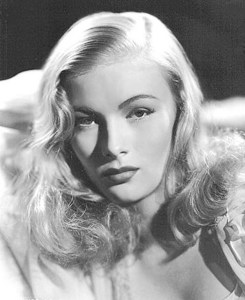
veronica-lake-1940s
Veronica Lake: “Sullivan’s Travels” (1941), “This Gun for Hire” (1942)
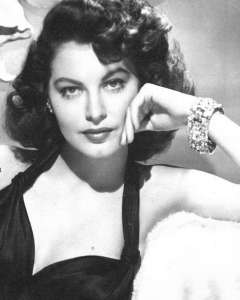
ava-gardner-recording-artists-and-groups-photo-u39
Ava Gardner: “The Killers” (1946), “The Barefoot Contessa” (1954)
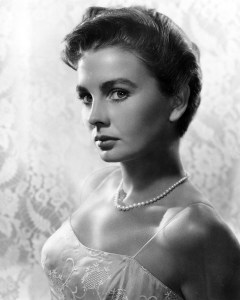
jean simmons
Jean Simmons: “Guys and Dolls” (1955), “Elmer Gantry” (1960)
GraceKelly
Grace Kelly: “High Noon” (1952), “Rear Window” (1954)
gene tierney.jpg
Gene Tierney: “Laura” (1944), “Leave Her to Heaven” (1945)
th.jpeg
Ingrid Bergman: “Casablanca” (1942), “Notorious” (1946)
joan bennett
Joan Bennett: “The Woman in the Window” (1944), “Scarlet Street” (1945)
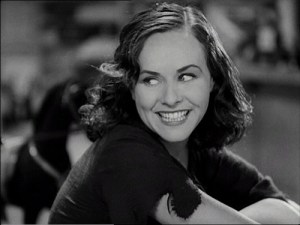
paulette godard
Paulette Goddard: “Modern Times” (1936), “The Great Dictator” (1940)
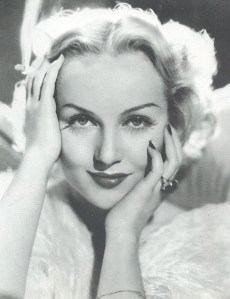
carole-lombard-classic-movies-22098755-816-1063
Carole Lombard: “My Man Godfrey” (1936), “Nothing Sacred” (1937)
myrnaloy
Myrna Loy: “The Thin Man” (1934), “Libeled Lady” (1936)
600full-olivia-de-havilland
Olivia de Havilland: “Gone with the Wind” (1939), “The Heiress” (1949)
55688_nw_038_122_1177lo
Natalie Wood: “Rebel Without a Cause” (1955), “West Side Story” (1961)
Annex - Leigh, Vivien_NRFPT_02
Vivien Leigh: “Gone With the Wind” (1939), “A Streetcar Named Desire” (1951)
1159765-elizabeth-taylor
Elizabeth Taylor: “A Place in the Sun” (1951), “Who’s Afraid of Virginia Woolf?” (1966)
e44f6da597ca8a6b13a2ee4f244ff39f
Rita Hayworth: “Gilda” (1946), “The Lady from Shanghai” (1947)
tumblr_static_audrey-hepburn-actors-photo-hd-desktop
Audrey Hepburn: “Roman Holiday” (1953), “Breakfast at Tiffany’s” (1961)
lana 2
Lana Turner: “The Postman Always Rings Twice” (1946), “Peyton Place” (1957)


An easy, breezy interview with the late Sam Shepard

Sam-Shepard-QA-010.jpg

Sam Shepard, who died last week of Lou Gehrig’s disease at age 73, was a consummate actor, all crinkled deep-West cool, and a groundbreaking, Pulitzer-winning playwright. He was also hell of a good sport during my interview with him in Austin, Texas, in 2006. He laughed off my blind spots, stuck with me, and seemed to have a good time. But who knows? Shepard was also something of a mystery man, solo, soulful, if often smiling.

In a small tribute to the artist, here is our interview:

Sam Shepard laughs more than you’d think he would, considering the actor-playwright’s sun-crisped cowboy persona, which dons the dusty, romantic despair of a desert loner.

Namely, Shepard laughs at me. He has a great dry chuckle that heh-heh-hehs whenever I demonstrate my sweeping ignorance of things cow, horse, rope and ranch. This happens often.

Best remembered as Chuck Yeager in “The Right Stuff,” Shepard was in Austin to screen his film “Don’t Come Knocking” during South by Southwest. He was disappointed that the movie wasn’t playing at the grand Paramount Theatre.

“That’s one of the reasons I wanted to do it,” he says in a soft drawl. “That beautiful big theater.

“Instead,” he laughs, “it’s in some stockyard theater.” (It screened at the Alamo South.)

Shepard co-wrote “Don’t Come Knocking” with director Wim Wenders, their second collaboration since “Paris, Texas” in 1984. Shepard stars in the film with longtime partner Jessica Lange.

Tall, lean, with striking blue eyes, Shepard, 62, cuts a suave figure in a black leather blazer, blue jeans and fancy cowboy boots. He sits down in the Four Seasons hotel bar and orders iced tea. He has written dozens of plays, including “Fool for Love” and “True West,” and acted in more than 40 films.

One of those films is Terrence Malick’s “Days of Heaven.” Shepard was having dinner with Malick and Wenders that night. I ask if I can come. He just laughs.

Q: Yesterday I interviewed John C. Reilly. He says hi. Do you have any words about him?

SS: He’s here? I didn’t see him. He’s a remarkable actor. We had a lot of good fun doing “True West” together (in 2000 on Broadway, with Philip Seymour Hoffman). It was unique in that he and Philip would switch roles every two nights. The transformations were amazing. Philip just won the Academy Award, bless his heart.

Q: How does “Don’t Come Knocking” fit into your body of work? It’s set in a familiar world of yours with a familiar character, but it’s steeped in valediction and redemption much like Clint Eastwood’s “Unforgiven.”

SS: I really don’t think about any of my work like that. I don’t know how to categorize it. I just go instinctively with certain ideas and allow those ideas to play themselves out. Because I’m the same person, obviously there’s going to be similarities with what’s done before. But if anything, Wim and I were trying to avoid similarities to “Paris, Texas.”

Q: Yet there are thematic similarities between the two films.

SS: Of course there are. The main characters share the same sort of alienation and strandedness and remoteness.

Q: Is that where the wide-open settings come into play, as metaphors for the characters’ predicament?

SS: Yes. It’s interesting to set characters like that against an overwhelming landscape, almost like he’s lost in the ocean.

Q: What kind of boots are those?

SS: Leddy.

Q: Leddy? Is that a famous brand?

SS: Yeah, man! Where you from? (Laughs) These are made in Fort Worth. They’re belly ostrich.

Q: That’s ostrich? I notice your belt buckle’s kind of elaborate, too.

SS: I have cutting horses. I won this.

Q: You won that? It’s like a trophy?

SS: Yeah. WHERE are you from?

Q: Can you tell me what cutting is?

SS: It’s an activity with quarter horses where you go in and separate cattle and keep the calf from getting back into the herd. It’s an old art form.

Q: You do that?

SS: Yes.

Q: The buckle says you won it in 2003. Is it gold, some valuable item?

SS: It’s Montana silver.

Q: What’s next for you?

SS: I’m in the middle of a play right now.

Q: One of yours that’s currently being staged or a new one you’re writing?

SS: I’m writing a play. I’m a playwright.

Q: I know. (He laughs.) Your (Pulitzer-winning) play “Buried Child” is being staged right now.

SS: It’s a workshop production that I didn’t even know about. And someone’s doing “The Late Henry Moss.” And I’m acting in a new film in Shreveport. You follow horse racing at all? Probably not. There was a famous filly called Ruffian in the ’70s, an extraordinary horse. Every time she ran she broke a track record. She died in a match race against a colt, snapped her leg. I’m playing her trainer.

Q: Sounds perfect for you. Who’s directing?

SS: A guy from Quebec. I don’t really know his name. (Laughs) A French guy.

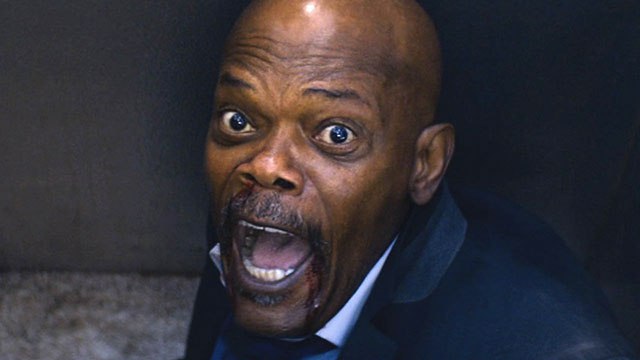
Samuel L. Jackson, film’s charismatic Old Yeller

samuel-l-jackson-freakin1.jpg

Samuel L. Jackson is a yeller. A growler. Part human, part pouncing jungle cat.

He scares the shit out of everyone.

When I interviewed him way back when for “Star Wars: Episode I — The Phantom Menace,” I noted: “Samuel L. Jackson enters a room the way you’d think Samuel L. Jackson would enter a room — with velocity, fury … ,” and there memory fails me. But fear not, because you can fill in the blanks, envisaging the long coat fluttering in a gust, his hello more of a guttural emission than a salutation.

I had to laugh.

But do we still laugh? The actor, bad, bald and raging, has a persona to maintain, and, yes, its tongue remains deeply in cheek. His is a cultivated act, swathed in black leather, engined by a scolding severity, and leavened by a scratched baritone laugh that could go either way: sinister or Santa Claus. (It’s almost always the former.)

Jackson, with a strenuous wink, even tries to intimidate us, if just a little, in his “What’s in your wallet?” Capital One commercials, some of which are humorously doctored by those who want their hero reliably profane. He prowls the screen with proprietary confidence, his spokedude’s blandishments quite uncompromising. (Use this card. Or else.)

He’s got it down: the self-parodic scowl and growl, eyes popping, mouth a lion’s maw, the apoplectic human megaphone. We’d have it no other way. He’s modern movies’ go-to badass, the man you call when, in the face of ineptitude and criminal folly, glowering gravitas and debonair menace are demanded.

That voice. The earth rumbles.

In this former film critic’s review of the 2008 thriller “Lakeview Terrace,”  in which Jackson plays a toxic cop, I wrote that Jackson’s “roiling, rhythmic voice is an instrument of interrogation and intimidation. It barks, recoils, then rears up and roars. He has a rapper’s control of tone and timbre, turning passion and ire into a kind of sociopathic backbeat.”

In my take on his 2000 “Shaft” reboot, I went on:

“Samuel L. Jackson speaks like a building storm; his words have lightning jags in them.

“When he taunts his quarry, which he does with great frequency, his throat tightens, throttling syllables. His voice kicks up a few octaves until words sing with angry strain. Expletives fly in shrapnel sprays.

“‘What’s my name? What’s . . . my . . . name?’ shouts Jackson at a preening dope dealer as his pistol forges an elaborate imprint on the pusher’s cheek.

“In his crime-dude roles, in films like ‘Pulp Fiction’ and ‘The Negotiator,’ Jackson is pure gale-force attitude and wrath-of-God fury.”

Jackson’s breakthrough role, and arguably his most popular, is Jules Winnfield in “Pulp Fiction.” Slick in a bespoke black suit, head crowned with a Medusa nest of glistening Jheri curls, and with scary Bible verses at the ready, he’s all grooving fire and brimstone, an apocalyptic preacher-man with a very large gun and a very short fuse.

Jules showcased Jackson’s range, which is more faceted than the picture painted here of an implacable, one-note Angry Man. Jackson is a genius at outrage, explosive outbursts of verbiage and violence. But his Jules also revealed he’s an expert comedian, with a gift for brilliant badinage, not to mention a penchant for brooding, sometimes profound introspection. He’s proud but protean.

Jackson doesn’t need to yell to get our attention. His seething charisma is all it takes. It’s the aura of a star, some kind of supernova, that snags us in his thrall. He’s the real deal. Just don’t piss him off.

PulpFiction.jpg
“It’s the one that says ‘Bad Mother Fucker.'”