Animal magnetism

There’s a pet pig on our block that makes everyone who sees it do swiney swoons. 

Trixie, the pink lady with black spots, who’s shaped like an overinflated football or a throw pillow, clicks down the sidewalk, nibbling grass, snout and low-slung belly to the ground, attended by three canine pals of various proportions. 

It’s quite the gaggle, and neighbors can’t resist snapping photos, giggling and petting, as if Miss Piggy and Babe had shown up in the hood, snorting for truffles. (Watch the pig and her posse HERE.) 

You don’t often see people with squirrel monkeys wearing tiny doll diapers anymore — animal abuse is finally unfashionable — but you do see the random exotic critter with its human comrades, like Trixie, who will grunt chunky oinks to amuse the masses. 

George Clooney and Miley Cyrus have famously made happy house pets of pigs, and if they can do it … well, not so fast. Some fancy Google footwork will tell you pet pigs are very expensive to acquire and maintain. And they’re space-hoggers, tending to get ginormous and push you out of your bed and eat all your Froot Loops, despite contradictory claims by Wilbur and Piglet.  

I admit I know little about our local piggy, except that she’s a trendy potbellied or “teacup” pig, a pink porker with evolved social skills and an impressive tolerance of dogs and piping children. She’s housebroken and uses a litter box. Also: she doesn’t like carrots. 

But she appears to like people, probably because they lavish her with, say, corn cobs and tequila — and because they don’t eat her for breakfast. Trixie basks in the human attention. Like a baby panda, she’s a star, a crowd-pleaser, eliciting oohs, aahs and ha’s. Pig as people-puller.

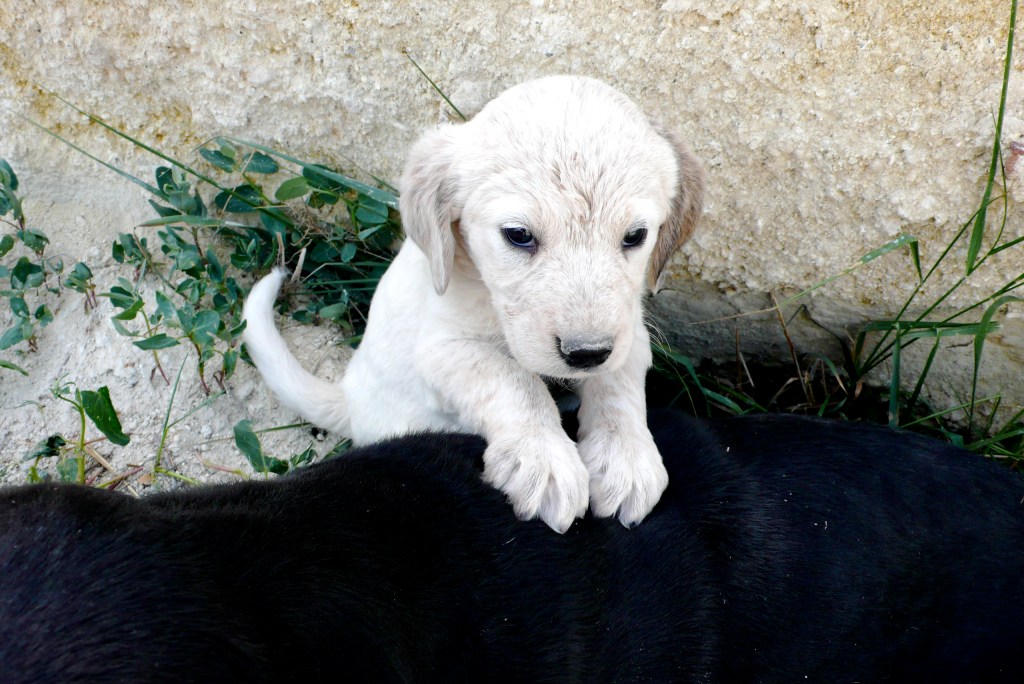
Which brings me to an acquaintance I knew in Texas, an esteemed novelist and journalist, whose new book happened to earn a rave in this weekend’s New York Times. Actually, it brings me to his dog, specifically his sweet blonde Lab puppy, whose name escapes me. It’s been a while.

We were at a backyard party — my then-girlfriend Laura and I, the above writer, and a slew of good friends — and the writer brought his attention-starved puppy (with his attention-starved self). My girlfriend sprung to the dog, talked to it and stroked it. (This is the girlfriend who once dumped a beer on me. On purpose. Because she’s a genius.)

Writer guy watches Laura, and says this about his special new puppy: “He’s a real pussy magnet.” The writer beams a smutty smile. Laura’s cooing turns to booing. She looks like she bit into a lemon. I’m near enough to hear, but say nothing to writer fella, a burly chainsmoker, disheveled in look and manner. I don’t like broken thumbs. 

This digression about the magnetic puppy is to show how animals can reduce people to marshmallows, and make others crack profane for a wan laugh. (Is the dog also a penis magnet? Har-har.) It’s to show how human and beast forge singular bonds, be it pup or pig, because we all possess big, needy hearts, and everyone likes to be pet. And licked. 

I once had a crazy, lick-your-entire-face puppy that I would call an everybody magnet. Everybody loved her and she loved everybody and there was no stopping the mutual gush of adoration. She was in a perpetual frenzy that caused her to lick your tongue if you weren’t careful. A French kiss, Fido-style. (Was she a tongue magnet?)

It’s hard to picture Trixie, she of the stripper’s name and porcine puss, kissing anything that isn’t slathered in ranch dressing. There she is, flat snout fluttering, hoofs tap-dancing on the concrete in bountiful suburbia, surrounded by fawning people (the fans) and curious dogs (the flummoxed), and showered with organic love. I don’t know about my neighbors, but I think this humble pig is nothing short of a me magnet.

Ten great indies you may have missed

So my movie-watching in this Covid cocoon is drastically spotty — I have yet to see Korean-American family drama “Minari” or Anthony Hopkins as “The Father,” both Oscar winners — and I find myself returning to favorite films, classics new (“John Wick”) and old (“The Thin Man”). 

What’s stuck with me of late is a passel of small newish movies, from “The Rider” to “Eighth Grade,” that could easily be missed by casual viewers, despite the pictures’ celebrated exceptionalism. 

I’ve culled 10 semi-obscure indie pearls from the past several years, 2013 to 2020, a few of which I’ve gushed about before, and many coincidentally released by A24, the hot independent distributor that’s crushing the competition with curatorial savvy. 

I’ve seen the following titles at least twice, except for “Uncut Gems,” whose mad, relentless intensity has, two years later, left me spent. It’s a bruiser. And a winner.

Onward. These are 10 great indie films highly worth your time, in order of release:

  • “Locke” (2013) — A desperate everyman (the brilliantly intense Tom Hardy) is in the driver’s seat, literally, for the movie’s entire 85 minutes. Yes, he’s driving the whole time. The camera never leaves him as he negotiates via smart phone personal tumults on the winding highway of life. It sounds grueling, claustrophobic and static. It’s not. It’s gripping, hypnotic, and exhilarating.
  • “The Witch” (2015) — The smartest, creepiest, most stylish horror picture in years, Robert Eggers’ frightfully immersive period chiller lands us in woodsy 1630 New England, where a family is torn apart by the disappearance of one of its children. Suspicions target eldest daughter Thomasin (wide-eyed Anya Taylor-Joy of “The Queen’s Gambit”), who may have flirted with the dark arts. Then there’s that menacing dancing goat, who’s not quickly shaken. Beware Black Phillip
  • “Tangerine” (2015) — Oh, is she pissed. When transgender hooker Sin Dee hears that her boyfriend and pimp cheated on her while she was in jail, she pops with glorious fury, tracking down him and his new lover and exacting a kind of sassy L.A. revenge that includes an inordinate amount of hair pulling. Move over, she’s stomping the sidewalk in teetering heels, cracking wise and hunting heedlessly. Sean Baker shot this scruffy, no-fi, Day-Glo gem on an iPhone, with stunning results. Raunchy and hilarious, it shimmers like a smoggy SoCal sunset.  
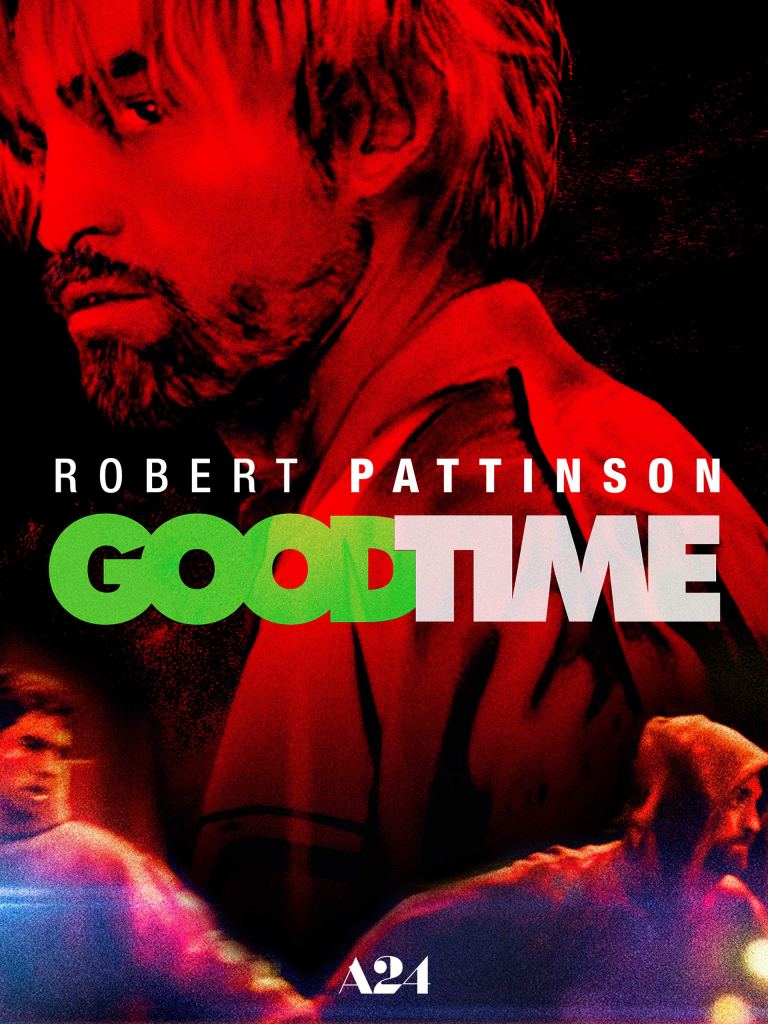
  • “Good Time” (2017) — With flickers of the young Pacino and De Niro, Robert Pattinson is revelatory as a scrappy, dangerous two-bit criminal who’s on the lam after a comically/tragically botched bank robbery. The feisty film, by the gifted Safdie brothers, pulls you on a rousing run-for-your-life tumble through nocturnal Queens that’s at once loose-limbed and sweatily taut. A raw portrait of redemption and ruin, pocked with ground-level authenticity, it thrills as it harrows.
  • “The Rider” (2017) — Chloé Zhao’s understated drama moves at the painstaking clip of everyday life, much like her recent Oscar-winner “Nomadland.” But little is everyday here: Brady (non-actor Brady Jandreau) is a rock star of rodeo bronc riding, until an accident in the ring leaves him slightly brain damaged. He’s forced to give up the only life he knows, outside of breaking colts, which he does with a calm, tough-love Jedi mastery. The film is a fine-grained portrait of the pains of getting back on your feet after life-altering disappointment, about rebuilding your spirit after it’s been body-slammed and shattered. Easily the most moving film of 2017, “The Rider” is pure distilled emotion, beautifully shot on the Dakota prairie.
  • “Eighth Grade” (2018) — Her chin and forehead dappled with islands of acne, 13-year-old Kayla is stuck in the excruciating pangs of adolescent metamorphoses. A smidge pudgy, she is awkwardly pretty, a butterfly half-jammed in her chrysalis, squirming to soar. Her two front teeth, jumbly and bucky, will break your heart. Played by the perfect Elsie Fisher, Kayla is the magnetic lead in Bo Burnham’s indie wonder. She’s an arpeggio of teen neuroses, a raw nerve that keeps getting pinged. It’s about today’s kids, glued to their phones, glazed in technology, and forging one’s individuality amid willful clones who gussy up their insecurities in narcotizing conformity. Kayla, a hero for the times, lives by her words, the dictums she professes on the videos she so bravely records on her phone. It doesn’t always work out, but watch her grow mightier upon each posting.
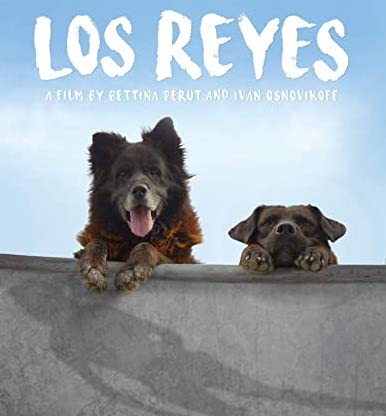
  • “Los Reyes” (2019) — In this inadvertently poetic, profoundly affecting doc from Chile, the camera veers from the skateboarding youth who cruise sinuous bowls to examine the laidback lives of BFFs (best furballs forever): Football, the elder, creaky-jointed cur, and Chola, the frisky female chocolate Lab mix that occasionally tries to hump a large pillow. Dispensing with anthropomorphic cutes, this astonishingly patient film relies on the dogs’ alternately mirthful and mournful antics, quizzical gazes, the way they doze unfazed among the rackety-clackety skaters, or a simple shot of Chola standing statue-still in the rain, getting soaked with the patience of a penitent.
  • “Uncut Gems” (2019) — Adam Sandler is off the hook, and it’s enthralling, like a buzzsaw to the head. In full serio-comic mode — he’s funny and foredoomed — Sandler plays a blingy, dingy New York jeweler who sees dollar signs even when there aren’t any. When he makes a reckless, big bucks bet that could set him up for life, he gets ensnared in a web of business buds, family and foes who all want a piece. Writers-directors the Safdie brothers (of the above “Good Time”) sustain such a frenetic frenzy in this chamber dramedy, you may feel wrecked.  
  • “My Octopus Teacher” (2020) — The octopus cautiously unfurls a tentacle like a flower blooming in a time-lapse photo to the human hand before her. It glances the hand then suddenly sucks it, gently pulling it toward her. The moment carries the pitter-patter of courtship. Could this be love? “That’s when you know there’s full trust,” says the owner of the suction-cupped hand, free diver and filmmaker Craig Foster, in his rare doc. A viral smash, the film won this year’s best documentary Oscar. It’s something else: a simple tale about a grown man befriending a gorgeously slithery cephalopod in the swaying kelp forests of South Africa. Quietly instructive, it goes from lush nature doc to poignant octo-poetry.
  • “Saint Maud” (2020) — Poor innocent Maud. A reclusive nurse seeking Christian devotion after a vague trauma, she becomes the caretaker of an aging dancer dying of cancer. Detecting weakness, and death, Maud (a pretty, pallid Morfydd Clark) kicks into high gear, striving to save her ward’s soul from hellfire with an eerie resolve straddling the sacred and profane. Supernatural phenomena unfurl with a tang of Christian creepiness. Nothing is obvious in Rose Glass’ weird spiritual thriller, especially an amazing climax that will leave you snickering in squirmy, baffled awe.

The pleasures and perils of reading outside

Reading outdoors is an ambiguous business. I’m an outdoor-reading veteran, a pastime that unites something I adore — reading — with something I barely tolerate — the outdoors. 

Yet occasionally a switch of scenery is required and I’ll dust off a patio chair at a spiffy sidewalk cafe and do the old curl-up with a crisp new paperback. Way back when, I’d try to read old-school newspapers while lounging on the beach, furiously fighting the wispy pages to stay put in the seaside gales. Without fail, a page corner would poke me in the eye and a full page would slap my cheeks. Repeatedly.

That’s how reading outdoors can be ambiguous. I was reminded of this today, a partly cloudy, 64-degree afternoon, when I fancied a book and a breeze would be a peachy idea. I grabbed my reading and hit the backyard deck thinking what a clever boy I am. 

After recently tearing through two new novels — “Whereabouts” by Jhumpa Lahiri and “Second Place” by Rachel Cusk, both ethereal, psychologically astute gems — I’m onto the Ralph Ellison classic “Invisible Man,” which even in its early pages is searing. Propulsive, savage, uncompromising — perfect for a glimmering spring day.

I lasted about 25 minutes out there. The clouds kept stubbornly shifting, sealing off the sky for jacket-ready cool, then opening to a sunscreen-ready radiance. Hopscotching moods, it was atmospheric ADD. 

I sniffled as puffs of wind released flurries of pollen over me, and my bookmark fluttered into the fresh, fragrant mulch. The chilly breezes, swaying shrubs and twisting trees, sent me back inside with grumbling memories of beach vs. newspaper. 

Mother Nature was playing with me, smudging the border between winter and spring, which had its calendrical kick-off March 20. (Summer — insufferable with its perplexing pleasures — arrives June 21, an annual day of mourning.) How else do you explain today’s crazy, veering temperatures? Nature knows how to confound. Watch how she drives meteorologists bat shit.

And she knows how to boomerang me back inside, onto the cushy Eames chair, body gently reclined, feet up, “Invisible Man” in hand, and not a mote of dusty golden pollen to spur the sneeze and wheeze.

This tiff with the elements isn’t over, and its history is rich. Just last week I was reading the Rachel Cusk novel on the deck in fine balmy air, the only irritant a black hairy bumblebee the size of a condor that decided it wanted my friendship. It buzzed and bothered; I swung and swatted. The encounter was a truce.  

I coulda been killed out there. What next while I’m reading amidst flora and fauna, burly bumblebees and erratic skies? Rabid chipmunks? A biblical hail storm? The next-door neighbor trying small talk over the fence? (I’ll take rabid woodland animals over that.)

Summer’s thermal terrors are fast coming and I will spend most of the hot months indoors, hands on the latest talked-up book or dog-eared classic. Inside it’s dark and dank, the only breeze wafting from A/C vents, the only deluge the torrent of words I’m reading, the only vicious creature a scruffy terrier mix named Cubby, who can be effectively disarmed with a hearty belly rub or a good Jack Reacher thriller. Much like me.

Wildlife, suburban style

Baby animals freak me out, startle me, and break my heart. They don’t even have to do anything — stop peering at me with those gigantic moist eyeballs; put down those adorable outsize paws — and they get me. 

The mini-critters make me kind of sad, what with their dewy vulnerability, peach-fuzzy squishiness, frantic suckling and flappy, floppy helplessness. (Human babies don’t have this effect on me. They have iPads and Elmo and rarely become roadkill.)

So I was walking through the big, bright, flora-flung idyll of my emphatically suburban neighborhood (Ward Cleaver, meet Ozzie Nelson), when I spotted a pair of bitty lost creatures on someone’s front lawn. I heard a faint squeak and took in a scene that could only lance my soul: two baby raccoons, blinking in the sunlight, gazing up a nearby tree, wondering, it seemed, where their mama was.

Oh, no, was my first (and second and third) impression: One of the infants looked semi-dead, and I promptly thought I’d stumbled upon guinea pig-sized baby possums, hoping the still one was only playing dead. But no, Lone Ranger markings and all, these were scrawny, handsome raccoons, both very much alive. Desperate and scared, but animate.

Awash with relief, I kicked into mammal emergency mode. But just as I was about to dial animal control, it struck me to ask the home’s owner if they knew about the orphan raccoons on their grass and if anything was happening to rescue them. 

I rang the bell on the big blue porch and a voice on an intercom wheezed, “Yes?” I told the woman my concerns — cute animals are squirming on your lawn, perilously — and she assured me she knew about the hapless wildlife. 

OK, I thought. She’ll take care of it. So I moved on with a twinge of anguish and the haunting notion that my raccoon pals were doomed. Why? Because people are cruddy.

Not me, not when it comes to poor, innocent animals, be it a mangy street cur in Kathmandu or an extravagantly spoiled pet rat named Becky, who drank beer and snarfed, well, everything. 

Or the orphaned baby squirrel I nursed to health with an eyedropper after it fell out of a tree some time ago. A cat almost got that tiny fella, but I snatched it and nestled it in a towel-stuffed basket until a crew of thick-gloved pros took it to a chirpy, scampering squirrel sanctuary. 

Yesterday, the day after my raccoon encounter, I passed the same blue house. Morbidly curious, I scoped out the lawn area where I first saw the stray, ring-tailed souls. They were gone. I envisaged cat-on-raccoon carnage, until I was distracted.

A man was washing his car on the street. “Can I help you?” he said, unsmiling. I asked about the raccoons. “You were here yesterday?” he said, water spluttering from a hose he pointed aimlessly. “You talked to my wife.” Right, I said. 

The raccoons are gone, the man said. Animal control? I asked. Yes, he said. I gave him a thumbs up — something I’ve done approximately six times in my life — and thanked him. He nodded, turned, sprayed.

Oddly, I didn’t feel as good about it as I thought I should. Just picturing those precious siblings, sprawled in the sun, sniffing the air for their parents’ scent, did a number on me. There’s closure, but there’s not.

Somewhere nearby a mother raccoon is looking for her babies.

The raccoons look just like this little guy.

Fur, feathers, and folderol

On the About page of this blog, I caution that my writings here are “forever random and rambling.” Rarely has that been so true than right now … 

*  *  *

The Tao of Cubby 

Cubby, the über-mensch of mutts, scurries across the wood floor, his nails recalling the tip-tap of a typewriter. (If only he could actually type. That would save me tremendous carpal tunnel distress.) 

He is fleet, balletic. Though he resembles a gray Oscar the Grouch — bodily bedhead, articulate brows — the dog is chipper and civil, venting frenzied yaps only when evolutionarily expected (read: Amazon). 

Cubby is also mindful and meditative. He follows the flow of the universe and the whiff of tacos. Part Chinese sage, part Scooby-Doo, he adheres to the Taoist tenets of simplicity, patience, compassion, and the canine tenet of raw sirloin. 

Spiritual but godless, Cubby finds solace in Sartre’s “Being and Nothingness” — self-deception! free will! — but not in Scripture. He likes to quote Socrates: “I am the wisest dog alive, for I know one thing, and that is that I know nothing.”

For Cubby, things just are. Why this, why now? As Cubs might say, Because. Just because.

*  *  *

In anticipation of Easter, a short tale featuring baby chicks

When I was five, we had a pair of baby chickens, a female (yellow) and a male (black). They scuttled around our backyard and slept in a wood and wire coop, also in the backyard. The birds were strictly decorative. We had no intention of consuming their flesh.

One night a possum tried to get the chicks. Hearing the ruckus, my Dad went outside and our black Lab followed, charging and half-killing the hissing marsupial. Distressed by the injured animal — drama in suburbia — Dad tried to put it out of its misery using a broomstick (why not a spatula, or a straw?). 

He failed, unsurprisingly. The possum was either unconscious or playing dead. Because the next morning the creature was still moving in the garbage can in which it was placed. A man sans a plan, Dad left it there to die on its own, to the collective horror of his family. 

Soon after, we gave the chicks to a cousin who cared for them on his sprawling farm. I’m sure they were delicious. 

*  *  *

Speaking of chickens …

Braided with wisdom, wit and woe, Jackie Polzin’s “Brood” is a deceptively slight novel about a woman caring for a small brood of chickens as she copes with the personal tragedy of a miscarriage. 

Not sold? Be, because Polzin’s debut is sublime. It’s steely, and gentle as a breeze.

The chickens are both main characters and peripheral walk-ons in this compact book, so don’t fear a poultry-centric story. In fact, there’s not much of a story at all. Deeply contemplative and minutely observed — à la Jenny Offill (“Weather”) and Marilynne Robinson (“Gilead”) — Polzin limns her nameless narrator’s life with by turns clinical realism and dazzling impressionism. There is much to learn about chickens, and life.

The precision of the prose, so nipped, tucked yet vital, is a marvel. Even the chicken passages, with their homely brown eggs, scratch feed and scaly feet, are poetic reveries. A human- and chicken-scale miniature, “Brood” loses none of its emotional texture next to its lo-fi humor. It’s one of the most lulling and pleasant books I’ve read in a spell. 

*  *  *

The larger worth of small talk

Strolling down the sidewalk, you run into an acquaintance — someone you know only faintly, yet well enough for a stop and chat; say, your mechanic or a few-houses-down neighbor — and you find yourself beaming hello, how are you, and before you know it things have devolved into vapid chitchat, the dreaded small talk.

Small talk eats the soul — the empty jawing about weather, work, kids, traffic, assorted gossip and platitudinous pleasantries. Defined as “polite conversation about unimportant or uncontroversial matters,” small talk reeks of the banal, the trivial, the sort of airy transactions saved for your Uber driver, that guy you went to high school with and haven’t seen in years, or the faux-cheery barista you encounter each morning. 

Still, while it can be painful, what with the groaning predictability of the exchanges, small talk serves a purpose: it fills the dead space we all fear. It’s a buffer, prosaic padding, a time-killer of minor moments that would otherwise be awkward, excruciating, or both.

Words. They will save us. No matter how crudely utilitarian.

A terrible year for giraffes. (Yes, giraffes.)

So bear with me. This is about ill-fated giraffes and me tumbling down the rabbit hole of giraffe-y headlines — news, lots of news, most of it rotten. Weird, I know.

I have no special interest in giraffes, though I’m attuned to animal happenings, especially awful ones, like the fact that two giraffes died yesterday in a barn fire at a Virginia zoo. (Not heartbreaking enough? One of them was named Waffles.) 

A little shattered, I recalled another recent giraffe calamity involving a calf and its mother. That triggered another one, and another, before I went down the hole, doing research that snowballed into a litany of tragedies befalling the vertically endowed beast. 

While no giraffe aficionado, I happen to think the elongated animals are fascinating. With their noodly necks, liquid lope, crazy-quilt patterns, nubby horns and serpentine tongues, giraffes make an irresistibly bizarre creature possibly slapped together by aliens. They’re both equine and avian, a kind of lurching mammalian ostrich. 

And they have cruddy luck, at least lately. There was yesterday’s zoo blaze — I shudder — and so much more: 

  • In January a newborn giraffe at the Nashville Zoo was accidentally stepped on by its mother and died. It happened just hours after the zoo shared news of the calf’s birth to the public. The cause was “trauma to the neck.”
  • Five days ago at the Maryland Zoo, an 8-year-old giraffe named Anuli died unexpectedly. The animal had suffered stomach ailments.  
  • Hasina the giraffe died a week ago at the Los Angeles Zoo following an anesthetized procedure to remove her calf, which was in an “abnormal breech position within the womb.”
  • Three rare giraffes were electrocuted in February when they walked into low-hanging power lines within a conservation area in western Kenya. All three died.
  • Two extremely rare all-white giraffes were killed by poachers in Kenya. (This happened a year ago today.)
  • Last month a trophy hunter posted several gruesome photographs on Facebook showing her posing with the body of a 17-year-old bull giraffe she had shot and killed in a South African game park. The hunter is seen smiling while she hugs the giraffe’s corpse and poses next to his dead body. In one photo, she holds up the big bloody heart of the animal, smiling like a slavering psychopath.  

But with death springs renewal. Just this year four zoos — in Tennessee, Texas, California and South Carolina — welcomed newborn giraffes to their menageries. It’s so very “Lion King,” the circle of life and what have you. 

But what of all that magnificent doom, packed into such a snug stretch of time? How did the zany giraffe — a creature that exists and looks as if it doesn’t, a sage notes — so earn the wrath of the cosmos? It can’t be the way it contorts into a nimble tripod when it drinks from a pool. Or how this vegetarian swirls its 27-inch-long tongue around sky-scraping leaves and branches.

Can’t be all that, since these are things of beauty and wonder. The gracefully gangly giraffe, that evolutionary whatsit, is apparently just having a terrifically bad year. I hope it tapers off, because the more time I’ve spent with the animals the more my affection has grown. They’re goofy, gentle, surreal and almost mythical. Wrote a poet: “The man who believes in giraffes would swallow anything.” That sound you hear is me gulping.

Hounding the strays of Istanbul

With a camera trained at butthole level, the street dogs of Istanbul bustle across the city, romp in parks, negotiate congested thoroughfares, brawl, chase cats, gambol, loiter and partake in public humping. 

This is a day in the life of the Turkish city’s derelict dogs in the patient, panting documentary “Stray,” released today. The film is a quiet, lolling chronicle of both canine and human behavior — the mutual respect and tolerance is moving — done minus narration. With few dramatic accents, though alive with built-in pathos, “Stray” is almost uninflected — unvarnished life through a studiously objective lens. What is spoken comes from the pups’ playful pantomime.

I’m on good terms with the stray dogs of Istanbul, having befriended, pet and fed several during my four trips to Turkey. The hounds are plentiful in the rolling, seaside city and are protected under a no-kill, no-capture policy. Each dog is registered, one of their ears pierced with an official tag. One of my favorite canine pals wore a red tag on her floppy left ear, leading me, with a poverty of imagination, to call her Red Tag.

They get you like that, these streetwise mongrels. Locals are mostly kind to the wandering, well-behaved dogs, leaving out bones and food and, when annoyed by them, gently shooing them away from storefronts and doorways. It helps if you have a soft spot for animals. My mushy affection led me to feed and pamper the friendly hounds, which I happily photographed. More than just memories, the animals were also sweet, licky mood-enhancers, a pack of therapy pups just for me.

Here’s where to watch “Stray,” and here are some of my street-dog snapshots.

My good pal Red Tag
I fed them cans of tuna.
Red Tag, again

Skulls, scales, piranhas and penises

Once I was strolling down the sidewalk in a small leafy city when I almost stepped on a dead baby bird. Gruesome and heartbreaking, about the size of a toddler’s palm, the chick bore hues of hot pink and bruised blue. Its livid, bulging eyelids were sealed, its featherless body as smooth as a plum. It was impressively intact. 

After a flush of shock and pity, I did what any sane person would do. I wrapped the freshly hatched corpse in a handkerchief, stuck it in my pocket, and took it home. 

I knew exactly what to do with the sad songbird that would never sing. I took a small, squat jar and dropped the creature in. Then I filled the jar with rubbing alcohol as a cheap formaldehyde substitute to preserve the bird. It looked like the baby floating in space at the end of “2001.”

“You’re nuts,” a friend said, grimacing at my latest specimen.

“If by nuts you mean genius, then you are correct, amigo,” I replied. 

Those were the days when I maintained a kind of ghoulish cabinet of curiosities, an array of animal bits and pieces that you might see in a really good, icky museum, like the Mütter in Philadelphia or the Kunstkamera in St. Petersburg, Russia. 

Jarred birth defect, Kunstkamera Museum, 2017

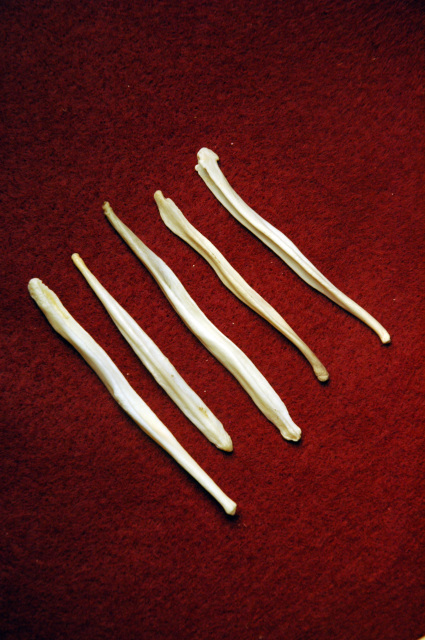
A minor collector of the morbid and marvelous, I was proud of my little spread on the mantel. It featured a perfect gopher skull I found in a forest that I boiled to get it ivory white; a shark jaw bought in Tijuana; a desiccated sea horse; an artfully mounted dried piranha; a skinny, three-inch coyote penis bone picked up at the wondrous Evolution Store in Manhattan; and, of course, the pièce de résistance, the newly jarred baby bird. 

All I needed were the famous bones of the Elephant Man to make my mini-museum world-class. Instead I had a penis bone. Of a coyote.

Coyote penis bones

My interest in this kind of fleshly ephemera goes back to when as kids we hunted lizards and snakes, captured frogs, tadpoles and the occasional crawfish. At the beach, we collected sand crabs, starfish and washed-up egg sacks from sharks.

It wasn’t callow mischief guiding us, but a dogged fascination with the slimy, squirmy world, our first real engagement with the natural sciences and coexistent creatures. Back then our main educational outlet for these things was TV’s “Wild Kingdom,” a show that pales woefully next to today’s über-slick “Planet Earth.” Yet it was good, eye-opening.

Even now, none of this bores me. Though I’ve since discarded my assortment of animal oddities, I love roaming the aisles and perusing the glass cases at the Mütter and the Evolution Store, gaping at furry and scaly taxidermy, jarred sharks, pickled human organs, and skulls of all species.

I’m not alone. The Mütter and Evolution are bustling tourist magnets, irresistible emporiums of the morbid and mortal, stocked with shocking notions and terrible beauty. (I just recalled I own t-shirts from the Mütter and Evolution. How could I forget?)

Meanwhile, my birthday is coming up. Here’s what you can get me, from Evolution:

Jaws in a jar. Beat that.

In space, no one can hear you woof

Sometimes I want to shoot the dog into outer space. Suit him up, slide on a big round helmet, and strap him into a tin-can capsule, ready go, boom

Really, I want to keep old Cubby on terra firma, safely earthbound, away from martians and pesky space debris. Still, when he barks and wails and scratches the paint off the door when visitors knock, I think: Jupiter, yes. Jupiter would be a fine place for a dog park.

Such was the fate of Laika the space dog, a small, blameless pup who was hurled into orbit for the Soviet space program in 1957. A stray street mongrel with a skittish gaze, Laika was really three animals in one: a dog, guinea pig, and sacrificial lamb. 

Laika the cosmic canine

Many critters had flown to space before Laika — monkeys, mice, mutts — but she was set to be the first to orbit Earth. Probably quaking with terror, surrounded by lab-coated apparatchiks, Laika was loaded into the satellite Sputnik 2 for an experimental flight to prove that a living passenger could survive a launch into orbit and weightlessness. 

It was a suicide mission, or more accurately, murder. Laika was never expected to survive; once they sealed the capsule, the Soviets knew she was toast. 

And toast is practically what she became. Within hours of her spectacular orbit, Laika died from overheating and panic. Even the Soviets were mortified: the true cause of her death was not made public until 2002. They initially said she was euthanized with poisoned food before her oxygen ran out, a classic, blundering cover-up. The dead dog floated around up there for six months. She was incinerated when Sputnik re-entered Earth’s atmosphere.

The world mourned the pioneer pooch. She’s gone down in lore as an unwitting hero, nicknamed Muttnick, and honored with commemorative stamps, dolls and children’s books. A monument to Laika was erected in Moscow in 2008.

Muttnick. I like that. Maybe, with a nod to David Bowie, she’s Major Dog. Or Apawlo 13. Or Chewbarka. Never mind. What matters is that Laika lived as a Moscow street hound and died for Soviet sins. A would-be martyr — Joan of Bark — she’s a helpless symbol of the sketchy side of science and progress.

Cubby should be so symbolic. But he’s of a different breed, and an entirely different kind of nobility. And though he wouldn’t last as long as brave Laika in space — I give him two, three hours tops — he’s ready for lift-off and would do NASA proud.

I could see him as a stowaway on the Mars rover (did you say Rover?) Perseverance, which is up there sniffing for signs of ancient Martian life. Or he might hitch a ride to the Moon on one of Elon Musk’s radical SpaceX rockets, joining other civilians who are nutsballs enough to pay millions to pierce the wild blue yonder. That would be fitting, because the dog is definitely daft, a total and irrevocable space cadet. (Fun facts: Laika means “bark” in Russian. Cubby means “preposterous” in any language.)

I’m glad Cubs is still on Earth to provide happiness and headaches, and I hope he sticks around before zipping off to Andromeda. Laika, well. She did the impossible for all mankind. She gave us enlightenment. She cracked opened scientific universes. She kissed the stars and the heavens, where she now eternally resides.

Laika’s monument

One magnificent mollusk

Coiled near its rocky den, the octopus slowly unfurls a tentacle like a flower blooming in a time-lapse photo to the human hand before her. It glances the hand then suddenly sucks it, gently pulling it toward her. The moment carries the pitter-patter of courtship, of holding hands for the first time. Could this be love?

“That’s when you know there’s full trust,” says the owner of the suction-cupped hand, free diver and filmmaker Craig Foster, in his remarkable documentary “My Octopus Teacher.” A viral smash, the Netflix film has been shortlisted for the best documentary Academy Award. Really, it deserves a special accolade, say, Best Buddy Picture Between Man and Mollusk. The movie is something else: devastating octo-poetry. 

A simple story about a grown man befriending a gorgeously slithery cephalopod in the swaying kelp forests of South Africa, the film depicts the burly, soft-spoken Foster as a dedicated student of the ocean who is truly moved by the relationship he forges over a year with the sea animal that remains unnamed. (I suggest Octavia.)

Part of his lesson is noticing the striking similarities between us and these “alien” creatures, the way connection, interspecies or not, is essential and a well of bracing contentment. “It does give you this strange level of octopus joy,” notes Foster, saying words that have likely never been uttered before.

As a pupil, Foster is a keen observer, learning by watching his silent friend do what she does: hunt, hide, jet, crawl, swim and, sometimes, walk on two legs on the ocean floor. That trippy spectacle, both funny and boggling, is one of many scene-stealers.

She’s a gelatinous chameleon, enacting stunning physical transformations with her bulbous head, serpentine legs and polka-dot suckers to blend seamlessly into the Day-Glo surroundings. Her effortless shape-shifting is part of the movie’s multi-pronged magic.

“My Octopus Teacher” reminds me of many oceany things, like the charmingly odd adopt an octopus campaign at the World Wildlife Fund, where for a $55 donation you get a plush stuffed octopus, a photo, an adoption certificate and other tentacular goodies. It never occurred to me that octopuses were endangered, but WWF says they’re “vulnerable to toxins and pollution,” yet doesn’t that cover just about everything? (Please send me $55. I am endangered. My plush doll is amazing.) 

As much as I love watching the delightful octopus in the movie, I love even more putting octopus in my mouth. Almost unavoidable on midscale restaurant menus — perhaps another reason they’re endangered — grilled octopus is hot stuff, up there with bone marrow and short ribs. Both chewy and silky, the meat has a mild sea-foody flavor complemented by a good fiery sear. Here’s a spectacular piece I scarfed in Barcelona:

I don’t want to eat the movie’s affable octopus. She’s a darling — adorably clever, wily and pretty, much like the picture itself, which is also fairly wrenching (brace for some drama). 

It’s an elemental tale rife with homey pleasures: the hand holding, the snuggling, the mutual respect. The bond is inexplicable but palpable, right there on screen, like when Foster’s new BFF seems to be tailing him through the sea.

“That’s one of the most incredible feelings,” he beams, “to be followed by an octopus.”

It’s fantastic, and it almost breaks your heart.