Good news, bad news. What’re you gonna do?

The dog smells like a bowl of stale Doritos. The nor’easter is splatting rain and blowing tree-tossing gusts. Our sociopathic “president” continues to appall on a daily basis (no, you’re not getting the Nobel, so shut up). And I have a zit on my forehead that’s festering like Mt. Vesuvius in 79 A.D.

Otherwise things are just super, grand and dandy, unless you consider that Diane Keaton, one of the most charming and beautiful creatures ever to grace the big screen, has died. Crushing. Long live Annie Hall.

I go to Mexico City in precisely one month, though just days before that I have a dental appointment I’d rather not keep but will, because two of my teeth appear to be turning gray (this mad world!). I’m afraid I am becoming wizened.

If you squint really hard you can squeeze out some of the bad news and unfettered horrors — Gaza, Ukraine, the new Spike Lee movie — unfurling across the world. But it’s not easy, and almost certainly not possible.

But back to the one kernel of okay news, my vacation in Mexico City, a full week in November. I’ve been booking tours and making reservations with tentacular zeal. And I’ve also been uprooting prior plans. In an earlier post I mentioned that I registered for a tacos al pastor cooking class, a splurge and a mash note to my favorite taco. 

Well, I nixed the class (sorry, Anne R.!) for two expeditions: one a three-hour guided tour of the National Museum of Anthropology (sounds deadly, but I’m assured it’s essential) and the other a festive, three and a half-hour Tacos and Mezcal Tour, whose price tag I blush to share with you. Guess which tour I’m looking more forward to.

Other good news lurks. Fall has fallen, and despite the nor’easter, which is really quite mild in these parts, the weather is totally dreamy. Usually I’m abroad for Halloween — Europeans try very hard to get it down, though it’s still strictly amateur hour there — but I’ll be around this time and that’s a plus. 

I dig a good monster mash. I also like all the costumes that I can’t tell what the hell they’re supposed to be. Is that a ballerina werewolf? I hope some savvy kids deck out as Annie Hall: men’s tie, vest and khakis, and that wide-brimmed hat. Sartorial genius. They can flummox all their friends who still dress in Pokémon.

On a side note, what ever happened to the smashed pumpkins in the street? In my day, that was as mandatory as begging for goodies. Kids today. So thoughtful. Or clueless.

I guess in the end that’s also good news. Smashing Pumpkins is a great band — pay special attention to the superhuman drummer — but smashing pumpkins is just boneheaded vandalism. Thus I hesitantly cheer its extinction.

Good news and bad news will always share a table, so we’re kind of stuck. Israeli hostages are freed (yay). Diane Keaton dies (boo). Leaves are falling with the temperature (yay). Jeff Tweedy releases a solo triple album (boo). Paul Thomas Anderson’s new movie, “One Battle After Another,” is an apparent masterpiece (yay). Oh, and the dog. Yes, the dog. He really needs a bath (self-explanatory).

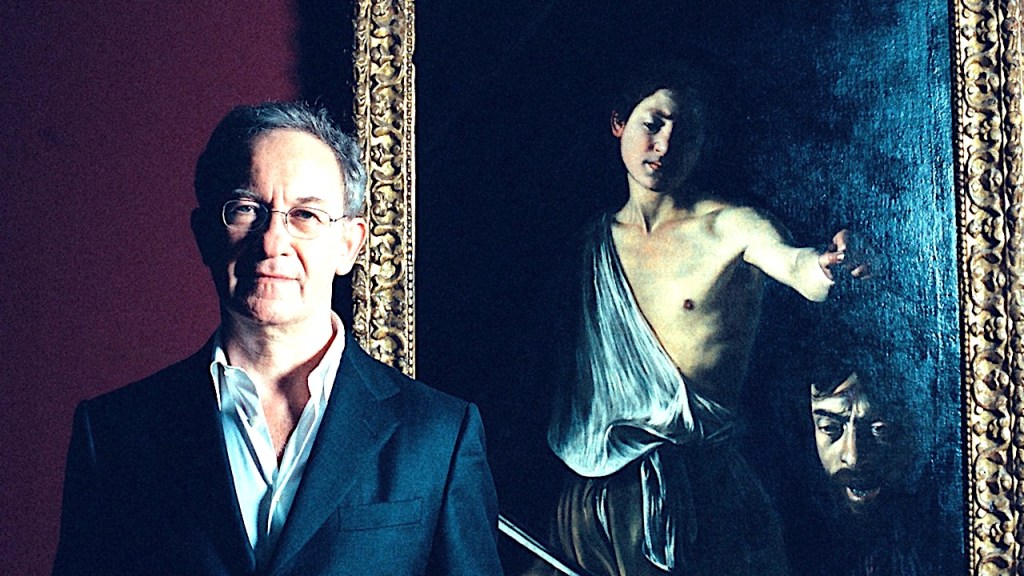
Diane Keaton as Annie Hall

Roaming Roma

About that Mexico City trip I’m taking in November, I think I’m getting carried away. I’m there for a week and already I’ve booked four dinners and six tours, and I’m scanning more adventures in the heaving megalopolis, which goes by the sporty acronym CDMX. 

The gargantuan city is so overwhelming, with so much to see and eat, I feel I require more guidance and guardrails than on previous trips. I’m so fretful that I woke at 2 a.m. to make a pair of rarefied restaurant reservations just to make sure I secured them at the exact right time. (Scored!) 

But I’m also a loner, so, when it comes to tours, I really don’t want to get stuck with too many chatty chuckleheads from, say, Melbourne and Milwaukee. I can roll my eyes only so much. Still, I have six tours on my slate, a personal record, which could be a canny or foolhardy proposition. 

That said, I’m probably going to spend the rest of my time strolling the many neighborhoods solo and uncover my own delights. The place is frightfully big, so this expedition will either be sweetly exhilarating or operatically tragic. 

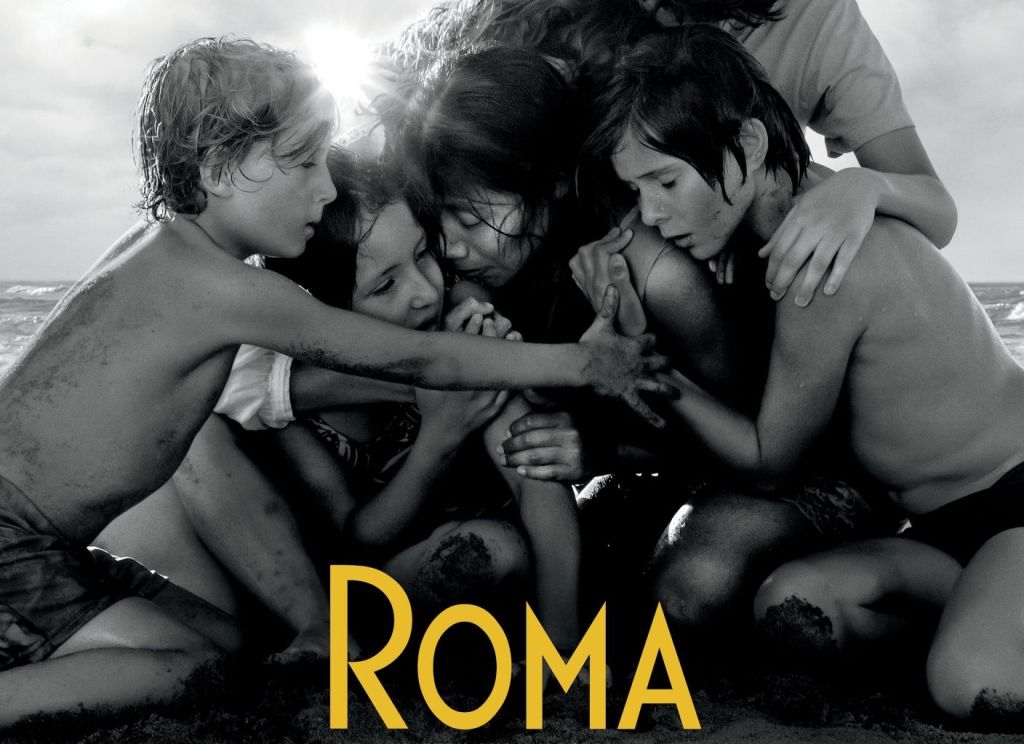
One of the tours I’ve booked is of the vibrant Roma area, billed as a paradise of local markets, parks, trendy restaurants, bars and hipster cafes. If that’s my sort of  thing — and it is, though I do love my grunge — it also evokes writer-director Alfonso Cuarón’s 2018 memory film “Roma,” set in the neighborhood during the much different 1970s, when the socio-political scene was uniquely combustible. (The area, incidentally, is named after Rome, Italy, as a tribute to its wealth and culture.)

The award-dappled movie is a languid stunner, an autobiographical portrait of growing up in Cuarón’s tight upper-middle class family, with special focus on the domestic help, namely Cleo, who, beyond sweeping up dog poop and making beds, takes care of Cuarón and his three gangly siblings.

Deceptively simple, “Roma” — shot in shimmery, Oscar-winning black and white that looks like quicksilver — is family drama at its most heightened and honest. Its verité verve is pure documentary immersion.

From the director of masterworks “Y tu mamá también,” “Gravity” and “Children of Men,” the movie examines with a flea comb the daily dynamics of living and loving together, and all the pain and joy that involves, including fatal frictions between husband and wife. 

And then there’s quiet, big-hearted Cleo, cooking and cleaning and embracing her role as part of the family — and in the process, becoming a sort of angelic savior keeping the clan together. The movie ranks #46 on the New York Times list of best films of the last 25 years.

The tour I booked has a lot to live up to.

(On Netflix.)

KISS-ing ass, Trump style

As a childhood KISS fan, this makes my stomach twist. Trump has tapped the grizzled glam rockers as inductees to the Kennedy Center Honors this year, a tribute so perfectly tawdry, I don’t think many get the irony, the hilarity.

KISS, whose integrity has always been dubious, is reportedly not a fan of our portly prez, calling Trump a “true danger to democracy,” but now of course say they’re “honored.” Trump says he picked the bawdy band because they’ve “made a fortune,” which is true, but a repugnant reason to exalt them. He’s also trying to irk the libs, of course. Funniest snub: Tom Cruise dissed Trump’s induction. That’s why he’s a big-screen action hero who can practically fly, without a cape. (Seen the Photoshop illustration of Trump as Superman, cape and all? You’ll vomit.)

Trump’s so stupid he doesn’t even know what culture is. He also elected disco queen Gloria Gaynor for the honors, evidently unaware that her biggest hit “I Will Survive” is a celebrated gay anthem — a song he loves with ignorant gusto. It’s much like the Village People’s comically transparent “YMCA,” a Trump theme during his campaigns that he would clap to like a bloated orange oaf.

The bigot is blind. And deaf. Our tinpot despot has a tin ear.

KISS-asses, selling their souls.

Newsflashes

Keeping it light, some recent news plucked from the headlines …

RIP Ozzy Osbourne, madman and mensch, who amazingly didn’t die of rabies. He was the gentle, doddering Prince of Darkness, whose live shows brought out the crowd-pleasing celebrant, all cackles and hand claps. He would hop like a pogo stick. I saw him in concert when I was 13, my first metal show. I can’t shake it decades later. Satan is smiling. 

Trump can’t elude the loaded Epstein case, and he’s shaking in his loafers and pissing his pants as he tries to deflect the pressure. Wipe your brow, sir; the flop sweat is showing. And on a scathing “South Park,” so is your talking micro-penis.

The New York Times posted its 100 best films of the past 25 years just to tick me off. While I agree with the bulk of the choices, if in different order, some make me want to throttle the voters. For starters, “Parasite” (#1 ?!), “Mulholland Drive” (#2 ?!), “Inglourious Basterds,” “Hereditary,” “The Master,” “Amélie,” and I’m just getting going. But bless them for including “Melancholia,” “The New World,” “Grizzly Man,” “School of Rock,” and so many other gems. Still, I don’t know why I read such lists. I don’t need the aggravation.

She perched gracefully atop sign posts, fences, rocks and cars, like a canine ballerina, poised and pliant. Maddie the spotted coonhound was the subject of her owner’s lustrous photography, clearly in the spirit of William Wegman’s whimsical photos of his preternaturally patient Weimaraners. Maddie’s charming pictures boast 1.2 million Instagram followers and comprise two books. But there will be no new pup pics, as Maddie died this week at age 14. I just got acquainted with her visual poetry, and still I’m crestfallen. Her loving obit.

Chuck E. Cheese got mouse-trapped. “Come with me, Chuck E.,” said the policeman who arrested the human-sized mouse — er, a human in a mouse costume — at the children’s pizza chain in Tallahassee, Fla., this week. The un-mousey behavior? Credit card fraud. Somewhere Mickey Mouse is blushing. “Astonished children wondered why the restaurant’s mascot was seemingly done for the day even as they continued to eat pizza and play arcade games,” said one report. “How do you explain this to a 4 and a 6 year old?” asked a witness. A youngster wanted a photo with the mighty mouse, but “a cop out of nowhere grabs his arm and says: ‘Chuck E.’s busy right now.’” Dying to know how his fellow inmates take to his gaudy outfit, big plastic head and all.

Hulk Hogan, a hideous human being, did the world a favor — he died. 

Summer playlist

Next to the excellent book about the Beatles I just finished, I’ve been staying intellectually nourished this summer with a spate of lush art, from musical earworm discoveries to great movies revisited. These are some highlights so far:

My brother turned me on to the rambunctious novel “The Death of Bunny Munro, and I don’t know if I should thank him or break his thumbs. Outrageous and splendidly salacious, the book, a dark comic romp, is by Nick Cave, the singer, performer, screenwriter and all-around Renaissance man, who looks like a dapper, raven-haired cadaver with a ghoulish gothic cast. Bunny, the protagonist, has just lost his wife to suicide. He decides to take his 9-year-old son, Bunny Jr., on a rambling, sex-fueled road trip that becomes a pervert’s picaresque filled with carnal catharsis and lessons learned for innocent but brilliant Junior, who appears to be on the spectrum. The novel pops with blazing  prose, twisted laughs and, as one critic put it, “grotesque beauty.” This Bunny goes down the rabbit hole and never comes up for air.

Released in 2007, “There Will Be Blood” retains its status as a cinematic landmark and holds up awesomely years later, getting better on each viewing. The New York Times recently named it the third best movie of the 21st century so far, behind the number two slot, the flatly unworthy “Mulholland Drive.” Paul Thomas Anderson’s strange, majestic saga of greed, faith, misanthropy, violence and of course crude oil is anchored terrifyingly by Daniel-Day Lewis working his acting sorcery for one of the great performances of male tyranny. He’s a monster, and he’s mesmerizing. Johnny Greenwood’s eerie, atonal score is as epic as the gorgeous visuals, and lends the film much of its woozy, unsettling power. There’s so much grandeur going on, you have to ask: How did they do it?

I tend to be way behind on new popular music. (Olivia Rodrigo who?) Mostly I just ignore it, and then it takes years for an ancient song to wind its way to my virgin ears, and then it’s a revelation (and a slight embarrassment). Like, I just discovered the 2018 album by the inimitable Mitski, “Be the Cowboy,” which was slavered over by every critic and named the best record of that year many times over. I’m especially infatuated with two songs, “A Pearl” and “Me and My Husband,” neither of which were the album’s hits or standouts. But they’re little jewels to me, each just over two minutes long. Mitski, a Japanese American with a made-up stage name, plays with piano, synthesizers, horns and her trademark guitar on the album, which has been frequently called genre-defying, but is firmly modern pop, with an outré twist. I won’t get all music critic-y and deconstruct my two favorite songs, saying only that “A Pearl” is dreamlike and yearning and rather heart-tugging, while “Me and My Husband” is funky with perhaps terribly ironic lyrics about a marriage. Or not. 

They are practically begging to die. So it seems amid a coterie of big wave surfers whose only aim in life is to locate the wickedest, most ferocious waves possible, get on their surfboards and hit the water and ride roaring barrels. That’s what ace documentarian Chris Smith captures in his transfixing HBO series “100 Foot Wave,an unlikely plunge into foam and fury and a beautiful human portrait of a tribe of surfers who salivate at the sight of an unforgiving ocean that dares them to take it on. The nominal star is middle-aged master Garrett McNamara, who leads the surfers from massive swells in Portugal — you cannot believe how enormous the waves are — to the far reaches of the Pacific. It’s season three in the series, but start anywhere, because the drama — from gnarly surfing to nasty wipeouts — is everywhere. Watch with a glass of wine. Your adrenaline is going to skyrocket, in the best way.

I hate everything

“I wish I was like you/Easily amused”  — Nirvana, “All Apologies”

Someone just pointed out — sooo boringly — how I don’t like anything. It’s an asinine statement that can only come from the congenitally cheery extrovert who unthinkingly likes almost everything, no matter how lame and degrading it is. These are the loud laughers and knee-slappers. Ha! What a hoot! The kind that still thinks “SNL” is funny.

It’s true, I’m a rough critic with shades of the pessimistic and a tendency toward the comparatively negative. I’m a dark spirit with high standards and a low tolerance for mediocrity and pure crap. I try many things. I am usually gravely disappointed.

Too many people like too many things. It’s as if they like everything. I consider myself discriminating. I don’t need, nor want, to like everything. Most things are middling or overrated, and I feel like a chump for investing time in them. I once interviewed a critic at the San Francisco Chronicle, and he admitted that most shows, films and concerts he sees are worth two out of four stars. I nodded wisely. 

And so, I’m labeled a hater.

Just because I find Taylor Swift numbingly average, think team sports are boring and obnoxious, abhor nearly every Wes Anderson and Quentin Tarantino movie, and am convinced the American version of TV’s “The Office” is grating and unfunny and not a whisker near the greatness of the British original. And Marvel: like daggers in my eyes.

Call me cranky, call me what you will.

But I’m not having it. 

There’s so much I do love, such as, in no order: 

World travel, books, reading, writing, drumming, snow skiing, romance, vintage BMX, animals, “Breaking Bad,” the Beatles, Philip Roth, stellar art museums, Iranian cinema, Paris, cold weather, big cities, director Michael Mann, “Hacks,” old film noirs and screwball comedies, Beethoven, architect Frank Gehry, ice cream, Radiohead, the Marx Brothers, “Top Chef,” David Bowie, nice people, the singer Mitski, rollercoasters, “The White Lotus,” Toni Morrison, boygenius, Martin Short, “SCTV,” an inspired cocktail, a great meal, Al Pacino, and — surprise — Anderson’s “Rushmore” and Tarantino’s “Pulp Fiction” … and so on and so forth. I could rattle off superlatives all day.

I should just keep my mouth shut, because too often my opinions suck the oxygen out of the room. People simply can’t believe I don’t think “The Wire” or Springsteen are unvarnished genius (they’re not). But below the negativity gurgles a sparkling river of all that I praise to a degree of adoration, even obsession.

Nope.

When I was a theater critic, years ago, readers complained about my cynicism to the point that my editors did a scientific breakdown of how many negative reviews I had given as opposed to my positive reviews. The result was 84 percent positive. People, I think, like to cling to the negative response, all that contradicts their self-righteously proclaimed passions that they protect like little bunnies. Free Britney!

Still, it is true I find dissing unworthy cultural totems liberating, a perverse pastime, and I’m not alone in this (see: Larry David). More things that make me recoil: Donna Tartt’s overrated novel “The Goldfinch,” souped-up cars, dinner parties, Harry Potter, bros (frat, finance, tech, gym, etc.), most tattoos, Kanye, that 40-year-old skateboarder … 

Bah. 


The drudgery, and joy, of writing

Last month or so, I was reading a terrific book about the making of the classic movie “Chinatown” titled “The Big Goodbye: ‘Chinatown’ and the Last Years of Hollywood,” by Sam Wasson, and I had to grin at this quote from legendary screenwriter Robert Towne: “So much of writing is trying to avoid facing it.”

That’s hardly the most original thing uttered about the writer’s penchant for procrastination and craven dread of the blank page — Hemingway summed it up: “There is nothing to writing. All you do is sit down at a typewriter and bleed.” — but it was a reassuring reminder that cooking up stuff for a readership, a nervously performative act, isn’t always a joyride, or particularly easy. It can be a grind. It can be depressing. It can sap the soul. 

But it can also be exhilarating and, when things are flowing, a blast. Well, let’s not get carried away. How about … satisfying? Said great journalist Russell Baker: “I’ve always found that when writing is fun, it’s not very good. If you haven’t sweated over it, it’s probably not worth it.”

I don’t know how you reconcile that dichotomy, the yin and yang of good and rotten, delight and drudgery, but they seem to jibe. There’s a fruitful friction. Good days, bad days, middling days. (That last line? Lazy writing. Bad writing. I left it there as a specimen of what can go wrong.) 

I always want to write, but once I sit down and face the empty page that sneers, “Go ahead, try and fill me,” I tend to constrict, choke, unless I’m especially inspired and know how I’ll begin and where I’m (generally) going. Those days are the exception. Right now, I’m winging it. I had that Robert Towne quote in my head and started riffing. (Help!) 

There’s no map. There’s only this: Get it down. The prose may be raw and bloody — embarrassing, eye-sizzling — but the ideas matter and the words, those painstakingly chosen few, will be chiseled out of the viscous blob of verbiage. Editors are helpful at this stage, and I’ve worked with many who have saved my prolix ass. But here on this free-floating blog I’m on my own. I am judge, jury, executioner. And I probably should have executed that sentence. 

Point is, writing, like any creative endeavor, is a messy enterprise, hard to do but at times truly rewarding (I have ten journalism awards that bear that out, he crowed). You have to dive in head first, and toil to make a splash. Taking pride in your work is mandatory — read tons, write multiple drafts, and use spell check for chrissakes — the only way you’ll do anything worth a damn.

First you must conquer that blank page, which requires actually facing the music, not dodging it, as Towne noted. I’m working on a writing project that I approach tentatively, with baby steps, not because I’m indolent but because I am, frankly, a little scared. 

There’s a cure for that. It’s simple yet courageous: Sit down, stare at the page, and bleed.

You must win the staring contest with the blank page. Despair is likely. So is reward.

Into the elusive mind of David Lynch (R.I.P.)

Indelible auteur, quiet crackpot, polite polymath, gentle genius, David Lynch, known mostly for his string of indescribable movies, died today at age 78. A lifelong, unrepentant chain-smoker, the artist/visionary announced he had emphysema last year, and defiantly declared he would not relinquish the pleasures of a good cigarette. And so …

In 2007, on the release of a new film and new book by Lynch, I interviewed him in Austin, Texas. This is how it went: 

Watching a David Lynch movie, you might reasonably think its maker is living somewhere deep in the clouds. Speaking to Lynch only confirms this conceit, but in a charming, even sweet way.

Lynch, creator of some of the most willfully strange, and darkest, American cinema of the past 30 years, comes across as a crypto-naif — a polite, soft-spoken Midwestern gent wearing the mantle of a sophisticated abstract artist obsessed by dark, disturbing and unknowable things. It’s hard to reconcile the voice you hear on the phone — that of a pocket-protector accountant — with the father of “Eraserhead,” “Blue Velvet,” “Twin Peaks” and “Mulholland Drive.”

But cognitive dissonance is the currency of Lynch’s weirdly wonderful, inveterately arcane body of work. Take a look at his new film “Inland Empire.” The three-hour movie and my conversation with Lynch affirm the artist’s unbending faith in the abstract. Abstraction trumps the literal, he reasons, because it gives viewers a participatory role, allowing them to unriddle the conundrums he puts forth.

Lynch refuses to plumb the meaning of his work, asking audiences to approach the films with no prior baggage or knowledge. Which makes our job simpler, as it eases the obligation to write about what the sprawling “Inland Empire” is about.

Some facts: Lynch wrote “Inland Empire” as he went. He shot on digital video for the first time, making him an outspoken convert to the medium. He pieced a lot of it from previous projects, including 2002’s “Rabbits,” a nine-part, 50-minute short featuring actors wearing giant rabbit heads. 

“Inland Empire” stars Laura Dern, who also co-produced, Jeremy Irons and Harry Dean Stanton, and features a handful of cameos. It is a difficult movie.

Lynch, 60, is on the road plumping the new film and his new book “Catching the Big Fish: Meditation, Consciousness and Creativity.” In the slight and gnomic book, the Montana native shines a light on his 30-year devotion to transcendental meditation and its scuba-like potential to let practitioners dive many fathoms into consciousness and make otherwise unavailable discoveries in the mind’s darkest depths.

This, Lynch says, is where he finds his ideas. Lynch recently began the David Lynch Foundation for Consciousness-Based Education, which is aimed at teaching children transcendental meditation, a monument to his creative wellspring.

I recently spoke to Lynch.

The long, piecemeal process of making “Inland Empire” is becoming legend. Can you explain its unusual gestation period?

Well, it was a little bit unusual, but still the same, because it all starts with ideas. I got an idea that started when Laura Dern told me she was my new neighbor and her saying we have to do something together again. Thinking about that, things started rolling out and I started catching ideas and then I would write those ideas down and a scene appeared. Instead of keeping going and writing an entire script, I saw this as a stand-alone thing, not thinking in terms of a feature film at all. We got people together and shot that scene. Then I got an idea for another scene, unrelated to that first scene.

What was that first scene?

I don’t say, because I don’t want to putrefy the experience. Sometimes when people know a bunch of things they just start thinking about that. For me, I like to go into a film not knowing anything and letting it just happen. So I was shooting scene by scene, not thinking it was a feature until a bunch of ideas came that united the things that had come before. At that point I wrote much more and we shot in a more traditional way. Everything comes from ideas.

Watching “Inland Empire” is an often jarring experience and it does feel cobbled together from totally independent ideas. You’ll be in one scene or situation, then suddenly those darn rabbit-headed people pop up again. It’s discombobulating, but I assume you have a master plan holding the logic together.

Well, everything comes from ideas. And every idea starts talking to you and somehow things get together and the whole feels correct. 

Why are you having ideas about people wearing giant rabbit heads?

Why does any idea come along? And why do we fall in love with them? Ideas that you fall in love with and think about and feel start speaking to you in a way that feels correct for the thing. If they’re abstract, you don’t always have a way of putting them into words that make the same feeling. That’s the beauty of cinema. Cinema can conjure things that can’t be said in words, except maybe by the great poets. They can stay abstractions. Many times in a film something pops up and then later the same thing pops up in a continuation. It’s the way stories unfold. It’s just the way it goes.

It sounds very organic put that way, but a critic might argue, “Yeah, you have a lot of ideas, but not all of them are thought through. You put the rabbit people in a satirical sitcom, but now what?”

I understand 100 percent, Chris. But if you just willy-nilly put things in, what is the point? The ideas start feeling correct even though you don’t know the whole story yet. A thing starts happening where the whole thing starts making sense, and it’s saying something for you, and it’s feeling correct. That’s how it goes with all the films. You may not know everything at the beginning, but you’re working on a script and it unfolds. It’s a huge gift, all these ideas holding together for you the filmmaker. And so you go like that, all pumped up with enthusiasm, feeling it and knowing it for yourself. Then you translate that through cinema and you’re rockin.’

Much of “Inland Empire” is easy to follow. Still, one might wonder what it’s about. Your official plot synopsis is just a single phrase: “A woman in trouble.”

That’s what it’s about. Obviously there’s more than that, and it’s there in the film. It’s not that I have fun not telling people things. The analogy I always say is that there are books where the author is long since dead and all that remains is the work. And you read it and the author isn’t around to ask questions of and you make sense of it yourself. To me, there’s a joy in that.

Do you mind that it sometimes seems like your ideas are vaulted in your head, inaccessible to everyone else?

No, because I think if it feels correct for one human being, chances are it can feel correct for others. When it’s abstract the correct feeling can come out in different interpretations. It’s like a long line of viewers stepping up to an abstract painting and each viewer getting a different feeling. If you wanted everybody to get the same thing you would make no room to dream. When things get abstract it’s open to whatever. Viewers know much more than they give themselves credit for. After a film, they go get a cup of coffee and talk to their friends, and before they know it they’re arguing over interpretations. All this stuff comes out, showing that they kind of internally knew (what was going on).

So you don’t mind asking a lot of your audience, particularly with the new film, which is nonlinear, opaque and a whopping three hours long? As one critic has written, it can leave an audience “baffled to the point of numbness.”

Some might feel that way, but if you talk to 10 people, all 10 won’t feel that way. It’s the viewer.

You’ve recently — and eagerly — joined the digital video revolution, and in Austin we have filmmaker Robert Rodriguez, who’s been evangelical about the medium’s virtues.

He’s a hero-champion. Digital video is a runaway train. Look at what people are taking still photos with now and you’ll see what’s happening with all of cinema. It’s digital and it’s here. There’s an opportunity for more and more people to let their voice out and realize their ideas. Freedom.

“Inland Empire” has a meta, film-within-a-film quality, echoing ideas of Hollywood, fame and moviemaking that you explored and critiqued in “Mulholland Drive.”

In a way the films are companion pieces.

That’s exactly how I felt. Can you elaborate?

No.

What are some of your obsessions? Lately you’ve gravitated to ideas about identity, split personas and parallel lives.

What I love are ideas, but not all ideas. How come certain people fall in love with certain ideas? It’s just the way they are. When you’re in love with an idea it’s such a beautiful thing. Then you know what you’re going to do and you can really enjoy the doing and translate that to a medium. It’s not like I say, “OK, I’m going to do something about an identity thing.” You get some ideas and later you realize, “Oh, it’s about that.”

In “Catching the Big Fish,” you are very generous sharing how you feel about transcendental meditation and how it’s transformed you. How has it affected your art?

One definition of human beings I’ve heard is we’re “humanoids reflecting the Being.” The Being is an ocean, unbounded, infinite, eternal, at the base of all matter and all mind. This ocean of pure consciousness, of bliss consciousness — creativity, intelligence, love, energy — is there and always has been there. It’s a human thing to learn how to contact this field and grow in it. And that means growing in creativity and energy. 

The side effect of experiencing that deepest level is negative things start to recede, dissolve. That’s like stress, anger, fear, sorrow, depression all going. So beautiful for the artist or for any human being. It affects all avenues of life, and big understanding starts to come, appreciation for things and people. It’s so important to expand this consciousness and get yourself better equipped to catch ideas at a deeper level and understand them more. 

As I put in the book, the artist doesn’t have to suffer to show suffering. Let the characters do the suffering. People say artists should suffer, they get ideas from suffering and all this. The more the artist is suffering, the less he or she can do. Real depression, real anger are a killer to creativity. So if you really want an edge, really want to do what you really believe in doing and have the power to have huge stressful situations come off your back like water off a duck’s back, just expand this bliss consciousness. The Being, this beautiful, beautiful, beautiful unified field — unity — expand that. Transcending is the only experience that utilizes the full brain.

Wow, whoa. You have your own coffee now, David Lynch Signature Cup. It seems a little gimmicky.

See, there’s the thing. There’s another expression: “The world is as you are.” There are lots of people who have their own coffee and there’s not a problem. We can do anything we want. So to put out a coffee that’s a good coffee to me is a beautiful, beautiful thing. I do love coffee, so roll it out.

Is it a special coffee; did you hand-pick it?

It tastes good to me. It’s the coffee I drink. It’s organic. It’s all fair trade. It’s a beautiful, beautiful thing.

***

Lynch on Lynch

In a game of free-association, I asked Lynch to offer a brief comment — or a single word — about some of his best-known works:

ERASERHEAD (1977): “My most spiritual film.”

THE ELEPHANT MAN (1980): “When I first heard the title an explosion went off in my brain, and I said, ‘That’s it.’ It was a true blessing to get that movie.”

DUNE (1984): “Heartache.”

BLUE VELVET (1986): “Hidden things.”

TWIN PEAKS (TV series, 1990) : “The mystery of the woods.”

WILD AT HEART (1990): “True love in Hell.”

THE STRAIGHT STORY (1999): “Forgiveness and brotherly love.”

MULHOLLAND DRIVE (2001): “A wondrous, hopeful dream of love.”

A tossed salad of topics, memoirs to movies

In these mid-summer doldrums, a few rambling thoughts that amount to nothing in particular …

Best sentence all summer: “Her lipstick is a philosophically incomprehensible shade of chalky orange.” (From “Eve’s Hollywood” by Eve Babitz.)  

I have yet to read a memoir that didn’t bore me silly or raise an eyebrow or two. Nabokov’s “Speak, Memory” is a possible exception, and “Eve’s Hollywood” definitely is. I’m skeptical of minutiae only the writer cares about, like how their father flew planes in World War II and their sister married an alcoholic son of a bitch. I can hardly believe a word of what the authors say, especially when they do things like insert direct quotes they muttered as toddlers, forty years after the fact. (See: Mary Karr’s aptly titled “The Liars’ Club.”) It’s all magnificent hooey.

I’m sleeping like crap. Nothing new, but I’m locked in a stretch of relentless insomnia. I called my doctor and he gave me a low dose of Lunesta. It’s done nothing, even when I take more than the prescribed amount (whoopsie). I pop Benadryl and a dorky over the counter sleep aid as well. I’m all drugged up and I still don’t nod off till 4 or 5 or 6. Then I sleep till 9 and awake vaguely refreshed with murder on the mind. I feel like a Stephen King character.

Kamala’s got me revved. For now. The initial blast of flowers and fireworks — her spontaneous honeymoon — is about over, and now she must face the music … er, the monster. Trump, a hopeless buffoon, bigot and playground bully, will meet his match in the debates. Kamala will be the buzzsaw that Trump’s ignorant, lying face encounters and it will be beautiful. That ear boo-boo Trump’s so proud of will be shown for the nothing it is, except symbolic and specious martyrdom. He keeps blathering about the American “bloodbath.” Yes, indeed.

As always, I’ve been watching lots of classic movies from early and midcentury Hollywood — the Golden Age of pictures when men were either gruff or suave (and glistening with pomade) and women were silky and soft-focus, radiating unreachable glamor. Black and white was king and the best pics were positively charged with swoony cinematography and dazzling chiaroscuro. Those were the days. (And I’m someone who name-checks “Alien” and “Jaws” among his favorite films, alongside “All About Eve” and “The Big Sleep.”) Recent viewings: “The Big Heat,” a crackerjack 1953 crime thriller by Fritz Lang, starring Glenn Ford and Gloria Grahame, who gets a pot of scalding coffee tossed in her face by Lee Marvin and has to wear a giant bandage for half the movie; the unbearably charming Cary Grant and Irene Dunne in the 1937 screwball marriage/divorce romp “The Awful Truth,” which features the brilliant dog Skippy, who also plays Asta in the great “Thin Man” films; and 1955’s “The Big Knife,” where a fist-tight Jack Palance is a movie star sucked into the manipulative corruptions of fame. A rabid Rod Steiger noshes the scenery like it’s beef jerky. And that’s just three oldies I’ve recently watched (I’ve seen them all before). They beat the living crud out of big, dopey summer blockbusters any day.

I bought a hair dryer. I swear to god. It cost $15. It screams like Janis Joplin.


Recent tomes I’ve tapped

I’m never not reading a book or two. These are a few new titles I got my grubby paws on: 

Mike Nichols’ 1966 film of Edward Albee’s corrosive play “Who’s Afraid of Virginia Woolf?” remains a dish-rattling, drink-spilling, daggers-in-your-ears delight, all marital earthquakes and social Molotov cocktails. (Cocktails. Of course.) Booze is big in that cracked portrait of a long-wed couple on the rocks. (On the rocks. Of course.) And you get a contact high reading the riveting “Cocktails with George and Martha: Movies, Marriage, and the Making of ‘Who’s Afraid of Virginia Woolf?’” by Philip Gefter, who capably captures the play’s serrated edges, dubious morality and verbal drive-bys, as well as the behind-the-scenes hoopla of making a controversial movie with a controversial couple, no less than Richard Burton and Elizabeth Taylor — Hollywood nitroglycerin. It’s a bracing blast of theater and cinema history.  

“Headshot” is by a woman named Rita Bullwinkel. Let’s get that out of the way. (There, done.) This slim, tightly coiled novel is also a muscular debut, damp with the blood and sweat of a passel of female teenage boxers, zesty characters realized with pointillist panache. Time-leaping and fragmentary, the girls’ stories are told in intense vignettes for a scrappy scrapbook of pugilistic profiles that pounds with humanity and life. If not quite a K.O. — more tonal and rhythmic variety would shake things up — the book is a fleet-footed contender. 

With irksomely precocious flair — at 35, he’s a wizardly wunderkind — poet Kaveh Akbar conjures worlds of art and ideas in his radiant fiction debut “Martyr!” Reeking agreeably of auto-fiction, this dense but delectably readable novel is about an Iranian-American poet scouring past and present, life, death and love with the insight of an artist and the squishy heart of the wounded. Gorgeous language propels you through its lush, gently philosophical thickets. And despite some muddled mysticism near the end — I’m allergic to spiritual allegory — “Martyr!” had me pleasantly reeling. 

Lorrie Moore’s a personal favorite and her latest fiction is the knottily named “I Am Homeless If This is Not My Home.Like all her books, tangy prose festoons the pages (a bite-size sample: “Fluorescent light rinsed the room.”). Yet the novel, with its arch surreal touches, rubbed me wrong. The narrative, centered on a man and his dying brother, is gawky, with sharp elbows and knobby knees. Plus, there’s heaps about chemo, cancer and croaking, and I’m not in a hospice mood. The novel just won the National Book Critics Circle award for fiction, so call me bonkers. In this rare instance, Moore is less.

Not for the feint of heart but perhaps for suckers for sentiment, the bleak memoir “Molly” — breathlessly written by Molly’s husband, Blake Butler, a noted novelist of thrillers — starts with her gunshot suicide and continues with another bang, the crack of bared emotion and tell-all candor. This is the story of Butler and Molly Brodak’s three-year marriage, a melding of art and nature and words and, in her case, bouts of inconsolable darkness. Brodak, a published poet and author who said “I simply wasn’t good enough,” killed herself three weeks before her 40th birthday, in 2020. “Molly” is so much about her and her devastating secrets, yet equally about Butler’s clawing to the other side of grief through deep (and verbose) psychic excavation. He includes Molly’s suicide note (“I don’t love people. I don’t want to be a person”), along with the frantic blow-by-blow action of finding her body in a favorite field of theirs. These passages are tough-going, not only for the forensic particulars, but for Butler’s writerly histrionics as well; he pants on the page. A cult sensation, tugging readers to and fro like emotional taffy and kicking critics into superlative overdrive, “Molly” is a divisive read, by turns lovely, wincing and overheated. It is the first book I’ve read that opens with the phone number for the national suicide hotline.