Into the elusive mind of David Lynch (R.I.P.)

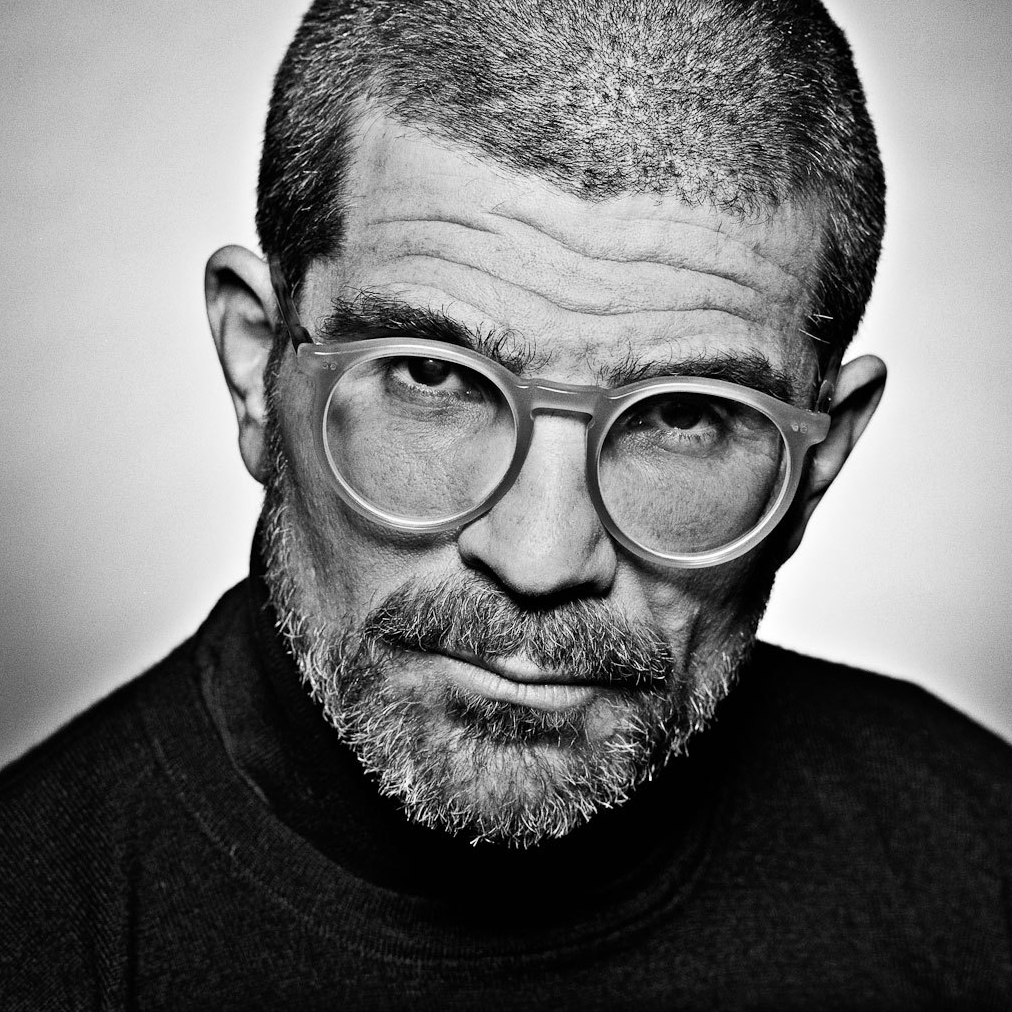
Indelible auteur, quiet crackpot, polite polymath, gentle genius, David Lynch, known mostly for his string of indescribable movies, died today at age 78. A lifelong, unrepentant chain-smoker, the artist/visionary announced he had emphysema last year, and defiantly declared he would not relinquish the pleasures of a good cigarette. And so …

In 2007, on the release of a new film and new book by Lynch, I interviewed him in Austin, Texas. This is how it went: 

Watching a David Lynch movie, you might reasonably think its maker is living somewhere deep in the clouds. Speaking to Lynch only confirms this conceit, but in a charming, even sweet way.

Lynch, creator of some of the most willfully strange, and darkest, American cinema of the past 30 years, comes across as a crypto-naif — a polite, soft-spoken Midwestern gent wearing the mantle of a sophisticated abstract artist obsessed by dark, disturbing and unknowable things. It’s hard to reconcile the voice you hear on the phone — that of a pocket-protector accountant — with the father of “Eraserhead,” “Blue Velvet,” “Twin Peaks” and “Mulholland Drive.”

But cognitive dissonance is the currency of Lynch’s weirdly wonderful, inveterately arcane body of work. Take a look at his new film “Inland Empire.” The three-hour movie and my conversation with Lynch affirm the artist’s unbending faith in the abstract. Abstraction trumps the literal, he reasons, because it gives viewers a participatory role, allowing them to unriddle the conundrums he puts forth.

Lynch refuses to plumb the meaning of his work, asking audiences to approach the films with no prior baggage or knowledge. Which makes our job simpler, as it eases the obligation to write about what the sprawling “Inland Empire” is about.

Some facts: Lynch wrote “Inland Empire” as he went. He shot on digital video for the first time, making him an outspoken convert to the medium. He pieced a lot of it from previous projects, including 2002’s “Rabbits,” a nine-part, 50-minute short featuring actors wearing giant rabbit heads. 

“Inland Empire” stars Laura Dern, who also co-produced, Jeremy Irons and Harry Dean Stanton, and features a handful of cameos. It is a difficult movie.

Lynch, 60, is on the road plumping the new film and his new book “Catching the Big Fish: Meditation, Consciousness and Creativity.” In the slight and gnomic book, the Montana native shines a light on his 30-year devotion to transcendental meditation and its scuba-like potential to let practitioners dive many fathoms into consciousness and make otherwise unavailable discoveries in the mind’s darkest depths.

This, Lynch says, is where he finds his ideas. Lynch recently began the David Lynch Foundation for Consciousness-Based Education, which is aimed at teaching children transcendental meditation, a monument to his creative wellspring.

I recently spoke to Lynch.

The long, piecemeal process of making “Inland Empire” is becoming legend. Can you explain its unusual gestation period?

Well, it was a little bit unusual, but still the same, because it all starts with ideas. I got an idea that started when Laura Dern told me she was my new neighbor and her saying we have to do something together again. Thinking about that, things started rolling out and I started catching ideas and then I would write those ideas down and a scene appeared. Instead of keeping going and writing an entire script, I saw this as a stand-alone thing, not thinking in terms of a feature film at all. We got people together and shot that scene. Then I got an idea for another scene, unrelated to that first scene.

What was that first scene?

I don’t say, because I don’t want to putrefy the experience. Sometimes when people know a bunch of things they just start thinking about that. For me, I like to go into a film not knowing anything and letting it just happen. So I was shooting scene by scene, not thinking it was a feature until a bunch of ideas came that united the things that had come before. At that point I wrote much more and we shot in a more traditional way. Everything comes from ideas.

Watching “Inland Empire” is an often jarring experience and it does feel cobbled together from totally independent ideas. You’ll be in one scene or situation, then suddenly those darn rabbit-headed people pop up again. It’s discombobulating, but I assume you have a master plan holding the logic together.

Well, everything comes from ideas. And every idea starts talking to you and somehow things get together and the whole feels correct. 

Why are you having ideas about people wearing giant rabbit heads?

Why does any idea come along? And why do we fall in love with them? Ideas that you fall in love with and think about and feel start speaking to you in a way that feels correct for the thing. If they’re abstract, you don’t always have a way of putting them into words that make the same feeling. That’s the beauty of cinema. Cinema can conjure things that can’t be said in words, except maybe by the great poets. They can stay abstractions. Many times in a film something pops up and then later the same thing pops up in a continuation. It’s the way stories unfold. It’s just the way it goes.

It sounds very organic put that way, but a critic might argue, “Yeah, you have a lot of ideas, but not all of them are thought through. You put the rabbit people in a satirical sitcom, but now what?”

I understand 100 percent, Chris. But if you just willy-nilly put things in, what is the point? The ideas start feeling correct even though you don’t know the whole story yet. A thing starts happening where the whole thing starts making sense, and it’s saying something for you, and it’s feeling correct. That’s how it goes with all the films. You may not know everything at the beginning, but you’re working on a script and it unfolds. It’s a huge gift, all these ideas holding together for you the filmmaker. And so you go like that, all pumped up with enthusiasm, feeling it and knowing it for yourself. Then you translate that through cinema and you’re rockin.’

Much of “Inland Empire” is easy to follow. Still, one might wonder what it’s about. Your official plot synopsis is just a single phrase: “A woman in trouble.”

That’s what it’s about. Obviously there’s more than that, and it’s there in the film. It’s not that I have fun not telling people things. The analogy I always say is that there are books where the author is long since dead and all that remains is the work. And you read it and the author isn’t around to ask questions of and you make sense of it yourself. To me, there’s a joy in that.

Do you mind that it sometimes seems like your ideas are vaulted in your head, inaccessible to everyone else?

No, because I think if it feels correct for one human being, chances are it can feel correct for others. When it’s abstract the correct feeling can come out in different interpretations. It’s like a long line of viewers stepping up to an abstract painting and each viewer getting a different feeling. If you wanted everybody to get the same thing you would make no room to dream. When things get abstract it’s open to whatever. Viewers know much more than they give themselves credit for. After a film, they go get a cup of coffee and talk to their friends, and before they know it they’re arguing over interpretations. All this stuff comes out, showing that they kind of internally knew (what was going on).

So you don’t mind asking a lot of your audience, particularly with the new film, which is nonlinear, opaque and a whopping three hours long? As one critic has written, it can leave an audience “baffled to the point of numbness.”

Some might feel that way, but if you talk to 10 people, all 10 won’t feel that way. It’s the viewer.

You’ve recently — and eagerly — joined the digital video revolution, and in Austin we have filmmaker Robert Rodriguez, who’s been evangelical about the medium’s virtues.

He’s a hero-champion. Digital video is a runaway train. Look at what people are taking still photos with now and you’ll see what’s happening with all of cinema. It’s digital and it’s here. There’s an opportunity for more and more people to let their voice out and realize their ideas. Freedom.

“Inland Empire” has a meta, film-within-a-film quality, echoing ideas of Hollywood, fame and moviemaking that you explored and critiqued in “Mulholland Drive.”

In a way the films are companion pieces.

That’s exactly how I felt. Can you elaborate?

No.

What are some of your obsessions? Lately you’ve gravitated to ideas about identity, split personas and parallel lives.

What I love are ideas, but not all ideas. How come certain people fall in love with certain ideas? It’s just the way they are. When you’re in love with an idea it’s such a beautiful thing. Then you know what you’re going to do and you can really enjoy the doing and translate that to a medium. It’s not like I say, “OK, I’m going to do something about an identity thing.” You get some ideas and later you realize, “Oh, it’s about that.”

In “Catching the Big Fish,” you are very generous sharing how you feel about transcendental meditation and how it’s transformed you. How has it affected your art?

One definition of human beings I’ve heard is we’re “humanoids reflecting the Being.” The Being is an ocean, unbounded, infinite, eternal, at the base of all matter and all mind. This ocean of pure consciousness, of bliss consciousness — creativity, intelligence, love, energy — is there and always has been there. It’s a human thing to learn how to contact this field and grow in it. And that means growing in creativity and energy. 

The side effect of experiencing that deepest level is negative things start to recede, dissolve. That’s like stress, anger, fear, sorrow, depression all going. So beautiful for the artist or for any human being. It affects all avenues of life, and big understanding starts to come, appreciation for things and people. It’s so important to expand this consciousness and get yourself better equipped to catch ideas at a deeper level and understand them more. 

As I put in the book, the artist doesn’t have to suffer to show suffering. Let the characters do the suffering. People say artists should suffer, they get ideas from suffering and all this. The more the artist is suffering, the less he or she can do. Real depression, real anger are a killer to creativity. So if you really want an edge, really want to do what you really believe in doing and have the power to have huge stressful situations come off your back like water off a duck’s back, just expand this bliss consciousness. The Being, this beautiful, beautiful, beautiful unified field — unity — expand that. Transcending is the only experience that utilizes the full brain.

Wow, whoa. You have your own coffee now, David Lynch Signature Cup. It seems a little gimmicky.

See, there’s the thing. There’s another expression: “The world is as you are.” There are lots of people who have their own coffee and there’s not a problem. We can do anything we want. So to put out a coffee that’s a good coffee to me is a beautiful, beautiful thing. I do love coffee, so roll it out.

Is it a special coffee; did you hand-pick it?

It tastes good to me. It’s the coffee I drink. It’s organic. It’s all fair trade. It’s a beautiful, beautiful thing.

***

Lynch on Lynch

In a game of free-association, I asked Lynch to offer a brief comment — or a single word — about some of his best-known works:

ERASERHEAD (1977): “My most spiritual film.”

THE ELEPHANT MAN (1980): “When I first heard the title an explosion went off in my brain, and I said, ‘That’s it.’ It was a true blessing to get that movie.”

DUNE (1984): “Heartache.”

BLUE VELVET (1986): “Hidden things.”

TWIN PEAKS (TV series, 1990) : “The mystery of the woods.”

WILD AT HEART (1990): “True love in Hell.”

THE STRAIGHT STORY (1999): “Forgiveness and brotherly love.”

MULHOLLAND DRIVE (2001): “A wondrous, hopeful dream of love.”

A tossed salad of topics, memoirs to movies

In these mid-summer doldrums, a few rambling thoughts that amount to nothing in particular …

Best sentence all summer: “Her lipstick is a philosophically incomprehensible shade of chalky orange.” (From “Eve’s Hollywood” by Eve Babitz.)  

I have yet to read a memoir that didn’t bore me silly or raise an eyebrow or two. Nabokov’s “Speak, Memory” is a possible exception, and “Eve’s Hollywood” definitely is. I’m skeptical of minutiae only the writer cares about, like how their father flew planes in World War II and their sister married an alcoholic son of a bitch. I can hardly believe a word of what the authors say, especially when they do things like insert direct quotes they muttered as toddlers, forty years after the fact. (See: Mary Karr’s aptly titled “The Liars’ Club.”) It’s all magnificent hooey.

I’m sleeping like crap. Nothing new, but I’m locked in a stretch of relentless insomnia. I called my doctor and he gave me a low dose of Lunesta. It’s done nothing, even when I take more than the prescribed amount (whoopsie). I pop Benadryl and a dorky over the counter sleep aid as well. I’m all drugged up and I still don’t nod off till 4 or 5 or 6. Then I sleep till 9 and awake vaguely refreshed with murder on the mind. I feel like a Stephen King character.

Kamala’s got me revved. For now. The initial blast of flowers and fireworks — her spontaneous honeymoon — is about over, and now she must face the music … er, the monster. Trump, a hopeless buffoon, bigot and playground bully, will meet his match in the debates. Kamala will be the buzzsaw that Trump’s ignorant, lying face encounters and it will be beautiful. That ear boo-boo Trump’s so proud of will be shown for the nothing it is, except symbolic and specious martyrdom. He keeps blathering about the American “bloodbath.” Yes, indeed.

As always, I’ve been watching lots of classic movies from early and midcentury Hollywood — the Golden Age of pictures when men were either gruff or suave (and glistening with pomade) and women were silky and soft-focus, radiating unreachable glamor. Black and white was king and the best pics were positively charged with swoony cinematography and dazzling chiaroscuro. Those were the days. (And I’m someone who name-checks “Alien” and “Jaws” among his favorite films, alongside “All About Eve” and “The Big Sleep.”) Recent viewings: “The Big Heat,” a crackerjack 1953 crime thriller by Fritz Lang, starring Glenn Ford and Gloria Grahame, who gets a pot of scalding coffee tossed in her face by Lee Marvin and has to wear a giant bandage for half the movie; the unbearably charming Cary Grant and Irene Dunne in the 1937 screwball marriage/divorce romp “The Awful Truth,” which features the brilliant dog Skippy, who also plays Asta in the great “Thin Man” films; and 1955’s “The Big Knife,” where a fist-tight Jack Palance is a movie star sucked into the manipulative corruptions of fame. A rabid Rod Steiger noshes the scenery like it’s beef jerky. And that’s just three oldies I’ve recently watched (I’ve seen them all before). They beat the living crud out of big, dopey summer blockbusters any day.

I bought a hair dryer. I swear to god. It cost $15. It screams like Janis Joplin.


Recent tomes I’ve tapped

I’m never not reading a book or two. These are a few new titles I got my grubby paws on: 

Mike Nichols’ 1966 film of Edward Albee’s corrosive play “Who’s Afraid of Virginia Woolf?” remains a dish-rattling, drink-spilling, daggers-in-your-ears delight, all marital earthquakes and social Molotov cocktails. (Cocktails. Of course.) Booze is big in that cracked portrait of a long-wed couple on the rocks. (On the rocks. Of course.) And you get a contact high reading the riveting “Cocktails with George and Martha: Movies, Marriage, and the Making of ‘Who’s Afraid of Virginia Woolf?’” by Philip Gefter, who capably captures the play’s serrated edges, dubious morality and verbal drive-bys, as well as the behind-the-scenes hoopla of making a controversial movie with a controversial couple, no less than Richard Burton and Elizabeth Taylor — Hollywood nitroglycerin. It’s a bracing blast of theater and cinema history.  

“Headshot” is by a woman named Rita Bullwinkel. Let’s get that out of the way. (There, done.) This slim, tightly coiled novel is also a muscular debut, damp with the blood and sweat of a passel of female teenage boxers, zesty characters realized with pointillist panache. Time-leaping and fragmentary, the girls’ stories are told in intense vignettes for a scrappy scrapbook of pugilistic profiles that pounds with humanity and life. If not quite a K.O. — more tonal and rhythmic variety would shake things up — the book is a fleet-footed contender. 

With irksomely precocious flair — at 35, he’s a wizardly wunderkind — poet Kaveh Akbar conjures worlds of art and ideas in his radiant fiction debut “Martyr!” Reeking agreeably of auto-fiction, this dense but delectably readable novel is about an Iranian-American poet scouring past and present, life, death and love with the insight of an artist and the squishy heart of the wounded. Gorgeous language propels you through its lush, gently philosophical thickets. And despite some muddled mysticism near the end — I’m allergic to spiritual allegory — “Martyr!” had me pleasantly reeling. 

Lorrie Moore’s a personal favorite and her latest fiction is the knottily named “I Am Homeless If This is Not My Home.Like all her books, tangy prose festoons the pages (a bite-size sample: “Fluorescent light rinsed the room.”). Yet the novel, with its arch surreal touches, rubbed me wrong. The narrative, centered on a man and his dying brother, is gawky, with sharp elbows and knobby knees. Plus, there’s heaps about chemo, cancer and croaking, and I’m not in a hospice mood. The novel just won the National Book Critics Circle award for fiction, so call me bonkers. In this rare instance, Moore is less.

Not for the feint of heart but perhaps for suckers for sentiment, the bleak memoir “Molly” — breathlessly written by Molly’s husband, Blake Butler, a noted novelist of thrillers — starts with her gunshot suicide and continues with another bang, the crack of bared emotion and tell-all candor. This is the story of Butler and Molly Brodak’s three-year marriage, a melding of art and nature and words and, in her case, bouts of inconsolable darkness. Brodak, a published poet and author who said “I simply wasn’t good enough,” killed herself three weeks before her 40th birthday, in 2020. “Molly” is so much about her and her devastating secrets, yet equally about Butler’s clawing to the other side of grief through deep (and verbose) psychic excavation. He includes Molly’s suicide note (“I don’t love people. I don’t want to be a person”), along with the frantic blow-by-blow action of finding her body in a favorite field of theirs. These passages are tough-going, not only for the forensic particulars, but for Butler’s writerly histrionics as well; he pants on the page. A cult sensation, tugging readers to and fro like emotional taffy and kicking critics into superlative overdrive, “Molly” is a divisive read, by turns lovely, wincing and overheated. It is the first book I’ve read that opens with the phone number for the national suicide hotline. 

This week’s astounding headlines

‘turro de force

Onstage, John Turturro is a frothing, frenetic vortex, spewing barbed-wire invective, spittle flying, making you cringe and laugh all at once. He’s Mickey Sabbath, retired puppeteer, devout deviant, a 60-ish sybarite of unbound lusts, a Vesuvian id raging in the night (and day and morning). I recently saw this crackling Off Broadway performance of “Sabbath’s Theater,” adapted from Philip Roth’s acclaimed, notoriously naughty novel, and while the small cast is a marvel, it’s Turturro as Sabbath who harnesses the show’s electric eros, whipping us along on a ride of pathos-kissed perversion. Everyone — he too — leaves exhausted. 

‘Home Alone’ 2023

In the “classic” Christmastime movie “Home Alone,” a little brat played by little brat Macaulay Culkin — in one of the most implausible plot twists in cinema history — is accidentally left behind when his family goes to the airport to fly to Paris for the holidays. So Culkin is all by his lonesome in the big empty house, until two bungling burglars show up … and yada-yada. This year I’m that little brat, home alone for the holidays, my friends flung around the country, and my immediate family jetting to Madrid on Christmas Day. With my parents passed, I’m left with Cubby the magic dog, a pair of impish cats, and, if I get lucky on Xmas Eve, when goodies will be gifted, a tiny tank of swirling Sea-Monkeys, my Proustian madeleine conjuring the age of Pet Rocks and the Fonz. I’m a loner at heart. I spent 10 Christmases solo in Texas, so this is actually my comfort zone. Leftovers, tipples of egg nog, a CBD gummy, a great old movie. I’m set. It might even snow. And there, the tableau is complete.

Mamet’s mad

Though repulsed by his latter-day conversion to all things alt-right, I will listen to nearly anything playwright/screenwriter/director David Mamet preaches about the craft of writing. The Pulitzer Prize-winning playwright (“Glengarry Glen Ross”) has written a zillion books about writing and directing theater and film, as well as penned movies like “The Verdict,” “The Untouchables” and “Wag the Dog,” and written and directed 10 of his own movies, from “House of Games” to “Homicide.” Mamet’s been through the Hollywood wringer, and he’s pissed. His new memoir, out this week, is “Everywhere an Oink Oink: An Embittered, Dyspeptic, and Accurate Report of Forty Years in Hollywood.” I just got it, and though not quite a swashbuckling thrill through the fraught Hollywood jungle (see William Goldman for that), it’s peppered with Mamet’s signature biting commentary. Producers are venal scum (“Are none of you idiots paying attention?”). Race and gender are never off limits. Errant grumpiness is rampant (“If you put cilantro on it, Californians will eat cat shit”). And fascinating insights into arcane movie lore abound. Mamet can be astringent, but anyone who calls “School of Rock” a “wonderful” picture can’t be all bad. 

Packing my bags 

So, Sicily it is. My next journey is a return to Italy — no! To Sicily. For locals, the distinction is vital. I quote: “People from Sicily consider themselves Sicilians first and Italians second. Though Sicily is a part of Italy [the big island beneath the boot] the region has its own culture, traditions and dialect, and Sicilians are incredibly proud of their heritage.” I go in February, after the chilly holidays, before the heat sets in, and before spring religious rites flourish. The history-drenched capital Palermo is home base, with day trips to the ghoulish catacombs and the dazzling mosaics of Monreale Cathedral, plus food and culture tours and lots in between. Tips? Phone lines are open … 

Fido’s funk

It’s raining and the dog went on a walk and got damp and now he smells like a giant corn chip. He’s needed a bath for some time, and the drizzle has activated a slightly fetid doggy odor that happens to recall a processed dipping snack. Pass the Ranch?

Flicks and the physician

Small talk with your various professionals, be it a masseuse or barista, is standard social glue. I gab with my barber extensively about world travel, for instance, swapping tales of our latest journeys to pass the otherwise awkward time. It’s chop and chat. (Most guys at the barbershop jaw about sports. Tedium crystallized.)

Things are different with your doctor, unless it’s with your therapist, where talk isn’t cheap but it is profuse. With medical doctors small talk is spotty, because the climate is so clenched, so clinical. For one, they always seem to be in a tizzy, a nerve-wracking rush. Two, it’s hard to shoot the breeze when they’re asking you to turn your head and cough. 

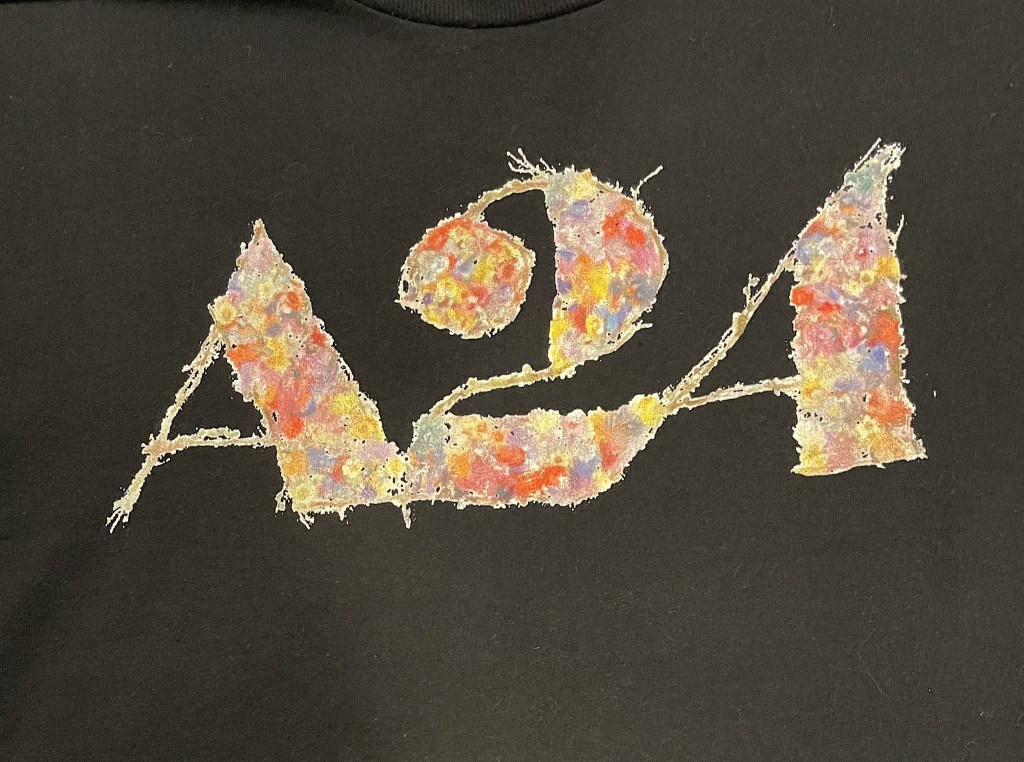
I had the biannual appointment with my primary care physician the other day, and I came away thinking how cool he is. After prattle about my prostate, gab about my gall bladder, and talk of a tetanus booster, he eyed my t-shirt and said, “That’s a great studio.” I had to look down to remember I was wearing my A24 shirt that looks like this:

A24, if you’re wondering, is the hot indie film distributor right now. The boutique shop — which (shockingly) scored a Best Picture Oscar this year with “Everything Everywhere All At Once” — is a mighty machine, celebrating 11 years in the biz with brazen and peculiar taste. Ambitiously art-oriented, A24 pushes cult films that garner lavish critical kudos and discerning viewing audiences. 

Movies like: “Ex Machina,” “Midsommar,” “Hereditary,” “Uncut Gems,” “The Tragedy of Macbeth,” “Aftersun,” “The Florida Project,” “Talk to Me” and more

And TV shows like: “Euphoria,” “Beef,” “The Idol,” “Ramy,” “Irma Vep,” “Ziwe” and more.

The good doc and I fell into a spontaneous groove, both of us animated by the splendor that is A24. We agreed that the ending of “The Witch” was spectacular and the ending of “Midsommar” sputtered. 

His favorite A24 movie is “The Lighthouse,” with Robert Pattinson and Willem Dafoe, and he loves “The Whale,” which snagged Brendan Fraser a Best Actor Oscar. I told him I like “The Witch” more than the mind-boink of “The Lighthouse,” both films directed by visionary wunderkind Robert Eggers. He was okay with that. He just nodded, knowingly.

So, yeah, A24 is badass. Dr. So and So digs it. I dig it. But I guess the point is me and my professional — a guy who actually used a stethoscope on me — forged a small connection. Everyone likes movies, and most everyone can chat them up. This, however, was specific, downright micro. It was like talking about a tiny kebab kiosk in the slimmest side streets of Istanbul that only the savviest tourist would know about. 

And then reality barged in. Suddenly, the nurse entered and jabbed me with a tetanus shot, and my fellow A24 fan was gone, vanished in the weird smelling ether of the doctor’s office.

Fade to black. Roll credits. We’ll always have “The Witch.”

More marvelous miscellany

1.One of my least favorite things in the world, after e-scooters and ravers, is sweating. Which means I am not a happy fellow. Why? Right. Because I am sweating. And rather a lot, swamp-ass and all. Somehow I thought it’d be a swell idea to take a brisk walk in the 92-degree blech of midsummer. The light sweat I produced outside — a mere film — quickly metastasized into a profuse drenching once inside. Forty minutes later, in powerful AC, it has yet to subside. How bad is it? The dog is licking me avidly, like I’m a giant piece of beef jerky.

2.House of Terror — how kicky is that for the name of a major tourist attraction? It’s real, and it’s not a ride at your local carnival. This daunting museum is in Budapest, where I head this fall, and it isn’t about ghouls and goblins. Or, well, it sort of is. Per its description: “It contains exhibits related to the fascist and communist regimes in 20th-century Hungary and is also a memorial to the victims of these regimes, including those detained, interrogated, tortured or killed in the building.” History writ large. And horrible. I’m so there, with solemn intentions, despite the thrilling name. 

3.Just finished Paul Harding’s newish novel “This Other Eden” on the dazzling strength of his first book, the 2009 Pulitzer Prize-winning “Tinkers,” which is uniquely mesmerizing. “Eden” limns Black American history in its many facets, including, troublingly, eugenics. Harding is an uncompromising stylist, forging gorgeous, gem-cut prose that’s sometimes too infatuated with itself, yet nevertheless tells a fascinating story. Harding writes like few others — Cormac McCarthy and Faulkner come to mind — but he can stumble on his own lush verbiage. He is a flawed master.

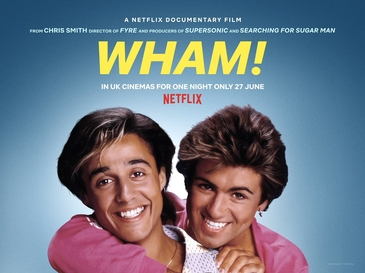
4.The new documentary about massive but short-lived Brit pop duo Wham! — aptly titled “Wham!” — is out on Netflix, and the trailer promises a bubbly, bubblegummy, bing-bang time (“Wake Me Up Before You Go-Go,” anyone?). The movie, a giddy romp directed by crack documentarian Chris Smith, isn’t, alas, as brawny as frontman George Michael’s uncrackable Aqua Net helmet. It’s strictly for googly-eyed fans who can’t be bothered with pop music history, laser-focusing on bandmates’ Michael and Andrew Ridgeley’s frolicsome BFF status and their improbable rise from cheesy teen wannabes to slick arena-fillers. Critically missing in this narrow nostalgia trip is cultural context, as if Wham! exploded in an ‘80s vacuum, with little competition and no help from juggernauts like MTV. And it doesn’t even footnote Michael’s untimely, and seismic, death as a solo artist. Wham! Bam! Thud.  

5. Speaking of the dog (see #1), Cubby was recently shorn like a poor gray sheep, which I documented here. The good news: his hair is growing back in the summer swelter. He no longer resembles a fuzzy Pringles can — he’s not so tubular — and he’s stopped nipping the parts that were so short, pink flesh was exposed. He’s returning to his bushy self, and his attitude is boinging back — a little cocky, vain with a scruffy bedhead sheen, and as fierce around the UPS folk as one can be behind a closed door. His yawps and barks still shatter glassware, but that’s OK. Pretty soon he’s going to look like Slash again and the process will start all over. Our little lamb chop.

6.Then there’s this: I was strolling in the summer heat (see #1 again) and some shitty beat-up compact sedan roared past me, easily doing 50 to 60 in a residential  25 zone. Startled (and pissed), I yelled, “Slow down!” The driver flipped me off and I reflexively returned the gesture. He barreled into oblivion. Then I thought: Smart. That’s a good way to get yourself killed. Jackass might have a gun, might want to turn around and use it. Sweating like a madman, I kept walking, ruffled, looking at the world in a slightly different shade.

50 great films with one-word titles

Sometimes when the days are slow and long and hot, I can just sort of geek-out and ponder random things related to my passions. Welcome to today, in which I spent a preposterous amount of time ticking off some of my favorite films that have one-word titles, from “Casablanca,” to “Goodfellas.”

It was a pointless exercise — massively pointless — but it was fun jogging my memory and eventually putting down a litany of terse titles, which always seem a bit more evocative than longer titles. As a lark, I chose 50 great films almost entirely off the top of my pointy head, and present them here in no order whatsoever. (Now it’s your turn.)

“Nashville” (1975); “Sunrise” (1927); “Amadeus” (1984); “Jaws” (1975); “Casablanca” (1942); “Airplane!” (1980); “Freaks” (1932); “Goodfellas” (1990); “Rebecca” (1940); “Heat” (1995):

“Detour” (1945); “Shrek” (2001); “Rushmore” (1998); “Ran” (1985); “Magnolia” (1999); “Oldboy” (2003); “Gilda” (1946); “Brazil” (1985); “Psycho” (1960); “Frankenstein” (1931):

“Duel” (1971); “Manhattan” (1979); “Eraserhead” (1977); “Se7en” (1995); “Yojimbo” (1961); “Notorious” (1946); “Lincoln” (2012); “Boyhood” (2014); “Chinatown” (1974); “Alien” (1979):

“Deliverance” (1972); “Spellbound” (2002); “Babe” (1995); “Sleeper” (1973); “Scarface” (1932); “Network” (1976); “Memento” (2000); “Hamlet” (1996); “M” (1931); “Breathless” (1960):

“Rashomon” (1950); “Stagecoach” (1939); “Ikiru” (1952); “Zelig” (1983); “Macbeth” (1971); “Klute” (1971); “Joker” (2019); “Cabaret” (1972); “Laura” (1944); “Metropolis” (1927) :

There are many more — “Bullitt,” “Contempt,” “Up,” “Repulsion,” “Gaslight,” “Slacker,” “Clueless,” “Thief,” “Locke” — but I wanted to keep the list at a tidy 50. I’d be here till Labor Day if I rounded up all the great single-title movies. But feel free to share your own.

You’ll notice I’ve made some glaring omissions of highly acclaimed films that simply don’t astonish me, and sometimes even rankle: “Fargo,” “Gladiator,” “Vertigo,” “Unforgiven,” “Zodiac” and “Casino.” Argue with me all you want, please.

How ‘Jaws’ ate me alive

Today was a two-errand day. I was picking up a modern classic potboiler at the library — the one about a ginormous great white shark that terrorizes the bejesus out of a New England beach town — and I was getting my periodic pedicure at the salon. I dubbed the day “ ‘Jaws’ and claws” to amuse myself. (Mission accomplished.)

The book I got really is “Jaws,” Peter Benchley’s 1974 blockbuster that spawned Spielberg’s famous film and a million petrified beachgoers around the world. As a kid, I lived in beachy Santa Barbara when both were released, and I fantasized about flesh-shredding teeth and ominous dorsal fins to unhealthy degrees. It terrified me, and I loved it. 

First I worshipped the movie, which I saw at age 7, then I snatched my parents’ mass market paperback of Benchley’s novel and gobbled it up at age 8. I savored those pages, slashing with vivid, violent writing that helped turn me onto reading for a lifetime. 

I still own that cracked, yellowed paperback, but it’s packed away with other mementos. So, on a whim, I hit the library up for its copy. I quickly located some of my favorite passages, ones that haunted — and excited — me as a young reader.

Just like my own copy

Can you handle it? This horrifying scene is from the opening of the book, when a young woman — recall her from the movie — takes a skinny-dip in the moon-dappled ocean. 

“The fish smelled her now, and the vibrations — erratic and sharp — signaled distress. The fish began to circle close to the surface. Its dorsal fin broke water, and its tail, thrashing back and forth, cut the glassy surface with a hiss. …

“At first, the woman thought she had snagged her leg on a rock or a piece of floating wood. There was no initial pain, only one violent tug on her right leg. She reached down to touch her foot, treading water with her left leg to keep her head up, feeling in the blackness with her left hand.  

“She could not find her foot. She reached higher on her leg. Her groping fingers found a nub of bone and tattered flesh. She knew that the warm, pulsing flow over her fingers in the chill water was her own blood. Pain and panic struck together. The woman threw her head back and screamed a guttural cry of terror.

“This time the fish attacked from below. It hurtled up under the woman, jaws agape. The great conical head struck her like a locomotive, knocking her up out of the water. The jaws snapped shut around her torso, crushing bones and flesh and organs into a jelly.” 

Now, as a young boy, this was about as stupendously visceral as prose could get. (And I omitted the rest of the violence for reasons of taste and space.) “A nub of bone and tattered flesh” — I reread that line over and over, shocked, thrilled, gobsmacked. 

Even today, these opening pages stun. Getting the book at the library, I was hoping Benchley’s eloquence would strike me again, and it did. That’s why I shared some here. 

Call him a hack or a mercenary, but you’d be wrong. Benchley’s a savvy craftsman, expert at tension and thrills, not to mention a vibrant stylist with a painterly (think Francis Bacon) flair. His humans, from Quint to Brody, pop off the page even if the world he confects for them occasionally brushes pulp.

I’m not going to reread the entire novel, which is remarkably short at 278 pages, but it was fun revisiting a book that so influenced my cultural life.

Why “Jaws,” why now? Well, I’m reading an excellent new book about the history of Hollywood and the Academy Awards called “Oscar Wars,” and I’m deep in the chapter focusing on the making of “Jaws” (as well as “Barry Lyndon,” “Dog Day Afternoon,” “One Flew Over the Cuckoo’s Nest” and “Nashville” — 1975 was a hell of a year in American film.)

The lore is notorious: Making the movie “Jaws” was a prolonged ordeal and near-disaster for all involved, including a 26-year-old Steven Spielberg, who was sure his nascent career was finished. We know how that turned out.

If the movie “Jaws” remains one of my all-time favorites — in a crowded field that includes “Heat,” “All About Eve,” “Sweet Smell of Success,” “Manhattan,” “City Lights,” “Seven Samurai,” “Duck Soup” and on and on — the novel “Jaws” is more of a sentimental gem. It’s dear to my heart for reasons that go beyond art. On a nostalgic level, it has — yes, I’ll say it — sunk its teeth in me. And it won’t let go.

Farewell, Fido

“I don’t want to be buried in a pet sematary/I don’t want to live my life again!”

“Pet Sematary,” the Ramones 

I once had a pet rat named Becky. After two and a half years of feisty play and impish scampering, tug of wars and belly tickles, she got terminal cancer and I had to put her down. I placed her remains in a decorated wooden box, dug a hole in the hard Texas dirt, and buried her in my backyard.

I repeated this ritual with three other pet rats — Phoebe, Tammy, LaShonda — and it shattered me every time. My yard became a veritable pet cemetery, a rodent resting place, and each grave should have cautioned me: Never again. I didn’t learn.

I also buried a blue betta fish named Alvy in the ad hoc graveyard. He thrived for four swishing years in a big sparkling bowl. I nestled the old man in a matchbox and set him in the ground, saluting him for his gratifying longevity. I miss the fish.

If you care one lick, laying your pet to rest is undiluted trauma. The platitude holds: pets are family, loving and adored, like hairy children who only live to their teens, if that. So integral are they to our lives, you swear they speak English and read minds. (I’m convinced Cubby the dog is really a tiny man in a dog suit. I keep looking for a zipper.) 

And so we honor them in death as in life, with a sentimental flourish and teary respect. Or at least we do in the modern age. There was a time when “people disposed of their dead pets in the river, or might have sold their bodies for meat and skin,” notes a CNN essayist. I know of modern folks subjecting their late Spots and Trixies to taxidermy, which is not only creepy, it’s selfish and disrespectful and twisted. 

Burial and cremation are popular send-offs. Barcelona, Spain, is set to open its first pet cemetery next year, with plans to carry out 7,000 animal cremations a year. Why? “Constant public demand,” they say. Barcelona is home to 180,000 dogs alone. Surely there’s just as many cats. (Rats? I bet.)

In 1983, Stephen King published the popular horror novel “Pet Sematary” about some macabre happenings surrounding a buried cat that is resurrected, or some such nonsense. The book spawned a 1989 movie (with “cemetery” also intentionally misspelled for plot purposes), which featured a cat-chy theme song by the Ramones.

The book and film helped spread the idea of the pet cemetery. And yet pet cemeteries are not some freaky esoteric brainchild of ghoul-meister King. There’s one in London’s Hyde Park, founded in 1881. New York’s legendary Hartsdale pet cemetery was founded in 1896, followed by Paris’ Cimetière des Chiens in 1899. 

About a hundred years later, I founded my own pet cemetery, at age 6, in my family’s pretty and serene Japanese-style garden in Santa Barbara. (This preceded the rat resting place by decades.) Surrounded by bamboo, moss and a statuary fountain, the graveyard contained goldfish, salamanders and other mostly water-bound critters. I’ve been at this a while.

On film, celebrated director Errol Morris made his debut with the acclaimed 1978 documentary “Gates of Heaven,” about the pet cemetery business and the souls who rely on it. It’s alive with vivid characters who are wrenchingly emotional about their dearly departed four-leggers.

Critic Roger Ebert, who named the film one of his 10 all-time favorites, wrote about “the woman who speaks of her dead pet and says, ‘There’s your dog, and your dog’s dead. But there has to be something that made it move. Isn’t there?’ 

“In those words,” Ebert writes, “is the central question of every religion.”

That pretty much says it all.

Becky the rat, at play.
Becky at rest.

The Tao of Nick Cave

Nick Cave — Australian musician, composer, filmmaker, writer, artist, actor, all-around Renaissance man, with slick black hair and natty suits hanging off a long, pencil-thin frame — runs a sage, funny and heartbreakingly sincere advice column on his website The Red Hand Files. His counsel is so sharp and impassioned, you wonder: What can’t the guy do? I bet he can fly.

Recently, a precocious 13-year-old boy wrote in, asking this: “How do I live life to its absolute fullest, and not waste my potential? Especially as a creative. Also, what is a great way to spiritually enrich myself, in general, and in my creative work?”

I relished Cave’s response so much, I am excerpting a chunk of it here.

These are, to me, words to live by:

“Read. Read as much as possible. Read the big stuff, the challenging stuff, the confronting stuff, and read the fun stuff too. Visit galleries and look at paintings, watch movies, listen to music, go to concerts — be a little vampire running around the place sucking up all the art and ideas you can. Fill yourself with the beautiful stuff of the world. Have fun. Get amazed. Get astonished. Get awed on a regular basis, so that getting awed is habitual and becomes a state of being.”

Nick Cave — bard, baritone, Bad Seed, badass.