“Research has associated smartphone use with ADHD symptoms in adolescents, and a quarter of surveyed American adults now suspect they may have the condition. School and college teachers assign fewer full books to their students, in part because they are unable to complete them. Nearly half of Americans read zero books in 2023.”
One of the cats died recently. He was kind of the rotten cat, the one that shreds up the carpet, craps where he feels like it and was extra aloof, like an Aviator-wearing rock star who hates giving autographs. Anyway, we’re saddened and miss the ornery fellow. I’m not sure what to do with his ashes: urn them nicely or chuck them over the fence at the squirrels.
I don’t trust social media as far as I can spit. If I had a girlfriend, I’d ask her, quite nicely of course, to get off that shit.
Voyeurism is the opiate of the masses, not religion. Think about that for about four seconds.
Just guess who I think embodies all of these descriptives: racist, greedy, venal, petty, megalomaniacal, misogynistic, heartless, rankly sophomoric, vulgarian scum. Bingo.
I’ve planned a trip to Mexico City for November, but I’m so traveled-out right now, the whole thing sounds terrible. Five months is far off, so I should be refreshed by then. Thing is, the weather runs in the mid-70s to 80 in November and I’m barely any good over 70. I hate the heat; I’m a San Francisco wuss. I read that t-shirts and shorts are frowned upon in Mexico City, and I’m not a fan of them either. It sounds like when I was in sweltering India and everyone was swaddled in jeans and long sleeves. I wore jeans with t-shirts and I sweated like swine. Drenched. Two showers a day. I don’t want any of that crap. Maybe I’ll push the trip to December. Or January. Or never.
What I’m reading: “Demon Copperhead,” Barbara Kingsolver’s gritty, funny, unsparing ode to Dickens’ “David Copperfield.” The novel won a Pulitzer last year and rollicks with knockabout wit and wisdom and with more than a dash of social commentary about the sorry state of many of our states (opioids, poverty, detox). The damn thing’s a cinder block so it’s taking me forever to plow through, but it’s worth it. The title character, a teenage boy, both tart and talented, is one for the ages. He’s like a super smart Pig-Pen from “Peanuts”: brilliant but with a cloud of flies and dust buzzing around him. It’s his lot. But he’s one wily fighter, a scrappy, red-headed hero (hence “Copperhead”) in a bedraggled, Dickensian wasteland.
The cat died; the dog thrives. Cubby the wonder mutt needs a bath and a haircut and those crunchy, coagulated eye boogers extracted, but otherwise the aging fella is in fine fettle. OK, he’s been doing the occasional “revenge pee” in the dining room, meaning when he feels abandoned he’ll whizz on the rug when no one’s around. Stealth urine is as bad as any urine, but it’s worse, because you know the scruffy rascal’s doing it with a puckish glint in his eye.
Last month or so, I was reading a terrific book about the making of the classic movie “Chinatown” titled “The Big Goodbye: ‘Chinatown’ and the Last Years of Hollywood,” by Sam Wasson, and I had to grin at this quote from legendary screenwriter Robert Towne: “So much of writing is trying to avoid facing it.”
That’s hardly the most original thing uttered about the writer’s penchant for procrastination and craven dread of the blank page — Hemingway summed it up: “There is nothing to writing. All you do is sit down at a typewriter and bleed.” — but it was a reassuring reminder that cooking up stuff for a readership, a nervously performative act, isn’t always a joyride, or particularly easy. It can be a grind. It can be depressing. It can sap the soul.
But it can also be exhilarating and, when things are flowing, a blast. Well, let’s not get carried away. How about … satisfying? Said great journalist Russell Baker: “I’ve always found that when writing is fun, it’s not very good. If you haven’t sweated over it, it’s probably not worth it.”
I don’t know how you reconcile that dichotomy, the yin and yang of good and rotten, delight and drudgery, but they seem to jibe. There’s a fruitful friction. Good days, bad days, middling days. (That last line? Lazy writing. Bad writing. I left it there as a specimen of what can go wrong.)
I always want to write, but once I sit down and face the empty page that sneers, “Go ahead, try and fill me,” I tend to constrict, choke, unless I’m especially inspired and know how I’ll begin and where I’m (generally) going. Those days are the exception. Right now, I’m winging it. I had that Robert Towne quote in my head and started riffing. (Help!)
There’s no map. There’s only this: Get it down. The prose may be raw and bloody — embarrassing, eye-sizzling — but the ideas matter and the words, those painstakingly chosen few, will be chiseled out of the viscous blob of verbiage. Editors are helpful at this stage, and I’ve worked with many who have saved my prolix ass. But here on this free-floating blog I’m on my own. I am judge, jury, executioner. And I probably should have executed that sentence.
Point is, writing, like any creative endeavor, is a messy enterprise, hard to do but at times truly rewarding (I have ten journalism awards that bear that out, he crowed). You have to dive in head first, and toil to make a splash. Taking pride in your work is mandatory — read tons, write multiple drafts, and use spell check for chrissakes — the only way you’ll do anything worth a damn.
First you must conquer that blank page, which requires actually facing the music, not dodging it, as Towne noted. I’m working on a writing project that I approach tentatively, with baby steps, not because I’m indolent but because I am, frankly, a little scared.
There’s a cure for that. It’s simple yet courageous: Sit down, stare at the page, and bleed.
You must win the staring contest with the blank page. Despair is likely. So is reward.
Despite the fact that my barber called me “bro” no fewer than twelve times — a word he’s never said in the four years I’ve patronized him — yesterday was fine and productive, a whiff of autumn in the air that had me breaking into brassy musical numbers on the sidewalk, à la Gene Kelly.
The day went like this: My podiatrist speared a cortisone shot in my foot; it bled like a Tarantino movie, and I marveled at the carnage. I picked up Renata Adler’s great cult novel “Speedboat” at the library. And for lunch I tucked into an elephantine deli sandwich that about made me upchuck thanks to its gut-busting enormity. I felt ill the rest of the day and loved every bite of it.
I also got a haircut, which brings us back to bro. Besides that it’s the go-to vocabulary of jocks, frat boys, rappers and illiterates who actually think they sound “street,” I don’t know why I loathe that word so much.
I just know that my barber suddenly using/abusing the modified noun out of nowhere was deeply distressing. He even did those lame hip-hop gestures — arms wide, hands contorted in faux-gang signage — as he said “bro” and — yes, it happened — “Yo, bro.”
What was going on? Four years and not once has he stooped to this phony street jive. I’m guessing he’s in his late thirties or early forties, too old for bro, fist-bumps and even, I’m afraid, “dude.” (The less said about “brah” the better.) Married with two young kids, my barber, who I’ll call Miles, doesn’t drink alcohol, so picking this up at a keg-soaked rager is at best categorically implausible.
(Amusing aside: When Miles did those hip-hop hand gestures he was holding scissors, making him look like Freddy Krueger cackling for the kill. I kind of wish he killed me.)
Of course “bro” is simply short for “brother,” but it sounds like the utterance of monosyllabic dolts. It is largely the verbal currency of very young men and we should cut them some slack until they acquire a full grasp of the English language. Like now.
In the case of Miles, when he says bro with that oblivious grooviness, he’s suddenly reduced to a kid — a bro — himself. Maybe that’s the point, that slang keeps you young at heart. Heaven knows I’ve retained some embarrassing slang in my life, much that’s unprintable in a family blog.
Miles might be on to something. He’s like a millennial Vanilla Ice, still trying to keep it real even at the risk of fatuity. I might not be a fan of whatever happened to him since I last saw him a month ago, but he’s still a good guy, a mighty barber and a voluble conversationalist (we talk world travel exclusively). It appears, I have to say, that our bromance rolls on.
My brother and I bought our widowed stepmom a two-week trip to France for April, which makes an unbroken streak of family travel, as my brother just returned from Madrid with his brood, I go to Sicily in February, and my brother and his wife hit Italy this spring to visit my nephew, who will be studying in Rome.
It sounds all jet-setty, but it’s pure coincidence. We’re hardly the Roys of “Succession,” or the Kardashians of depression. We’re strictly economy — zero legroom and chicken curry meals swathed in foil.
But it works. It gets us there. No matter if I don’t sleep a wink during a nine-hour redeye. They say it’s not about the destination, it’s about the journey. Bull dookie. It’s totally about the destination when you’re flying United.
I go to Sicily in a month. Never been, but I anticipate the ancient splendor of Rome and the graffitied scrappiness and coastal beauty of Naples. It’s “Godfather” country, once infested with mafioso, and I’ve booked a tour that’s actually called “No Mafia.”
Yet, if you’ve seen the Denzel Washington action flick “The Equalizer 3,” which unfurls in Sicily and is operatically violent, you might think the Italian mafia, namely the homicidal Camorra, are alive and killing. “No Mafia”? How about “Uh, I’m Afraid-So Mafia?”
Harbor of Sciacca, Sicily
Though I’ve been to Italy a few times, I’m re-learning some basic words and phrases, like “Do you speak English?,” which is a big one for me. I ask that constantly in foreign countries, often in plain English, which is both foolish and boorish. In Sicily I will politely approach a local, clear my throat nervously, and ask, “Parli inglese?” (That’s: par-lee-inglesy.) And then, most likely, be promptly bopped on the nose.
I’m really not such a klutz in my travels. I tread lightly, mindfully, and rarely find myself in awkward tangles. I keep my trap shut, until I’m desperate for a small pointer. (“Mi scusi,” I might begin. “Where is the toilet?”)
We are travelers, my family and friends. I returned from Budapest and Kraków in October and I’m already greedily charting a post-Sicily trip. Where? I haven’t a clue. For the second time, I seriously considered Ireland, but research has again left me cold and bored. Besides Guinness and grass, what is there? A plethora of pubs? Some castles? Rain? Sheep? Elves?
I read an article, “20 Cool Destinations to Escape the Summer Heat” — ditching the heat is a huge selling point for me — and it includes Alaska, Canada, Iceland, Norway, Chile, South Africa and more.
Chile sounds aptly chilly and attractively off the beaten track. (I’ve only been to South America once, Buenos Aires in July 2022 — our sweltering summer, their swooning winter.) At a glance, Chile in July offers snow skiing, wineries and temps in the low 60s. Heavenly. I used to ski madly back in California. Though if I try to ski at this late date, I’ll wind up with two broken femurs, four cracked ribs and a neck brace.
Meantime, Sicily, the largest island in the Mediterranean, beckons. It’s awash in zesty history, a strange (and strained) relationship with mainland Italy, world-class cannoli, singular pizza, and a people I hope will brook a humble tourist’s blundering attempts at speaking Italian. A tourist who, spongelike, yearns to soak it up, metabolize it, then, months later, jump to the next place with almost juvenile impetuosity.
As the cliché goes, I’m like a shark: I have to keep moving or I die. That’s glib, but rather true. And if it is, I’m definitely a Great White — tenacious, voracious, and dying for an authentic pizza margherita.
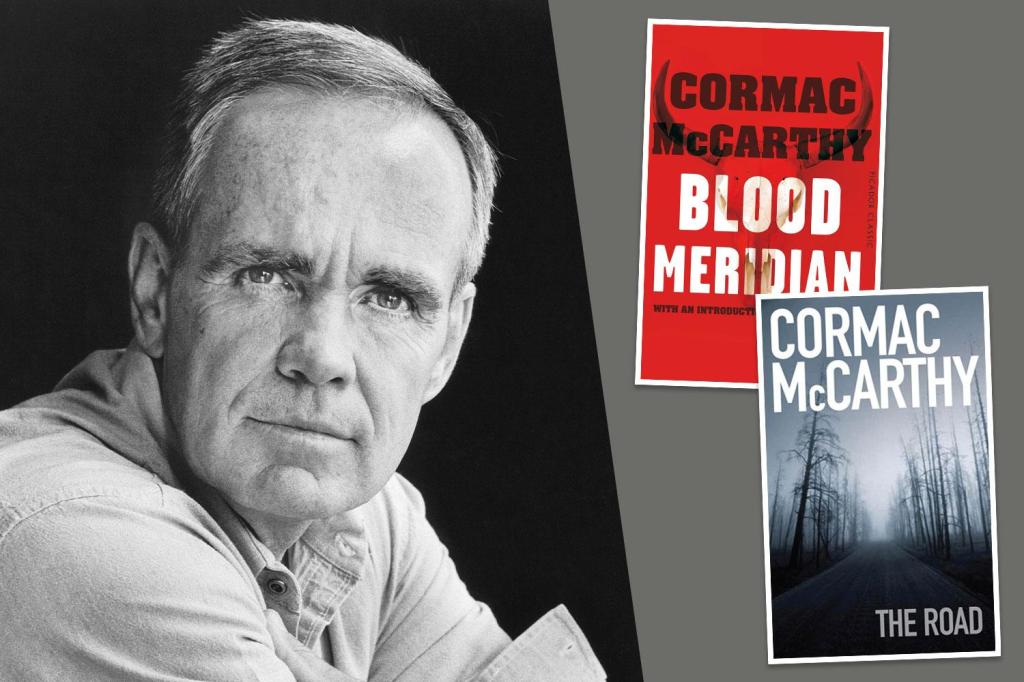
Prose that crackles like lightning in the dark desert, emotions that consume you like skulking, slavering wolves, blood spattered in the dust, humanity writ large and frightening and mercilessly. (Yes, I kinda wish I was Cormac’s little brother.) RIP, you giant.
It was 65 degrees F and the Scots were on fire. Summer’s here, the locals kept blissfully declaring, as they peeled off jackets and dabbed beading brows and dipped into pubs for emergency pints, as if they were dangerously parched from the sizzling rays of a vengeful sun.
This was comical to me, who was strolling about in long sleeves and a quilted black jacket and feeling just right in the rare Scottish weather event called “sunshine.” A cool breeze mussed your hair and creeping cloud cover furnished a periodic chill.
Not so for the delightful natives I encountered in Edinburgh and Glasgow last week, where miles of pale flesh — as pasty and pink as a baby’s — almost required Ray-Bans.
Edinburgh
Part of why I went to Scotland for my biannual travels was for the cooler late-spring weather (it’s going to be 90 in my parts this week — disgusting). And so watching the denizens get in a happy lather when temps broke the 60s amused me a bit (a “wee bit,” to borrow the local vocabulary).
Scotland was a lovely surprise (“lovely” being another highly trafficked descriptive). Why Scotland?, even the locals asked me. Dunno. Been around the world a couple times, looking for someplace new — and climatically cool — and my research convinced me it holds sights and treasures and, yes, food, worth checking out.
Food? That’s the big punchline with Scotland. I’ve written about it here before, and when I texted a friend I was there, she wrote back sarcastically, “Enjoy the great food” with a dubious emoji.
But first, the big national rivalry: Edinburgh vs. Glasgow. Who wins? No brainer. Glasgow can use the excuse that Edinburgh is too touristy. But there’s a reason for that: It kills Glasgow, a big, homely city with a few historical sights and other feeble points of interest (hey, here’s a university and over there’s a giant mural).
Meanwhile, Edinburgh is encrusted in history, flush with medieval flavor, cobblestone, and an attractive village vibe, especially as the country’s capital. The ancient Castle is there, sure, but the city’s overriding character stomps the generic urban tang of Glasgow. Yeah, I said it.
Royal Mile, Edinburgh
Scottish pub culture is familiar to all of the UK, and much of its food is delicious. But dig deeper, beyond the burgers, fish and chips, Eggs Benedict and bangers and mash, and a quality bounty awaits. Like Cullen skink, a thick, fantastically savory soup of cream, smoked haddock, onions and hearty potato chunks that I had at a pub before (one of many) whisky tastings.
Here’s some of the rest:
Scottish Eggs: eggs wrapped in sausage, breaded and fried
Lamb shank atop mashed potatoes in wine and onion gravy
Potatoes, with haggis on the right (sheep & beef guts with oats — fantastic)
Hake fish with potatoes and baby asparagus
Fresh peas and scallops
Cod wrapped in pork, with poached egg at right
And for dessert:
The charming, super-historic Grassmarket, where I stayed in Edinburgh
And, of course, a fragrant flight of whisky at one of several mandatory tastings:
To that last one I say, Slàinte Mhath!, or Slanj-a-va, meaning ‘cheers’ in Scottish.
Last weekend, we hit a panel discussion at the Philip Roth festival in the late novelist’s hometown of Newark, New Jersey. We left it walking on intellectual air. Not smugly, but smilingly. It was heady and engrossing. Fun, funny and fascinating.
Called Philip Roth Unbound, the festival was a three-day celebration of all things Roth, from bus tours around his old Newark haunts to numerous panels parsing the formidable genius that gifted us “Portnoy’s Complaint,” “American Pastoral” and “Sabbath’s Theater,” to name some obvious masterpieces. (Need more? How about “The Human Stain” and “Everyman.”)
“[A] panel on the cathartic power of discomfort. With each new novel, Roth predictably delighted and shocked readers with his frank depictions of human frailty and immorality. No aspect of behavior was spared his withering critical eye — sex, gender, race and religion were all fair game.”
I love it.
The panelists, all novelists, were a youngish quartet of publishing stars, award winners and best-sellers: Ayad Akhtar,Susan Choi, Gary Shteyngartand my personal favorite, Ottessa Moshfegh. They comprised a supergroup of sizzling hot writers, gathered to chat up Roth, his transgressive themes, techniques, cultural impact, and personal influence on each writer.
I won’t recap the 90-minute discussion, but I will say that Choi was supremely poised and verbally chiseled; Akhtar, as moderator, navigated the discussion with shrewd erudition; Shteyngart labored to entertain with cussing and comic schtick, including some mugging (he was often very funny); and Moshfegh, coming across as a cerebral introvert and a smidge neurotic, was refreshing in her sometimes spacey reflections.
To be surrounded by diehard Roth fans was heartening. Too often I feel that Roth is marginalized. He’s either too dirty, too angry, too offensive or too smart. His books aren’t easy; they are verbally dense, lashed in skeins of urgent ideas about life, marriage, love, sex, Jewishness, morality, death, politics, art. They are mean, unsparing, philosophically violent, crude, passionate and hilarious.
Few writers — Saul Bellow is one — could graze such dazzling complexity, that Rothian exuberance, that volcanic, (sometimes literally) orgasmic prose. “American Pastoral” (1997) is one of my top two favorite novels. It sucked my breath away with its relentless moral and artistic propulsion. It should be banned by sheer dint of how good it is.
“Sabbath’s Theater” — described by one critic as “Roth’s coarsest, frankest, and most exhilarating novel, showing off Roth’s linguistic verve, and his unparalleled ability to stare unblinkingly into the psyche of a depraved scoundrel” — is mandatory reading, a master text of style, for anyone pursuing the art of fiction. (I’m about to read it again.)
Roth died at 85, in 2018, without winning the Nobel Prize (though he received many awards, including the Pulitzer). In later years, he was regularly shortlisted, but was likely too incendiary for the milquetoast committee. Every October I would check the paper to see if it was his turn, then throw it down, crushed, livid. Bellow won it in 1976. Faulkner in 1948. Toni Morrison in 1993. Roth would fit right in that company of trailblazing masters.
Maybe he was just too much much. Roth fans are zealous and jealous, and to see the capacity crowds at the festival, chatty and excited, reminded me the great one lives on. Or at least his challenging ideas and coruscating wit live on. We at least have that.
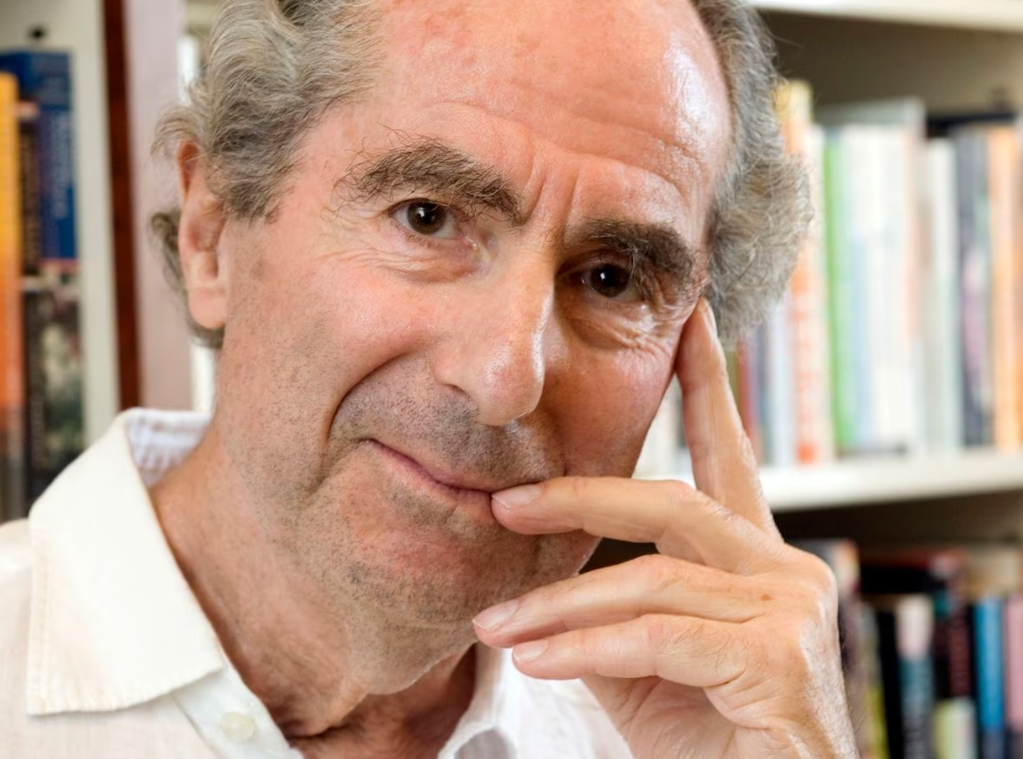
Philip Roth. Such a dirty, furious, brilliant mind.
Talking on the phone with my Dad once in my early twenties, I used the word “funner” as an adjective and, stickler that he was, he busted me.
“That’s not a word,” he intoned.
Oh. I sat there chastened, my cheeks pink.
I was a burgeoning word freak but Dad was the authority, the maestro, a journalist and wordsmith for decades who loved dissecting language, adored puns (he was the worst!), and collected clichés with a far-flung dream of making a board game out of all the hoary, hackneyed maxims, platitudes and banalities he scribbled down on everything from receipts to cocktail napkins.
Say something nakedly trite and he would call you out — ha! — scramble for a pencil and jot down the howling cliché you dared utter. Can you imagine what kind of game that would be? Either brilliant. Or inordinately annoying. Anyway, it never came to be.
Back to “funner.” Apparently that isn’t a real word. At least according to my father. And that has stuck ever since. I never say “funner.” Yesterday my brother used the word “funnest” and I pulled a Dad and said that’s not a word. My brother gave me the stink-eye and started making a voodoo doll of me.
But I was wrong. Sort of.
Here’s what the New Oxford American Dictionary says: “The comparative and superlative forms funner and funnest should only be used in very informal contexts, typically speech.”
That’s good news — informal contexts, typically speech. Just how I used funner.
However, an online teacher says this: “The next time students ask why they can’t say ‘funner,’ I say it’s because ‘fun’ was originally only a noun and the -er and -est forms are not commonly accepted. Stick to ‘more fun’ and ‘the most fun.’ ”
And another site avers: “There’s something funny about the word funner. It has the sound of a word twisted for the sake of a game of Scrabble, and any mention of it is liable to draw the response of, ‘Do you mean more fun?”
No! I mean funner! There, I said it, so many years later. Funner.
So, Dad, on this count you might have been off. I’m using funner as an adjective — better late than never. And with that phrase I’ve given you a moldy cliché for your board game, which would have surely been the funnest game of clichés ever.
Language is always evolving, especially between the formal and the colloquial. Take “over” vs. “more than,” for example. Both are now used to mean more than if used before a number or quantity, as in “This cost over four dollars.” That once was a stylistic no-no, but increasingly “over” is an acceptable substitute.
I’m a word nerd. Love the language, love quips, innuendos, alliteration, even puns, which come tragically easy to me. I like big hairy words that have tentacles and teeth.
I do indeed find words fun. I find writing funner. I find finishing writing funnest of all.