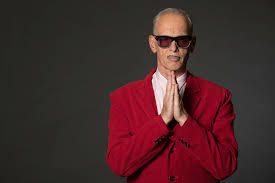
“If you go home with somebody, and they don’t have books, don’t fuck ’em.”
— John Waters, writer, director, author, incontinent raconteur, ribald iconoclast
WONDERING. WANDERING. WHATEVERING.

“If you go home with somebody, and they don’t have books, don’t fuck ’em.”
— John Waters, writer, director, author, incontinent raconteur, ribald iconoclast
“The idea of meeting someone in a library, in the aisle of a bookstore or while reading on the subway, for instance, remains stubbornly high on the list of many people’s romantic fantasies.” — from The New York Times (link below)
I admit there are few things more alluring to me than an attractive woman reading a book or browsing in (or working at) a book shop or library. It’s a smashing combo, a kind of electrifying alchemy that I can’t quite explain.
For instance, in the 1946 noir “The Big Sleep,” I’ve always been partial to the bespectacled bookshop proprietress played by Dorothy Malone than to Bogart’s famous glamor squeeze Lauren Bacall — a nerdy example of my bookish bent.
My personal history of amore is lucky with literature. There was blue-eyed Guen, who brought on our first date a copy of David Mamet’s “Writing in Restaurants,” just for me. Laura, who made my knees buckle from afar, was toting the poems of Herman Hesse (we were soon a couple).
One of my biggest crushes was on the girl who worked at the hippest book store in Austin. Then there was the woman who, after a little wine, insisted we go browse the local used book store and buy each other a volume. Now we’re talking.
On the flip-side, I once invited a date to my place. She looked around at the Rothko print and various vintage movie posters, all without comment. Then she eyed my bookshelves and scoffed, “You have way too many books.” Deal-breaker!
Like movies, books are crucial to me, and a shared passion for them is just that — shared passion. It’s something in common, hot to the touch, and can be the bedrock of something more intense, meaningful and feverish.
All this was stirred up reading the above mentioned story in the Times titled “Is Reading the Hottest Thing You Can Do as a Single Person?” (Answer: yes.)
Check it out HERE.


Today was a two-errand day. I was picking up a modern classic potboiler at the library — the one about a ginormous great white shark that terrorizes the bejesus out of a New England beach town — and I was getting my periodic pedicure at the salon. I dubbed the day “ ‘Jaws’ and claws” to amuse myself. (Mission accomplished.)
The book I got really is “Jaws,” Peter Benchley’s 1974 blockbuster that spawned Spielberg’s famous film and a million petrified beachgoers around the world. As a kid, I lived in beachy Santa Barbara when both were released, and I fantasized about flesh-shredding teeth and ominous dorsal fins to unhealthy degrees. It terrified me, and I loved it.
First I worshipped the movie, which I saw at age 7, then I snatched my parents’ mass market paperback of Benchley’s novel and gobbled it up at age 8. I savored those pages, slashing with vivid, violent writing that helped turn me onto reading for a lifetime.
I still own that cracked, yellowed paperback, but it’s packed away with other mementos. So, on a whim, I hit the library up for its copy. I quickly located some of my favorite passages, ones that haunted — and excited — me as a young reader.

Can you handle it? This horrifying scene is from the opening of the book, when a young woman — recall her from the movie — takes a skinny-dip in the moon-dappled ocean.
“The fish smelled her now, and the vibrations — erratic and sharp — signaled distress. The fish began to circle close to the surface. Its dorsal fin broke water, and its tail, thrashing back and forth, cut the glassy surface with a hiss. …
“At first, the woman thought she had snagged her leg on a rock or a piece of floating wood. There was no initial pain, only one violent tug on her right leg. She reached down to touch her foot, treading water with her left leg to keep her head up, feeling in the blackness with her left hand.
“She could not find her foot. She reached higher on her leg. Her groping fingers found a nub of bone and tattered flesh. She knew that the warm, pulsing flow over her fingers in the chill water was her own blood. Pain and panic struck together. The woman threw her head back and screamed a guttural cry of terror.
“This time the fish attacked from below. It hurtled up under the woman, jaws agape. The great conical head struck her like a locomotive, knocking her up out of the water. The jaws snapped shut around her torso, crushing bones and flesh and organs into a jelly.”
Now, as a young boy, this was about as stupendously visceral as prose could get. (And I omitted the rest of the violence for reasons of taste and space.) “A nub of bone and tattered flesh” — I reread that line over and over, shocked, thrilled, gobsmacked.
Even today, these opening pages stun. Getting the book at the library, I was hoping Benchley’s eloquence would strike me again, and it did. That’s why I shared some here.
Call him a hack or a mercenary, but you’d be wrong. Benchley’s a savvy craftsman, expert at tension and thrills, not to mention a vibrant stylist with a painterly (think Francis Bacon) flair. His humans, from Quint to Brody, pop off the page even if the world he confects for them occasionally brushes pulp.
I’m not going to reread the entire novel, which is remarkably short at 278 pages, but it was fun revisiting a book that so influenced my cultural life.
Why “Jaws,” why now? Well, I’m reading an excellent new book about the history of Hollywood and the Academy Awards called “Oscar Wars,” and I’m deep in the chapter focusing on the making of “Jaws” (as well as “Barry Lyndon,” “Dog Day Afternoon,” “One Flew Over the Cuckoo’s Nest” and “Nashville” — 1975 was a hell of a year in American film.)
The lore is notorious: Making the movie “Jaws” was a prolonged ordeal and near-disaster for all involved, including a 26-year-old Steven Spielberg, who was sure his nascent career was finished. We know how that turned out.
If the movie “Jaws” remains one of my all-time favorites — in a crowded field that includes “Heat,” “All About Eve,” “Sweet Smell of Success,” “Manhattan,” “City Lights,” “Seven Samurai,” “Duck Soup” and on and on — the novel “Jaws” is more of a sentimental gem. It’s dear to my heart for reasons that go beyond art. On a nostalgic level, it has — yes, I’ll say it — sunk its teeth in me. And it won’t let go.
On a frigid fall weekday, I strolled to the library, determined to slow down my crazed buying of books by borrowing some instead, and I suddenly tripped and fell, all but face-planting on the cracked concrete. The wind swirled. Snowflakes fluttered, constellations of falling stars. I clutched my knee and whined like a baby infant. God wept.
Everything okay, I rose, did the ritual dust-off, and walked on, wearing a pinched wince on my unscathed puss. I casually looked around, praying no one saw.
At the library, I had work to do, books to seize. Recently, I had the throbbing urge to re-read “Beloved,” the Toni Morrison classic enshrined as one of the greatest works of literature of the 20th century. Slavery, infanticide and malevolent ghosts — fine holiday reading. Found it, grabbed it.
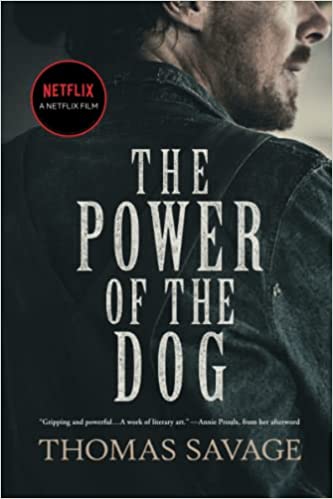
Oscar chatter circles Jane Campion’s new film, the spare, unsparing western “The Power of the Dog,” starring Benedict Cumberbatch. For that, the 1967 book it’s based on, by the unsung Thomas Savage, is receiving renewed attention. So I also got it. (And I read it. It’s terrific — all searing psychological grit with a blindsiding twist that will snuff your dreams of ever becoming a cowboy.)
I’m hot and tepid with novelist Lauren Groff — I quite liked her novel about a utopian commune “Arcadia,” but found the acclaimed marital dissection “Fates and Furies” ordinary and wildly overrated. Still, I’m going to give her latest super-hyped novel, “Matrix,” a shot. So I got that, too. It’s a character study about a young woman who discovers love and feminist agency in an impoverished abbey in 12th century England. Sounds … intriguing?
Heading to Portugal soon, I picked up Portuguese literary eminence and Nobel Prizer José Saramago’s “The Gospel According to Jesus Christ.” This isn’t Saramago’s most famous novel — that would be “Blindness” — but it’s kind of better. It’s a mash-up of the four Gospels with Saramago slyly, ironically and contempletively (and controversially) filling in the mysterious, nettling voids of those holy books. He presumes and vamps on what Jesus did in his childhood and adolescence, up to his grisly demise on the cross with a skeptic’s impish wit. I loved the book. I loved the shivery last line: “But what Jesus did not see, on the ground, was the black bowl into which his blood was dripping.” Human, all too human.
Elizabeth Strout knows humans. Author of such intimate, character-driven novels as “Olive Kitteridge” and “My Name is Lucy Barton,” her prose is lean, literary and deeply felt, homing in on individuals, real people, with an empathic laser beam. She banishes cynicism for a rare authenticity that invites organic joy and pain. Her latest is “Oh William!” (oh, that title!), a continued riff on characters from “Lucy Barton.” Lucy and her ex-husband William reunite platonically for what’s inescapably called a journey of discovery, one with neat, homey zigzags that ring hard and true. Its humanity is unassailable, its humor wry, its imprint lasting. That’s another book I got.
I scored that day among the teeming stacks, under the florescent mists. Five books essentially for free is nothing to smirk at, and my luck seemed boundless, until it wasn’t. I couldn’t find Franzen’s latest family blockbuster “Crossroads” or John Gardner’s cult classic “Grendel” — an ironic tale told from the point of view of the aggrieved monster in “Beowulf” — or Elizabeth Samet’s “Looking for the Good War: American Amnesia and the Violent Pursuit of Happiness” and, gee, doesn’t that sound like festive holiday reading, not unlike “Beloved”?
In my book, oh yes, it certainly does.
So it’s back to Paris I go. After a foolish flirtation with a week-long trip to Ireland, which went as far as booking a flight, hotels and tours, I dithered again and scrapped the whole damn thing.
My fall travel plan was initially for Paris, which I booked early summer. Then I got cold (Covid?) feet and thought: Hm, I’ve been to Paris plenty of times, let’s try something virgin and verdant. Ireland! Odd, as I’ve never had one inkling of an urge to go there. Still, I traded my Paris flight for a Dublin one and away we (almost) go.
And then I dove into my usual rigorous research, combing and poring over books and sites about the land o’ Guinness guzzlers (evidently not a cliché, at all) and after each tepid tourist “gem” (the insanely popular, intensely lame Guinness Storehouse) and middling tour (the Jameson whiskey distillery), my heart began to sink and I was like: shit.
I was even hard pressed to find any restaurants worth a prized reservation in Dublin and Galway, my two destinations. What came up repeatedly and endlessly were pubs and pubs and pubs. And it hit me: I don’t even really like pubs, what with their rowdy regulars, garrulous gulpers and sports super-fandom. Dublin and its kinda interesting cathedrals, fascinating-for-about-14-minutes Book of Kells library and three million pubs fizzled fast. (Let’s not forget Enya.)
Paris suddenly looked magical, marvelous, as it always does. Dublin dumped, I swapped back my flight to Paris, where I’ll spend eight days in mid-October. I’m staying in the chic, foot-trafficky Le Marais, eating fine cuisine at Buvette and beyond and cruising quays and cobblestone to my favorite museums and bone repositories, from the Catacombs to the oceanic Père Lachaise Cemetery.
Just booking the trip was its own journey. Oh, the fun, fickle planning of the neurotic mind. My impulses are famously rash — watch me shop online, and weep — and when I’m bitten by something that seems fantastic, I swoop into action, Visa in hand. That of course leads to the occasional snap judgement. Like Ireland.
With that, you might say I’m depriving myself of a new experience, a land of uncharted wonders and bottomless brown suds. But I argue I’m saving myself from groaning mediocrity, eye-crossing tedium and the deflating effect of the chronically underwhelming. (Here I risk rousing the “ire” in Ireland.)
I’m certain Ireland has its charms and delights. But it’s not for me, not now. Paris is my place, an almost mythical destination — the art! the food! the bookshops! the cinemas! the river! the boulevards! the gardens! — that fairly twinkles.
The City of Light makes me lightheaded.

In my first semester of college, Marlon Brando blew open my bitty blinkered brain.
I was 18 and watching the actor at a small on-campus screening of “A Streetcar Named Desire,” Elia Kazan’s 1951 film of Tennessee Williams’ torrid fever dream of a play. I was mesmerized, disturbed, rattled.
Who is this guy? I wondered. What is this guy?
I had seen Brando in “The Godfather” and “Apocalypse Now” on VHS, but this was different. This was the young, bristling Method actor, a radical of modern performance, searing the screen with unseen naturalism — a combustible churn of physical and psychological muscle, animal charisma, brute sexuality and roiling menace.
He was a new kind of screen male. He hollered and knocked things over. He was sensitive, a raw nerve. He was scary, feral. He was gorgeous. He was hideous. He was fantastic.
This, I thought, is what college is about: revelation, learning, getting gobsmacked by the greats. All at once, in that Brando bombshell, was a liberating feast of ideas and culture. The very next day, I borrowed a Brando biography from the library. I craved more.
A curious kid at a university in a wildly diverse, culturally rich city, I gulped it all, from Hong Kong action flicks to Zippy the Pinhead comics. In a city of famed seismic activity — yes, San Francisco — Brando was one of the first icons to rock my late-teen world.

He wasn’t alone. Other cultural forces who uncorked my brain included, in no order: Beethoven; Sartre; the Marx Brothers; Shakespeare; Freud; Stanley Kubrick; the Beatles (I’d always known their music; I just didn’t know their music); Orson Welles; Buddha; Nietzsche; John Waters; Dalí; Bogart; Buñuel; Kafka; the Ramones; Fellini; Charlie Chaplin; New Yorker film critic Pauline Kael.
(Woke alert: I realize there is only one woman and, save for Buddha, exclusively white people on the list. This is just before I fell for Toni Morrison, García Márquez, Miles Davis and all the rest. As it’s the past, there’s very little I can do to remedy the situation.)
I adored my school. It was an institution that showed scant regard for sports and frats. (I sort of felt sorry for our neglected little football team, but not really.) It was the kind of liberal arts college where August Coppola — brother of Francis Ford Coppola and father of Nicolas Cage — was Dean of Creative Arts and the city newspaper’s erudite pop critic taught my History of Rock ’n’ Roll course.
Protests were big — pro-Palestine, anti-apartheid. The Red Hot Chili Peppers played the stamp-sized Student Union for five bucks a head. Director Sydney Pollack gave a seminar on filmmaking. Free movie screenings abounded. You barely needed class when almost everything around you was an education.
Take the campus library: nerdy, for sure, but a free, all-you-can-eat buffet of intellectual stimulation. There I’d watch esoteric documentaries, listen to concertos and symphonies and pore over rare books. It was all part of this teen’s great game of cultural catch-up.
And isn’t that what college is, a way to get young minds up to speed on the world, culture, history, life? It’s about my freshman geography professor dismissing the Bible as a book of fairy tales and the above rock history teacher expounding on the lush productions of Phil Spector, Fleetwood Mac’s “Rumours” and Springsteen’s “Born in the USA.”
It’s about watching bad improv groups perform in the dorms and serving as Opinion Editor on the fiery campus newspaper. It’s about eating falafel for the first time and meeting Allen Ginsberg at a reading of “Howl” at City Lights bookstore.
College as entrée to life’s rich pageant, untrammeled exposure — that’s how I took it. There were city museums and concert halls — at 19, I got a student subscription to the San Francisco Symphony — the Haight-Ashbury, its own mad cultural-historical corridor; movie theaters like the Castro, Red Vic and Roxie; plays at ACT and the Magic Theatre. Not to mention the cultural cornucopia awaiting just over the bridge in Berkeley.
I got my first good camera as a freshman, styling myself a shutterbug about town, a wee, wannabe Weegee. I got deeper into my drums, soaking up sophisticated masters like Steve Gadd and Terry Bozzio, learning to kick things up while toning them down.
It was all about finesse, those early college days, about forging newly freed passions into a prismatic worldview that made sense to me. And it began with a revelatory sensation that was balled-up in the raw, sweaty brio of Marlon Brando.
Not for a moment has that novel feeling stopped. Once launched on the journey of discovery, you’re pretty much stuck. College lit a fuse; the explosions keep on popping.
I’m greedily tearing through “Interior Chinatown,” a tangy cultural satire by hot young writer Charles Yu. I’m savoring the book’s poppy humor, clever screenplay format and edifying critique of what it’s like to be Asian in America (bluntly: assimilation’s a bitch). The novel, which is also a scathing indictment of racial stereotyping in Hollywood, won this year’s National Book Award. It probably deserves it.

As I read, plunging into a world both comic and caustic, ordinary life churns on. I pop a mild tranquilizer (tranquility, wee), the snow melts into puddly archipelagos, the washing machine sloshes, the small gray dog curls up like a sow bug on the couch. These are not distractions, though I sometimes get sidelined by looking forward to my next book, no matter how good the current read is.
Like:
It’s trite to note how reading has risen during the pandemic. That’s almost a year now of increased literary calories. And, gulp, plump we get. If you’re braving the prolix Russians, you’re assuming even more brain girth. Conversely, if your diet is J.K. Rowling, you could be anorexic. (And the knuckle-draggers who boast they don’t read? Mind rot — enjoy!)
Certain books, hence, are in high demand. I’m having a hell of time getting my mitts on Maggie O’Farrell’s award-winning historical fiction “Hamnet,” a speculative study of Shakespeare’s complex marriage, his young son’s death from the plague, and how that loss might have led the playwright to make his immortal “Hamlet.” The slavered-over tome is out of stock at (boo, hiss) Amazon and on back order at the local indie shop. All 66 copies in the county library system are checked out.

It can wait. I have the above books on queue, with a few other titles earmarked. You can never run out of choices, even if it leads you to reread a book or three, which is how you know you’ve struck a great one, like my current pleasure “Interior Chinatown,” a contender for a later revisit.
Literature is like another book, the passport. It slings you aloft, carries you to far-flung places. In these cloistered days, reading is the safest, most satisfying way to get out of your space, the claustrophobic chambers of the solitary mind. While we can barely leave home, books are effectively the new travel, transporting — and transcendent.
These days, I seem to only get high on the fumes — the thick, inebriating perfume — of words. I just read a fine passage in my current book and it brushed the orgasmic. To write like that, to make literary music, is the best thing, the very best thing. It matches, maybe surpasses, love.
Too much? Too loopy? Probably. But great art does that — it makes you dizzy. During the pandemic captivity, I’m reading with fiendish greed, in oceanic gulps. I’m buying with crazy zeal. And you probably can’t get that book you want at the library because I already checked it out. Terribly sorry.
More than ever, I grab the written word for solace, inspiration and spiritual nutrition. Yet while I crack mounds of books, I don’t always finish them. I am a notorious book-slammer, shunting aside titles that don’t rivet me by page 50 or so. Mediocrity won’t cut it. I’ve had enough meh, oof and blah. Especially this year.
These are grim days — both of my parents died in the past year; the Covid terror seethes; the Trump shit-show blunders on; some personal turmoil has body-slammed me; pick your catastrophe — and lots of us look to art for escape, empathy and temporary amnesia.
Art extends beyond the written word, of course, so I’m still listening to music, watching films and TV shows and streaming all manner of streamy abundance.
Stuff that stands out: the wise, tartly funny Pamela Adlon comedy “Better Things,” in which Adlon plays a frazzled single mother of three offbeat daughters and simply tries to, well, cope; the bizzaro “Pen15,” a cringe comedy starring two 30-something women playing seventh graders with boggling juvenile verisimilitude; and “The Crown,” that tea-time telenovela about British royalty that entrances, despite me caring less about the real Royals than I do about carbuncles.

I always have to nitpick at year’s end, too. Always. If the just-fine though room temperature chess drama “The Queen’s Gambit” missed the sublime, it ably outclassed other hot streamers, like the broad, shrill “Schitt’s Creek” and the animated “BoJack Horseman,” whose mordant mopiness was mistaken for hip profundity. (Speaking of adult animation, does anybody still watch “Archer,” the subversive, devilishly clever cartoon on FX? Join me.)
Thanks to Covid-contorted release formats, I’m behind on new movies, especially presumptive Oscar contenders. I did try to watch David Fincher’s tediously diffuse “Mank” but couldn’t finish it, and, yes, I can tick-off all of its esoteric Hollywood references. I’m skipping Spike Lee’s Vietnam fantasia “Da 5 Bloods” for two reasons: It doesn’t look very good and Lee’s track record of great films is plain disheartening. (I will also be skipping “Wonder Woman 1984,” grumbled grandpa.)
This is what kind of year it’s been: Mere weeks ago I watched and can recall almost nothing about the admired indie “First Cow” by Kelly Reichardt, one of my favorite minimalist filmmakers, except that some guys make yummy biscuits. I’m renting the scruffy period piece again to see what I’m blanking on.
Movies I’m looking forward to include the adaptation of August Wilson’s “Ma Rainey’s Black Bottom”; Frances McDormand in “Nomadland” (by the director of 2017’s extraordinary “The Rider”); the viral documentary “My Octopus Teacher,” about a grown man befriending a gorgeously slithery mollusk; and Frederick Wiseman’s typically sprawling doc “City Hall.”

And yet for all that — let’s swoop back to the start of this entry — books are my sweet spot right now. In the past few tumultuous months I’ve savored “Those Who Leave and Those Who Stay,” the ravishing third novel in Elena Ferrante’s four-part Neapolitan series; Jess Walter’s jaunty period saga “The Cold Millions”; and “Leave the World Behind,” Rumaan Alam’s quiet thriller about race, class, marriage and other thorny things.
But what’s providing the most satisfying literary kicks are titles from the New York Review Books Classics series, an eclectic spread of fiction and nonfiction from the past, each book a minimally designed paperback that bespeaks worldly elegance. Called “discoveries” by the publisher, the books are “established classics and cult favorites, literature high, low, unsuspected and unheard of.”
I now own 13 terrific novels from the series, with another — Leonard Gardner’s gritty boxing drama “Fat City” — on the way. Today I’m reading the noirish “Nightmare Alley” by William Lindsay Gresham (midgets, mediums, mendacity). Before that was the twisty, eerily timely crime thriller “The Expendable Man” by Dorothy B. Hughes, who wrote cult classic “In a Lonely Place,” part of the series I also devoured.

What’s getting me is the power of words, the emotional and psychic heft, the sheer salve of art, and the attendant awe. I’ve always loved books and any words on paper (and screen), but I seem to love them more in the rotten times, a stretch so shitty, I haven’t touched this blog in over three months. I hadn’t the urge nor the heart. Fall, my favorite season, gone wasted.
Maybe I’m uncoiling from a prolonged flinch. I don’t know. But this, now, during some of the very bleakest days, is where I’m at. Turning the page in another chapter.
Thanks to the collective corona cloistering, I’ve been ordering books online, greedily. With libraries and bookshops closed, I’m buying used books from third-party sellers on Amazon and new titles from New York indie institution McNally Jackson.
Unquenchably, I’m ingesting words in the yawning vacuum of self-quarantine. Reading is nearly as nourishing as food. This is what’s on my literary plate.
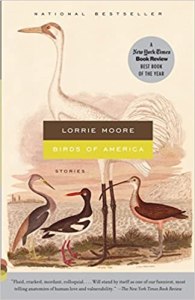
I met “Birds of America” author Lorrie Moore at a book signing for that acclaimed 1998 story collection, and she wasn’t the most jolly person in the room. She was frosty to her gathered admirers, but I don’t hold that against her. Moore’s edge informs her tart, smart fiction, which is also infused with emotional immediacy and pocked with laughs. With stories like the award-winning “People Like That Are the Only People Here,” the book is a contemporary classic that hasn’t aged a whit.
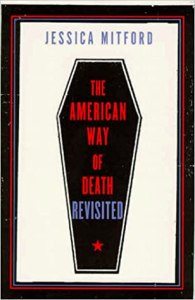
Death looms these grim days, though mortality is always on the mind of this moody Cassandra. Long ago I read the updated edition of “The American Way of Death,” Jessica Mitford’s definitive 1963 exposé of the funeral racket, and I’m back at it, if not for the dazzling reportage and head-shaking stats — upshot: funeral peddlers are exploitative swindlers — then for purely great writing that makes a dismal subject pop. The book is not only essential muckraking, but lavish literary satire, nipping at a venal industry with the toothy, pit bull wit of Pauline Kael. This tangy volume is one big reason I will be cremated and thrown to the wind.
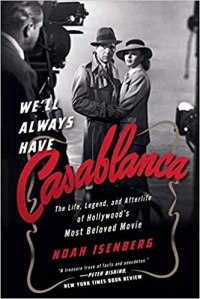 While rereading books like the above, I’m also rewatching some favorite flicks, including “Casablanca,” the evergreen masterpiece in which every element of fine filmmaking miraculously falls into place. I love a good movie book so I clicked on Noah Isenberg’s “We’ll Always Have ‘Casablanca’: The Legend and Afterlife of Hollywood’s Most Beloved Movie,” the gawky title of which tells you just what you’re delving into. I haven’t cracked it yet, but I’m hoping for historical Hollywood gold on par with the recent knockout “The Big Goodbye: ‘Chinatown’ and the Last Years of Hollywood.”
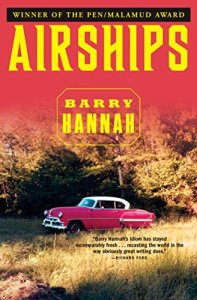
Dreaming about Paris, I tripped upon the site for fabled English-language bookshop Shakespeare and Company, that grand, musty emporium on the Left Bank, where I scrolled staff recommendations for Paris-set stories. Never mind its racy cover, I was lured to Elaine Dundy’s cult comic classic “The Dud Avocado,” a romp tracing the libertine escapades of a comely young American woman in the French capital who yearns to exist out loud. Called a “timeless portrait of a woman hell-bent on living,” the novel seems unlikely to disappoint this thwarted traveler pining for Paris. 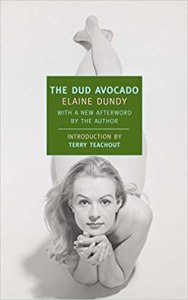 On the note of cult classics, “Airships,” Barry Hannah’s award-winning collection, promises “20 wildly original, exuberant, often hilarious stories that celebrate the universal peculiarities of the new American South.” The book hasn’t arrived yet, but it’s highly anticipated after being called “one of the most revered short story collections of the past 50 years, remaining a vital text in the history of the American short story.” And this snippet from it makes me sort of love it already: “What a bog and labyrinth the human essence is … We are all over-brained and over-emotioned.”
 Raymond Chandler’s crackling and complex detective noir “The Big Sleep” scorches with style. The novel, a total delight, introduces private eye Philip Marlowe, literature’s great existential antihero, a shrugging loner with a gun, cigarettes and devastating wit. Chandler crams it with so many ravishing lines, images, similes, he elevates pulp to high literature. Marlowe, all slow-burn aplomb, speaks and thinks like the consummate smart-aleck tough: “I don’t mind if you don’t like my manners,” he grumbles. “They’re pretty bad. I grieve over them during the long winter evenings.”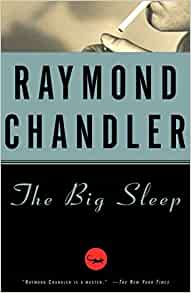
“Death Comes for the Archbishop” is a western in priest’s clothing. Set in the mid-1800s, Willa Cather’s elegant epic about a gentle French bishop spreading Catholicism through Mexico and its southwest territories braids American history with lush spirituality and, at times, a mean Cormac McCarthy crunch. The title is a major spoiler, like Tolstoy’s “The Death of Ivan Ilyich,” but Cather knew what she was doing, and the foregone conclusion hits hard — and beautifully. Her eloquence is breathtaking, and the glistening lyricism comes out of nowhere to stun. Here Cather describes two men running through the desert: “They coursed over the sand with the fleetness of young antelope, their bodies disappearing and reappearing among the sand dunes, like the shadows that eagles cast in their strong, unhurried flight.” 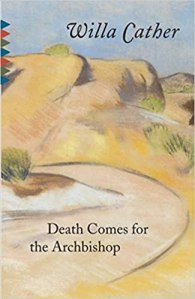
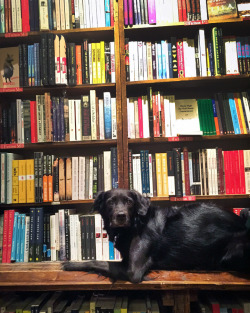
I believe this is the best combo of in-house self-quarantine (minus a tall whisky):
 GNASHING.