More marvelous miscellany

1.One of my least favorite things in the world, after e-scooters and ravers, is sweating. Which means I am not a happy fellow. Why? Right. Because I am sweating. And rather a lot, swamp-ass and all. Somehow I thought it’d be a swell idea to take a brisk walk in the 92-degree blech of midsummer. The light sweat I produced outside — a mere film — quickly metastasized into a profuse drenching once inside. Forty minutes later, in powerful AC, it has yet to subside. How bad is it? The dog is licking me avidly, like I’m a giant piece of beef jerky.

2.House of Terror — how kicky is that for the name of a major tourist attraction? It’s real, and it’s not a ride at your local carnival. This daunting museum is in Budapest, where I head this fall, and it isn’t about ghouls and goblins. Or, well, it sort of is. Per its description: “It contains exhibits related to the fascist and communist regimes in 20th-century Hungary and is also a memorial to the victims of these regimes, including those detained, interrogated, tortured or killed in the building.” History writ large. And horrible. I’m so there, with solemn intentions, despite the thrilling name. 

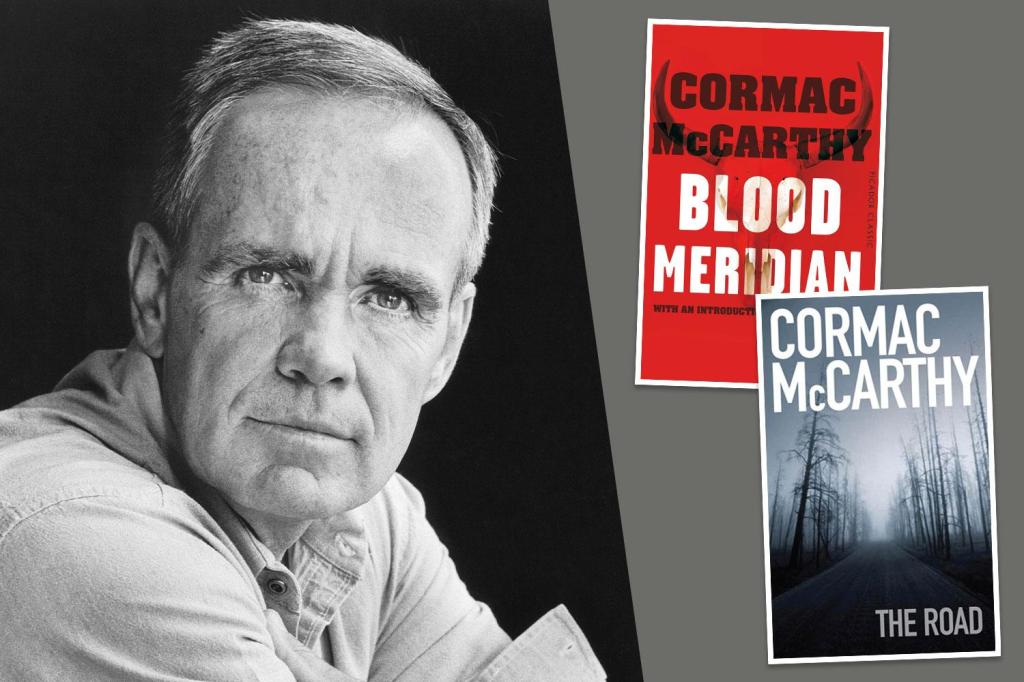
3.Just finished Paul Harding’s newish novel “This Other Eden” on the dazzling strength of his first book, the 2009 Pulitzer Prize-winning “Tinkers,” which is uniquely mesmerizing. “Eden” limns Black American history in its many facets, including, troublingly, eugenics. Harding is an uncompromising stylist, forging gorgeous, gem-cut prose that’s sometimes too infatuated with itself, yet nevertheless tells a fascinating story. Harding writes like few others — Cormac McCarthy and Faulkner come to mind — but he can stumble on his own lush verbiage. He is a flawed master.

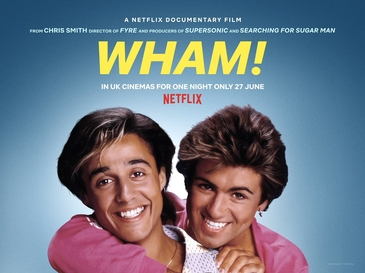
4.The new documentary about massive but short-lived Brit pop duo Wham! — aptly titled “Wham!” — is out on Netflix, and the trailer promises a bubbly, bubblegummy, bing-bang time (“Wake Me Up Before You Go-Go,” anyone?). The movie, a giddy romp directed by crack documentarian Chris Smith, isn’t, alas, as brawny as frontman George Michael’s uncrackable Aqua Net helmet. It’s strictly for googly-eyed fans who can’t be bothered with pop music history, laser-focusing on bandmates’ Michael and Andrew Ridgeley’s frolicsome BFF status and their improbable rise from cheesy teen wannabes to slick arena-fillers. Critically missing in this narrow nostalgia trip is cultural context, as if Wham! exploded in an ‘80s vacuum, with little competition and no help from juggernauts like MTV. And it doesn’t even footnote Michael’s untimely, and seismic, death as a solo artist. Wham! Bam! Thud.  

5. Speaking of the dog (see #1), Cubby was recently shorn like a poor gray sheep, which I documented here. The good news: his hair is growing back in the summer swelter. He no longer resembles a fuzzy Pringles can — he’s not so tubular — and he’s stopped nipping the parts that were so short, pink flesh was exposed. He’s returning to his bushy self, and his attitude is boinging back — a little cocky, vain with a scruffy bedhead sheen, and as fierce around the UPS folk as one can be behind a closed door. His yawps and barks still shatter glassware, but that’s OK. Pretty soon he’s going to look like Slash again and the process will start all over. Our little lamb chop.

6.Then there’s this: I was strolling in the summer heat (see #1 again) and some shitty beat-up compact sedan roared past me, easily doing 50 to 60 in a residential  25 zone. Startled (and pissed), I yelled, “Slow down!” The driver flipped me off and I reflexively returned the gesture. He barreled into oblivion. Then I thought: Smart. That’s a good way to get yourself killed. Jackass might have a gun, might want to turn around and use it. Sweating like a madman, I kept walking, ruffled, looking at the world in a slightly different shade.

How ‘Jaws’ ate me alive

Today was a two-errand day. I was picking up a modern classic potboiler at the library — the one about a ginormous great white shark that terrorizes the bejesus out of a New England beach town — and I was getting my periodic pedicure at the salon. I dubbed the day “ ‘Jaws’ and claws” to amuse myself. (Mission accomplished.)

The book I got really is “Jaws,” Peter Benchley’s 1974 blockbuster that spawned Spielberg’s famous film and a million petrified beachgoers around the world. As a kid, I lived in beachy Santa Barbara when both were released, and I fantasized about flesh-shredding teeth and ominous dorsal fins to unhealthy degrees. It terrified me, and I loved it. 

First I worshipped the movie, which I saw at age 7, then I snatched my parents’ mass market paperback of Benchley’s novel and gobbled it up at age 8. I savored those pages, slashing with vivid, violent writing that helped turn me onto reading for a lifetime. 

I still own that cracked, yellowed paperback, but it’s packed away with other mementos. So, on a whim, I hit the library up for its copy. I quickly located some of my favorite passages, ones that haunted — and excited — me as a young reader.

Just like my own copy

Can you handle it? This horrifying scene is from the opening of the book, when a young woman — recall her from the movie — takes a skinny-dip in the moon-dappled ocean. 

“The fish smelled her now, and the vibrations — erratic and sharp — signaled distress. The fish began to circle close to the surface. Its dorsal fin broke water, and its tail, thrashing back and forth, cut the glassy surface with a hiss. …

“At first, the woman thought she had snagged her leg on a rock or a piece of floating wood. There was no initial pain, only one violent tug on her right leg. She reached down to touch her foot, treading water with her left leg to keep her head up, feeling in the blackness with her left hand.  

“She could not find her foot. She reached higher on her leg. Her groping fingers found a nub of bone and tattered flesh. She knew that the warm, pulsing flow over her fingers in the chill water was her own blood. Pain and panic struck together. The woman threw her head back and screamed a guttural cry of terror.

“This time the fish attacked from below. It hurtled up under the woman, jaws agape. The great conical head struck her like a locomotive, knocking her up out of the water. The jaws snapped shut around her torso, crushing bones and flesh and organs into a jelly.” 

Now, as a young boy, this was about as stupendously visceral as prose could get. (And I omitted the rest of the violence for reasons of taste and space.) “A nub of bone and tattered flesh” — I reread that line over and over, shocked, thrilled, gobsmacked. 

Even today, these opening pages stun. Getting the book at the library, I was hoping Benchley’s eloquence would strike me again, and it did. That’s why I shared some here. 

Call him a hack or a mercenary, but you’d be wrong. Benchley’s a savvy craftsman, expert at tension and thrills, not to mention a vibrant stylist with a painterly (think Francis Bacon) flair. His humans, from Quint to Brody, pop off the page even if the world he confects for them occasionally brushes pulp.

I’m not going to reread the entire novel, which is remarkably short at 278 pages, but it was fun revisiting a book that so influenced my cultural life.

Why “Jaws,” why now? Well, I’m reading an excellent new book about the history of Hollywood and the Academy Awards called “Oscar Wars,” and I’m deep in the chapter focusing on the making of “Jaws” (as well as “Barry Lyndon,” “Dog Day Afternoon,” “One Flew Over the Cuckoo’s Nest” and “Nashville” — 1975 was a hell of a year in American film.)

The lore is notorious: Making the movie “Jaws” was a prolonged ordeal and near-disaster for all involved, including a 26-year-old Steven Spielberg, who was sure his nascent career was finished. We know how that turned out.

If the movie “Jaws” remains one of my all-time favorites — in a crowded field that includes “Heat,” “All About Eve,” “Sweet Smell of Success,” “Manhattan,” “City Lights,” “Seven Samurai,” “Duck Soup” and on and on — the novel “Jaws” is more of a sentimental gem. It’s dear to my heart for reasons that go beyond art. On a nostalgic level, it has — yes, I’ll say it — sunk its teeth in me. And it won’t let go.

Best. Teacher. Ever.

Reading the short bubbly novel “The Prime of Miss Jean Brodie” by Muriel Spark, I’m reminded of my own most extraordinary high school teacher back in California so many years ago. 

In the book, Miss Brodie is a 30-ish instructor of teenage girls in Edinburgh, Scotland, with unorthodox teaching ways that fellow teachers sniff at as “experimental methods.” Weeding out her sharpest pupils from the dolts, Miss Brodie selects six girls to be “the crème de la crème” — the Brodie set.

“Determined to instill in them independence, passion, and ambition, Miss Brodie advises her girls, ‘Safety does not come first. Goodness, Truth, and Beauty come first. Follow me.’”

Miss Brodie goes on: “Art and religion first; then philosophy; lastly science. That is the order of the great subjects of life, that’s their order of importance”

At that, memories tumble forth of how my junior year English teacher, Mrs. Lisa Condon, laser-focused on art, literature, theater, poetry and all things high culture. And how she quietly cherry-picked certain students to be her, for lack of a better word, pets — the Condon set. She knew who would soar amid her unconventional efforts and those who would muddle through a fog of half-assed disinterest.

I went to an unremarkable high school in the flush suburbs of the East Bay near San Francisco, notable for its cloying rah-rah school spirit (Go Wolves!) and outstanding mediocrity, from academics to sports (Go Wolves?). The place sort of asphyxiated your teenage soul.

But there were exceptions in the form of a few teachers — colorful, charismatic, quirky characters who jumpstarted their subjects to phosphoric life. They’d challenge with an uncompromising affection for the material and the students. To name a few, there was Mr. Church, Mr. Weigardt, Mr. Nelson and, above all, the fearsome Mrs. Condon.

Mrs. Condon — always in flowing floral skirts, straight brown hair down her back, peasant blouses, no makeup — was soft but a fierce taskmaster. She could scare the snot-nosed adolescence out of you and make you a college-poised pupil in the first couple weeks of class. Each week we had to write a long essay. They took me five hours, every time. For midterms, we had to memorize the verbatim definitions of 125 vocabulary words.

Mrs. Condon was no martinet. She was warm and human, if tightly wound. She hewed to principle. She knew how things should be done and expected us to follow. There was little room for compromise. At 32, she was in her prime. 

On that crummy campus, her room was an oasis of art, civilization, rules and manners. She was dedicated to culturing us, wiping the philistine smirks off our faces, getting the gears in our sex-addled heads whirring. We studied Picasso, Dalí, Blake, Hemingway, Van Gogh, Dante, DeKooning, even lyrics by Iron Maiden and Pink Floyd. There was so much more. My head exploded. (She later added classical music to her syllabus. I would have killed for that. She would have broken down and cracked open the glories of Beethoven and Mahler with passion and ferocious intelligence and her students would weep.)

And woe to those who didn’t keep up. Mrs. Condon kicked out a jock when he couldn’t identify the ongoing famine in Ethiopia (he was back in class the next day), and ejected a cheerleader for cheating on the weekly vocabulary test (she never returned).

An unreconstructed Berkeley free-spirit, she maintained a rebellious streak — a “Question Authority” bumper sticker was posted by her desk for all to see and ponder — and actually told me what teachers to avoid or enroll with.

Mrs. Condon was a force. None of my college professors grazed her instructional power. Working at my second newspaper job in my mid-20s, I wrote her a note to thank her for the cultural exposure, no matter how demanding, that she instilled in me. She wrote me back, warmly pleased I was still writing. 

A couple years before that, while in college, I ran into Mrs. Condon at a San Francisco Ballet production of Stravinsky’s “Rite of Spring.” It was an awkward reunion, clumsy and blushing and impromptu and all, but nice nonetheless. I can only think she chalked up my attendance as a small triumph. I hope so. 

“What were the main influences of your school days? Were they literary, political, or personal?” a character asks one of the Brodie set in the novel.

The girl responds: “There was a Miss Jean Brodie in her prime.”

I’d say the same, but in my version: “There was a Mrs. Lisa Condon in her prime.”

Raging with Roth

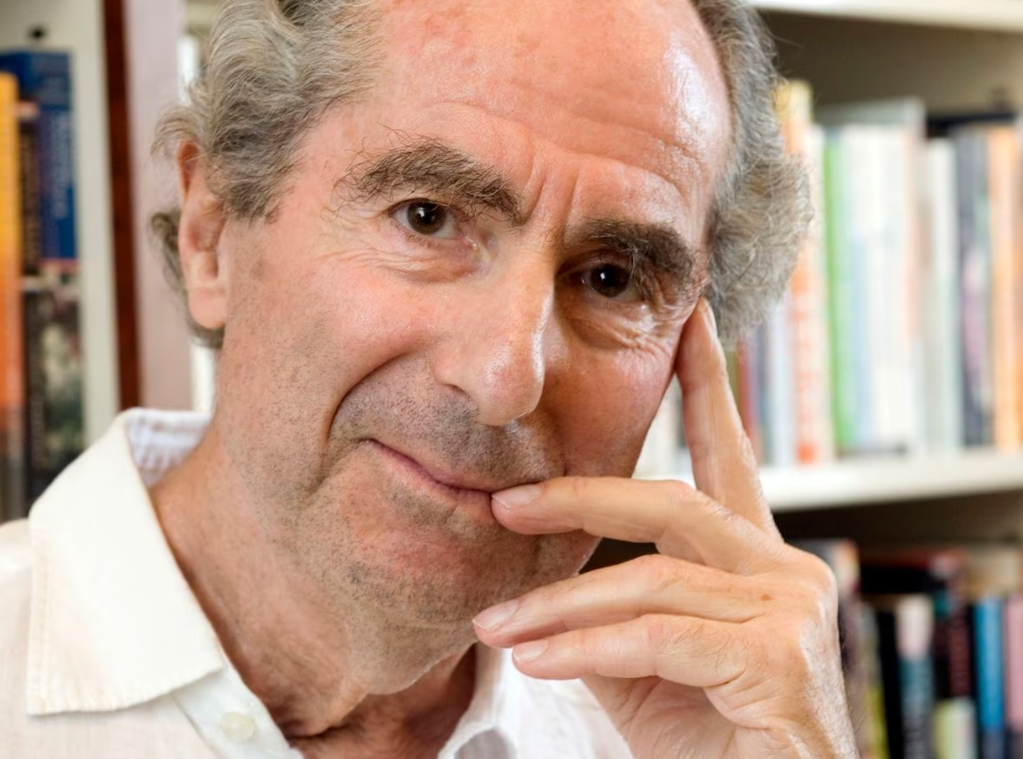
Last weekend, we hit a panel discussion at the Philip Roth festival in the late novelist’s hometown of Newark, New Jersey. We left it walking on intellectual air. Not smugly, but smilingly. It was heady and engrossing. Fun, funny and fascinating.

Called Philip Roth Unbound, the festival was a three-day celebration of all things Roth, from bus tours around his old Newark haunts to numerous panels parsing the formidable genius that gifted us “Portnoy’s Complaint,” “American Pastoral” and “Sabbath’s Theater,” to name some obvious masterpieces. (Need more? How about “The Human Stain” and “Everyman.”)

Our panel was irresistibly titled “Letting the Repellent In: Philip Roth and the Art of Outrage” — right up my twisted alley. A short description from the festival: 

“[A] panel on the cathartic power of discomfort. With each new novel, Roth predictably delighted and shocked readers with his frank depictions of human frailty and immorality. No aspect of behavior was spared his withering critical eye — sex, gender, race and religion were all fair game.”

I love it.

The panelists, all novelists, were a youngish quartet of publishing stars, award winners and best-sellers: Ayad Akhtar, Susan Choi, Gary Shteyngart and my personal favorite, Ottessa Moshfegh. They comprised a supergroup of sizzling hot writers, gathered to chat up Roth, his transgressive themes, techniques, cultural impact, and personal influence on each writer. 

I won’t recap the 90-minute discussion, but I will say that Choi was supremely poised and verbally chiseled; Akhtar, as moderator, navigated the discussion with shrewd erudition; Shteyngart labored to entertain with cussing and comic schtick, including some mugging (he was often very funny); and Moshfegh, coming across as a cerebral introvert and a smidge neurotic, was refreshing in her sometimes spacey reflections. 

To be surrounded by diehard Roth fans was heartening. Too often I feel that Roth is marginalized. He’s either too dirty, too angry, too offensive or too smart. His books aren’t easy; they are verbally dense, lashed in skeins of urgent ideas about life, marriage, love, sex, Jewishness, morality, death, politics, art. They are mean, unsparing, philosophically violent, crude, passionate and hilarious.

Few writers — Saul Bellow is one — could graze such dazzling complexity, that Rothian exuberance, that volcanic, (sometimes literally) orgasmic prose. “American Pastoral” (1997) is one of my top two favorite novels. It sucked my breath away with its relentless moral and artistic propulsion. It should be banned by sheer dint of how good it is.

“Sabbath’s Theater” — described by one critic as “Roth’s coarsest, frankest, and most exhilarating novel, showing off Roth’s linguistic verve, and his unparalleled ability to stare unblinkingly into the psyche of a depraved scoundrel” — is mandatory reading, a master text of style, for anyone pursuing the art of fiction. (I’m about to read it again.)

Roth died at 85, in 2018, without winning the Nobel Prize (though he received many awards, including the Pulitzer). In later years, he was regularly shortlisted, but was likely too incendiary for the milquetoast committee. Every October I would check the paper to see if it was his turn, then throw it down, crushed, livid. Bellow won it in 1976. Faulkner in 1948. Toni Morrison in 1993. Roth would fit right in that company of trailblazing masters. 

Maybe he was just too much much. Roth fans are zealous and jealous, and to see the capacity crowds at the festival, chatty and excited, reminded me the great one lives on. Or at least his challenging ideas and coruscating wit live on. We at least have that. 

Philip Roth. Such a dirty, furious, brilliant mind.

Quote of the day: Exactly how I feel about it

“Boy, when you’re dead, they really fix you up. I hope to hell when I do die somebody has sense enough to just dump me in the river or something. Anything except sticking me in a goddam cemetery. People coming and putting a bunch of flowers on your stomach on Sunday, and all that crap. Who wants flowers when you’re dead? Nobody.” — Teen philosopher Holden Caulfield