Recent tomes I’ve tapped

I’m never not reading a book or two. These are a few new titles I got my grubby paws on: 

Mike Nichols’ 1966 film of Edward Albee’s corrosive play “Who’s Afraid of Virginia Woolf?” remains a dish-rattling, drink-spilling, daggers-in-your-ears delight, all marital earthquakes and social Molotov cocktails. (Cocktails. Of course.) Booze is big in that cracked portrait of a long-wed couple on the rocks. (On the rocks. Of course.) And you get a contact high reading the riveting “Cocktails with George and Martha: Movies, Marriage, and the Making of ‘Who’s Afraid of Virginia Woolf?’” by Philip Gefter, who capably captures the play’s serrated edges, dubious morality and verbal drive-bys, as well as the behind-the-scenes hoopla of making a controversial movie with a controversial couple, no less than Richard Burton and Elizabeth Taylor — Hollywood nitroglycerin. It’s a bracing blast of theater and cinema history.  

“Headshot” is by a woman named Rita Bullwinkel. Let’s get that out of the way. (There, done.) This slim, tightly coiled novel is also a muscular debut, damp with the blood and sweat of a passel of female teenage boxers, zesty characters realized with pointillist panache. Time-leaping and fragmentary, the girls’ stories are told in intense vignettes for a scrappy scrapbook of pugilistic profiles that pounds with humanity and life. If not quite a K.O. — more tonal and rhythmic variety would shake things up — the book is a fleet-footed contender. 

With irksomely precocious flair — at 35, he’s a wizardly wunderkind — poet Kaveh Akbar conjures worlds of art and ideas in his radiant fiction debut “Martyr!” Reeking agreeably of auto-fiction, this dense but delectably readable novel is about an Iranian-American poet scouring past and present, life, death and love with the insight of an artist and the squishy heart of the wounded. Gorgeous language propels you through its lush, gently philosophical thickets. And despite some muddled mysticism near the end — I’m allergic to spiritual allegory — “Martyr!” had me pleasantly reeling. 

Lorrie Moore’s a personal favorite and her latest fiction is the knottily named “I Am Homeless If This is Not My Home.Like all her books, tangy prose festoons the pages (a bite-size sample: “Fluorescent light rinsed the room.”). Yet the novel, with its arch surreal touches, rubbed me wrong. The narrative, centered on a man and his dying brother, is gawky, with sharp elbows and knobby knees. Plus, there’s heaps about chemo, cancer and croaking, and I’m not in a hospice mood. The novel just won the National Book Critics Circle award for fiction, so call me bonkers. In this rare instance, Moore is less.

Not for the feint of heart but perhaps for suckers for sentiment, the bleak memoir “Molly” — breathlessly written by Molly’s husband, Blake Butler, a noted novelist of thrillers — starts with her gunshot suicide and continues with another bang, the crack of bared emotion and tell-all candor. This is the story of Butler and Molly Brodak’s three-year marriage, a melding of art and nature and words and, in her case, bouts of inconsolable darkness. Brodak, a published poet and author who said “I simply wasn’t good enough,” killed herself three weeks before her 40th birthday, in 2020. “Molly” is so much about her and her devastating secrets, yet equally about Butler’s clawing to the other side of grief through deep (and verbose) psychic excavation. He includes Molly’s suicide note (“I don’t love people. I don’t want to be a person”), along with the frantic blow-by-blow action of finding her body in a favorite field of theirs. These passages are tough-going, not only for the forensic particulars, but for Butler’s writerly histrionics as well; he pants on the page. A cult sensation, tugging readers to and fro like emotional taffy and kicking critics into superlative overdrive, “Molly” is a divisive read, by turns lovely, wincing and overheated. It is the first book I’ve read that opens with the phone number for the national suicide hotline. 

Chick lit

“The idea of meeting someone in a library, in the aisle of a bookstore or while reading on the subway, for instance, remains stubbornly high on the list of many people’s romantic fantasies.” — from The New York Times (link below

I admit there are few things more alluring to me than an attractive woman reading a book or browsing in (or working at) a book shop or library. It’s a smashing combo, a kind of electrifying alchemy that I can’t quite explain.

For instance, in the 1946 noir “The Big Sleep,” I’ve always been partial to the bespectacled bookshop proprietress played by Dorothy Malone than to Bogart’s famous glamor squeeze Lauren Bacall — a nerdy example of my bookish bent.

My personal history of amore is lucky with literature. There was blue-eyed Guen, who brought on our first date a copy of David Mamet’s “Writing in Restaurants,” just for me. Laura, who made my knees buckle from afar, was toting the poems of Herman Hesse (we were soon a couple).

One of my biggest crushes was on the girl who worked at the hippest book store in Austin. Then there was the woman who, after a little wine, insisted we go browse the local used book store and buy each other a volume. Now we’re talking.

On the flip-side, I once invited a date to my place. She looked around at the Rothko print and various vintage movie posters, all without comment. Then she eyed my bookshelves and scoffed, “You have way too many books.” Deal-breaker!

Like movies, books are crucial to me, and a shared passion for them is just that — shared passion. It’s something in common, hot to the touch, and can be the bedrock of something more intense, meaningful and feverish.

All this was stirred up reading the above mentioned story in the Times titled “Is Reading the Hottest Thing You Can Do as a Single Person?” (Answer: yes.) 

Check it out HERE.

Dorothy Malone, bookshop owner, face to face with Bogart in “The Big Sleep”

The reluctant bachelor

In my 30s, a pair of well-meaning coworkers nominated me for a title in a big-city glossy magazine that makes me blush even as I type this so many years later. 

The magazine was a strenuously vapid thing, slathered in food and lifestyle pap, all of it mawkishly upbeat. To attract page after Technicolor page of blaring ad copy, it was shamelessly obsessed with ratings and lists: Best Barbecue! Best Campsites! Best Burgers! Best Places to Get Off!

City magazines with ample ad revenue are like that. They traffic in pretty pictures of manicured affluence, catering to the beauty-salon and doctor’s office crowds. Without being trendy themselves — they are woefully unhip —  they try to manufacture trends. Only dingbats actually pay money for the periodical, which is so cloying, you could barf. 

That said, I admit up front that I participated in this paragon of sub-journalism. My coworkers nominated me for one of those knuckleheaded lists: the city’s Most Eligible Bachelors. I was flattered. I was humbled. I was mortified.

The magazine editor phoned me for a preliminary interview. And I blurted: no. I rejected the nomination. It was way out of my comfort zone. I wasn’t so desperate for a date. And this introvert definitely didn’t need the exposure, my bewildered mug spread next to an ad for the hottest tanning salon or 40 sparkly, smiley real estate agents.

I thanked my deflated pod-mates, the lovely Sarah and Sharon, and also apologized. I was being ungracious, but I didn’t have the stomach for it. 

My dis was apparently a big deal. Friends expressed dismay. My disappointed mother scolded me like I was eight. The topper: Ira Glass of “This American Life” called for a possible segment — man turns down most eligible bachelor nomination, how zany is that? — that, fortunately, never panned out. 

And yet, I’m only human.  

Forward a year: Same routine, but this time, for better or worse, I caved. I did it. I’m not sure why. I was strafed by anxiety. But I thought, what the hell, man up. 

During the in-office interview with the editor, I explained my job (movie critic, which I said wasn’t nearly as glamorous as it’s cracked up to be), noted my hobbies (world travel, books, film, drinks, drums), and things I’m not so crazy about (dancing, reggae). Asked the inevitable question of what I look for in a woman (sigh), I said something like someone bookish, worldly and intellectually curious (what a dope).

This is the story of someone quite bashful scraping himself out of his dark, lonesome shell. A comment the editor solicited for the article from one of my dearest friends, Courtney, included these bits: “His eccentricities are very endearing … Once he lets you in, you discover a kind-hearted soul.”

Yeah. That might be a bit much. But there I was in this glossy magazine with nine other “most eligible bachelors,” practically shaking in my boots with self-consciousness. Each of us filled a full color page, with no ads. In the photo, my head is enormous.

The issue hit the stands (and the beauty salons and doctors’ offices) and I braced for the worst. But instead: crickets. No one called, emailed, berated me, ridiculed me, asked me on a date, nothing. Disappointment? No, massive relief. 

I guess the moral of this tale is to get out of your self-defined — and in my case, distinctly neurotic — safe zones and take a chance on something new, even alien. I ate a whole cobra in Vietnam and got detained by Hezbollah in Beirut. A cheesy little spread in a city magazine is comparably nothing. Really. Nothing.  

Take a risk. It might be gut-wrenching. It might be exhilarating. Or it might be … crickets. 

Money can’t buy me love

When I was 14, gangly and clueless, a fellow teen approached me in line for the Big Thunder Mountain rollercoaster at Disneyland. She was cute, shy and giggly, and she slipped me a piece of paper the size of a business card. A shiny dime was taped to the card, which read: “Here’s my number and a dime, you can call me anytime.” 

Hot damn! 

(Less hot: I probably still have this ego-tickling keepsake. What a sap.)

(Lesser hot: The lass was surely carrying several cards around like a rod and reel, fishing for quarry at a teeming amusement park. The indignity.)

If only that’s how things worked in this era of high-tech, horn-dog delivery systems. To hell with Match and Tinder, just hand me your card with a proposition and I’ll take it from there. Prepaid to boot, though I’m sure a dime won’t slice it anymore. Tape a fifty-spot to it and we can talk. 

Though I prefer the above messaging — or, equally effective, the hand-passed mash note in Spanish class — I have resorted to dating sites, if only thrice, to make my intentions known. Each time was met with lavish failure. They just didn’t work out, making me a member of about 20 million date-site suckers.  

There was the young woman on Yahoo!, a dark beauty with cotton-candy cheeks, who advertised herself as an inveterate reader and energetic world traveler, only to prove she’s a deft fabulist and convincing embellisher. 

We met up for drinks and jabber. I asked what she reads and she said Harry Potter (watch my face drop). I press. No, just Harry Potter. We never discussed what I’m reading. Travel? She’s been to New York, once, with her mother. And Canada. The tryst was a bust. Even more so, as she’s a fiend for top-shelf vodka. 

Later, I tried trés-hip hookup hotbed OkCupid. I contacted two women. My gentlemanly overtures — the meek shall not inherit the earth — fetched zero responses. I had no idea what I was doing. Still, I was crestfallen for about 17 minutes.  

I believe in fate, kismet, stuff happening for a reason. Actually I don’t, but stick with me. I had a distant, tormenting crush on a woman who worked at the local arthouse cinema. She didn’t notice me. 

One day, at my favorite outdoor cafe, I spotted her (alone, gripping a Hermann Hesse paperback; be still my beating heart). As if the heavens split, she saw me and we exchanged incandescent smiles. I wish, right there, I had a business card that said, “Here’s my number — just call me!” 

Forget the goddam dime. Life is cheap, and short; love’s even cheaper, and shorter. Loose change has no place in this picture. (I later learned that this melting vision, named Laura, didn’t own a cell phone, just as I didn’t. I should have handed her the card with a roll of quarters and a money order.)  

I was paralyzed, besotted, nerves ajangle. So close, I thought. Make a move, putz!

I shot her a few more smiles, and, helpless about what to do next — approach her? sure! — I got in my car. As I pulled away, we made final eye contact, smiled and waved at each other. I ached with yearning, dramatically misty-eyed.

That’s because this was the classic, tragic missed opportunity. And yet with some tactful sleuthing, I figured it out: I discovered her name, got permission to call her (trusty land line), and soon wound up at her place watching “About a Boy” on VHS. We were a solid couple — books, travel, beer — for more than a year. Not an epoch, but enough time for the earth’s plates to shift.

Success, without a dating service, without a dime taped to a brazen call-me card, without exaggerated CVs and eye-fluttery flirtation — it happens. And it’s the only way I’ll play the dating game. Chance, fate — I don’t believe in them. But sometimes, rarely, it all falls into place. And I cherish that, for it’s no dime a dozen.

Going to the movies with your girlfriend

“When I’m getting serious about a girl, I show her ‘Rio Bravo,’ and she better fucking like it.”

— Quentin Tarantino

It’s a truism that when you’re dating, or deep in a relationship, you want the one you adore to like what you like, be it a book, band, meal or merlot. That typically takes shared exposure, an excursion to a favorite restaurant, museum or bookshop. 

And, of course, to the movies. 

Romance in the flickering dark of a theater may be a dating cliché — shared popcorn, awkwardly slinking your arm around her shoulder — but it’s also a communal act of culture. It filters preferences and underscores taste. Will she like it? Did she like it? (She better fucking like it, as Tarantino says.)

I’ve taken risks on movie dates, bringing girlfriends to foreign arthouse films like “Fellini Satyricon,” Kurosawa’s “Seven Samurai,” Tarkovsky’s “Mirror” and Satyajit Ray’s “Pather Panchali.” (I never willfully tortured them with a Bergman dirge.)

‘Seven Samurai

These aren’t the easiest movies. They can be long, slow, thorny, with subtitles to boot. I don’t force it. If the film is proving a slog, I’m flexible. We walked out of “Satyricon” when I noticed the corpselike look on my girlfriend’s face (I’d seen the movie before, luckily).

New mainstream movies are fine, but, when possible, I lean to classics, rarities and art films. I got most of my cinema education at great revival houses in the serious movie towns of San Francisco, Austin and New York. Those funky theaters — the Castro, Alamo Drafthouse, Film Forum — are where I lapped up, wide-eyed, gritty film noirs, widescreen westerns, merry musicals and foreign essentials. It’s where I met Buster Keaton, Rita Hayworth, John Wayne and Anna Magnani and fell in love. 

Sharing this love is part of a good movie date, and I’ve had wonderful experiences with women at “Casablanca,” “Duck Soup,” “Annie Hall” and “All About Eve,” as well as brainy documentaries by Werner Herzog and playful French New Wavers like “Breathless.”

They’re movies I want to see and expose my lovers to. I become an enabler, a tutor perhaps, unspooling new cultural experiences. I am, for one, forever grateful to my brother for introducing me to the fun, frenetic bliss of Hong Kong action flicks, from Jackie Chan to John Woo and movies like “Peking Opera Blues” and “Hard-Boiled.” You never forget the impact of that, much like your first kiss. 

‘Hard-Boiled

Going to current movies is different. It means we’re taking a shared ride of discovery in the dark. A serious girlfriend and I watched “Dazed and Confused” and “Pulp Fiction” during their first runs (she loved them as much as I did, thank god). We got our classics fix watching “Sunset Boulevard” and Renoir’s “Grand Illusion” on video, rapturously. 

It doesn’t always work out so well. One date rejected the virile operatics of Michael Mann’s crime masterpiece “Heat” (fail!), while another huffed and ridiculed my choice of adjective when I called “Reservoir Dogs” “astonishing” as we left the theater. 

I know the feeling. I’ve been in the other seat, when I scorned a shared movie experience. My rants and tiny tantrums after sitting through the brain-dead “Titanic” and “Independence Day” come queasily to mind.

Then there’s the movie mistake, like when my brother took a girl to the emotionally devastating downer “Sophie’s Choice” on their first date. Nice libido killer, bro. She married him anyway.

Movie dates, then, are a fraught enterprise. What seems an innocent night out for easy entertainment can reveal telling value judgements about taste and temperament (she actually liked “The Notebook”?). They can even be deal breakers. (Again: she actually liked “The Notebook”?)

You take it personally. If I pick a movie I’ve seen before, I sit giddy and expectant, trying to gauge my date’s response, praying she likes it or at least endures it. As seriously as I am about film, however, I’ve never broken up with a girlfriend over a movie disagreement. That would be petty and asinine.

But I do keep score. 

One magnificent mollusk

Coiled near its rocky den, the octopus slowly unfurls a tentacle like a flower blooming in a time-lapse photo to the human hand before her. It glances the hand then suddenly sucks it, gently pulling it toward her. The moment carries the pitter-patter of courtship, of holding hands for the first time. Could this be love?

“That’s when you know there’s full trust,” says the owner of the suction-cupped hand, free diver and filmmaker Craig Foster, in his remarkable documentary “My Octopus Teacher.” A viral smash, the Netflix film has been shortlisted for the best documentary Academy Award. Really, it deserves a special accolade, say, Best Buddy Picture Between Man and Mollusk. The movie is something else: devastating octo-poetry. 

A simple story about a grown man befriending a gorgeously slithery cephalopod in the swaying kelp forests of South Africa, the film depicts the burly, soft-spoken Foster as a dedicated student of the ocean who is truly moved by the relationship he forges over a year with the sea animal that remains unnamed. (I suggest Octavia.)

Part of his lesson is noticing the striking similarities between us and these “alien” creatures, the way connection, interspecies or not, is essential and a well of bracing contentment. “It does give you this strange level of octopus joy,” notes Foster, saying words that have likely never been uttered before.

As a pupil, Foster is a keen observer, learning by watching his silent friend do what she does: hunt, hide, jet, crawl, swim and, sometimes, walk on two legs on the ocean floor. That trippy spectacle, both funny and boggling, is one of many scene-stealers.

She’s a gelatinous chameleon, enacting stunning physical transformations with her bulbous head, serpentine legs and polka-dot suckers to blend seamlessly into the Day-Glo surroundings. Her effortless shape-shifting is part of the movie’s multi-pronged magic.

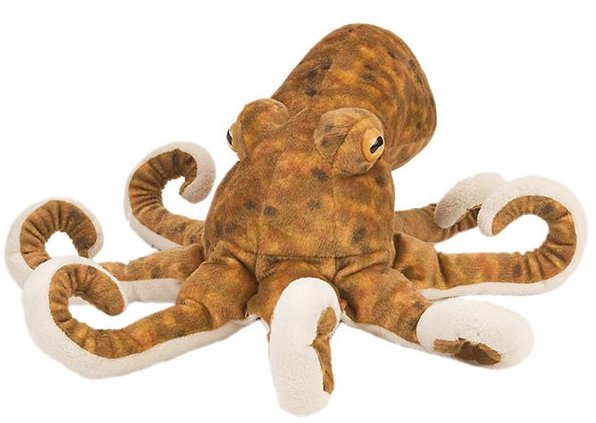
“My Octopus Teacher” reminds me of many oceany things, like the charmingly odd adopt an octopus campaign at the World Wildlife Fund, where for a $55 donation you get a plush stuffed octopus, a photo, an adoption certificate and other tentacular goodies. It never occurred to me that octopuses were endangered, but WWF says they’re “vulnerable to toxins and pollution,” yet doesn’t that cover just about everything? (Please send me $55. I am endangered. My plush doll is amazing.) 

As much as I love watching the delightful octopus in the movie, I love even more putting octopus in my mouth. Almost unavoidable on midscale restaurant menus — perhaps another reason they’re endangered — grilled octopus is hot stuff, up there with bone marrow and short ribs. Both chewy and silky, the meat has a mild sea-foody flavor complemented by a good fiery sear. Here’s a spectacular piece I scarfed in Barcelona:

I don’t want to eat the movie’s affable octopus. She’s a darling — adorably clever, wily and pretty, much like the picture itself, which is also fairly wrenching (brace for some drama). 

It’s an elemental tale rife with homey pleasures: the hand holding, the snuggling, the mutual respect. The bond is inexplicable but palpable, right there on screen, like when Foster’s new BFF seems to be tailing him through the sea.

“That’s one of the most incredible feelings,” he beams, “to be followed by an octopus.”

It’s fantastic, and it almost breaks your heart.

Rating life, and everything else

Once a former colleague and I were talking about how overrated most movies are. We were actually astonished and pretty disheartened. (“Avatar”? Christ.)

Then I took a big leap and mused that life is overrated, and I wasn’t really kidding. My pal nodded, even softly repeating my words. We traded wry grins that belied a deep sadness. We went back to work.

Funny thing is, even that sadness was overrated. Because it wasn’t quite sadness so much as bluish resignation, a minuscule sigh. Life, overrated as it may be, goes on.

Isn’t everything sorta, kinda overrated? All right, not everything. There’s family, romantic love, learning, travel, dogs, bourbon, art, Billy Wilder, anything concerning Doritos.

Still, the very question is unnerving. It’s not the most joyous thing to realize I can think of a kajillion things that are overrated, yet I’m sure you can, too. Let’s go for it. I’m totally just spitballing here:

  • empanadas
  • “The Wire”
  • Johnny Depp
  • most rap
  • “The Queen’s Gambit”
  • Sofia Coppola
  • dinner parties
  • all things Harry Potter
  • “Twin Peaks”
  • sports
  • music festivals
  • celebrity/celebrities
  • chicken breast
  • fake breasts
  • almost every Netflix comedy special
  • Twitter
  • zombies
  • Quentin Tarantino
  • road trips
  • “The Office”
  • late Red Hot Chili Peppers, including “Californication” (but not “My Friends”)
  • giant Ferris wheels in major cities
  • “Fargo” (the 1996 movie)
  • Brazilian waxing
  • Dave Eggers
  • Prague
  • politicians
  • “Vertigo”
  • year-round warm weather
  • Colson Whitehead’s novel “The Nickel Boys”
  • David Sedaris 
  • convertibles
  • “Borat Subsequent Moviefilm”
  • video installations

Excuse the haphazard tally; I was just getting started. I could have tossed in podcasts and pork rinds. Hell, I think I’m overrated. Put me in the top slot.

The thing with overrating stuff is how impossibly subjective it is. I can say life — or, for that matter, “Titanic” — is overestimated and there’s a 90-plus percentage you’ll disagree. Surely one of you thinks David Bowie is overrated, but I’d argue he is not, to my grave.  

But subjectivity is part of the pleasure. Sports fans (grossly overrated) forever gauge teams and players in heated arguments of gladiatorially subjective rating games. 

And it is a game. In Woody Allen’s “Manhattan,” Diane Keaton and Michael Murphy rattle off members of their own “Academy of the Overrated,” including Vincent van Gogh, F. Scott Fitzgerald, Lenny Bruce and Ingmar Bergman, formidable figures that seem name-checked just to piss off a breed of urban intellectual. (Woody himself goes apoplectic listening to them.)

As a game, cataloging one’s personal overrated (movie, food, person, book) is a cathartic kick. The characters in “Manhattan” are having a giggling ball airing their pointedly curated Academy. Tossing together my list above was fun and purgative, despite its sloppy incompleteness. (Though I did self-edit as I went. I felt some inclusions would offend sensitive readers. Like God, and jellybeans.) 

Is life really overrated? Sometimes, especially when you consider sickness, loss, debt, all those Tyler Perry movies. But it’s underrated, too — getting lost in a European city, succulent bone marrow in a good restaurant, fond memories, Al Pacino roaring his way through “Heat.”

Maybe it’s an even split. Maybe life and all its facets, good and not-so good, are what make things interesting. Maybe Coldplay (overrated) and cold weather (underrated) can coexist. And maybe, really, overrating things is itself overrated.

Even travel letdowns are worth it

I’m a jaded traveler, asking much, with high expectations and a low threshold for disappointment. 

So naturally I’ve at times been disillusioned during my many journeys around the world. It happens. And it’s not a terrible thing. After all, how letdown can you be by, say, Madrid, a great city that pales a bit compared to its more lustrous and colorful cousins, Sevilla and Barcelona? Not much.

In a previous post I told how I recently unpacked piles of my travel journals from cold storage after several years. Written in blue ink in black notebooks — usually on barstools after long days wending wide-eyed through cobblestone streets and spindly alleyways — the pages are filled with the magic of travel, the mirth of discovery, the shock of the new, amazing people and far-out food (like the whole cobra I ate in Vietnam). 

The journals are also laced with descriptions of those isolated times when I was dissatisfied, underwhelmed or — what! — plain bored. I’ve re-read these bits with a kind of dismayed surprise: Really? That’s how I felt about Rome? Rome? 

Well, yeah, on that particular day. Travel experiences are colored by everything from jet lag to daily frustrations (taxi rip-offs, getting lost, language hassles). They are mutable. What deflates one day might electrify the next. 

My journals reminded me of this in bold strokes. These are some examples of thwarted expectations and little letdowns on travel’s twisty, rugged road: 

In 2000 I went to Israel a hardened agnostic bordering on a true atheist. Astounded by religion and the mindset of its believers, I wanted to go to the desert nation that’s home to the big three, Judaism, Christianity and Islam, and see what makes them tick. Scenes from my journal:

“Today in Bethlehem I arrived at the perhaps blasphemous idea that the region is a historical Disneyland, a realm of fairy tales. ‘Here’s where Jesus was crucified and resurrected.’ ‘This is where Mary slept.’ We might as well be told, ‘This is where Snow White ate the fateful apple,’ or ‘Behold the tomb of Cinderella’s stepsisters.’ It’s psychotic that pilgrims succumb to the fanciful whims of Constantine’s mother, who randomly appointed holy designations to places here. Paraphrasing something I actually heard on a tour: ‘Here’s King David’s tomb and the site of the Last Supper, but, uh, not really, because they’re lost somewhere far below the city.’ And people eat this stuff up.”

Later I noted:

“Believers hoisting giant wooden crosses follow ‘Christ’s final footsteps’ on the Via Dolorosa in Jerusalem’s Old City. It’s maniacal, and not half as fascinating as you’d think. That’s how religion is for me now. Just silly, impossible to be contemplated in the higher regions of the mind. It absolutely fails to astonish. So this trip, which is wonderful thus far — peaceful, pleasant, edifying — is innocent of any celestial wallop, of a blinding halo glow and spiritual intervention. I am unmoved. I am unchanged.”

Then there’s Prague, which I visited with inflated enthusiasm in 2002. I should have known better, especially since so many blinkered Americans just love the tourist-clogged Czech capital and callow expats infest the place. I got there and sighed, writing:

“Not entirely impressed by the city. Like an Eastern Amsterdam: beautifully antiquated, charmingly European, painted with time and soot, tired but proud. And yet rather vacant. It’s all show, with a familiar, generic Euro tang. My true feelings are stifled from sleepless flights. My impressions are, for now, Cubist — fragmented, jumbled, unreliable. But, so far, a fine, sturdy European city of great charm and Old World wealth. A Disneyland-like anachronism, bursting with pastel façades and fairy-book antiquity, tourist throngs and souvenir kitsch.” 

Two days later I wrote: 

“I like Prague, and yet needing to write that means I’m working at liking it as much as I’m supposed to.”

On my second trip to Italy, in 2003, I revisited Florence and Rome, with a day trip to Pisa to see that teetering tower. My scribbled impressions:

“Pisa is a university town with a tower. Not sure why Italy doesn’t touch or connect with me the way Paris does. It’s less refined, more brusque. Its virile, violent history isn’t as deep and textured. It’s less intellectual, less progressive and less interesting. It’s about gelato and church.”

And about Rome specifically:

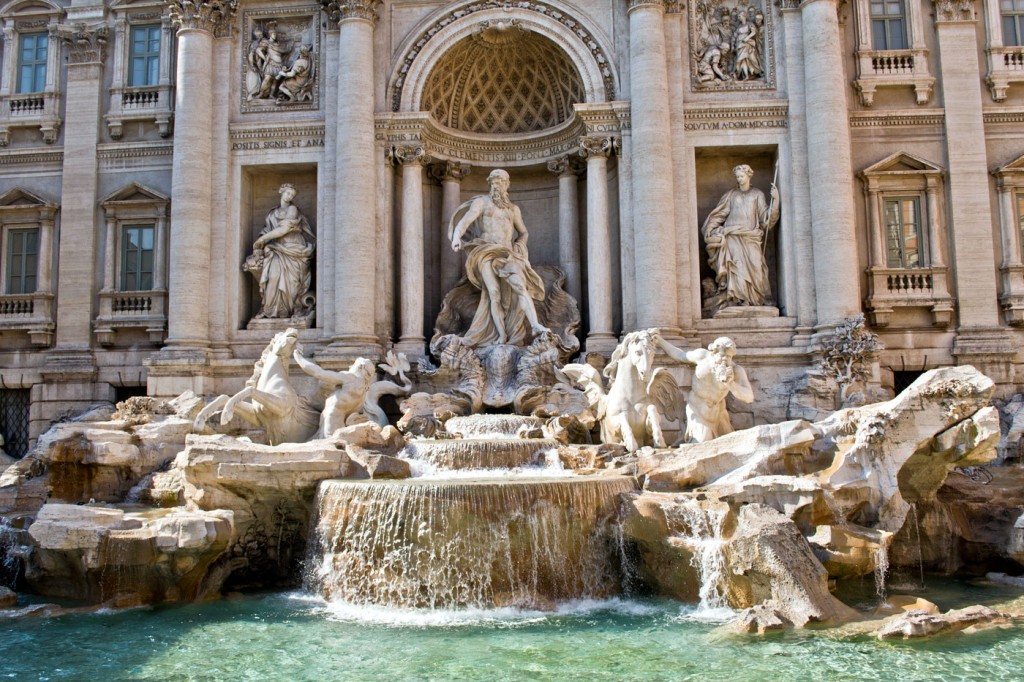
“Rome is OK. Trevi Fountain, Vatican, St. Peter’s — all numbingly familiar and inert, just there, edifices radiating gray. The city is sort of like Madrid or Berlin — popped expectations.”

What’s notable about the Italy trip is that when my girlfriend finally arrived to meet me there, everything shimmered to life with a giddy radiance. The Trevi Fountain at night was a splashy thrill, the Sistine Chapel an almost spiritual swoon. I loved my girl, and I loved Italy. 

I’ve learned that the fluctuating charms of travel cannot be underestimated. They should be greedily embraced. Up, down, it’s all about the ride, the swirling ecstatic journey.

Love, laughs, loss

Girlfriends are great. I adore them, madly, with smashing intensity. They like me too (yo, it takes two to tango), even if they have to slalom around my prickly edges, indigo moods, slashing humor and periodic bouts of suicidal solitude. But really, no joke, I’m a blast.

Just ask some past survivors — er, lovers. One said I was “brooding and negative” (aw, thanks, honey). Another called me a “tortured artist.” And, more to the point, I was told I’m an “s.o.b.” and, shucks, an “asshole.”

Ah, romance. All flowers and firebombs.

Those Hallmark sentiments, spouted in rare snaps of high dudgeon, are the exception not the rule. I’m a good, if challenging, partner, as my exes will attest. Almost all of them remain tight friends, and at least two are undying soulmates, exceptional individuals with whom I’ve never laughed harder, shared harder, and created quirky little worlds together.

I bring this up after watching two of my favorite fractured romances, movies that either rip me up or crack me up before sending me off blubbering like an Italian widow. 

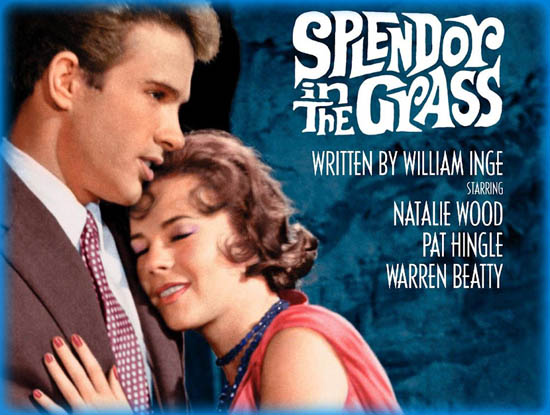
In 1961’s “Splendor in the Grass,” Natalie Wood plays a sexually repressed teenager who falls for Warren Beattie’s high school jock and, in short, goes crazy. As they go their separate ways, Wood’s psychosis intensifies. Later, supposedly cured, she visits her ex, who is now married. The ending will kick your guts out.  

Freighted with neuroses, Woody Allen courts a young, insecure Diane Keaton in 1977’s “Annie Hall,” the quintessential Allen love story, whose tagline is the very apt “a nervous romance.” With Allen’s overbearing hangups and egotism and Keaton’s skittish fragility, the couple’s frequently hilarious affair doesn’t stand a chance. Friendship will have to do. The last, lingering shot is almost unbearably wistful.

My relationships have bits of both films — possessiveness, craziness, big laughs, deep-dish neuroses, breakups and friendship. They have no boozy “Fool for Love” abuse, or bat-shit “Fatal Attraction” obsession. They are earthbound, boring to some; glorious fireworks spectaculars to those involved. 

I’m lucky to have dodged real drama, yet love isn’t always pretty. An otherwise sweet, sane woman shattered a glass on my bedroom floor in blind fury. (I told her I wouldn’t have dinner with her family on Christmas — smash!). Another one dumped her beer on me with extreme prejudice. But these are aberrant episodes in my relationship history, teensy scars I can look back on lightly. What’s a soaked, sudsy shirt between sweethearts?

I don’t want to date a deranged Natalie Wood from “Splendor in the Grass,” and I have dated a Diane Keaton from “Annie Hall,” who yielded almost too much fun to describe. But life isn’t the movies and love isn’t easy. Just ask my exes. They’ll tell you. Believe it all.