I’ve aired it here before, and if I haven’t I will now: almost every comic book movie bores me to suicidal tendencies. They make zero narrative sense and are the most cynical kind of anti-art — soulless, silly, self-inflated money machines. They’re a cineplex pox.
That said …
A couple of weeks ago auteur Martin Scorsese volunteered his opinion about Marvel comic book movies. Here are his now notorious words, which sparked howls of defensive dialogue, mostly from comic book movie writers and directors (naturally):
“That’s not cinema. Honestly, the closest I can think of them, as well made as they are, with actors doing the best they can under the circumstances, is theme parks. It isn’t the cinema of human beings trying to convey emotional, psychological experiences to another human being.”
As one might exclaim in the cartoony Marvel universe: kapow!
Scorsese
Then, yesterday, Francis Ford Coppola, Scorsese’s esteemed comrade in canonical ‘70s Hollywood, hurled perhaps a bigger grenade into the controversy:
“When Martin Scorsese says that the Marvel pictures are not cinema, he’s right because we expect to learn something from cinema, we expect to gain something, some enlightenment, some knowledge, some inspiration. … I don’t know that anyone gets anything out of seeing the same movie over and over again. Martin was kind when he said it’s not cinema. He didn’t say it’s despicable, which I just say it is.”
Not enough? Lauded British filmmaker Ken Loach offered his two pence this week about superhero films:
“I find them boring. They’re made as commodities … like hamburgers … It’s about making a commodity which will make profit for a big corporation — they’re a cynical exercise. They’re a market exercise and it has nothing to do with the art of cinema.”
(What superhero movies do I like, you might ask? I love “The Dark Knight,” “Logan,” “Iron Man,” “Unbreakable,” and one of the early “Spider-Man” flicks, I can’t remember which one because there’s like 12.)
A freestyle digest of stuff — anecdotes, lists, thoughts, opinions …
In 2007 I interviewed actor Paul Rudd at the South by Southwest Film Festival in Austin, Texas. He was charming, funny and absurdly laidback. As he answered one of my questions he blurted out a lengthy, earth-rattling burp. “Whoa,” I laughed, “what flavor was that?” Rudd replied: “You know what’s weird? It wasn’t a flavor so much as an actual scent, like a potpourri, a mixture of peppermint and brisket. I went to (barbecue joint) The Salt Lick last night, and I ate brisket. I’ll tell you something: It was very different than my Nana’s brisket.”
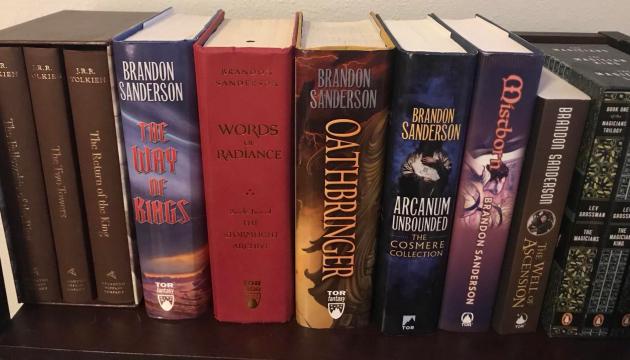
Ben Lerner’s “10:04” is a breed of intellectual masterpiece, a novel I’ve praised here before. His 2011 debut “Leaving the Atocha Station” is also remarkable, the work of a poetic brainiac with torrents to say, crackling with life observations. His new novel, “The Topeka School,” is his most acclaimed yet — and I’m not sure why. I read fully half of it, and while the writing is pristine, the thinking impressive, I got lost in the choppy, distracting narrative thread. Unmoored, I put it down, migraine emerging. Yet I’m not through with the scandalously young Lerner. I’m taking “10:04” on my 14-hour flights to and from Japan — my third communion with that radiant auto-fiction.
My list of favorite cities has shifted just-so over time, and will likely keep doing so. For now: 1. Paris (eternally tops); 2.Istanbul; 3. Tokyo (this may change after my upcoming visit); 4. New York; 5. London; 6. San Francisco; 7. Sevilla; 8. Amsterdam.
Numero Uno
The New York Review of Books is hallowed home to academic think pieces about all things, from politics to poetry, by some of our most prodigious and stylish writers: Zadie Smith, Adam Kirsch, Marilynne Robinson, Jonathan Lethem, Rachel Cusk. Why then do I find the essays gassy, tedious, enervating, as long and dry as the Sahara? Never, not once, have I read more than a third of one. (It’s me, I know.) Rightful cult classics, “John Wick” and “John Wick: Chapter 2,” starring a lank-haired, bullet-proof Keanu Reeves, are action-flick orgies, chop-socky pistol poetry of a kind unseen since the heyday of John Woo’s “The Killer” and “Hard-Boiled.” I could barely wait for this summer’s “John Wick: Chapter 3 – Parabellum.” And then, ugh. Grindingly repetitive (though that urban horse chase is nifty), drawn out and mired in its own smug formula — with a wider narrative scope that attenuates rather than expands the affair — this one is all diminishing returns. The film runs 131 minutes. I quit it, bored, fatigued, with 40 minutes left to go. This Wick is no longer lit.
It’s still hard to reckon, a year after his death, that American novelist Philip Roth never won the Nobel Prize in Literature. Like most awards, it’s a scam, a sham. Roth was one of the greatest, dwarfing most writers who have indeed won the prize. That he received only a single Pulitzer — for 1997’s astonishing “American Pastoral” — is itself a gross dishonor. Every once in a while this pops into my head and I get all rankled.
Gusty and blustery, a wind storm howls, churning treetops like crumpled paper, flinging acorns that pelt cars and roofs, dropping like small rocks, falling leaves twirling, the house creaking, windows rattling and Cubby the dog, shaking, leaps into my lap, where he curls into a donut, glancing up with fraught brown eyes that say, simply: “Papa.” This lasts all day.
When I wrote about film in Austin, a particular local celebrity didn’t like me. That’s because I didn’t write super stuff about her — one Sandra Bullock. I thought she was a cutesy hack, all dimples and snorts, with dismal taste in roles. Knowing she told a colleague that she wanted my “head on a stick,” I won’t deny a small surge of pride.
I’m a nervous guy, anxious about some things (social situations, small children, cancer, Tyler Perry movies) though calm about others (air travel, clowns, death), making my anxiety pool a kind of grab-bag, a Kellogg’s Cereals Fun Pak, if you will.
Neuroses are a blast, a frothy enchantment of stomach pangs, irritable digestion, insomnia, jitters, fatigue, hypochondria, fatalism and an ambient unease that makes you want to switch skins with the nearest stable person, no matter if his name is Rupert.
Mornings are the worst. But as the day unfurls, the bad, the black, slowly burn off. By night I’m mostly calm, relaxed, hardly even thinking about brain tumors and leukemia. I assume that’s why I am steadfastly nocturnal, vampiric, stiff drink in hand.
For instance, when I wake each morning, my upcoming Japan trip sounds like a terrible idea, an exorbitant blunder and colossal miscalculation. My stomach flips; I wince. Around midday, I warm to the thought and picture an experience of Michelin-star sushi, bullet trains and megalopolis madness. By dark, optimism flowing, I’m on the computer or flipping pages plotting my incontestably epic and mystical adventures in the Far East.
They make pills for this, of course. But meds are at best serviceable. Too meager a dose scarcely soothes the nerves. Too much tends to narcotize. Things are lighter — aren’t they always when you’re napping? (Not really. My dream realm is an id-iotic hellscape of troubling memories, fraught encounters and anything that gnaws on my insecurities. Kafka would clutch his chin and nod.) Plus, you don’t know what’s what with some of those sedatives. A doctor once told me to chuck my Xanax. “That stuff is crack,” he scoffed. Oh.
I don’t think I’ve ever had a panic attack, unless that time browsing with my niece at the American Girl® doll store counts. Though I have experienced shortness of breath, racing heart and a kind of overwhelming, generalized terror of being alive. I suppose that counts, even if I’m pretty sure it wasn’t a clinically defined panic attack and merely my reaction to deliriously unfunny ventriloquist Jeff Dunham’s latest Netflix special.
Want to churn my anxiety? Make me speak in front of a group, crowd or microphone. I don’t do meetings, panels, town-halls, televised interviews or, for that matter, karaoke or charades (charades — parlor game of the dark arts). I kind of recoil singing “Happy Birthday” among friends. With pathological resistance, I avoid having my picture taken (keep your cameras to your selfie).
My low-frequency embarrassment, raking self-consciousness and broken self-esteem are congenital delights. In the words of Morrissey (indeed, Morrissey), I am infected with a ”shyness that is criminally vulgar.” None of it is fun or poignant. But what are you to do? Therapy, meditation, yoga, tequila shots, a fistful of Clonazepam. These have been tried. Futility reigns. Relief is fleeting, often downright illusory.
And yet we soldier forth. We function in spite of the topsy-turvy tummy, mild paranoia, paper-thin skin, social squirming, hyperbolic pessimism, etc. Then I think: I’m going to Japan in three weeks. That’s something. During my extensive travels, my angst all but evaporates. I am unshackled, life’s daily detritus dispersed by an existential leaf blower. For this trip, I expect elation, moderate ecstasy, radical stimulation and some of the best food I’ve ever eaten. Nothing short of sublimity.
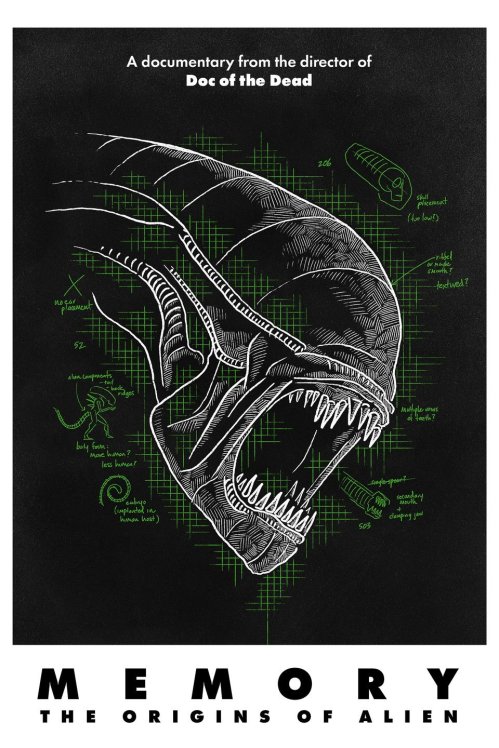
Let’s cut to the chest: Ridley Scott’s 1979 sci-fi horror masterpiece “Alien” is forever remembered for one indelible scene — a “very significant moment in film history,” genre director Gary Sherman says — the chest-burster sequence, when a gore-slimed, serpentine creature chews its way out of the torso of a hapless John Hurt while he’s having dinner, leaving him a quivering, blood-drenched corpse and unleashing the title monster to slither away and torment the rest of the spaceship’s unsettled crew for the next hour.
Great detail and respect are granted this monumental moment in Alexandre O. Philippe’s dizzyingly in-depth, intellectually exhaustive documentary “Memory: The Origins of Alien” — from wild talking-head theories (Hurt is literally giving birth!) to gruesome behind-the-scenes footage of this greatest of gross-outs.
One of those talking heads, author Ian Nathan, deftly parses the visceral and dramatic importance of the scene: “The chest-burster changes the complexion of the film from a kind of epic to a kind of horrible, horrible intimacy that’s claustrophobic and inward. Suddenly everybody is trapped. Suddenly the spaceship is small and confined” and the film becomes a primal survival story.Which, I say, renders “Alien” such a splendid, fearsomely realistic haunted house tale during a grisly second half that vibrates with unendurable tension and dread.
“Memory” makes a strong point that the mythos and monster in “Alien,” which was written by sci-fi fanatic Dan O’Bannon, were hardly original. “‘Alien’ didn’t come out of a creative vacuum,” we’re told. “It drew from a whole heritage of American science fiction.”
O’Bannon cherrypicked sources over the years, including comic books, H.P. Lovecraft’s horror fiction, and B-movies like “It! The Terror from Beyond Space” (1958), Howard Hawks’ “The Thing from Another World” (1951), “Planet of the Vampires” (1965) and, most extensively (and strangely), Roger Corman’s lurid “Queen of Blood” (1966).
But it was O’Bannon and director Ridley Scott’s mutual exposure to the lithograph “Necronomicon,” a phantasmagoria of wondrous and hideous creatures by Swiss surrealist artist H.R. Giger, that cemented the look and language of “Alien.” Scott rhapsodizes about the titular creature, sometimes known as the Xenomorph: “This is beautiful, not just threatening, and it also has very sexual connotations. It’s like a rather beautiful, humanoid bio-mechanoid insect.”
Giger himself did some artistic cherrypicking, synthesizing Egyptian mythology, dream imagery, Boschian fright-scapes, medieval dragons, Hindu goddess Kali and, key to the chest-burster, the disturbing canvasses of British artist Francis Bacon. “Giger consolidates every monster from every mythology from around the world into a single creature. It embodies the mythic Other,” USC professor Henry Jenkins says.
Why “Alien” works so well is its commitment to the kind of gritty realism of so much superior 1970s American cinema. An Altmanesque naturalism permeates the film, and it boasts gorgeous Kubrickian photography, a crack cast of virtual unknowns, deliberate pacing and adult restraint.
It is, simply, an art film. It spurned the space-western kicks of “Star Wars” and the Keane-eyed aliens of “Close Encounters” (both 1977). Suddenly we were served a new, naturalistic depiction of outer space in the sooty, clanky, eerily rain-soaked cargo ship Nostromo, a floating industrial city, a grungy “space truck,” that fatefully investigates a distress signal beamed from an alien planet.
“Memory” is fascinating when talking about artistry and craft, but veers onto shaky ground when its commentators argue too hard that “Alien” is a product of its social and political times or, almost laughably, gaze at the film through a scrim of academic feminist theory. Says one: The movie is a “male fantasy of the kind of oppression that had been handed out to women over the century of guilt that was part of masculinity.” (Where’s the chest-burster when we need it?)
Fortunately the focus stays mostly on the allegory and mythology behind this iconic, massively influential movie, and the obsessive density of it all is both boggling and breathtaking. The film “can mean many, many, many things,” says writer William Linn, conceding, “I don’t think we can get to the bottom of ‘Alien.’”
“Memory: The Origins of ‘Alien’” hits theaters and VOD on October 4. Trailer HERE.
Pretty much kaput, Halloween means just about nothing to me nowadays. The thrill is gone. The chill is gone. I’m not 7, dig.
Yet something about Halloween sticks, hovering like a blanket of graveyard fog. Each year I gladly inhale the occasion’s residual festive fumes, pumped in like so much giddy-making nitrous oxide. Hey, unlike zombies, I have a pulse.
Though costumes are long — and forever — doffed and I’ve retired the habit of sneaking morsels from the communal candy bowl (It’s for the kids, dammit!), I remain devoted to this perverse, very North American celebration of the gross, grim and ghoulish. (And, yeah, I lied: the Reese’s cups are mine.)
But I effectively don’t partake in the big-picture party, unless you count sometimes serving as the eve’s Doorbell Dork, doling out Snickers and Tootsie Pops, smiling like the village idiot on cue when a particular and rather mystifying catchphrase (starts with trick) is shrieked by decked-out kiddies (and a few shameless, straggling grown-ups who can only dream they’re getting a Kit-Kat from this finger-wagging candy dispenser).
It’s a festival of enforced flamboyance. Excess is enshrined. Generally sane people douse themselves in corn syrup blood. Sex is flaunted in racy micro-fashions: cats and maids and devils. It’s masks and makeup and Marvel; wigs, witches and wizards; Pokémon, pirates and pop stars (and, yes, Pop Tarts) — the palette is as infinite as it is infantilizing. The id comes out to romp.
Halloween in Sevilla, Spain, 2016 — amateur hour.
In placid suburbia, lawn dioramas have grown ambitiously disgusting. I love the sinew-chewing zombies (with staticky sound effects), life-size, yoga-posed skeletons and tombstone-cluttered cemeteries, gnarled limbs popping out of the ground. I beseech you: gross me out.
It’s a bacchanal of fantasy and horror, whimsy and steroidal imagination. It’s pop cinema — slashers to superheroes — sprung to life. And it’s uniquely, wildly American (and, I hear, Canadian).
Halloween, Beirut, 2008 — not cool.
I’ve done Halloween in London, Paris, Beirut, Ho Chi Minh City, Kathmandu and Sevilla. As the locals tried to summon the spirit, they invariably botched the holiday, blundering with gauche costumes (er, blackface in Beirut and Paris) and feebly attended parties — strictly amateur hour, training wheels required.
Except when they’re not. Except when the night has been co-opted with the verve and vision matching the western prototype. All eyes on … Japan. It’s said that Japan has only been practicing Halloween in earnest for five years. But amateurs? Hardly.
The Japanese were born pros, built for Halloween. Nothing is lost in translation. Dress up and cosplay are daily mainstream occurrences. Stroll anytime through Tokyo’s Harajuku district for teen fashion so high, so rococo, it passes as a perpetual street costume party.
Harajuku teen, Tokyo, in April 2006.
Which should make this year’s Halloween something special. I land in Tokyo on October 30, giving me less than 24 hours to steel for whatever that hyper-charged city has in store in the way of a woozy wingding.
Because there is no way I’m not wading into the most outrageous Halloween hotspots — like bustling, youthful Shibuya, where a million revelers are expected — to get the full Japanese treatment: anime and cosplay characters, J-horror ghosts and vampires, video-game avatars and the universal diet of Star Wars, Harry Potter, Power Rangers and other mega-brands. (Oddly, Where’s Waldo? seems to still be popular. I’ll look into it.)
This is what I wanna see, Halloween with kick (I’ll return with a full, bloody report):
Witches? Zombies? No idea but I’m thrilled. Nerd, nerd, nerd, nerd and nerd. That’s five nerds. God bless them.Grisly Disney: zombie versions of famous cartoon characters, including Minnie Mouse and Snow White.A gaggle of zombie fast food (flesh food?) servers. Do you want fingers with that human hamburger?
This painting kills me. It’s titled “Brave Cone Dog” and it’s by a wry, puckish character named Brandon Bird, who makes very witty pop art. I don’t have much to say about the minimalist image, because it speaks (morosely, piteously, hilariously) for itself. I own a framed print of it, and everyday it stirs in me an emotional milkshake.
“Brave Cone Dog”
This I like, from a recent book review: “Walter Benjamin wrote that a truly great sentence is one that’s been burnished to perfection, then sabotaged in some respect. Wounded or weakened just sufficiently to seduce.”
As a kid, I was a quivering hypochondriac. To wit: At age 7 I had a cramp on the left side of my belly that lasted a couple hours. Convinced it was appendicitis, I curled into a ball in my parents’ empty bed and envisioned horrors of surgery and gloom and, yes, death. The cramp subsided and I proceeded to watch TV, tear-streaked. Around age 9 I had a swollen bruise on my knee that I mistook for a malignant tumor. I crumpled on my bedroom floor in a sleeping bag, too distraught to clamber into bed, and imagined losing my leg to certain amputation. Later, I calmed and accepted that it was just a bruise and I watched TV, tear-streaked. I still often misdiagnose myself, hurling me into fleeting, fluttery hysteria. Then I watch TV, tear-streaked. Reader, WebMD is your foe.
In this week’s “By the Book” column in The New York Times, singer-author-badass Patti Smith is asked “What’s the last great book you read?” She replies:
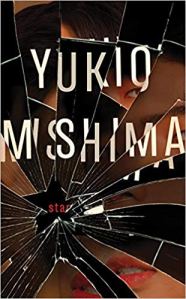
Recently I was captured by two small, addictive works. “Kingdom Cons,” by the Mexican author Yuri Herrera, floored me. … And “Star,” by Yukio Mishima, is a startlingly modern, hypervisual jewel; it could be a really interesting movie. Both books were mesmerizing, seeming to fall in my hands from an alternative sky.
As I’m doing a semi-immersion in Japanese literature and film in preparation for a fall trip to Japan, I picked up “Star,” which is about a hot movie actor in existential distress. From Smith’s zippy description, I expect glitter and diamonds.
At the cafe today, a 30-something hipster in a wool fedora, four-day stubble and ratty Chuck Taylors sans socks sat next to me, slipped on headphones and went on to loudly tap his feet and roll his head, wearing an imbecilic grin, all but dancing in his seat. I wanted to spill his kombucha. Was I wrong? And: He wore a large thumb ring.
One of the Japanese movies I’m revisiting before I go to Japan is “Ichi the Killer,” a shock-cinema bloodbath from bad boy auteur Takashi Miike (say: Meek-a). About a kidnapped yakuza boss, his punky minion — a psychopathic sadomasochist whose specialty is baroque disfigurement — and the titular hero, a bullied weakling out for revenge, this notoriously twisted crime comedy was tonic jazz the first time I saw it. Now it mostly plays as an extreme exercise in tedious transgression: How disgusting can we get? Bloated with rape, murder, drugs, gangsters, prostitution, masturbation, self-mutilation, unthinkable torture, disembowelment and ample amputation, the film is set in the sometimes seamy nightlife district of Shinjuku in Tokyo. Which is where I’m staying.
I‘ve owned pet rats named Phoebe, Becky, Tammy and LaShonda. A friend told me I’d inadvertently given the rats the names of receptionists at construction companies.
The other day I actually saw a guy rollerblading in the neighborhood. That is something you cannot unsee. It’s sort of like seeing someone on a unicycle.
Words I love: blithe, bloviate, evanescent, loquacious. Let’s add nincompoopery to the list.
A peculiar joy is had watching the yelping delight two stray dogs derive from the simple actions of a bouncing soccer ball or a hurled tennis ball. Prancing, dancing, they are elated, gamboling across the nail-clicky concrete of Los Reyes, the oldest skatepark in Santiago, Chile, and, in a way, we are too.
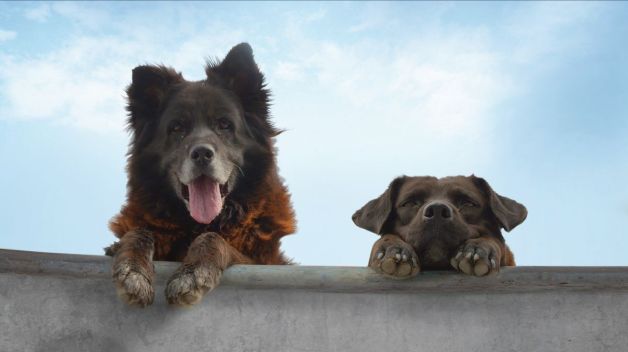
In Chilean duo Ivan Osnovikoff and Bettina Perut’s almost inadvertently poetic, profoundly moving “Los Reyes,” the camera veers from the skateboarding youth who cruise sinuous bowls to examine the laidback lives of BFFs (best furballs forever) — Football, the elder, creaky-jointed cur that resembles a mangy male lion, and Chola, the frisky female chocolate Lab mix that occasionally tries to hump a large pillow.
It wasn’t supposed to be this way. The filmmakers set out to document the skaters but located more compelling subjects in the park’s two permanent residents, who have little direct contact with their human visitors, save for the sporadic ball toss. Shot over two years, the doc can’t totally avoid the skaters, and it shouldn’t. Creatively hiding their identities, it captures them in snippets, mostly arty images of their hands, bodily shadows, long shots of them skating and idle voice-over chatter detailing the troubles and trivialities of their hardscrabble lives, from drugs to home and school dramas.
Dispensing with music, narration and anthropomorphic cutes, this is an astonishingly patient film, relying on the dogs’ alternately mirthful and mournful antics, quizzical gazes, the way they doze unfazed among the rackety-clackety skaters, or a simple shot of Chola standing statue-still in the rain, getting soaked with the patience of a penitent.
Despite their companionship, the mutts are essentially loners and there’s an aching desolation in their struggle-filled lives. Poetry blossoms from extreme close-ups of a long, panting tongue or rapidly fluttering nostrils, flies nipping at their flesh or a pair of scraggly paws at rest.
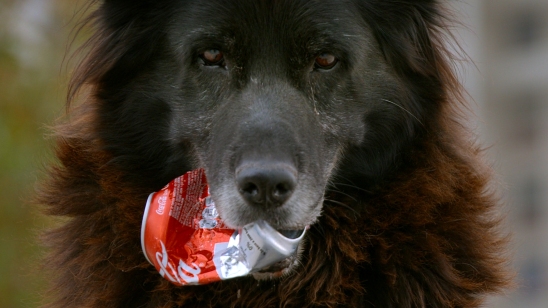
In this, “Los Reyes” is deceptively shapeless, so willfully hands-off, the 75-minute movie often plays like a lyrical and lovely Terrence Malick fugue. And then scruffy old Football will put something in his mouth, be it a Coke can, a pack of discarded cigarettes or a gigantic rock, and the pensive mood melts again. And so do we.
When last I checked, the world was in tatters. But that’s a trifle for another day. Thing is, I have a wicked splinter in my finger and a bodacious pimple on my forehead that’s a little too Cyclopsian for shrugging off. Then there’s the boy dog, whose sphincter-sniffing flirtation with the girl cat might soon require rings, roses and rice. We remain calm.
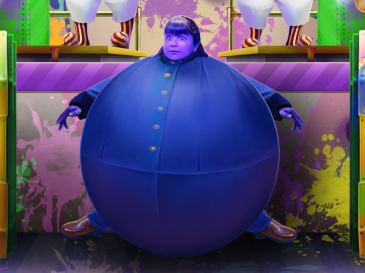
Summer subsides and the late-August slash Labor Day doldrums set in like a hard crust over the celebratory season. Things are dying down. Things are dying. I for one had no idea that Denise Nickerson, who played ravenous gum-chomper Violet Beauregarde in “Willy Wonka & the Chocolate Factory,” died in July at age 62. She and Gene Wilder — gone. Let’s hope Charlie doesn’t kick the bucket.
Speaking of blueberries — recall Violet inflates into a gigantic blueberry and must be rolled away by Oompa Loompas — that finger-staining fruit is my single breakfast comestible each day. I gobble them by the handful, a disgusting image but we’re all adults. They’re a summer fruit and so make a timely cameo in this post, which is sort of about the end of summer, the now, but we’ll see where it takes us. Already I’m rather lost.
It was a short summer, merciful, not too warm, and it moved with benign velocity. So glad it’s shuttering, as I look forward to crisp breezes, light coats, brisk walks without drenching humidity, Oscar-caliber movies, my Tokyo sojourn, obscenely short days — it’s 8 p.m. now and almost pitch-dark — and my usual litany of fall and winter joys.
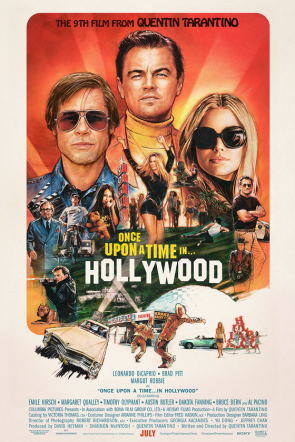
At the cineplex, I dodged the onslaught of summer sequels and superheroes — brain-beating blunderbusses — for “artier” fare like Tarantino’s sophomoric garble “Once Upon a Time … in Hollywood,” a shambolic misfire, and the cathartic Australian horror-thriller “The Nightingale,” a savage, soulful gut-punch of vengeance and violence. For early-summer froth, the delirious comic excess of “Booksmart” can’t be forgotten. Fall brings promise: Joaquin Phoenix as “Joker,”“Little Women” and Scorsese’s “The Irishman.”
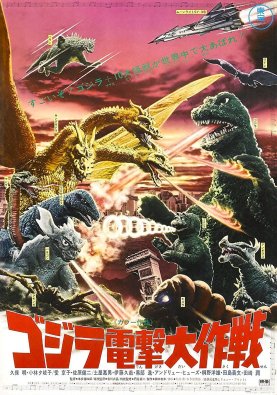
“Destroy All Monsters”
Movie mad, I always watch films from the country I’m going to visit next. So, Japan. I re-watched the 1954 version of the original “Godzilla,” which is startlingly melancholic. (The monster dies a slow, sinking death. Oh: spoiler.) In 1968’s full-color “Destroy All Monsters,” a menagerie of kaiju creatures, from Godzilla and Mothra to Gorosaurus and Rodan, unleash murderous mayhem on the world’s largest cities. Aliens are somehow involved. Silly — and spectacular. (Lest it seems I’m just watching monster movies, I’ve also re-watched Ozu’s “Floating Weeds,” Oshima’s “In the Realm of the Senses,” Kurosawa’s “The Hidden Fortress” and Suzuki’s “Branded to Kill” and “Tokyo Drifter.”)
As I cut short my late-summer reading of Haruki Murakami’s timid, ultra-bland novel of youthful romance “Norwegian Wood” I picked up Toni Morrison’s “Sula,” which has more literary panache in its first 20 pages than Murakami’s snoozer has in 150.
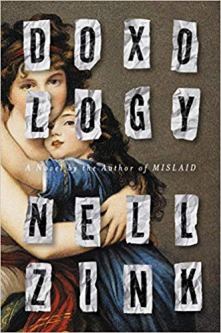
Autumn looms and I have a pair of fall novels picked out: “Doxology” by Nell Zink and “The Topeka School” by virtuosic young writer Ben Lerner, whose “10:04” and “Leaving the Atocha Station” are rhapsodic in their essayistic intelligence and gliding beauty. “10:04” is one of my favorite novels of the past 10 years. I’ve read it twice. So far.
I admit I struggled with Zink’s acclaimed 2014 fiction debut “The Wallcreeper.” We didn’t jibe. The new book has been called her best and most ambitious, “a ragged chunk of ecstatic cerebral-satirical intellection … bliss.” I am all over that.
But first, after Morrison’s promising “Sula,” it’s back to Japan and Banana Yoshimoto’s international cult hit “Kitchen,” a bittersweet novel whose “whimsy” and “simplicity” are frequently hailed as virtues, making me wary. Those words could be code for “precious.”
Now that I’ve mentioned Japan three hundred times, it might be a good place to state why I’m really exalting summer’s end — my October-November trip to Tokyo and Kyoto. Which, lucky you, you can read more about as plans unfold.
Tokyo
Yet so much is great about fall, not just a fleeting vacation. Autumn is coming fast — the calendar says Sept. 23, but we all know it starts on Labor Day — sucking summer back into the gooey abyss from whence it came. Japan, new books, new movies, new weather — all good and well. But fact is, fall is its own prize. It’s all fine, shimmery sublimity.
My niece and nephew, both teens, are watching Peter Jackson’s “The Lord of the Rings: The Fellowship of the Ring” for the first time. They are in the basement, I am upstairs, web-surfing all things Tokyo. (Godzilla vs. Smaug? I’m in.)
All I hear are dragon shrieks and thunderous fire-belching that rumbles the floor and walls and surely rattles the television, making it shimmy and shake on its spindly base. (Wait. I am later told that Smaug the dragon is not in this “LOT” installment. What then was I hearing? Gollum’s hissy, phlegmy rasp? A bombardment of unbridled Tolkien imagination? Hobbit flatulence?)
Smaug
I was well into adulthood when this first film in the “LOT” trilogy was released 18 years ago, and by then I wasn’t much for elves and wizards and hobbits. It’s all very childlike to me, which is also why I didn’t do backflips for “Game of Thrones,” though I mostly enjoyed that rollicking, bloody, gleefully nakedy, defiantly impenetrable series.
I grapple with most fantasy archetypes. I can barely do swords. Harry Potter, which arrived awfully late to the tournament of genre clichés, is a baffling bore, an embarrassing ecosystem of such contrived, feebly derivative Halloween, D&D and Renaissance Fair poppycock that my aversion to it is nigh boundless.
Wizards, wands, witchcraft, trolls, potions, flying broomsticks, spells, sorcerers, centaurs — such are the tropes of an impoverished imagination. Such is the desperation of a starved (and benighted) readership and viewership. It is expressly for innocents, naifs, children, the like.
My niece, bless her roving, fecund mind, rabidly adored Harry Potter a few years ago. We don’t speak of it, lest one of us goes bald from mutual hair pulling. I don’t know what she thinks of the Christlike Chosen One now, and I don’t want that information. The kids watch “Lord of the Rings” as I type, and I do not know what they think of it, as they’re in the middle of Middle-earth and all.
I hope they like it. It’s rather good; it’s just, at this late date, not my bag. Gandalf, “my Precious,” the hirsute feet, the Shire, Orcs — I’ve moved on. Yet I endorse it. And I’m not one quick to sanction fantasy flicks.
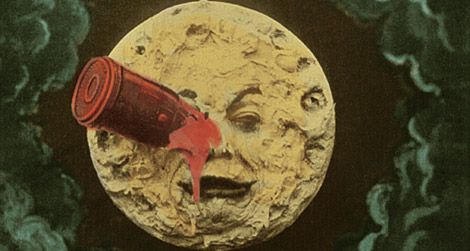
A few exceptions: “A Trip to the Moon” (1902); “King Kong” (1933); “The Wizard of Oz” (1939); “Beauty and the Beast” (1946); “Willy Wonka & the Chocolate Factory” (1971); “Legend” (1985); “Babe” (1995); “Spirited Away” (2001); “Coraline” (2009). (Please don’t ask where “Avatar” fits into this list. It doesn’t. It is banished, with prejudice.)
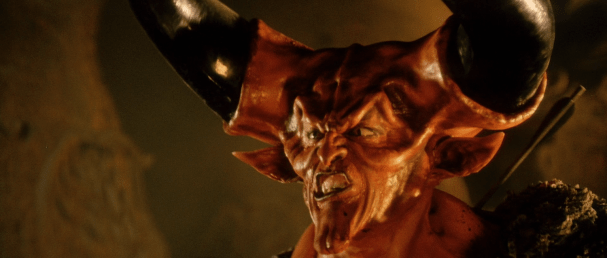
The wondrously weird “Trip to the Moon” (1902)Tim Curry in Ridley Scott’s underrated “Legend” (1985)
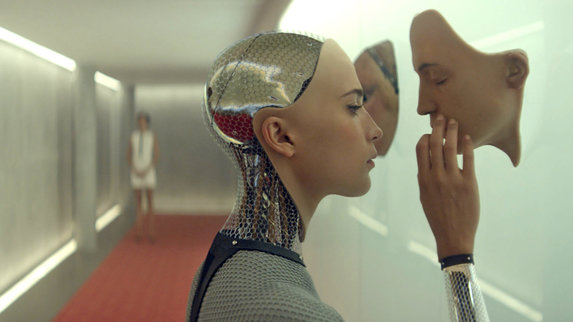
I think I need more fantasy in my life, despite my allergy to it and most things science fiction. (Exceptions: “2001: A Space Odyssey” (1968); “Solaris” (1972); “Star Wars” (1977); “Close Encounters of the Third Kind” (1977); “Alien” (1979); “Blade Runner” (1982); “The Fly” (1986); “Serenity” (2005); “District 9” (2009); “Moon” (2009); “Ex Machina” (2014).)
“Ex Machina” (2014) — Ex-ceptional
Nowadays dystopian scenarios are hijacking the fantasy and sci-fi worlds — from fashionable post-apocalyptica to ever-tedious zombies — with mixed results. Film-wise, dystopian zeniths are the visionary, crazily exhilarating “Mad Max” epics. (Other highlights off the top of my head: “A Clockwork Orange” (1971); “Brazil” (1985); “RoboCop” (1987); “Children of Men” (2006).)
In fiction, fine contemporary classics — “The Handmaid’s Tale,” “The Road,” “Never Let Me Go” — chafe against new mediocrities like Emily St. John Mandel’s “Station Eleven,” which at its best reveals genre fatigue.
I’ll take dragons over such drags. A trio of trainable dragons lit up “Game of Thrones” with awe and grandeur and strange, scaly pathos. Smaug is a juggernaut, a fearsome, fiery Middle-earth monster considered to be the last great dragon of the realm. (Yeah, I had to look that up.)
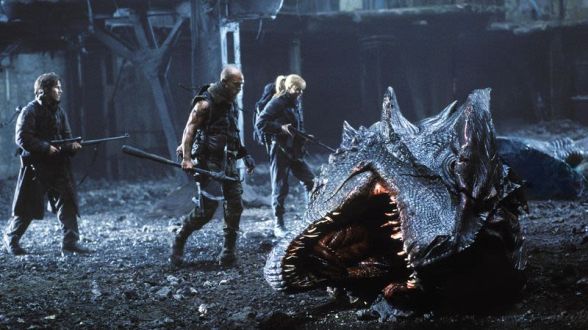
I may be the sole fan of the crunchy 2002 dragon drama “Reign of Fire,” in which Matthew McConaughey and Christian Bale combat a futuristic (totally dystopian) infestation of those winged, fire-spraying dinosaurs. The sheer force of its perverse and pummeling premise — not to mention top-drawer dragon action — dragooned me to full appreciation of this fantasy tale.
“Reign of Fire” — more underrated film fantasy (2002)
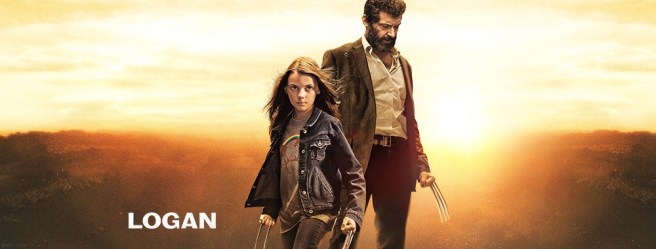
And what about comic-book superheroes? “The Dark Knight” (2008) remains an adult-geared masterpiece of mayhem and menace. One or two of the early Spider-Man movies are efficient. I like “Iron Man” (2008) and the profanely spoofy “Kick-Ass” (2010) — both are fast and funny — and, more so, the bleak, ruminative Wolverine installment “Logan” (2017). I have very little use for the rest of it.
From the basement, I hear Howard Shore’s strident, overbearing score, more earth-rattling noise, stadium-fuls of yelling, screaming and bellowing. Drama is happening in “The Lord of the Rings.”
And then: hush. The niece and nephew emerge from Lower-earth to the living room. The spectacle is over. We inquire.
Her: “It was good. I’m excited for the next part. I’m looking forward to the hobbit movies, too. This one is just really long.”
Him: “It’s exciting and there’s tons of fighting. but it’s more than three hours. Still, you don’t get bored.”
Length, damn length. This “LOT” runs a savage three hours and 48 minutes. Fantasy always seems to run interminably long (“Avatar”: two hours, 42 minutes), even when it doesn’t (“Legend”: one hour, 34 minutes). To binge all 73 episodes of “Game of Thrones” would take three days and 16 minutes, enough time for a weekend getaway to Bermuda.
But fantasy and sci-fi are all about girth and sprawl. Poundage of detail and characters, world-building and mythologizing is their very DNA, their showoffy M.O. Glimpse any fantasy novel worth its weight in gibberish; just don’t try and lift it.
Epic, capital E, is the primary aspiration. It’s all about blowing the mind, overwhelming the senses. For this skeptic, this mostly invites chronic eye-glazing. Fantasy does not stir fanaticism. This fanboy might have just become a fan-man.
I’m having a tricky time containing how much I dislike “Once Upon a Time … in Hollywood,” Quentin Tarantino’s almost laughably feckless evocation of L.A. showbiz in the 1960s that’s by turns sledgehammer subtle, cringingly unfunny, self-enamored and offensively and childishly sadistic.
Tripe.
It’s a moronic movie, a blinding misfire, that its critical supporters should be ashamed of liking. Tarantino is 56. He’s still making movies for snickering 15-year-old boys. He’s like Benjamin Button, aging backwards. It’d be cute if it wasn’t so appalling. He’s declared he will make only 10 films. This is his ninth. We grin.
That said, this inveterate malcontent has a crush on a pair of brand-new documentaries — rock docs, if you will:
The former reveals the beauty and beautiful artistry — that voice could do anything: pop, ballads, rock, operetta, country, mariachi, jazz standards — of Linda Ronstadt with groove and feeling. It captures the ‘70s American rock scene with such texture, heart and authenticity, it’s a woozy time-capsule, transporting and wondrous. The gamut of denim on display is worth it alone. Trailer HERE.
The latter, the one with lashing hair, banging heads and volcanic vitriol and virtuosity, stage-dives into the 1980s heavy metal scene in the Bay Area, surveying the bands, from Exodus and Slayer to Possessed and Metallica, that influenced global hard rock. The film limns a subculture with a streak of apt aggression and a snarl. It has crunch. It has sweat. It has bite. Trailer HERE.The current cover story at Slate will make you want to jab your eyes out. It’s titled “The 25 Most Important Characters of the Past 25 Years” and is one of those blinkered, tone-deaf, willfully confounding listicles peppered with numbskull picks. Among them: The Babadook (No. 24), Jay-Z (No. 4), Sarah Koenig (No. 21), Bridget Jones (No. 17), Tina Fey’s Sarah Palin impersonation (No. 8) and Carmela Soprano (No. 1!). It gets worse. Way.
Rankings like these generally give me a brain tumor, and this one is so off, so strenuously eclectic, you know the authors are just trying to get a rise out of you with their labored cleverness rather than commit serious cultural commentary. They’re about as incisive and hilarious as reviled “Star Wars” court jester Jar Jar Binks (No. 6).
Yeah, him.
Shot through with the bloody brutality of a Peckinpah or Scorsese, “The Nightingale” is a pretty decent revenge thriller from Australia by Jennifer Kent (“The Babadook” — see above) that’s as unflinching as it is richly affecting.
Set in 1825 in a British penal colony in what’s now Tasmania, the drama ignites when a young female convict is repeatedly raped as her baby and husband are slaughtered by a British officer and his mossy-toothed minions. Dazed and enraged, the woman, Clare (a fierce Aisling Franciosi), hops a horse, hires an Aboriginal tracker and sets her sights on sweet, savage revenge.
It’s a complex tale of frontier justice, love, death, friendship, betrayal, with an emotional and cathartic core that almost buffers the rattling volume of violence. Perhaps a mite too long at 136 minutes, “The Nightingale” remains sturdy Gothic arthouse fare. Trailer HERE.



 In 2007 I interviewed actor Paul Rudd at the
  B
B
 Rightful cult classics, “John Wick” and “John Wick: Chapter 2,” starring a lank-haired, bullet-proof Keanu Reeves, are action-flick orgies, chop-socky pistol poetry of a kind unseen since the heyday of John Woo’s














 The current cover story at