“When you read the list of Trump’s purported lies, they are absolutely incredible. His claims aren’t just false; they’re transparently, incandescently stupid. This was not a sophisticated effort to overturn the election. It was a shotgun blast of obvious falsehoods.” — David French, The New York Times
“By the time I was in high school, I hated everything, had nothing nice to say, and kept all my positive aspirations squeezed tightly inside a tortured fist of perfectionism.” — Ottessa Moshfegh, author and novelist
Today was a two-errand day. I was picking up a modern classic potboiler at the library — the one about a ginormous great white shark that terrorizes the bejesus out of a New England beach town — and I was getting my periodic pedicure at the salon. I dubbed the day “ ‘Jaws’ and claws” to amuse myself. (Mission accomplished.)
The book I got really is “Jaws,” Peter Benchley’s 1974 blockbuster that spawned Spielberg’s famous film and a million petrified beachgoers around the world. As a kid, I lived in beachy Santa Barbara when both were released, and I fantasized about flesh-shredding teeth and ominous dorsal fins to unhealthy degrees. It terrified me, and I loved it.
First I worshipped the movie, which I saw at age 7, then I snatched my parents’ mass market paperback of Benchley’s novel and gobbled it up at age 8. I savored those pages, slashing with vivid, violent writing that helped turn me onto reading for a lifetime.
I still own that cracked, yellowed paperback, but it’s packed away with other mementos. So, on a whim, I hit the library up for its copy. I quickly located some of my favorite passages, ones that haunted — and excited — me as a young reader.
Just like my own copy
Can you handle it? This horrifying scene is from the opening of the book, when a young woman — recall her from the movie — takes a skinny-dip in the moon-dappled ocean.
“The fish smelled her now, and the vibrations — erratic and sharp — signaled distress. The fish began to circle close to the surface. Its dorsal fin broke water, and its tail, thrashing back and forth, cut the glassy surface with a hiss. …
“At first, the woman thought she had snagged her leg on a rock or a piece of floating wood. There was no initial pain, only one violent tug on her right leg. She reached down to touch her foot, treading water with her left leg to keep her head up, feeling in the blackness with her left hand.
“She could not find her foot. She reached higher on her leg. Her groping fingers found a nub of bone and tattered flesh. She knew that the warm, pulsing flow over her fingers in the chill water was her own blood. Pain and panic struck together. The woman threw her head back and screamed a guttural cry of terror.
“This time the fish attacked from below. It hurtled up under the woman, jaws agape. The great conical head struck her like a locomotive, knocking her up out of the water. The jaws snapped shut around her torso, crushing bones and flesh and organs into a jelly.”
Now, as a young boy, this was about as stupendously visceral as prose could get. (And I omitted the rest of the violence for reasons of taste and space.) “A nub of bone and tattered flesh” — I reread that line over and over, shocked, thrilled, gobsmacked.
Even today, these opening pages stun. Getting the book at the library, I was hoping Benchley’s eloquence would strike me again, and it did. That’s why I shared some here.
Call him a hack or a mercenary, but you’d be wrong. Benchley’s a savvy craftsman, expert at tension and thrills, not to mention a vibrant stylist with a painterly (think Francis Bacon) flair. His humans, from Quint to Brody, pop off the page even if the world he confects for them occasionally brushes pulp.
I’m not going to reread the entire novel, which is remarkably short at 278 pages, but it was fun revisiting a book that so influenced my cultural life.
Why “Jaws,” why now? Well, I’m reading an excellent new book about the history of Hollywood and the Academy Awards called “Oscar Wars,” and I’m deep in the chapter focusing on the making of “Jaws” (as well as “Barry Lyndon,” “Dog Day Afternoon,” “One Flew Over the Cuckoo’s Nest” and “Nashville” — 1975 was a hell of a year in American film.)
The lore is notorious: Making the movie “Jaws” was a prolonged ordeal and near-disaster for all involved, including a 26-year-old Steven Spielberg, who was sure his nascent career was finished. We know how that turned out.
If the movie “Jaws” remains one of my all-time favorites — in a crowded field that includes “Heat,” “All About Eve,” “Sweet Smell of Success,” “Manhattan,” “City Lights,” “Seven Samurai,” “Duck Soup” and on and on — the novel “Jaws” is more of a sentimental gem. It’s dear to my heart for reasons that go beyond art. On a nostalgic level, it has — yes, I’ll say it — sunk its teeth in me. And it won’t let go.
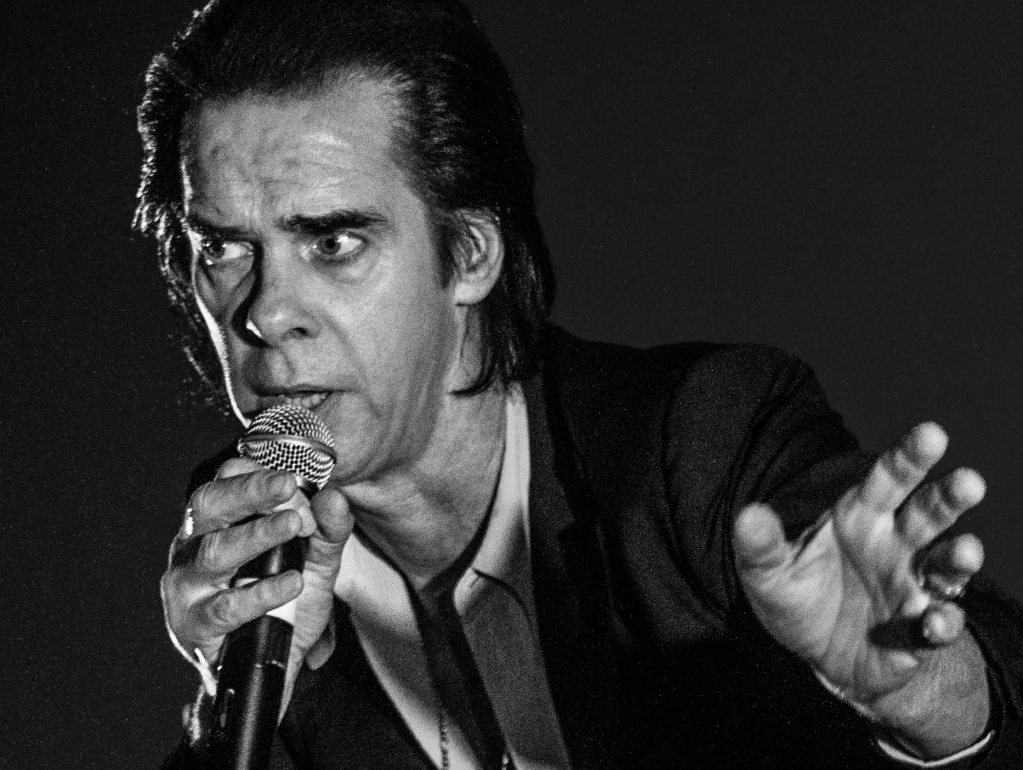
Nick Cave — Australian musician, composer, filmmaker, writer, artist, actor, all-around Renaissance man, with slick black hair and natty suits hanging off a long, pencil-thin frame — runs a sage, funny and heartbreakingly sincere advice column on his website The Red Hand Files. His counsel is so sharp and impassioned, you wonder: What can’t the guy do? I bet he can fly.
Recently, a precocious 13-year-old boy wrote in, asking this: “How do I live life to its absolute fullest, and not waste my potential? Especially as a creative. Also, what is a great way to spiritually enrich myself, in general, and in my creative work?”
I relished Cave’s response so much, I am excerpting a chunk of it here.
These are, to me, words to live by:
“Read. Read as much as possible. Read the big stuff, the challenging stuff, the confronting stuff, and read the fun stuff too. Visit galleries and look at paintings, watch movies, listen to music, go to concerts — be a little vampire running around the place sucking up all the art and ideas you can. Fill yourself with the beautiful stuff of the world. Have fun. Get amazed. Get astonished. Get awed on a regular basis, so that getting awed is habitual and becomes a state of being.”
“Boy, when you’re dead, they really fix you up. I hope to hell when I do die somebody has sense enough to just dump me in the river or something. Anything except sticking me in a goddam cemetery. People coming and putting a bunch of flowers on your stomach on Sunday, and all that crap. Who wants flowers when you’re dead? Nobody.” — Teen philosopher Holden Caulfield
Talking on the phone with my Dad once in my early twenties, I used the word “funner” as an adjective and, stickler that he was, he busted me.
“That’s not a word,” he intoned.
Oh. I sat there chastened, my cheeks pink.
I was a burgeoning word freak but Dad was the authority, the maestro, a journalist and wordsmith for decades who loved dissecting language, adored puns (he was the worst!), and collected clichés with a far-flung dream of making a board game out of all the hoary, hackneyed maxims, platitudes and banalities he scribbled down on everything from receipts to cocktail napkins.
Say something nakedly trite and he would call you out — ha! — scramble for a pencil and jot down the howling cliché you dared utter. Can you imagine what kind of game that would be? Either brilliant. Or inordinately annoying. Anyway, it never came to be.
Back to “funner.” Apparently that isn’t a real word. At least according to my father. And that has stuck ever since. I never say “funner.” Yesterday my brother used the word “funnest” and I pulled a Dad and said that’s not a word. My brother gave me the stink-eye and started making a voodoo doll of me.
But I was wrong. Sort of.
Here’s what the New Oxford American Dictionary says: “The comparative and superlative forms funner and funnest should only be used in very informal contexts, typically speech.”
That’s good news — informal contexts, typically speech. Just how I used funner.
However, an online teacher says this: “The next time students ask why they can’t say ‘funner,’ I say it’s because ‘fun’ was originally only a noun and the -er and -est forms are not commonly accepted. Stick to ‘more fun’ and ‘the most fun.’ ”
And another site avers: “There’s something funny about the word funner. It has the sound of a word twisted for the sake of a game of Scrabble, and any mention of it is liable to draw the response of, ‘Do you mean more fun?”
No! I mean funner! There, I said it, so many years later. Funner.
So, Dad, on this count you might have been off. I’m using funner as an adjective — better late than never. And with that phrase I’ve given you a moldy cliché for your board game, which would have surely been the funnest game of clichés ever.
Language is always evolving, especially between the formal and the colloquial. Take “over” vs. “more than,” for example. Both are now used to mean more than if used before a number or quantity, as in “This cost over four dollars.” That once was a stylistic no-no, but increasingly “over” is an acceptable substitute.
I’m a word nerd. Love the language, love quips, innuendos, alliteration, even puns, which come tragically easy to me. I like big hairy words that have tentacles and teeth.
I do indeed find words fun. I find writing funner. I find finishing writing funnest of all.
1. I don’t do dragons. I think they’re silly. For all their fiery tantrums and wing-flapping fury, I can’t take them seriously. Humans ride on their scaly backs like they’re horsies and fly through the sky. I crack up whenever I see that.
So needless to say I’m not watching HBO’s “House of the Dragon” or Amazon’s “The Lord of the Rings: The Rings of Power,” big ticket fantasy orgies that by turns bore and baffle me. I don’t even know if “Rings of Power” features dragons — halitosis-impaired Smaug looms large in Tolkien’s Hobbit-verse — but I also don’t do elves or wizards, Orcs or even swords, so I’m pretty much locked out of those good times.
But I’m not a complete dragon-phobe. My favorite dragon movie is easily “Reign of Fire,” starring Christian Bale and a bald Matthew McConaughey as gnarly post-apocalyptic dragon slayers. If you haven’t seen it, do. It’s a blast. McConaughey chews on a big fat cigar throughout. There’s fire and volcanic sludge and dragons all over the place. It’s also pretty grim. And nobody rides a dragon.
2. My brother and his wife just got back from Madrid — precisely where I am headed 20 days from now. No conspiracies, no subtext, we just happened to agree that Spain’s capital is the place to be this month, this year, right now.
What’s great is that I sent the lovely couple on a sort of expedition to scope the city, suss out all the hot tapas bars and cocktail bars, the most electric neighborhoods, what sights to see and what to skip.
And they delivered resoundingly, finding me a better hotel in a livelier area, several hip restaurants and bars, a shrine to Goya, and a slew of invaluable practicalities. Teamwork! High five! Madrid is famous for its blaring all-night carousing. You still hear people banging bongos in the street at five in the morning. I land on Halloween. I hope it’s batshit.
3. The ongoing saga of my misadventures in sneaker shopping — the subject of a prior post — is finally winding down. I spent the summer agonizing over what shoes to get to replace my moldered, moth-eaten collection of casual kicks.
Halt. Mere minutes ago, after I wrote that paragraph, I ordered the final pair of sneakers I will order this year. (I hope.) Just as I was getting comfortable with some slick new Cole Haans, I stumbled on a pair of rare New Balance sneaks that I fell for instantly. Now what? I put the Cole Haans back in their box (for the moment) and clicked “Place My Order” on the New Balance.
Which means I’ve now, since July, bought seven pairs of sneakers, an unholy sum that has me and my Visa doing barfy loop-the-loops. What else: I got another pair of New Balance, two pairs of Italian-made Oliver Cabells, a cheap pair of white Adidas Stan Smiths, and some Asics that I promptly returned. Incidentally, one pair of the Oliver Cabell shoes are all but unwearable, causing oozing blisters at each step. And it’s too late to return them. My Visa is writhing.
The indulgence is appalling. I’m no sneaker-head. I don’t collect footwear. I am not Imelda Marcos. I just need a fresh fleet of shoes to replenish the worn and rejected. If the latest New Balance are good, I will return the Cole Haans. That will mean I will own only five new pairs of sneakers. One of those causes blisters. So that means four new pairs. Not so dramatic after all. But still: really?
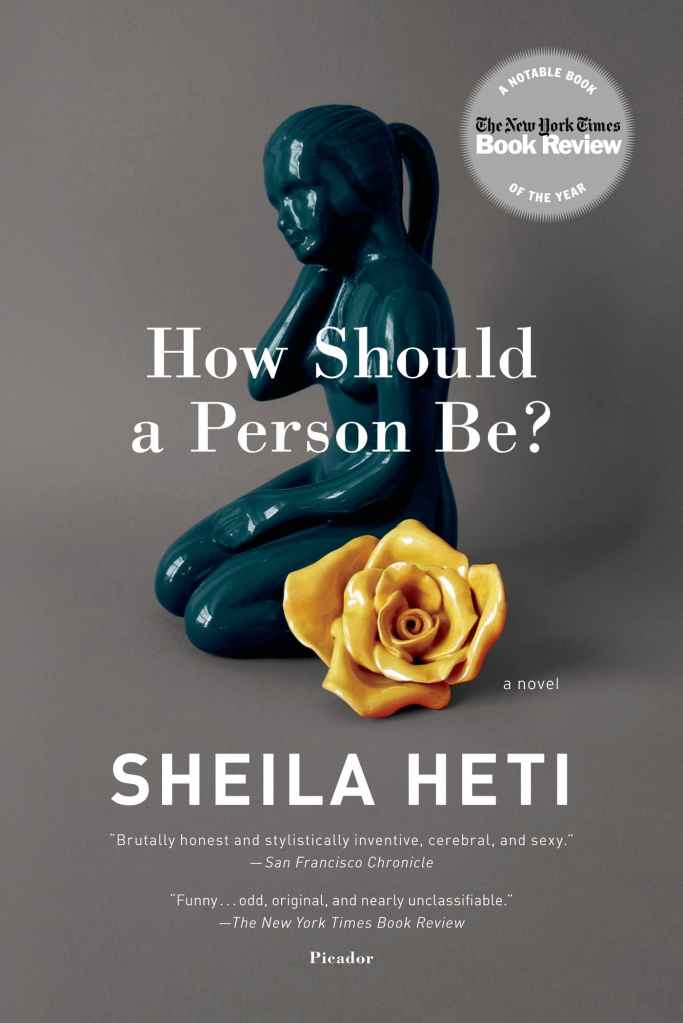
4. Next to Michael Mann’s cop thriller “Heat 2,” a brilliant, blistering, book-form sequel to his 1995 crime movie masterpiece “Heat,” with Robert De Niro and Al Pacino among other badasses, the best book I read this summer was Sheila Heti’s “How Should a Person Be?” — sticky auto-fiction that giddily pinballs through its meandering idiosyncrasies. This jagged, brainy book functions with the itchy buzz of life. It’s hilarious. Awkward. Wincing. Wonderful. Yeah, life.
Narrated by a 30-ish Heti, it’s aptly described as “part literary novel, part self-help manual, and part vivid exploration of the artistic and sexual impulse.” It happily recalls the sui generis first-person fictions of Rachel Cusk, Jenny Offill and Elif Batuman, currently my favorite writers. They kind of drop you mid-thought into their lives, then roll on from there with chatty, funny, unembarrassed realism. The works revel in their mundanity, which becomes a kind of magnificence.
Heti’s 2012 novel was named one of 15 “remarkable books by women that are shaping the way we read and write in the 21st century” by The New York Times. A bold but clear choice I wholly endorse. Heti has a new novel, “Pure Colour,” that I wasn’t bonkers about, but you might find worth a peek. For now, “How Should a Person Be?” is what I’m bellowing about from the mountaintop. (Me. Megaphone. A towering crag.)
5. If you want to know something about me, read this tart and telling passage from Elizabeth McCracken’s new novel “The Hero of This Book”:
“Myself, I loathe having my picture taken. I have for as long as I can remember, even in the old days when you could go weeks without somebody trying. In all group shots I am not pictured. It’s beyond vanity and in the realm of superstition. I don’t like people looking at me. I don’t like being the center of attention except under very specific conditions. … I will not stop for a photo. I will not look at myself in a mirror for you. I will not watch myself pass in a plane-glass window.”
There. Now you know a bit more about me. Also, I’m not big on dragons.





 GNASHING.