
The headline above says “a reclamation,” by which I mean a reclaiming of bits of culture that have been acknowledged or acclaimed yet buried beneath indifference, ignorance or more accessible cultural detritus.
unsung |ˌənˈsəNG|not celebrated or praised; unacknowledged.
From food to film, I’m highlighting the forgotten, the forsaken and the downright dissed, retaining due respect to exceptional cultural finds.
These are the unsung. Some of them are the merely undersung — things that either had their day in the sun and were left for dead, or never got the plaudits they deserved.
Any culture buff worth his “House of Thrones” or “Game of Cards” knows where the good stuff is. So accept this as Quality Unsung Stuff 101, a nudge, some tips, a torch alighting on the unjustly obscure.
Film
Quick: Have you seen “Sweet Smell of Success” (1957), “At Close Range” (1986), “Naked” (1993), “The Dead Zone” (1983) or “Tangerine” (2015) ? If not, then you have some serious, very pleasurable, movie viewing in store.
But I’m not here to discuss those under-sung films, which are largely known and well-regarded. From a sea of ignored or lost titles, I’ve tapped three under-appreciated, fairly unseen movies, the minimalist masterworks “Locke” (2014), “Chop Shop” (2007) and “Wendy and Lucy” (2009).
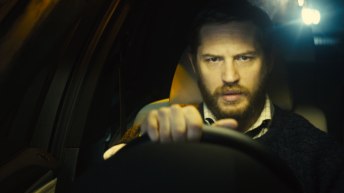
* “Locke” — A desperate everyman (the brilliantly intense Tom Hardy) is in the driver’s seat, literally, for the movie’s entire 85 minutes. Yes, he’s driving the whole time. The camera never leaves him as he negotiates by smart phone the personal tumults on the winding highway of life. It sounds grueling, squirmily static. It’s not. It’s gripping, utterly.
* “Chop Shop” — A small-scale drama about an orphan boy in Queens who works for an auto chop shop and how he deals with suspicions that his teenage sister is dabbling in prostitution. The writer-director, minimalist maestro Ramin Bahrani, is, like the neo-realists before him, a steadfast humanist, and this fascinating slice of grubby life brims with heart — and heartache.

* “Wendy and Lucy” — A girl and her dog. There you have it in Kelly Reichardt’s grim but soulful tale of a homeless woman (Michelle Williams) and her faithful hound Lucy as they get by as best they can. Lucy gets lost. Drama unfurls. It’s sad, funny, and inexorably stirring. The dog, a natural, is something special. (See my full review here.)

***
Pop Music
Alt-rock’s embarrassment of riches in the ‘90s — Nirvana, Smashing Pumpkins, Breeders, Soundgarden, Radiohead, PJ Harvey, Beck — birthed its share of one-hit/no-hit wonders, from Spin Doctors to Blind Melon.
Somewhere in between it all was Jellyfish, a Bay Area power-pop band that tossed the harmonic velcro hooks of the Beatles, Beach Boys, Queen, ELO, Supertramp, Cheap Trick and even, gulp, the Partridge Family into a bottle, shook it up and let it fizz all over the place. It was poppy, heady psychedelic bliss, both dreamy and driving. It sounded like Skittles.
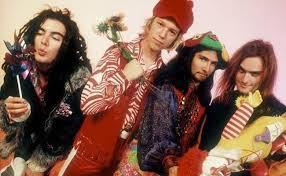
On only two albums, “Bellybutton” and “Spilt Milk,” the woolly quartet confected soaring, careening, crashing four-part harmonies over surgical melodies and thwumping beats. The songs were so catchy and joyous that each one sounded like a hit from a bygone time. Band members looked like a Haight Street circus and their shows, like their music, were carnivalesque.
“Is Jellyfish the great lost band of the 90s?” a music site recently wondered. Decidedly, yes. The band was soon elbowed out by the grunge assault, eclipsed by angst, drugs and scratchy flannel — and some of the best music of the past 25 years.
An obvious Jellyfish forebear, Supertramp is hardly an unsung pop group. It sold millions of its 1979 album “Breakfast in America,” a masterpiece of jangly, sophisticated, hyper-harmonic rock that spawned four chart-topping hits like “The Logical Song” and “Take the Long Way Home.”
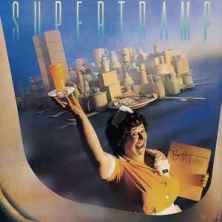
But where’s that record now? FM radio and the general public seem to have forgotten it, paying excessive deference to the Billy Joels and Led Zeppelins. If not unsung, “Breakfast in America” is an example of the under-sung, a victim of cultural amnesia. Stream it sometime. The pop perfection you’ll hear is kind of overwhelming.
***
Food
For food tourists and inveterate foodies, it’s by now hackneyed to actively consult career food adventurer Anthony Bourdain on where to go and what to eat when you get there. But that’s just what I did before a recent London trip. Watching one of his shows in which he prowls London for the tastiest, highest quality dishes, I took notes and underlined what he called his favorite plate — his “death row” meal — the Roast Bone Marrow and Parsley Salad at St. John in the East End.

Though you can find it on many fine-dining menus — it was rather trendy a few years ago — bone marrow remains an unsung specialty that repels the squeamish and excites daredevil palates. At St. John the bone segments were hot, the oily, meaty marrow even hotter. There’s a special way to eat marrow, and the server carefully tells you how. With a thin scooper, you scrape out the marrow and, like brown-pink butter, spread it on crusty bread, top with chunky salt granules and parsley sprigs. Excavating the marrow isn’t always easy. Eating the delicious protein is.
Japanese ramen, that soupy, slurpy noodle bowl, is a longtime favorite, but lately I’ve been almost exclusively forgoing the broth, opting for liquid-free ramen called mazeman, which still, despite growing popularity, hovers in the sphere of the unsung yummy. I rarely see people ordering it at my go-to ramen spot, safely sticking to the traditional hot soup.

Without broth, ramen is like a bowl of zesty, hearty pasta, thick, seasoned noodles topped by a medley of meats, veggies and a shiny soft-boiled egg. You mix it all up and an umami tsunami emerges, dangling between chopsticks.
The dish is lionized in season two of the fine Netflix comedy “Master of None,” when Dev (Aziz Ansari) has it for the first time. After his second bite, he exclaims, “You know what? Fuck broth!” I must concur.
***
Books
“Stoner” is a stunner. John Williams’ 1965 novel, tracing the wearied footsteps of professor William Stoner, was reissued in 2006, and, despite a surge of attention, remains, alas, relegated below the unsung heading.

A shame, because the writing is surpassingly exquisite, the characters and place crackling with verisimilitude, the emotional dividends reverberant. Though Stoner is quite the sad sack, locked in an unsatisfying job, fissured marriage and the shackles of a deep existential malaise, the book is too splendid to be depressing.
Also unsung: Nicholson Baker’s ridiculously cerebral satire of the everyday “The Mezzanine” — something of a cult item — and Richard Yates’ devastating marital drama “Revolutionary Road,” which, despite being a Leonardo DiCaprio film, seems woefully overlooked as literature.
And, as I’ve mentioned a few times here, seek out Eve Babitz, especially her zesty ’70s novels, freshly reissued, “Eve’s Hollywood” and “Sex and Rage.”
***
Cities
It seems only elite travel scribes and savvy globe-trekkers talk much about the resplendence of Istanbul, one of my very top cities, a paradisiacal world of ancient mosques and prayer-swirling minarets, exotic eats, riotous bazaars, deep-dyed tradition, and some of the kindest people I’ve ever met.

Straddling the best of Europe and Asia, Istanbul’s distinctly Middle Eastern tang and cobblestoney Old Europe patina is singular. It has seas and waterways and tall hills cluttered with colorful buildings, both old and breathtakingly modern. The whole city braids the new and the historic, and the result is the exhilarating essence of truly transporting travel.
If you can blot out the hypothetical perils and hypocritical politics, Jerusalem is a delirious fount of history and culture. Nudge aside the vexing fanaticism infesting the Old City — actually, spectacles of devotion, like a Christian pilgrim hauling a giant cross down the Via Dolorosa, are pretty enthralling — and suddenly you’re in a Disneyland of the devoted.
The Western Wall, Temple Mount, Mount of Olives, East Jerusalem — it’s all utmost fascination, even for this unbudging agnostic. Short bus rides away are Masada, the Dead Sea and Bethlehem. The volume of history, religion and culture is gobsmacking. I’m going back.
For unhinged nightlife, try suave, seaside Beirut, where taxis cram narrow, bar-riddled streets and well-attired revelers roar and carouse. During the seven nights I was there, I hit both bustling, elbow-jostling bars and cozy cafes. The partiers were friendly, the drinks strong and the troubled city’s old sobriquet, “Paris of the Middle East,” seemed fitting again.
***
TV
Many of you will think I’m nuts for this one, but I really do believe Chris Elliot’s wacko ’90s sitcom “Get a Life” was underrated, unloved, misunderstood and, of course, completely unsung. I also believe it was a giddy Dadaist exhibition of minor genius. All right — full-on genius.
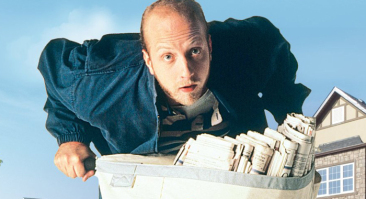
Elliot — balding, tubby, irretrievably nerdy and awkward (and weird as hell) — played Chris Peterson, a 30-year-old paperboy who lived above his parents’ house. He had a best friend, went on the occasional, entirely improbable date, took his first driver’s test, built a submarine in his bathtub and nurtured a mordant enmity with his best friend’s wife founded on hilarious fusillades of sarcasm.
The show, which didn’t last long on Fox (surprise!), operated on an alien wavelength that either annoyed or enraged viewers who didn’t get it. There was a pinch of the Marx Brothers’ anarchic DNA in the show’s ambient absurdism. But mostly it was Elliot’s screwily non-sequitur sense of humor that shaped “Get a Life.” Charlie Kaufman (“Being John Malkovich,” etc.) was a contributing writer on the program, if that helps explain things.
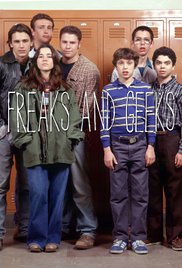 This one’s a no-brainer: “Freaks and Geeks” had Judd Apatow producing and starred Seth Rogen, James Franco, Jason Segel, Linda Cardellini and Martin Starr. The whip-smart dramedy about outlier high school cliques, the stoners and the nerds, captured school days more incisively, humorously and humanly than any work of art since “Dazed and Confused.”
And because it was so good, it was naturally cancelled after 12 episodes, in 2000, only to mushroom into a cherished cult darling that reliably makes magazines’ “best TV shows ever” lists. Unsung? This one’s pretty sung.



 GNASHING.
