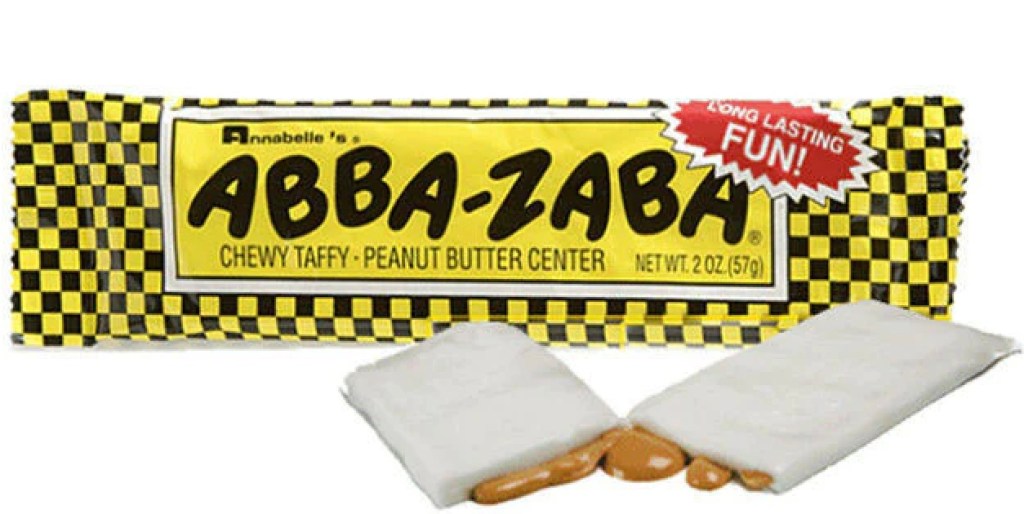
Getting fussy about fun

Talking on the phone with my Dad once in my early twenties, I used the word “funner” as an adjective and, stickler that he was, he busted me. 

“That’s not a word,” he intoned. 

Oh. I sat there chastened, my cheeks pink.

I was a burgeoning word freak but Dad was the authority, the maestro, a journalist and wordsmith for decades who loved dissecting language, adored puns (he was the worst!), and collected clichés with a far-flung dream of making a board game out of all the hoary, hackneyed maxims, platitudes and banalities he scribbled down on everything from receipts to cocktail napkins. 

Say something nakedly trite and he would call you out — ha! — scramble for a pencil and jot down the howling cliché you dared utter. Can you imagine what kind of game that would be? Either brilliant. Or inordinately annoying. Anyway, it never came to be.

Back to “funner.” Apparently that isn’t a real word. At least according to my father. And that has stuck ever since. I never say “funner.” Yesterday my brother used the word “funnest” and I pulled a Dad and said that’s not a word. My brother gave me the stink-eye and started making a voodoo doll of me.

But I was wrong. Sort of.

Here’s what the New Oxford American Dictionary says: “The comparative and superlative forms funner and funnest should only be used in very informal contexts, typically speech.”

That’s good news — informal contexts, typically speech. Just how I used funner.

However, an online teacher says this: “The next time students ask why they can’t say ‘funner,’ I say it’s because ‘fun’ was originally only a noun and the -er and -est forms are not commonly accepted. Stick to ‘more fun’ and ‘the most fun.’ ”

And another site avers: “There’s something funny about the word funner. It has the sound of a word twisted for the sake of a game of Scrabble, and any mention of it is liable to draw the response of, ‘Do you mean more fun?”

No! I mean funner! There, I said it, so many years later. Funner.

So, Dad, on this count you might have been off. I’m using funner as an adjective — better late than never. And with that phrase I’ve given you a moldy cliché for your board game, which would have surely been the funnest game of clichés ever.

Language is always evolving, especially between the formal and the colloquial. Take “over” vs. “more than,” for example. Both are now used to mean more than if used before a number or quantity, as in “This cost over four dollars.” That once was a stylistic no-no, but increasingly “over” is an acceptable substitute. 

I’m a word nerd. Love the language, love quips, innuendos, alliteration, even puns, which come tragically easy to me. I like big hairy words that have tentacles and teeth.

I do indeed find words fun. I find writing funner. I find finishing writing funnest of all. 


New Year’s Eve, or New Year’s Evil?

New Year’s Eve — long known as amateur night for all its novice partiers (the ones who puke in the backseat of the Uber) — is a sloppy spectacle charged with debauchery, douchebaggery and, on occasion, responsible revelry. 

It’s tailored to the same people who get all giddy and bug-eyed over the very idea of a celebration, be it Mardi Gras, spring break or a bachelorette party. It’s all about skin-deep decadence, dude! Now put your tongue back in your face.

I’ve done my share of Jim Morrisonian indulgence on New Year’s Eve, long time ago when a frilly party hat and chintzy noisemaker didn’t mortify me. Now even streamers and confetti make me blush and I really sink into a sulfurous funk when I see giant eyeglasses with frames spelling “2023” in glitter. Outsized and clownish, they look fit for an orca at SeaWorld. 

But I’m not allergic to a robust get-together with wine, folks and song, even though I shy away from them year by year. Hell, tonight I’m begging off a gathering of five for drinks in a living room. And it’s a pretty safe bet that I won’t be watching Anderson Cooper and Andy Cohen get hilariously-slash-obnoxiously tipsy for the Times Square ball drop on CNN. (The dropping ball — what does it all mean?)

My last NYE soiree was pre-Covid, naturally, and it was fine, fun, chill. Maybe 10 of us, imbibing, blabbing, noshing, each one getting visibly more exhausted as midnight ticked-tocked to blast off. I get bored just thinking about it.

The rest of you tear it up, safely, sagely. Wear the dumb glasses, hurl confetti, drink up. But don’t bother anyone, rankle your fellow revelers. Especially the hardworking, don’t-want-to-deal-wth-drunks Uber drivers, who’d also really appreciate it if you didn’t barf in the backseat. I’ve talked to these people, and believe me, tonight they are dreading you. Don’t be that guy.

Spirited away

Yesterday I had the local liquor store — a florescent-splashed airplane hangar thronged with miles and miles of bottles — deliver some goodies to the house. One, because I’m lazy. And two, because I’m lazy. 

But really, the Amazonian efficiency of having port dropped on your porch or Stella on your steps is unbeatable. I’m all in my sweats and sockies and here’s Delivery Don, waving as he heads back to his van, leaving me a box of hooch that will make these polar evenings that much toastier. 

This was a Christmas score, because I was lucky enough to receive a $100 gift card for said booze emporium. So I splurged, spent the whole thing in one big gulp, all on gin. As a gin dilettante, I generally sip the low-shelf stuff at home and order a suave tipple like Hendrick’s, The Botanist or the mighty Monkey 47 at cocktail bars. 

With the gift card, I was going to kick it up a bit. I wanted to get three gins that I’d never tried before. Obviously they couldn’t be too pricey — I would have loved to get some Monkey 47, but a small bottle runs $75 — yet they could still be good, even exotic.

I poked around the web doing due research and soon found a trio of intriguing options. The first to hook me was the hot new Sông Cái, a dry Vietnamese gin “crafted from wild, hand-foraged mountain botanicals” that boasts a pleasant herbal burn and a strong cinnamon finish. For a gin and tonic, my go-to, the distillery suggests adding a pinch of salt. I did and it was deliciously alien and inarguably apt. A winner. (Check out Sông Cái.)

Second was on the gimmicky side, the Dorothy Parker New York Gin, distilled in Brooklyn and, yes, a tribute to the legendary wag, wit, writer and imbiber, who I happen to adore. You’d expect bite, pungency — Parker was the epitome of acid-tongued — but the drink exerts an old-fashioned smoothness. Botanicals are juniper, orange, lemon, grapefruit, cardamom, cinnamon, elderberry and dried hibiscus petals. It’s gently complex, richly satisfying. (And just under $30.)

Then there’s the elegant French gin Citadelle — Jardin d’Été, a strong, zesty bracer infused with melon, lemon, yuzu and orange, like a fruit garden, hence the name. Fancied as a fair-weather drink, it works anytime of the year, like now, in the shivery gloom, because it’s so refreshing yet muscular, especially if you add your own fruit garnishes. It rattles the icicles right off. 

While I’m a wine and whiskey guy, gin’s my main sin. I don’t know when I became so partial to the 500-year-old spirit (while watching too many “Thin Man” movies?), but I find it sophisticated, beguilingly herbal and neatly versatile. Though no martini fan, I will drink the more fragrant, flavorful gins sans mixer, on the rocks. Monkey 47 is good like that. So is the underrated Brockmans, an affordable dram singing with lively grape notes. 

It’s nice to splurge now and then on a top-shelf gin, say, Kinobi, or Monkey 47. But really, 30 bucks should get you an excellent bottle, and the selection in that range is huge. Shop around, do some homework. Better liquor stores have informative websites, with write-ups, reviews and trusty staff picks. One of my favorites is Astor Wines & Spirits in Manhattan. Take your time. Ask questions. Purchase. Pour. Go nuts.

No folly with Dolly

Some years ago my brother and I took a road trip through the Deep South, a six-day vacation doubling as a brush-up on American history and twangy regionalism. Civil rights, the Civil War, Graceland, Sun Records, the Lorraine Motel — we squeezed in a lot. Much of it moved us, spiritually, morally and musically. 

But there was one stop that did its own crazy thing. It awed, confounded and regaled. There were history, banjos and biscuits. There were rollercoasters, glass-blowers and fiddlin’ fools. There were fried catfish and frilly cowboy boots. There were lots of overalls. 

We had found ourselves deep in the Smoky Mountains of Tennessee in a gilded wonderland made of corn dogs and mascara. We were at … Dollywood.

That is, of course, Dolly Parton’s personal theme park, 160 acres of thrill rides, country cooking, burly craftsmen, glitzy shows, nostalgic displays, Dolly shrines, all with a pinch of Christianity and patriotism. At opening hour, the National Anthem is blared before patrons, hands on hearts, can enter.

And there’s ole Dolly, her rhinestone-studded likeness beaming around every corner — that shiny blonde bouffant, dimply red-wax smile and those famous Frankenboobs — in all its campy resplendence. Luckily she’s in on the joke or the place would be unbearable in its lack of self-awareness. It would be a cruel punchline, not a family paradise.

But for us wiseacre city boys it was something else. Like an anthropological artifact unearthed in the soft southern soil to be puzzled over. It was our duty to stifle our snickers and suss out what makes this deeply red (politically), aggressively white (racially), boot-kicking (musically) environment tick. 

Well, we never did get to the bottom of it, not surprisingly. We got too swept up in the nine rollercoasters and the luxuriantly bearded dudes doing woodwork and the beans and brisket and the dewy video presentations about Dolly’s fabulous rags-to-riches life. 

Dolly’s no dip. Self-aggrandizement is her kryptonite; she never pulls a Kardashian, despite being something of a glam ham. She’s a giver, not a taker. Indeed, she pays full college tuition for all the park’s employees. That’s on top of her other well-documented, deep-pocket altruism.

Dollywood’s no joke, either. It’s the number one theme park in the country, according to TripAdvisor (really?). Along with the nine rollercoasters (nine!) there’s a water park, wads of wholesome live shows, 25 dining spots and a trillion shops (I bought a gaudy Dollywood coffee mug with my name on it). Go when the fall leaves turn in the scenic Smokies, or now when light snow falls. I’m starting to sound like a Parton pitchman. 

Condescension is too easy, and Dollywood is too big a target. Have your fun — we did — then surrender to the facile charms of another bombastically artificial playland that at least offers a different theme than the formulaic movie characters of Disneyland and Six Flags. It’s rustic, it’s corny, it’s unassuming. (A spokesman recently told The Times that they’re working on the park’s lack of diversity. So there’s that.) 

It’s not unlike Kenny Rogers Roasters (where we actually ate in Nashville), Sammy Hagar’s Cabo Wabo (where I will never eat), Reba McEntire’s Reba’s Place or Billy Cyrus’ Car Wash and Detailing (now I’m making stuff up). Branding is hot, but Dolly — who smartly took a moment to invent a clever name for her venture — started Dollywood in the ‘80s. Ahead of the curve as always, working way more than 9 to 5. 

So there we were, part-way through our whirlwind tour of the American South. Dollywood was on our list. We made it. At first we chuckled, assuming the camp quotient would be too delicious. We weren’t Dolly diehards — I did like “Jolene,” “Here You Come Again” and “9 to 5” — but our respect for the country icon was true. 

Hokum is what we sought. But we were wrong. The craftsmen stuff was mildly interesting — whoa, he just carved out a birdhouse in like five minutes! — the Dolly stuff was tasteful if sometimes maudlin, and the overall setting was handsome and top-tier.

I spotted one of the bigger, meaner rollercoasters and we ran for it. I noticed that water sprayed up on some of the turns and curves. I hate that. I don’t like getting drenched at theme parks, not even on those splashy log-ride thingies.

We got on. It was a corker, a great, rumbling ride. I was having a blast. Until the end, the final corkscrew. The goddam thing soaked me good. The joke, at last, was on me.

I own a Dollywood mug just like this gorgeous thing.

Have yourself a weary little Christmas

Lurching towards Christmas, I slowly fill with queasy dread. This is strictly an adult thing. As a child, I was crackpot for Christmas, weren’t we all. I even tolerated the Christmas Eve Mass jive to keep in the spirit of all things magical, moral and Mattel. It was ecstatic, intoxicating. My eyes were pinwheels. A messiah in the manger? I mused. More like Rock ‘em Sock ‘em Robots and a Huffy bike!

But now, not so much. It’s fine — my Grinchy shades of green flash only occasionally (like when a relative tried to make us all play kazoos on Christmas morning) — yet any magic is vanishingly rare. I have no kids (maybe there is a wish-making Santa Claus), but I have nephews I’ve watched for years do the woo-hoo reindeer dance, ripping open presents faster and faster, barely registering what the prior package was, just go go go. 

That’s how we were as kids, too, of course. It’s like a hot dog eating contest — inhale as much as you can as fast as you can, then raise a fist in triumph. Burp.

Still, as a wee one, I was transfixed by the legend, the myth, the psychotic balderdash of jolly St. Nick and his reindeer, an octet of forest dwellers that inevitably released droppings over the entire planet as they flew from continent to continent (er, rather incontinent). I bought it hook, line and sucker. 

When I was about seven I swore I spotted Santa in his sled, pulled by a team of reindeer. The vision was on a hilltop, thrillingly close to our house. I got piss-pants excited and my parents wisely scooted me off to bed so as not to scare Santa away — and so as not to vaporize the obvious mirage I was experiencing. (No, wait! I saw him. I did! To this day I will never know … )

I wish Santa was real. Without the tubby, ruddy one, it isn’t the same. And so the dread sets in. The kids are much older and they chuckle off memories of believing. The human circle near the fireplace is the same as it has been for a lifetime, but it’s smaller. We’ve lost key faces over the years. Presents are presented and unwrapped, but the frenzy is gone. Dull-eyed expectation eclipses the tinsel’s glittery glow.

About now I’m supposed to sum up with a heartwarming message, gushing how splendorous Christmas remains, how un-mechanical it feels, how suffused with blinding joy and world peace it is. You know I can’t do that. I don’t even think it’s legal. 

Christmas is good. At some point, after the little ones’ heads are done exploding in overwhelming rapture, you might have to lower your expectations. Santa still hovers, belly jiggling, though he’s probably playing a different tune. Ho-ho-hum, he mutters.

A little help from my friends

Lying in bed last night, listening to music low on my AirPods, the lights as dim as can be, I somehow started thinking about my junior high school and high school years with an emotional lucidness that made me inexplicably misty-eyed. 

I mean, I didn’t give a crap about those school years, especially high school, which was a cliquish crucible of morons, meatheads and motley malcontents. Not to mention the perennially sunny, laughing, smiling ones, who only made the experience more of a four-year inferno.

But last night I was thinking about the good ones, the handful of cool, kind, thoughtful kids who were caring and courteous, interested and concerned. They were fonts of effortless empathy, tolerant of my long hair and penchant for metal, my love of books and Woody Allen, and my dark streak that could express itself as juvenile misanthropy. 

Simone, Susie, Ann, Todd, Jamie, Jennifer … I could name them all — about 15 total — but there’s no need. Yet I won’t leave out my 11th grade English teacher, Mrs. Condon, whose radical, rigorous teachings literally changed my life. 

These people moved me, gave me hope for my fellow humans. Like Leah, who brought me back a big, silly Mickey Mouse keychain from Disneyland. Or Todd, who saved me when I was about to get my ass kicked. Or Ann, who consoled me when I was suffering existential gloom. Or Susie, who wrote a lovely note on the back of a black-and-white Woody Allen postcard. And so forth. How great are they? 

I don’t know why this all came rushing back to me one random night. It was odd and overwhelming. Maybe a particular song on the AirPods triggered lightly buried memories. Maybe I was feeling sentimental. Maybe I took too much Clonazepam. 

It’s unusual but not uncharacteristic, such a mood. I can get sappy about people, as we all can. But I tend to view our species from a glass half-empty stance. My faith in us is shaky. I can be hopelessly pessimistic. Years ago, Apple offered free engravings on its iPods. I chose Sartre’s famous maxim: “Hell is other people.” I thought it was funny. Sort of.

Last night was eye-opening. It just reminded me: People are terrible. People are sublime. 

I’m going, no matter what

Am I getting sick, dammit? Is this portentous throb in my brain the on-ramp to a massive cold? Is that familiar scratch in my throat a tease to a burning ribbit? Do those worrisome pangs in my limbs augur aches across my entire body?

Am I pissed about all this?

Yes, I am!

For one, I hate being sick — and that, reader, is the winner of the most unoriginal statement in the history of the world. 

Two, I have a date. With Philadelphia to be exact. This week. A three-day assignation with some fine art, that’s what it is. And excellent food. And an unapologetic dive bar named Dirty Frank’s. That is correct: Dirty Frank’s

Philly is only two hours away. And there happens to be two art shows worth some time there: “Matisse in the 1930s” at the Philadelphia Museum of Art (the place with the mountainous steps that Sylvester Stallone scales in “Rocky” — and why did I feel I had to mention that?), and “Modigliani Up Close” at the peerless Barnes Foundation, one of my very favorite venues for aesthetic astonishments.

And food. I will indulge in delicious vittles (and drink) at Village Whiskey (burgers, the eponymous hooch, and oodles of class) and The Dandelion, a “sophisticated homage to the British pub.” Last time I was there, I ate right next to a crackling fireplace.

We can’t overlook Dirty Frank’s, that famous cash-only, no-nonsense skank bar just around the corner from my hotel. It’s a neat, neon-splashed, Bud-in-the-bottle joint, replete with a hard-rocking jukebox, darts, pinball and miles of tats. Vice magazine calls it “a gleaming oasis of weird in a town beset by 21st-century slickening that’s always made people its primary business, no matter who those people are.” Word-for-word, my cold seems to fade at that description.

But is it actually fading? My head still thumps, my throat slightly sizzles. It’s time for three more Advils. I got a flu shot in September, so it can’t be the flu, can it? And I’ve had Covid and I don’t have any respiratory symptoms. And yet …

Take it easy, I tell myself. As I gulp down the pills, I toast good riddance to any sick and hello to Matisse, Modigliani — and Frank. Now, as further deterrence, I plop down for a nap. And I dream of Philadelphia.

A few years ago at Dirty Frank’s. The pooch and his pilsner.

One of the hottest books of the year is cool to the touch

Funny how you can admire a book without fully liking it. That’s the case with the lavishly overpraised memoir “Stay True” by New Yorker writer Hua Hsu, which was named one of the 10 best books of the year by The New York Times and made book reviewers get all moist.  

It’s a baffling response to a book whose prose contains no electricity, no buzz. A book that rather lies there, dry, ho-hum and humorless. 

And yet Hsu reveals authorial gifts by showing what even a mildly engaging story can do: carry you along with raw pathos, stripped of punch and pyros. Though the book sputters at the half-way point — Hsu’s early years at UC Berkeley in the ‘90s aren’t as novel or riveting as he thinks they are — it occasionally grazes the profound with ranging reflection that delivers a spurt of substance. 

Still, missteps abound. Women, for instance, are almost totally absent for most of the book, noted in passing by first names only, granted the vaporous texture of ciphers. I don’t recall one speaking, even when Hsu at last finds a dimly sketched girlfriend.

Not even his Asian identity issues (he’s Taiwanese American), his mania for alt-music, or especially the zines he publishes pop off the page. These are exciting topics, but we’re left thirsting. While a huge fan, I find most New Yorker writing to be self-consciously restrained and prim. Staff writer Hsu suffers from a chronic case of New Yorker-itis.

But at least it feels real, which memoirs like Mary Karr’s aptly titled “The Liars’ Club” definitely do not. Which makes “Stay True” also aptly titled. (I find pretty much all memoirs to be 15-20% made up — there’s simply no way such decades-spanning reportage can be true — but that’s pulp for another blog.)

This book is about friendship and the violent loss of it and the hole it leaves. Hsu meets his friend Ken —  who’s mostly depicted as a one-dimensional cut-out — at college and they become best bros (Ken is in a frat, something initially anathema to the “outsider” Hsu). Ken is soon ripped from the narrative and we’re supposed to be crushed. 

But the loss of a character we barely knew is treated with a remove that makes it hard to share an emotional wallop. Believing otherwise, Hsu writes: “I was a storyteller with a plot twist guaranteed to astound and destroy.”

Not quite. “Stay True” misses its mark, but by feet, not yards. A few sentences jiggle with magic — “Their beats sounded like death rearranging furniture in the underworld,” Hsu notes about a rap group — and the closing passages of this slim volume emanate a cathartic warmth that’s AWOL in the gangly prose of the first 100-plus pages.

In the end, Hsu wants the truth to pierce. Here, it merely pinches. 

***

Ten books I really liked this year:

“Asymmetry” (Lisa Halliday); “Eleven Kinds of Loneliness” (Richard Yates); “The Copenhagen Trilogy” (Tove Ditlevsen); “Heat 2” (Michael Mann and Meg Gardiner); “Either/Or” (Elif Batuman); “How Should a Person Be?” (Sheila Heti); “Weather” (Jenny Offill); “Wildlife” (Richard Ford); “A Manual for Cleaning Women” (Lucia Berlin); “The Idiot” (Elif Batuman).  

The wow of Bilbao

In a fight, Madrid beats Barcelona. That’s my take. I’ve been to both Spanish cities twice now — I returned this week from the capital, Madrid — and conclude that Madrid is the real charmer, the metropolis of less sprawl, less dazzle, less tourists. If it has perhaps fewer bucket-list attractions — despite the marvelous Prado and its trove of Goyas and El Grecos, and Picasso’s overwhelming “Guernica” at the Reina Sofía — it compensates in sheer street-level charisma.   

Madrid is about its distinct, vibrant, supremely walkable barrios, humming with old-world quirks and character. Tapas, flamenco, doggies, blue-chip ham that’s cured for years, wonderful locals, seductive atmosphere. There’s something more intimate, more personal, more special about Madrid compared to big chest-thumping Barcelona. Both are world-class — I do love my Gaudí — but I could live in Madrid.

On another high note, one of my trip’s tippy-top joys was a two-day jaunt to Bilbao, far north in hilly Basque Country. If you know Bilbao, a bustling bayside city of 350,000, it’s probably because of the famous Guggenheim art museum, which is celebrating 25 years as a ridiculously successful tourist magnet.

The Guggenheim, designed with playful splendor by architect Frank Gehry, is a shimmering shrine for modern art, from Serra and Rothko to Warhol and Bourgeois. It’s a succinctly curated spread of visual greatest hits, a tantalizing survey that’s intelligently to the point. You leave filled, not fatigued. 

Naturally the Guggenheim’s star is Gehry’s woozy vessel for the art — all shiny, warped grandeur — which is not only gorgeous, but mind-boggling. How does he conjure such elaborate beauty? (Er, genius.) And how in the world was it actually built — by elves and sorcerers? It’s all so breathtaking, a fun, lavish, almost Escherian modern marvel that vaults gawkers into fits of selfie euphoria. 

Here’s a few more angles:

Louise Bourgeois’ giant spider teetering on the museum waterfront.
Inside the museum, Richard Serra’s extraordinary space-bending steel sculptures.

And some shots of Bilbao and Madrid:

Madrid flamenco. So much boot-stomping, hand-clapping, sweat-flying drama. Operatically physical.
Madrid
Bilbao
Old Bilbao
Old Bilbao
Halloweeners in Madrid (a rare sight)
Street-art dog, Madrid
Real dog, Madrid