5 best movies of the year (so far)

  1. “Eighth Grade” — Her chin and forehead dappled with islands of acne, 13-year-old Kayla is stuck in the excruciating pangs of adolescent metamorphoses. A smidge pudgy with ruffled blonde hair, she is awkwardly pretty, a butterfly half-jammed in her chrysalis, squirming to soar. Her two front teeth, jumbly and slightly bucky, will break your heart. Played by a preternaturally perfect Elsie Fisher, Kayla is the can’t-keep-your-eyes-off lead in Bo Burnham’s indie wonder. She’s a compendium of teen neuroses, a raw nerve that keeps getting pinged. But as some have noted, the movie is not about geezers and their times bridging, torturously, eighth-grade and high school. It’s about today’s kids, glued to their phones, glazed in technology. It’s about forging one’s individuality amidst willful clones who gussy up their insecurities in narcotizing conformity. Kayla, a hero for our times, lives by her words, the dictums she professes on the videos she so bravely records on her phone. It doesn’t always work out, but watch her grow stronger after each posting. This rumpled, dimpled film is a marvel to behold, and one from which to learn.

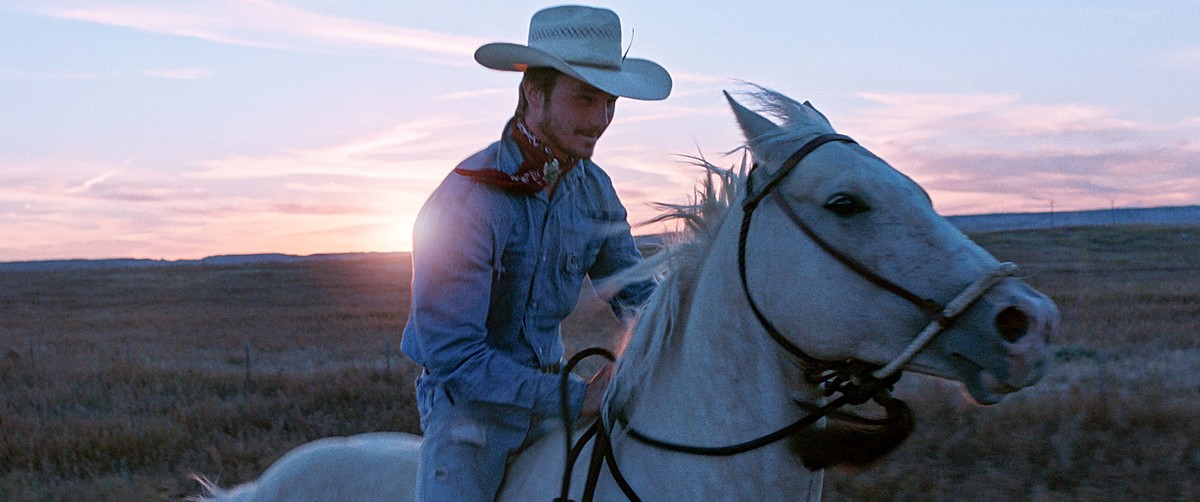
2. “The Rider” — Chloé Zhao’s lo-fi drama moves at a painstaking pace, the clip of everyday life in action. But little is everyday here: Twenty-something Brady (newcomer Brady Jandreau) is a local rock star of rodeo bronc riding whose skull, we see in the opening shots, is stapled shut and oozing blood. An accident in the ring has left him slightly brain damaged. He’s forced to give up the rodeo, the only life he knows, outside of breaking colts, which he does with a calm, tough-love Jedi mastery. The film is a fine-grained portrait of the pains of getting back on your feet after life-altering disappointment, about rebuilding your spirit after it’s been body-slammed and shattered. Easily the most moving film of the year, “The Rider” is pure distilled emotion, beautifully shot on the Dakota prairie by cinematographer Joshua James Richards. It won Best Feature at the prestigious Gotham Awards this week.

3. “A Star is Born” — Call me a sap but I fell hard for this high-sheen remake of a remake of a remake (of, yup, a remake) about a pair of star-crossed musicians working on love amid the ruthless, sometimes lethal brambles of showbiz. Bradley Cooper and Lady Gaga unswervingly possess their crooning characters, Jack and Ally, with explosive energy and heart-searing nuance. It’s a simple tale about mutual respect, and its flip-side jealousy, and how drugs can neuter talent and well-oiled ambition can nurture it. Cooper, whose steely direction wrests high drama from the grunge and glamor, sings and gives one of his finest performances. Lady Gaga is a blazing revelation. The picture boasts genuinely solid songs, including the hit “Shallow,” a soaring paean to the thrill, and fragility, of love.

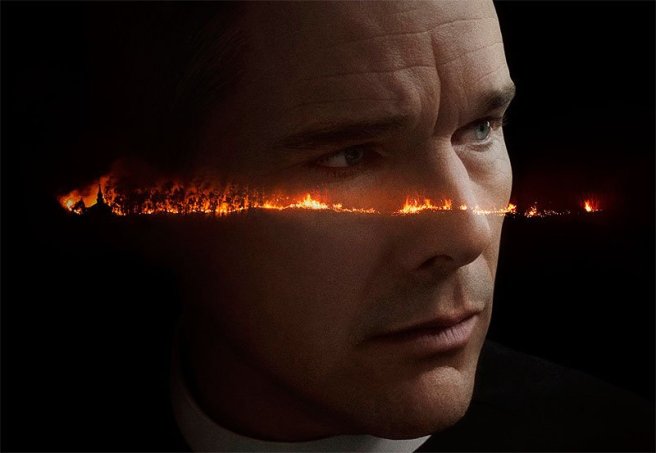
4. First Reformed” — The underrated Ethan Hawke, in his most hoarse, laser-beam performance, plays Rev. Ernst Toller, a clinically depressed man of enforced solitude who is too enmeshed in overwhelming epistemological questions for all that mainstream life stuff. He lives on the margins. He lives for God. He lives to save others, if not himself. Veteran writer-director Paul Schrader taps into his unshakable lodestar — Bergman and Bresson’s transcendental cinema of existential turmoil, spiritual struggle and personal despair — and fashions a dire universe for Toller, one consumed by crises of faith, guilt and penitence. Austere and bruised, this is not an easy picture. But it feels like a necessary one. (Hawke won Best Actor at the Gotham Awards.)

5. “Won’t You Be My Neighbor?” — Mister Rogers was a badass. Twinkly TV host, child advocate, public broadcasting pioneer, musician, writer, Presbyterian minister, seat-of-the-pants puppeteer, colorful cardigan fetishist and all-around super fella, Fred McFeely Rogers (McFeely!) held a special passport into fledgling hearts and minds to become a noble pied-piper of cheering children across the land. He worked his educational magic with a voice of honey and silk, a lilting instrument so soothing it could place you in a spontaneous coma, and a dapper dependability that made him seem like the safest person in the world. He was made of gumdrops and hugs and soaring imagination. Not a scintilla of that hagiographic image is tarred in this illuminating, touching documentary that follows the self-styled teacher of tots as he crafts his TV programs, mainly the paste-and-plastic “Mister Rogers’ Neighborhood.” It’s an adoring snapshot, a trippy bit of time-travel effusive with nostalgia and bolted together by Rogers’ nearly A.I. perfection. His virtuosity almost cloys: he was a wonderful husband and father (no! Not gay!), and his Midas touch with preschoolers was no fool’s gold. In the sphere of pedagogy, his sainthood is locked. (Gotham Audience Award winner.)

Of course there’s a slew of buzzed-about movies I haven’t seen yet that might still make the list: “Roma, “The Sisters Brothers, “Mission: Impossible — Fallout, “The Favourite,” “Widows,” “Blaze,” “I Am Not a Witch, “The House That Jack Built” and more.

Then there are the acclaimed movies that left me limp: “Black Panther,” “Leave No Trace,” “Ballad of Buster Scruggs,” “Isle of Dogs,” “Mandy,” “Shirkers,” “Miseducation of Cameron Post,” “You Were Never Really Here,” “Hereditary,” “Private Life.

And there are films I enjoyed perfectly well, like Julian Schnabel’s heady portrait of van Gogh “At Eternity’s Gate, the funny-sad triplets doc “Three Identical Strangers, the melancholy horse saga “Lean on Pete,”  the anthropomorphic, Wes Andersonian antics of “Paddington 2” and the asphyxiating thriller “A Quiet Place.

“A Quiet Place”

5 best books of the year

  1. “Cherry” by Nico Walker — Walker’s precocious debut novel is tough, streetwise and gruesomely war-torn. It is ugly, scabby — drugs, crime, graphic combat violence — yet lovely still, bristling with heart, candor and raw youthful love that throbs unvarnished truth. What emerges is a pungent, probing snapshot of America today, what has been dubbed “(perhaps) the first great novel of the opioid epidemic.” 

2. “There There” by Tommy Orange — This smashing debut is a novel of ambient beauty and a penetrating portal into urban Native American culture. It’s a world at once broken, squalid and, by the skin of its teeth, empowered. The writing swings, crackling with observational fire. Much of it hits home, like a lightning jag, pulsing with candor and woe.


3. “Kudos” by Rachel Cusk — My favorite book in Cusk’s remarkable Outline Trilogy, this slim volume continues a minimalism that feels maximalist, a headlong plunge into the circumscribed but deeply philosophical world of a single female protagonist who’s on a first-person journey amidst many places and people. Cerebrally and queerly enthralling.

4. “My Year of Rest and Relaxation” by Ottessa Moshfegh — A young woman is determined to hibernate from life via shelves of pharmaceuticals and we don’t quite know why. She is a wreck, in cryptic self-exile. This wiggy, sometimes wayward study in alienation is at once comical, unnerving, depressing and iridescent.

5. “Inseparable: The Original Siamese Twins and Their Rendezvous with American History” by Yunte Huang — The lone non-fiction book in the bunch, this sensitive, captivating and occasionally creepy biography of conjoined twins Chang and Eng is a strange tale, a sad tale, one of courage, dignity, triumph and increasing oddness, yet one of naked humanity and pulsating historical vitality.  

Bonus best: Classic book of the year, “The Easter Parade” by Richard Yates, from 1976, whose grim opening line sets a searing tone: “Neither of the Grimes sisters would have a happy life … ” By the author of 1961’s caustic suburban masterpiece “Revolutionary Road.

And, as always, I chucked aside the predictable pile of unsatisfying titles, including Nana Kwame Adjei-Brenyah’s hyped stories “Friday Black” and Lauren Groff’s collection “Florida, which is brawny, but I was distracted by stronger stuff. (I also thought her 2015 novel “Fates and Furies” was hysterically overestimated.) 

Good but overrated: “The Mars Room” by Rachel Kushner. I gladly finished it. Not bad, not brilliant. Same goes for Nick Drnaso’s perplexingly ballyhooed “Sabrina,” the first graphic novel to make the Man Booker Prize longlist. A few grades above meh.

A transcendent dogumentary

They scramble and scrabble, bark and bound, nap and nuzzle, making an indelible imprint on their human pack leaders whose love for canines is crazily uncontainable.

Photos: Netflix

“Dogs,” a terrific six-part anthology series on Netflix, lushly shot by a squad of bravura documentarians (Glen Zipper, Oscar-nominated Amy Berg, et al.) , is a frank and unadorned look at the relationship between man and mutt. Heartrending and heartwarming, little is forced or pushily sentimental. Episodes provide spectacularly detailed snapshots of person, place and pup, and you strangely come away with a broader comprehension of life itself. Which makes the series certified art. 

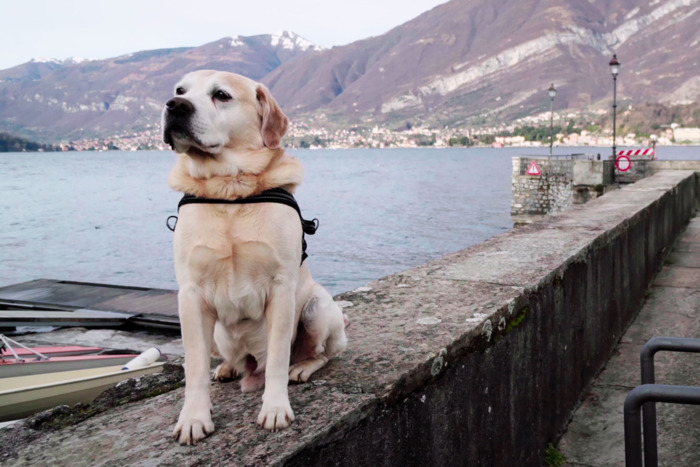
Emotions organically erupt from an array of situations, be it a Labradoodle service dog that detects seizures in its epileptic owner with whooping barks; an imperiled Syrian war refugee that happens to be a yowling Siberian Husky; an aging golden Lab in a quaint Italian fishing village that dutifully follows his master onto Lake Como where they drift together; the fabulously groomed pooches of Japan and the uncharted culture of competitive grooming; a sanctuary in Costa Rica that’s home to 1,200 free-range strays; or New York City’s exploding rescue-dog phenomenon.

Each textured 50-minute portrait is framed within the big picture of the humans’ lives, from political to familial, together with the dogs’ often precarious realities. Funny, galvanizing, sad, uplifting and even spiritual, “Dogs” shows how beautifully symbiotic the two entities, hound and human, truly are.

Watch the “Dogs” trailer HERE.

The weird and wiggy, worldwide

As one who seeks out the freaky and far out in my travels, serendipity seems to be the best GPS for the fiendishly, often funnily, strange. Mostly this is in the form of art, mainly sculpture and statue and the occasional painting. (Or some decidedly unfunny human cremations in India and Nepal — I’ll spare you.)

Sure, it’s superficial this fascination. (So weird! So hilarious!) What does it mean? Not much. It’s aesthetics of the outré, stimuli out of left field, tailored, perhaps, to the oddballs among us. It’s striking, warped and wonderful. The more ghastly the better. The more shocking the cooler. (Note: I have yet to stumble upon art or artifact that’s sincerely blasted my senses. It’s out there, and I will find it.)

Here, meanwhile, are irresistible curiosities I’ve come across around the world: 


Cast of Joseph Merrick’s, aka the Elephant Man’s, skull, Royal London Hospital. One of the most interesting, most hideous and saddest skeletal specimens ever.
Latex cast of the Elephant Man from the 1980 David Lynch film “The Elephant Man” at the Museum of the Moving Image, New York. This is the mold they used to make-up John Hurt as the real-life Elephant Man.
“Crucified Woman,” an unsettling work by supreme provocateur Maurizio Cattelan, hanging in the Guggenheim in New York City. Note the pigeons. I have no idea what’s going on.
Cracked cherub in Iglesia de El Salvador, a gorgeous church in Sevilla, Spain. I love the little fella’s decrepitude and pink and bulgy doll-like creepiness.
Museu d’Art Contemporani de Barcelona. Stacked: a sheep, a pig, a cow, all with unicorn horns. Interesting, until you realize it’s just bad art.
Montreal Museum of Fine Arts. Rugged hiking man with primates. The bloke’s head is like a bobble-head.
The Met, New York City. Exactly how I wake each morning.
Body cast of Chang & Eng, original Siamese twins, Mutter Museum, Philadelphia. Gross and glorious.
A baby through Picasso’s eyes, Paris. I just like this poor warped toddler, so bulbous and twisted — and probably demonic.
Peter and Paul Fortress, St. Petersburg, Russia. At the resident Torture Museum. Highlight: the saliva string and puddle.
Hirshhorn Museum, Washington, DC. Trump in two years, in his cell. 
Malformed Baby Jesus, flea market, Barcelona, Spain. So distorted and freakish I desperately wanted to take it home and cuddle it.
Hanging horses by crazy Cattelan, Guggenheim, NYC. Something out of Fellini. See the little Pinocchio puppet by its front legs. Discuss.
Monkey murder. I really haven’t the foggiest. I wish I did, but I don’t. Montreal Museum of Fine Arts. 

The ecstasy of the unleashed dog

Roxie! Roxie! Come on!

It’s dark out and the human couple are going crazy trying to corral their unleashed dog in the street near the park. Come on! they take turns beseeching the heedless hound.

The dog keeps circling them in wide arcs, mouth open, tongue wagging. He’s laughing at them. He’s having a ball. Catch me if you can! 

Exasperation streaks the air. This little game is growing old. The dog doesn’t know this. It’s cold, it’s getting late, dinner beckons. Ha! says the dog. He is free, free at last. And he isn’t wasting this hard-won opportunity of open-range rambling.

Roxie! (breathless) Roxie! (impatient) Come on! (aggravated) COME. ON. (hair being pulled)

The empty leash rattles, human feet stomp and scamper, doggie nails tappy-tap against pavement. The animal runs, feints, twists around, runs in the other direction. The humans are hopeless. 

There is no grand ending to this tableau. Eventually the drama fades, as it will. The dog is captured, the leash reattached. Feet shuffle away. If one listens closely, a dog pants and pants and says under his breath: Yes!

Hounding the dogs of Istanbul

She ambled into the cafe smiling, her rump gently shaking this way and that, tail shyly wagging. The cafe owner, a radiant globe-trotter named Nazan who’s lived in Istanbul for years, joyfully greeted the large brown mutt, patting her head and cooing her name. The dog then plopped onto the wood floor and rolled on her back, legs skyward. She remained in this posture for a good half hour. She looked ridiculous. And adorable.

1.jpg

The pup, whose name is Garip, is one in a gaggle of dogs and cats Nazan feeds and takes care of. Garip is a stray, part of thousands that live in the by turns picturesque and grungy streets of Istanbul, a massive, hilly metropolis bulging with 16 million people — the world’s fourth largest city and the biggest city in Europe. 

That means a lot of stray dogs, whose numbers rival the city’s seething stray cat population (lovingly profiled in the documentary “Kedi,” which I wrote about HERE). It’s a zoo out there, an amicable, well-behaved cosmos of bewhiskered street urchins that are mostly pampered by locals or, at worst, casually ignored. 

Animus towards the animals isn’t evident. I was in Istanbul for nine days this month and kept a close eye on the roving dogs and cats. The critters are almost universally plump and well-fed by caring, compassionate locals attuned to the spiritual sustenance of communing with intelligent four-legged creatures that reciprocate the love. 

There they are, zonked out, on their sides or curled in balls, in the middle of plazas amid the bustle and noise of swarming tour groups that step over them. They loiter outside of restaurants, reliable fonts of food, and snarf up the dog kibble people put out for them on schedule. Nimbly dodging cars, some move in small packs but most ramble their neighborhoods as lone wolves, occasionally pausing to sniff one of their hairy cohorts’ rear-ends before tramping off down cobblestone paths.

The dogs calmly stroll around for snacks and strokes, but are rarely beggy. They don’t cadge, they don’t hector. They scarcely bark. Rather they befriend and endear. If you approach them, they nuzzle up to you, tail fanning, like any dog worth its canine credentials, yet leave you alone when you pull away (unless you call them to follow you, as I often did). Their independence is admirable, even noble.  

As the homeless can attest, street life’s a bitch. Hunger remains an imperative and untended wounds agonizingly fester. I met a dog with a ghastly slash around its throat and another with an oozing cut on its back leg that left a bright streak of blood down its fluffy cream tail, looking like a giant paint brush dipped in red paint. Many stray dogs are registered by the city, signaled by a tag on their ear that means they’ve been fixed and vaccinated. I think that’s swell.

At the cafe, the marvelous Mitara Cafe & Gallery, Nazan visibly adores her furry charges, her courteous quadruped pals. She speaks to them, strokes them, invites them in for a bite and respite from the heat or cold. When I handed her a tip for my lunch, Nazan assured me it would go to food and medical care for the animals. That was all right by me.

A motley gallery of some new Istanbul friends:

2

3.jpg

4.jpg

5.jpg

P1030568_1.jpg

6.jpg

7.jpg

P1030243_1.jpg

8.jpg

When a suitcase becomes a basket case

I own an old piece of luggage that is, at long last, the worse for wear.

It’s lost that luggin’ feeling. 

For some 18 years it’s been my sturdy companion around the globe, from Israel and India to Morocco and Madrid; Egypt and China to Turkey and Poland; Thailand and Lebanon to Japan — and beyond. It carried worlds of stuff, from my underwear to a Turkish hooka; from Syrian soaps to ham from Spain and pirated DVDs from Vietnam.  

All the rugged mileage this road warrior has incurred has aged it like a pugilist pummeled into premature dotage. Not helping are airport baggage handlers who hurl one’s precious parcels like sides of beef.

I’ve seen it. I actually watched through the ovoid plastic jet window a handler on the tarmac chuck my exact suitcase — mine — into the cargo hold like it was a sack of stinky refuse. It was almost heartbreaking.

My luggage — a 22-inch two-wheel roller made of thick nylon by the superb Pathfinder — is still functional. It’s just outmoded, beaten and battered, like shoes that are broken-in to just-right comfort but are scabby and gangrenous. It isn’t dead. But it is officially on Social Security.  

IMG_1170
Suitcase or basket case?

Scarred and scuffed, it’s a homely old comrade, chain-smoking, hard-drinking, occasionally finding itself in a barroom brawl. It has rolled around and seen the world, seen good times and bad, and, well, I’m out of clichés. 

Strips of plastic peeled off the two beleaguered wheels a year ago and the zipper ripped off one of the front compartments that accommodates books, magazines and documents.

Without a quartet of spinning wheels, the bag is unwieldy, especially on streets and sidewalks. It can be frustratingly graceless, at once ratty and bratty. 

All of this, of course, is just noisy throat-clearing to announce I have replaced the grizzled (yet forever faithful) Pathfinder with a newer model, the, huh-hum, Samsonite Silhouette Xv Hardside Spinner. Behold:

91LpuiyYmhL._SL1500_.jpgI haven’t used my new bag yet — I will next week when I return to Turkey — but I’ve taken my brother’s slightly older version on a few journeys. So the model has been test-driven, with flying colors. It’s a dynamo.

Recall my old bag is 22 inches long. The new one is 21 inches — total carry-on action if I choose. Samsonite offers a chart that says the 21-incher is the perfect size for a two-day trip, which means they’re bonkers.

As I did with the 22-incher, I stuff all I need into these bags with zero space issues, no problems. I don’t know what their product-testers are packing, but I can pack a good 10-day trip into bags this size. (Of course, I only pack a loincloth, foldable toothbrush and shower cap.) 

Whatever. I’ve got the packing thing down. Cram, condense, fold clothes into origami. Give me 20 minutes and I’m ready to roll.

And nowadays that means rolling on four well-greased spinners. 

A1kcDI9526L._SL1500_

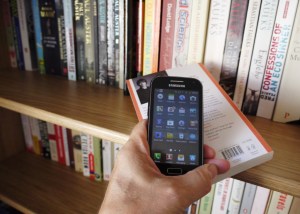
The daunting and taunting of the bulging bookshelf

Nothing in a home excites me more than bookshelves crammed and jammed with actual books, as opposed to knickknacks, tchotchkes and corny picture frames. Filled right, they are towering works of art, swirls of graphics and oceans of colors.

I love engorged, groaning bookshelves, whose heaving pulp cargo functions as stylish and classy decor, the jostling spines stringing rainbow rows of erudition, edification and entertainment. So gorgeous and seductive is a grand, brimming bookshelf, it’s almost erotic.

8536d681f28f66caa54226bbccc05e6b--bookstores-libraries.jpg

At minimum, it takes hundreds of volumes to stock an amply, aptly impressive bookshelf. It takes a collector’s fervor, an obsessive appetite for those bound squares of facts, fiction and, so often, beauty.  

But there’s this: Do we actually read all the books in these sprawling collections? Or do they act largely as pretentious decor, literary plumage that flatters the owner?

That depends, but I know I rigorously try to read every title on my shelves, as nearly impossible and as crazily aspirational that proposition is. Still, I don’t see them as frills and frippery. I simply think walls of books look amazing. (Bookshops and libraries: Platonic ideals of aesthetic glory.)

I confess I don’t read all the books I acquire. One, the quantity is too great, especially when new books keep crashing my bulging bookosphere. Two, not every book is worth reading — too many just aren’t good enough. 

So, as I’ve mused here before, I frequently dispense with books that aren’t thrilling me. The rate that I put books down at the 50-, 80- or 100-page mark is deplorable. It’s also necessary. I show no quarter.

“I own far more books than I could possibly read over the course of my remaining life, yet every month I add a few dozen more to my shelves,” writes Kevin Mims in this essay in the New York Times.

That is a sickness I know well. But mostly I’ve stopped this hoardish habit. I realize now that not every well-reviewed book or immortal classic is worth picking up.   

I used to work in a corporate bookstore — the biggest bookstore in San Francisco at the time — and, like that ravenous kid in the candy store, the one with chocolate smeared all over his mouth, I couldn’t help but accrue a gigantic book collection. It fast became overwhelming, so I kept a list on a lined yellow notepad of all the books I hadn’t yet read, planning to cross titles off as I went. Sheer folly, that.

I have since evolved and have become the prince of the partially read book. Though my shelves boast more tomes that I have actually completed, the rejects are copious. 

And then there are the books I haven’t even cracked yet, and may never get to. In his essay, Mims locates a term for this: “tsundoku, a Japanese word for a stack of books that you have purchased but not yet read. My personal library is about one-tenth books I have read and nine-tenths tsundoku.”

That doesn’t mean your fabulous bookshelves are mere pretty repositories, ceiling-scraping storage bins. They are libraries and all that that word implies: knowledge, art, stories, journeys, lives, cracking your head open with the world.  

Says Mims:

A person’s library is often a symbolic representation of his or her mind. A man who has quit expanding his personal library may have reached the point where he thinks he knows all he needs to and that what he doesn’t know can’t hurt him. He has no desire to keep growing intellectually. The man with an ever-expanding library understands the importance of remaining curious, open to new ideas and voices.”

bb42752b8ffbeacfca9b8d5d6918ecdd.jpg

* Late postscript: I stumbled upon this nifty quote in my readings later today. It’s from “The Bookish Life,” an article by Joseph Epstein:

So many books are there in the world that no one can get round to even all the best among them, and hence no one can claim to be truly well-read. Some people are merely better-read than others. Nobody has read, or can read, everything, and by everything I include only the good, the beautiful, the important books.”

How to annoy a Good Samaritan

For the first time in my life, and hopefully the last, I called 911. It happened today, though it almost didn’t happen. The injured party of two, which did not include me or anyone I know, degenerated into a noisy confusion of bickering and dithering about if I should actually make the call. 

Call it! 

No, don’t call, I’m fine! Jesus!

Annoyed, I rolled my eyes and dialed. 

I was outside the library when I heard a crash then piercing screams and old-man groans — drama and panic before a fine civic institution. A splendid fall day.  

What happened was this: A woman is pushing an elderly man in one of those mini-wheelchairs, officially called transport chairs, when the conveyance hits a large uneven crack in the concrete, spins around and flips over.

The man, who’s attached to an oxygen tank, falls backward in the chair, landing on his back and bonking his head on the ground. There he is, stuck on his back, knees airborne, moaning. His elbows appear to have gotten the worst of it, and they are scraped and bloody. 

blog art.jpg
A highly inaccurate reenactment

Screaming and swearing, the woman, doughy and Weeble-shaped, tries to help him up, loses her balance, and falls on top of him, squishing the poor guy. 

Get off me!

Goddmmit! Oh! Ack! Help!

The woman, brassy and braying, tries to get up and falls on her ass on the concrete. She is screaming and cussing. I try to help her up but she’s having none of it.

Oh! My knee! Aaaah!

Yadda yadda yadda. 

She’s fine, a marvelous drama queen.

By now she’s really getting on my nerves, cussing and yelling at her supine companion whose head almost cracked open like a melon.

He, on the other hand, is calm and good-natured, with a crinkly sense of humor, even though he’s on his back on the concrete, knees in the air, tubes up his nostrils. He sort of looks like Hyman Roth in “The Godfather II” or Grandpa from “The Munsters,” except with a constellation of age spots across his olden face. 

He asks me to place my foot under his head as a cushion and I do. It’s a ridiculous scene. She repeatedly swears she will sue the city. She takes a picture of the guy on his back. Don’t take a picture! he yells. 

So I call 911 and the dispatcher keeps me on the line, asking a zillion questions about what’s happening, if the old man is on blood thinners (he is) and other questions I have no answers to. I can barely hear because the woman is screaming and swearing the whole time. 

Can you call 911 for human obnoxiousness?

The aggrieved twosome looks — and acts — like a married couple, though she seems to be in her late 50s and he in his late 70s, early 80s. Daughter and father is more likely. Either way: a nightmare.

The EMS arrives apace, sirens wailing, lights twirling. Taking a final gander at the squabbling duo and circling medics, I saunter off, irritated, into the library. The guy is still on his back. She’s still squawking.

I check out “Apocalypse Now.”

Pushing for Paris

I once knew someone who actually said this when I mentioned that my favorite city is Paris: “Huh? Even Munich is better than Paris.”

Deathly silence.

Munich?

Munich?

Thunderstruck, I retain this memory with terrible clarity. I crossed that person off my Christmas card list. 

(Now, nothing against Munich. Munich is neat-o. I thoroughly enjoyed Munich, if I didn’t fall in love with it. I like beer. And cuckoo clocks.)

When I was in Amsterdam in May, I was on a boat tour through the lovely canals and, coaxed by the pushy skipper, I was evidently dumb enough to say the city was beautiful, much like Paris, wherein the whole boat, about eight people, groaned, “Whoa! Amsterdam is waay better than Paris.” Murmurs and whispers ensued. (Oh, those awful French people, groused a ditzy Brit, echoing the laziest cliché in the history of world travel.)

I had to, first, snuff my indignation, then muffle my bemusement, then muzzle my laughter. Were they serious? Amsterdam is gorgeous and fun and historically and culturally robust, but it doesn’t hold a flickering little paper match to the overwhelming majesty of sprawling, art-encrusted, haute cuisine-infused, history-convulsed Paris, which boasts its own sinuous canal in the knockout, 483-mile Seine and all of its inviting, ancient quays. 

eiffel-tower-priority.jpg

The last thing Paris needs is some doltish American offering injured and angry apologias for the grand, gilded metropolis. Paris stands supreme, proudly independent, unimpeachable, a dazzling European peacock, plumage in full splay. Perhaps not everyone’s favorite destination, it remains high up, cleanly above Munich and Amsterdam. (I choose Amsterdam, which I adore for so many reasons, over Munich, for the record.)

Central Paris, that masterpiece of urban planning, conflates the antiquated and the contemporary for stunning treelined strolls. Magnificent parks, gardens and cathedrals stipple the cityscape and some of the most august art repositories in the world — Musèe d’Orsay, the Louvre, Musèe de l’Orangerie, Musèe Picasso, Centre Pompidou — unfailingly spellbind. Food, fashion, film — Paris is a throbbing epicenter for it all.

IMG_0625.jpg
Musee d’Orsay, November 2015

But we know this. Here I am describing, a mite defensively, the patent pleasures of this great city. All of it world-renown. For a reason.

While Paris preens and beguiles, some of my other eternal boldfaced cities include New York, Tokyo, London, Barcelona, San Francisco, Krakow and stately Istanbul, where I return this month, giddily. 

Reader: I’d love to hear about your favorite travel spots. Drop names in the comments section and be as brief or windy as you’d like. I’m curious if Paris makes the cut or not, or if I’m crazy, and if I’m overlooking other star locations, be it Botswana or Buenos Aires. Type away …