Idle thoughts about our human duality

Eric Idle, one of the great Monty Pythonians, spoke in yesterday’s newspaper to say this: “I think I am an optimist by day and a pessimist by nighttime.” 

I take this to mean that life’s workaday gunk, from headaches to the headlines, and the daily news cycle, that cataract of informational sewage, from Trump to pathologically unfit Supreme Court nominees, poisons him in a most unpleasant manner. 

That he undergoes a sort of icky Dr. Jekyll/Mr. Hyde binary: By day he’s merry old Eric Idle (Jekyll), getting along hunky-dory, and by night, fangs sprout, thick hair unfurls on his hands and face, and his disposition waxes decidedly splenetic (Hyde).

Fredric-March-and-Mr.-Hyde
Mr. Hyde, left, and Dr. Jekyll — same fella, different moods

For all that, Idle is evidently not a morning person. He says: “I can’t stand talking to people before lunch. I don’t think anybody civilized does.” (Hear, hear!)

I relate, to an extent. I am not a morning person. It takes a couple of hours, and at least one caffeinated elixir, for the early-hour crust to peel away, the nocturnal fog to burn off, my voice to clear from hoarsey to honeyed, my mood to shift from monosyllabic zombie to socially functional, with a possible grin if you’re really nice.  

It’s like the transformation of the Wolf Man back to a regular bloke, while we’re trading in Universal Horror metaphors.

But Idle and I differ in that I am a pessimist by day and an optimist by night — polar opposites. I arise and experience the day as Hyde — hairy, harried — and then I cool off, wind down and digest the day’s doldrums and distress during the dark. I relax, anxiety dissipates, I operate in a less pressurized space, though I must say I miss Hyde’s chimpanzee orthodontics and senatorial eyebrows. 

I rise in a murky mood. And, though it improves quite quickly, pessimism hovers over me during the daytime, an existential pall, a storm cloud poised to spit angsty, acid raindrops. I’m a little tense and the day’s news buffets me and only mixes me up more, stirs the pessimistic pot, which is really more like a cauldron, black and bubbly.

And then! The sun ducks, darkness falls like a stage curtain on the woozy light, and I slowly unwind. I once asked a therapist why this was — why my mood and my whole being gets, well, better at night. He had an answer that I cannot recall. It was some time ago. Bummer. I think it’s something about letting things go. Work is over. The night is yours. A splash of vino is poured. Fists unball.

I googled this phenomenon with imperfect results. All sorts of reportage about morning people vs. night owls popped up, but none of it addressed mood and state of mind, optimism vis-à-vis pessimism, focussing more on sleep habits, insomnia, and other folderol. There’s much about how some at night get droopy and others get galvanized, staying up later than the snoring household.

That’s not what I’m on about. It is noontime as I type this, warm, partly cloudy, just like me — warm and partly cloudy. Darkish thoughts percolate, I’m a little clenched, my forehead is a map of (mostly innocuous) worry. I am Mr. Hyde to Eric Idle’s enviable Dr. Jekyll.

But our roles will switch as the day progresses. Idle is slowly being filleted by life’s slings and arrows, so that by nighttime he will curdle with negativity. I’m already a wreck, lucky me. I’m Dracula (another Universal Horror allusion, you’re welcome), miserable in the sunlight, a goddam barrel of monkeys by night. We do what we can.

Radiance of the pet rat

If you want to see a rat drink beer, click HERE. I’ll wait.

That’s Becky, my long-ago pet rat, whose both alarming and comical omnivorousness knew no bounds. Seriously: zero. 

She’d chomp broccoli, rubber bands, towels, chickpeas, cheese, books, dog food, t-shirts, pizza, gecko lizards and crawly cockroaches. She’d guzzle wine and the above beer. 

IMG_2471
Becky shares pizza with a pal.

She once bit into a small tube of Super Glue. In a miraculous stroke, the glue was so old it had evaporated. The alternate results would have been grisly, even fatal, I’m certain.

Rats, like honey badgers, don’t give a crap.

But they are as smart, sweet, social, endlessly curious and affectionate as any animal, be it a dog, cat, piranha or wildebeest. 

They play and wrestle, come when called, chill on your shoulder, build crafty nests from newspapers and less innocuous sources (like the fluffy guts of your sofa or that pricey box of Q-Tips), play fetch, groom with OCD avidity, swim, delight in belly rubs lying on their back, and so much more. Oh, and hoard. How they hoard. Hide all small valuables. (Becky stole my watch once. It took days to find.)

They’re like super pets that delight, entertain and nourish the heart and soul. As I’ve quoted in these pages before, rats are “cleaner than cats, smarter than dogs.” Whoever said that is just about spot-on and probably lives with a thousand rats and the authorities are onto him or her. A reality TV show is coming soon.

IMG_1385
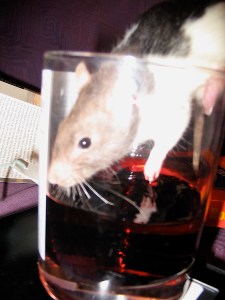
Becky going head-first into the glass, tippling a fine (cheap) cabernet.

Pets hold spiritual qualities with their power to elevate and expand one’s being. But, like dogs and cats, rats do it with a special, irresistible elan, magnetism and downright adorableness. Still, it’s different. For one, they don’t fart.

With their silky, curling pink paws (tiny starfish), twitching whiskers, itty-bitty tongue and translucent ears, gently nibbling buck teeth and enormous hearts, they’re lovable buggers.

Those thick wiry tails that whip around, made strictly for balance, are something else. The creatures squeak in pleasure and, science has proven, giggle like little girls. When treated right, Prozac they don’t need. (Though they’ll eat that as well.)

Like sharks, rats are exquisitely evolved specimens. Get this: They can collapse parts of their skeleton to squeeze under doors and through tight cracks. I’ve seen it. They are quicksilver with fur, superheroes with a super power, lacking only a cape and a ridiculous moniker.

IMG_1359.jpg
Still life: Becky

An image I cannot shake: Becky drinking wine by dipping a paw in the liquid and licking the paw, like a cowboy drinking from the Rio Grande after days without water. (Her boozing was judiciously supervised — I only let her get a nice taste.)

And yet … well, rats will obliterate you. With a life-span of an average of two and a half years, they desert you far too quickly. They become your best friend and then, like a relationship gone bad, they end it, they vanish. They die. Usually it’s a respiratory disease or, more likely, cancer. It rips you to shreds.

Becky’s death was excruciating. I spent a lot of time and money on her, all of it beautifully worth it. Still, she had to go. She’s probably tearing up heaven, nibbling angel tunics, nesting in holy beards, gulping sacred wine. Being a worthy rat, not giving a crap.

P1010152
RIP Becky

Istanbul’s citywide kitty corner

Goddamm cats. 

All over Istanbul, they ramble and climb, pounce and shinny. These homeless street beasts tackle each other in play; hiss and strike in combat; scrounge and scavenge for the next meal. They barge into shops and curl up in chairs and beg for food at sidewalk cafes with various degrees of rough-hewn etiquette (claws, paws and purrs).

000e4198-800.jpg
From the film “Kedi”

Most importantly, they insinuate themselves into the homes and hearts of many of this huge city’s denizens, soft souls who often regard the felines with an almost spiritual gravity, spurring the occasional display of soggy sagacity: 

“Dogs think people are God, but cats don’t,” a cat-lover says in “Kedi,” a documentary about the thousands of stray cats of Istanbul. “Cats know that people act as middlemen to God’s will.” 

I’m pretty sure I have no idea what that means.

“Kedi” (cat in Turkish, though it sounds a lot like kitty) is a well-received film from last year that lavishes the love — there’s not one hater in the whole picture, no one shooing away a cat with a broom — on Istanbul’s famed felines. It feels like a short film stretched taffy-like into a 79-minute feature that’s at once indulgent and superficial, while pleasant and lightly informative in an ingratiating PBS sort of way.   

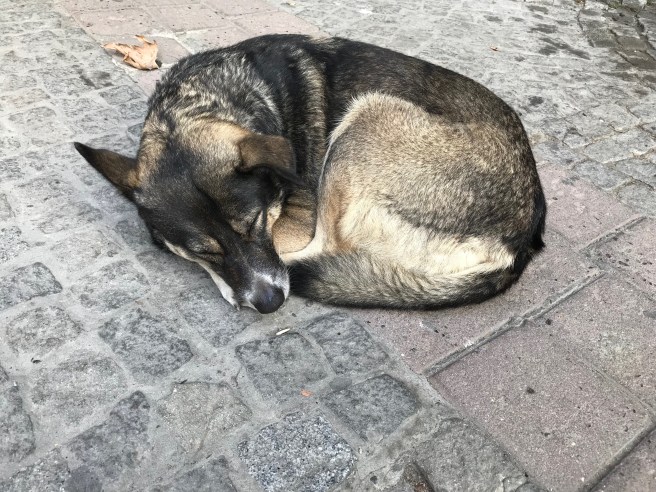
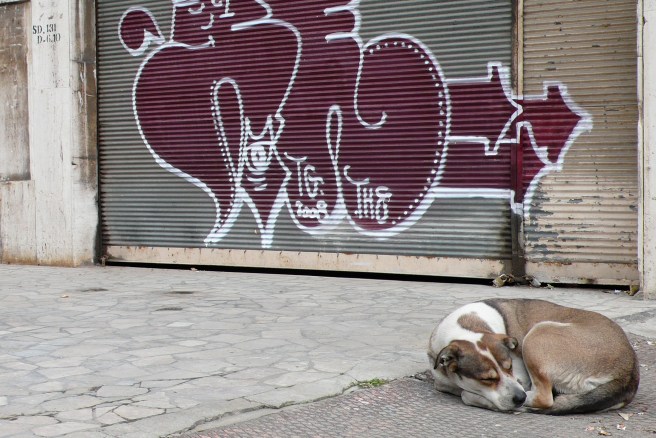
Someone in the movie declares the homeless kitties are the city’s soul, but on my few visits to Istanbul I saw far more stray dogs than cats. Like this winsome fella, who became my pal for nearly a month:

P1020788.jpg
Istanbul, 2008

Still, I certainly saw many cats, such as this leery pair of scrappy, well-fed survivors:

P1030495_1.jpg
Istanbul, 2008

In “Kedi” cats inhabit rooftops, cardboard boxes, markets, cemeteries, trees and awnings, and the film paints artful visions of the kitty stars, from Bergmanesque close-ups to whisker-level Steadicam action of running, jumping and chasing (mice beware).

The cats comprise a motley array, and I expect to see the kitty cavalcade when I return to Istanbul next month — toms, calicos, tortoiseshells, mamas nursing their babes, cats with patterns like a painter’s palette, or, one of the stars of “Kedi,” a female hellion dubbed “the neighborhood psychopath.”

fat cat.jpg
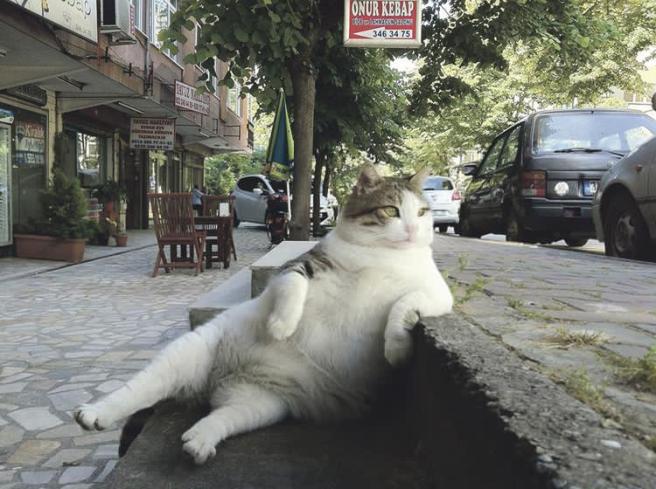
From the film “Kedi”

Inevitably, kitty characters and personalities emerge, inescapably anthropomorphized. “It’s so fascinating,” says a simpatico fishmonger of the cats who not so mysteriously follow him around. “They’re just like people.”

We have two cats. They’re just like people: indifferent, solitary, narcissistic, wise, wily, incessantly hungry, jerks.

Yet in “Kedi” the humans are like grandparents who spoil their charges. A shopkeeper compares a kitty comrade to one of his children as he brushes her fur while she looks off into heavenly ecstasy. Another man compares the company of cats to the soul-soothing power of prayer beads.

Our cats provide the soul-soothing power of pooping, crotch-licking gremlins.

Taking care of these furry street urchins is, they say, their duty. They are cat custodians, and for many of them the animals supply a divine connection that is healing, curative and therapeutic.

How is this possible? one may ask. Cats purr and meow, but are otherwise as mute and inscrutable as the Sphinx. They scamper off a lot for no damn reason.

“I imagine having a relationship with cats must be a lot like being friends with aliens,” muses a dreadlocked woman in the film. “You make contact with a very different life form, open a line of communication with one another, and start a dialogue.”

As someone who talks to the animals, from cats to rats, I love that.

(“Kedi” stuff, including trailers, can be seen here.)

Biting into a tangy ‘Cherry’

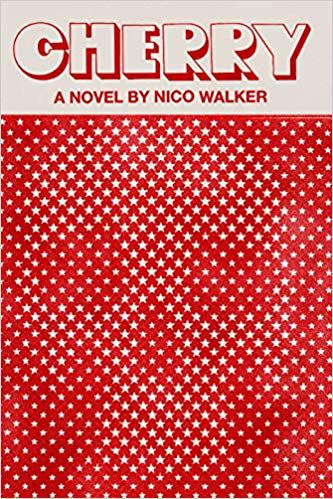
The novel I’m reading now, “Cherry,” is gritty, witty, dirty, funny, grim — and marvelous. Compulsively readable, the rollicking fiction introduces in debut author Nico Walker a natural dynamo equipped with a dazzlingly fresh voice that has a compelling, troubling croak in it. It’s scratchy, a little hoarse, and it sings with a hard rock crunch. 

Almost universally acclaimed, “Cherry,” out this summer, is tough, streetwise and gruesomely war-torn. It is ugly, scabby — drugs, crime, graphic combat violence — yet lovely still, bristling with heart, candor and raw youthful love that throbs unvarnished truth. What emerges is a pungent, probing snapshot of America today, what has been dubbed “(perhaps) the first great novel of the opioid epidemic.”

61wgnjuctll-_sx331_bo1204203200_.jpg

I’m just over half-way into it, so my take on the book isn’t fully formed, but early impressions beguile. Walker traffics in autofiction — like his narrator/antihero, he was a 20-year-old medic in Iraq, pulled bank robberies and battled a heroin habit — so he knows of what he writes. (Walker, 32, boasts a remarkable backstory: He wrote “Cherry” from prison, where he remains.) 

“‘Jesus’ Son’ meets ‘Reservoir Dogs’ in a breakneck-paced debut novel about love, war, bank robberies, and heroin,” notes the publisher.

So far the narrative sizzles with combat action and battalion buffoonery among low-level fuckups, not the slick, seasoned pros of, say, “The Hurt Locker.” The war reportage is colloquial and harrowing; the prose lean and sinewy and almost drolly unsentimental. 

“Cheetah was driving. Cheetah was a shitbag. He was big into Faces of Death and what was almost certainly child pornography. He would buy all the stupid gaudy knives the haji shops sold and mount them on the plywood wall above his bunk. He was driving that morning, and I thought it was stupid since he wasn’t even a grunt. He was the lowest ranking of three supply POGs in the company, and he wasn’t even good at that because he kept getting himself Article-Fifteened for being a moody knife-pulling shitbag.”

Walker’s “language — relentlessly profane but never angry — simmers at the level of morose disappointment, something like Holden Caulfield Goes to War,” says The Washington Post, accurately.

The protagonist’s romance with a girl back home leavens the drama at this point in the novel. Yet meanwhile there is this: unflinching combat that seems as vital to the story’s realism as any of it, and with which I will leave you. Hang tight:

“I said, ‘Where are the casualties?’ He said, ‘They’re all dead, you fucking asshole.’ I looked again at the body of the gunner. He was burned away, scrap of IBAS clung to his torso, legs folded up, femurs and tibias and fibulas with black tissue, arms melted, body eviscerated and lying on its guts, face gone, head a skull. The smell is something you already know. It’s cooled in your blood. The smoke gets into every pore and into every gland, your mouth full of it to where you may as well be eating it.”

No matter how horrible that passage is, it feels strangely and totally essential. “Cherry” is like that: so uncompromisingly true, it rattles you awake.

Ode to a wondrous hair explosion

It was like a solar event radiating from her head, explosive yellow curlicues twirling and boinging into the stratosphere. Flaring, flaming, the bleached helixes formed a magnificent afro that any ethnicity could pull of with high-fashion finesse. It was positively Kaepernickian.

This vision appeared today in a cafe and I oddly did not see the woman’s face, just the back and side of her head. It was plainly a woman, but I have no idea if she was white, black, brown or what. I stared at the flaxen shrubbery from behind. Its corona of frizz entangles you, startles, transfixes. 

edfef30baa823b90dcbebb4aee0c907b--blonde-selfies-girls-selfies.jpg
A lot like this.

It’s so loud, so brash, it’s like a bulletin, a manifesto, a mission statement. Hair, like clothes, is like that: It’s an articulate communicator, revealing much about a person, like the choice of your car or your dog does. It says This is me, and quite a bit more. 

What this gigantic yellow afro says is: YES DAMMIT!

If you want a piece of that, you can buy the big ‘do for $19 from Amazon:

Unknown.jpeg

But that tilts toward offensive, never mind the repugnant artificiality of it. 

I like what I saw, the real deal, the brazen authenticity and screw-you audacity. I like the sheer follicular electricity, all zap and fire.

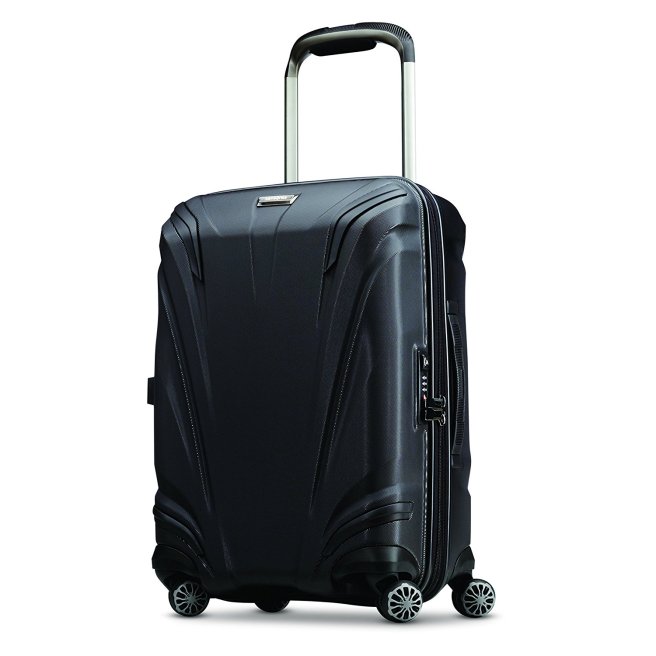
All packed with nowhere to go (yet)

I’m ready to skedaddle.

I am going to Turkey and my prep-work is a whooshing blur. Look out — I am a trip organizer extraordinaire, a whiz-bang packer, planner and non-procrastinator. I am completely prepared to go to my next destination, namely Istanbul, with a two-day sidelight to the south in Cappadocia. It’s time. I’m ready. Let’s go. 

I’ve booked my round-trip flight between home and Istanbul, and the same for Istanbul and Cappadocia. Reservations are made for three hotels, seven dinners and a chi-chi culinary tour that ambles across both sides of the city, the European and Asian. 

I know where I’m renting a motor scooter in Cappadocia, and I know the price. I’ve purchased and printed my Turkish tourist visa. My passport and credit cards have been photocopied. I’ve selected the book I will take for in-flight reading. And I have procured provisions: No Jet Lag tablets (self-explanatory), Emergen-C immune boosters and a few airplane-size bottles of booze for the red-eye flight to Turkey.

In my head, my wardrobe is totally picked out and as good as packed. I am, I think, more than ready to walk out the door.

I leave in two months.

My readiness is ridiculous. I’ve accomplished all of the above in little less than two weeks since I bought my airline ticket. I book my flight. And I pounce. 

Yet I am not rash and hasty, though I have been on occasion in the past. (I still rue that musty, doll-house-size hotel room in the Latin Quarter. Refund!). I stay up late, often into the wee hours, researching and cross-referencing restaurants and hotels, poring over various reviews.

IMG_1163Budget is always a factor. Quality is too. Email exchanges with tours, eateries and hotels are voluminous. Like a bulldog reporter, I ask pointed questions, suss out better deals, dig for the best room and best price. Don’t hustle this hustler.

I have done this many times. I’ve had practice. Hire me for your next vacation. In a hair-whipping whirlwind I’ll have you booked and vacuum-packed in less time than it takes you to notify your credit cards that you’re leaving the country. (Yes, I’ve already done that, too.)

I’m sure this all appears quite anal and neurotic. And, dammit, it is. But it’s also the breathtaking, otherworldly efficiency of a luxuriantly bearded wizard or a dancing magical elf. I rule.

My brother and his family are going to Spain for Christmas. I see them straining, huffing, puffing, doing the rich, rewarding work of travel planning. Some of that includes reading books about their destinations that aren’t city guides. (OK, I still have a book about Turkey I need to read before I go: “Crescent & Star: Turkey Between Two Worlds.”)

I’ve assisted my brother a little using my almost eerie aptitude for travel research, helping him locate hot restaurants and the like. But four months out, they’re on the ball, doing great work.

My work, as thoroughly noted, is all but done for Turkey. I have two months.

Two months.

Now what do I do?

Drinking outside the box

Summer’s steamy curtain call is almost here (woo-hoo!), but we’re still in a light wine state of mind. Rosé is our go-to beverage in the seasonal swelter — with citrus-laden gin and tonics right behind — almost like sody-pop for the kids: refreshing, quenching, yet still retaining that sneaky bite adults crave (and sometimes require).  

These days we’re getting our rosé from a faintly unorthodox source: We’re drinking from a box. They call it bag in box wine, or simply boxed wine. Either way, you extract a plastic nozzle or spigot from a cardboard box and wine spritzes from it, or more specifically, from a shiny bag inside the box.

It’s resplendently dorky.

And yet …

w5254575tf_1.jpg

After a period of snooty ignominy, boxed wine is back in vogue, shorn of shame and stigma amongst those who know a good deal and, yes, a good wine. Excellent boxed wines abound, including the crack rosé we’re drinking in almost blushing abundance: Lab Rosé, from Casa Santos Lima winery outside of Lisbon, Portugal. (Rosé, incidentally, is defined as “a light pink wine, colored by only brief contact with red grape skins.” It’s exceptionally fruity, just a tad dry, ideal for the hot months.) 

Three reasons boxed wine rules:

— It’s way cheaper. A standard 3-liter box holds as much wine as four regular wine bottles. Our local outlet sells a Lab Rosé box for $17. Do the math and get misty-eyed. Then guzzle. What you lose in sleek glass aesthetics you make up for in sheer value.

— It’s environmentally sound. Say several sources: The production of boxed wine generates about half the emissions per standard bottle of wine.

 It lasts forever (almost). “Thanks to its handy-dandy vacuum-sealed spigot, boxed wine has a longer shelf life after opening than its bottled counterparts,” writes one pro. “And I mean a lot longer. Up to six whole weeks, in fact.”

IMG_1161And that brings me back to Lab Rosé, which is that much more of a bargain because of its prodigious quality. It is, for example, far more luscious and drinkable than its more expensive Provence Rosé counterpart, whose gloppy malty finish is ruinous. And though Bota Box Dry Rosé is quite fine, it too is several dollars more than trusty Lab.

Lab indeed earns consistently strong reviews from wine experts and sundeck sippers alike. Wine Enthusiast bestows Lab Rosé a respectable 86 points, noting, “This is a pale colored, attractively perfumed wine. With red berry fruit flavors, bright acidity and a lively orange zest texture, it is fruity and ready to drink.”

Ready to drink, for sure. Right out of the dorky, yet somehow radically cool, box.

My best fiend: remembering a childhood pal

My best friend between ages 5 and 10 was a freckled scamp named Gene, who even at that age seemed to conduct life on the razor’s edge, courting trouble with a highly evolved sense of mischief and the occasional snap of malice.

Always cooking something up for us to perpetrate, be it leaving dog poop on someone’s porch then doorbell ditching or setting small fires with gun powder in his bedroom, Gene earned the nickname “Gene the Machine” from my dad, who didn’t know the half of it.

Small and short — he sat on a tall step stool at the dinner table — Gene provided my unsentimental education. He taught me every cuss word I know. When he blurted “Go to hell!” at a girl in our fourth-grade class, I was too overcome with snickers to be shocked. He introduced me to nudie magazines, some of which he buried in plastic bags in his backyard. He sold me on the rock band Kiss and the dubious pleasures of pyromania. 

Boy holding burning matchstick

Matches and firecrackers were always on hand. We scorched many things, including, by accident, ourselves. At our mildest we would torment plastic army men, igniting them and watching them melt, black, acrid smoke curling up. Eventually Gene, with another pal, burned down a large field. (That misbegotten episode attracted the authorities.)

Something of a holy terror when he was in form — like the time he tortured to death two frogs he found under a rock — Gene also exposed me to twin thrills: the breathtaking delights of high-impact rollercoasters and the gnarly waves at our Southern California beaches. To this day, a mean, uncompromising rollercoaster is a peerless high.  

And then he’d do something reckless, like toss shotgun shells into a bonfire or pour rubbing alcohol on the garage floor in a circle, light it and stand in the middle of it as if performing some kind of pipsqueak pagan ritual.

We were young and he made me laugh harder than anyone. Yet this incorrigible gremlin exposed me to dangers and things wrong and taboo, even illegal. (Where were our parents amid the devilry?) Once he convinced me to throw rocks off a cliff into dense traffic. A man, enraged, saw us and we ran like hell.

Even Gene’s jokes were warped, naturally. He told me that he was going to stick a firecracker in the neighbor poodle’s butt and light it. Seeing my horror, he admitted he was kidding. Thing was, I didn’t put it past him. (Then again, he was a bleeding heart animal lover, lavishing cooing affection on his dog and pet rat.)

After I moved, at 10, from Santa Barbara to the San Francisco Bay Area, Gene and I kept in touch, seeing each other twice a year to hit the next rollercoaster, smoke cigarettes on the railroad tracks and listen to heavy metal as our teenage years blossomed.

Gene picked up the guitar and played metal like a madman — he was good at whatever he tried, from surfing to skiing — and I continued playing the drums I started as a kid. We jammed, copying riffs we heard on vinyl by the likes of Ozzy Osbourne, Metal Church and Metallica.

And then Gene’s heedless path took him down bum detours, drug addiction being the worst of it. We saw less and less of each other as we hit our 20s — college, jobs. He struggled mightily with his demons, and lost. At 26 he was dead from an overdose. I was a pallbearer at his funeral with a few other guys I’d never met before.

I still have dreams of Gene — impish, funny, alive. He made an enormous imprint on me, shaping and influencing me in ways to live (loud, with a scrap of healthy risk) and not to live (like a kamikaze). Age has tempered, filtered and refined all that. I’m (arguably) well-adjusted, considering the Gene factor.

In the end, Gene was just a neat kid, scrappy and irrepressible, taking a bite out of life with enviable gusto if too little restraint and a sometimes shaky moral code. I facetiously call him that devil child. But, thing is, I don’t think he’s anywhere near hell.

Captivated in Cappadocia (Turkey Part II)

The stony hills don’t roll so much as jag and tumble. Fantastic rock formations — so often called “fairy chimneys” that the term, apt as it is, has become cliché — spiral from the clay-colored earth in tapered towers and stout tepees. 

Cave dwellings and ancient cave chapels adorned with shimmeringly preserved Christian frescoes honeycomb hillsides. Phallic boulders and chalky spires erupt out of the arid Anatolian plains. Horses graze amid tall grass and bright wildflowers and horse-pulled carts trundle down steep stone streets.

After a long time away, I am soon returning to this otherworldly, almost Martian landscape of Cappadocia, Turkey, where I will rent a motor scooter and buzz the hills, stop and gape at the underground cities and famed Open-Air Museum, stay in the obligatory cave hotel, tuck into lavish Turkish cuisine and partake of the modest nightlife. (I’m partial to the funky Flintstone Bar, which is also, yes, a cave.)

I was last in Cappadocia a decade ago and I marveled then and expect to marvel all over again at the sculpture-like topography — it’s a mushroom! It’s an arrowhead! — molded by the artistic hands of the heavens. This UNESCO World Heritage site, whose pink dawn skies are peppered with flotillas of touristy hot-air balloons, would make an exemplary location for a sci-fi or fantasy movie, and probably has. 

It’s practically a hop-skip from Istanbul to Central Anatolia — a 90-minute flight, that, at $25 each way, is a steal that can’t be denied. So back I go this fall.

These are scenes from my last stay in Cappadocia — looking back while looking forward.

P1020799.jpg
My cave hotel in Goreme, Cappadocia

P1020834.jpg

P1020859.jpg

P1020826.jpg

P1020835.jpg

P1020801.jpg
Cave hotel room

P1020809.jpg

p1020806.jpg

P1020848.jpg

P1020840.jpg

P1020817.jpg

P1020857.jpg

And three bonus photos that really capture the magic, borrowed from the web:

cappadocia-red-tour.jpg

2-day-cappadocia-tours-from-antalya-by-bus-5.jpeg

5900511330595.jpg

The pictures, and pull, of Istanbul (Turkey Part I)

Like regular human ardor, a love affair with a city is complicated — prickly, passionate, vexing, ineffable. We adore our favorite cities, which are not breathing creatures but quasi-animate entities that are unquestionably alive, pulsing and forever mutable.

When pressed, the two cities I enjoy the most intense romances with are Paris and Istanbul. Paris is my baby, but sometimes I think I love them equally. (Sorry, ma chérie.)

I fell in love with Istanbul in the spring and fall of 2008, two trips comprising some of my very peak travel experiences. There were times when I actually lost myself, and, this is spectacularly unusual, crawled out of my muzzy head, breathed a little and existed, if momentarily, in a vacuum of Edenic placidity, even contentment. I flew.

Ten years on, the country has hurtled into political tumult: multiple terrorist attacks, violent anti-government protests, an attempted coup and the burn marks of President Erdogan’s tightening authoritarian chokehold. The guidelines of a culinary walking tour in Istanbul actually state: “We are not responsible for acts beyond our control, including but not limited to …  acts of war, or other unrest caused by state or non-state actors.” Terrific.

I could boycott Turkey, but that’d be my loss. I miss the generosity of the people, the grandeur of Hagia Sofia and the Blue Mosque, the majesty of the sun-twinkling Bosporus, the exquisite food, the dazzling cultural and religious breadth of East meets West. So I am returning this fall, with a two-day excursion amid the fairytale moonscapes of Cappadocia in Central Anatolia. (See them here. Ignore the festering hot-air balloons.)

These shots of Istanbul, snapped on my long-ago journeys, remind why I’m going back.

P1020703.jpg

P1020982.jpg

P1020932.jpg

P1020622.jpg

P1020728.jpg

P1020629.jpg

P1020604.jpg

P1020909.jpg

P1020769.jpg

P1030582_1.jpg

P1020947.jpg

P1030243_1.jpg

P1020632.jpg

P1020504.jpg

P1020732.jpg

P1020980.jpg

P1020572.jpg