Retro movie review: ‘Wendy and Lucy’

“Wendy and Lucy,” from 2009, is an unsung pearl of stripped-down indie filmmaking. Directed by Kelly Reichardt, it warrants a revisit by dint of its thematic relevance, stirring lead performance, and the soulful presence of an utterly endearing dog named Lucy. My review:

In the minimalist heartbreaker “Wendy and Lucy,” Michelle Williams plays Wendy with a premature perma-frown and a youthful spirit that’s been crumpled like a recycled can. Lucy is her faithful pup, a golden mutt with dark, serious eyes and the cool composure of Robert Mitchum.

She’s a good dog. Wendy’s striving to be good, too, but fate and circumstance have thrown up a gauntlet of bad luck with no room in which to budge. With impressive calm and fierce nonjudgment, the movie puts you in Wendy’s shabby sneakers and taps into our morbid economic moment when it can seem that a dog is all you have.

wendy-and-lucy-watching-recommendation-master768-v2.jpg

Kelly Reichardt’s follow-up to her scruffily lo-fi “Old Joy” is a desolate story told in miniature with almost forbidding quietude. It crackles on life’s lowest, most natural frequencies, banishing slash-cuts and musical cues, except for the singsongy, slightly eerie tune Wendy sometimes hums, and courts the rustle and flow of its woodsy Oregon setting. Such a threadbare aesthetic speaks of self-conscious formalism, yet form and function here are gracefully and expressively wed.

The story, what little there is, starts in mid-sentence, with Wendy and her steady companion stopping in a small Oregon town on their way to Alaska, where Wendy plans to get work in a cannery. “I hear they need people,” she tells an old parking lot security guard (an extremely un-actorly Walter Dalton) who becomes her angel in hard times.

Wendy has an exhausted voice for her age. It’s breathy and weary and assumes a pitch of exasperated despair as her troubles mount. Her car breaks down, she gets caught shoplifting dog food and, topping things off and setting the nonplot in motion, Lucy disappears.

Wendy searches for Lucy and, with no money, tries to get her car fixed. That’s it. But of course that’s not it. The movie’s a symposium in American poverty, about how people living on the brink of destitution can land there with a shift in the wind. It’s about how people respond to a woman whose only problem seems to be chronic bad breaks. It’s about how you and I respond to that dude and his dog with a cardboard sign at the intersection — our fellow citizens and brethren. Wendy becomes different things to different people: parasite, criminal, an everywoman in need. It’s about our state of affairs, right now.

th.jpeg

Reichardt and co-writer Jon Raymond, who displayed a similar fascination with the dispossessed and marginalized in “Old Joy,” purposely strip Wendy of backstory and even much personality, and this could challenge viewer empathy. Williams, sporting cut-offs, a tomboy shag and vacant eyes, recedes into the role, making Wendy a wraith in society, all but invisible. It’s an entrancing anti-performance.

You could say nothing happens in “Wendy and Lucy,” but if it were your life, everything happens. The movie doesn’t make it easy on pleasure-seeking viewers. It proudly basks in the quotidian now and lives in its exquisite details, be it Wendy washing and changing in a dingy gas station bathroom or walking past graffiti that simply says “Goner.”

In its stubborn airiness “Wendy and Lucy” grants you gaping spaces in which to wander with the protagonist and feel her metastasizing despair. Without melodrama or the clanking machinery of by-committee plotting, the movie engenders a sense of effortlessness that snares you in its lyrical spell.

It’s tempting to call this frowzy story a tone poem, but it’s not. It’s cold, naked prose, scratched in gravel with a stick.
A few things keeping me afloat

A glass half-empty sort of fellow, I maintain a suspect relationship with reality, an existential leeriness that has proven keenly unhelpful. Though I’ve fought it, I’m kind of stuck with it, a black and blue complexion not unlike a bruise. 

The world’s not helping — Trump, Syria, Israel, Bolton, the EPA, fires, flooding, shootings — but I’m still able to locate an array of things to be glad about. Small, but good.

I could mention the pleasures of last week’s birthday, my family’s sound health, my sister-in-law’s spiffy new car or the dog’s chewy glee over the pig’s ear I got him. I could mention my niece’s turquoise hair, my friend’s marriage or how the Stormy Daniels affair is closing in on the president like a vice. 

But I won’t, even though I just did. 

Here are a few other things currently leavening my oft-smudged outlook:

  • Last week saw the release of “Inseparable: The Original Siamese Twins and Their Rendezvous with American History,” a book this circus freak-show fanatic had to get, and did as a birthday present. Yunte Huang’s widely praised biography of famed conjoined twins Chang and Eng Bunker is a vast, panoramic narrative of the twins’ bizarre, unlikely life (wives, numerous children, slave ownership) in 19th-century America that deftly weaves details and personalities from U.S. history into a rich, fluttering tapestry. Elegant prose twins with magnificent detail.

61PpZ6teJWL._SX335_BO1,204,203,200_.jpg

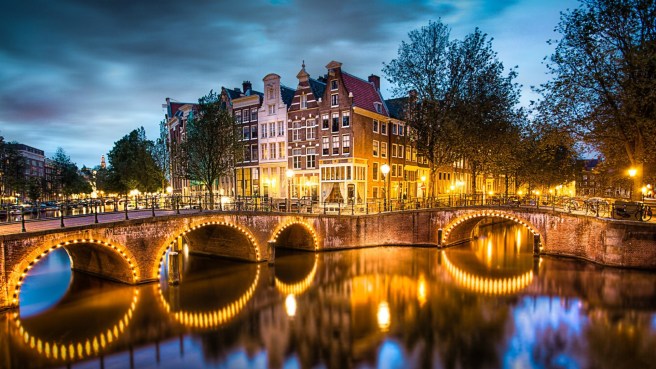
  • The giddy anticipation of mulling world travels is a reliable endorphin. I recently posted my dual urges to go to Budapest and Amsterdam — the former I’ve never been to, the latter I’ve visited in quick, couple-days spurts. Always looking ahead, with one eye on the calendar and one on the map, I get a jolt just thinking about strolling new streets, eating exotic cuisine, ogling art, architecture and people. It’s already April. Time to start some serious research. (Spoiler alert: I’m leaning toward Amsterdam.) 
427490.jpg
Amsterdam
  • I’m captivated by the film “Ex Libris: The New York Public Library” by that doyen of documentarians, that genius of fly-on-the-wall observation, Frederick Wiseman (“High School,” “La Danse”). Released last year and running a whopping three and a half hours, the movie is a leisurely, painstaking amble through the hallowed marble halls, offices, shelves and auditoriums of the NYC institution. Wiseman’s eminent pointillist eye and febrile curiosity fashion an immersive experience inside everything from folios to fundraising, e-books to behind-the-scenes bureaucracy, programs to performances, community outreach to the organization’s pumping inner organs. Almost defiantly, “Ex Libris” is culturally kaleidoscopic. 

event-featured-John-Fraser-1507862176

  • Another birthday gift whacking the sweet spot is a squat, artisanally stylish bottle of Monkey 47 Schwarzwald Dry Gin, a German, handcrafted, batch-distilled, 47-percent alcohol (94 proof) beverage that tastes like an Everlasting Gobstopper in liquid form, swirling and multi-chromatic — fragrant, aromatic, smooth, rich and tangy. My brother was scanning the gin shelves and three individuals, one who worked in the shop, voluntarily told him that Monkey 47 was the best gin they’ve had. Three random people. He was sold. Now we both are.

monkey-47-schwarzwald-dry-gin-1-1.jpg

One wedding and a birthday

So I let myself get a little worked up and twisted about yesterday’s big birthday. But it mostly flowed like any other day, except, and this is remarkable, I wore a dark blue Hugo Boss suit, purple striped tie and black and purple Cole Haan wingtips the whole day. It was the very first time I’ve worn a suit, unless you count the three times in my life I’ve donned tuxes (one prom, two weddings).

Worrying about one’s birthday is futile, frivolous, fun-free. Age truly is, as the maxim goes, just a number. I don’t like my new number one bit — it’s ugly and has fangs — but fretting over it is so much twaddle. Life blunders forth. Let us proceed.

Some boldly aver, “Bring it on!” but that’s a scary invitation. I’m not welcoming the disease and decrepitude waiting to pounce as time advances. Death I’m not uptight about. I could use a few extra years of uninterrupted slumber. But hospital beds, catheters, sippy cups, hospice — I’m having none of it. I have given notice. 

But life was lived on my birthday. As noted in a blog dated one day before the monumental occasion, my friend happened to slate his wedding for the same day, so my brother and I hit Manhattan, natty in suits and ties, for the connubial affair, which was intimate and lovely and all manner of florid, fortuitous festivity. 

Set at the tweedy, incomparably cool Library at the Public Theater in the East Village — book-lined shelves, leather sofas, dim lighting, no windows — it was resplendent. The open bar was hugely appreciated by all. (That’s what I call a birthday present.)

libraryatthepublictheaternewyork2.jpg
The Library at the Public Theater.

Following the afternoon nuptials, we walked long and far across the city, down Broadway and into the Saturday farmer’s market in Union Square (I bought the dog a pig’s ear), past the Flatiron Building, where selfie-takers swarmed and giggled, to the Todd Snyder shop, where my brother, an incorrigible clotheshorse, shopped for eons. 

IMG_1037.jpeg
The Flatiron.

As I reclined in a chair while he agonized over product and prices, an employee, kind of crazily, offered me a snifter of The Balvenie Scotch whisky — liquid gold. I accepted. When finished, he offered me another one. I accepted. I told him it was my birthday, to give his lavish generosity meaning. He shook my hand. His name is Carlos. He is heroic.

More walking and a subway ride took us to dinner at Tom Colicchio’s ritzy Temple Court in the Beekman Hotel in Lower Manhattan. Exquisite whiskey sours, divine tasting menu, ultra-classy service, including several congratulations on my birthday. Dessert arrived speared with a candle and the server assured me they would not be singing “Happy Birthday.”

Something clicked yesterday. What was it — the lovely wedding, the big city, the complimentary whisky, the sumptuous dinner, the mindfulness of the staff not singing that goddam tune that made me think: birthdays, they’re not so bad.

Retro movie review: ‘The Darjeeling Limited’

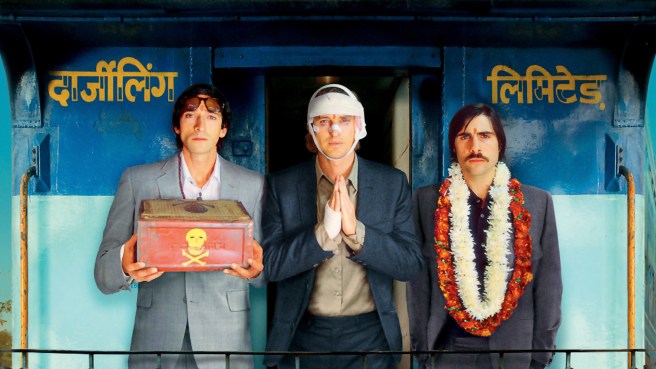
“The Darjeeling Limited,” from 2007, is minor Wes Anderson but, as always, colorful and interesting, frantic and funny. I bring it up because of Anderson’s new “Isle of Dogs.” Wildly stylized, a bit melancholy, “Darjeeling” holds up better than many think. My review upon its release:

From “Rushmore” to “The Darjeeling Limited,” Wes Anderson inserts us into lush and artificial places, heady imaginary worlds slathered in sizzling primary colors and soundtracked to infectious ’60s rock that courts a light-headed buzz. His ornate sets and surgical compositions are like dioramas made of gumdrops and lollipops. Be sure: They will cause toothaches.

Anderson is a showman — a show-off — with a dandy’s sensibility for design and décor, a little bit of Pedro Almódovar swished with Richard Lester, lovely but spasmodic. That aesthetic hit its mark in “Rushmore,” one of Anderson’s comic masterstrokes (the other is “Bottle Rocket”), but got out of hand in the cloying “Royal Tenenbaums” and the meandering “Life Aquatic with Steve Zissou,” cutesy confections that strained to delight the Anderson cult with rampant quirks.

Anderson’s a hipster nebbish, the self-conscious artist as a youngish man still locating a workable balance of personal voice and cinematic immortality.

the-darjeeling-limited-still.jpg

Perhaps chastened by the pallid response to “Life Aquatic,” Anderson pulls back in “Darjeeling” for something sweetly inviting. Co-written by Roman Coppola and one of the film’s stars, Jason Schwartzman — both of whom trace bloodlines to the Coppola dynasty — this yeasty picaresque about three troubled brothers on a bumbling train journey across India shows Anderson in fair control of his material. Excess gives way to highly stylized understatement, grounded by an unmistakable thrum of melancholy.

In fact, the affair is so mild that Anderson’s ideas about reconciliation and healing amid a dysfunctional family (abiding themes in all his movies) don’t quite jell. When the rural Indian dust settles, it’s not clear what the characters actually accomplished in their distinctly un-mythic quest.

Still, it’s a fun ride. Schwartzman, Owen Wilson and Adrien Brody make an amusing trio whose passive-aggressive deadpan is relieved by fits of brotherly scrapping. Yet we never get caught up in their professed spiritual journey or the small adventures into which they shamble.

Anderson tames the dirty, dizzying India of reality and other India-set films. He brightens it up with that free-flowing electric pallete and organizes the chaos to fit his fussy sensibilities. From all reports, he even gets the smell of the country wrong. (“I love the way this country smells,” Brody’s character says. “It’s kind of spicy.”)

Anderson has no interest in the heaving Indian miasma. He fails even to contrast our goofy heroes’ monied, white upper-middle classness with the local penury. Everything is beautiful: Their titular train is all luxury coaches, and when they enter a far-flung village, the light falls perfectly, the colors mesh and flowers abound.

That village sequence, by the way, centers around a sudden tragedy midway through the 90-minute film. It’s a thing of sadness, but Anderson mishandles its impact on the story. The incident not only shuts down and sobers up the boys, who have been clownish entertainers until now, it throws a pall over the rest of the show.

A blowzy charmer, Wilson mostly reprises his Dignan character from “Bottle Rocket,” playing the bossy, control-freak brother with an iron plan. He’s brought a travel assistant with a PC and printer to be cumbersomely schlepped around.

Eerie to some, par for the celebrity course to others, Wilson’s character sports a mummy’s worth of facial bandages through the film, thanks to a failed suicide attempt, which recalls the actor’s recent real-life suicide attempt.

All three brothers bear wounds. Schwartzman, who mysteriously goes barefoot the entire trip, looking like Paul McCartney on the “Abbey Road” album, is nursing a broken heart, and Brody’s stuck in a moribund marriage. The trip, ring-led by Wilson, is also a way to bring the brothers together after a year of silence following their father’s death.

Slight as it is, “The Darjeeling Limited” is of a piece in the Anderson oeuvre. Ferrying between poles of enchantment — happy levity to wistful sorrow — it tenderly limns shattered family dynamics, and does so with panache. Anderson’s visual tics are in full flower: the swift, information-packed pans; long horizontal tracking shots; lyrical slow-motion. (And, hey, there’s Bill Murray!)

Some will call this mellow picture minor Wes Anderson, which would be reductive. I call it growth.

Bitching about the birthday

The birthday blues are too obvious, an emotional cliche as lamentably predictable as Christmas cheer and Valentine’s self-pity.

Too bad. I’ve got those jangly, moaning blues, just a little bit, for tomorrow I smash head-on into one of those big, hairy birthdays, the kind with horns and tusks that makes you spin yet makes friends and family giggle. 

I’m getting older when I specifically asked the calendar to cease and desist from advancing. It’s disgusting. But I can do this. 

th.jpeg

Plans for the Big Day? Hilarious. A good friend scheduled his wedding for tomorrow, so I’ll be spending a chunk of my time celebrating someone else’s milestone. That should keep my mind off things. Pass the Champagne.

(Truth be told, I haven’t actually “celebrated” — party, gathering, friends — my birthday since I turned 13. The attention mortifies me.)

Spiffy (or is it scratchy and twitchy?) in suit and tie from the nuptials, I will then be taken to a suave dinner at Tom Colicchio’s swanky Temple Court in the Beekman Hotel in Lower Manhattan, courtesy of my swell brother, who is also attending the marital event. (Kudos, Jeff and Debbie!)

Do birthdays really change anything? Will I wake up tomorrow with a jungly, gray Moses beard? Will my insistent lower-back ache go into sudden overdrive? Will the pain in my left hand morph into full-blown grandpa arthritis? Will my ambivalent outlook on life, a fraught shade of charcoal-gray, turn black, black, black?

On all counts, I think not. Tomorrow, April 7, will be an overcast Saturday, breezy and easy, featuring a soiree that I don’t even have to throw — I’ll pretend it’s my birthday party — a day in New York, and a dinner sure to stagger. 

The calendar pages flip. It happened one year ago, no big deal. It happened the year before that, ditto. A dear friend said not to worry, I have scores more years to go. I’m not sure that’s the best news — I’m really not digging visions of me in my nineties.

I fear aging, not dying. One will beat the other; it’s a race to the finish. My birthday is just another lap.

Art exhibit’s visitors in a nude mood

The naked man looked at the clothed man, and then he looked at the naked people, and then back at the clothed man, all the time wearing a scrunched look that said, “What is this dude doing here?”

This dude (yours truly), fully dressed, was there to talk to naked people. He told the naked man this, and the naked man relaxed. But the clothed man did not relax, for he was one of only a few clothed people in an art gallery filled with naked men and women.

Twenty-one of the naked people were there in the literal, quivering flesh, and about as many were hanging on two long walls, the subjects of life-size photographs by artist George Krause.

m5x00046_9Recently at an urban art gallery, a bevy of nudists came to a nude art show. The nudists, an informal tribe of devoted clothes peel-offers, are always on the lookout for novel ways to gather, and what’s more fitting than naked people looking at naked people?
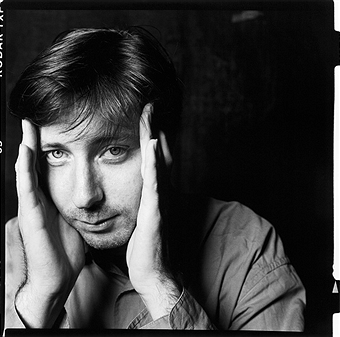
The gallery owner was happy to give the group a private viewing, and Krause, clothed but bald, came to talk about his work. Each human-size black-and-white portrait depicts an ordinary person, standing stark naked, facing the camera. His singular technique uses white light to create a smoky sfumato effect, bathing the figures in a ghostly, X-ray glow.

Naked people admired the photos’ indiscriminate honesty, and the boxy, concrete gallery echoed with the slappy patter of bare feet. Sipping cheap cabernet in plastic cups, nudists mixed casually in the shocking altogether, proud in their mammalian resplendence. They embodied all sizes and shapes, from pears to bears, though the age scale tipped to ear hair and back aches.

“Seeing the photos in the middle of a group of nudes reinforces how many different kinds of bodies there are,” said nudist Bill Morgan, whose body hair could pass for clothing in some cultures. “Running around with this group has done a lot for me in terms of accepting my own body.”

One thin woman was all bare flesh but for a yellow Livestrong bracelet, while a tall man with a round belly wore only silver-rimmed spectacles. A green, quarter-sized tattoo announced itself from a woman’s right dorsal cheek. Tan lines: oddly scarce.

The nudist group has roughly 60 members, about 40 of whom are men, says club president Steve Bosbach, diminutive and hairless as a fish. The lopsided male-to-female ratio was on full-frontal display at the private party. It was a man’s world.

There was chatter about “liberation,” “society” and the nudist “agenda,” yet a curious dearth about sexuality and the whole nakedy thing. One wondered how these people abstain from . . . looking.

“With some practice, it’s completely possible to maintain eye contact with a topless woman,” Morgan said. “You don’t stare, but you don’t avoid looking in a particular direction either.”

Morgan has a long gray ponytail and lives with his mother, who was surprised by his nuditude. She doesn’t see him naked, though her son likes to spend a few hours a day kicking back in the buff. Like his clubmates, Morgan does many things without attire, cut free from the bondage of cotton fibers. Perhaps it’s the leather seats, but one thing he has not done is drive naked.

“I’ve wanted to drive naked a few times after club get-togethers,” he said. “Putting the clothes back on is the hardest part.”

Human figures, so creepy, so astonishing

For many, Easter Sunday is a time to reflect on one very important body, the one that rose from the dead to make thunderous proclamations and upend the world forever.

For me, Easter Sunday, a few days ago, was a time to reflect on scores of bodies congregated in a Manhattan museum, a reflection that furnished its own transcendence, its own religious experience, if you will.

These bodies — from the gorgeous to the gruesome; the hyper-realistic to the freakily figurative — comprise the knockout exhibit “Like Life: Sculpture, Color, and the Body (1300-Now)” at The Met Breuer, through July 22.

willem-danielsz-van-tetrode-hercules-greer-lankton-rachel.jpg
The old and the new, juxtaposed.

“Like Life” nimbly and epically presents some 120 works spanning 700 years, from classical Greek to contemporary bad boy Jeff Koons, and oodles in between: Donatello, El Greco, Jean-Léon Gérôme, Rodin, Degas, Louise Bourgeois, Meret Oppenheim, Isa Genzken, Charles Ray, and so many more.

The show’s thrills (and chills) include an awesome array of wax effigies, reliquaries, mannequins and anatomical models — including graphic autopsy depictions — plus tiny-scale sculptures from the Renaissance and beyond. There is lots of nakedness.

My visit was a promenade amid faces and bodies, hands and limbs and heads, some bloody, some immaculate. Many of the life-size bodies, often made of wax, are so realistic I practically did double-takes. Once in a while I flinched and muttered, “Christ.

Juxtapositions with ancient and new figures are clever and provocative, almost none of them without wit and wonder. Throughout, spellbound, I contemplated mortality and deformity, the genius of art and the supremacy of the visionary. Gladly, I was just as often captivated as creeped-out. It’s a sweet and savory affair.

Below is part of the population crowding the best show I’ve seen since the Irving Penn photography exhibit at The Met last summer:

merlin_135783267_595a2783-5d78-4264-9a02-2e23f409c9e2-superjumbo.jpg
Detail from “The Whistlers” (2005), a sculpture by Tip Toland. Jarringly realistic, profound and whimsical. Just look at that face.
merlin_135783831_4340e86d-7749-4a67-a2ac-4c52da29427f-master1050.jpg
In “The Digger” (1857), is this skinless man shoveling his own grave? In the background, an especially grisly crucifixion from medieval Germany.
merlin_135854523_26608341-e02a-4dd8-b473-331280b85578-superJumbo.jpg
Faces from the ages: Center is the ethereal “Mask of Hanako, Type E” by Auguste Rodin (1911). At right is “Self,” a frozen-blood self-portrait by Marc Quinn (2006).
merlin_135784095_17f377b1-3c72-491b-9260-4f2699c76120-master675.jpg
“Housewife” (1969-1970) by Duane Hanson. Commentary that is both witty and withering, this snapshot of quotidian, housebound tedium is a diorama of depression.
koons.jpg
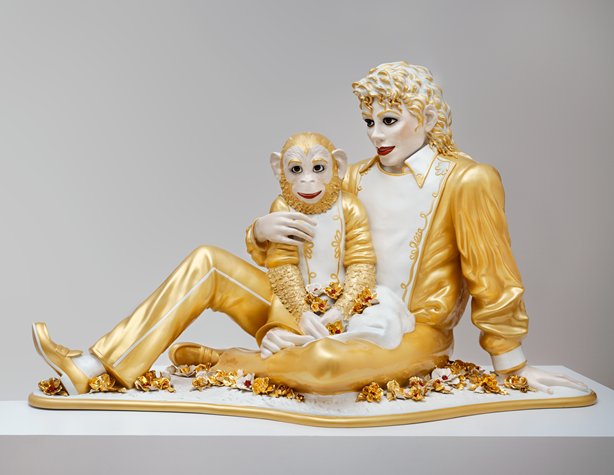
“Michael Jackson and Bubbles” by Jeff Koons. A porcelain monstrosity that’s actually pretty hilarious depending on your mood and/or critical perspective. (I think the consensus is that it’s hideous.)
merlin_135854517_800fbba9-338b-47a0-af48-2478006fb3f4-superJumbo.jpg
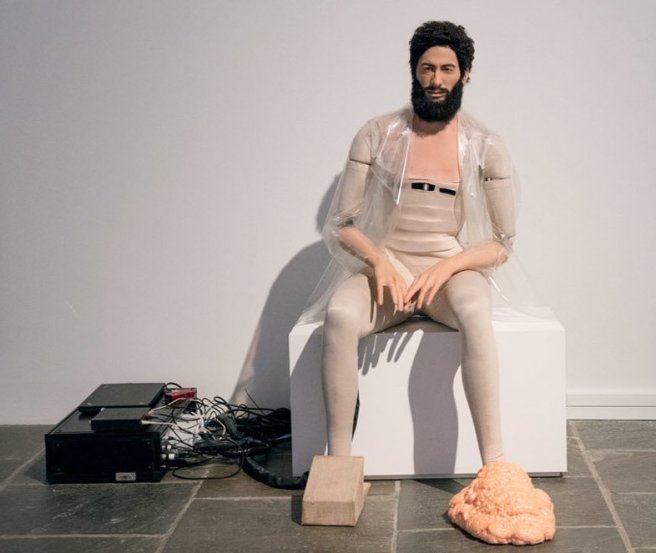
“To the Son of Man Who Ate the Scroll” (2016) by Goshka Macuga, a speaking, moving android that pontificates with chilling verisimilitude about life, death and global concerns for 38 minutes. Eerie and mouth-agape mesmerizing, he’s the spiky, intellectual counterpoint to Disney’s anodyne animatronics.
met-2.jpg
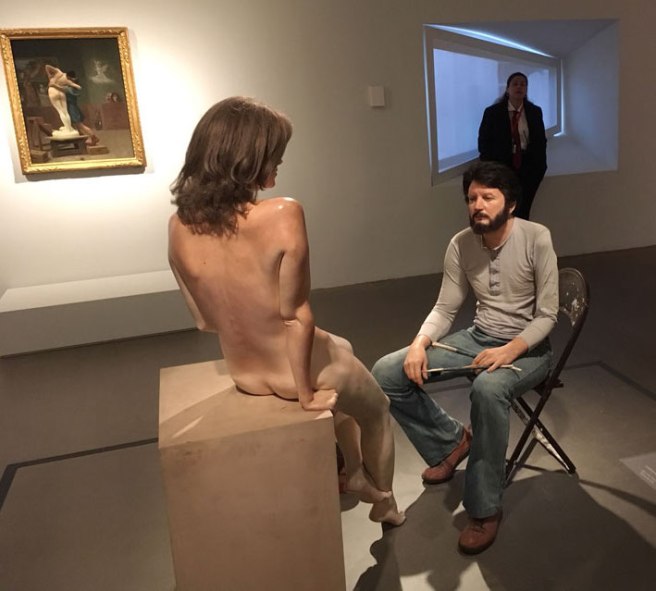
“Self-Portrait with Sculpture” by John De Andrea, 1980. These are not real people. The frontal view is firmly R-rated, the tableau slightly disturbing and thought-stirring and so true-to-life, it makes you start. (Can you name the extremely famous painting in the background, left? It’s a beautiful juxtaposition with the sculpture. Answer: “Pygmalion and Galatea.)
49932a3100000578-5432385-image-m-5_15195573594971.jpg
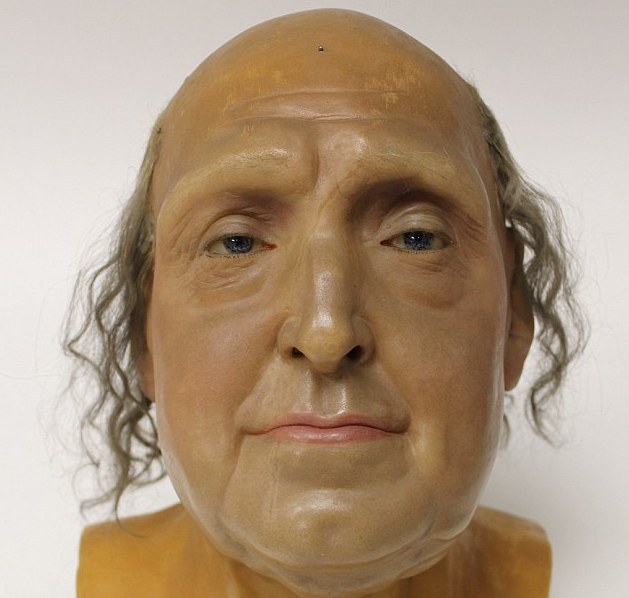
I don’t know who this is, or who made him. But he emanates a special brand of banal magnificence.

Spring’s baffling, irritating volatility

Easter Sunday’s unambiguous spurt of spring — vigorous sunshine, 60 degrees, itsy Technicolor blossoms dimpling New York’s Central Park — now has the Monday doldrums. Snow — we got more snow. Some six inches. It’s April 2. What are we, Michigan, Montana, the Alps? 

getty
This …

Spring seems uncertain if she wants to touch down and nestle in. She’s circling, weighing her options. She is fickle and flighty and flirty:

Here’s some sun and a teasing 50 degrees, cloudless and dry, she says. Now here’s a spritz of rain, 30 degrees, sky gun-metal-gray and cloud-clogged. And here, ha ha, are bluffs of sticky snow. Deal. I’ll be getting my nails done.  

Winter’s a bitch. Spring may be bitchier, for now. The season’s schizophrenic whiplash hurtles like a clattering, climatic rollercoaster. And for many people, it’s no fun at all. 

Climate change is irrefutably jumbling normal seasonal patterns. The erratic weather impacts swaths of natural phenomena, from plant blossoms arriving at the wrong time to dangerous tidal levels to the destruction of lucrative crops.

th-1.jpeg
… or this? Spring’s maddening indecision.

It is 35 degrees as I write this.

It will be 65 degrees, with rain, on Wednesday.

Amidst all this I’m supposed to be ruffled. I am not. I don’t like that the 70s and 80s are impending. I don’t like that it gets dark at 8 p.m., and soon 9 p.m. I embrace the 40s and 50s. I relish an early dusk. (At times in the Arctic Circle, they don’t see the sun for weeks. Glorious.)

Yesterday’s taste of true spring, the one we’ll soon be stuck with, was like a warning shot telling me I’m in for months of bright, hot discomfort. For everyone else it was a harbinger of heaven, petal-strewn paradise, a fantasia for flip-flops. They can have it. Or at least when spring decides to figure herself out, cut the confusion, and finally land.