These are a few quotes about the arts that I’ve carried around for a while. I believe they’re intellectual gold:
On art:
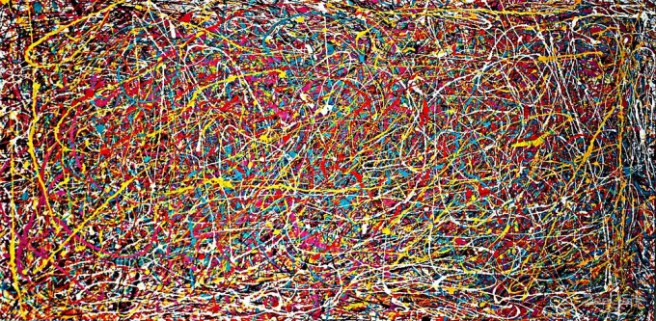
“Art, love and God — they’re dumb words, and probably the dumbest is art. I don’t know what it is, art. But I believe in it, so far.” — Damien Hirst
*
“The last hope is that art may transmute the disappointments of life into something more radiant and stable; the lasting bitterness is that although art may guide ‘what pangs there be/Into a bearable choreography,’ it does not repair the original life-rift.” — Helen Vendler, with excerpts from poet James Merrill
*
On theater and art:
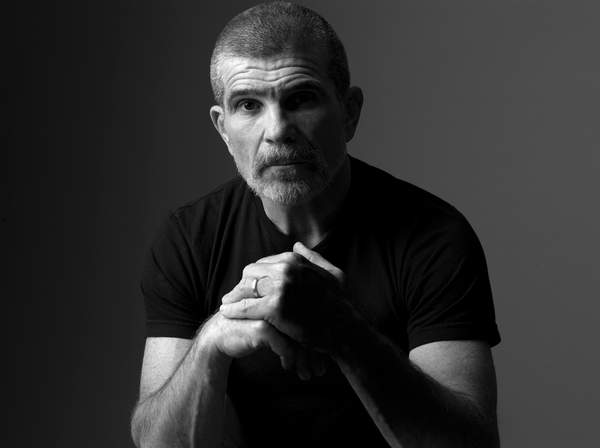
“The new generation of theatergoers are suburban know-nothings dumbed down to the point of expecting art to be some kind of inclusive, fraudulently life-affirming group-grope, instead of what it is: arrogant, autocratic, and potentially monstrous!” — David Hirson, “Wrong Mountain”
*
On acting:
“If you intend to follow the truth you feel in yourself — to follow your common sense, and force your will to serve you in the quest for discipline and simplicity — you will subject yourself to profound despair, loneliness, and constant self-doubt. And if you persevere, the Theatre, which you are learning to serve, will grace you, now and again, with the greatest exhilaration it is possible to know.” — David Mamet
*
On writing:
“One must be drenched in words, literally soaked in them, to have the right ones form themselves into the proper patterns at the right moment.”— Hart Crane
“What writers hear when they are trying to write is something more like singing than like speaking. Inside your head, you’re yakking away to yourself all the time. Getting that voice down on paper is a depressing experience. When you write, you’re trying to transpose what you’re thinking into something that is less like an annoying drone and more like a piece of music.” — Louis Menand
*
“More than ever, critical authority comes from the power of the critic’s prose, the force and clarity of her language; it is in the art of writing itself that information and knowledge are carried, in the sentences themselves that literature is preserved. The secret function of the critic today is to write beautifully, and in so doing protect beautiful writing.” — Katie Roiphe
Today’s New York Timeslooks into the new movement called “antifa,” a “controversial force on the left.”
Antifa, the paper explains, is “a contraction of the word ‘anti-fascist'” and “describes the loose affiliation of radical activists who have … openly scuffled with white supremacists, right-wing extremists and, in some cases, ordinary supporters of President Trump.”
“You need violence in order to protect nonviolence. … It’s full-on war, basically,” antifa activist Emily Rose Nauert told the Times.
In a life imitates art moment, this brings to mind a startlingly prescient scene from Woody Allen’s masterpiece “Manhattan,” from 1979:
Issac (played by Allen): Has anybody read that Nazis are going to march in New Jersey, you know? I read this in the newspaper. We should go down there, get some guys together, you know, get some bricks and baseball bats and really explain things to them.
Man: There was this devastating satirical piece on that on the op-ed page of the Times. It is devastating.
Isaac: Well, well, a satirical piece in the Times is one thing, but bricks and baseball bats really gets right to the point.
Woman: Oh, but really biting satire is always better than physical force.
Isaac: No, physical force is always better with Nazis. Because it’s hard to satirize a guy with shiny boots.
When I was eight, sleeping at my grandparents’ house, I had a sheet-crumpling nightmare. A hairy woman made me cry.
Hearing my distress, my grandpa stumbled into the darkened bedroom. I pointed at the closet door. There. She’s in there, I whimpered. Grandpa had his hands full. Christ, I’m sure he thought. Right, the ugliest woman in the world is in that musty little closet. I was inconsolable, until sleep enveloped me. Miffed, grandpa went back to bed. My persistent visions of sideshow freaks had receded. For now.
Lionel the Lion-Faced Man.
Ever since I received on my eighth birthday the book “Very Special People” — a gift I expressly asked for — I think about circus freaks and human anomalies with worrisome frequency. I’m mildly obsessed with Joseph Merrick, aka The Elephant Man, and I still wonder about Jo-Jo the Dog-Faced Boy and Lionel the Lion-Faced Man and how much they saved on razors.
But I also reflect on Julia Pastrana, a 4½-foot-tall Mexican woman who was carpeted in black, bristly hair, a victim of hypertrichosis terminalis, and cursed with an abnormally huge jaw, lips and ears. She also sang like an angel. A sideshow super-celebrity in the 1800s, her stage names varied from the Ape Woman to the Nondescript. She was mostly billed as “The Ugliest Woman in the World.”
Her life was a disaster.
Julia Pastrana
She married her conniving manager. They had a child. The baby was covered in thick black fur. Julia died of a broken heart days later.
The husband-manager saw his meal ticket full. So he made a business decision. He had both Julia and the baby mummified and exhibited their bodies around the world in one of the most grotesque and morally reprehensible exploitations in the annals of showbiz. Eventually he died. More than a few people were pleased.
Julia’s story doesn’t end there. Her body was eventually stored at the University of Oslo, Norway, before, after protracted bureaucratic folderol, she was finally laid to rest in Mexico in 2013 — 153 years after her death.
The freak shows of yore groan with heartache, abuse, loneliness, rank exploitation and the flagrant theft of human dignity. Joseph Merrick’s years in Victorian sideshows as the “terrible” Elephant Man are well-documented, filled with physical and verbal abuse and life-threatening illness, not to mention the wholesale degradation of body and spirit.
Chang & Eng, apparently good in bed.
Yet many of these “freaks of nature” were extravagantly compensated, sometimes making $1,000 a week or more — a royal wage for the late 19th and early 20th centuries. They married, had children. Chang and Eng, known as the original Siamese twins, joined at the sternum, had 21 children between them and lived in middle-class prosperity. (They even, reportedly, owned slaves.)
America’s most famous bearded lady, Annie Jones, enjoyed a superstar’s life in the late 1800s, hirsute and happy on the high life — a furry Myrna Loy. She worked for showman P.T. Barnum as a top-billed circus attraction, and had the good sense to lobby to have the term “freaks” banished from the shows. She married twice, divorcing her first hubbie to marry her childhood sweetheart. Jones blossomed early: She had a mustache and sideburns at age five, putting many a latter-day hipster to tearful shame. So famous was she that photographer Matthew Brady, the Richard Avedon of his time, had her pose for him.
Annie Jones, living high.
Tennessee-born Myrtle Corbin was tagged “The Four-Legged Woman,” the reason manifest in the photo below. “However that moniker was slightly misleading,” according to bodacious site The Human Marvels. “While at a glance one could plainly see four legs dangling beyond the hem of her dress, only one pair actually belonged to her. The other set belonged to her dipygus twin sister.
“The tiny body of her twin was only fully developed from the waist down and even then it was malformed — tiny and possessing only three toes on each foot. Myrtle was able to control the limbs of her sister but was unable to use them for walking.”
(I just totally shuddered.)
Myrtle appeared under the banners of P.T. Barnum, Ringling Brothers and at Coney Island, hauling in $450 a week in the late 19th century. She married at 19, and “it was then that other aspects of her bizarre anatomy became evident,” says Human Marvels.
Myrtle Corbin
“It seems that her twin sister was also fully sexually formed — thus Myrtle possessed two vaginas. She had four daughters and a son and it has been rumored that three of her children were born from one set of organs and two from the other.”
(Long shudder.)
So maybe I shudder and shake my head sometimes when I reflect on my very special people. Their unimaginable lives, their fantastic plights, can overwhelm a sensitive soul. Childish nightmares aren’t implausible, haunted dreams quite likely.
But I don’t have those nightmares anymore. I no longer believe some long-dead sideshow oddity is lurking in my closet. They lurk instead in the mind, crowding it with wonder, curiosity, not a little pity, and a soupçon of sadness. Nightmares or not, I can’t shake them, and I don’t think I want to.
The headline above says “a reclamation,” by which I mean a reclaiming of bits of culture that have been acknowledged or acclaimed yet buried beneath indifference, ignorance or more accessible cultural detritus.
unsung |ˌənˈsəNG|not celebrated or praised; unacknowledged.
From food to film, I’m highlighting the forgotten, the forsaken and the downright dissed, retaining due respect to exceptional cultural finds.
These are the unsung. Some of them are the merely undersung — things that either had their day in the sun and were left for dead, or never got the plaudits they deserved.
Any culture buff worth his “House of Thrones” or “Game of Cards” knows where the good stuff is. So accept this as Quality Unsung Stuff 101, a nudge, some tips, a torch alighting on the unjustly obscure.
Film
Quick: Have you seen “Sweet Smell of Success” (1957), “At Close Range” (1986), “Naked” (1993), “The Dead Zone” (1983) or “Tangerine” (2015) ? If not, then you have some serious, very pleasurable, movie viewing in store.
But I’m not here to discuss those under-sung films, which are largely known and well-regarded. From a sea of ignored or lost titles, I’ve tapped three under-appreciated, fairly unseen movies, the minimalist masterworks “Locke” (2014), “Chop Shop” (2007) and “Wendy and Lucy” (2009).
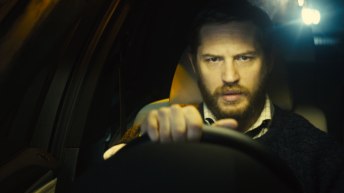
* “Locke” — A desperate everyman (the brilliantly intense Tom Hardy) is in the driver’s seat, literally, for the movie’s entire 85 minutes. Yes, he’s driving the whole time. The camera never leaves him as he negotiates by smart phone the personal tumults on the winding highway of life. It sounds grueling, squirmily static. It’s not. It’s gripping, utterly.
* “Chop Shop” — A small-scale drama about an orphan boy in Queens who works for an auto chop shop and how he deals with suspicions that his teenage sister is dabbling in prostitution. The writer-director, minimalist maestro Ramin Bahrani, is, like the neo-realists before him, a steadfast humanist, and this fascinating slice of grubby life brims with heart — and heartache.
* “Wendy and Lucy” — A girl and her dog. There you have it in Kelly Reichardt’s grim but soulful tale of a homeless woman (Michelle Williams) and her faithful hound Lucy as they get by as best they can. Lucy gets lost. Drama unfurls. It’s sad, funny, and inexorably stirring. The dog, a natural, is something special. (See my full review here.)
***
Pop Music
Alt-rock’s embarrassment of riches in the ‘90s — Nirvana, Smashing Pumpkins, Breeders, Soundgarden, Radiohead, PJ Harvey, Beck — birthed its share of one-hit/no-hit wonders, from Spin Doctors to Blind Melon.
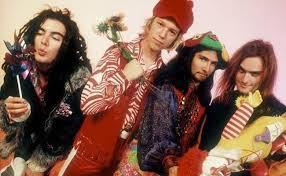
Somewhere in between it all was Jellyfish, a Bay Area power-pop band that tossed the harmonic velcro hooks of the Beatles, Beach Boys, Queen, ELO, Supertramp, Cheap Trick and even, gulp, the Partridge Family into a bottle, shook it up and let it fizz all over the place. It was poppy, heady psychedelic bliss, both dreamy and driving. It sounded like Skittles.
Jellyfish
On only two albums, “Bellybutton” and “Spilt Milk,” the woolly quartet confected soaring, careening, crashing four-part harmonies over surgical melodies and thwumping beats. The songs were so catchy and joyous that each one sounded like a hit from a bygone time. Band members looked like a Haight Street circus and their shows, like their music, were carnivalesque.
“Is Jellyfish the great lost band of the 90s?” a music site recently wondered. Decidedly, yes. The band was soon elbowed out by the grunge assault, eclipsed by angst, drugs and scratchy flannel — and some of the best music of the past 25 years.
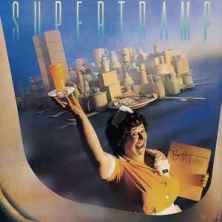
An obvious Jellyfish forebear, Supertramp is hardly an unsung pop group. It sold millions of its 1979 album “Breakfast in America,” a masterpiece of jangly, sophisticated, hyper-harmonic rock that spawned four chart-topping hits like “The Logical Song” and “Take the Long Way Home.”
Supertramp’s 1979 smash “Breakfast in America,” which seems all but forgotten.
But where’s that record now? FM radio and the general public seem to have forgotten it, paying excessive deference to the Billy Joels and Led Zeppelins. If not unsung, “Breakfast in America” is an example of the under-sung, a victim of cultural amnesia. Stream it sometime. The pop perfection you’ll hear is kind of overwhelming.
***
Food
For food tourists and inveterate foodies, it’s by now hackneyed to actively consult career food adventurer Anthony Bourdain on where to go and what to eat when you get there. But that’s just what I did before a recent London trip. Watching one of his shows in which he prowls London for the tastiest, highest quality dishes, I took notes and underlined what he called his favorite plate — his “death row” meal — the Roast Bone Marrow and Parsley Salad at St. John in the East End.
My bone marrow feast, London.
Though you can find it on many fine-dining menus — it was rather trendy a few years ago — bone marrow remains an unsung specialty that repels the squeamish and excites daredevil palates. At St. John the bone segments were hot, the oily, meaty marrow even hotter. There’s a special way to eat marrow, and the server carefully tells you how. With a thin scooper, you scrape out the marrow and, like brown-pink butter, spread it on crusty bread, top with chunky salt granules and parsley sprigs. Excavating the marrow isn’t always easy. Eating the delicious protein is.
Japanese ramen, that soupy, slurpy noodle bowl, is a longtime favorite, but lately I’ve been almost exclusively forgoing the broth, opting for liquid-free ramen called mazeman, which still, despite growing popularity, hovers in the sphere of the unsung yummy. I rarely see people ordering it at my go-to ramen spot, safely sticking to the traditional hot soup.
Without broth, ramen is like a bowl of zesty, hearty pasta, thick, seasoned noodles topped by a medley of meats, veggies and a shiny soft-boiled egg. You mix it all up and an umami tsunami emerges, dangling between chopsticks.
The dish is lionized in season two of the fine Netflix comedy “Master of None,” when Dev (Aziz Ansari) has it for the first time. After his second bite, he exclaims, “You know what? Fuck broth!” I must concur.
***
Books
“Stoner” is a stunner. John Williams’ 1965 novel, tracing the wearied footsteps of professor William Stoner, was reissued in 2006, and, despite a surge of attention, remains, alas, relegated below the unsung heading.
A shame, because the writing is surpassingly exquisite, the characters and place crackling with verisimilitude, the emotional dividends reverberant. Though Stoner is quite the sad sack, locked in an unsatisfying job, fissured marriage and the shackles of a deep existential malaise, the book is too splendid to be depressing.
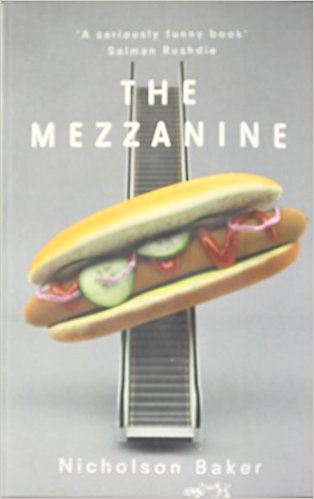
Also unsung: Nicholson Baker’s ridiculously cerebral satire of the everyday “The Mezzanine” — something of a cult item — and Richard Yates’ devastating marital drama “Revolutionary Road,” which, despite being a Leonardo DiCaprio film, seems woefully overlooked as literature.
And, as I’ve mentioned a few times here, seek out Eve Babitz, especially her zesty ’70s novels, freshly reissued, “Eve’s Hollywood” and “Sex and Rage.”
***
Cities
It seems only elite travel scribes and savvy globe-trekkers talk much about the resplendence of Istanbul, one of my very top cities, a paradisiacal world of ancient mosques and prayer-swirling minarets, exotic eats, riotous bazaars, deep-dyed tradition, and some of the kindest people I’ve ever met.
My Istanbul, 2008.
Straddling the best of Europe and Asia, Istanbul’s distinctly Middle Eastern tang and cobblestoney Old Europe patina is singular. It has seas and waterways and tall hills cluttered with colorful buildings, both old and breathtakingly modern. The whole city braids the new and the historic, and the result is the exhilarating essence of truly transporting travel.
If you can blot out the hypothetical perils and hypocritical politics, Jerusalem is a delirious fount of history and culture. Nudge aside the vexing fanaticism infesting the Old City — actually, spectacles of devotion, like a Christian pilgrim hauling a giant cross down the Via Dolorosa, are pretty enthralling — and suddenly you’re in a Disneyland of the devoted.
The Western Wall, Temple Mount, Mount of Olives, East Jerusalem — it’s all utmost fascination, even for this unbudging agnostic. Short bus rides away are Masada, the Dead Sea and Bethlehem. The volume of history, religion and culture is gobsmacking. I’m going back.
For unhinged nightlife, try suave, seaside Beirut, where taxis cram narrow, bar-riddled streets and well-attired revelers roar and carouse. During the seven nights I was there, I hit both bustling, elbow-jostling bars and cozy cafes. The partiers were friendly, the drinks strong and the troubled city’s old sobriquet, “Paris of the Middle East,” seemed fitting again.
***
TV
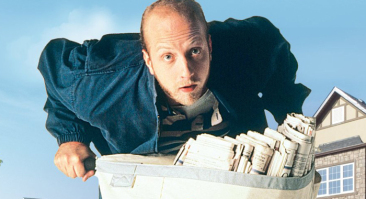
Many of you will think I’m nuts for this one, but I really do believe Chris Elliot’s wacko ’90s sitcom “Get a Life” was underrated, unloved, misunderstood and, of course, completely unsung. I also believe it was a giddy Dadaist exhibition of minor genius. All right — full-on genius.
Elliot — balding, tubby, irretrievably nerdy and awkward (and weird as hell) — played Chris Peterson, a 30-year-old paperboy who lived above his parents’ house. He had a best friend, went on the occasional, entirely improbable date, took his first driver’s test, built a submarine in his bathtub and nurtured a mordant enmity with his best friend’s wife founded on hilarious fusillades of sarcasm.
The show, which didn’t last long on Fox (surprise!), operated on an alien wavelength that either annoyed or enraged viewers who didn’t get it. There was a pinch of the Marx Brothers’ anarchic DNA in the show’s ambient absurdism. But mostly it was Elliot’s screwily non-sequitur sense of humor that shaped “Get a Life.” Charlie Kaufman (“Being John Malkovich,” etc.) was a contributing writer on the program, if that helps explain things.
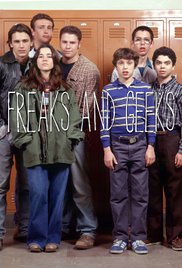
This one’s a no-brainer: “Freaks and Geeks” had Judd Apatow producing and starred Seth Rogen, James Franco, Jason Segel, Linda Cardellini and Martin Starr. The whip-smart dramedy about outlier high school cliques, the stoners and the nerds, captured school days more incisively, humorously and humanly than any work of art since “Dazed and Confused.”
And because it was so good, it was naturally cancelled after 12 episodes, in 2000, only to mushroom into a cherished cult darling that reliably makes magazines’ “best TV shows ever” lists. Unsung? This one’s pretty sung.
On a recent hot Monday, I bought a big bottle of Dewar’s White Label Scotch. The home supply was running low. It was dire.
I tapped the Lyft app for a ride and soon enough the usual dark, Japanese-made sedan pulled up. The driver was a late-middle-aged guy, tan with a ball cap and a festive tropical shirt from the Jimmy Buffett line. I climbed in back and set the heavy bottle on the floor. It made a gurgly thunk.
We drove in becalmed silence.
As I opened the door to get out, the driver turned and said, “What do you have there?” I hoisted the bottle so he could see the label. He frowned, then he took the bottle and read the label more closely as if he couldn’t believe his eyes.
“Ack. Dewar’s. Need the good stuff. Need Glenlivet.”
“You’re right, that is the good stuff. I save that for special occasions.”
“Special occasions? I only drink Glenlivet,” he grumbled. “Stopped drinking Dewar’s years ago.”
“Or there’s Laphroaig,” I said, trying to sound whisky-literate, refined, like I clearly knew Dewar’s was rotgut.
“This isn’t even Scotch,” he said, grimacing. “It’s blended, not single malt.”
I told him I knew that it was blended and hinted that with this 1.75 liter bottle, I was getting more bang for my buck. That didn’t go over well with the purist. He scowled.
I wanted to read him the encouraging Dewar’s description: “Up to 40 of the finest malt and grain whiskies are blended together in perfect harmony … Notes of Scottish heather and honey linger on the finish, with the faintest touch of smoke.”
Honey! Smoke! Harmony!
But surely it would sound to him like a paper-sack-sipper’s doggerel. This was outstanding. My Lyft driver was a whisky snob. I suddenly wanted to engage him in dialectics about beer — does he wrinkle his nose at IPAs as I do? — cocktails — would he ever drink one with cucumbers floating in it? — and wine — is vino in a box tantamount to ramen in a styrofoam cup?
I wondered about his life — what kind of music he listened to, if he bet on the horses, does he watch “America’s Got Talent.” Lyft and Uber drivers are fascinating. I talk to most of them, a lot about where they come from. I always tell Jamaican drivers that I visited Jamaica twice as a teenager. A lively gabfest, full of lush places and vivid anecdotes, invariably follows.
The ride sharing phenomenon is patently different from the standard taxi pickup. Lyft and Uber drivers pilot their own personal vehicles, so you never know what you’re going to get. Mostly you get mid-range four-doors — Toyotas, Hondas, Kias, Nissans, the occasional American model — and minivans with maw-like sliding doors. Only once did I get a truck, this towering Chevy beast. The driver told me that all his fares remark upon its hulking exoticism.
Because there are no physical taxi-like barriers between driver and passenger, the situation is literally open, which makes it socially conducive. We talk. We pry. We joke and laugh. We gripe about the weather and bad drivers. (It’s no “Taxicab Confessions.”) I always inquire about whatever keychain, tassel, necklace or other tchotchke is swinging from the rearview mirror. Stories abound. A sliver of a life resides in that little dangling dreamcatcher.
I try to compliment the driver’s choice of vehicle, especially if it’s extra nice or extra clean. And, with queer frequency, I tell them how pleasant their car smells, because, boy, they are besotted with nose-tickling air fresheners.
It’s a human thing, and the encounters, spanning many cities, are kaleidoscopic. The garrulous, too-much-information pot dealer; the beaming student who has by chance picked me up a few times and now calls me Mr. Chris; the yoga-psychic who insisted I write down my number so she could get my business; the Paris drivers who talked jazz and Trump and practiced their English; and the countless immigrants — so many Haitians! — from Boston to London, whose stories of their former homes and their new home are wondrous and heartening.
Expansive chatting was not to be on this ride. My Lyft driver was a taciturn man. Strictly Scotch. Strictly my Scotch.
As I left I took my bottle and I thanked him with sincerity for the lift. (I went on to award him a five-star rating.) Kindly, he thanked me back.
“Enjoy your drink,” he said. “You’re going to get a hangover.”
The book I’m having the best time with right now, the one that swings with a driving lyric beat, glitter and spunk, is Eve Babitz’s “Sex and Rage,” a midsize book with a kingsize subtitle: “Advice to Young Ladies Eager for a Good Time.” (Why are subtitles so long yet explicate so little?)
Published in 1979, this inebriating, semi-autobiographical novel of L.A. sun and New York fun, of boozing and book publishing, was reissued last month after an overdue Babitz revival was set loose by Dwight Garner’s rave review in The New York Times of her ebullient memoiristic novel “Eve’s Hollywood”.
Babitz, so young, jazzes her already pungent prose with piquant similes and pinging metaphors, snarky observations and laughing surprises that rush you along, flowing and splashing. She’s an effortless, evocative dazzler, both tragically hip and self-deprecatingly down to earth.
Currently in the thick of “Sex and Rage,” I’ve plucked a few chewable excerpts that reveal a stylist’s stylist:
*
“In the hurricane, the waves were fifteen feet high and roared like lions and volcanoes.”
*
“Gilbert’s apartment was furnished by his landlord in cocoa-brown threadbare fifties’ Modern with a cocoa-brown shag rug and stucco walls, which had been swirled into a pattern so life would be more interesting.”
*
“He smelled like a birthday party for small children, like vanilla, crêpe paper, soap, starch, and warm steam and cigarettes. Anyone would have liked being hugged by him.”
*
“She had heard that an artist was ‘any white person over twenty-five without health insurance.'”
*
“His voice was icy but cordial, a combination she had never remembered hearing. It was sort of like Montgomery Clift trying to be mean.”
*
“He was built like a lizard or a saluki. He was narrow and ancient-looking; his skin looked like papyrus, five thousand years old but not wrinkled, just from another age — from an age before they knew about chocolate or Dante or Charlie Chaplin.”
*
“This wave would grow larger and larger, sucking in its cheeks, and, unable to contain itself, finally it would break, thundering with a passion so ruthless that nothing in its way prevailed. To surf such a stampede you had to be alive with balance, for the speed welled up beneath your feet, blooming faster and faster, as the green glass smashed into foam, throwing you into its tangoed embrace. If you lasted and kept on your feet, the wave unrolled until finally it exhausted itself, spent upon the wet shore, softly uncurled like a baby’s smile.”
*
“She felt as though she’d been in front of a firing squad that had changed its mind.”
*
“Max’s laugh was like a dragnet; it picked up every living laugh within the vicinity and shined a light on it, intensified it, pitched it higher. It was a dare — he dared you not to laugh with him. He dared you to despair. He dared you to insist that there was no dawn, that all there was was darkness, that there was no silver lining … He dared you to believe you were going to die — when you at that moment knew, just as he did, that you were immortal, you were among the gods.”
I met author Nicholson Baker at a reading of his collection “The Size of Thoughts: Essays and Other Lumber” some time ago on Haight Street in San Francisco. For me the reading was a sustained 60-minute symphony of emotional unease, toggling from pity, to giddiness, to gleeful recognition, to awe, to depression, to tiny elation, to a momentary lapse into eye-watering hero worship. After the event, as he signed a stack of his books and a framed picture of him that I brought, I told him I thought his work was “astonishing.” I don’t regret it, because I still believe it.
We landed front row seats in the children’s books section, rubbing elbows with Curious George and the kid with the purple crayon. In my lap were Baker’s new book, as well as the novels “Room Temperature,”“Vox,”“The Fermata” and his 1988 debut “The Mezzanine,” which remains my dearest Baker book, an uproarious, undisputed marvel of pointillistic insights into life at its most mundane, consumeristic and miniaturistically magnificent. Aglow with prosy pyrotechnics, it’s the one book I tell everybody to read.
(He’s published at least nine books of fiction and non-fiction since then, some of them, including the quietly hilarious novel “The Anthologist,” rather wonderful.)
Baker entered the store, very tall and visibly anxious, and slinked into the back room. Jonathan Pryce’s teetering, disheveled, hand-wringing wreck in the movie “Glengarry Glen Ross” came to mind, and I felt sorry for the man, believing he was perhaps prodded with a long rake by Random House into doing such public readings.
When he first appeared at the podium, his face rapidly changed expressions, almost all of them on his broad red forehead. His entire face was an agitated, chafed pink-magenta, due to psoriasis, the skin affliction he shared with his late literary lodestar John Updike. (See Baker’s marvelous “U and I,” a profound and comical meditation about his tormenting Updike obsession.)
This tall, frail man filled me with pity; my favorite author, my linguistic idol, quivering up there and my expectant probing eyes contributing to his discomfort. But then he opened the book, complimenting it’s nice “minty green” cover, and began to read. With a sudden surge of surety, he read the title essay and told the gathered crowd that he wrote it in 1982, at age 25. (Twenty-five! Envy gnawed me and my heart sank.) He said he decided on non-fiction essays because, also at 25, he had written a couple of short stories that ran in The New Yorker (25!), and after the third one he ran out of ideas.
As a writer without ideas, you become an editor, Baker went on. He applied at TheAtlantic Monthly and told the fiction editor he wanted to see more stories replete with metaphorical language, dense, tangled forests of word vegetation, the kind of stuff he writes.
The Atlantic editor asked if Baker knew that writers are supposed to write every day. Baker’s reply: “N-no.” Now, he said, he writes daily, mostly “journal things.” He carries an 8½-by-11 sheet of paper folded to the size of a Camel box on which to jot thoughts, descriptions and whatever springs to his febrile mind.
Baker writes about 1,000 pages a year, and most of it is awful. “What is worth writing about” he said is the toughest thing about writing. With a facetious twinkle, he said “The Mezzanine” is the only novel in history with four pages of continuous footnotes. Why footnotes, which appear in many of his books? Because his sentences become too attenuated, stretch to the breaking point, with too much space between noun and verb.
Writers, he said, stop writing each day when the writing starts getting really bad. So the next day you have to face the last shit you wrote. When it’s that time, he plays Suzanne Vega extremely loud to drown out the re-writing of the leftover shit. When he’s finished, he returns to silence and begins fresh writing.
Book readings are like rarefied mini-salons, enriching and, if you’re lucky, enlightening. You get to meet your heroes, interrogate them, get a glimpse inside their minds, see what they look like beyond their blow-dried jacket photos. I’ve attended swell readings by Lorrie Moore, Michael Chabon, Don DeLillo, Jonathan Franzen and, as a sweaty-palmed teen, Allen Ginsberg at San Francisco’s fabled City Lights Bookstore.
But my favorite reading is still the one by the wry, shy Baker. He was the funniest (DeLillo was so serious), the warmest (Moore was downright frosty), the most self-effacing about himself and his art (Franzen’s, well, Franzen) and the most self-conscious (Chabon, the cheery nice fellow). He was as good as Ginsberg, who was a gigantic spirit, radiating a Buddha’s benevolence and inclined to chat you up when he signed your copy of, in my case, “Howl.”
Of course he was hugely different than Ginsberg, too. Baker was the introverted version of Ginsberg’s enveloping holy hippie. But he also chatted amiably with me when he signed all my books. He thanked me for reviewing “The Fermata” in the newspaper I worked at. And he thanked my brother for asking a question during the Q&A session. And then he said something I thought was immeasurably kind. Looking at me modestly, even diffidently, he said, “Good luck with your writing.”
I love animals, but more and more I realize that they just make me sad.
I saw a guide dog at the grocery store the other day, one of those creatures that plunges me into an inky funk on the spot. Sorrow all around — for the poor slave dog and, of course, for her disabled charge. (The world is ambient with woe, and sometimes I buckle.)
As guide dogs always do, this sweet baby had sad, downcast eyes. She was under-weight and scrawny, dirty and matted. Worse, she had a plumb-size tumor on a back leg and her spine spiked out like a mountain range.
The guide dog’s plight.
I looked, sighed, and moved on to the saddest aisle I could find. (Not the half-hearted car accessories, and not the greeting cards, not this time.) My mood curdled by animal grief, I became philosophical, trying to deflect bad thoughts, such as the reality that millions of animals are far worse off around the world (I’ve seen, and petted, lots of them).
Stray pup I befriended in Mumbai.
Then I saw the pair at the checkout and the gloom rushed back. The dog stared at the ground, sniffed a little, then her visually impaired owner, an overweight man in baggy clothing, let go of the leather handle strapped to the dog and it plunked down hard on her bony spine.
Enough. I moved on.
On my way out, I came upon the two standing at the exit. I decided to stop and meet the dog. I stroked her, asked her name and age. Her name is Romy, short for Romance, the nice guy, Peter, told me. She is 10. And she’s thin looking because of her age — I had a similar lab as a pet, and she too thinned out markedly in her dotage — and because she’s on a diet. She used to be fat and took a spill trying to clamber onto the bus because of her tubbiness. The tumor is benign.
I asked if he played with her and if she was happy, and he assured me heartily that he did and she was. He’s had Romy for eight years, and he pulled out a photo of him and her at her guide-dog graduation. She’s 2 in the picture, beaming proudly.
I said goodbye to Peter and Romy, feeling a lot better. I still choked up a little as I walked away.
We love our movie stars, and I love my actresses, especially those indelible bright lights, those sirens, sex pots and sophisticates, from Hollywood’s Golden Age, roughly the 1920s through the early ’60s.
Audiences cultivate complex relationships with the actors on screen. They crush, lust, idolize, envy and hero-worship. They take these visions personally. Sometimes they want to take them home.
With today’s top actresses and starlets, tabloid tastemakers gravitate to the Jolies, J. Los and J-Laws, brassy self-promoters with wicked powers of manipulation.
But the actresses who seize my attention, the ones who have the elusive It factor, an intelligence mingled with integrity, include Rachel Weisz, Marion Cotillard, Anne Hathaway, Cate Blanchett and Nicole Kidman. They recall the stars of Hollywood past, several of whom I celebrate here.
Marion Cotillard
Despite their physical allure — not to fetishize appearances — I appreciate actresses with hauteur, poise and self-possession. They’re sassy and sophisticated, loopy and urbane, glamorous, flirtatious, demure and dangerous. They’re partiers, victims, fatales and floozies. Beautiful, blazing, but armed with multifaceted talent.
You might be shocked by the actresses I shut out, as much as I adamantly adore them: Lauren Bacall, Joan Fontaine, Bette Davis, Barbara Stanwyck, Greta Garbo, Joan Crawford, Norma Shearer, Irene Dunne, Katharine Hepburn. Not even stone-cold goddess Marilyn Monroe makes the cut.
Ann Blyth
And, with the key exception of Martha Vickers as the narcotized nymphet in “The Big Sleep,” I’ve reluctantly excluded the countless supporting performers who’ve goosed so many screwballs, soaps and noirs, like Ann Blyth in “Mildred Pierce” and Dorothy Malone, who plays the bespectacled bookstore owner in “The Big Sleep.”
Here’s a 20-strong parade of my favorite Golden Age screen sirens, my old-timey It girls. They are presented in no particular order, neither by chronology, talent or pulchritude. (Please add your two cents if you’d like.)
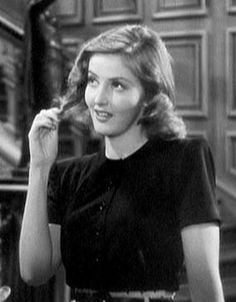
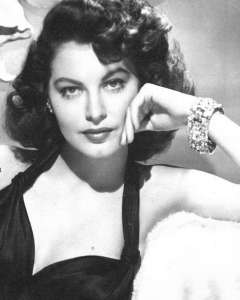
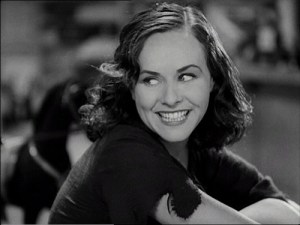
Hedy Lamarr:“Ecstasy” (1933), “Samson and Delilah” (1946)Louise Brooks: “Pandora’s Box” (1929), “Diary of a Lost Girl” (1929)Martha Vickers: “The Big Sleep” (1946)Veronica Lake: “Sullivan’s Travels” (1941), “This Gun for Hire” (1942)Ava Gardner: “The Killers” (1946), “The Barefoot Contessa” (1954)Jean Simmons: “Guys and Dolls” (1955), “Elmer Gantry” (1960)Grace Kelly: “High Noon” (1952), “Rear Window” (1954)Gene Tierney: “Laura” (1944), “Leave Her to Heaven” (1945)Ingrid Bergman: “Casablanca” (1942), “Notorious” (1946)JoanBennett: “The Woman in the Window” (1944), “Scarlet Street” (1945)Paulette Goddard:“Modern Times” (1936), “The Great Dictator” (1940)Carole Lombard: “My Man Godfrey” (1936), “Nothing Sacred” (1937)Myrna Loy: “The Thin Man” (1934), “Libeled Lady” (1936)Olivia de Havilland: “Gone with the Wind” (1939), “The Heiress” (1949)Natalie Wood: “Rebel Without a Cause” (1955), “West Side Story” (1961)Vivien Leigh: “Gone With the Wind”(1939), “A Streetcar Named Desire” (1951)Elizabeth Taylor: “A Place in the Sun” (1951), “Who’s Afraid of Virginia Woolf?” (1966)Rita Hayworth: “Gilda” (1946), “The Lady from Shanghai” (1947)Audrey Hepburn: “Roman Holiday” (1953), “Breakfast at Tiffany’s” (1961)Lana Turner: “The Postman Always Rings Twice” (1946), “Peyton Place” (1957)
“Throughout August, with almost sadistic joy, I watch summer slowly die.” — musician-poet Henry Rollins
Today, in the first week of August, my niece was rattling off why fall is her favorite season and she slipped into this refrain:
“No bugs! No bugs! No bugs!”
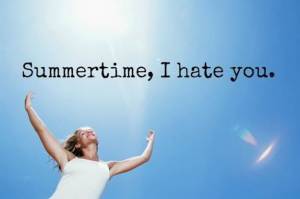
I almost applauded. Fall is my favorite season, too (winter’s a close second, or maybe they’re tied). I can’t do summer. I don’t do summer. August is the cruelest month — it spews volcanic heat, it seems to last an eternity — but when it arrives I count the days of summer’s final steamy breaths. September is around the bend. It won’t be long till I can slip on a jacket. The anticipation’s killing me.
In summer the heat’s too murderous, the days are too long and the pants too short. We know this. But some of us actually like this. Everyone chirps about how nice it is outside at a torrid 88 degrees. They start eating outdoors, drinking beer in blazing sunlight. I’m vampiric. There are outdoorsy people, then there’s me. I’m indoorsy. “Sun and fun” don’t compute. (One word: barbecues.) Like a possum, I’m a nocturnal creature. I crave the dark. Now, where’s the AC?
Not a good look.
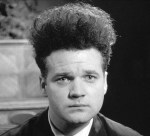
No one likes humidity, but that’s one of the joyous gifts of summertime. I have pretty curly hair that swells and swirls in the humid soup, until it shares attributes with the protagonist in “Eraserhead.” Humidity is the devil’s flatulence.
I’d rather shiver than sweat. I lived for years in Texas, where summer lasts 10 months out of the year and sweating is a way of life. It’s one of those places where when you sit outside at a bar you get soaked by misters. Sweat and mist. Bring a towel, slicker and umbrella.
I travel a lot but never during the summer — the rigged prices, the crowds, the heat exacerbated by global warming. (Those scourging heat waves in, of all places, London and Paris are a scandal.) Tropical “paradises” are off the table, though I hold dear my spring and fall trips to Vietnam, Thailand, Hong Kong and India, epicenters of perspiration. I was positively soaked-through the whole time during all of them. From India I flew to Nepal just to cool off near the Himalayas and breathe relatively fresher mountain air. In Thailand, I got sun poisoning. That’s a long, humiliating story, featuring one beach, eight hours and zero sunscreen. (The upshot: I could barely move my swollen legs and I had to drink two gallons of water a day.)
I thrive on fall and winter’s cooler temperatures and shorter light cycle. Long sleeves and jeans happily return. Kids go back to school. Arts seasons commence and prestige pictures fill movie screens. (The monstrous snowfall, you say? I can’t hear you.)
What about blameless spring, with its temperate climes and floral efflorescence? Careful, spring can get you too. That’s why it’s my second least favorite season, with all of its pesky augurs of summer: rising temperatures, plants and pollen, picnics, longer days, and, of course, those bugs, bugs, bugs.
Coming soon.
When summer goes skedaddle, these things go with it: outdoor music festivals, flip-flops, exposed hairy legs, beach outings, tank-tops, camping, sunburn, restaurant patios, body odor, baseball, “The Emoji Movie,” hidden tattoos, small-town parades, parasails, Toyota Summer Sales Events, rattling, weeping window ACs, people named Jasmine and Tyler.
Halloween in Sevilla.
Summer’s dragon’s fire will soon be extinguished by the crisp gusts of autumn. Turning leaves, shorter days, harvest moons, soup, fall TV, Halloween. Halloween is a big one. It’s way up there on my niece’s list of fall glories. (Since I travel so much in autumn, I’ve done Halloween in London, Paris, Beirut, Ho Chi Minh City, Kathmandu and Sevilla. Each city bumbles the American holiday. For now, it’s strictly amateur hour.)
And yet there are six calendar weeks left of the warm stuff, so maybe I’m getting ahead of myself. But I don’t think so. August is the last hurrah, the season’s dying gasp, and it’s here and, with sunglasses tucked away, we are ticking off the days, closely, carefully, ecstatically.


 “You need violence in order to protect nonviolence. … It’s full-on war, basically,” antifa activist Emily Rose Nauert told the Times.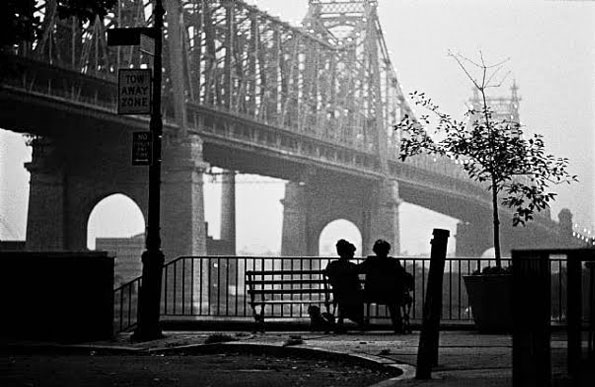






 This one’s a no-brainer: “Freaks and Geeks” had Judd Apatow producing and starred Seth Rogen, James Franco, Jason Segel, Linda Cardellini and Martin Starr. The whip-smart dramedy about outlier high school cliques, the stoners and the nerds, captured school days more incisively, humorously and humanly than any work of art since

 The book I’m having the best time with right now, the one that swings with a driving lyric beat, glitter and spunk, is Eve Babitz’s













 I thrive on fall and winter’s cooler temperatures and shorter light cycle. Long sleeves and jeans happily return. Kids go back to school. Arts seasons commence and prestige pictures fill movie screens. (The monstrous snowfall, you say? I can’t hear you.)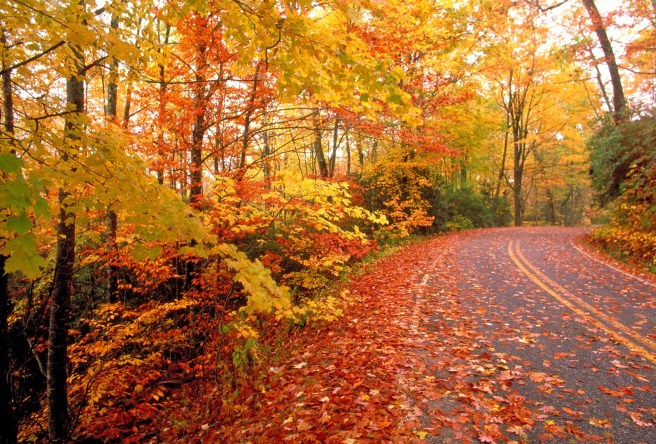

 GNASHING.

