Stuff, etc.

One of the cats died recently. He was kind of the rotten cat, the one that shreds up the carpet, craps where he feels like it and was extra aloof, like an Aviator-wearing rock star who hates giving autographs. Anyway, we’re saddened and miss the ornery fellow. I’m not sure what to do with his ashes: urn them nicely or chuck them over the fence at the squirrels. 

I don’t trust social media as far as I can spit. If I had a girlfriend, I’d ask her, quite nicely of course, to get off that shit.

Voyeurism is the opiate of the masses, not religion. Think about that for about four seconds.

Just guess who I think embodies all of these descriptives: racist, greedy, venal, petty, megalomaniacal, misogynistic, heartless, rankly sophomoric, vulgarian scum. Bingo.

I’ve planned a trip to Mexico City for November, but I’m so traveled-out right now, the whole thing sounds terrible. Five months is far off, so I should be refreshed by then. Thing is, the weather runs in the mid-70s to 80 in November and I’m barely any good over 70. I hate the heat; I’m a San Francisco wuss. I read that t-shirts and shorts are frowned upon in Mexico City, and I’m not a fan of them either. It sounds like when I was in sweltering India and everyone was swaddled in jeans and long sleeves. I wore jeans with t-shirts and I sweated like swine. Drenched. Two showers a day. I don’t want any of that crap. Maybe I’ll push the trip to December. Or January. Or never.

What I’m reading: “Demon Copperhead,” Barbara Kingsolver’s gritty, funny, unsparing ode to Dickens’ “David Copperfield.” The novel won a Pulitzer last year and rollicks with knockabout wit and wisdom and with more than a dash of social commentary about the sorry state of many of our states (opioids, poverty, detox). The damn thing’s a cinder block so it’s taking me forever to plow through, but it’s worth it. The title character, a teenage boy, both tart and talented, is one for the ages. He’s like a super smart Pig-Pen from “Peanuts”: brilliant but with a cloud of flies and dust buzzing around him. It’s his lot. But he’s one wily fighter, a scrappy, red-headed hero (hence “Copperhead”) in a bedraggled, Dickensian wasteland.

The cat died; the dog thrives. Cubby the wonder mutt needs a bath and a haircut and those crunchy, coagulated eye boogers extracted, but otherwise the aging fella is in fine fettle. OK, he’s been doing the occasional “revenge pee” in the dining room, meaning when he feels abandoned he’ll whizz on the rug when no one’s around. Stealth urine is as bad as any urine, but it’s worse, because you know the scruffy rascal’s doing it with a puckish glint in his eye.

Pet sounds

The animals have it made. They just don’t know it.

Oblivious to their Edenic existence — room, board, vet care, treats, belly rubs — they try my charity and patience with animal trickery, inbred cunning that might serve them in the wild, but I doubt it. Tossed outside, the dog and two cats would eat twigs and weeds and cry for their mommies. That scratching at the door? I’m sure I don’t know.

When they’re not noisome they’re noisy, yawping dissonant arias that would make Yoko Ono reconsider her entire career. Every so often I am startled by the sound of hell’s maw bellowing tortured damnation. It’s just the cat.

While the cats whine constantly, the dog often breathes with the labored wheeze of a Sleestak, the reptilian humanoids from the “Land of the Lost.” He sounds about 100 and sneaks Pall Malls. And he barks at strangers with a fury so committed, you want to reward him with a meatball. But you don’t, because his outbursts are teeth-clinchingly annoying. Told to shut up, he replies: yap!

The male cat in particular, gray and greedy and shameless, is an air-raid siren of plaintive meows, begging for food then stealing that of his push-over sister. The other day I Frisbeed a small plate at him and missed. He gave me the stink eye and stalked haughtily to the other room, where he probably contemplated murder and mackerel.

Cubby the curly mutt is my pal, a boy and his dog and all that. We get along with a fellowship of such purity you could throw up. We’re like bros, even though I hate bros. He doesn’t know this.

The cats are another deal. They’re sweet and affectionate, but it’s hard to get close to creatures that prefer aloof entitlement to purry snuggles. One cat hibernates in the attic all day, zonked, and the other one is on call strictly for food, any food. (This is flagrant feline stereotyping, I know. My ex and I had a cat named Jesse who would play fetch with bottle caps and sleep on your head.)

Watching the animals in repose, on their back or curled up like a large ball of yarn, must be what it’s like when your small child finally falls asleep after a day of tantrums and slobber. Suddenly there’s a still angel in your midst, halo shimmering, mouth miraculously shut. Shhh.

Oft-seen shot of Cubby, blissfully at rest.


Pet peeves

Between the cat eating the house plants then vomiting greenery all over the place and the dog expressing his anal glands by scooting his butthole across the cream-colored carpet, the animals are just asking for a one-way trip to the pound. 

I jest, but it’s true that pets is only one letter away from pests. Love them as I do, these free-roaming (if housebound) creatures are high-maintenance, not quite like human children, god forbid, but demanding and nerve-wracking nonetheless.

Oh, what’s this adorable chunk of indescribable disgustingness? Just another hairball upchucked from my favorite feline. Thanks, Tiger Lily, you charmer!

Any responsible owner of pets knows the aggravation of keeping animals. That’s why I’ve owned so many pet rats over the years — low-maintenance while being cleaner than cats and smarter than dogs. That’s a truism that happens to hold water. And the rodents may just be funnier than cats and dogs, and more affectionate to boot. Plus they have a life-span a little longer than the common house fly, which actually drop-kicks your heart.

Rats always like to play and snuffle around. They are great explorers, endlessly curious and insatiably social. They hoard. They drink beer. They dig in the plants, climb all over you, squeak during belly rubs and, yes, even giggle with joy. Then again, they nibble anything in their path, from electrical cords to your favorite book.

Pets aren’t perfect. People aren’t perfect. And while my girlfriend isn’t going to express her anal glands on my light-hued carpet, she might dog-ear the pages and break the binding of my favorite book. Infallibility — let the Pope bask in that rarefied delusion.

So as I write about these pet peeves, the dog goes ballistic over the arrival of the mail. Screeches and door scratches, head nearly exploding with the notion of territorial intrusion. The dog is bored. Let him fulfill a sense of purpose for 20 seconds. Though, thanks to the hyperactive scratching, the front door needs a fresh paint job.

The dog, Cubby, grumbles as he comes off his hissy-fit. He relaxes, peers out the window for more invaders, then curls up in a ball like a sowbug on the couch. (He’s dark gray, charcoal, and small. Like a sowbug.) The cat … who knows where she went. She vanishes like the Cheshire Cat, but leaving no toothy smile in her wake. How come cats rarely smile? Entitled, they are, seething with grave self-importance.

Last week the dog shat on the dining room rug, an impressive tower of leaning Lincoln Logs, a bonfire yet unlit. The cat barfed out something bile-colored — an intoxicating shade of yellow, beige and lime green — and I, ha ha, got to pick it all up. Rascals!

The price of pets is worth it. They cost time, money and exasperation. They get sick. The dog needs grooming. The cat tears up the carpet. Then there are the Sea-Monkeys, which live in a miniature saltwater tank. Let’s not get into the Sea-Monkeys.

Pets are gems. Strange animals strolling the halls, licking themselves obsessively, barking and meowing the call of the wild, oozing reciprocal love in our gorgeous, fantastically maddening peaceable kingdom. Sit, Cubby, sit. Thatta boy. 

The cat’s seething self-importance

Farewell, Fido

“I don’t want to be buried in a pet sematary/I don’t want to live my life again!”

“Pet Sematary,” the Ramones 

I once had a pet rat named Becky. After two and a half years of feisty play and impish scampering, tug of wars and belly tickles, she got terminal cancer and I had to put her down. I placed her remains in a decorated wooden box, dug a hole in the hard Texas dirt, and buried her in my backyard.

I repeated this ritual with three other pet rats — Phoebe, Tammy, LaShonda — and it shattered me every time. My yard became a veritable pet cemetery, a rodent resting place, and each grave should have cautioned me: Never again. I didn’t learn.

I also buried a blue betta fish named Alvy in the ad hoc graveyard. He thrived for four swishing years in a big sparkling bowl. I nestled the old man in a matchbox and set him in the ground, saluting him for his gratifying longevity. I miss the fish.

If you care one lick, laying your pet to rest is undiluted trauma. The platitude holds: pets are family, loving and adored, like hairy children who only live to their teens, if that. So integral are they to our lives, you swear they speak English and read minds. (I’m convinced Cubby the dog is really a tiny man in a dog suit. I keep looking for a zipper.) 

And so we honor them in death as in life, with a sentimental flourish and teary respect. Or at least we do in the modern age. There was a time when “people disposed of their dead pets in the river, or might have sold their bodies for meat and skin,” notes a CNN essayist. I know of modern folks subjecting their late Spots and Trixies to taxidermy, which is not only creepy, it’s selfish and disrespectful and twisted. 

Burial and cremation are popular send-offs. Barcelona, Spain, is set to open its first pet cemetery next year, with plans to carry out 7,000 animal cremations a year. Why? “Constant public demand,” they say. Barcelona is home to 180,000 dogs alone. Surely there’s just as many cats. (Rats? I bet.)

In 1983, Stephen King published the popular horror novel “Pet Sematary” about some macabre happenings surrounding a buried cat that is resurrected, or some such nonsense. The book spawned a 1989 movie (with “cemetery” also intentionally misspelled for plot purposes), which featured a cat-chy theme song by the Ramones.

The book and film helped spread the idea of the pet cemetery. And yet pet cemeteries are not some freaky esoteric brainchild of ghoul-meister King. There’s one in London’s Hyde Park, founded in 1881. New York’s legendary Hartsdale pet cemetery was founded in 1896, followed by Paris’ Cimetière des Chiens in 1899. 

About a hundred years later, I founded my own pet cemetery, at age 6, in my family’s pretty and serene Japanese-style garden in Santa Barbara. (This preceded the rat resting place by decades.) Surrounded by bamboo, moss and a statuary fountain, the graveyard contained goldfish, salamanders and other mostly water-bound critters. I’ve been at this a while.

On film, celebrated director Errol Morris made his debut with the acclaimed 1978 documentary “Gates of Heaven,” about the pet cemetery business and the souls who rely on it. It’s alive with vivid characters who are wrenchingly emotional about their dearly departed four-leggers.

Critic Roger Ebert, who named the film one of his 10 all-time favorites, wrote about “the woman who speaks of her dead pet and says, ‘There’s your dog, and your dog’s dead. But there has to be something that made it move. Isn’t there?’ 

“In those words,” Ebert writes, “is the central question of every religion.”

That pretty much says it all.

Becky the rat, at play.
Becky at rest.

I (sort of) like the cat

The cat wails plaintively, pathetically, for no known reason. It is high-pitched and high-decibel. It’s a distress signal, a siren from the depths of hell that is feline. 

Cats are OK. I like them well enough, about as much as I like, I dunno, pet pigs. I don’t like them as much as I love pet rats, that is certain. Pet rats and I go way back. It’s an intricate relationship.

In my life, I’ve had a half dozen rats: Phoebe, Becky, LaShonda, Tammy, etc. They are like mini dogs — affectionate, social, clean and wickedly intelligent. They play. They come when called. They like their bellies rubbed. They drink beer. Dogs are tops, but rats are little badasses.

Cats, well. 

I’ve had about five cats, including this wailer who indiscriminately cries, whines and yowls. It’s like living with a sickly crone, or a werewolf.

The cat, a rescue named Spicy by his prior owner, resides with his sister, Tiger-Lily. She rarely makes a peep, only the occasional textbook meow, the sound you hear when you look up “meow” in the dictionary. 

Tiger is sweet, gentle, svelte, independent. Spicy is pushy, needy, burly, noisy. Plus his eyes weep goop like the Exxon Valdez.

But Spicy is cherished. He’s an animal, after all, and animals tend to deserve unconditional love, spoiled as they are because they are cute and cuddly, fun and furry, smart and, in Spicy’s case, smart-alecky. 

Is he smarter than us? He slinks with an underplayed intelligence and studied detachment. His yellow eyes burn through you, laser beams of simmering condescension. When they’re not softening at half-mast during cuddle mode, those eyes are saying, “Screw you.” 

He nips with sharp teeth to prod you to stroke him, to demonstrably adore him. He climbs in your lap when there’s already a laptop there, plop. He claws at the carpet with violent resolve, sounding like someone’s hair is being ripped out. And, of course, he whines and caterwauls like an opera diva in grandiose agony. He thinks all of this is charming, and it is to a point. But he’s giving cats a bad rep.

Of course Spicy does not represent all cats. He isn’t even emblematic of truly bad felines, like those cringey manimals from “Cats.” No, he’s in-between, part cuddle kitty, part son of a bitch. Don’t get me wrong. I love him like a pet. Just not my pet. 

Tiger-Lily and Cubby the dog own more of my heart. Cubby may bark like a madman and scratch the paint off the door on occasion, but he’s all angel, whereas Spicy has a satanic streak. Sometimes you’ll try to pet him and he’ll arch his back and bristle his fur. Devil cat!

And those yowls he emits evoke “The Exorcist” more than “Puss in Boots.” As I said, though, I like him alright, even if he’s trouble. Meow? More like meh.

The cat, giving the evil eye. As usual.

Quirky kiddie queries about death, dying and other fun stuff

As people grow up, they internalize this idea that wondering about death is ‘morbid’ or ‘weird.’ They grow scared, and criticize other people’s interest in the topic to keep from having to confront death themselves. … Most people in our culture are death illiterate, which makes them more afraid.”  —  Caitlin Doughty

primary_2_2.jpg

Children, meanwhile, fueled by unfettered curiosity and innate innocence, don’t always harbor silly adult fears of death. They’re allowed to, expected to, wonder about death and dying. It’s a learning process;  it’s not “morbid” or “weird.” It’s eye-opening, mind-inflating. Asking questions about it is a step closer to not being “death illiterate.”

The quote topping this post is from Caitlin Doughty’s new book, the funny and informative “Will My Cat Eat My Eyeballs?,” whose subtitle is “Big Questions From Tiny Mortals About Death.” That means both wiggy and weighty queries from children about death, inquiries she routinely receives as a death-chick rock star: mortician, author, podcaster, “death activist” and “funeral industry rabble-rouser.” In the book Doughty answers 34 kid-friendly (well, kinda) questions about death and dying, and a bit beyond.

A total pro, her attitude is cheeky, frisky and upbeat, often with a wink. It’s hardly just kid’s stuff. She applies sweeping research and her own mortician’s know-how, a braid of science, craft, technology and, unavoidably, morbidity. It gets gleefully icky at times.

Doughty goes into gripping, grisly detail about livor mortis (“bluish color of death”), rigor mortis (“stiffness of death”), putrefaction, embalming, burial, cremation ovens, blood draining, organ donation, and, #1 on the hit parade, postmortem gas. 

And she does it with oozy, crunchy, gelatinous eloquence:

413b7oOI9KL._SX329_BO1,204,203,200_.jpg

  • “Welcome to putrefaction,” she writes. “This is when the famous green color of death comes into its own. It’s more of a greenish-brown, actually. With some turquoise. … The green colors appear first in the lower abdomen. That’s the bacteria from the colon breaking free and starting to take over. They are liquefying the cells of the organs, which means fluids are sloshing free. The stomach swells as gas starts to accumulate from the bacteria’s ‘digestive action’ (i.e., bacteria farts).”
  • “In the first ten minutes of cremation, the flames attack the body’s soft tissue — all the squishy parts, if you will. Muscles, skin, organs, and fat sizzle, shrink, and evaporate. The bones of the skull and ribs start to emerge. The top of the skull pops off and the blackened brain gets zapped away by the flames.”
  • “Oh, how to describe the smell of a decomposing human body — what poetry is needed!” Doughty gushes. “I get a sickly-sweet odor mixed with a strong rotting odor. Think: your grandma’s heavy sweet perfume sprayed over a rotting fish. Put them together in a sealed plastic bag and leave them in the blazing sun for a few days. Then open the bag and put your nose in for a big whiff.”

Now, on to questions, a sampling of the kids’ queries, which on average yield two- to three-page responses in Doughty’s book. In brief, inquiries include:

  • The jejune: Will I Poop When I Die? (“You might poop when you die. Fun, right?” Doughty giggles. True: It depends on how “full” you are when you croak. You don’t automatically doo-doo at death.)
  • The sentimental: Can I Keep My Parents’ Skulls After They Die? (No. No. And no. There are such things as “abuse of corpse” laws, our trusty authority tells us.)
  • The ludicrous: What Would Happen If You Swallowed a Bag of Popcorn Before You Died and Were Cremated? (What do you think would happen in 1,700-degree flames?)
  • The freaky: What If They Make a Mistake and Bury Me When I’m Just in a Coma? (Pretty impossible — a battery of medical tests are conducted to confirm brain death.)
  • The ghoulish: We Eat Dead Chickens, Why Not Dead People? (Guess what — some people do. They’re called cannibals. Next!) 
  • The metaphysical: Is It True People See a White Light As They’re Dying? (“Yes, they do. That glowing white light is a tunnel to angels in heaven. Thanks for your question!” the author ribs.)
  • And the vaguely vain: Will My Hair Keep Growing in My Coffin After I’m Buried? (Sorry, Rapunzel. That’s a big fat “death myth.”)

About the book’s titular question, “Will My Cat Eat My Eyeballs?” — this refers to the dreaded scenario of you dying alone in your home, your corpse left for days and your unfed pet, well, getting hungry. Doughty relishes this one. 

29insidelist-jumbo
Caitlin Doughty

“No, your cat won’t eat your eyeballs,” she writes. “Not right away, at least.” 

That’s the short answer. 

The longish answer shivers with excitement:

“Cats tend to consume human parts that are soft and exposed, like the face and neck, with special focus on the mouth and nose. Don’t rule out some chomps on the eyeballs,” Doughty says, but more likely your feline friend will dig into the lips, eyelids and tongue.

And what about Pepi the peaceful poodle, human’s best friend, your cuddle buddy? 

“Your dog will totally eat you,” Doughty assures.

Hounding the dogs of Istanbul

She ambled into the cafe smiling, her rump gently shaking this way and that, tail shyly wagging. The cafe owner, a radiant globe-trotter named Nazan who’s lived in Istanbul for years, joyfully greeted the large brown mutt, patting her head and cooing her name. The dog then plopped onto the wood floor and rolled on her back, legs skyward. She remained in this posture for a good half hour. She looked ridiculous. And adorable.

1.jpg

The pup, whose name is Garip, is one in a gaggle of dogs and cats Nazan feeds and takes care of. Garip is a stray, part of thousands that live in the by turns picturesque and grungy streets of Istanbul, a massive, hilly metropolis bulging with 16 million people — the world’s fourth largest city and the biggest city in Europe. 

That means a lot of stray dogs, whose numbers rival the city’s seething stray cat population (lovingly profiled in the documentary “Kedi,” which I wrote about HERE). It’s a zoo out there, an amicable, well-behaved cosmos of bewhiskered street urchins that are mostly pampered by locals or, at worst, casually ignored. 

Animus towards the animals isn’t evident. I was in Istanbul for nine days this month and kept a close eye on the roving dogs and cats. The critters are almost universally plump and well-fed by caring, compassionate locals attuned to the spiritual sustenance of communing with intelligent four-legged creatures that reciprocate the love. 

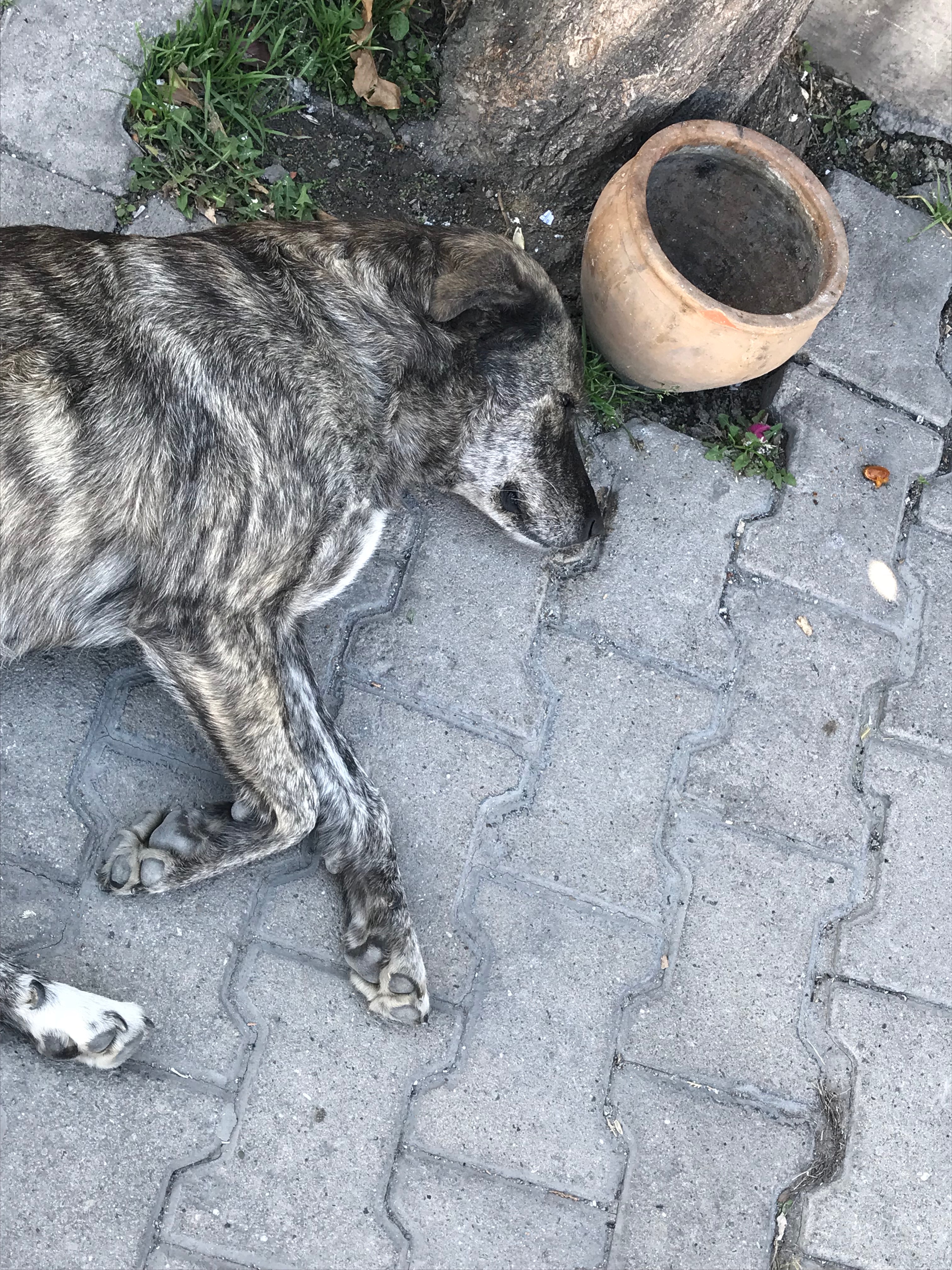
There they are, zonked out, on their sides or curled in balls, in the middle of plazas amid the bustle and noise of swarming tour groups that step over them. They loiter outside of restaurants, reliable fonts of food, and snarf up the dog kibble people put out for them on schedule. Nimbly dodging cars, some move in small packs but most ramble their neighborhoods as lone wolves, occasionally pausing to sniff one of their hairy cohorts’ rear-ends before tramping off down cobblestone paths.

The dogs calmly stroll around for snacks and strokes, but are rarely beggy. They don’t cadge, they don’t hector. They scarcely bark. Rather they befriend and endear. If you approach them, they nuzzle up to you, tail fanning, like any dog worth its canine credentials, yet leave you alone when you pull away (unless you call them to follow you, as I often did). Their independence is admirable, even noble.  

As the homeless can attest, street life’s a bitch. Hunger remains an imperative and untended wounds agonizingly fester. I met a dog with a ghastly slash around its throat and another with an oozing cut on its back leg that left a bright streak of blood down its fluffy cream tail, looking like a giant paint brush dipped in red paint. Many stray dogs are registered by the city, signaled by a tag on their ear that means they’ve been fixed and vaccinated. I think that’s swell.

At the cafe, the marvelous Mitara Cafe & Gallery, Nazan visibly adores her furry charges, her courteous quadruped pals. She speaks to them, strokes them, invites them in for a bite and respite from the heat or cold. When I handed her a tip for my lunch, Nazan assured me it would go to food and medical care for the animals. That was all right by me.

A motley gallery of some new Istanbul friends:

2

3.jpg

4.jpg

5.jpg

P1030568_1.jpg

6.jpg

7.jpg

P1030243_1.jpg

8.jpg

Istanbul’s citywide kitty corner

Goddamm cats. 

All over Istanbul, they ramble and climb, pounce and shinny. These homeless street beasts tackle each other in play; hiss and strike in combat; scrounge and scavenge for the next meal. They barge into shops and curl up in chairs and beg for food at sidewalk cafes with various degrees of rough-hewn etiquette (claws, paws and purrs).

000e4198-800.jpg
From the film “Kedi”

Most importantly, they insinuate themselves into the homes and hearts of many of this huge city’s denizens, soft souls who often regard the felines with an almost spiritual gravity, spurring the occasional display of soggy sagacity: 

“Dogs think people are God, but cats don’t,” a cat-lover says in “Kedi,” a documentary about the thousands of stray cats of Istanbul. “Cats know that people act as middlemen to God’s will.” 

I’m pretty sure I have no idea what that means.

“Kedi” (cat in Turkish, though it sounds a lot like kitty) is a well-received film from last year that lavishes the love — there’s not one hater in the whole picture, no one shooing away a cat with a broom — on Istanbul’s famed felines. It feels like a short film stretched taffy-like into a 79-minute feature that’s at once indulgent and superficial, while pleasant and lightly informative in an ingratiating PBS sort of way.   

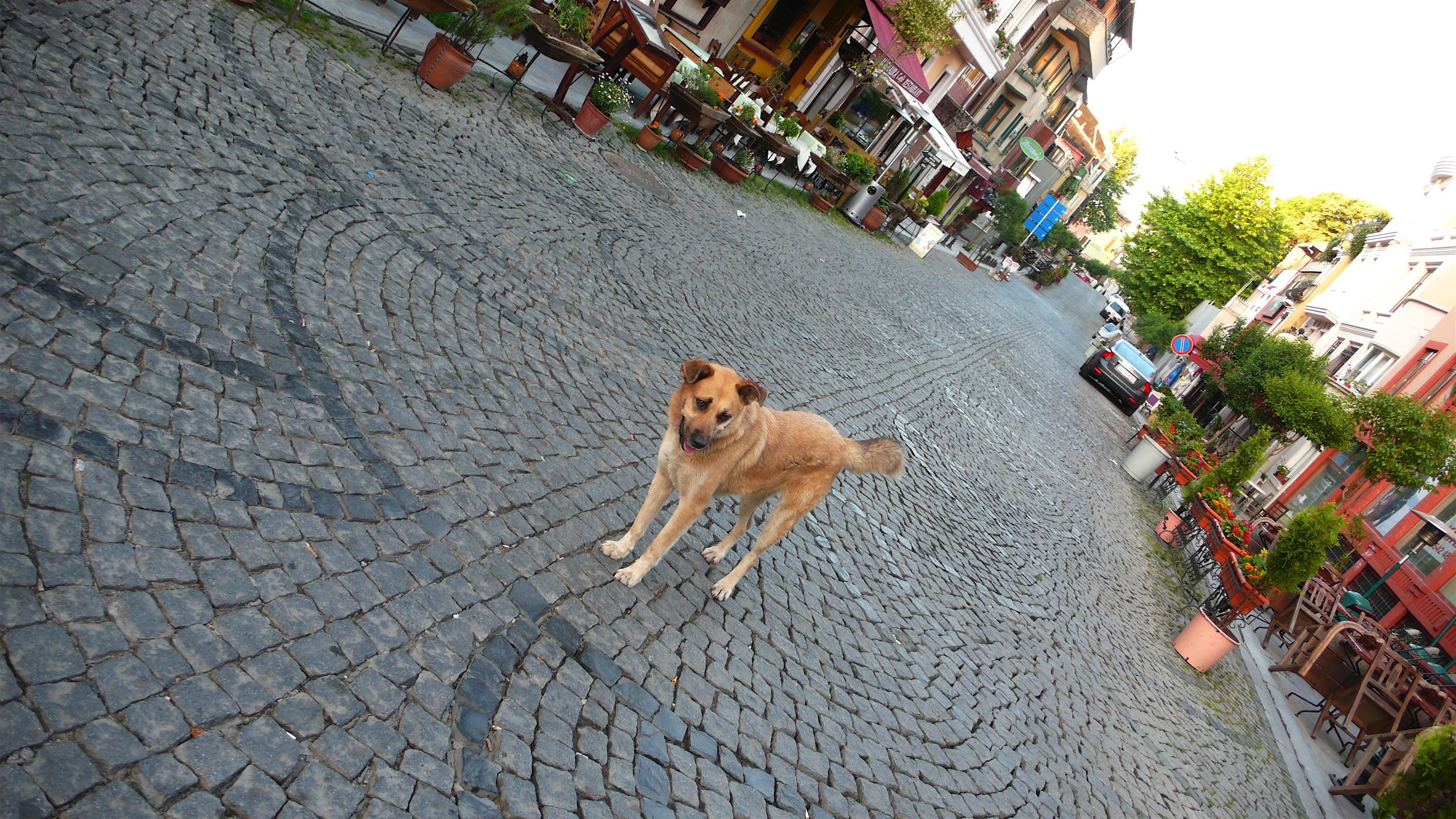
Someone in the movie declares the homeless kitties are the city’s soul, but on my few visits to Istanbul I saw far more stray dogs than cats. Like this winsome fella, who became my pal for nearly a month:

P1020788.jpg
Istanbul, 2008

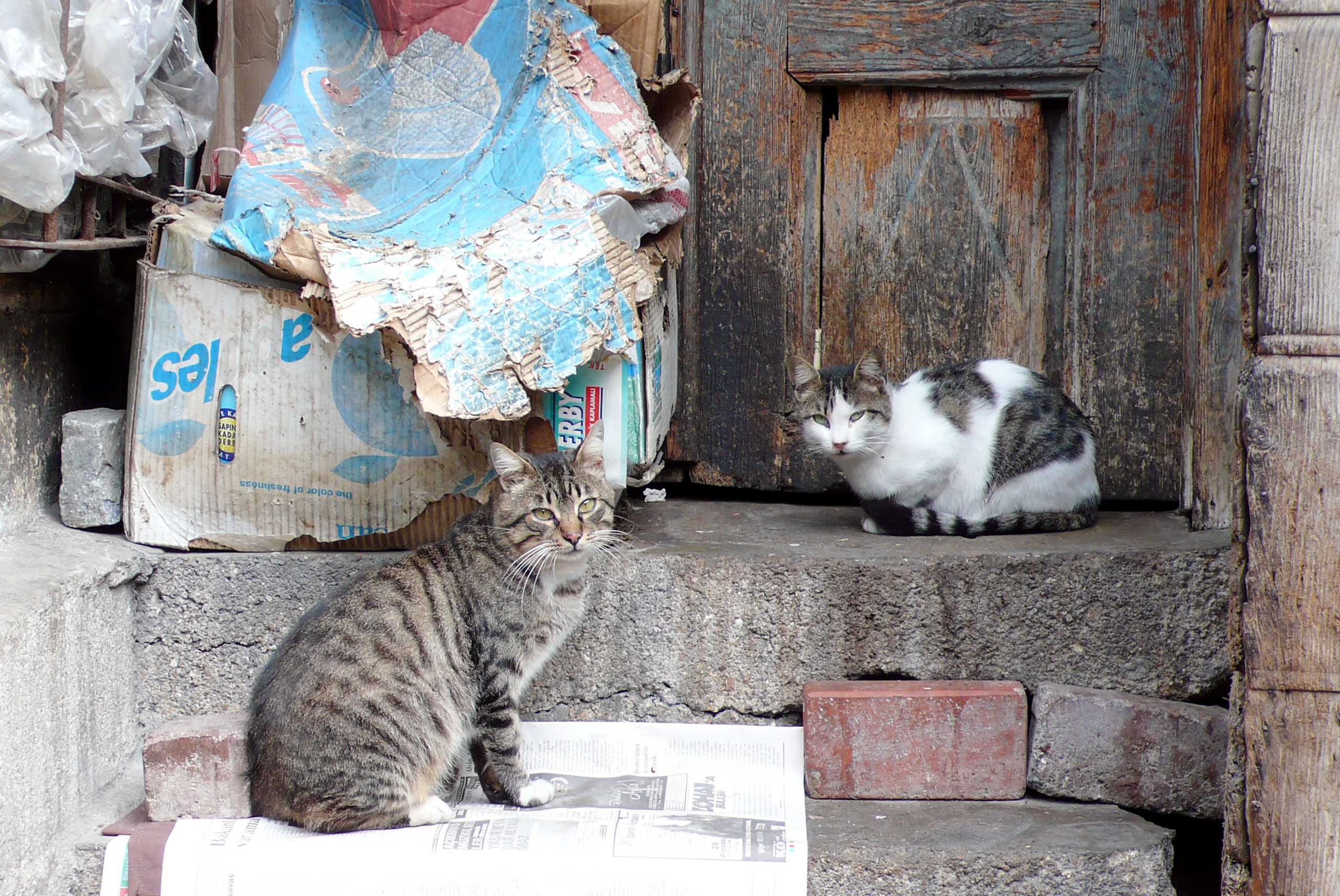
Still, I certainly saw many cats, such as this leery pair of scrappy, well-fed survivors:

P1030495_1.jpg
Istanbul, 2008

In “Kedi” cats inhabit rooftops, cardboard boxes, markets, cemeteries, trees and awnings, and the film paints artful visions of the kitty stars, from Bergmanesque close-ups to whisker-level Steadicam action of running, jumping and chasing (mice beware).

The cats comprise a motley array, and I expect to see the kitty cavalcade when I return to Istanbul next month — toms, calicos, tortoiseshells, mamas nursing their babes, cats with patterns like a painter’s palette, or, one of the stars of “Kedi,” a female hellion dubbed “the neighborhood psychopath.”

fat cat.jpg
From the film “Kedi”

Inevitably, kitty characters and personalities emerge, inescapably anthropomorphized. “It’s so fascinating,” says a simpatico fishmonger of the cats who not so mysteriously follow him around. “They’re just like people.”

We have two cats. They’re just like people: indifferent, solitary, narcissistic, wise, wily, incessantly hungry, jerks.

Yet in “Kedi” the humans are like grandparents who spoil their charges. A shopkeeper compares a kitty comrade to one of his children as he brushes her fur while she looks off into heavenly ecstasy. Another man compares the company of cats to the soul-soothing power of prayer beads.

Our cats provide the soul-soothing power of pooping, crotch-licking gremlins.

Taking care of these furry street urchins is, they say, their duty. They are cat custodians, and for many of them the animals supply a divine connection that is healing, curative and therapeutic.

How is this possible? one may ask. Cats purr and meow, but are otherwise as mute and inscrutable as the Sphinx. They scamper off a lot for no damn reason.

“I imagine having a relationship with cats must be a lot like being friends with aliens,” muses a dreadlocked woman in the film. “You make contact with a very different life form, open a line of communication with one another, and start a dialogue.”

As someone who talks to the animals, from cats to rats, I love that.

(“Kedi” stuff, including trailers, can be seen here.)

Of mouse and man

It’s hot outside, I’m hot, the dog is hot, the backyard plants are hot, and that reminds me, I need to water them. But not until it cools down, around dusk, say. Then that luxuriant jungle of exotic flora will get a soaking and gratitude will beam from the firmament.

A heat wave they’re calling this. It’s only 93 degrees right now but, coupled with sopping humidity, it feels like cruel triple digits. Within a minute of stepping below the blazing skies and into the muggy soup you break a sweat, rivulets down the cheeks, puddles in the small of your back. It’s disgusting. Right, this isn’t New Delhi or Bangkok, but still. Anyone who says they like this weather is either a liar or a twit or both.

Speaking of delightfulness, I recently destroyed a mouse. I did not want to, but my conscience got the better of me. So I held it by its gummy-worm tail and dunked it in the toilet and held it there until it drowned. It took fewer than two minutes, if that. Still, it made me kind of sick.

Why such horror? Thank the accursed cat, the tubby charcoal-gray tom with the white Hitler mustache. There he was, playing with a squirming, grievously wounded mouse, brown with a pink belly, in the dining room. It was the natural world in action, a realm Woody Allen, noting the pitiless animal food chain, dubbed “an enormous restaurant.”

20121211-105322.jpg

One might applaud the cat for capturing and maiming a crafty little house mouse, a ravaging rodent. I’m not giving ovations. I’m known for protecting and pampering animals, a latter-day St. Francis sans the amazing tunic, sneaking the dog table scraps and keeping sweet, smart rats as long-term pets. I rescued a baby squirrel from the maw of a snarling cur and a mauled bird from a godless outdoor cat (the bird didn’t make it).

And so I snatched the writhing, oddly bloodless mouse from the cat’s paws, carrying the creature by its silken tail. I wanted to save it, take it outside and let it scamper to freedom.

It scampered, but sideways, in a corkscrewy dance, clearly in pain and despair. It got away, crippled, ruined. I went back inside, crestfallen, wishing I had put it out of its misery. I figured it’d be out there, suffering a slow death for hours, maybe days.

Hours passed before it struck me to go and look for the mouse in the summer blaze. I promptly found it. It was motionless, hopefully dead. But when I touched it, it spun again in corkscrews, its whole body knotting in pain. This would not do. I pinched it by the tail, took it to the bathroom and snuffed what was left of its tiny life.

It was fast, but horrible. I held it moments longer than necessary to make sure the poor animal was out, gone. Then I carried the still, matted body back to the yard and set it behind the shrubs and covered it in mulch. I only wish I had done that five hours earlier.

These things aren’t simple. Even a mercy killing is troubling, against my nature. Pesky vermin — big deal, you say. Big deal, you bet.

Yet there’s no moral here. I don’t like what I did. Not one bit. But I’d do it again. In a heartbeat.

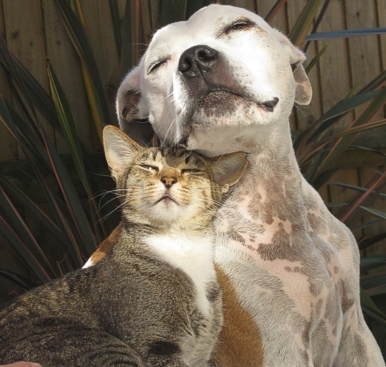
Cats and dog sweetly coexisting. Mostly.

The dog pounces at the cat, stopping short, directly in her expressionless face. He thinks he’s fulfilling his role as a tough-guy mongrel, a canine Cagney, intimidating his housemate, the ice-cool kitty. They lock eyes and stand nose-to-nose. She doesn’t flinch, budge or blink. She has seen him coming, fast, and she holds her ground, not a single whisker aquiver.

The dog, Cubby, is small. The cat, witheringly, seems to be saying to him, “You’re too short for that gesture,” as George Saunders tells Anne Baxter when she swings open the door and tries to eject him from a room in “All About Eve.” In the end, the dog capitulates, and the cat sashays away.

dogs-cats3.jpg
It’s really not like this, at all.

For the most part, the animals, including another cat, coexist impressively peaceably. They are very mature about their roommate situation. Drama is minimal, and, when it happens, laughable. No one gets hurt.

Poor Cubby. He’s all bark and no bite (except in play, when he nips fiendishly). He loves to hear himself yap, yelp and yowl when the mail carrier mounts the porch, producing a piercing cacophony and, somewhat comically, a rousing display of feckless theater. He growls, spins and crouches, a shrimp-size showman, his nails doing a fine tap dance on the wood floor.

Yet open the door when someone rings and he clams up, giddily sniffing the newcomer, tail wagging, a bundle of excited curiosity. The animal is operating on pure instinct, doggie DNA, so we try not to make fun.

The house cats, Tiger Lily and Spicy, tolerate Cubby, despite their frequent sighs. They mostly ignore him and his occasional manifestations of machismo. They are unflappable, standoffish. Basically, they don’t give a shit. And when they do, they swipe a samurai paw at his face. He recoils.

IMG_0829
Cubby: a badass in his own mind.

Yet sometimes he gets their goat. Periodically, he will chase one of them up the stairs and the cat will bolt, scramble, fly. But not without emitting a long hiss, like a leaky tire or a king cobra. Cubby doesn’t relish that sound, and he stands down and returns to worrying one of his irresistible bully sticks (which are actual 100% bull penises, dried and seasoned).

The whole cats and dogs as mortal foes narrative is a hoary myth. Of course some dogs antagoznie some cats. (As a kid, our otherwise dreamy black Lab tore apart the neighbor’s cat in a scene out of “Cujo.”) It’s nothing personal. It’s biology and psychology: genes and instincts run amok.

There’s a fluffy black cat in the neighborhood that ambles right up to Cubby when he’s on his walks, and the animals casually sniff each other out, the cat practically rubbing against the dog, purring. Cubby is mostly indifferent to this, and promptly moves on.

But he can’t help needle his pet-mates in the house. Close proximity, boredom, jealousy, general annoyance — many reasons spring to mind, all of them conjecture. Sometimes he gets feisty when a cat gets too close to his bully stick, as if they’ll snatch it. Other times he’s just asserting his virility, his wishful doggie dominance.

The cats and the dog are in many ways classic shotgun roommates: imperfect fits, possessive, a little irritable, eating each other’s food, each from different worlds. One roommate likes rap, the other likes Rachmaninoff. The cats want their space, Cubby wants to invade it. He wants to be the pack leader, the alpha male honcho. It’s sad yet funny.

Don’t tell Cubby, but it’s pretty clear: Tiger Lily could lick him.