In defense of death

A new book is out and contains a passage that provides a frisson of happy recognition: 

“The human cannot abide the thought of death … Most people aren’t wrestling with dread so much as trying to ignore a chronic background anxiety.”

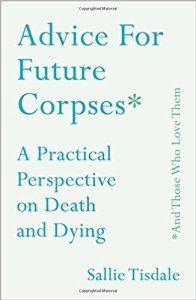
This comes from Sallie Tisdale’s windily, and wittily, titled “Advice for Future Corpses (And Those Who Love Them): A Practical Perspective on Death and Dying.” It’s a slimmish, scintillating book, pimpled with wisdom and knowledge from the stance of a professional thinker, steadfast Buddhist and registered nurse — a trusty troika.
41Td+RX8QDL._SX324_BO1,204,203,200_

But why does that quote sing? As I’ve touched on in prior posts (like this one), we are the whopping deniers, gymnastic dodgers, when it comes to confronting or even thinking about death. We know it’s there, lurking in the gloom of the collective id. Most people, as Tisdale says, are “trying to ignore a chronic background anxiety.”

I find this absurd and annoying, because I wonder: How, on a daily basis, does one not consider their inevitable, totally inescapable and at once entirely unpredictable (how and when will you die?) and completely predictable (you’re gonna die!) mortality?

“Advice for Future Corpses” examines that idea with a graceful, empathetic touch and it adds to a mini-mountain of mainstream literature about dying that includes Atul Gawande’s mega-hit “Being Mortal: Medicine and What Matters in the End” and Cory Taylor’s “Dying: A Memoir,” to name just two.

Why this death-book boomlet? Because lots of us are understandably freaked about the fearsome finality. (At least those who even consider it.) For one, people are living longer than ever and we find ourselves taking care of aging, often incapacitated parents and relatives. Death is in our face. And still, so many look away.

IMG_0599
Brompton Cemetery, London, 2017

Call me sick. Tisdale quotes William James on two personality types: the “healthy-minded … with its strange power of living in the moment and ignoring and forgetting,” and the rest, the “sick souls” who cannot blot out the naked prospect of mortality. Yes, a sick soul am I, but also enlightened, awakened and aware that our flimsy, fleshly bodies will someday fail us and atomize to dust.

I’m a nervous type so the fact that I look death in the eye doesn’t mean it’s a steely gaze. I lose that staring contest every time. Death scares me, even if, as I believe, it’s one big great nothingness — no heaven, no hell, no paradisiacal virgins — and we shouldn’t be scared of nothing. Yet the unknown is killing us, so to speak. Its foreverness terrifies.

Tisdale writes: “The psychiatrist Irvin Yalom describes the ego facing extinction as being ‘staggered by the enormity of eternity, of being dead forever and ever and ever and ever.’”

Totally.

“At some point,” Tisdale says, “most of us shift from realizing that sooner or later some future self will die to realizing that this very self, me, precious and irreplaceable me, will die. It’s a terrible thing to grasp, and though this insight may last a mere second, it changes your life.”

Her breadth on the topic dazzles. She addresses both sides of death-phobia (terror vs. liberation), our response to death (unalloyed grief), the certainty that we will die, the notion of the “good death,” personal anecdotes such as her dying friend shopping for biodegradable coffins and shrouds, and Zen-worthy declarations like “cremation can have a kind of stark beauty.”

She naturally can’t get to the bottom of it — death’s mystery is all-engulfing, impenetrable, the Big One — but her Buddhist-nurse compassion touches every page and she sheds copious slats of light into our shared abyss. My favorite citation comes from a dying Rabelais, whose last words were: “I am going in search of a great perhaps.”

The beauty in that is bottomless.

img_0601.jpg
Brompton Cemetery, London, 2017

Death becomes us

“To live fully is to live with an awareness of the rumble of terror that underlies everything.” 

Ernest Becker, “The Denial of Death”

For some of us, the above “rumble of terror” is a buckling, earth-cracking tremor felt many times each day, a sort of clockwork bell that tolls every hour, on the hour. It is, of course, death, our unavoidable mortality, crooking a finger, baring its teeth and uttering a horror-movie cackle.

Drama aside, what Becker says is that without a sharp recognition of the reality of your own death you paper over a critical dimension of existence. Without death, paradoxically, a major chunk of life is muted. You reside in the dark.

5154120492_e2269336f61.jpg

The existential denial Becker speaks of amounts to an ignorance as willful as it is mystifying. To mention dying has become taboo. How can the most important stage in life, the great closure, the monumental punctuation mark, be off limits? I don’t want to think about it,” goes a common refrain. “It’s just too horrible.” 

But is it? By being aware of your mortality, knowing you will die, that it is an unstoppable event, you can cultivate a richer, more philosophical, existentially awakened life. The aim of this consciousness, as I’ve written before, is to “put you in touch with an untapped aspect of your spirituality, to jolt you out of complacency and into perhaps uncomfortable soulfulness.”

Instead, people distract themselves from the big questions and tough realities. Texting, Facebook and binge TV shows are potent diversions. We think we have control over our lives by doing the right things — exercising, eating healthfully, thinking positive, traveling, communing with art and nature, procreating.

Rubbish.

“Modern man is drinking and drugging himself out of awareness, or he spends his time shopping, which is the same thing,” Becker says.

Death isn’t on my lips — I rarely broach the subject — but it weighs on my mind like an anvil. I’m not talking about the gruesome, corporeal details of death — the corpse, the medical examiner, the venal funeral industry, the land waste of burial — but the chilly philosophical fact of mortality, of dying. Not how we die, but that we die.

Hans Larwin's amazingly evocative 'Soldat und Tod' ('Soldier and Death') from 1917

It’s confounding that people dodder through life without considering death, as though it’s some vague, distant inconvenience that won’t afflict them — not even when they’re crossing a busy street or speeding down the highway or eating a marbled slab of steak or hauling around 100 pounds of extra body weight. The musty cliché “ignorance is bliss” could not be more fitting.

Accepting our fate now, in the present, dulls the fear factor. The idea of dying — Becker’s “rumble of terror” — is inarguably frightening, and that’s certainly why so many of us keep it at bay. But awareness makes you smarter, more prepared. It eases the angst. “The fear of death follows from the fear of life,” Mark Twain said. “A man who lives fully is prepared to die at any time.”

To live fully, says Becker, means to live mindfully, to be cognizant of that lyrical rumble of terror, to embrace one’s fate, or to at least be on cordial terms with it. It is, in fact, consciousness in full bloom.

A darkly delightful book of the dead

For the record, family: Do not donate my body to science when I die. Let them harvest an organ or two, scoop out my eyes like melon balls, carve off a carpet swatch of skin.

Then burn me up good.

Scary to say, but my obsession with death, dying and the post-life has only rocketed since I recently re-read Mary Roach’s weirdly engrossing, and joyously gross, 2003 bestseller “Stiff: The Curious Lives of Human Cadavers.”

51AT2j73sjL._SX331_BO1,204,203,200_

The title nearly says it all: Roach’s beautifully reported book is a blunt, euphemism-free, aggressively lighthearted examination of exactly what happens to cadavers that are donated to science and research. (Cue: barfing emoji.)

Facts, history, grisly details and the author’s vivacious gallows humor make the unutterable utterly readable. Roach is smart; she pauses for philosophical reflection about what’s before her, providing a finish of deep and dignified meditation to what could have been perverted voyeurism catering to “Faces of Death” sickos. 

The breezy read features jarring chapter subtitles — “Human Crash Test Dummies and the Ghastly, Necessary Science of Impact Tolerance”; “On Human Decay and What Can Be Done About It”; “Medicinal Cannibalism and the Case of the Human Dumplings” — that are so graphic, they may be all you need to get it. For example, that first one: Yes, dead bodies are used as crash test dummies in vehicles. Splat.

Plunge into the pages and you’ll get the smells, sights and sounds of expired bodies rotting, ripping, being gutted and even crucified. (Scientists still want to know how Jesus died on the cross. Freshly dead bodies are a prime instructional aid. Pass the nails.)

The doctors and scientists Roach meets are a reticent assortment. But she intrepidly presses on. 

o-SYNTHETIC-CADAVERS-facebookSometimes a source will turn his back on her, suspect of her macabre motives.
“You want a vivid description of what’s going through my brain as I’m cutting through a liver and all these larvae are spilling out all over me and juice pops out of the intestines?” snaps a vexed forensics examiner. 

Roach responds to us, sotto voce: “I kind of did, but I kept quiet.”

“Stiff” rests on my growing, groaning shelf of superlatively morbid but essential books on mortality, like “How We Die,” “Final Exit,” “The Denial of Death” and other festive titles. I recommend them all. They will, while you’re still living, change your life.

Want a reminder that you’re going to die? There’s an app for that

I don’t get people who don’t consider their mortality — the actual, undeniable fact that one day they are going to die, forever (because you are, reader, you are) — at least once or twice a day.

Surely that’s because I think about my death specifically and death as a brute phenomenon generally many times a day. This has been going on for years. Like since I was seven. I maintain a shelf of books about death, from “The Denial of Death” to “How We Die.” (My id is a vivid, hyperactive place. My therapy bills, exorbitant.)

Who needs a reminder of death? I wonder. It’s right there in the face that looks back at you in the mirror.

Who wants a reminder of death? my friends retort.

Apparently a lot of people, mostly millennials, do. They want a brief if pointed reminder that they are indeed going to buy it sometime. And they want it exactly five times a day, randomly. On their phone.

10We-CROAK1-blog427That’s what the new app WeCroak offers: quick, jarring jabs calling attention to users that, yup, death is waiting around the corner. With homilies like this from Herman Melville — “Death is only a launching into the region of the strange Untried” — the 99-cent app exists expressly to galvanize consciousness, a little existential poke to nudge you into the now. And maybe to scare the holy hell out of you.

“Each day, we’ll send you five invitations to stop and think about death,” says the WeCroak site. “It’s based on a Bhutanese folk saying that to be a happy person one must contemplate death five times daily. The invitations come at random times and at any moment, just like death.”

By turns soothing and somber, quotes are culled from the likes of Emily Dickinson, Thoreau, Charles Bukowksi, Lao Tzu and Margaret Atwood.

“The grave has no sunny corners,” goes one. (For pessimists.)

“Begin again the story of your life,” says another. (For optimists.)

methode-times-prod-web-bin-b0093bb2-e034-11e7-a1a7-d23b605d14fb

(That one, for fatalists, I think.)

We think we have control over our lives by doing the right things — exercising, eating healthfully, thinking positive, traveling, communing with art and nature, procreating.

It’s rubbish.

WeCroak’s passages are meant to put you in touch with an untapped aspect of your spirituality, to jolt you out of complacency and into perhaps uncomfortable soulfulness. In fact, hokey as it sounds, I’d say the messages are nutrient-rich food for the soul.

The benighted disagree. People have actually called the app “sick” and “disgusting.” These people are babies. They are in craven denial. No matter — they’re still going to die.

“Death never takes a wise man by surprise; he is always ready to go.” — Fontaine

I don’t know if WeCroak offers that jewel, but it should.

10we-croak2-blog4272.jpg

392x696bb.jpg

Bury me in the ball

What to do with your body after you die?

For me, it’s easy. I’ve instructed loved ones to cremate me, then put my ashes in a pickle jar, drive down the interstate doing 70 and dump the powder out the window — although the car behind, wiper blades slashing furiously, likely won’t be overjoyed by the Mount St. Helens-esque storm.

It’s simple, it’s cheeky, and it’s entirely illegal. For someone bent on cremation — I’m not getting leeched of my precious fluids, then pumped with toxic chemicals and put out to rot in an obscenely overpriced box for eternity — there must be another way. And of course there is.

I think about this stuff with unseemly frequency. For as long as I can remember, the specter of death has had its talons lanced into my gelatinous psyche. I read about it, I watch movies about it, I dream about it, I visit cemeteries all over the world to get close to it.

I mull mortality, yours and mine, every single day. I’m a realist, but it’s a quivering kind of reality. As mortician-author Caitlin Doughty writes, since childhood “sheer terror and morbid curiosity have been fighting for supremacy in my mind.” It’s a bifurcated fascination, marbled and complex.

cremation

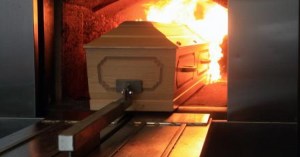
Cremation is flat-out horrifying, but for me it’s the only option, none of which are especially appetizing. But then what? Ashes and bone kibble stored in a handsome urn and set on the mantel like an ornate candy jar? Cremains scattered over the San Francisco Bay or some other picturesque point of personal poignancy?

No, I got it. Bury me in a ball.

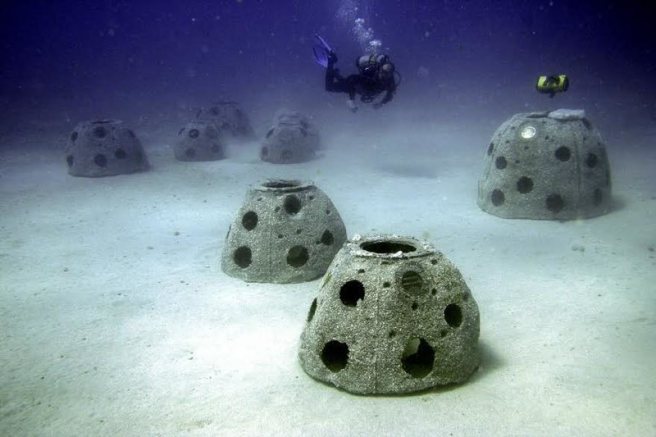
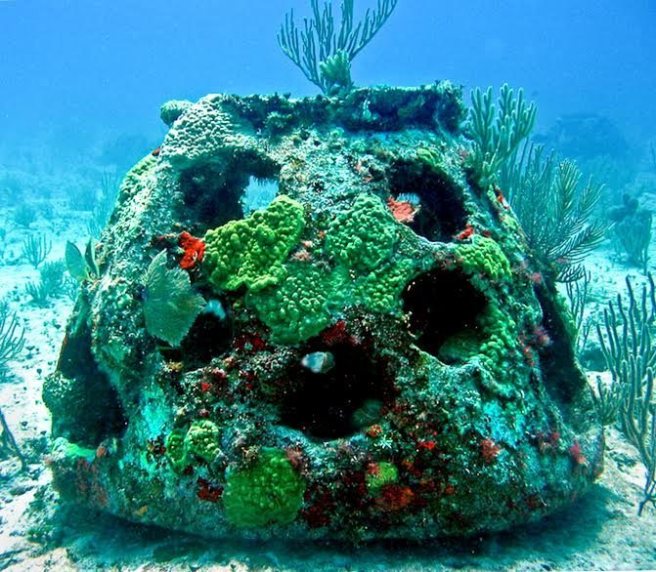
What’s that? It’s this: the wonderful underwater reef ball, an eco-friendly, reef-building sphere of cement in which your ashes are placed and then sunk to the bottom of the sea. First you’re cremated. Then your ashes are stirred with concrete and shaped into a hollow, hole-pocked reef ball, which can be up to six feet wide and five feet tall. Resting on the seafloor, its goal is to provide a teeming marine habitat for fish, coral and more.

image.jpgSeveral companies do reef burials, but Eternal Reefs of Florida specializes in more personal balls. Three sizes of reef balls run from about — hang on — $4,000 to $7,500, according to AtlasObscura.com, which goes on:
“The larger reef balls can accommodate multiple sets of remains, so that families can be ‘buried’ together, turning the ball into a sort of underwater mausoleum. Surviving friends and family can leave handprints, markings, and messages in the wet cement.”

image-1.jpg

The reefs are fashioned from “environmentally-safe cast concrete” and are “placed in the permitted ocean location selected by the individual, friend or family member,” says the Eternal Reefs site.

I grew up on the Pacific Coast, from Santa Barbara to the SF Bay Area, and I’ve always loved SeaWorld and I’m a big fan of grilled octopus. The reef ball sounds like a ball, smack in my bailiwick for the eternal snooze. I’m intrigued by its eco possibilities, that it can nurture fishies and coral and plants and sea anemones and, if lucky, some impish sea otters. In the picture above, it’s not the prettiest grave on the lot, cankered and barnacled with squiggly mysteries of the sea, despite the dazzling Van Gogh hues. (Kind of looks like a six-month-old jack-o’-lantern.)

We should figure this out before it’s too late, while we’re still here, cognizant and, well, alive. We plan for vacations with great care and great expense. This is the most epic journey of all, the final destination, one-way ticket in hand. Not sure about you, but I want to go out with a splash.

Happy Halloween.

Life, death, brevity — quote of the day

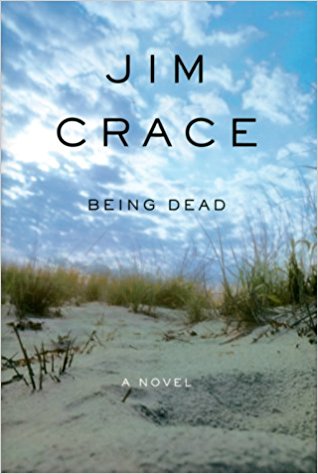
“The world’s small, breathing denizens, its quaking congregations and its stargazers, were fools to sacrifice the flaring briefness of their lives in hopes of paradise or fears of hell. No one transcends. There is no future and no past. There is no remedy for death — or birth — except to hug the spaces in between. Live loud. Live wide. Live tall.’’

Jim Crace, “Being Dead”

41RCP79053L._SX316_BO1,204,203,200_.jpg