

Think of the hundreds — no, the thousands upon thousands — of books published in the United States from Jan. 1, 2000 to today (elbow nudge: that’s 25 years). Mounds, mountains, miles of bound pulp, if you consider only traditional paper books that you flip the pages of and place on neatly arranged shelves, while ignoring their electronic ilk.
Now, pick the best books from that teetering heap, or actually the 100 best books, both fiction and non-fiction. That’s the gargantuan task The New York Times has undertaken this week in its selection of “The 100 Best Books of the 21st Century So Far.”
We’re talking the smartest, zestiest, funniest, fiercest, most important and most influential tomes over the past 25 years. A gallery of luminaries — writers, actors, critics, editors and more — voted, and you can find them and the whole Times project here, including the final list of the 100 “best” books.
It’s pure gimmickry. It’s subjective folly. It’s a game. Let’s play.
I’ll give you a taste. Here are the Times’ top 10 picks (spoiler alert): 1. “My Brilliant Friend” by Elena Ferrante. 2. “The Warmth of Other Suns” by Isabel Wilkerson. 3. “Wolf Hall” by Hilary Mantel. 4. “The Known World” by Edward P. Jones. 5. “The Corrections” by Jonathan Franzen. 6. “2666” by Roberto Bolaño. 7. “The Underground Railroad” by Colson Whitehead. 8. “Austerlitz” by W.G. Sebald. 9. “Never Let Me Go” by Kazuo Ishiguro. 10. “Gilead” by Marilynne Robinson.
It’s a robust mix, though heavy on the historical, I think. The top 11-20 is a bit lighter, with titles like Junot Díaz’s funny “The Brief Wondrous Life of Oscar Wao” and Michael Chabon’s delightful “The Amazing Adventures of Kavalier & Clay” (yet it also includes Joan Didion’s grief journal “The Year of Magical Thinking”).
Conveniently, the project provides an online tool that makes it easy to tally how many books you’ve read from its mega-compilation. Me, I’ve read 39 of the 100 chosen titles — not great, not bad. But it’s not a contest. I won’t list all of them here. Instead, I’ve picked five of my favorite books from my personal tally, a peek into my pea brain and what I look for between covers.
- “The Human Stain” by Philip Roth — A disgraced professor is smeared by a career-crushing lie all while he’s weighted by his own monumental secret in this shattering portrait of America in 1998. Roth propels the story with tart literary gusto and his patented moral vehemence. One of his best.
2. “The Amazing Adventures of Kavalier & Clay” by Michael Chabon — Gleefully spanning lands and history, this teeming picaresque is about a magician and an escape artist who figure out life by creating globe-trotting comic books. But that’s just a sliver of their “amazing adventures.” Chabon, who won a Pulitzer for his 600-page romp, uses every trick in the book to entertain and edify, and handily succeeds.
3. “Behind the Beautiful Forevers” by Katherine Boo — An unvarnished plunge into the slums — and humanity — of Mumbai, India. An award-winning journalist, Boo’s unflinching but empathetic reporting is both devastating and bracing. It sticks with you like a troubling dream.
4. “The Road” by Cormac McCarthy — Biblical, apocalyptic, rife with death, despair and cannibalism, McCarthy’s unrelenting opus takes us through hell with ash, blood and savagery, and stingy glints of light. A Pulitzer winner, this riveting knockout is all about being human in the abyss.
5. “Gilead” by Marilynne Robinson — This deeply spiritual Pulitzer-winning novel almost defies description. An epistolary story told in the forms of journals and memoirs, it showcases Robinson’s otherworldly command of language and astute thinking about the divine. Not the easiest read, it still blew me away.
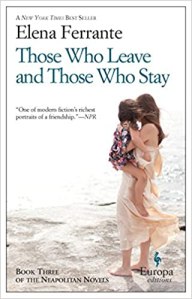
Rounding up to 10: “My Brilliant Friend” by Elena Ferrante; “White Teeth” by Zadie Smith; “The Corrections” by Jonathan Franzen; “Outline” by Rachel Cusk; “Train Dreams” by Denis Johnson.



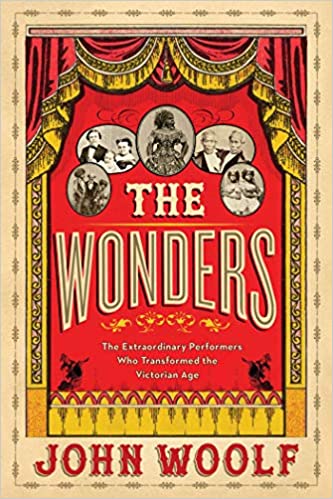 Agreed. Author John Woolf weds sharp scholarship and anecdotal color about some of the most popular human oddities of the 17th to 20th centuries with accessible and mesmerizing verve. Some of the abnormalities are digestible — dude, you’re like the size of a Cabbage Patch Kid! — while others rattle: the rampant racial exploitation marring the sideshow circuit truly sickens.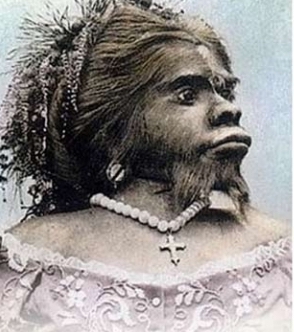
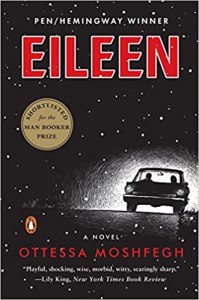
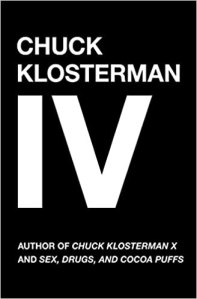
 There’s a handful of hip, youngish, mostly male writers I avoid because of both their grating public images and callow, look-at-me writing (see ya, Dave Eggers). Journalist Chuck Klosterman, who specializes in rock and pop culture at large, has always made my belly twist at the teensy bit of his I’ve read in the likes of Spin magazine. He’s published loads of essay collections, like “Sex, Drugs, and Cocoa Puffs” and
  Also a delight are the words of the late David Carr, the New York Times media columnist who in 2015 dropped dead in the Times newsroom, a fact that might have tickled the celebrated super-journalist.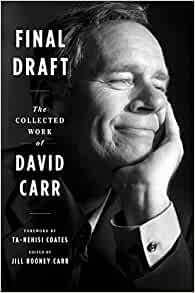
 GNASHING.