One of the hottest books of the year is cool to the touch

Funny how you can admire a book without fully liking it. That’s the case with the lavishly overpraised memoir “Stay True” by New Yorker writer Hua Hsu, which was named one of the 10 best books of the year by The New York Times and made book reviewers get all moist.  

It’s a baffling response to a book whose prose contains no electricity, no buzz. A book that rather lies there, dry, ho-hum and humorless. 

And yet Hsu reveals authorial gifts by showing what even a mildly engaging story can do: carry you along with raw pathos, stripped of punch and pyros. Though the book sputters at the half-way point — Hsu’s early years at UC Berkeley in the ‘90s aren’t as novel or riveting as he thinks they are — it occasionally grazes the profound with ranging reflection that delivers a spurt of substance. 

Still, missteps abound. Women, for instance, are almost totally absent for most of the book, noted in passing by first names only, granted the vaporous texture of ciphers. I don’t recall one speaking, even when Hsu at last finds a dimly sketched girlfriend.

Not even his Asian identity issues (he’s Taiwanese American), his mania for alt-music, or especially the zines he publishes pop off the page. These are exciting topics, but we’re left thirsting. While a huge fan, I find most New Yorker writing to be self-consciously restrained and prim. Staff writer Hsu suffers from a chronic case of New Yorker-itis.

But at least it feels real, which memoirs like Mary Karr’s aptly titled “The Liars’ Club” definitely do not. Which makes “Stay True” also aptly titled. (I find pretty much all memoirs to be 15-20% made up — there’s simply no way such decades-spanning reportage can be true — but that’s pulp for another blog.)
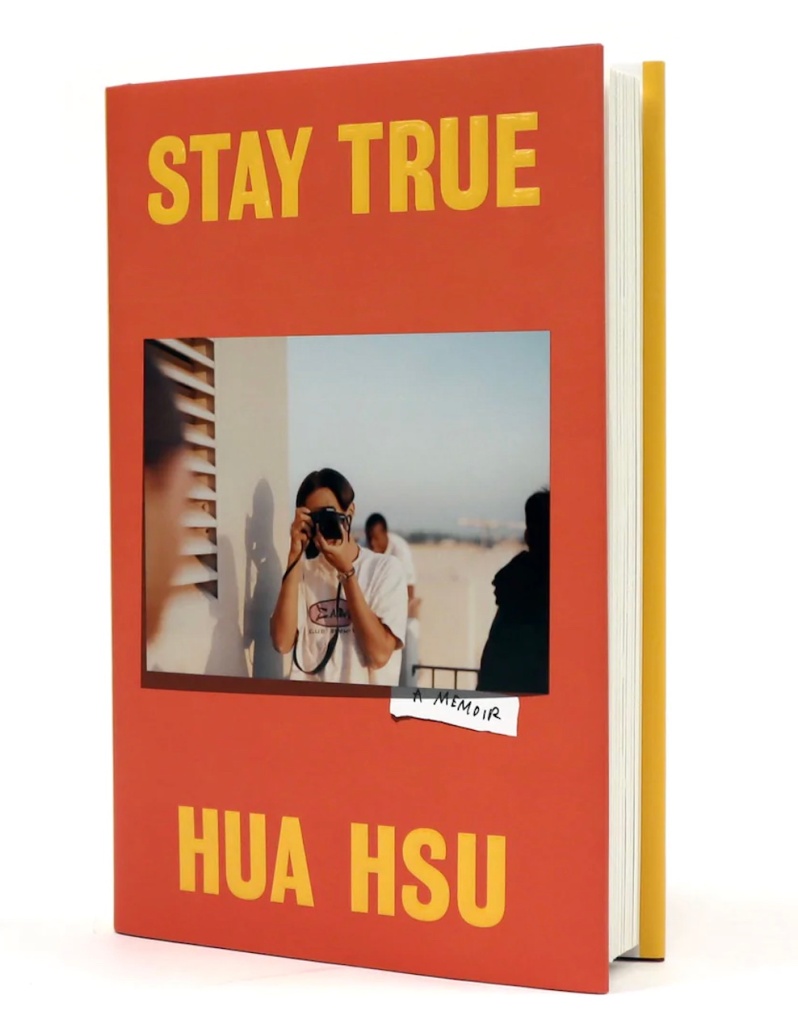
This book is about friendship and the violent loss of it and the hole it leaves. Hsu meets his friend Ken —  who’s mostly depicted as a one-dimensional cut-out — at college and they become best bros (Ken is in a frat, something initially anathema to the “outsider” Hsu). Ken is soon ripped from the narrative and we’re supposed to be crushed. 

But the loss of a character we barely knew is treated with a remove that makes it hard to share an emotional wallop. Believing otherwise, Hsu writes: “I was a storyteller with a plot twist guaranteed to astound and destroy.”

Not quite. “Stay True” misses its mark, but by feet, not yards. A few sentences jiggle with magic — “Their beats sounded like death rearranging furniture in the underworld,” Hsu notes about a rap group — and the closing passages of this slim volume emanate a cathartic warmth that’s AWOL in the gangly prose of the first 100-plus pages.

In the end, Hsu wants the truth to pierce. Here, it merely pinches. 

***

Ten books I really liked this year:

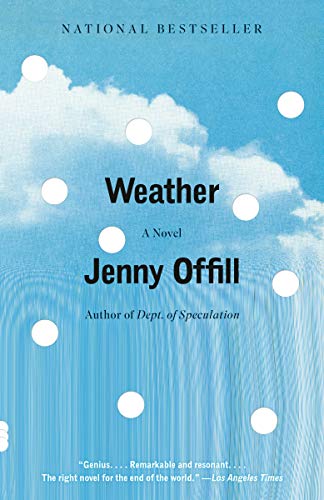
“Asymmetry” (Lisa Halliday); “Eleven Kinds of Loneliness” (Richard Yates); “The Copenhagen Trilogy” (Tove Ditlevsen); “Heat 2” (Michael Mann and Meg Gardiner); “Either/Or” (Elif Batuman); “How Should a Person Be?” (Sheila Heti); “Weather” (Jenny Offill); “Wildlife” (Richard Ford); “A Manual for Cleaning Women” (Lucia Berlin); “The Idiot” (Elif Batuman).  
My current cultural playlist

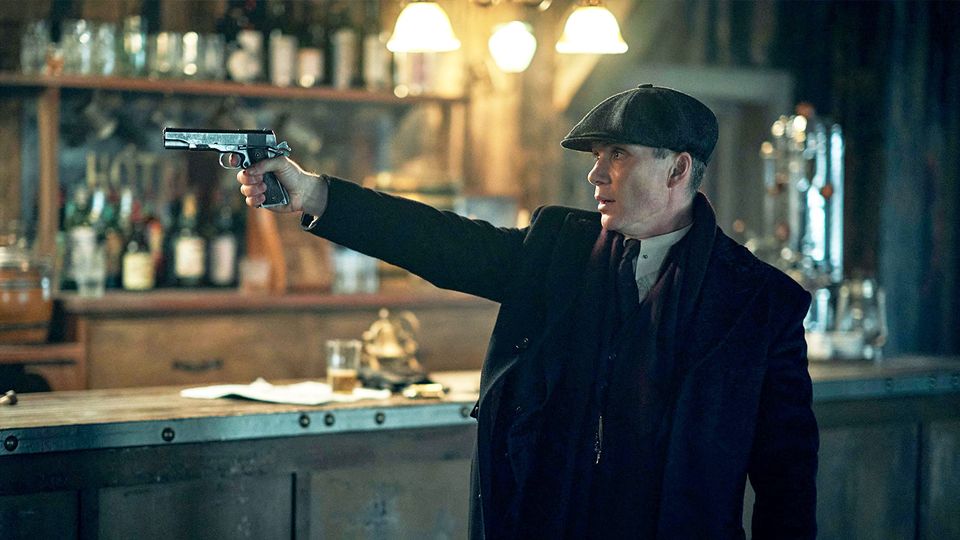
1. Way behind on the cult British crime saga, I’m discovering the gritty and gruesome pleasures of “Peaky Blinders,” an uncompromising gangster epic bristling with politics, razor blades, gamblers, guns, and unvarnished thuggery. 

Set in Birmingham, England, just after World War I, the Netflix series is a fearsomely atmospheric blood opera starring a rogue’s gallery of dapper gangsters with deep family roots and a hunger to stay in power. It openly, inevitably recalls “The Godfather,” “The Sopranos” and, on a knife and knuckle street level, “Gangs of New York,” with perhaps more thematic tentacles.

The show is fronted by Cillian Murphy as crime boss Thomas Shelby, whose smoldering menace can burn a hole like a bullet. One website has voted him the Greatest TV Character of All Time, a testament to Murphy’s pit bull commitment and conviction. He unnerves every time he’s onscreen, makes you shift in your seat. Pepper the grimy period setting with tunes by Nick Cave, PJ Harvey and White Stripes and you get more than anachronistic friction; you get gang-banging with a boogie beat. 

2. Listening to Nirvana’s short, punchy songs, it struck me again why the band is so good and lasting: Almost lick for lick, Nirvana is as infectiously hooky as the Beatles.

And on the Beatles — my favorite band, and I’m not a hundred years old — I liked this line from “The Idiot,” Elif Batuman’s riotous novel of the head and heart: “The Beatles turned out to be one of the things you couldn’t avoid, like alcohol, or death.”

3. You also can’t avoid Marvel and its muddleheaded mayhem in the current cinema, a soul-battering bummer. But there do exist little oases floating past the aesthetic carnage, attractive indie films like the raunchy, uproarious “Zola” and my latest favorite, “The Worst Person in the World.” 

The grabby title is slyly misleading in this dark rom-com drama about a young woman who skitters between jobs and lovers while surfing life’s foibles. Joachim Trier’s prickly Norwegian charmer, ablaze with insinuating characters and sexy anecdote, is told in 12 fluid chapters, led by endearing star Renate Reinsve, who won best actress at Cannes for her intricate portrayal of a woman in flux. Hardly the worst person in the world, she’s a millennial supernova.

4. Ottessa Moshfegh’s new novel “Lapvona” is grossing out reviewers with its blithe violence and panoramic depravity. (Is Moshfegh the worst person in the world?) The medieval fable, set in a village rife with plague and other misfortunes, is earning wildly mixed reviews, many of them lashing in their displeasure, even from fans of Moshfegh’s previous dark fictions (“Eileen,” “Homesick for Another World”). 

I’m a fan as well, and I’m steeling for a rough ride. I’m only on page nine, and here’s a verbal taste: “disemboweled” “heads of the dead,” “a bone sticking out through the flesh,” “animal excrement.” (Page nine.) The book, in all its gloppy mucus and viscera, came out this week — which makes it the perfect summer beach read. You heard it here first.

In praise of small pleasures

Stay away. We’re contagious. First my nephew caught Covid, then I did. Now my brother has it. Next up: the dog. 

This too shall pass, this rottenness, and I’m happy that the virus, for now, is behind me. It’s just one small blessing in muddled times, a jagged slab of flotsam to hug while the ship sinks.

There are other things. Like Elif Batuman’s new novel, “Either/Or,” which I’ve plugged here before briefly. It’s one of few passing pleasures right now, be it a startling observation about love or a suave turn of phrase that knocks me dizzy. 

Or a jab of insight glinting with wry misanthropy: 

“Of course, you couldn’t have a party without alcohol; I understood this now. I understood the reason. The reason was that people were intolerable.” 

Or any number of absurdist gems: 

“I hadn’t a clear mental picture of his new girlfriend, Lara, and realized that I had almost expected her to look blurry.”

But what’s a small delight to me may be imperceptible to you. 

Unless you’re traveling abroad and you’ve just learned that the U.S. has lifted its Covid testing requirements to return to the States — a major hassle deleted from an already stressful travel climate. I recently had to take the test in Portugal and Italy to get back home and the logistics were near-traumatic. 

So rejoice for that minor miracle. And why not the same for Monkey 47, a richly aromatic, botanically fierce, impishly named gin that I’ve rediscovered and is well worth the price. Even the gin-averse extol its ample virtues. It may be the best gin on the shelf, a smooth bracer for rough days.

What else is keeping me warm, now, when the skies are dark? The crack and screech of Brandi Carlile’s voice on her song “Broken Horses.” The zesty mazeman noodles at Ani Ramen House. Penélope Cruz’s febrile, heartrending performance in Pedro Almodóvar’s stirring melodrama “Parallel Mothers.” My unquenchable wanderlust. Bongos. That woman at the cafe. Books, mountains of them.

The dog. 

The dog. 

The dog.

Culture in the time of Covid

My Covid’s gone and I feel strong as an ox, even though I barely know what an ox is. A big cow? Paul Bunyan’s interspecies BFF? Actually, I just looked it up. An ox is a “castrated bull used as a draft animal.” So let’s scratch the whole ox analogy entirely. 

Point is, I’m back — non-contagious, symptom-free, fit as a fiddle. (I don’t know what that means either. Skip it.) It took about five days to vanquish the virus, and it wasn’t as bad as I imagined. It was like a mild cold, but without mucus violently erupting from my lungs. This was a dry cough, little hacks, as if an infant was smoking a cigarillo.

As hoped, I got a lot of reading done during my convalescence. I wrapped up “The Sportswriter,” Richard Ford’s extraordinary, bittersweet novel about life, love and letdowns, and started three more books, all highly acclaimed and released in the past few weeks.

Alas, two of them tanked. Those would be Ali Smith’s “Companion Piece” and Mieko Kawakami’s “All the Lovers in the Night.” 

I’m not sure what critics are going on about with Smith. They go bananas for her Seasonal Quartet novels — I failed miserably to warm up to two of them — and seem to regard the new book as the prosaic sublime. I read 175 pages of “Companion Piece” and surrendered with a mere 50 left. She’s a slog, oblique, flirting willfully with incoherence. I wasn’t having fun. I was having a migraine.

I enjoyed Japanese super-author Kawakami’s earlier novels, the shrewd and touching “Heaven” and “Breasts and Eggs,” which sounds like a particularly provocative breakfast dish. But her latest, though not totally displeasing, never takes off. It’s slow going … going nowhere.

But I hit pay dirt with “Either/Or,” Elif Batuman’s sequel to “The Idiot,” tracing the turbulent interior life of a female college student who’s trying to figure it all out. It’s at once wildly funny and erudite, catchy and sparkling, and that’s about all I can ask for in a book. Bonus: the author’s name is Elif.

For someone isolating with time to burn, I watched very little in the way of shows and movies. I did stay abreast of the series “Hacks” (hilarious), “Top Chef” (harrowing) and “Barry” (hilarious and harrowing). And I’m looking forward to sinking my teeth into “Irma Vep,” the great Olivier Assayas’ dramedy about a vamp, vampires and the insanity of making movies.

Meanwhile, everybody and their easily-scared tweens are bingeing Netflix’s gimmicky genre mash “Stranger Things.” I preferred the show when it was called “Scooby-Doo.”

I also got to anticipate my July journey to Buenos Aires as I was spread out, aching and sniffling with dramatic moans of self-pity. It’s something to look forward to, and, from a piece I read recently, that’s not only a good thing, it’s a healthy thing: “Having something to look forward to boosts your mood and lowers your stress. It can increase motivation, optimism and patience and decrease irritability.” Huh.

Not quite a Covid cure, but it can’t hurt. So much so that I started looking forward to my annual October trip, leap-frogging the July trip I haven’t even taken yet.

I’m thinking Budapest, a European joint I have yet to visit. Or perhaps a return to Krakow. Or Berlin. I’ll have to see what Covid is up to in those places. I might be cured, but the tenacious bug, mean and mercurial, still has the world in its gooey grip. 

Sick daze

Well, I got it. Or it got me. Whatever. It’s my turn. For Covid, that is. 

Some crabby cold symptoms — the usual gunk: light cough, wet nose, swimmy head, a generalized ick — proved to be the real deal today. A test said so. My achy-breaky body bears it out.

Now what?, I wonder. First, I’ll be isolating for five days. Then I’ll take another test. Meantime, lots of fluids, rest, crushing boredom, gratitude that I haven’t lost my taste or smell (yet!), and some reflecting on how foolish I was to think I was impervious to the virus, as I took all the precautions — two rounds of shots plus a booster, regular mask-wearing, mega doses of arrogance, etc. Small irony: I was slated to get my second booster this afternoon. 

They say most of us will get Covid, so I don’t feel completely singled out and picked on (mmm, yes I do). Still, it’s a drag. I’ve had to rearrange my schedule, cancel appointments, and, sorely, I will miss a public reading of one of my brother’s stellar plays. Plus, I have a wee dry cough that sounds like a choking Munchkin.

Reading. I’ll catch up on some reading. I’m already waist-deep into a re-read of Richard Ford’s beautifully observed 1986 novel “The Sportswriter.” A piercing slice of contemporary realism, the book is tinged with rue and humor and grit, and profoundly meditative about the everyday struggle. It’s oddly comforting, despite the sting. 

On deck is “Either/Or,” Elif Batuman’s brand-new sequel to her hit novel “The Idiot.” Like its predecessor, critics adore it (“This novel wins you over in a million micro-observations” — NYT) and the way it sweeps you into a bright young woman’s woolly world of self-discovery. (That’s all I got. I haven’t read it yet.)

I can get all philosophical about contracting the virus, or not. It’s plain as day, and because it’s physical, intellectualizing it, cataloging the myriad ways the body betrays us, is just so much wheel-spinning. So far, the malady feels like a mild head cold — every so often I wonder if I really even have it — and I’m banking on it staying that way. 

Covid can kill you, but so can the flu, or a drive to the pharmacy. I know lots of people who’ve had it and each one pulled through famously. So I’m not too tangled up about it. Everything will be just fine … right?

As the lead in “The Sportswriter” says, “Sometimes I’m afraid … It’s natural to the breed.”