Recent tomes I’ve tapped

I’m never not reading a book or two. These are a few new titles I got my grubby paws on: 

Mike Nichols’ 1966 film of Edward Albee’s corrosive play “Who’s Afraid of Virginia Woolf?” remains a dish-rattling, drink-spilling, daggers-in-your-ears delight, all marital earthquakes and social Molotov cocktails. (Cocktails. Of course.) Booze is big in that cracked portrait of a long-wed couple on the rocks. (On the rocks. Of course.) And you get a contact high reading the riveting “Cocktails with George and Martha: Movies, Marriage, and the Making of ‘Who’s Afraid of Virginia Woolf?’” by Philip Gefter, who capably captures the play’s serrated edges, dubious morality and verbal drive-bys, as well as the behind-the-scenes hoopla of making a controversial movie with a controversial couple, no less than Richard Burton and Elizabeth Taylor — Hollywood nitroglycerin. It’s a bracing blast of theater and cinema history.  

“Headshot” is by a woman named Rita Bullwinkel. Let’s get that out of the way. (There, done.) This slim, tightly coiled novel is also a muscular debut, damp with the blood and sweat of a passel of female teenage boxers, zesty characters realized with pointillist panache. Time-leaping and fragmentary, the girls’ stories are told in intense vignettes for a scrappy scrapbook of pugilistic profiles that pounds with humanity and life. If not quite a K.O. — more tonal and rhythmic variety would shake things up — the book is a fleet-footed contender. 

With irksomely precocious flair — at 35, he’s a wizardly wunderkind — poet Kaveh Akbar conjures worlds of art and ideas in his radiant fiction debut “Martyr!” Reeking agreeably of auto-fiction, this dense but delectably readable novel is about an Iranian-American poet scouring past and present, life, death and love with the insight of an artist and the squishy heart of the wounded. Gorgeous language propels you through its lush, gently philosophical thickets. And despite some muddled mysticism near the end — I’m allergic to spiritual allegory — “Martyr!” had me pleasantly reeling. 

Lorrie Moore’s a personal favorite and her latest fiction is the knottily named “I Am Homeless If This is Not My Home.Like all her books, tangy prose festoons the pages (a bite-size sample: “Fluorescent light rinsed the room.”). Yet the novel, with its arch surreal touches, rubbed me wrong. The narrative, centered on a man and his dying brother, is gawky, with sharp elbows and knobby knees. Plus, there’s heaps about chemo, cancer and croaking, and I’m not in a hospice mood. The novel just won the National Book Critics Circle award for fiction, so call me bonkers. In this rare instance, Moore is less.

Not for the feint of heart but perhaps for suckers for sentiment, the bleak memoir “Molly” — breathlessly written by Molly’s husband, Blake Butler, a noted novelist of thrillers — starts with her gunshot suicide and continues with another bang, the crack of bared emotion and tell-all candor. This is the story of Butler and Molly Brodak’s three-year marriage, a melding of art and nature and words and, in her case, bouts of inconsolable darkness. Brodak, a published poet and author who said “I simply wasn’t good enough,” killed herself three weeks before her 40th birthday, in 2020. “Molly” is so much about her and her devastating secrets, yet equally about Butler’s clawing to the other side of grief through deep (and verbose) psychic excavation. He includes Molly’s suicide note (“I don’t love people. I don’t want to be a person”), along with the frantic blow-by-blow action of finding her body in a favorite field of theirs. These passages are tough-going, not only for the forensic particulars, but for Butler’s writerly histrionics as well; he pants on the page. A cult sensation, tugging readers to and fro like emotional taffy and kicking critics into superlative overdrive, “Molly” is a divisive read, by turns lovely, wincing and overheated. It is the first book I’ve read that opens with the phone number for the national suicide hotline. 
The smart, tart prose of Lorrie Moore

Lorrie Moore astonishes, still, her writing shiny, poetic and brainy, the best kind of literature. It’s massively, richly human, striking each note, from humor to horror and all in between. She’s a blistering deterrent for ever trying to commit fiction. If I can’t be that good, I don’t want to be anything — that’s my thinking. My stabs at fiction have been leaden, lame, laughable. 

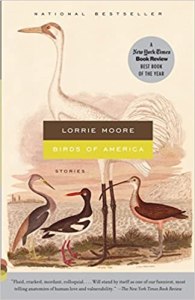
I am re-reading Moore’s acclaimed story collection “Birds of America.” On its release in 1998, a writer friend and I were both reading the book, and I told him that her writing made me jealous, defeated. “Oh, not me,” he said. “It inspires me.” (That from the guy who was a two-time Pulitzer Prize finalist in his early 20s.) 

71NDES3RN5L._SX334_BO1,204,203,200_.gif

Today Moore’s ecstatic prose inspires me, too, provides oomph, a kick to my motivational motor, spurring me to tap the keys and say something, anything. That can be dangerous. If it’s any good, most writing is. (I know — that’s axiomatic.) 

What I mean is, I can write stuff so sloppy, witless and rancid that it’s actually toxic — it wounds and discourages. Then I can pick up a book by Moore or her peers (say, Alice Munro or Tobias Wolff) and be pacified by sheer beauty and slashing craft and get revved again at the possibilities — the old can of spinach. 

Moore’s written four story collections: “Self-Help,” “Birds of America,” “Bark” and the brand-new anthology “Collected Stories” from the prestigious Everyman’s Library Contemporary Classics. And three novels: “Anagrams,” “Who Will Run the Frog Hospital?” and “A Gate at the Stairs.”

I read the latter and liked it, but I don’t remember much about it. “Birds of America” is different. It’s stickier, droller, more dynamic, more prismatic. It’s spiky, empathic, bright and cynical. Though she’s no maximalist, less isn’t Moore: Her words contain worlds. (And her titles are often titillations: “Which Is More Than I Can Say About Some People”; “People Like That Are the Only People Here.”)

I forgot to mention the stories are also crackingly funny. Moore’s effortless humor, mostly of a mordant strain, ribbons through the dramas organically. She’s no stand-up comedian like novelist Gary Shteyngart, who’s forced and erratic. With sociological rigor, she locates the dark laughs baked in the everyday.

Lorrie-Moore.jpgShe is particularly good at the jolt-laugh of the unexpected:
“The next time Bill saw her, it was on her birthday, and she’d had three and a half whiskys. She exclaimed loudly about the beauty of the cake, and then, taking a deep breath, she dropped her head too close to the candles and set her hair spectacularly on fire.” 

And she’s bracing when she goes darkly wise:

“This is what he knows right now, with dinner winding up and midnight looming like a death gong: life’s embrace is quick and busy, and everywhere in it people are equally lacking and well-meaning and nuts.”

My next book purchase will be “Bark,” Moore’s 2014 story collection, which I find hard to believe I don’t already own. I’ve put it off, sure that it can’t touch the brilliance of “Birds,” that it’s a disappointment in waiting. But revisiting her masterpiece blots out doubt. How can it be weak or wan? It can’t, I say. It can’t.

Not much else to do but read (and read…)

Thanks to the collective corona cloistering, I’ve been ordering books online, greedily. With libraries and bookshops closed, I’m buying used books from third-party sellers on Amazon and new titles from New York indie institution McNally Jackson. 

Unquenchably, I’m ingesting words in the yawning vacuum of self-quarantine. Reading is nearly as nourishing as food. This is what’s on my literary plate. 

51j21ZQ+KHL._SX322_BO1,204,203,200_

I met “Birds of America” author Lorrie Moore at a book signing for that acclaimed 1998 story collection, and she wasn’t the most jolly person in the room. She was frosty to her gathered admirers, but I don’t hold that against her. Moore’s edge informs her tart, smart fiction, which is also infused with emotional immediacy and pocked with laughs. With stories like the award-winning “People Like That Are the Only People Here,” the book is a contemporary classic that hasn’t aged a whit. 

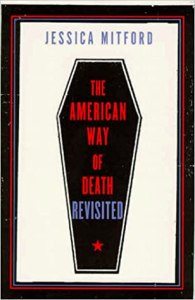
Death looms these grim days, though mortality is always on the mind of this moody Cassandra. Long ago I read the updated edition of “The American Way of Death,” Jessica Mitford’s definitive 1963 exposé of the funeral racket, and I’m back at it, if not for the dazzling reportage and head-shaking stats — upshot: funeral peddlers are exploitative swindlers — then for purely great writing that makes a dismal subject pop. The book is not only essential muckraking, but lavish literary satire, nipping at a venal industry with the toothy, pit bull wit of Pauline Kael. This tangy volume is one big reason I will be cremated and thrown to the wind.

71BFF821VTL._SX306_BO1,204,203,200_.gif

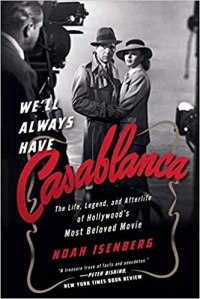
51VIRgJYGcL._SX331_BO1,204,203,200_While rereading books like the above, I’m also rewatching some favorite flicks, including “Casablanca,” the evergreen masterpiece in which every element of fine filmmaking miraculously falls into place. I love a good movie book so I clicked on Noah Isenberg’s “We’ll Always Have ‘Casablanca’: The Legend and Afterlife of Hollywood’s Most Beloved Movie,” the gawky title of which tells you just what you’re delving into. I haven’t cracked it yet, but I’m hoping for historical Hollywood gold on par with the recent knockout “The Big Goodbye: ‘Chinatown’ and the Last Years of Hollywood.”  

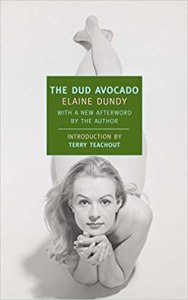
Dreaming about Paris, I tripped upon the site for fabled English-language bookshop Shakespeare and Company, that grand, musty emporium on the Left Bank, where I scrolled staff recommendations for Paris-set stories. Never mind its racy cover, I was lured to Elaine Dundy’s cult comic classic “The Dud Avocado,” a romp tracing the libertine escapades of a comely young American woman in the French capital who yearns to exist out loud. Called a “timeless portrait of a woman hell-bent on living,” the novel seems unlikely to disappoint this thwarted traveler pining for Paris.  41efY3TglbL._SX310_BO1,204,203,200_On the note of cult classics, “Airships,” Barry Hannah’s award-winning collection, promises “20 wildly original, exuberant, often hilarious stories that celebrate the universal peculiarities of the new American South.” The book hasn’t arrived yet, but it’s highly anticipated after being called “one of the most revered short story collections of the past 50 years, remaining a vital text in the history of the American short story.” And this snippet from it makes me sort of love it already: “What a bog and labyrinth the human essence is … We are all over-brained and over-emotioned.”

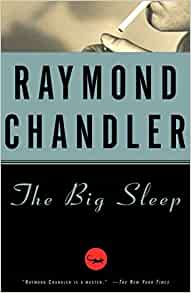
51hhyhVwywLRaymond Chandler’s crackling and complex detective noir “The Big Sleep” scorches with style. The novel, a total delight, introduces private eye Philip Marlowe, literature’s great existential antihero, a shrugging loner with a gun, cigarettes and devastating wit. Chandler crams it with so many ravishing lines, images, similes, he elevates pulp to high literature. Marlowe, all slow-burn aplomb, speaks and thinks like the consummate smart-aleck tough: “I don’t mind if you don’t like my manners,” he grumbles. “They’re pretty bad. I grieve over them during the long winter evenings.” Unknown.jpeg
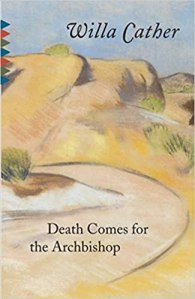
“Death Comes for the Archbishop” is a western in priest’s clothing. Set in the mid-1800s, Willa Cather’s elegant epic about a gentle French bishop spreading Catholicism through Mexico and its southwest territories braids American history with lush spirituality and, at times, a mean Cormac McCarthy crunch. The title is a major spoiler, like Tolstoy’s “The Death of Ivan Ilyich,” but Cather knew what she was doing, and the foregone conclusion hits hard — and beautifully. Her eloquence is breathtaking, and the glistening lyricism comes out of nowhere to stun. Here Cather describes two men running through the desert: “They coursed over the sand with the fleetness of young antelope, their bodies disappearing and reappearing among the sand dunes, like the shadows that eagles cast in their strong, unhurried flight.” 51qJIvsSX6L._SX323_BO1,204,203,200_