Schama to shellfish

Been enthralled rewatching the eight-part docuseries “Simon Schama’s Power of Art,keeping winter’s brrr at bay with deep insights and gobsmacking grandeur. The 2006 BBC show, now streaming, profiles an octet of artistic titans hosted by the smartest guy in the room, scholar and scamp Simon Schama, known for a heap of cultured feats, including “Citizens,” the landmark history of the French Revolution. 

With theatrical kick and piercing opinions, Schama surveys these pigment-stained characters in one-hour slices: Caravaggio (blood, beauty and butchery); Bernini (boggling, blissed-out sculpture); Rembrandt (peerless Dutch portraits — “Mr. Clever Clogs,” Schama cracks); David (the divisive “Death of Marat”); Turner (violent squalls of blinding light); Van Gogh (dazzling swirl-scapes, with an ear to the ground); Picasso (Cubism: Braque ’n’ roll); and Rothko (pulsing rectangles of preternatural color). 

Tweedy but cool, shirt buttoned low, Schama is a delight. He deploys effortless erudition with an impish glint in his eye, a calibrated smirk and a gift for eloquent, giggle-making irony — he’s brainy and funny. But he’s also dead serious, reverent, about his heroes and their eternal masterworks. Art, he seems to say, is no joke. Except when it is.

As one observer says, “Schama is not neutral; he argues, provokes, and interprets boldly,” adding that the series “helped shift popular art docs away from polite scholarship toward emotion, conflict, and stakes.”

It’s how he peels back the works’ essence and the artists’ humanism that stands out. For example, he not only declares but demonstrates how Van Gogh “created modern art” amid a maelstrom of mortal mental distress. (That chapter is understandably the most heartbreaking.)

If you like transcendent art — “Slave Ship”! “Starry Night”! “Guernica”! — cinematic reenactments with fine actors in real locations, and the sly, conspiratorial air of a charismatic host, the series is a feast. More than edifying, it’s electrifying.

Just listen to this guy: “Great art has dreadful manners,” says Schama, who writes every episode. “The greatest paintings grab you in a headlock, rough up your composure, and then proceed in short order to rearrange your reality.” 

Right about there, my knees buckle.
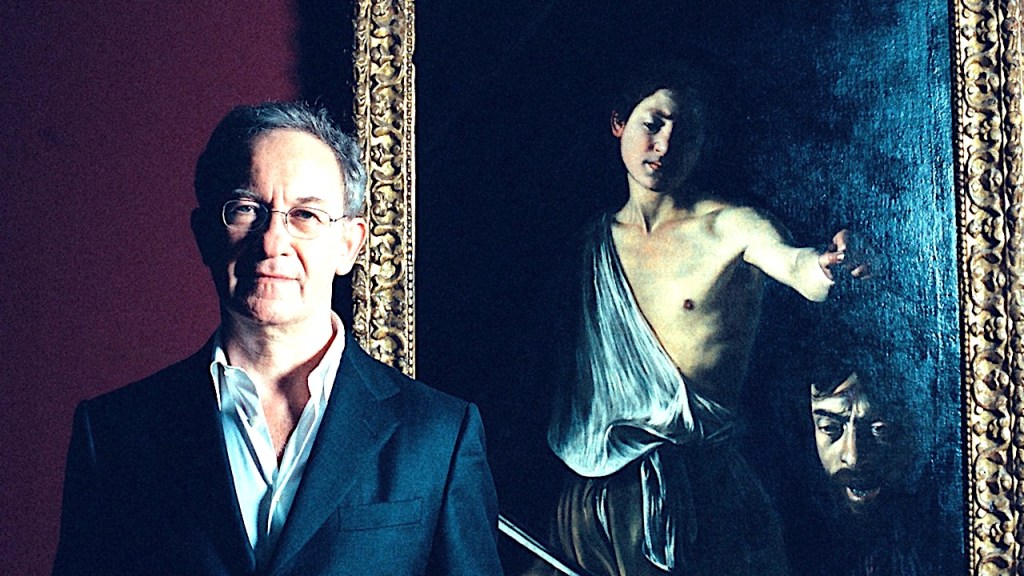
Schama presenting Caravaggio’s gleefully grisly “David with the Head of Goliath”

I’ve been blabbing here about going to Marseille in early February. A picturesque coastal city, the second largest in France, it’s famed for a gritty, hip, multicultural vibe, a fabulous port and craggy shorelines kissed by Listerine-blue Mediterranean waters.  

Marseille is also famous for its motley cuisine, from French and Moroccan to pizza and West African. But above all it’s known for the iconic, somewhat extravagant seafood stew, bouillabaisse — rich, aromatic and typically made with various Mediterranean fish. 

The recipe generally goes like this, and here I’m cribbing:

A traditional bouillabaisse has two parts:

  1. The broth – saffron-gold, flavored with fennel, garlic, tomato, orange zest, olive oil, and Provençal herbs.
  2. The fish – several firm, rock-dwelling fish from the Mediterranean, added in stages so each cooks properly.

Now, many hot-shot chefs mess with the recipe, adding shrimp, lobster, mussels and other mollusks, god forbid. This bouillabaisse virgin — never had it! — is allergic to shrimp and lobster (an adult-onset allergy; I love shrimp), so I fretted about where I would get a purely traditional fish stew in Marseille.

All the guidebooks and websites point to one restaurant, Chez Fonfon, which has been serving bouillabaisse for 74 years using scorpion fish, red mullet, eel and other fishies in its recipe. “We offer to prepare the fish in front of you or already prepared for immediate enjoyment,” says the Fonfon site. I’ll take the show, please. 

Then, as is my wont, I over-thunk the meal. What if they also add shrimp or lobster? I’d just have to see. Or not. Yesterday I emailed Chez Fonfon and asked the question. A few hours later they responded.

“Our bouillabaisse is prepared in the traditional way, using only rock fish and vegetables. It does not contain any crustaceans such as shrimp or lobster.”

Jackpot. Now I can sleep at night and dream of rock fish swimming in my bowl, sans crustaceans stinking up the joint, toxic creatures that would make my throat swell, my breathing sputter, likely ending in my death, face-down in my very first, and last, bouillabaisse. Merde!
Rewards of the return visit

Friends, those kooks, occasionally wonder why I often return to places I’ve already traveled to instead of going somewhere new and horizon-expanding. The answers are simple and numerous. One, obviously, is that I’ve fallen for a city or country and the days I visited were but a tantalizing taste. I want more. To really get under the skin of a place. So I go back.

(It should be said that last week I was enjoying my first journey to Buenos Aires — my first time in South America — so I still seek the exotic and uncharted.)

To return to a destination is also to refresh the original experiences that made it special and to caulk the holes of crumbling memory. Right now I’m considering a revisit to Madrid, Spain, where I went like 20 years ago. That trip is a fond haze.

Besides Picasso’s gobsmacking “Guernica” and the gems of the Prado Museum — I’m specially partial to the wackadoodle Bosch triptych — I remember only a convivial Irish pub where I met some fun locals and a whiplashing green rollercoaster on the city outskirts. It didn’t even seem to be part of an amusement park, just this stand-alone adrenaline machine amid the trees. Anyway, it was a blast. 

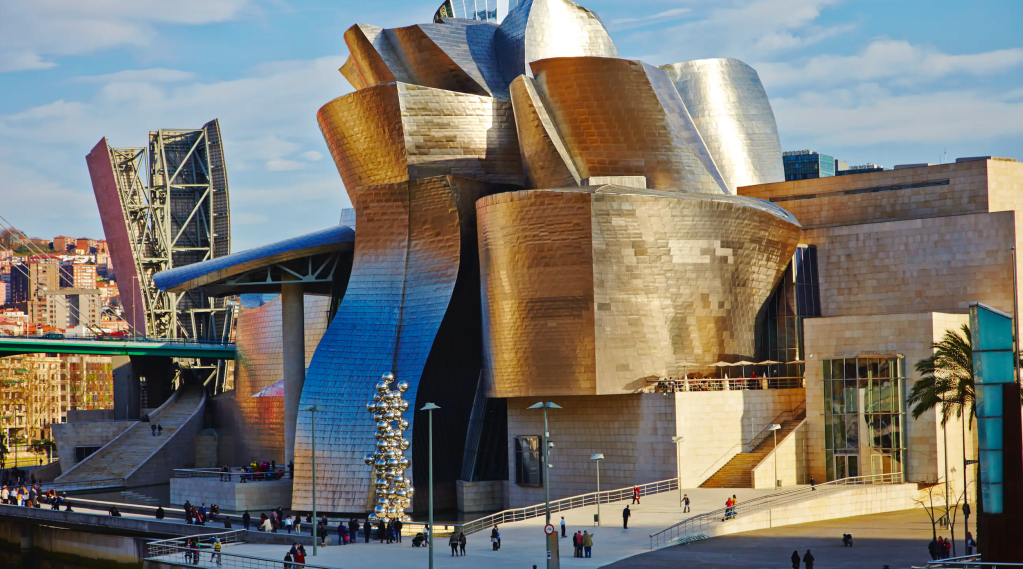
So I’m mulling Madrid for my fall trip, with a three-day excursion north to Bilbao, which is famous mainly for its warped and woozy Frank Gehry-designed Guggenheim art museum but has, since the museum’s opening in 1997, blossomed with attractions and an arty, edgy personality all its own.

Guggenheim Bilbao

I’ve yearned to go to Bilbao for at least 15 years, but you don’t just go directly to the city, you typically go through a hub like Barcelona or Madrid then trek north by train to Spain’s autonomous and beautiful Basque Country.

Thus I’m piggybacking a new place with a place I’ve been before, but both should be rejuvenating and illuminating, since, as I said, my memories of Madrid are a scintillating smudge. 

This happens. I went to Rome in March and even though I had been there twice before, it was changed as much as I’d changed in the intervening years. Same with my January visit to Lisbon. I recognized much of the city, but it was also strikingly novel, a whole new world. It’s about layers: each visit peels back exciting ones, those you didn’t see or didn’t have time for the first go around. Discovery is fathomless.

And this is from someone who journals copiously and snaps photos like a paparazzo. But those mementos are static, mere documents, like a map or a postcard. Throbbing, breathing life is the aim, so, yeah, it’s time to go back.

We’ll always have Paris?

With a dash of relief, I’ve learned my cheap ticket to Paris for October remains valid, that United hasn’t deemed it necessary to cancel the trip — yet. Booked in early April, when the pandemic was mustering its full fury, the flight still does seem doomed, even four months away. The virus isn’t letting us off that easy.  

Hitches abound. Like the new edict by the European Union barring American visitors to the Continent. That’s a nifty start. Perhaps that will change by fall, if a particularly reckless, infantile and hysterically pathological world leader decides to do his job and quit frothing at the mouth. 

But what will Paris be like in four months? The city is gingerly reopening, taking wise baby steps. Cultural crown jewel the Louvre opens Monday with Covid guidelines and protocols. Only 70 percent of the museum will be accessible — most of the popular stuff — and masks will be mandatory for visitors aged 11 and up.

Cleaning up the Louvre for its July 6 reopening.

I’ve done the Mona Lisa to death, but for those who must, it will go like this, says a Louvre director: “Until now, people would crowd around the Mona Lisa. Now, visitors will stand in one of two lines for about 10 to 15 minutes. Then each person is guaranteed a chance to stand in front of the Mona Lisa and look at her from a distance of about 10 feet.”

I’ll politely pass.

The magnificent Musée d’Orsay opens July 23. Musée Picasso, a personal essential, opened June 22, as did Musée de l’Orangerie and citywide cinemas (I always see three or four classic movies when in Paris). Centre Pompidou opened three days ago, and the ghoulish Catacombs have been open since mid-June. Showing through January 2021 at Musée Jacquemart-André is “Turner: Paintings and Watercolours from the Tate” — nirvana.

That’s a tantalizing start. Or is it foolhardy, madness?

Parks and gardens are open, as are many shops, restaurants, cafes and bars. But that also signals a behavioral slalom course of masks, social distancing, crowd control, etc. Right now, I wouldn’t hazard it, even in my favorite city. Now isn’t the time to be there. Four months, fingers crossed.

This incorrigible planner has had a fully refundable hotel reservation since spring — Hôtel Jeanne d’Arc Le Marais, which has reopened — and slavering beads on at least three restaurants, including the peerless Frenchie and Michelin-star Le Chateaubriand. 

At six days and six nights, this is a short jaunt to Paris for me. If it happens. I have no doubt the pandemic could dash my plans, and that’s OK, because I’ve resigned myself to things not working out. In these epochal times, far more important things jut into high relief, the pandemic to the November election.    

We’ll always have Paris, sure. It’s just a matter of when.

Whenever. Whatever. 

The weird and wiggy, worldwide

As one who seeks out the freaky and far out in my travels, serendipity seems to be the best GPS for the fiendishly, often funnily, strange. Mostly this is in the form of art, mainly sculpture and statue and the occasional painting. (Or some decidedly unfunny human cremations in India and Nepal — I’ll spare you.)

Sure, it’s superficial this fascination. (So weird! So hilarious!) What does it mean? Not much. It’s aesthetics of the outré, stimuli out of left field, tailored, perhaps, to the oddballs among us. It’s striking, warped and wonderful. The more ghastly the better. The more shocking the cooler. (Note: I have yet to stumble upon art or artifact that’s sincerely blasted my senses. It’s out there, and I will find it.)

Here, meanwhile, are irresistible curiosities I’ve come across around the world: 


Cast of Joseph Merrick’s, aka the Elephant Man’s, skull, Royal London Hospital. One of the most interesting, most hideous and saddest skeletal specimens ever.
Latex cast of the Elephant Man from the 1980 David Lynch film “The Elephant Man” at the Museum of the Moving Image, New York. This is the mold they used to make-up John Hurt as the real-life Elephant Man.
“Crucified Woman,” an unsettling work by supreme provocateur Maurizio Cattelan, hanging in the Guggenheim in New York City. Note the pigeons. I have no idea what’s going on.
Cracked cherub in Iglesia de El Salvador, a gorgeous church in Sevilla, Spain. I love the little fella’s decrepitude and pink and bulgy doll-like creepiness.
Museu d’Art Contemporani de Barcelona. Stacked: a sheep, a pig, a cow, all with unicorn horns. Interesting, until you realize it’s just bad art.
Montreal Museum of Fine Arts. Rugged hiking man with primates. The bloke’s head is like a bobble-head.
The Met, New York City. Exactly how I wake each morning.
Body cast of Chang & Eng, original Siamese twins, Mutter Museum, Philadelphia. Gross and glorious.
A baby through Picasso’s eyes, Paris. I just like this poor warped toddler, so bulbous and twisted — and probably demonic.
Peter and Paul Fortress, St. Petersburg, Russia. At the resident Torture Museum. Highlight: the saliva string and puddle.
Hirshhorn Museum, Washington, DC. Trump in two years, in his cell. 
Malformed Baby Jesus, flea market, Barcelona, Spain. So distorted and freakish I desperately wanted to take it home and cuddle it.
Hanging horses by crazy Cattelan, Guggenheim, NYC. Something out of Fellini. See the little Pinocchio puppet by its front legs. Discuss.
Monkey murder. I really haven’t the foggiest. I wish I did, but I don’t. Montreal Museum of Fine Arts.