Recent tomes I’ve tapped

I’m never not reading a book or two. These are a few new titles I got my grubby paws on: 

Mike Nichols’ 1966 film of Edward Albee’s corrosive play “Who’s Afraid of Virginia Woolf?” remains a dish-rattling, drink-spilling, daggers-in-your-ears delight, all marital earthquakes and social Molotov cocktails. (Cocktails. Of course.) Booze is big in that cracked portrait of a long-wed couple on the rocks. (On the rocks. Of course.) And you get a contact high reading the riveting “Cocktails with George and Martha: Movies, Marriage, and the Making of ‘Who’s Afraid of Virginia Woolf?’” by Philip Gefter, who capably captures the play’s serrated edges, dubious morality and verbal drive-bys, as well as the behind-the-scenes hoopla of making a controversial movie with a controversial couple, no less than Richard Burton and Elizabeth Taylor — Hollywood nitroglycerin. It’s a bracing blast of theater and cinema history.  

“Headshot” is by a woman named Rita Bullwinkel. Let’s get that out of the way. (There, done.) This slim, tightly coiled novel is also a muscular debut, damp with the blood and sweat of a passel of female teenage boxers, zesty characters realized with pointillist panache. Time-leaping and fragmentary, the girls’ stories are told in intense vignettes for a scrappy scrapbook of pugilistic profiles that pounds with humanity and life. If not quite a K.O. — more tonal and rhythmic variety would shake things up — the book is a fleet-footed contender. 

With irksomely precocious flair — at 35, he’s a wizardly wunderkind — poet Kaveh Akbar conjures worlds of art and ideas in his radiant fiction debut “Martyr!” Reeking agreeably of auto-fiction, this dense but delectably readable novel is about an Iranian-American poet scouring past and present, life, death and love with the insight of an artist and the squishy heart of the wounded. Gorgeous language propels you through its lush, gently philosophical thickets. And despite some muddled mysticism near the end — I’m allergic to spiritual allegory — “Martyr!” had me pleasantly reeling. 

Lorrie Moore’s a personal favorite and her latest fiction is the knottily named “I Am Homeless If This is Not My Home.Like all her books, tangy prose festoons the pages (a bite-size sample: “Fluorescent light rinsed the room.”). Yet the novel, with its arch surreal touches, rubbed me wrong. The narrative, centered on a man and his dying brother, is gawky, with sharp elbows and knobby knees. Plus, there’s heaps about chemo, cancer and croaking, and I’m not in a hospice mood. The novel just won the National Book Critics Circle award for fiction, so call me bonkers. In this rare instance, Moore is less.

Not for the feint of heart but perhaps for suckers for sentiment, the bleak memoir “Molly” — breathlessly written by Molly’s husband, Blake Butler, a noted novelist of thrillers — starts with her gunshot suicide and continues with another bang, the crack of bared emotion and tell-all candor. This is the story of Butler and Molly Brodak’s three-year marriage, a melding of art and nature and words and, in her case, bouts of inconsolable darkness. Brodak, a published poet and author who said “I simply wasn’t good enough,” killed herself three weeks before her 40th birthday, in 2020. “Molly” is so much about her and her devastating secrets, yet equally about Butler’s clawing to the other side of grief through deep (and verbose) psychic excavation. He includes Molly’s suicide note (“I don’t love people. I don’t want to be a person”), along with the frantic blow-by-blow action of finding her body in a favorite field of theirs. These passages are tough-going, not only for the forensic particulars, but for Butler’s writerly histrionics as well; he pants on the page. A cult sensation, tugging readers to and fro like emotional taffy and kicking critics into superlative overdrive, “Molly” is a divisive read, by turns lovely, wincing and overheated. It is the first book I’ve read that opens with the phone number for the national suicide hotline. 
Sole asylum

So we’re wandering through the smashing Henry Taylor exhibit at the Whitney Museum in Manhattan and, like that, flash-bam, my right foot spontaneously combusts. It burns and sizzles. I seize up and sit down like a premature geriatric. Wincing happens. Cursing occurs. And yet nothing diminishes the pleasures of the show one bit. The art is exquisite — raw, funny, moving. I’m between awe and ow.

The foot becomes an issue. The pain, the throb, the burn. And we still have miles to trek through the unforgiving corridors of the city. The day is young, and it is often excruciating.

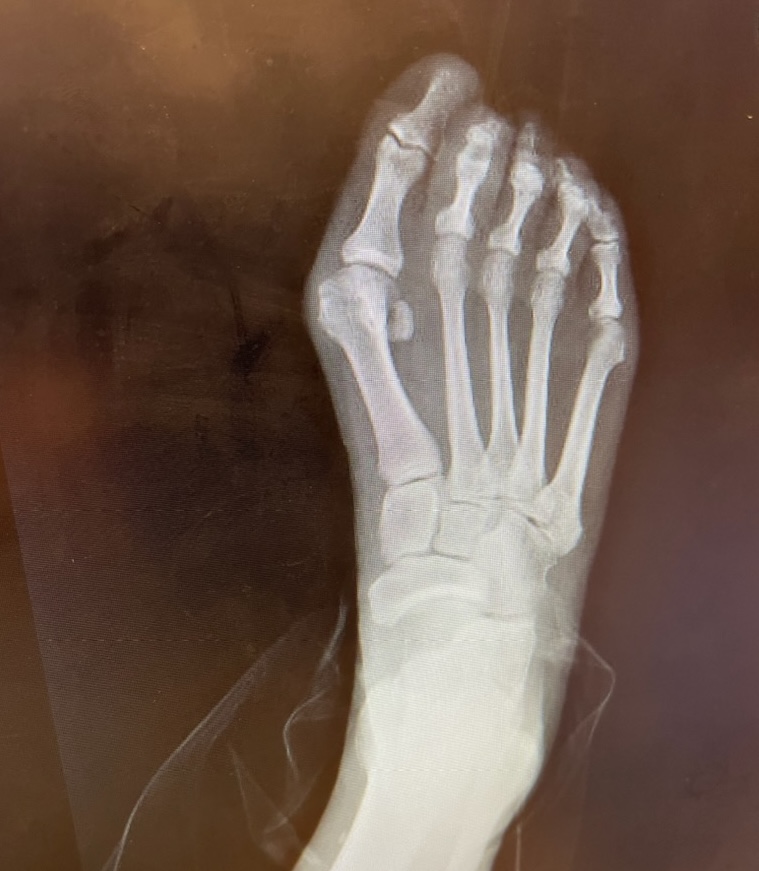
A day later, I call the podiatrist. An X-ray of my right foot is taken. I wait in the doctor’s minute room, slouching on the elevated exam bench, whose thin tissue covering crunches at the tiniest move, like aluminum foil, or tracing paper.

The doctor at last enters, assistant in tow, and she asks me to denude the offending foot. As I peel off my sock, I intone dramatically, “Behold the monstrosity.”

She laughs. I was expecting a scream. My foot is an objectively ghoulish sight. 

Pro that she is, the doc instantly unriddles what’s before us, which is, in all its homeliness, sort of poignant. It’s something Cubist, maybe Surrealist. Perhaps a strain of elephantiasis.

What’s really happening is a honking medley of maladies: a bunion, a hammertoe and a flat foot. Hearing this, blinking dumbly, I inquire about a wholesale foot replacement, say, a grocery cart wheel, or a deer hoof.

Ignoring me, she administers a very gnarly cortisone shot into my toe while her assistant sprays a freezing liquid on the entry area so I don’t shriek like Axl Rose. The needle goes in deep. And deeper. I swear I hear the crunch of bone. A choir of angels sings.

Amazingly, my foot feels instantly better. The burn is extinguished. The doctor cautions that the cortisone could last a week, two months, forever, we don’t know. I’ll take any of those. She has me order an $11 toe splint from Amazon and suggests I buy fancy insoles. She checks to see if my insurance will cover the insoles she can provide, at $450, but, no, of course not. They will not foot the bill.

I sort of hobble out of the podiatrist’s office. My foot feels so much better. I’m walking on air. I’m about to do a little jig, until, out in the sunshine, I realize what a heel I’d be. One step at a time. One step at a time.

Eerie and incandescent, my X-rayed foot, a web of symptoms.

Travel burnout? Ah, grow up

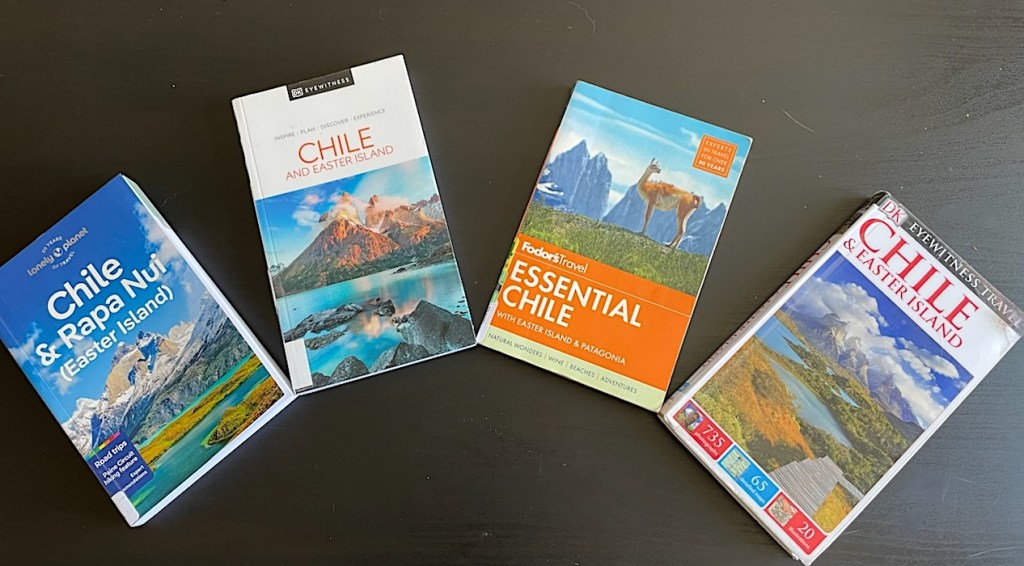
Fanned out before me are four travel books about Chile, my next destination — if, that is, I can get over a bruising bout of traveler’s fatigue. 

We should all be so fatigued. A first-world ailment if ever there was one, this is a disorder of the chronic whiner, that big burbling inner baby who’s pooped pulling his roller carry-on through oh-so-crowded airports and having to locate the gate for his flight. Poor little travel boy!

Fortunately these are library books.

Writing the above was cathartic. It puts matters in perspective and places my pathetic buffoonery, my puerile moaning, in high relief. I’m not suffering chronic traveler’s fatigue, wherein I actually can’t pack my bags and go. This isn’t a medical issue. This is an earth-rattling brain fart.

I know the drill. For one, I’m quite agile negotiating the human/zombie slalom course of international airports. And while getting to one’s destination may be maddening, once you’re there — be it Chile, San Francisco or Naples —  the steady delights begin to flow. (Theoretically. Technically. So they say.)

Perhaps I’m not really fatigued after all. Yet I am definitely a little worn-out from the jostling logistics of multiple back-to-back trips: the sleepless nine-hour redeye flights, the four-hour layovers, and the sleepless 12-hour redeye trains. (“Sleeper Car,” with the clanging rickety-rack all night? Refund!) 

Not to mention the extortionately priced airport food (much of it prison-grade), snaking airport security lines, and the endless stop-go choreography of the Uber circuit. Yet, as frustrating as they can be, the Uberthons are worth it.

As are other tricks of the trade. I’ve started to pay for small conveniences, like “priority” seating on United (around $40 a flight) and, better, $78 for five years of TSA PreCheck, which zips you through security, sort of like the 15 items or less line at the grocery store.

But lately, after crammed-together trips to Budapest, Poland, Sicily and Washington, DC, I thought: This is enough. Too much, too soon. Breathe. Rest. Slow. Down. After Sicily, I almost kiboshed DC. After DC, Chile seems foolhardy.

Chile, booked and all, is 10 weeks away, plenty of time to recharge and rejuvenate. Right? For now, though, I’m tired — tired of airports, planes, trains and automobiles. Hauling my junk around. Dealing with strangers. Wah-wah.

But here’s what just happened today. After a good sleep, I shook off my doubts. I was even jazzed, wide-eyed, flipping through a Chile guide book, taking notes, figuring out what is … next.

Dorothea Lange’s luminous despair

Last week I choo-choo-trained to Washington, D.C. to scavenge through its bulging bounty of museums. (And also to get all gourmandy and eat at delish restaurants like Josè Andrès’ Mexican palace Oyamel; do order the guac and the tacos.) The US capital boasts like a billion halls of paintings, history, culture, science and more, and I visited seven in two days. Not a world’s record, but I was pacing myself. Huff, puff.

Tops for me was the National Gallery of Art — more on that in a bit. A close second was the transformative and seam-bursting National Museum of African American History and Culture, where everything from slavery and “Sanford and Son” to the Harlem Renaissance and “Harlem Shuffle” are gorgeously limned. Go.

While the National Gallery’s Rembrandts, Turners and Vermeers made me one of those vexing viewers who stands too long in front of a painting, till other patrons wonder crankily What’s he gawping at?, it was a special exhibition that really got me and did what great art can do: split open your world. 

The show, “Dorothea Lange — Seeing People,” presents some 100 black and white photographs by the great, socially astute 20th-century shutterbug. Her most enduring photo, part of the show, is probably this one from 1936, “Human Erosion in California (Migrant Mother)”:

Gaze at that picture. A little harder. Its masterpiece status is unshakable.

Steeped in jagged beauty and more (prematurely) creased flesh than a dozen old folks’ homes, the exhibit “addresses Lange’s innovative approaches to picturing people, emphasizing her work on social issues including economic disparity, migration, poverty, and racism,” the museum says. 

Alright. Uplifting it’s not. It unfurls a timely, tattered tapestry of naked despair and down-on-your-luck dignity. Yet it’s so filled with shuddering pathos and raw humanity it’s hard not to be moved, shaken, taken. 

Lange’s photos are untouched authenticity — keep your Photoshop sorcery — real people with sun-baked skin and hollowed eyes, capturing the American experience of a time, the 1930s to ‘50s, and places, the Dust Bowl to San Francisco. They don’t let you off the hook.

Exhausting, yes, but exhilarating too …

“Migratory cotton picker, Eloy, Arizona” (1940)
“Mexican workers leaving for melon fields, Imperial Valley, California” (1935)
“Nettie Featherston, wife of a migratory laborer with three children, near Childress, Texas” (1938)
“Maynard and Dan Dixon” (1930)
“Young girl looks up from her work. She picks and sacks potatoes on large-scale ranch, Edison, Kern County, California” (1940)
On the Plains a Hat Is More Than a Covering” (1938)