“It’s a disease. Nobody thinks or feels or cares any more; nobody gets excited or believes in anything except their own comfortable little God damn mediocrity.”
— Richard Yates, “Revolutionary Road”

WONDERING. WANDERING. WHATEVERING.

“It’s a disease. Nobody thinks or feels or cares any more; nobody gets excited or believes in anything except their own comfortable little God damn mediocrity.”
— Richard Yates, “Revolutionary Road”
For the record, family: Do not donate my body to science when I die. Let them harvest an organ or two, scoop out my eyes like melon balls, carve off a carpet swatch of skin.
Then burn me up good.
Scary to say, but my obsession with death, dying and the post-life has only rocketed since I recently re-read Mary Roach’s weirdly engrossing, and joyously gross, 2003 bestseller “Stiff: The Curious Lives of Human Cadavers.”

The title nearly says it all: Roach’s beautifully reported book is a blunt, euphemism-free, aggressively lighthearted examination of exactly what happens to cadavers that are donated to science and research. (Cue: barfing emoji.)
Facts, history, grisly details and the author’s vivacious gallows humor make the unutterable utterly readable. Roach is smart; she pauses for philosophical reflection about what’s before her, providing a finish of deep and dignified meditation to what could have been perverted voyeurism catering to “Faces of Death” sickos.
The breezy read features jarring chapter subtitles — “Human Crash Test Dummies and the Ghastly, Necessary Science of Impact Tolerance”; “On Human Decay and What Can Be Done About It”; “Medicinal Cannibalism and the Case of the Human Dumplings” — that are so graphic, they may be all you need to get it. For example, that first one: Yes, dead bodies are used as crash test dummies in vehicles. Splat.
Plunge into the pages and you’ll get the smells, sights and sounds of expired bodies rotting, ripping, being gutted and even crucified. (Scientists still want to know how Jesus died on the cross. Freshly dead bodies are a prime instructional aid. Pass the nails.)
The doctors and scientists Roach meets are a reticent assortment. But she intrepidly presses on.
 Sometimes a source will turn his back on her, suspect of her macabre motives.
“You want a vivid description of what’s going through my brain as I’m cutting through a liver and all these larvae are spilling out all over me and juice pops out of the intestines?” snaps a vexed forensics examiner.
Roach responds to us, sotto voce: “I kind of did, but I kept quiet.”
“Stiff” rests on my growing, groaning shelf of superlatively morbid but essential books on mortality, like “How We Die,” “Final Exit,” “The Denial of Death” and other festive titles. I recommend them all. They will, while you’re still living, change your life.
As sort of a literary snack, some lyrical Cheetos, I recently dipped into one of my favorite poetry books, Stephen Dunn’s “Different Hours.” It’s magnificent; so many fine poems, so many lines that quietly slash. The poems are all about wisdom and honesty and breakage, lovers and loss and burying a cat.

I don’t care so much that the book won the 2000 Pulitzer Prize, though it surely deserved it. I do care that it contains this stanza:
I was burned by books early/and kept sidling up to the flame.
And I care even more that it has this bracing verse, from the final poem in the collection, “A Postmortem Guide (For my eulogist, in advance)”:
Tell them that at the end I had no need
for God, who’d become just a story
I once loved, one of many
with concealments and late-night rescues,
high sentence and pomp. The truth is
I learned to live without hope
as well as I could, almost happily,
in the despoiled and radiant now.
Those shimmering words shatter me, in a most positive fashion. (“In the despoiled and radiant now”!) The verse is frank but droll, vulnerable and confessional. It’s written with the points of melancholy stars.
Dunn, like his comrade in wry minimalism, Billy Collins, wields an unabashed colloquial touch, his plain-spokenness littered (glittered?) with joyous turns of phrase and often mischievous, tip-toeing humor.
He’s a master of subtlety, but any perceived simplicity is thoroughly deceptive. If you think Dunn’s poems are simple-minded, even pablum, you are sorely mistaken. You haven’t done the work.
Far before I’m done reading a book, I know firmly what volume I’ll be cracking next. I keep an ever-replenished list of titles. Something is always ready, waiting, like the upcoming course at dim sum.
As I wrap up “Inseperable,” the excellent new biography of Chang and Eng, the original Siamese twins, I know what’s next. I’m taking a worn paperback of Kurt Vonnegut’s archly prophetic classic “Mother Night” (1962) on my trip to Amsterdam next week. Vonnegut’s breezy cynicism, swirled with empathy, a hesitant optimism and measured absurdism, feels just right for airplane reading.
After that, 10 books weigh down my list. But half of them get to jump the line. These are the next five books I’m plunging into:
 I’ve read three of Zadie Smith’s fine novels — “Swing Time,” “On Beauty” and, the best of the bunch, “White Teeth” — so I’m revved for “NW,” her acclaimed 2012 tragicomedy about a slice of London and how its human patchwork intersects and interacts. The intellectually rangy Smith has a sorcerer’s touch, conjuring crowded, complex stories that can be mesmerizing jumbles: granular, moving, funny and expansively human.
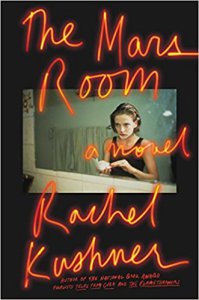
If Rachel Kushner’s wildly hailed fiction “The Flamethrowers” didn’t blow me away, it was still a fresh, propulsively entertaining epic about a young woman whose love of motorcycles, art and action hurl her on a picaresque through boho New York and radicalized Italy. In her new novel, the hotly awaited “The Mars Room,” Kushner pinballs from the pitiless realities of a women’s prison to those in a San Francisco strip joint and beyond for a seedy and violent, harrowing but humorous skip through sordid demimondes. Raves wreathe the book already. “Heartbreaking and unforgettable … it deserves to be read with the same level of pathos, love and humanity with which it clearly was written,” gushes one reviewer.
Our Shakespearean laureate, that lord of the Bard, Harold Bloom lasers in on one of the canon’s preeminent tragic figures in “Lear: The Great Image of Authority,” a thin but typically volcanic volume that’s part of a series of portraits, including Iago, Falstaff and Cleopatra, titans all. Lear, fallen monarch, disgraced father, receives the full Bloomian treatment, a richly personal, prickly and cerebral exploration of the character and his enduring mythic stature.
Andrew Sean Greer’s “Less,” winner of this year’s Pulitzer Prize for fiction, totally evaded my radar. I’m not even sure I’d heard of the novel until it cinched the award this month. I know so little about the bounding satire that I quote here from the dust jacket:

“Arthur Less will almost fall in love in Paris, almost fall to his death in Berlin, barely escape to a Moroccan ski chalet from a Saharan sandstorm, accidentally book himself as the (only) writer-in-residence at a Christian Retreat Center in Southern India, and encounter, on a desert island in the Arabian Sea, the last person on Earth he wants to face. Somewhere in there: he will turn fifty. Through it all, there is his first love. And there is his last.”
OK, I’m hooked.
A writer friend of mine won’t read Ottessa Moshfegh’s fiction, citing a gruesome quotient of blood and bodily fluids. I don’t know what she’s talking about because I’ve never read Moshfegh. Her stories “Homesick for Another World” have been called “eerily unsettling … almost dangerous, while also being delightful, even laugh-out-loud funny.” Characters are “unsteady” and the “grotesque and the outrageous,” a la Flannery O’Connor, “are infused with tenderness and compassion.”

She has “a big mind, a big heart, blazing chops, and a political acuity that is needle-sharp,” crows the publisher. “The needle hits the vein before we even feel the prick.”
I think my friend is crazy. This sounds amazing.
And on things bookish, I finally discovered a well-tread site fully worth your while: Literary Hub. Brain-cracking interviews, essays, reviews, profiles — I won’t go on about it; just check it out.
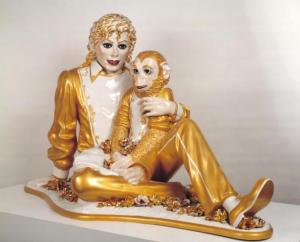
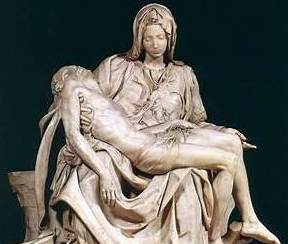
“Koons’ act, which is perhaps not even an act, is to believe that he is a natural descendant of the great artists of the past, interpreting religious iconography with a kind of contemporary twist, but aspiring to the same level of eternal fame and truth. … Nobody questions the work because Koons’ lock on the market is so thorough. It’s a form of spiritual vandalism.”
— Critic Robert Hughes on artist Jeff Koons, after Koons compared his 1988 porcelain “Michael Jackson and Bubbles” to Michelangelo’s 1498 “Pieta”
As spring does its springy thing — budding flora, blaring sunshine, apocalyptic allergies, humping squirrels, the air lousy with tweetling birdies — I return to my annual choleric conclusion: spring sucks.
It’s an old song I warble, a self-pitying plaint performed on banjo and harmonica. It’s almost T-shirt and shorts time, which makes me shudder the way I gladly do in the cherished chill of fall and winter. Spring, though well under way, is creeping ahead, producing mostly 60s yet dipping into the 50s when we’re extra lucky.
Still, I’m steeling for the worst.

Spring’s bonus gift: allergies. I’ve been blowing my nose in a single sustained honk since late March and my eyes won’t stop watering. I feel like I’m endlessly weeping. I am. I’m crying that summer is around the sweaty bend. (Oh, and: gesundheit.)
I prefer short cool days — dark at 6 p.m. — to long, hot days. Vampiric, nocturnal, certifiable — label me how you will. I just know it’s only going to get worse before it gets better.
Five more months of climatic distress, some of it dimly tolerable, some of it abominable. I welcome October like an old friend unseen in years, with backslaps and bear hugs, a pal who brings me a light jacket as a gift.
Yesterday I broke my second sweat of the season. Thrills were at a premium.
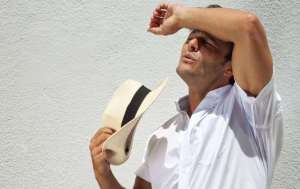
This operatic whining is me blowing off steam about the coming steaminess and the attendant pool parties, barbecues, spring breakers, sun roofs, flip flops, humidity, bees and beaches. I’m fairly infantile about the whole thing, but really, I just don’t look good in shorts. Sneezing and sunburn — also not big on my to-do list.
My minority status is solidified. I’ve met maybe three people who spurn spring and summer in favor of the brisk breezes and long shadows of fall. People don’t often understand outliers, and I in turn can’t fathom those who relish the hot months. Besides vacation time (yet who actually wants to vacate in the 90-degree swelter?), I see few pluses.
Obviously there’s no way around the seasonal shift, unless I scurry northward. So I sally forth, declaring with a dash of grit (and gritted teeth): Spring, summer — let’s get this thing over with.
The exorcists are exercising the bounds of belief. They are exercised by exorcisms.
At a weeklong conference on exorcisms in Rome last week, over 250 priests, theologians, psychologists and criminologists “rang the alarm on exploding demonic activity being fueled in part by access to the occult via the internet,” writes The Christian Post.
The Devil isn’t just in the details, he’s got wifi, and he’s online. He likely has a blog. He’s spreading porn, death and general hellfire across the wicked wide web, cackling as he types. He’s possessing people through Facebook and Instagram, known tools of Satan.
So, sure, perhaps thanks to the ubiquity of the internet, reports of demonic possession have mushroomed. In response, the Catholic Church is marshaling and grooming its troops to tackle the epidemic.

Hence the conference, as well as Pope Francis’s noted approval of the rococo rites, saying exorcists “manifest the Church’s love and acceptance of those who suffer because of the Devil’s works.”
Jesus — er, I mean damn. Because of the spike in requested exorcisms, “There are priests who carry out exorcisms on their mobile phones. That’s possible thanks to Jesus,” an Albanian Cardinal said at the conference, presumably with a straight face. (“That’s possible thanks to Jesus”? What about Verizon?)
Exorcisms on mobile phones? (Dial 666.) It’s hard to imagine. No crosses, rosaries or holy water? No comforting holding of hands and signs of the cross? No projectile pea-soup vomit? Do they use FaceTime, or just speaker phone?
Most of the aspiring exorcists truly and openly believe in a physical Devil, as does Pope Francis. They believe in full-blown possession of humans by evil spirits. They might actually believe the 1973 film “The Exorcist” is a documentary.
Demon-possessed people are known to suddenly develop supernatural strength, have radical changes in their voice and speak languages they’ve never known. They sound like superheroes.
“Most commonly they speak Latin, Hebrew and Aramaic,” says Father Pedro Barrajon. “If you show them a holy object, like a rosary or a cross or a picture of the Madonna, they go into shock and start yelling.”
That happens to me often, especially if it’s Madonna on her “True Blue” tour.

Figuring if actual demonic possession has occurred requires ruling out conditions like mental illness, epilepsy, schizophrenia, bipolar disorder or drug abuse.
“Not everyone who thinks they need an exorcism actually does need one,” said Bishop Thomas J. Paprocki. “It’s only used in those cases where the Devil is involved in an extraordinary sort of way in terms of actually being in possession of the person.”
I trip over that last phrase: actually being in possession of the person. Sometimes I feel satanically possessed, but it winds up being just a diabolical case of indigestion.
Yet these people, these hallowed priests and bishops (and pope!), honestly believe the Devil, that online prankster, can possess a human being and take over their mind and body, for whatever unfathomable purpose.

It’s no wonder that, even within the Church, stigma and cynicism wreathe the ceremony. It remains controversial, yet, as we’ve seen, exorcism’s popularity keeps swelling.
And the Church isn’t fooling around with that puckish Devil. The Albanian Cardinal said sometimes you had to get tough with him amid the magical theater of an exorcism and actually holler hurtful commands such as, “Shut up, Satan!”
There’s that, or you could call him a big ninny.
Flippancy aside, the truth is that the notion of exorcisms is so far removed from real, actual, everyday life, it simply does not make a single speck of difference, and, frankly, means absolutely nothing. It’s a sham, hysterical hocus-pocus, sheer knowing chicanery that does what it desperately needs to do: help keep a tottering Church from buckling.
“If I had sought counseling, I might have become a more mature, emotionally well-adjusted human being. But I preferred becoming a writer.” — author Viet Thanh Nguyen

True story: A woman came into the cafe and she was so short, I thought she was a dwarf. On my third or fourth glance, I realized she was indeed not a dwarf, just spectacularly diminutive, stout and normally proportioned, yet Lilliputian.
Is my vision that bad? Am I seeing things? Has my fascination with human anomalies and “very special people” warped my lens on the world so that normality contorts into the freakish?
Upon entering, the child-size woman was immediately surrounded by cafe baristas crying her name in joy as though they had not seen her in many ages. This was a moment of celebration. Hugs were fulsomely exchanged, and every employee had to crouch considerably to administer an embrace that would not be too awkward.
Who was this center of such lavish attention, this magical elf? From where does she hail? Was she treated so kindly out of pity? That seems doubtful. Short, maybe, but also a human being, and one with many adoring friends.
Arriving later, a very rangy barista saw the woman and bent down dramatically to hug her, his body a folding, upright accordion. She asked him if he’d sprouted even taller since they last met. No, he laughed.
She also laughed, chuckling, “Maybe I just shrunk.”
Amsterdam prevails.
Weighing Budapest against Amsterdam for my next trip, the Netherlands won out ably after effortless contemplation that sprung to mind peerless European art, worldly cuisine, cobblestone, canals and cannabis.
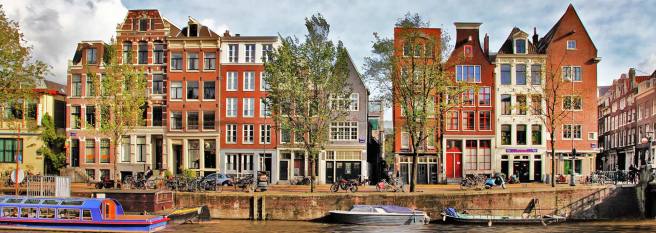
Compared to the striking Hungarian capital, there’s more to see and do in one of Europe’s most bristling cradles of culture, a smallish, quintessentially Old World setting marbled with a pungent contemporary tang. (And naughtily dubbed Sin City for its legal prostitution and lax marijuana laws.)
Once, in the 1600s, it was the world’s richest city; port-centric commerce flourished. Now, it’s a reservoir of humanistic riches — art, food, style, architecture. Friends of mine are so taken with the city that they’re moving to Amsterdam from Manhattan ASAP.
It’s been years since I’ve visited Amsterdam, and those times had the brevity of stopovers. Budapest’s Gothic spikiness and post-Soviet chill can wait. My destination offers popping pastel charms, including an iconic fretwork of canals lined by trees and spindly, leaning houses that seem to be jostling for room on the banks. And now there’s a lot more time.
No tulips or bicycles for me (and, alas, no Anne Frank House: tickets are plum sold out during my stay, though I’ve been there twice before), but I’m all about the hazy gold and brown Rembrandts, those Vermeers and the cornea-sizzling Van Goghs gracing the majestic Rijksmuseum and Van Gogh Museum, plus the spread of classic modern art — Haring to Kruger — at the recently reopened Stedelijk Museum.

Gourmet stuffed pancakes, Indonesian bites (of which Holland is a hotbed), Dutch dishes, frites with mayo, pickled herring, European lagers and gin, or, in Dutch, jenever — that’s my menu. Cafes, pubs, maybe a sooty “coffeeshop” — those are where I will recharge.

Out of touristic obligation I’ll trot the tawdry and corny Red Light District, which stings the nostrils with damage, despair and possibly disease, and get out fast to catch a 90-minute canal boat tour run by the cheeky Those Dam Boat Guys, who encourage you to bring whatever ingestible vice you’d like. “Bring all the wine you have,” they exclaim. “Sure, it thins the blood and will kill you quicker, but I’ll be damned if it don’t make you forget the nippiness. We’ll provide the best cheap, shitty, plastic cups not very much money can buy!”

After that, a heady spin through the Heineken brewery seems mandatory, as does the Museum Vrolik, a shuddery repository of the “normal anatomy of humans, but also pathological anatomy and congenital malformations.” Meaning, contorted skeletons, chubby jarred fetuses, outlandish taxidermy and all things squishy and wrong.
I blush at how this reads like a breathless brochure by a lackey at the Amsterdam Chamber of Commerce. Part of the unseemly boosterism, the unbridled optimism, comes from the vim of nailing down a destination and the kick of anticipation. Of the simple notion of travel and gulping the exotic. Of being able to finally say: Amsterdam. Yes.
 GNASHING.