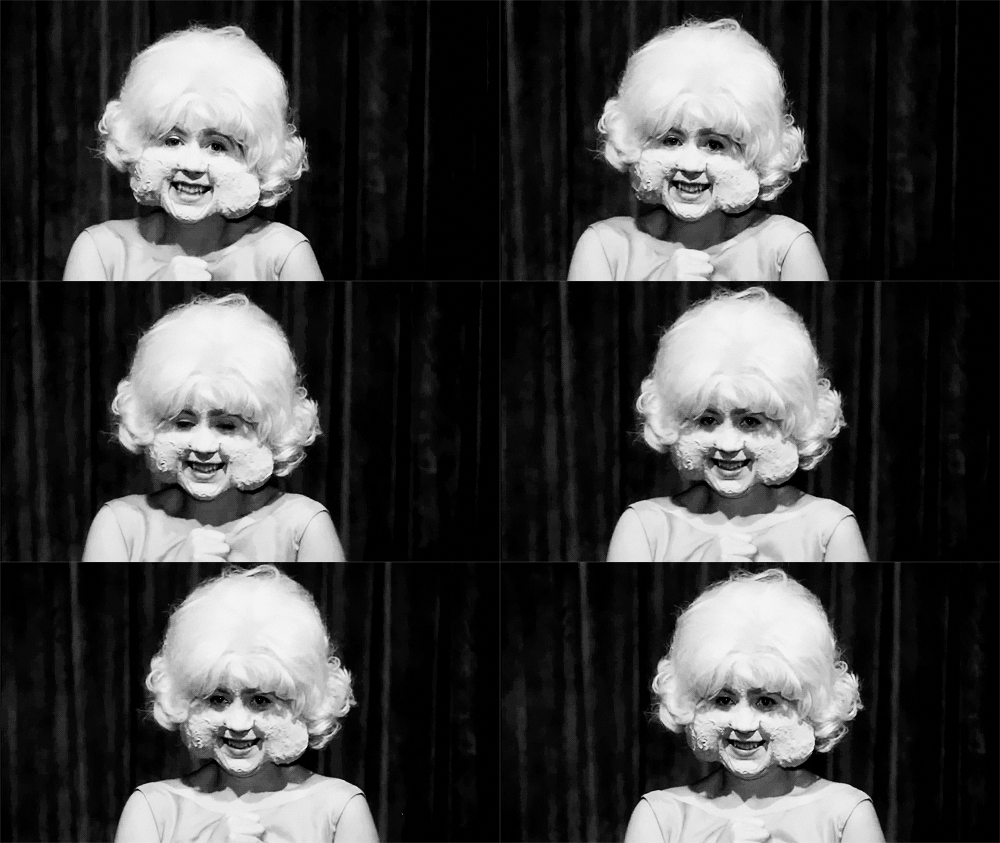
Eric Wareheim and Nina Arianda are the funniest people on ‘Master of None’

Perhaps it’s sacrilege to say, but the funniest, most outstanding performances on Aziz Ansari’s great Netflix series “Master of None” are by Eric Wareheim and Nina Arianda. (Yes, by two white people on a brown person’s show. Deal.) I’m talking funny factor and acting wattage. Ansari is himself a crack comic actor — a laser-witted, rubber-faced, helium-voiced mensch, remarkably sensitive, graced with an unassuming authenticity. Wareheim and Arianda are better. They’re eccentric, wild, take more comedic chances. They’re sort of bonkers.

While Wareheim appears in most of the 20 episodes in the show’s two seasons, Arianda was a one-shot guest star in a single episode during season one titled “Hot Ticket,” a masterwork of comic ingenuity, including Ansari and a fine cast spritzed by the deadpan Lena Waithe and the wry and dry H. Jon Benjamin (who also, btw, provides the voice of Archer).

One episode! And she’s practically the best thing that’s ever happened on the show. Arianda makes her blowzy mark during roughly six minutes of screen time. She’s like Alec Baldwin in “Glengarry Glen Ross” or Gene Hackman in “Young Frankenstein,” stealing the show with a fizzy vigor that throws the whole affair off its axis.

Let’s be clear. “Master of None” is consistently good and frequently superb. Following the professional vagaries, friendships and turbulent love life of 30-ish Dev (Ansari) in New York, the show throbs with feeling, a millennial “Seinfeld” but with pathos, whose observational insights are both funny and socially and racially attuned. Excellent episodes abound — season two grazes Woody Allen heights of romantic complication — but I find myself returning to “Hot Ticket,” which gets funnier on each viewing.

xMPGnwf
Eric Wareheim. Don’t ask.

Wareheim — half of the gloriously deranged “Tim & Eric Awesome Show, Great Job!” — plays Arnold, Dev’s best friend, a 6-foot-7-inch bearded man-baby. Rather thick in the head, Arnold provides uproarious seasoning to Dev’s occasional blandness. With his adenoidal voice and pursed lips, he often traffics in dry, surreal laughs. (Note in “Hot Ticket” his query to his pals: “What if someone sent you a picture of a turtle climbing out of a briefcase?” Believe me, it’s a gut-buster.) When Dev, Arnold and pals gather to watch the BBC’s “Sherlock,” Arnold has to hush them up. “Dudes, can we please not talk during the show? Respect my Cumberbatch!”

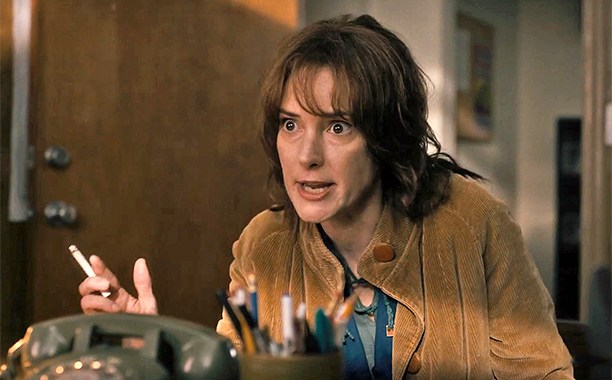
Wareheim’s Arnold is reliably present on “Master of None,” yet always a treat. Arianda, who plays a waitress named Alice in “Hot Ticket,” is a novelty to be savored. Her big scene comes when Dev invites her to a VIP concert. He barely knows her, but that changes fast as she performs loud impersonations of Cartman from “South Park,” demands Dev take obnoxious Vines of her, dares herself to give a stranger a blowjob in public and tops things off by stealing a girl’s jacket, then proposes they do some coke and play laser tag. She a gorgeous nightmare, and all Dev can do is watch horrified before running for his life.

Arianda is so good as Alice, she shakes all of us up. A Tony-nominated Broadway performer (“Venus in Fur”), with roles in films like Woody Allen’s “Midnight in Paris,” the actress has a scratchy voice and elastic facial features. She’s pretty and protean, and her Alice might be one of her most off the hook turns. Season three of “Master of None” is a done deal. We can only hope she didn’t scare off Dev too much.

MV5BMTQ4MTQ4NTg1Ml5BMl5BanBnXkFtZTgwNjIzNTkzNzE@._V1_SY1000_SX1500_AL_
Nina Arianda and Aziz Ansari, just as she starts getting … whack. Notice his wax-museum smile. 

Filming life in fascinating fragments

Too many worthy films flitter aimlessly in the ether, small and micro titles that never reach the local whatever-plex and go straight to DVD or get lost in streaming’s infinitely accommodating democracy (see, for one, Joe Swanberg’s hidden comic gem “Win It All” on Netflix). Sometimes the films get lucky, becoming cult revelations (“Wet Hot American Summer,” anyone?). Yet so often they go poof, vanishing into cinematic oblivion.

One of those small movies is “Cameraperson,” Kirsten Johnson’s transfixing, deeply personal free-form documentary, which is doing quite well, thank you. The 2016 film, peculiar and pretty wonderful, played minimally, and then, oh-so sneakily, debuted on DVD.

853_DVD_box_348x490_original.jpg

I don’t even remember how I heard about “Cameraperson.” It’s that kind of discovery, unique and hushed, like a hot, under-the-radar new restaurant, or a monkey’s paw. Remarkably, I located the movie at the library, just sitting there patiently, new, unsullied, waiting to be taken home like a shelter dog.

But “Cameraperson” is no mistreated mongrel. In fact, it’s laureled with widespread acclaim, earning a 99% rating at Rotten Tomatoes and shiny critical bouquets like “brilliant“ and “masterpiece.“ And none other than The Criterion Collection (which takes such good care of its superbly tasteful catalog that I bought a t-shirt) issued the DVD and Blu-Ray of the film. That’s prestige.

But what is “Cameraperson”? It’s a curio of whole-cloth originality, a globe-hopping cinematic scrapbook assembled from Johnson’s 25 years as a non-fiction cinematographer for other directors. She shot, among many docs, Michael Moore’s “Fahrenheit 9/11” and Laura Poitras’ “Citizenfour,” both of which won Oscars for best documentary.

But this is her movie, so personal that she calls it “my memoir.” It could also be called a vivid, living career diary, a collage of unvarnished outtakes from numerous docs that she handpicked and wove together with a crazy-quilt method that’s not always obvious.

Zigzagging and hopscotching from subjects and locations, a visual essay emerges. Artful connections and startling juxtapositions happen. Panoramically, with spare narration — her debt to Frederick Wiseman is palpable — Johnson captures multitudes: from a mossy-toothed shepherd strolling with his wooly charges, to bristling backstage drama at a Brooklyn boxing bout; from a fraught Nigerian maternity ward complete with yawping, slime-coated newborns, to shots of lightning in rural Missouri, punctuated by Johnson’s own camera-shaking sneezes. “These are the images that have marked me and leave me wondering still,” she says in the film’s opening note.

There is so much more.

Jumpy Liberian street scenes. Interviews with former rebel warriors who give testimonies of combat horrors. A panning shot of a Yemen prison for Al-qaeda fighters. A rickety, joyful Ferris wheel ride in Kabul. Grim visuals of Guantanamo Bay, Wounded Knee and Tahrir Square, places far removed from peace. A Christian-themed ballet performed by little girls in Colorado Springs. Far-flung centers of protest and massacre, mass rape and public executions. A visit with Johnson’s mother, who suffers from Alzheimer’s. Chirpy frolics with Johnson’s adorable twin toddlers, who are enthralled by a dead bird.

Though beauty abounds — there’s even splendor in a Bosnian martyrs’ cemetery — not all of Johnson’s shots are the master compositions you’d expect from a seasoned camera artist, and that might be the point. Many of the visuals are haphazard, shaky and seemingly random, like she’s busy setting up a shot or gathering all-important “coverage.”

You might also say the pictures are achingly authentic, quivering in the raw, glinting moment; that they are human, all too human.

cameraperson.jpg
Kirsten Johnson and friends

Turned on by Turner

Two of my favorite J.M.W. Turner paintings reside in museums not far from me: the harrowing “The Slave Ship” at the Museum of Fine Arts, Boston and the thrashing, splashing “Whalers” at The Met in New York. Both are masterworks by the 19th-century British artist, who began his career on a crest of acclaim only to come crashing down, relegated to solitary ignominy.

The disgrace was a direct result of Turner’s artistic magnificence. His unyielding depictions of roiling landscapes and maritime dramas revealed a radical stylist, whose fevered visions and intoxicated abstractions alternately pleased and repulsed.

Turner’s credo was “Never settle for the charming or the pretty,” says historian Simon Schama in his BBC series “The Power of Art,” a master class of lyrical, mind-stretching erudition that I cannot recommend more.

“This is what drives the very greatest art  — contempt for ingratiation,” Schama notes in the episode about Rembrandt, a sentiment that clearly applies to Turner.

Early on, Turner could do little wrong, producing glittering, golden landscapes composed of, says Schama, “fairy dust.” The tableaus are electric storms of color — earth of blazing blood-reds, skies of bedazzling golds. Technically unconventional, his scribbly, smeary works were a bridge to Impressionism, a vital crossing between the Romantic and the modern.

He enjoyed early hits like 1812’s crowd-pulling “Snow Storm: Hannibal and his Army Crossing the Alps,” which I recently saw at the Tate Britain. The picture is so epic, it’s almost literature.

But Turner felt the tug of the pure artist. He wanted more. Ambition hurled him forth into novel spheres of creativity and he evolved into a “painter of chaos, conflagration and apocalypse, wild and ambitious,” Schama says with a barely veiled grin.

This later period culminated with what Schama calls “the greatest British painting of the 19th century” — the dreadfully majestic “The Slave Ship.” Awash in horrors, the picture, based on a historical episode, depicts a ship in the distance and, closer to us, its human cargo — African slaves who have been thrown overboard — bobbing in the sea.

Slave-ship.jpg
“The Slave Ship” (1840)

Critics hated the painting, controversial for its divisive subject and flamboyant technique, though Schama considers it Turner’s “greatest triumph in the sculptural carving of space.” It is a masterpiece.

“Whalers,” from 1845, was also not an immediate hit, though it’s one of the works I most seek out at The Met. Its violent subject matter, rendered with aggressive abstraction, proved slippery to viewers. At first blush — squint your eyes —  it’s difficult to figure out what you’re looking at. I see a ship, but what’s that dark glob?

3818.jpg
“Whalers” (1845)

Allow novelist William Thackeray, Turner’s contemporary, to clear things up:

“That is not a smear of purple you see yonder, but a beautiful whale, whose tail has just slapped a half-dozen whale-boats into perdition; and as for what you fancied to be a few zig-zag lines spattered on the canvas at hap-hazard, look! They turn out to be a ship with all her sails.”

Yes! Of course. And this sudden clarity irradiates what is already a clear, uncontested tour de force, a painting that may have baffled for all its surpassing beauty.

Samuel L. Jackson, film’s charismatic Old Yeller

samuel-l-jackson-freakin1.jpg

Samuel L. Jackson is a yeller. A growler. Part human, part pouncing jungle cat.

He scares the shit out of everyone.

When I interviewed him way back when for “Star Wars: Episode I — The Phantom Menace,” I noted: “Samuel L. Jackson enters a room the way you’d think Samuel L. Jackson would enter a room — with velocity, fury … ,” and there memory fails me. But fear not, because you can fill in the blanks, envisaging the long coat fluttering in a gust, his hello more of a guttural emission than a salutation.

I had to laugh.

But do we still laugh? The actor, bad, bald and raging, has a persona to maintain, and, yes, its tongue remains deeply in cheek. His is a cultivated act, swathed in black leather, engined by a scolding severity, and leavened by a scratched baritone laugh that could go either way: sinister or Santa Claus. (It’s almost always the former.)

Jackson, with a strenuous wink, even tries to intimidate us, if just a little, in his “What’s in your wallet?” Capital One commercials, some of which are humorously doctored by those who want their hero reliably profane. He prowls the screen with proprietary confidence, his spokedude’s blandishments quite uncompromising. (Use this card. Or else.)

He’s got it down: the self-parodic scowl and growl, eyes popping, mouth a lion’s maw, the apoplectic human megaphone. We’d have it no other way. He’s modern movies’ go-to badass, the man you call when, in the face of ineptitude and criminal folly, glowering gravitas and debonair menace are demanded.

That voice. The earth rumbles.

In this former film critic’s review of the 2008 thriller “Lakeview Terrace,”  in which Jackson plays a toxic cop, I wrote that Jackson’s “roiling, rhythmic voice is an instrument of interrogation and intimidation. It barks, recoils, then rears up and roars. He has a rapper’s control of tone and timbre, turning passion and ire into a kind of sociopathic backbeat.”

In my take on his 2000 “Shaft” reboot, I went on:

“Samuel L. Jackson speaks like a building storm; his words have lightning jags in them.

“When he taunts his quarry, which he does with great frequency, his throat tightens, throttling syllables. His voice kicks up a few octaves until words sing with angry strain. Expletives fly in shrapnel sprays.

“‘What’s my name? What’s . . . my . . . name?’ shouts Jackson at a preening dope dealer as his pistol forges an elaborate imprint on the pusher’s cheek.

“In his crime-dude roles, in films like ‘Pulp Fiction’ and ‘The Negotiator,’ Jackson is pure gale-force attitude and wrath-of-God fury.”

Jackson’s breakthrough role, and arguably his most popular, is Jules Winnfield in “Pulp Fiction.” Slick in a bespoke black suit, head crowned with a Medusa nest of glistening Jheri curls, and with scary Bible verses at the ready, he’s all grooving fire and brimstone, an apocalyptic preacher-man with a very large gun and a very short fuse.

Jules showcased Jackson’s range, which is more faceted than the picture painted here of an implacable, one-note Angry Man. Jackson is a genius at outrage, explosive outbursts of verbiage and violence. But his Jules also revealed he’s an expert comedian, with a gift for brilliant badinage, not to mention a penchant for brooding, sometimes profound introspection. He’s proud but protean.

Jackson doesn’t need to yell to get our attention. His seething charisma is all it takes. It’s the aura of a star, some kind of supernova, that snags us in his thrall. He’s the real deal. Just don’t piss him off.

PulpFiction.jpg
“It’s the one that says ‘Bad Mother Fucker.'”

The playful elegance of Irving Penn’s photos

I’ve recently done some traveling to Washington, Philadelphia, Boston, Montreal and London, art-encrusted metropolises boasting drop-dead, world-class museums, from D.C.’s National Gallery to London’s twin Tates and the mighty Philadelphia Museum of Art. I was spun around (picture Mary Tyler Moore giddy and agape in the big city) by the sheer voluminous quality around almost every corner, be it the say-what size of the magnificent Turner collections in London or the rare “Chagall: Colour and Music” show in Montreal.

Yet, for all that sublime perambulation, meandering among masterpieces, the best art show I’ve seen in a spell, hands-down, is the Irving Penn photography exhibit at The Met in New York. “Irving Penn: Centennial” features over 200 photos — glamorous portraits of writers, artists, actors, dancers and other outsize personalities; insane food still lifes; leonine fashion divas; and worlds more. It’s an exhilarating joy.

Avers the show catalog: It’s the “most comprehensive retrospective to date of the work of the great American photographer,” who, after a sensational stint at Vogue, died in 2009. “Penn mastered a pared-down aesthetic of studio photography that is distinguished for its meticulous attention to composition, nuance, and detail.”

Yes, but there’s so much more than that clinical description suggests, and you can see it in the work itself. (Time is of the essence: the exhibit closes July 30. The Met has posted a nice video preview of the show here.) A smoky elegance and playful naturalism imbue the hugely influential pictures — hello, Richard Avedon and Annie Leibovitz — whose complexity and sophistication are on full display, if rarely peacocky.

Below are a few of Penn’s famous black and white celebrity portraits — some of my favorites — lucid, lush, deceptively simple images that pierce into the personalities to become indelibly iconic. (Try and identify the subjects.)

16218544919_fa5f5a3d7c_b.jpg

images-2.jpeg     images.jpegtruman-capote-irving-penn.jpg

garbo-bn1.jpg

penn-irving-photography-history-the-red-list.jpg

f5147b485f9e0b38967e9cfca6e0ec07--old-hollywood-classic-hollywood.jpg

16218056809_4956b4e5b7_b.jpg

penn14.jpg

The 10 best movies of the year, so far

What’s usually a Christmasy pastime, the year-end best-of list, is happening now, today, amidst the gruesome swelter of mid-summer. Movie best-of’s are mostly tiresome, self-aggrandizing exertions, but they seem worthwhile now because the year has already produced a trove of must-sees, pictures that are, largely, detergents to summer’s franchise flotsam.

So this one-time film critic has compiled a litany of bests, even if it’s strictly provisional. For instance, I haven’t seen — and I’m in no rush to see — “Wonder Woman,” “Spider-Man: Homecoming” and “War for the Planet of the Apes.” I’ve also, with regret, missed “Baby Driver,” “Raw,” “It Comes at Night” and “Graduation.” They’re in my crosshairs.

Meanwhile, from what I have seen, here are the top 10 films from the first half of 2017:

  1. “Maudie” — Richly idiosyncratic and unbearably poignant, Aisling Walsh’s intimate biopic about an arthritic Canadian folk artist (played by an avian Sally Hawkins, who’s so fragile she seems made of twigs) and her unlikely marriage to a brusque fishmonger (the macho Ethan Hawke excelling out of his element as a human cinder block with jelly inside). A miniature about art and love, it’s simple, slow, aching, beautiful. (More about it here.)        maudie_film_still.jpg
  2. “John Wick 2” — Oh. Yes. An explosion of Hong Kong-stylized mayhem, fueled by revenge and the ability to look impeccable while dispatching a fleet of attackers with the elastic, tentacular ease of the guy in “Oldboy” (who did it with just a hammer). Über-assassin John Wick (a simmering, sneering Keanu Reeves) is on another tear, engaging in non-stop, surgically choreographed street fighting and bullet ballets — Astaire and Rogers with knives and Glocks. Exhilaratingly bloody and pornographically suave, this exercise in arms and Armani is about as good as the first one. And, yes, Wick has another dog.john-wick-2-guns.jpg
  3. “The Wedding Plan” —  After her fiancé abruptly dumps her, 32-year-old Michal, an Orthodox Jew, decides, demands, insists that she is going, God willing, to get married in 30 days — with or without a groom. A series of comic blind dates, goosed by bumbling despair, is a showcase for Jewish rituals and mating rituals, not to mention an array of sparkling performances. An American director would muck it all up with farce and bathos, and despite the rare feel-good sop, the film, by Rama Burshtein, stays true as a serious, delightful peephole into faith, Orthodoxy and the universality of companionship. A find. wedding plan.jpg
  4. Get Out” — A scathing op-ed about American racism and race relations disguised as a bloody horror-thriller, Jordan Peele‘s ingenious what’s-it follows the relationship of Chris (Daniel Kaluuya) and Rose (Allison Williams) as it graduates to her bringing him home to meet the ‘rents. Hitch: They don’t know Chris is black. Rose assures her nervous beau that it won’t be an issue. Right. Peele keeps the boat rocking, with discombobulating tonal shifts and shocking reversals, as well as jabs of genre-apt violence. This disturbingly original movie also killed at the box office.  get-out-jordan-peele.jpg
  5. “A Quiet Passion” — A fine-grained Cynthia Nixon, alternately pinched and forthright, is 19th-century American poet Emily Dickinson in cinema bard Terence Davies‘ lushly elegant biopic of the reclusive writer, who deflects the twin tyrannies of sexism and religion with vocal mutiny and bridling impiety. Far from musty, the movie is an epigrammatic delight. Austenian, even Shakespearean, repartee festoons the crackling script about a bitter, celibate, sequestered genius who considers hers a “minor” life. “I would like some approval before I die,” she says. The world’s response is, well, heartbreaking.
    AQuietPassion_Trailer2.jpg
  6. “I Am Not Your Negro” — Raoul Peck’s cool, contemplative doc is based on a manuscript by James Baldwin about the lives and back-to-back assassinations of his close friends Medgar Evers, Malcolm X and Martin Luther King, Jr. (He left the manuscript behind when he died in 1987.) Read by an eerily hushed Samuel L. Jackson, the material, catalyzed by riveting archival footage, traces all that was going down in the heat of the Civil Rights movement. The movie’s timely racial resonance makes it an excellent companion piece to last year’s astonishing “O.J.: Made in America.”james.jpg
  7. Personal Shopper” — This offbeat drama is a risky mash of tones and genres, but out-there auteur Olivier Assayas is a daredevil, one of our most fascinating filmmakers, and he achieves wonders. He elevated Kristen Stewart in the entrancing “Clouds of Sils Maria,” and made the callow actress fly. Here she soars. This singular and sometimes freakily supernatural thriller about, yes, a personal shopper, boils down to: Kristen Stewart, Kristen Stewart, Kristen Stewartpersonal shopper.jpg
  8. “Okja” — A Netflix flick by South Korea’s Bong Joon-ho (“The Host,” “Snowpiercer”), “Okja” is a weird, witty and wild action-fantasy about a girl and her pig (think “Charlotte’s Web,” with a dash of “King Kong.”) The titular creature is a ginormous swine that looks more like a galumphing hippo. It has floppy elephant ears, nubby teeth and a tongue that flaps like a beach towel. Okja is a soulful pig, playful and protective, like a child’s canine BFF. But that’s where the joy ends. See, she is a genetically engineered “super pig,” bred by an American corporation for her delicious meat. And the company wants her, now. The spunky little girl who raised Okja for years is having none of it. Paul Dano sympathetically plays an animal liberation leader and Tilda Swinton is splendidly venal as the corp head. Jake Gyllenhaal? He’s the best human cartoon you never saw on “Pee-Wee’s Playhouse.” The candy-colored affair is a harrowing, heart-cracking moral tale, whose message is: Free the pig!
    okja-1024x544.jpg
  9. “Logan” — Logan’s the non-mutant name Wolverine goes by, so you know heading into this Marvel Comics marvel that fearsome knuckle talons will retract like 12-inch switchblades and baddie flesh will be slashed and perforated. Logan (a ruffled, ripped Hugh Jackman) is in a pissy mood, a worn and torn X-istential hero who’s had it up to here. This is all he needs: A little mutant girl who happens to be blessed (cursed?) with the same weaponized fists — a distaff Wolverine who’s also a murderous wildcat when danger strikes. (Unfortunately, she forgoes Logan’s luxurious facial fur.) Writer-director James Mangold aspires to an impressive hard-R grit and gore and an almost “John Wick”-ian body count (impaling! beheadings!) in this bruising X-Men installment. The complexion is dark, the tenor aggrieved, yet there’s no lack of the bonkers excitement that galvanized “Mad Max: Fury Road.” The story is unencumbered by fussy superhero mythos, focussed more on family and past, with a bold stroke of unexpected sadness. This one’s for the grownups.

thumbnail_25475.jpg

10.  “Dunkirk” — Certain to go down as the most fulsomely praised picture of the year, Christopher Nolan’s alternately epic and intimate WWII drama isn’t quite as singular or special as you’ve been led to believe. Pity the poor war movie, which has to transcend hoary combat clichés while delivering the bloody, kablammy goods; which has to strive for rigorous tough-mindedness while furnishing the hokey uplift of victory to swelling orchestral strains. Nolan does his best with his mostly gripping, always picturesque telling of the celebrated rescue mission of some half-million Allied troops out of Nazi-surrounded Dunkirk, but convention gets in the way and a you’ve-seen-this-all-before mood settles in. Canned heroics and schmears of sentimentality lard the third act. But Nolan finally prevails for an impeccably staged war rattler of intermittent intensity. Yet let’s not get carried away. Some are calling “Dunkirk” Nolan’s masterpiece. It’s not. Both “Memento” and “The Dark Knight,” er, blow it out of the water.

maxresdefault.jpg

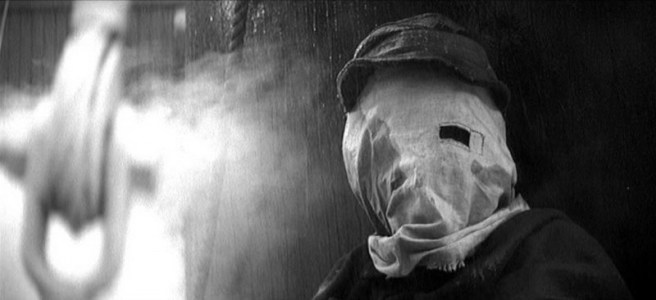
  • Honorable mentions: “A Ghost Story” — One of the most wildly original films I’ve seen in ages, this elusive drama about a ghost (a touching Casey Affleck, wearing, yes, a sheet with eye holes cut in it) who haunts while mourning for his still-living wife. Shot in dreamlike ultra-long takes and nearly wordless, David Lowery’s challenging, sensitive love story is a vision, and visionary. … “The Big Sick” — Not bad, not spectacular, Kumail Nanjiani’s smile-making rom-com with a dark undertow, featuring a fine Zoe Kazan and Holly Hunter, is worth a look, and a chuckle. (More about it at the bottom of this post.)
  • Overrated: “The Beguiled” — Sofia Coppola’s uneventful snoozefest has the bounding verve of a somnambulist. Its 94-minute run time is a godsend.

A kitty’s single eye peered deep into our souls, and questioned life’s fragility

Like a perfect amber marble smooshed into its forehead, the eyeball rests in the kitty’s face. With no eyelid to blink it, the eye glistens and stares, evoking a comic book Martian or, naturally, the Cyclops of Greek myth, a towering, fearsome beast that wore the largest monocle in recorded history. Wags on the web have dubbed it the “cyclops kitten,” musing with by turns pity, laughter, skepticism and freaked-out fear about this botched job of nature. The solo orb, writes one poster, “peers deep into my SOUL.”

maxresdefault-1

The kitty and its creepy eye are captured in a startling Associated Press photo, and it’s no hoax. Scientists say so, terming the facial mishap “holoprosencephaly.” Named Cy by its owner, it was born Dec. 28, 2005 in Oregon and died the next day. It was also born without a nose, making it look to some like a one-eyed monkey. Cy was one in a litter of two kittens. Its sibling came out normal and is presumably destroying furniture as we write.

With that impressive peeper, Cy was the kitten’s pajamas. Its image held Net surfers in the queasy thrall of morbid fascination. The photo of the pink and white feline — laying on a bed of horror and pathos, the outsize uni-eye centered in its downy head — shot through the blogosphere.

For a good spell, the picture was one of the most viewed and most emailed photos at Yahoo, and “cyclops kitten” was one of the most searched keywords. Soon, a meticulous and loving painting of Cy, complete with the epigram RIP, was posted at 7deadlysinners.com. Other sites ran poems to Cy. (I bet you woulda made a great pet/woulda scared everybody at the vet.) While sympathy reigned, nasty people let loose with monikers like “devil cat.” One poster wrote, “That cyclops cat scared the bejesus out of me.”

That’s glib stuff when deeper reflection is demanded. Cy represents the crazy fragility of life, the cruel caprice of Mother Nature. And it throws into question Cy’s mother’s taste in tomcats.

Cy is gone now. A fleeting oddity that ruffled us for a moment. A sideshow distraction that made us feel and think. Cy’s owner did what anyone would do with such a gift and learning tool for humanity. She put it in the freezer.

In defense of proudly prosaic poetry

Who likes poetry? I mean, who sincerely enjoys and delights in the art’s nose-crinkling inaccessibility, willful allusiveness and opaque flights of fancy? Who, really, likes to be flummoxed?

I do. Not much. But a little.

With a philistinian gulp, I admit that I prefer my poetry streamlined, simple, more aerodynamic than pyrotechnic. “Prose poetry” — the wondrous fictions of Nabokov, Marquez, Marilynne Robinson, Cormac McCarthy, to name a few — is what I really savor, alongside the vaulting, tongue-tangling verse of Shakespeare’s plays. (I haven’t worked hard enough to appreciate the Bard’s beloved Sonnets. I know, I know. Poetry, see, so often requires toil. I tire easily.)

Recently reviewing the great Ben Lerner’s book-length essay “The Hatred of Poetry,” The New York Times remarked: “A lot of people seem to hate poetry, which is arguably neck-and-neck with mime as the most animus-attracting of art forms. Loathing rains down on poetry, from people who have never read a page of it as well as from people who have devoted their lives to reading and writing it.”

I‘m loving the Times.

Now, here’s what feels like a blushing confession, a bald admission that I am, at long last, a quasi-poetryphobe. And that is: My favorite poet is Billy Collins. Elfin in aspect, with a humble mien and dazzling intelligence, Collins might be the most popular poet in America. His publishing deals are staggering. He enjoyed two stints as U.S. Poet Laureate. His readings are thronged. He’s like the Tom Hanks of poetry.

He also might be one of America’s most loathed poets, caught in that love-hate swirl of backlash — or simple lash. He’s deplored by many readers, critics and fellow poets, dismissed as easy, anodyne and frivolous, appealing to the lowest-common denominator, the beach-read slugs.

Billy Collins Photo and Book 07212014.jpg

As The Buffalo News said: “To his critics, Collins is a ‘major minor’ poet at best whose work is formulaic, if not predictable, and whose relentless efforts to charm the reader assume that the only way a poem can work is on the demotic level, which is to say, as colloquial speech.”

An online wag cracked: “Billy Collins is to good poetry what Kenny G is to Charlie Parker; what sunset paintings at the mall are to Jackson Pollock.”

Or, jeez, perhaps Collins is the Thomas Kinkade of poets.

Then again, no.

Collins’ gently cascading language is deceptively dismissible. It doesn’t boogie; it waltzes and sways. The poems are indeed colloquial, plain-spoken, but the artist braids his mini-narratives just so, to surprising and droll effect. Explosions are rare. He ferrets out little truths in life’s nooks, casting a soft, never-blinding light on them, hoisting them as shiny epiphanies that make you nod in gratitude.

Almost consistently funny, his poems are also often dark, shot through with self-deprecation and doubt about the whole racket of writing. It’s charmingly self-referential, even a bit neurotic.

Collins is the master of  “witty poems that welcome readers with humor but often slip into quirky, tender or profound observation on the everyday,” That’s the Poetry Foundation, which also cites no less than John Updike (speaking of an exemplary prose poet), who praised Collins’ “lovely poems” as “limpid, gently and consistently startling, more serious than they seem, they describe all the worlds that are and were and some others besides.”

Read for yourself here.

One of Collins’ poems, “The Country,” which opens the fine collection “Nine Horses,” hooked me early on, made me follow him all the way:

I wondered about you

when you told me never to leave

a box of wooden, strike-anywhere matches

lying around the house because the mice

might get into them and start a fire.

But your face was absolutely straight

when you twisted the lid down on the round tin

where the matches, you said, are always stowed.

Who could sleep that night?

Who could whisk away the thought

of the one unlikely mouse

padding along a cold water pipe

behind the floral wallpaper

gripping a single wooden match

between the needles of his teeth?

Who could not see him rounding a corner,

the blue tip scratching against a rough-hewn beam,

the sudden flare, and the creature

for one bright, shining moment

suddenly thrust ahead of his time —

now a fire-starter, now a torchbearer

in a forgotten ritual, little brown druid

illuminating some ancient night.

Who could fail to notice,

lit up in the blazing insulation,

the tiny looks of wonderment on the faces

of his fellow mice, onetime inhabitants

of what once was your house in the country?

That poem cracks me up every time. It’s funny yet concerned, a little nerdy. (You can watch an animated video of the poem here.)

Thing is, Collins wants poetry to be easy and lucid and fun and moving. He’s curated two volumes of such work, “Poetry 180: A Turning Back to Poetry,”  featuring poems by, among others, Catherine Bowman, Philip Levine, William Matthews, Paul Muldoon, Mary Jo Salter and Pulitzer Prize-winner Stephen Dunn, my second favorite poet, who also traffics in prosey stylings that illuminate life with wry melancholy. (Check him out, especially, I think, “A Postmortem Guide,” which I’d like read at my own ashes scattering. Classic stanza: I learned to live without hope/as well as I could, almost happily,/in the despoiled and radiant now.)

It doesn’t matter that Collins is no Larkin, Wordsworth, Heaney, Dickinson or Keats. Hell, maybe he is. I don’t know. But like the best art, his quirky poems are nourishing. They stimulate and tickle. They please me. I think that’s enough.

Curiosity killed the Catholic

I’m always on the lookout for a little religious illumination, be it the rattling Scientology documentary “Going Clear” to actually inviting a pair of Mormon elders to my home for an eye-crossing lesson in radical historical revisionism. (They were very nice young men, for the record, natty in ties and pressed white shirts. A wee deluded.)

Right now I’m returning to some tried-and-true texts: the four Gospels and Acts in the New Testament, along with “The Historical Figure of Jesus” by E.P. Sanders.

This hidebound agnostic isn’t going reborn, hasn’t “found” anything and anyway isn’t searching for religious enlightenment, a Damascus moment. I’m a minor history buff (literally: it was my college minor) and armchair theologian, which means I sit in an armchair and read about religion with skepticism and a giant cigar.

The cigar’s a jape, but I’m fascinated by ideas of mass worship, divinity, mysticism and the spread of religion through the ages. Seeking “truth” isn’t the object — I don’t believe it resides in a religious text — but merely intellectual stimulation.

(And I have gotten out of the armchair: I was raised Catholic — baptized, Sunday school, weekly Mass, teenage apostasy, the works. In 2000 I made a solo trip to Israel to, among other things, get immersed in monotheism firsthand. It altered none of my thinking on the matter, except to solidify preconceptions about faith and fanaticism.)

Curiosity killed the Catholic. The more religion I ingest, the warier I become. I thirst for facts, historical actualities, not myths or homilies or inspired conjecture. I want the relative power of knowledge, not the affirmation of faith.

What strikes me is how, outside of the academy, intellectual ballast is so often at odds with religion. Example: A good friend in college prided herself on her devout Christianity, chided me for everyday blasphemies, went to church weekly and praised Christ. But she never read the Bible and everything she knew about the religion was received wisdom, blind faith from the church and her parents. Once, when I described to her what Jesus probably looked like, she said, and I quote, “Didn’t he have those beautiful blue eyes?” Yes, and a brushed swoop of sandy-blond hair.

face-of-Jesus
Would the real Jesus please stand up?

Maybe Jesus did look like Barry Manilow. But I care more about a historically accurate account of what he said and did. I especially want to know how he turned water into wine, a miracle that could save me bundles at Liquor Locker. No one seems to have a complete grasp on the actual Jesus. Even the Catholic Bible I’m reading is strewn with footnotes that cast troubling shadows over the “gospel truth.” Despite my reading, I’m still a grappling student. I’ll get back to you when the heavens crack open.

It’s my journal. If only it were more.

“Journal entries, those vessels of discontent, are notoriously fickle, subject to the torque of mutable feelings; without caution, speculation falls into usurpation.” Cynthia Ozick

I’ve kept a journal for more than 22 years. It’s mostly electronic, tip-tapped on my computer, though I’ve printed out hundreds of pages from the first decade or so and bound them in a plastic spiral binder, as if I wrote a book. It’s quite fat.

IMG_0760.JPG
A big hunk of my journals, bound.

(This word barrage, incidentally, doesn’t include the stacks of Moleskin notebooks deliriously filled during my extensive world travels.)

What I write in the journal is hardly revolutionary. I report, remember, ruminate, philosophize, complain, yearn, whine and woolgather — all that human stuff. Most likely it is ravenously narcissistic, disgustingly self-obsessed, irretrievably solipsistic. (And how.)

Some of it’s pretty juicy, even naughty, but I’m careful not to get too personal about others. For one, I’m not comfortable anatomizing friends and family; second, I wouldn’t want to injure feelings of someone who pried where they weren’t supposed to. (Once, someone did pry where they weren’t supposed to. A romance that was in its death throes was instantly snuffed.)

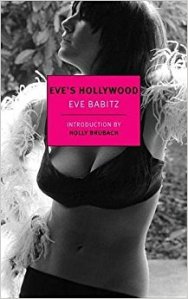
It wants badly to be literary, more narrative than journalistic, even occasionally novelistic, lyrical, with cartwheels and curlicues. This means a lot of it is dreadful. Perhaps what I’m aiming for is the memoir-y fictions of writers like Ben Lerner (the astounding, erudite “10:04”), Karl Ove Knausgård (the granular, un-put-downable “My Struggle” series), Teju Cole (“Open City,” a minor masterpiece), and Eve Babitz (“Eve’s Hollywood,” a delicious, decadent Didion), paragons of the form, of living, breathing autobiographical novels.

And then there’s one of the Platonic ideals, Dostoyevsky’s “Notes from Underground,” the first half of which is the faux-memoir of a blustering, philosophical nihilist, spittle flying with frothing apoplexy. It’s nuts, pure sulfurous id.

And, three attempts in, I still can’t surrender to this undisputed (until now) classic novel. Despite its machine-gun stream-of-consciousness, “Notes” is a grinding slog. The book rushes headily but incoherently, a corrosive rant by its nameless protagonist that loops-the-loops, caroms, careers and pinballs. Zesty, it’s also strangely insipid. I don’t know what the character is on about most of the time, but there’s a zing and energy propelling his transgressive thoughts.

About putting it down, yet again, I am conflicted, though I am mostly just bored, and that — boredom by a work of art — is unforgivable. I persevere for my friend Sativa’s sake. “Muscle through,” she, a fan of the book, tells me. But I can’t.

Still, I wish my journals were as combustible, as gnarly and smart. Sylvia Plath’s published journals, so frank and vivid, have inspired me, told me how to limn a banal day, galvanize a simple gesture. Lerner, infusing the quotidian with ballistic intelligence — he’s something else. (I’ve twice read “10:04.”)  I return to my bloated journal, its thirsty computer pages, recording the day, feelings, longings, and do what I can, all the while hoping for something approaching, or just faintly grazing, art. Ha.