Too many worthy films flitter aimlessly in the ether, small and micro titles that never reach the local whatever-plex and go straight to DVD or get lost in streaming’s infinitely accommodating democracy (see, for one, Joe Swanberg’s hidden comic gem “Win It All” on Netflix). Sometimes the films get lucky, becoming cult revelations (“Wet Hot American Summer,” anyone?). Yet so often they go poof, vanishing into cinematic oblivion.
One of those small movies is “Cameraperson,” Kirsten Johnson’s transfixing, deeply personal free-form documentary, which is doing quite well, thank you. The 2016 film, peculiar and pretty wonderful, played minimally, and then, oh-so sneakily, debuted on DVD.
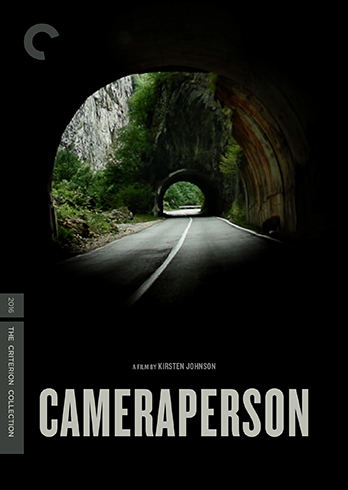
I don’t even remember how I heard about “Cameraperson.” It’s that kind of discovery, unique and hushed, like a hot, under-the-radar new restaurant, or a monkey’s paw. Remarkably, I located the movie at the library, just sitting there patiently, new, unsullied, waiting to be taken home like a shelter dog.
But “Cameraperson” is no mistreated mongrel. In fact, it’s laureled with widespread acclaim, earning a 99% rating at Rotten Tomatoes and shiny critical bouquets like “brilliant“ and “masterpiece.“ And none other than The Criterion Collection (which takes such good care of its superbly tasteful catalog that I bought a t-shirt) issued the DVD and Blu-Ray of the film. That’s prestige.
But what is “Cameraperson”? It’s a curio of whole-cloth originality, a globe-hopping cinematic scrapbook assembled from Johnson’s 25 years as a non-fiction cinematographer for other directors. She shot, among many docs, Michael Moore’s “Fahrenheit 9/11” and Laura Poitras’ “Citizenfour,” both of which won Oscars for best documentary.
But this is her movie, so personal that she calls it “my memoir.” It could also be called a vivid, living career diary, a collage of unvarnished outtakes from numerous docs that she handpicked and wove together with a crazy-quilt method that’s not always obvious.
Zigzagging and hopscotching from subjects and locations, a visual essay emerges. Artful connections and startling juxtapositions happen. Panoramically, with spare narration — her debt to Frederick Wiseman is palpable — Johnson captures multitudes: from a mossy-toothed shepherd strolling with his wooly charges, to bristling backstage drama at a Brooklyn boxing bout; from a fraught Nigerian maternity ward complete with yawping, slime-coated newborns, to shots of lightning in rural Missouri, punctuated by Johnson’s own camera-shaking sneezes. “These are the images that have marked me and leave me wondering still,” she says in the film’s opening note.
There is so much more.
Jumpy Liberian street scenes. Interviews with former rebel warriors who give testimonies of combat horrors. A panning shot of a Yemen prison for Al-qaeda fighters. A rickety, joyful Ferris wheel ride in Kabul. Grim visuals of Guantanamo Bay, Wounded Knee and Tahrir Square, places far removed from peace. A Christian-themed ballet performed by little girls in Colorado Springs. Far-flung centers of protest and massacre, mass rape and public executions. A visit with Johnson’s mother, who suffers from Alzheimer’s. Chirpy frolics with Johnson’s adorable twin toddlers, who are enthralled by a dead bird.
Though beauty abounds — there’s even splendor in a Bosnian martyrs’ cemetery — not all of Johnson’s shots are the master compositions you’d expect from a seasoned camera artist, and that might be the point. Many of the visuals are haphazard, shaky and seemingly random, like she’s busy setting up a shot or gathering all-important “coverage.”
You might also say the pictures are achingly authentic, quivering in the raw, glinting moment; that they are human, all too human.