All about Eve

It is the impoverished soul who has yet to encounter the unbridled bliss that is Eve Babitz’s prose. I’ve written about her several times, but I seem to be on a Babitz kick this summer (when am I not?), and my proselytizing propensities are in full whack. 

There. I said it. I am enamored with Babitz’s writing, and this lust just won’t go away. Last month I reread her infamous 1972 semi-fictionalized memoir “Eve’s Hollywood” and that kick-started my crush on her hip, shaggy, archly observant wordsmithery.

Babitz was Joan Didion with a jolt of sex, drugs, rock ’n’ roll and, crucially, a sense of humor. She’s the cool Didion, the one who laid Jim Morrison, among a murderers’ row of L.A. badasses — “she seduced seemingly everyone who was anyone in Los Angeles” — and swanked her way through the megalopolis’ mega-scenes with abundant beauty and ample talent (she was also an accomplished artist). 

Her memoirs and novels depict “a glamorous and unapologetically wild world.” And a privileged one, too. Her godfather was Igor Stravinsky. She was romantically entwined with Steve Martin and Harrison Ford. Reader, you are forgiven for getting a wee jealous about her oversaturated life. Me, I wilt.

And it’s this bounty that keeps you reading, carried as it is with earthy writing whose low-slung easiness pops at every turn with a hilarious throwaway detail. “She was a phenomenal writer,” declared LitHub, “the kind people hate the most, the kind that doesn’t have to toil or sweat to turn out something that’s not only decent but often extraordinary. Eve was not a great writer in spite of her unseriousness but because of it.”

Some summers ago, I compiled a blog entry entirely of quotes from Babitz’s fizzy, funny novel “Sex and Rage.” A few brief samples, a sliver of what the book, as slim as it is, contains:

“In the hurricane, the waves were fifteen feet high and roared like lions and volcanoes.”

“He smelled like a birthday party for small children, like vanilla, crêpe paper, soap, starch, and warm steam and cigarettes. Anyone would have liked being hugged by him.”

“She felt as though she’d been in front of a firing squad that had changed its mind.”

Her work is so much more than this. I’d have to transcribe whole pages to do it justice. It’s wily, droll, dry but juicy, real and loaded. And you will laugh. 

Four years ago, I wrote about this book: “Babitz’s raffish auto-fiction, whose subtitle, ‘Advice to Young Ladies Eager for a Good Time,’ is a brazen come-on. It’s so saucy, such unfiltered fun, and the writing so ablaze, resisting it would be dumb self-denial.”

In 2018, I read the Babitz novel “L.A. Woman,” and wrote, “Soaked in sunsets and squalor, glamor and grit, ‘LA. Woman’ traces the squiggly trajectory of a young Jim Morrison groupie through the titular city with a constant stream of poetics and epiphany. It’s funny and mean. It’s about Los Angeles. And life. I gobbled it up in a gulp, like a gumdrop.” 

So, yeah, I dig Eve. Without being her proxy pitchman — Babitz died in 2021, age 78 — I recommend these books: “Eve’s Hollywood,” “Sex and Rage” and “I Used to Be Charming: The Rest of Eve Babitz.” Take a bite.

Or don’t. Remain unenlightened. I don’t care. And Eve, that snarky libertine, certainly wouldn’t either. She’d shrug, chuckle a plume of smoke, then carry on waxing rhapsodic about her capacious life in her crazy city, not a care in the world.

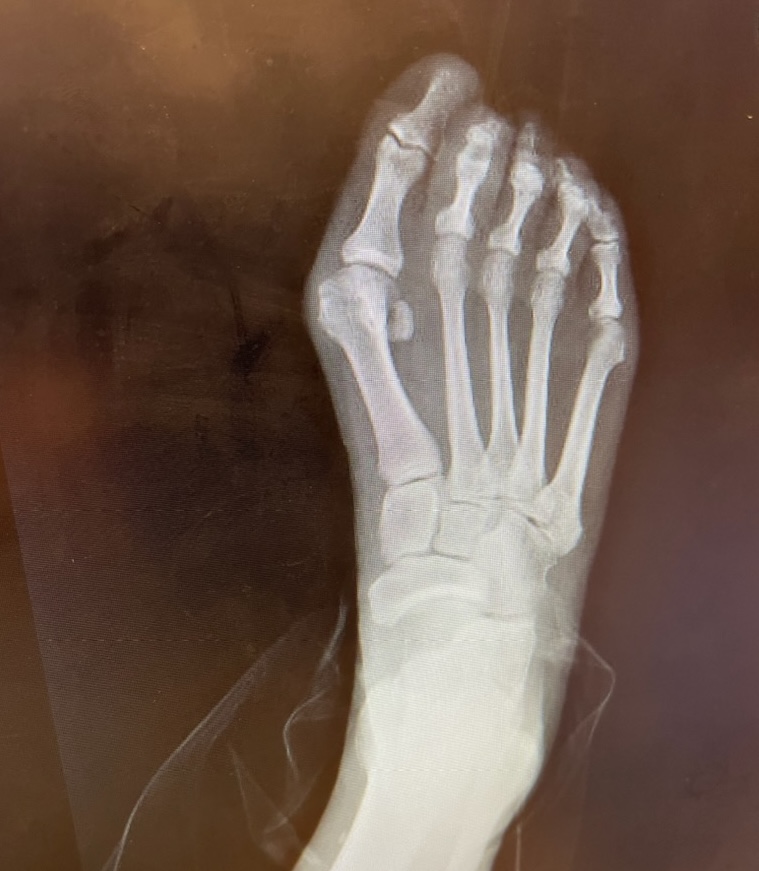
Sole asylum

So we’re wandering through the smashing Henry Taylor exhibit at the Whitney Museum in Manhattan and, like that, flash-bam, my right foot spontaneously combusts. It burns and sizzles. I seize up and sit down like a premature geriatric. Wincing happens. Cursing occurs. And yet nothing diminishes the pleasures of the show one bit. The art is exquisite — raw, funny, moving. I’m between awe and ow.

The foot becomes an issue. The pain, the throb, the burn. And we still have miles to trek through the unforgiving corridors of the city. The day is young, and it is often excruciating.

A day later, I call the podiatrist. An X-ray of my right foot is taken. I wait in the doctor’s minute room, slouching on the elevated exam bench, whose thin tissue covering crunches at the tiniest move, like aluminum foil, or tracing paper.

The doctor at last enters, assistant in tow, and she asks me to denude the offending foot. As I peel off my sock, I intone dramatically, “Behold the monstrosity.”

She laughs. I was expecting a scream. My foot is an objectively ghoulish sight. 

Pro that she is, the doc instantly unriddles what’s before us, which is, in all its homeliness, sort of poignant. It’s something Cubist, maybe Surrealist. Perhaps a strain of elephantiasis.

What’s really happening is a honking medley of maladies: a bunion, a hammertoe and a flat foot. Hearing this, blinking dumbly, I inquire about a wholesale foot replacement, say, a grocery cart wheel, or a deer hoof.

Ignoring me, she administers a very gnarly cortisone shot into my toe while her assistant sprays a freezing liquid on the entry area so I don’t shriek like Axl Rose. The needle goes in deep. And deeper. I swear I hear the crunch of bone. A choir of angels sings.

Amazingly, my foot feels instantly better. The burn is extinguished. The doctor cautions that the cortisone could last a week, two months, forever, we don’t know. I’ll take any of those. She has me order an $11 toe splint from Amazon and suggests I buy fancy insoles. She checks to see if my insurance will cover the insoles she can provide, at $450, but, no, of course not. They will not foot the bill.

I sort of hobble out of the podiatrist’s office. My foot feels so much better. I’m walking on air. I’m about to do a little jig, until, out in the sunshine, I realize what a heel I’d be. One step at a time. One step at a time.

Eerie and incandescent, my X-rayed foot, a web of symptoms.

Dorothea Lange’s luminous despair

Last week I choo-choo-trained to Washington, D.C. to scavenge through its bulging bounty of museums. (And also to get all gourmandy and eat at delish restaurants like Josè Andrès’ Mexican palace Oyamel; do order the guac and the tacos.) The US capital boasts like a billion halls of paintings, history, culture, science and more, and I visited seven in two days. Not a world’s record, but I was pacing myself. Huff, puff.

Tops for me was the National Gallery of Art — more on that in a bit. A close second was the transformative and seam-bursting National Museum of African American History and Culture, where everything from slavery and “Sanford and Son” to the Harlem Renaissance and “Harlem Shuffle” are gorgeously limned. Go.

While the National Gallery’s Rembrandts, Turners and Vermeers made me one of those vexing viewers who stands too long in front of a painting, till other patrons wonder crankily What’s he gawping at?, it was a special exhibition that really got me and did what great art can do: split open your world. 

The show, “Dorothea Lange — Seeing People,” presents some 100 black and white photographs by the great, socially astute 20th-century shutterbug. Her most enduring photo, part of the show, is probably this one from 1936, “Human Erosion in California (Migrant Mother)”:

Gaze at that picture. A little harder. Its masterpiece status is unshakable.

Steeped in jagged beauty and more (prematurely) creased flesh than a dozen old folks’ homes, the exhibit “addresses Lange’s innovative approaches to picturing people, emphasizing her work on social issues including economic disparity, migration, poverty, and racism,” the museum says. 

Alright. Uplifting it’s not. It unfurls a timely, tattered tapestry of naked despair and down-on-your-luck dignity. Yet it’s so filled with shuddering pathos and raw humanity it’s hard not to be moved, shaken, taken. 

Lange’s photos are untouched authenticity — keep your Photoshop sorcery — real people with sun-baked skin and hollowed eyes, capturing the American experience of a time, the 1930s to ‘50s, and places, the Dust Bowl to San Francisco. They don’t let you off the hook.

Exhausting, yes, but exhilarating too …

“Migratory cotton picker, Eloy, Arizona” (1940)
“Mexican workers leaving for melon fields, Imperial Valley, California” (1935)
“Nettie Featherston, wife of a migratory laborer with three children, near Childress, Texas” (1938)
“Maynard and Dan Dixon” (1930)
“Young girl looks up from her work. She picks and sacks potatoes on large-scale ranch, Edison, Kern County, California” (1940)
On the Plains a Hat Is More Than a Covering” (1938)

Food porn, Sicilian style

It’s 33 degrees outside and a cold winter sun glares from unblemished skies, the deep snow melts and the tweedly doodles and musical Morse code of birdsong fills the chilly air. Even inside, my hands are numb and puckered, and I should really put on gloves. But I can’t type with gloves. The blogger’s quandary.

Here’s another quandary: I just got back from my maiden voyage to Sicily — namely, the capital city Palermo — and, writerly speaking, I am constipated, all blocked up. Ex-Lax for writers — is that a thing? Gloves or no gloves, my typing is stymied. 

Let’s try this. Let’s look at a picture of one of my many fabulous meals on the fabulous trip, like this heartbreaking pizza:

Or this exquisite specimen of pistachio gelato:

And why not this prosciutto panini with a popular Italian beer:

Or the best cannoli I’ve ever had, made before my eyes in an actual nun’s convent:

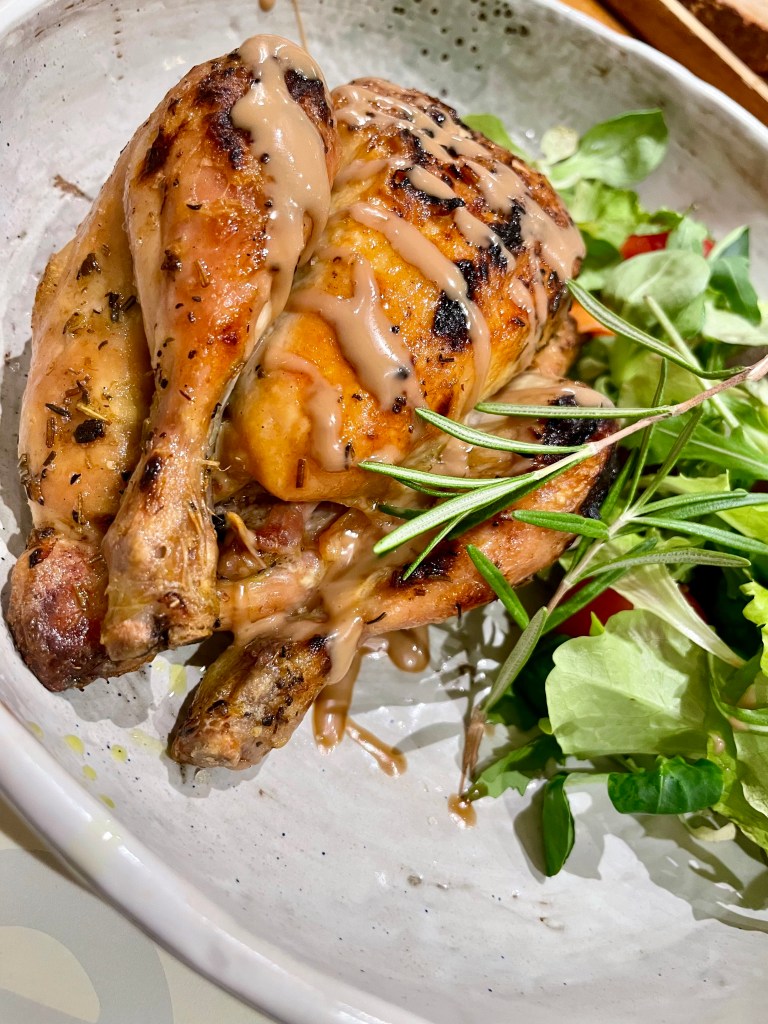
See, with most of my journeys, food takes up considerable real estate on my itineraries, at least 50 percent of why I go and what I do. Art, cathedrals, quirky museums — like the marionette and Inquisition museums in Palermo, the gruesome catacombs, plus the Mafia tour I took — are mandatory and rewarding. But nothing quite so viscerally gets the gut like, say, this succulent, perfectly seasoned chicken I feasted on:

Sicily — infamous for its Mafioso, which is actively being stamped out — is the biggest island in the Mediterranean, set just below mainland Italy. It boasts a regional flavor, dialect and attitude all its own, and its denizens are a proud people. They are also unfailingly kind, helpful, funny — and self-admittedly gesticulative and loud.

All of my Ubers were sleek black Mercedes and, as it was low season last week, non-local tourists were scarce. Booking a tour or a table was a cinch, and the weather hovered in the very comfortable mid-60s. (No gloves needed!)

Palermo, a coastal city of about 700,000, is exciting the way gritty Naples is. It pulses. It’s richly historical and traffic-choked with throngs of motor scooters; graffiti-strewn and colorfully multicultural. Pet dogs are plentiful — sidewalks are mushy minefields of poop — and street food rules. Like the Sicilian Arancini, fried rice balls, nearly the size of a tennis ball, filled with melty cheese and meat. Phenomenal.  

As I’m still a bit writer’s-blocky, I exit with these non-foodie shots of the rightfully famous Palermo Cathedral, a dazzling architectural melange of Islamic, Norman and Christian influences. I’ll share more about picturesque Palermo when my brain freeze thaws. Ciao.

‘X’ marks the spot

I recently wrapped Catherine Lacey’s transfixing novel “Biography of X,” and it still haunts me. Published last year, the book is pungent and persistent, banging around my brain, impressions springing up at random moments, all of it fragrant and strangely alluring.

“X” is a big book of ideas and feelings. It has a collage-like texture. It’s about art and the ravenous impulses of the artist; romantic love and its hazards; the fluidity of identity; the slipperiness of selfhood; and the rigors of creation. 

And it’s about the relationship between X, who has died, and her widow CM, the so-called writer of this fictional biography, which of course was written by Lacey in a neat feat of authorial ventriloquism.

X — who went by a swarm of pseudonyms, depending on her setting — was a shape-shifting Zelig, insinuating her self into the realms of art, music and literature, finding creative success and romantic excess, much of it to CM’s dismay and heartbreak as she researches her ex-wife’s half-cloaked life. 

In elegant, unfussy prose, Lacey conjures an alternative world in which X wrote the iconic David Bowie song “Heroes”; Jackson Pollock, Alexander Calder and other major artists are killed in a terrorist bombing; and Bernie Sanders is the President of the United States. Cameos by Patti Smith, Christopher Walken, Susan Sontag and other luminaries arrive with cheeky nonchalance.

Lacey’s command of her literary experiment and the constellation of personalities she so blithely courts sometimes makes you think you’re reading an actual biography of an actual person. It’s a good trick, deft and ambitious, and a delight to plunge into.

At 38, Lacey is a bona fide wunderkind, and her performance in “Biography of X” has me trusting her to lead me farther into her cerebral yet accessible oeuvre. 

This week I got her slim gothic fable “Pew,” from 2020. It’s about an anonymous orphan who’s lacking crucial identifying components — age, name, sex, history — rattling and confounding a small, deeply religious community in the American South. 

I’m half-through this mysterious novel, whose humanity almost blinds. I’m with it all the way, totally sold. Lacey’s virtuosity sings, loud and clear as a bell. I’ll just say it: She is one of the most interesting authors of her generation.

Best. Teacher. Ever.

Reading the short bubbly novel “The Prime of Miss Jean Brodie” by Muriel Spark, I’m reminded of my own most extraordinary high school teacher back in California so many years ago. 

In the book, Miss Brodie is a 30-ish instructor of teenage girls in Edinburgh, Scotland, with unorthodox teaching ways that fellow teachers sniff at as “experimental methods.” Weeding out her sharpest pupils from the dolts, Miss Brodie selects six girls to be “the crème de la crème” — the Brodie set.

“Determined to instill in them independence, passion, and ambition, Miss Brodie advises her girls, ‘Safety does not come first. Goodness, Truth, and Beauty come first. Follow me.’”

Miss Brodie goes on: “Art and religion first; then philosophy; lastly science. That is the order of the great subjects of life, that’s their order of importance”

At that, memories tumble forth of how my junior year English teacher, Mrs. Lisa Condon, laser-focused on art, literature, theater, poetry and all things high culture. And how she quietly cherry-picked certain students to be her, for lack of a better word, pets — the Condon set. She knew who would soar amid her unconventional efforts and those who would muddle through a fog of half-assed disinterest.

I went to an unremarkable high school in the flush suburbs of the East Bay near San Francisco, notable for its cloying rah-rah school spirit (Go Wolves!) and outstanding mediocrity, from academics to sports (Go Wolves?). The place sort of asphyxiated your teenage soul.

But there were exceptions in the form of a few teachers — colorful, charismatic, quirky characters who jumpstarted their subjects to phosphoric life. They’d challenge with an uncompromising affection for the material and the students. To name a few, there was Mr. Church, Mr. Weigardt, Mr. Nelson and, above all, the fearsome Mrs. Condon.

Mrs. Condon — always in flowing floral skirts, straight brown hair down her back, peasant blouses, no makeup — was soft but a fierce taskmaster. She could scare the snot-nosed adolescence out of you and make you a college-poised pupil in the first couple weeks of class. Each week we had to write a long essay. They took me five hours, every time. For midterms, we had to memorize the verbatim definitions of 125 vocabulary words.

Mrs. Condon was no martinet. She was warm and human, if tightly wound. She hewed to principle. She knew how things should be done and expected us to follow. There was little room for compromise. At 32, she was in her prime. 

On that crummy campus, her room was an oasis of art, civilization, rules and manners. She was dedicated to culturing us, wiping the philistine smirks off our faces, getting the gears in our sex-addled heads whirring. We studied Picasso, Dalí, Blake, Hemingway, Van Gogh, Dante, DeKooning, even lyrics by Iron Maiden and Pink Floyd. There was so much more. My head exploded. (She later added classical music to her syllabus. I would have killed for that. She would have broken down and cracked open the glories of Beethoven and Mahler with passion and ferocious intelligence and her students would weep.)

And woe to those who didn’t keep up. Mrs. Condon kicked out a jock when he couldn’t identify the ongoing famine in Ethiopia (he was back in class the next day), and ejected a cheerleader for cheating on the weekly vocabulary test (she never returned).

An unreconstructed Berkeley free-spirit, she maintained a rebellious streak — a “Question Authority” bumper sticker was posted by her desk for all to see and ponder — and actually told me what teachers to avoid or enroll with.

Mrs. Condon was a force. None of my college professors grazed her instructional power. Working at my second newspaper job in my mid-20s, I wrote her a note to thank her for the cultural exposure, no matter how demanding, that she instilled in me. She wrote me back, warmly pleased I was still writing. 

A couple years before that, while in college, I ran into Mrs. Condon at a San Francisco Ballet production of Stravinsky’s “Rite of Spring.” It was an awkward reunion, clumsy and blushing and impromptu and all, but nice nonetheless. I can only think she chalked up my attendance as a small triumph. I hope so. 

“What were the main influences of your school days? Were they literary, political, or personal?” a character asks one of the Brodie set in the novel.

The girl responds: “There was a Miss Jean Brodie in her prime.”

I’d say the same, but in my version: “There was a Mrs. Lisa Condon in her prime.”

The Tao of Nick Cave

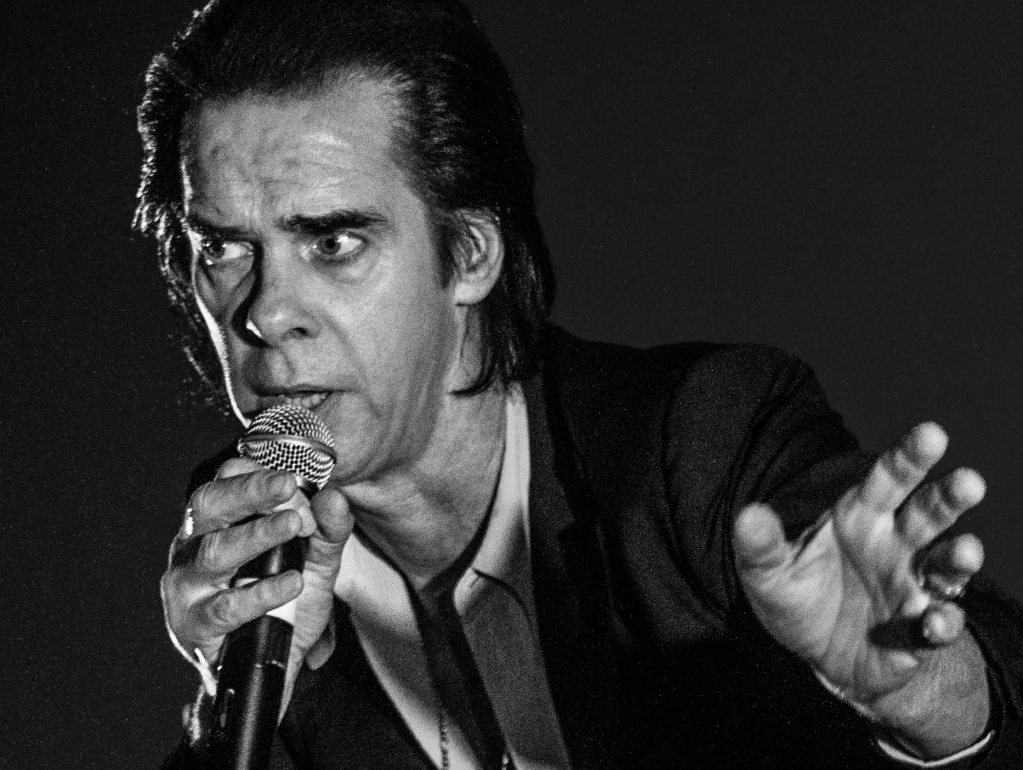
Nick Cave — Australian musician, composer, filmmaker, writer, artist, actor, all-around Renaissance man, with slick black hair and natty suits hanging off a long, pencil-thin frame — runs a sage, funny and heartbreakingly sincere advice column on his website The Red Hand Files. His counsel is so sharp and impassioned, you wonder: What can’t the guy do? I bet he can fly.

Recently, a precocious 13-year-old boy wrote in, asking this: “How do I live life to its absolute fullest, and not waste my potential? Especially as a creative. Also, what is a great way to spiritually enrich myself, in general, and in my creative work?”

I relished Cave’s response so much, I am excerpting a chunk of it here.

These are, to me, words to live by:

“Read. Read as much as possible. Read the big stuff, the challenging stuff, the confronting stuff, and read the fun stuff too. Visit galleries and look at paintings, watch movies, listen to music, go to concerts — be a little vampire running around the place sucking up all the art and ideas you can. Fill yourself with the beautiful stuff of the world. Have fun. Get amazed. Get astonished. Get awed on a regular basis, so that getting awed is habitual and becomes a state of being.”

Nick Cave — bard, baritone, Bad Seed, badass.

Raging with Roth

Last weekend, we hit a panel discussion at the Philip Roth festival in the late novelist’s hometown of Newark, New Jersey. We left it walking on intellectual air. Not smugly, but smilingly. It was heady and engrossing. Fun, funny and fascinating.

Called Philip Roth Unbound, the festival was a three-day celebration of all things Roth, from bus tours around his old Newark haunts to numerous panels parsing the formidable genius that gifted us “Portnoy’s Complaint,” “American Pastoral” and “Sabbath’s Theater,” to name some obvious masterpieces. (Need more? How about “The Human Stain” and “Everyman.”)

Our panel was irresistibly titled “Letting the Repellent In: Philip Roth and the Art of Outrage” — right up my twisted alley. A short description from the festival: 

“[A] panel on the cathartic power of discomfort. With each new novel, Roth predictably delighted and shocked readers with his frank depictions of human frailty and immorality. No aspect of behavior was spared his withering critical eye — sex, gender, race and religion were all fair game.”

I love it.

The panelists, all novelists, were a youngish quartet of publishing stars, award winners and best-sellers: Ayad Akhtar, Susan Choi, Gary Shteyngart and my personal favorite, Ottessa Moshfegh. They comprised a supergroup of sizzling hot writers, gathered to chat up Roth, his transgressive themes, techniques, cultural impact, and personal influence on each writer. 

I won’t recap the 90-minute discussion, but I will say that Choi was supremely poised and verbally chiseled; Akhtar, as moderator, navigated the discussion with shrewd erudition; Shteyngart labored to entertain with cussing and comic schtick, including some mugging (he was often very funny); and Moshfegh, coming across as a cerebral introvert and a smidge neurotic, was refreshing in her sometimes spacey reflections. 

To be surrounded by diehard Roth fans was heartening. Too often I feel that Roth is marginalized. He’s either too dirty, too angry, too offensive or too smart. His books aren’t easy; they are verbally dense, lashed in skeins of urgent ideas about life, marriage, love, sex, Jewishness, morality, death, politics, art. They are mean, unsparing, philosophically violent, crude, passionate and hilarious.

Few writers — Saul Bellow is one — could graze such dazzling complexity, that Rothian exuberance, that volcanic, (sometimes literally) orgasmic prose. “American Pastoral” (1997) is one of my top two favorite novels. It sucked my breath away with its relentless moral and artistic propulsion. It should be banned by sheer dint of how good it is.

“Sabbath’s Theater” — described by one critic as “Roth’s coarsest, frankest, and most exhilarating novel, showing off Roth’s linguistic verve, and his unparalleled ability to stare unblinkingly into the psyche of a depraved scoundrel” — is mandatory reading, a master text of style, for anyone pursuing the art of fiction. (I’m about to read it again.)

Roth died at 85, in 2018, without winning the Nobel Prize (though he received many awards, including the Pulitzer). In later years, he was regularly shortlisted, but was likely too incendiary for the milquetoast committee. Every October I would check the paper to see if it was his turn, then throw it down, crushed, livid. Bellow won it in 1976. Faulkner in 1948. Toni Morrison in 1993. Roth would fit right in that company of trailblazing masters. 

Maybe he was just too much much. Roth fans are zealous and jealous, and to see the capacity crowds at the festival, chatty and excited, reminded me the great one lives on. Or at least his challenging ideas and coruscating wit live on. We at least have that. 

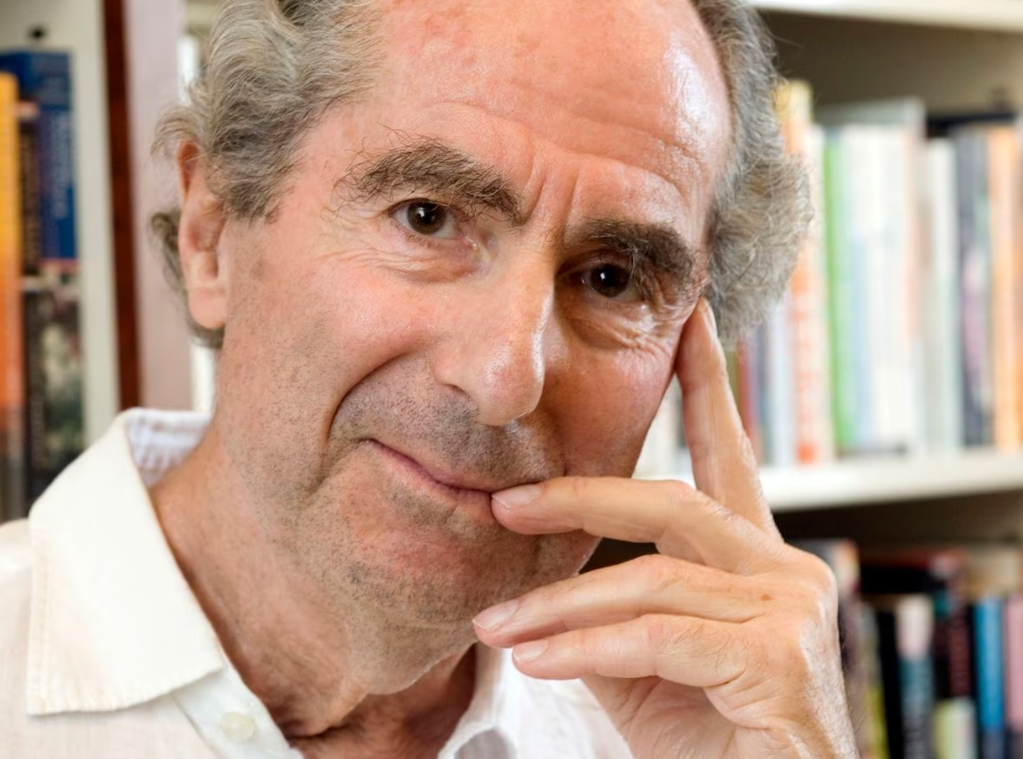
Philip Roth. Such a dirty, furious, brilliant mind.

Kilt me now

I’m trying, I really am. 

I’m trying to get super excited about Scotland, much as I tried a year ago to get jazzed about Ireland. 

We know how that turned out: I bought a flight to Dublin only to exchange it a week later for a flight to Paris. It was after I studied the destination with a flea comb, burrowed into my research, only to arrive at the great existential query: What am I thinking? (I ask this frequently in my life.)

I’m sure Ireland is splendid, despite the fact that pubs, pubs and pubs are invariably named the top experience in everything I read. A friend just returned from Dublin and said it’s terrific — for two or three days. Then you run out of things to do. At that point, of course, you rent a car for the verdant countryside and … yawn, you lost me. 

I’m an urban traveler. I seek culture, cuisine, cobblestone. Art, edifices, bustling humanity and idiosyncratic neighborhoods. I also seek cool climates — I’m done sweltering in the tropics — for summer travel. Last July I went to Buenos Aires to, among many reasons, escape our heat. I slipped on my jacket each day with a big grin. 

And so, Scotland. I’m eyeing a May trip to the capital Edinburgh and Glasgow, the largest city in the country, both of which brim with museums, castles, street art, music (here is where I make peace with bagpipes), hearty food (do I dare try haggis?) and, a-ha, whisky. May weather hovers in the mid-50s and below and I’m already happily shivering.

Like Ireland, Scotland is comprised of highlands, lowlands, islands, cliffs, crags, rolling pastures and billowing grass. It’s lousy with forts and castles. It doesn’t look like I’ll get into all that, though I might be whisked away on a day trip. I probably should.

Maybe I’ll spot Nessie, the wondrous Loch Ness Monster, and hitch a ride on her mythical scaly back through the chill waters. (As a kid, I used to love Nessie, that bashful and elusive lake dinosaur. I thought she and Bigfoot should get married.)

I am a wee nervous about the language, specifically the knotty Scottish brogue, which contorts familiar English into musical pretzels and thick-tongued tootles that leave some of us wincing with incomprehension. I once worked with a native Scot named Alan Black and I couldn’t understand a damn word he said. We got along swimmingly, but I’m sure I missed 60 percent of what he was telling me. 

This worries me, the rogue brogue. I’ll be made the fool by cheery locals who will snicker at me between sips of lager and Glenfiddich, doing spit takes. I’ll be the dumb American carrying around an ear funnel, going, “What’s that, mate?”

I can do this. The more I excavate, the more Scotland attracts. I’m thinking seven days between the two cities, yet there’s more to explore. The trip could get longer, epic, out of control. It could go from a jaunt to a journey. I like that. (Cue: “Loch Lomond.”)

Am I sure about this?

My blog photo explained (again)

About four years ago I did a short post explaining the photograph that graces my blog, Gnashing — the black and white one at the top of the page showing a gaggle of children going bonkers with delirious glee, fear and surprise as they witness something magical, or menacing.

Since then other readers have asked about the picture, and instead of explaining it again, I offer a direct link to that brief blog. It tells you all you need to know about an image I never tire of, a photo that captures such a paroxysm of raw, joyous emotion, you either have to laugh or cry. Go right HERE.