Well, I got it. Or it got me. Whatever. It’s my turn. For Covid, that is.
Some crabby cold symptoms — the usual gunk: light cough, wet nose, swimmy head, a generalized ick — proved to be the real deal today. A test said so. My achy-breaky body bears it out.
Now what?, I wonder. First, I’ll be isolating for five days. Then I’ll take another test. Meantime, lots of fluids, rest, crushing boredom, gratitude that I haven’t lost my taste or smell (yet!), and some reflecting on how foolish I was to think I was impervious to the virus, as I took all the precautions — two rounds of shots plus a booster, regular mask-wearing, mega doses of arrogance, etc. Small irony: I was slated to get my second booster this afternoon.
They say most of us will get Covid, so I don’t feel completely singled out and picked on (mmm, yes I do). Still, it’s a drag. I’ve had to rearrange my schedule, cancel appointments, and, sorely, I will miss a public reading of one of my brother’s stellar plays. Plus, I have a wee dry cough that sounds like a choking Munchkin.
Reading. I’ll catch up on some reading. I’m already waist-deep into a re-read of Richard Ford’s beautifully observed 1986 novel “The Sportswriter.” A piercing slice of contemporary realism, the book is tinged with rue and humor and grit, and profoundly meditative about the everyday struggle. It’s oddly comforting, despite the sting.
On deck is “Either/Or,” Elif Batuman’s brand-new sequel to her hit novel “The Idiot.” Like its predecessor, critics adore it (“This novel wins you over in a million micro-observations” — NYT) and the way it sweeps you into a bright young woman’s woolly world of self-discovery. (That’s all I got. I haven’t read it yet.)
I can get all philosophical about contracting the virus, or not. It’s plain as day, and because it’s physical, intellectualizing it, cataloging the myriad ways the body betrays us, is just so much wheel-spinning. So far, the malady feels like a mild head cold — every so often I wonder if I really even have it — and I’m banking on it staying that way.
Covid can kill you, but so can the flu, or a drive to the pharmacy. I know lots of people who’ve had it and each one pulled through famously. So I’m not too tangled up about it. Everything will be just fine … right?
As the lead in “The Sportswriter” says, “Sometimes I’m afraid … It’s natural to the breed.”
So let me bore you silly and tell you that I’m currently re-reading Joseph Conrad’s slim epic “Heart of Darkness,” a smidge more than 100 pages of nightmarish adventure up the African Congo, rife with colonial violence and brushes with death, and co-starring a renegade colonist named Kurtz who’s apparently gone mad in the jungle.
It’s been decades since I’ve read the classic novella, which of course inspired Francis Ford Coppola’s Vietnam phantasmagoria “Apocalypse Now,” back when ELO and C-3PO held cultural sway. And it felt about right for a revisit, don’t ask me why.
(No, ask away. Okay, I needed a shortish book to hold me over while I wait for a copy of the new Michael Cimino biography. A mysterious figure, Cimino directed the Oscar-winning Vietnam drama “The Deer Hunter” and the catastrophic flop “Heaven’s Gate,” both right about the time of ELO and C-3PO.)
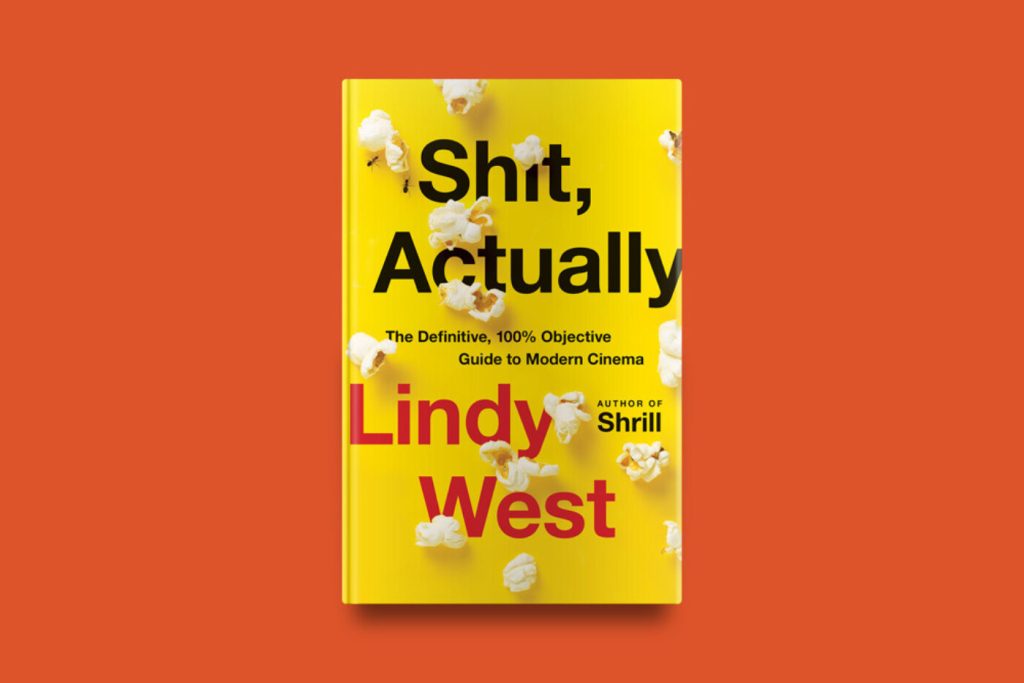
Before re-picking up “Heart of Darkness” only yesterday, I was hopscotching between three books: Tove Ditlevsen’s mesmeric memoir “The Copenhagen Trilogy”; humorist Lindy West’s caustic movie reviews, “Shit, Actually”; and cartoonist Roz Chast’s lauded memoir “Can’t We Talk About Something More Pleasant?”
Ditlevsen’s “Trilogy” bundles three smallish memoirs — “Childhood,” “Youth” and “Dependency” — in a single volume, and the cumulative effect is powerfully poignant. She traces her life in the 1930s and ‘40s, from about age 6, when her interest in poetry flowered, to her twenties, as a young mother and successful author addicted to painkillers. The prose is clean and unflinching and recalls the transfixing autofiction of Elena Ferrante and Karl Ove Knausgaard.
Lindy West is the opposite of Ditlevsen — tart, messy, sophomoric, fueled entirely by pop culture punch. Her rambunctious movie reviews aren’t primly unfurled; they’re yelled in a neon hailstorm. Mainly they’re plot synopses with running commentary festooned in ALL CAPS, promiscuous italics and serial exclamation points (because they’re funny in bulk!!!!!). It really is like she’s yelling at us.
She LOVES!!!! 1993’s “The Fugitive” and rates movies — from “Face/Off” (a misunderstood masterpiece she direly underestimates) to “Harry Potter” — on how they stack up to the Harrison Ford thriller.
“‘The Fugitive’ is the only good movie. We didn’t need any more movies after ‘The Fugitive,’” she gushes. “We don’t need any movies before it either. We should erase those.”
That would be funny if it wasn’t so wrong. I’ve always thought “The Fugitive” was one of the most overrated movies of the ‘90s. But she’s obviously exaggerating for comic flash and bratty button pushing (right?). I’ll give her this: The title of this book, “Shit, Actually,” is also the title of her scorched-earth review of the barfy, saccharine rom-com “Love, Actually.” Good show.
Yet ultimately West is so insincere and strenuously flip that you can’t tell what she really likes or loathes for all the jokiness. She’s a little Andrew Dice Clay-esque — it’s hard to tell where schtick ends and truth begins.
You’d know these characters anywhere: the nervously quivering bodies, gaping grimaces, dark rings around the eyes, skinny arms and big heads. Roz Chast draws consummate depictions of raw, buzzing angst — humanly and hilariously — with squiggly lines that look like she has a bad case of the shakes. Why’s she so rattled?
Well, life to begin with. That’ll do it. But in her 2014 memoir “Can’t We Talk About Something More Pleasant?,” Chast, the longtime New Yorker cartoonist, tackles the dreaded situation of “an only child watching her parents age well into their nineties and die.” Oof. Grim.
And funny. Because it’s true. Chast, for all her squirms and squiggles, draws and writes with unvarnished precision about the tragicomedy of becoming your parents’ caregivers, when the roles reverse. You could say she goes straight into the heart of darkness, and finds bittersweet laughs.
Another installment of haphazard thought doodles, six hors d’oeuvres that I’m too lazy to whip into full meals. They’re presented numerically, but that’s just for looks. Rest assured, each item is equally trivial.
1. In a thud of disappointment, I put down a book today that I had great hopes for — I hate that. Brandon Taylor’s story collection “Filthy Animals” just won the prestigious Story Prize for best book of short stories, so I snatched it up, cracked it, and eventually let out a blustery sigh of resignation, thinking, Pshaw. Not dreadful but not great, Taylor’s sexy social realism traces the romantic exploits of young LGBTQ+ couples, which is no longer novel yet still refreshing. His writing is spare and precise, but it’s also facile and shallow, sanded to a sterile remove. Physical descriptions trump psychological and emotional depth. Taylor’s stories have been compared to the light and prickly millennial sexcapades of Sally Rooney. Fair enough. But she’s sharper, cuts deeper. Has fangs.
2. Cubby the über-pooch is doing fine, thank you, and he’s watching me as I type this, so things are sort of meta. I look at him back and see that his fuzzy Ewok face has striking human attributes. Like his eyelashes, which I rarely notice, are almost as luxuriant as Tammy Faye Bakker’s big, fake, bat-wing lashes. And his lower lip is like a little man’s with black lipstick. And his bottom teeth are just like tiny baby teeth. OK, now I’m starting to get creeped out.
3. Not creeping me out are the warm sentiments I received on my recent birthday, especially the nice words from one of my dearest exes, who wrote, “Our time together is one of my favorite chapters in life, for sure.” For three and a half years we had a blast, traveling Europe — Paris, Italy, Vienna, Istanbul, Greece — going to concerts, movies and plays, carousing and canoodling, and I’m thankful she’s still in my orbit. We were sweet and snarky. Here’s how she signed off: “Write me back, asshole! And have a very Happy Birthday.” Aww.
4. After quitting “Filthy Animals,” I grabbed the even more acclaimed “The Copenhagen Trilogy,” a collection of three memoirs by late Danish author Tove Ditlevsen, which comes wreathed in panting praise and strewn with confetti. Written from 1967-71 and embraced by a new generation of readers and critics, the memoirs, “Childhood,” “Youth” and “Dependency,” have been hailed a masterpiece, “the product of a terrifying talent.” Having just started the book, my opinion of it is at best embryonic — the writing is stupendous — yet I’ve tweezed a piercing line from the early pages: “Childhood is long and narrow like a coffin, and you can’t get out of it on your own.” That both chills and cheers me.
5. Once when I was at Angkor Wat in Cambodia, a young girl was selling sunscreen on the roadside. I asked her how much and she gave me an absurdly high price. I blurted, “You’re crazy!” She hissed back, “You crazy!” Just two weeks ago in Rome, I approached a taxi driver and told him the address to my hotel. “Forty euro,” he said, as if he wasn’t trying to blatantly fleece me by a full 25 euro. “You’re crazy,” I scoffed, to which he replied, “You’re crazy!” I really need to come up with a new line.
6. The latch on the back gate has broken, so the fence no longer makes a catching noise, it just sort of swooshes shut. That means you can’t tell if someone is coming or going. A ghost might as well be walking in. Or a serial killer.
Big and bold it announces “Buenos Aires,” and you can gather from it that Argentina’s capital is in my sights for my next destination. The nerve, the gall, you might huff, considering I got back from Italy a mere four days ago. But see, I’m a greedy globe-trekker, scheming my next move on the plane back from my latest journey like a cheating lover.
Buenos Aires wasn’t on my bucket list. Though I almost went years ago, I’ve never been to South America. As I was decompressing after my flight home from Rome, I was chatting with a woman, a friend of a friend, whose entire life is an unbroken blur of world travel. She asked where I was off to next and I had no answer. I really didn’t know. I just knew it would happen in the fall, my prime travel season.
I told her I never travel in the summer because of the heat and the crowds, and she, a veteran of Argentina, suggested Buenos Aires. Below the equator, our summer is their winter, of course. I could go in July and luxuriate in 59-degree temps in a jacket and jeans. And it’s the off-season, so crowds are thinner and prices cheaper. I was on my computer researching the city within minutes.
I was taken. Infused with Spanish, Italian and French colonial influences that lend it a lusty European sheen, yet still boldly Latin, the city of 13 million people is famed for a dizzying eclecticism that runs from its architecture to cuisine, including ubiquitous beef steaks and flowing Malbec. Street art animates facades, baroque cemeteries lure the living, and, if you’re into it, clubs smolder with tango. (I’ll watch the dance, but not partake, lest I cause an international incident.)
It’s all enticing until you shop for flights, which run a stroke-inducing $1,200 to $1,300 in July. Argentina also requires you to buy travel insurance to cover any hypothetical Covid treatments. That’s in addition to a negative Covid test, proof of vaccination and some other minor paperwork.
That’s the downside. The upside is stylish and affordable boutique hotels (I already have one picked out), 15-minute taxi rides costing $2.50 USD, dinner with a full bottle of wine for $10, free museums, jumping cafe and bar cultures and, by most accounts, loopy, lively people. I’ll tell you more when my book arrives.
Buenos Aires is Spanish for “fair winds” or “good air,” and isn’t that nice. It’s not certain that I’m going there; I’m thick in homework and investigation. I’m vetting this city that seems magnificent on paper, and might be even more so in the flesh. I’ll see where those fair winds carry me.
P.S. If you don’t think I’m already pondering my fall voyage, you are grossly ill-informed. Scotland? Iceland? Poland? Peru?
Farting thunder and crackling lightning preceded the cloudburst that tried its damnedest to drench our small tour group at Pompeii, the ancient city of dramatically preserved ruins just outside of Naples yesterday. Umbrellas aloft, my brother and I winced at each other and agreed we didn’t want lightning to blast us into human beef jerky like the displayed bodies caught in squalls of volcanic gas and ash from a spewing Mt. Vesuvius way back when (79 A.D., to be exact).
Weather-wise, Rome was better, but Naples, Italy’s third largest city, set south and known as the country’s black sheep and mischievous scamp, might be more atmospheric, vaguely sketchy and intimately enthralling. It’s got kick and fizz.
Sure, Naples has offered lashing schizophrenic weather — enveloping sunshine, then muffling fog, then a glimmer of sun, then a 10-degree temperature drop and downpours — but it has character to burn: crazy winding backstreets streaked with old churches, lavish, looping graffiti, bristling bars, sensational food, boisterous people. And do mind that Vespa tearing down the cobblestone street bustling with fleet-footed pedestrians.
Speaking of food I might kill for — last night’s grilled octopus and the pasta carbonara in Rome surely count — we waited about 40 minutes for a seat at the famed Sorbillo pizzeria, known for the best pies in the world and certainly in Italy. Get the basic Margherita — mozzarella, basil, zesty homemade tomato sauce and thin, chewy crust (huge and about $5). It will recalibrate your pizza expectations for life.
But I’m not here to peddle pizza. I’m here to report that we tracked down the three (stunning) Caravaggio paintings in Naples; found a go-to watering hole, Libreria Berisio, which is a cozy working bookstore by day, heaving with volumes, and at night dims the lights and serves a boggling array of cocktails, with funky seating, including stacks of hardbacks for stools (books and booze!); and took a private four-hour city and food tour with the spectacular Gennaro. Just the three of us.
Gennaro, who speaks with a lilting, comically tangy Italian accent and shoots off sparks of wound-up energy, whisked us along in a gust of breathtaking erudition, knowledge, information and raw charm. Food, history, literature, opera, architecture, art, politics both local and global, film, geography — he seems to know it all, an effusive polymath who makes you feel intellectually undernourished.
But we weren’t undernourished, because Gennaro fed us a feast, including pastry, fried seafood, buffalo mozzarella, deep-fried pizza (!!), beer, Limoncello (a local lemon liqueur), pasta with meat sauce, and more.
He’s also something of a one-man chamber of commerce for Naples, fervently defending the city, exalting its virtues with fist-shaking passion, and angrily blaming city leaders for underrating and underselling their jewel in the rough. Five years ago, he says, Naples still carried a bad rap — piles of garbage, crime, mafioso, and other underbelly lesions — but it’s enjoying a surge of respectability and much-needed tourism. He wants the world to see his native city as he does: a top draw, a world-class player, a tourist mecca. He wants it to be loved, adored, appreciated.
The airport security line today was groaningly long, but it moved with ease and speed and I hardly complained about the grabby strip search. Soon enough, I was on my way to Gate C123, where I’ll be boarding a Boeing something or other to Rome, an eight-hour redeye that will land tomorrow just past the crack of dawn.
My brother, who meets me in Rome on Tuesday, drove me to the airport. I was very appreciative until he tried to fist bump me as I got out, a gesture that isn’t really in my physical vocabulary. I indulged him, with a blush — what am I going to do, reject the fist? Then I exclaimed, Ciao! Grazie!, getting into the spirit of the trip and all. He drove off, perhaps flushed with shame.
Checking in at the United kiosk, no one asked to see my Covid vaccination card, but whatever. That’s one less micro hassle. United on its website cautioned to get to the airport early due to a possible surge in spring break travelers, the worst kind. But it didn’t seem overly crowded, and only once did I hear “bro” uttered.
I wound up overcompensating by getting to the damn airport way too early, as I almost always do. I still, now, have a little more than two hours to kill at the gate. I’ve had an $11 beer and a $13 turkey sandwich wrapped in cellophane — airport haute cuisine. Now what?
I can get some reading done. I brought along novelist Jeffrey Eugenides’ cult classic “The Virgin Suicides,” which I read long ago and have meant to reread. So here I am, and the book holds up better the second time.
If you’ve read it, or seen Sofia Coppola’s gauzy movie, you know it’s a suburban American gothic hinged on the suicides of five teenage sisters over one year. That sounds grim, but the story, suffused with Eugenides’ glinting lyricism and arch humor, moves with a lush, dreamy drift that’s slightly removed from reality, yet remains wise and true and fine.
I’m already about halfway through the novel, which means I’ll probably have to buy another book for the return trip. Ah, the pleasurable perils of world travel …
On a frigid fall weekday, I strolled to the library, determined to slow down my crazed buying of books by borrowing some instead, and I suddenly tripped and fell, all but face-planting on the cracked concrete. The wind swirled. Snowflakes fluttered, constellations of falling stars. I clutched my knee and whined like a baby infant. God wept.
Everything okay, I rose, did the ritual dust-off, and walked on, wearing a pinched wince on my unscathed puss. I casually looked around, praying no one saw.
At the library, I had work to do, books to seize. Recently, I had the throbbing urge to re-read “Beloved,” the Toni Morrison classic enshrined as one of the greatest works of literature of the 20th century. Slavery, infanticide and malevolent ghosts — fine holiday reading. Found it, grabbed it.
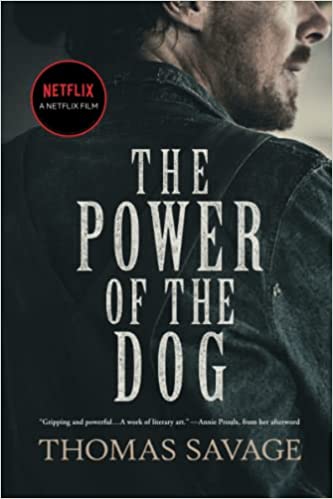
Oscar chatter circles Jane Campion’s new film, the spare, unsparing western “The Power of the Dog,” starring Benedict Cumberbatch. For that, the 1967 book it’s based on, by the unsung Thomas Savage, is receiving renewed attention. So I also got it. (And I read it. It’s terrific — all searing psychological grit with a blindsiding twist that will snuff your dreams of ever becoming a cowboy.)
I’m hot and tepid with novelist Lauren Groff — I quite liked her novel about a utopian commune “Arcadia,” but found the acclaimed marital dissection “Fates and Furies” ordinary and wildly overrated. Still, I’m going to give her latest super-hyped novel, “Matrix,” a shot. So I got that, too. It’s a character study about a young woman who discovers love and feminist agency in an impoverished abbey in 12th century England. Sounds … intriguing?
Heading to Portugal soon, I picked up Portuguese literary eminence and Nobel Prizer José Saramago’s “The Gospel According to Jesus Christ.” This isn’t Saramago’s most famous novel — that would be “Blindness” — but it’s kind of better. It’s a mash-up of the four Gospels with Saramago slyly, ironically and contempletively (and controversially) filling in the mysterious, nettling voids of those holy books. He presumes and vamps on what Jesus did in his childhood and adolescence, up to his grisly demise on the cross with a skeptic’s impish wit. I loved the book. I loved the shivery last line: “But what Jesus did not see, on the ground, was the black bowl into which his blood was dripping.” Human, all too human.
Elizabeth Strout knows humans. Author of such intimate, character-driven novels as “Olive Kitteridge” and “My Name is Lucy Barton,” her prose is lean, literary and deeply felt, homing in on individuals, real people, with an empathic laser beam. She banishes cynicism for a rare authenticity that invites organic joy and pain. Her latest is “Oh William!” (oh, that title!), a continued riff on characters from “Lucy Barton.” Lucy and her ex-husband William reunite platonically for what’s inescapably called a journey of discovery, one with neat, homey zigzags that ring hard and true. Its humanity is unassailable, its humor wry, its imprint lasting. That’s another book I got.
I scored that day among the teeming stacks, under the florescent mists. Five books essentially for free is nothing to smirk at, and my luck seemed boundless, until it wasn’t. I couldn’t find Franzen’s latest family blockbuster “Crossroads” or John Gardner’s cult classic “Grendel” — an ironic tale told from the point of view of the aggrieved monster in “Beowulf” — or Elizabeth Samet’s “Looking for the Good War: American Amnesia and the Violent Pursuit of Happiness” and, gee, doesn’t that sound like festive holiday reading, not unlike “Beloved”?
Expectedly, knee-jerkingly, reviewers have stumbled over themselves to praise the foppish funnyman’s latest collection of personal tales (often tall), diary entries, cultural observations and social sniping.
Snicker-worthy at his very best, Sedaris, a humor essayist for The New Yorker, has made a cottage industry out of wan, admittedly embellished autobiography, droll stories about his family, his husband and his privileged moves to the French and English countrysides.
Turning life into literature, he is frank, irreverent, sassy, yet sensitive, as any good writer should be. And he is a good writer, even if his language is baldly prosaic, stylistically flat-footed, determinedly unadorned, dare I say drab. (I said it.)
Overrated, with thousands flocking to theater-sized readings to hear his nasally, high-pitched deadpan — I’ve been there — he’s not exceptionally funny or insightful, though he taps a reservoir of honest empathy. He’s a queer, urban Erma Bombeck, flattering a particular strain of hipster and sophisticate with teeny tee-hees.
***
I’m pumped about Portugal. Barely back from Paris and already I’m poring over books and sites about Lisbon and Porto, legwork for a weeklong stay in mid-January, when I’ll probably get soaked by merciless rain (while temps hover at a balmy 58 degrees). Paris must feel like a betrayed mistress.
The flight, which cost less than a good winter coat thanks to an airline credit, is booked. Hotels, at seductive off-season prices, are booked. Two walking tours, including a Porto food tour, are booked.
I got back from Paris exactly one week ago. I am shameless, a monster.
Unlike Paris, London or Spain, Portugal isn’t front-loaded with blindingly spectacular sights and museums. It instead thrums with an old-world vibe, cobbly neighborhoods spread over San Francisco-y hills, views and plazas and churches and food, including unparalleled bounties from the sea, and of course the people. (My people. As mentioned before, I’m of Portuguese descent, though my ties to the country are tenuous at best. I’m a terrible ambassador.)
It’s a walking world, Portugal. I plan to amble, stomp and stagger through the country’s two biggest cities, with the very occasional — and very cheap — taxi for longer hauls. A picture says so much, and makes the heart do a jig:
Porto
***
Smarter, funnier, better looking and a brilliantly better writer — not mention an infinitely superior cook, natch — Anthony Bourdain and I still had a lot in common.
We’re both wanderers, seekers, a little profane and rough around the edges, smart-alecks, atheists, ironists and guiltless sensualists. We’re angry, fiery and melancholic. We’re easily bothered and bored, and don’t always know what to do about it, except, in many cases, hit the road.
And like him, for all my searching, I’m still not sure what I’m looking for. And I’m pretty sure I will never find out. Bourdain, a suicide in 2018, probably never did either.
This hits me watching “Roadrunner: A Film About Anthony Bourdain,” a moving, multilayered documentary about the celebrity chef, author and influential television host by gifted filmmaker Morgan Neville (the Oscar-winning “Twenty Feet from Stardom,” another masterpiece).
Sure we had things in common, but Bourdain, in his books, shows and this remarkable movie, cuts a troubled figure, the classic brooding, almost romantic enigma who toggles manically between wonder and woe.
With his streamers of verbiage, buoyantly prickly charm, zeppelin-sized attitude (and ego), lanky strut, tats and designer shades, Bourdain was hipster as tour guide, a foodie philosopher, man of the world who was always just a little itchy in the role. He was the reluctant rock star — cynical, self-effacing — who still craved the glory, glamor, privilege and, alas, the drugs, including heroin, that came with it.
At his best Bourdain was an influencer before the term gained the narcissistic kiddie cachet it flaunts today. Before any trip, be it Toronto or Tokyo, I watch a rerun of “No Reservations” or “The Layover” to get a voluptuary’s feel for a city and nail down must-do destinations of plate and place. I’ll be rewatching his “Parts Unknown” episode about the food and culture of Porto soon enough. I trust him to steer me to the coolest and most coveted spots. He hasn’t failed me yet.
The programs, of course, are as much about the man as the places he visits. They’re about getting an earful, and a mouthful, from a dark, dazzling host who found so much joy between grumbles. He made the dangerous seem divine, just how I like it.
***
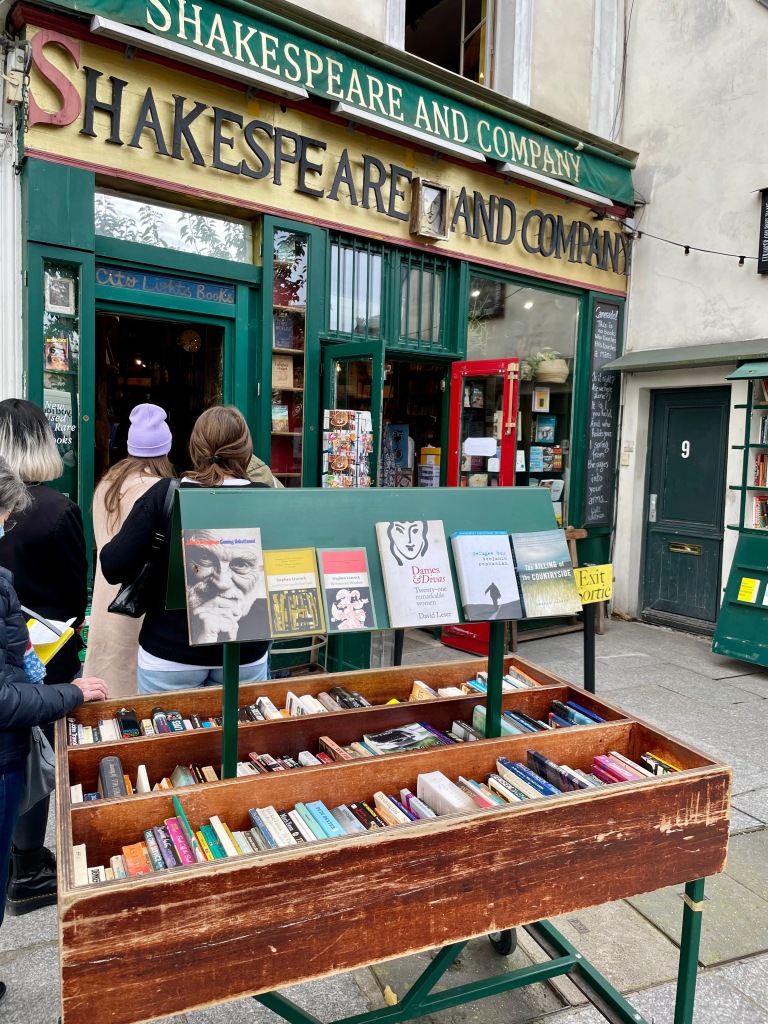
When in Paris, I always duck into the fabled Shakespeare & Company bookstore, smack on the Seine on the historically literary Left Bank, where Joyce, Hemingway, Fitzgerald, Stein and Sartre tippled and typed, spinning the blank page into eternal art.
Cramped and crowded with tome-seeking tourists, the creaky-floored shop, honeycombed with nooks, alcoves and twisty aisles, specializes in French and English language literature — no junk, just the good stuff. It’s not snobby. It’s just smart. And the English-speaking staff are unfailingly cheerful and helpful, stamping your book with the store’s inky insignia. It’s a pulp paradise, the kind that makes a bibliophile go a little mad with delight and desire.
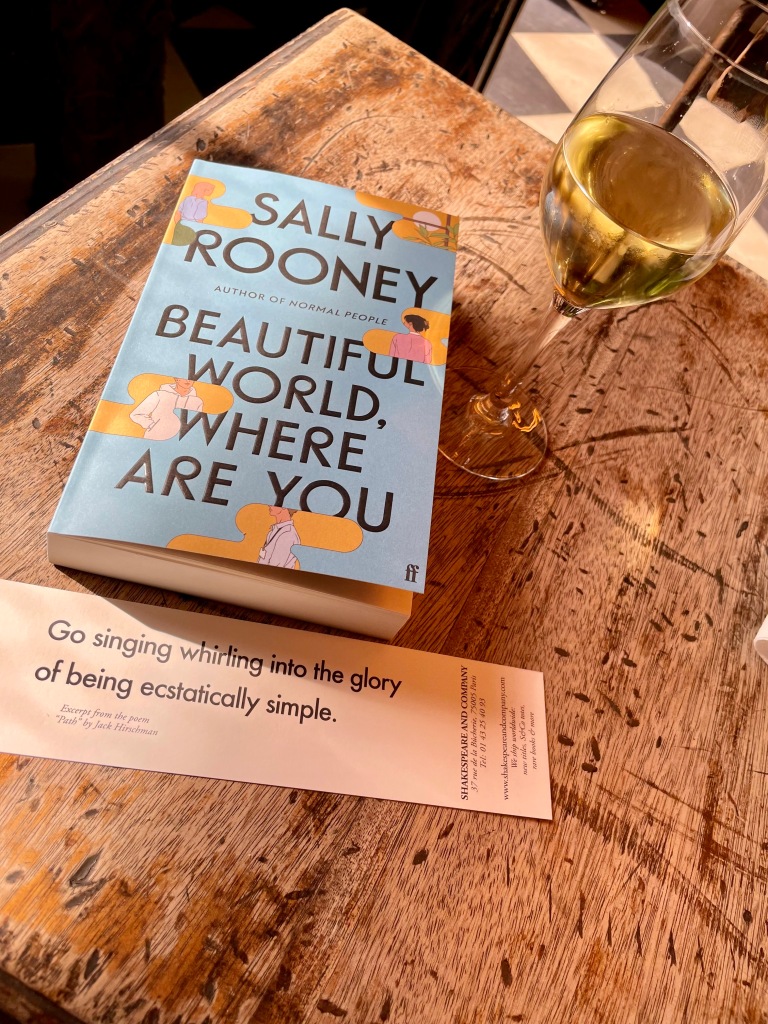
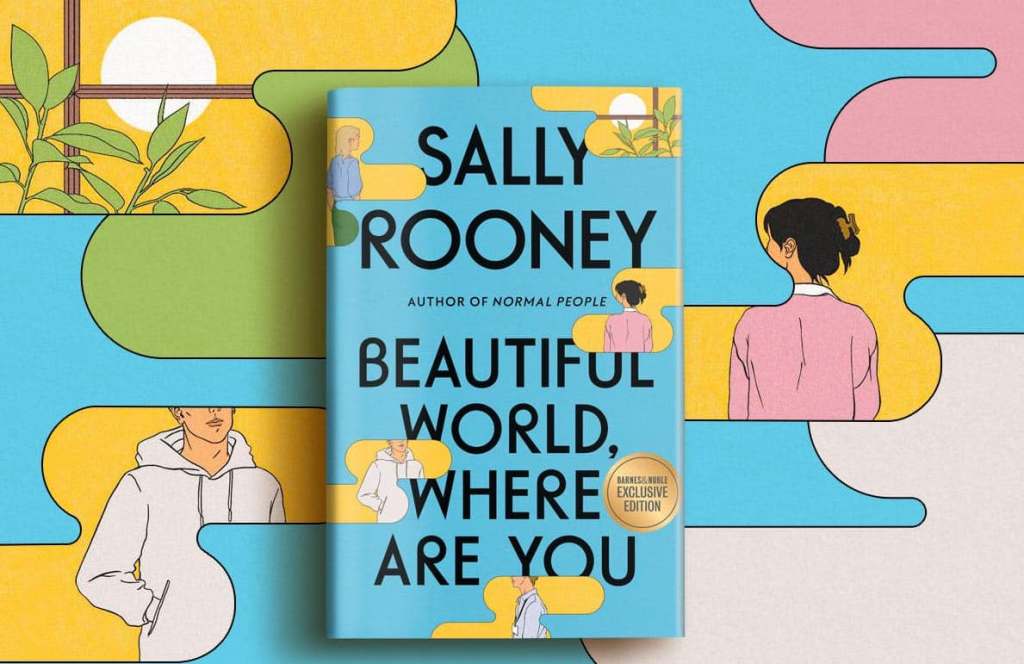
I went firmly middlebrow on my recent pilgrimage, grabbing a paperback (it’s only available in hardback in the States) of Sally Rooney’s new novel, the wincingly titled “Beautiful World, Where Are You.” I cracked it immediately, reading in bars and cafes with a Chardonnay or latte on hand.
The Irish Rooney (“Normal People”) is a reliably breezy read, plainspoken, occasionally lyrical, but mostly succinct and pinched. Her control is impressive and her sturdy, confident voice makes you want to follow her wherever she’s going, which often includes naked people.
I just finished the book on my return from Paris and enjoyed it. It covers Rooney’s preferred topics — love, sex and friendship, yearning and ambition among anguished millennials — with detour discussions about Marxism and life’s unfathomable purpose. (Rooney, a wunderkind at 30, is a professed Marxist.)
Coming from the famous bookshop, it’s not only a winning read, it’s a fitting souvenir from that most bookish of cities.
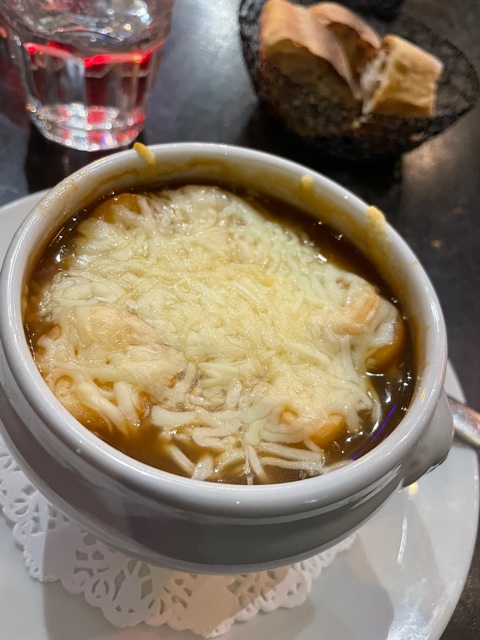
The worst French onion soup I ever had was in France.
It happened last week at a cozy bistro in Paris’ hip Le Marais district, a minor hiccup, though major faux pas, amid a constellation of remarkable meals I savored during my most recent travel escapade — eight days in Paris, the greatest city on the planet.
I love onion soup, French style, but I never have it. Where do you get an authentic bowl? Well, try France. And so I did. Yet something went wrong. No, lots went wrong. The oily brown broth tasted OK — sweet, savory beef stock — but the onions themselves were pitifully scarce and, much worse, it was topped with small, stale, store-bought croutons and a grisly pile of clearly processed shredded cheese from a ziplock bag, cheese that was not Gruyere or Parmesan or melted.
I’ve had better onion soup in New Jersey. This was a disgrace. Only once, maybe twice, have I ever sent a dish back. I didn’t mutter a complaint about the soup. I didn’t want to shame anyone. Partly that’s because I also ordered escargot and it was pretty delicious — hot, plump mollusks drenched in garlic and olive oil. This was, of course, my purposely clichéd French meal. It had to be done, despite being a half fail.
Saddest onion soup in the world
But I don’t travel for the greatest bowl of onion soup (or do I?). I do it for the explosive newness, to be pried out of my home-addled head and relocated to the novel and exotic, to live, learn, experience. To find joy, or even fear. To escape the self and kick open doors. To move, move, move. To seek, discover. To be astonished.
Instead of my usual Paris haunt the Latin Quarter, I stayed in the aforementioned Le Marais on the Right Bank, a village of winding cobblestone streets, haute boutiques, LGBTQ cool, cafes, bars and trend-setting ambiance. It’s kind of fantastic.
As usual I walked miles around the city till my toes blistered. Transportation-wise, I eschewed the Metro and instead hailed Ubers and taxis. After years of scrappy, lo-fi travel, I felt I deserved the convenience and ease of environmentally devastating vehicles. I’ll call it what it was: shameful, privileged laziness. It was a marvelously stupid decision that cost me hours in choking traffic and hundreds of precious dollars. I get all sad just thinking about it.
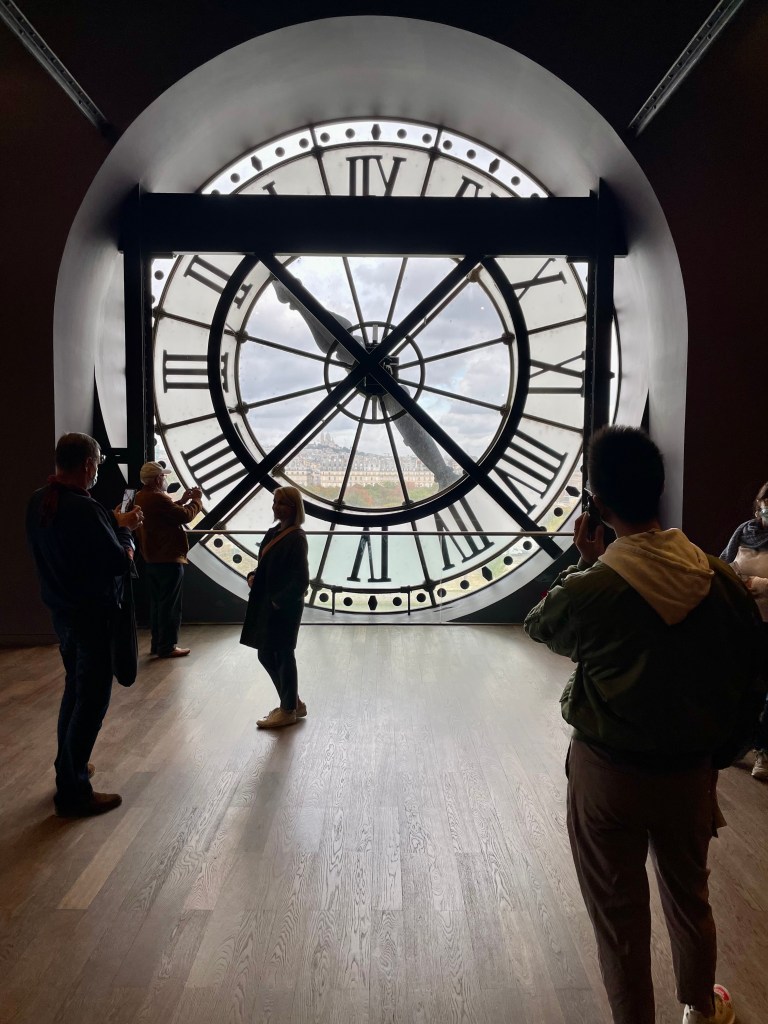
But the destinations, after I popped from the cars with a chirpy “Merci beaucoup!,” almost always assuaged the grief and guilt. There were of course essential standbys — the Louvre, D’Orsay, the legendary Shakespeare & Co. bookshop, the bone-encrusted Catacombs — but I added new spots to my well-trod Paris itinerary.
Louvre
Like the avant-garde exhibition space Palais de Tokyo, where an impenetrable show by German artist Anne Imhof baffled and bored; and vaunted bistro L’Amis Jean, where I ate the most delectable rabbit and country vegetables and reveled in the festive atmosphere; and the dreamy Georgia O’Keefe retrospective at Centre Pompidou; and the itty-bitty restaurant-bakery Mokonuts, one of the hottest and hardest to get seats in town.
Run by an endearing if understandably frenetic couple — with no employees, they’re the chefs, waitstaff and hosts — Mokonuts is low-key gourmet all the way. I had raw scallops that made me smile so involuntarily, co-owner/pastry chef/showrunner Moko Hirayama burst out laughing. (The main plate, pink-fleshed pigeon, was equally amazing.)
Mokonuts is where I chatted with a middle-aged American couple about food and travel. They asked if I’d ever been to Lisbon, Portugal, and I said yes, I visited many, many years ago. (I’m of Portuguese descent, but that’s neither here nor there.) I found Lisbon to be like a giant, beautiful seaside village, suffused with languid, old-world charm. I relished it, but it didn’t leave teeth marks.
The couple perked up and replied that things have changed and they go there often for its food, people and invigorating bustle. Lisbon, I’ve since read, has become one of the most visited cities in Europe. My fellow travelers went on about it and inspired me to take a deeper look. The crazy result: I’m heading to Lisbon and Porto in mid-January. Expect a blog about sausage.
Musee D’Orsay
For the very first time in my many trips to Paris I did not see a classic American movie at one of the city’s numerous revival cinemas; no films (“An Affair to Remember” — pass) grabbed my interest, sadly. Yet I did take a short amble through my good friend Père Lachaise Cemetery, freckled as it was with fall leaves and dappled with autumn shadows. I sought out the relatively new grave of French actress Anna Karina, wife and muse of Jean-Luc Godard, with no luck. The place is massive. In fact I saw no celebrity plots — no Oscar Wilde, Jim Morrison or Edith Piaf — on this visit. Yet I still found a baroque beauty in death.
As always seems to happen, I strolled by Notre Dame several times. The gothic vision oddly emerges out of nowhere almost anywhere you go. It demands your attention.
She is tragically transformed after the April 2019 blaze that tore her soul out and broke the world’s collective heart. Only the indelible, indomitable facade is fully visible, as the rest of the cathedral is girdled by a fortress of construction walls, webbed in scaffolding and towered over by spindly cranes. Depressingly visible are exposed wood planks on the flying buttresses and gaping maws in the charred rooftop.
The surrounding wall panels are emblazoned with photos and explanatory text describing the fire’s destruction and exactly what type of surgical procedures the ancient lady is now undergoing. It’s informative, and classy. People still come to gaze in awe, and the cathedral’s gargoyles still perch in the heavens, smirking, telegraphing in their way that everything will be all right.
1. Au revoir, France — hello, Ireland? That’s how it looks right now, especially since I’ve swapped my flight to Paris for a ticket to Dublin. So I guess I’m going to Ireland in October (insert a wee leprechaun kick). Or I think I am. The tyranny of the pandemic can upend everything, so while Ireland has relatively open tourism guidelines, things can change in a depressing snap. I scotched Paris because France’s Covid rules have become groaningly prohibitive — très crappy. I’m not torn up about it. I’ve been to Paris a few times, but this purportedly worldly traveler has never made Ireland. Frankly, it hasn’t lured me to its bucolic charms: rolling green hills, craggy ocean cliffs, mossy castles, obsession with pubs and, suspiciously, Guinness beer, minor museums and churches. It’s been on my index of non-bucket list destinations (including Australia, Iraq and pretty much anything Caribbean) until now. What clicked? The idea of something far and uncharted (and not tropical). Focusing on Dublin and, briefly, Galway, it will be a mellow journey, eight lolling days of food and drink, mild tourism, immersive history and lots of questionable Irish music. If I really get there, I’ll be lucky, charmed.
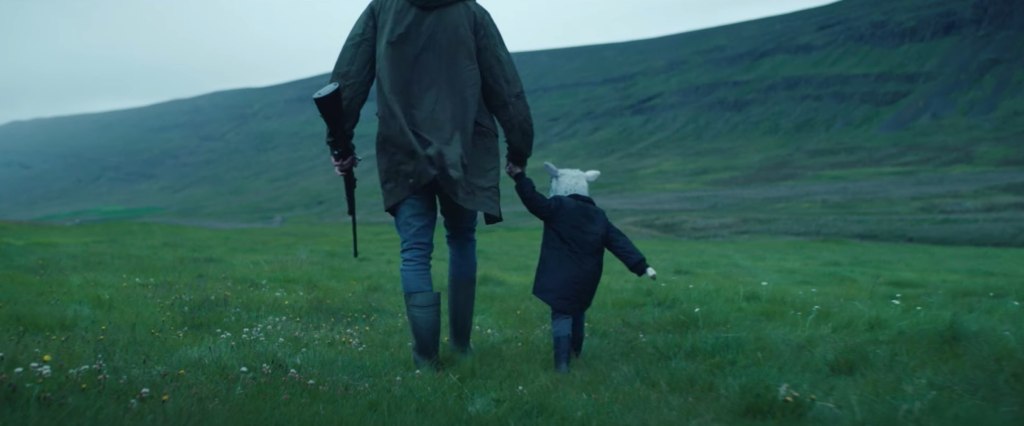
2. With uncluttered elegance, the film is called “Lamb,” and it will chill you to the bone. Coming October 8, it’s described by hip indie studio A24 as “Icelandic folktale on top, Nordic livestock horror on bottom,” and it flows in the vein of A24 creep-outs “The Witch” and “Midsommar.” This one, by Valdimar Jóhannsson, is about a childless couple adopting a creature that is neither lamb or human: a sheep has given birth to a hybrid animal that has the body of a baby and the head of a lamb. Watch the trailer here. It’s unsettling. It’s eerie. It’s glorious.
3. I’ll take sweaters over sweat anytime, and I cherish every cool breeze that cuts through this soggy, sloggy summer. Let’s call it a wrap. I have things to do this fall and the chaotic weather, be it soak or scorch, is proving a deflating victory for climate change. It’s time for 50s and 60s and the end of wildfires, heat waves and floods. Yes, I hate summer, but no season’s perfect. Even autumn, the best of them all, has its pesky drawbacks, from confetti storms of leaves and Mandalorian costumes on Halloween, to football and corn mazes. We can deal.
4. And we curl back to Dublin, via Irish author Sally Rooney, whose new book “Beautiful World, Where Are You” arrives September 7. A globally celebrated wunderkind for her twin novels “Normal People” and “Conversations with Friends,” both written before she was 28, Rooney returns to her familiar milieu of middle-class millennials swirling in career, interpersonal and libidinous distress. Couplings and uncouplings of bright young things juice the story and, if her other books are any indication, things will get hot. And bothered. A Rooney fan, I’m looking for artistic growth in the new novel, her longest yet. Rooney’s not the most assertive stylist, her stubbornly lean prose tweezered of metaphor. In a 2019 post, I concluded that “Rooney’s smart little beach reads — people boast about how they gulp her books in one sitting — are crisp divertissements. But they are lacking in weight, import, poetry, the stuff of lasting literature.” That said, they’re nourishing and human, and I’m banking on “Beautiful World” to be a frothy palate cleanser after more vinegary fare this summer. Then, for some tang, I’ll grab E.M. Cioran’s self-explanatory “The Trouble with Being Born,” and the world will sleep well again.









 GNASHING.