Things we used to like

We all have embarrassing lists of things we once thought were beautiful, whatever they are, like Monet haystacks or Kieslowski films.” 

— Megan O’Grady


Confession: Once upon a time, I was entranced by the poetry of Jim Morrison. Well, entranced is pushing it. I was interested in it, I liked it, I thought it was … neat-o.

At 17, I was spongey and vulnerable, easy prey for a bad poet with good hair who’d whisper sweet nothings (and I do mean nothings), like:

Did you have a good world when you died?/Enough to base a movie on?/I’m getting out of here./Where are you going?/To the other side of morning.

Blush.

At a friend’s urging, I had just finished the cathartically lurid biography of Morrison, “No One Here Gets Out Alive” (a sensational read, I’m telling you). It’s a thick mass market paperback and, as a budding rock ’n’ roller (I drummed for years, had hair down to here), I snarfed up Morrison’s simultaneously literary/glittery exploits, his Nietzschean excesses and his laughable self-crowning as the “Lizard King.” And of course his rockstar antics on- and offstage as the Dionysian frontman of The Doors. (Dead at 27. Long live the King!)

31591828846_b36df16120_b-e1551797088469
The “Lizard King”

In retrospect, Jim Morrison was a ridiculous, even dangerous cultural icon, despite that nimbus of curls and his body’s perfect synergy with tight leather pants. He was heedless, abusive, narcissistic, a drug addict, pure outsize ego and unshackled id. I thought he was cool. I hung a poster of him in my college dorm room. Until I put away childish things — in the dumpster.

As journalist Megan O’Grady points out at the top of this post, “We all have embarrassing lists of things we once thought were beautiful, whatever they are.” And what are they? They run from the sentimental and the tacky to the precious and pretentious. It’s stuff we grow out of, intellectually and aesthetically, as we mature or plainly change. 

(Such things are not to be confused with guilty pleasures, those so-bad-they’re-good objects: “a film, a television program or a piece of music, that one enjoys despite understanding that it is not generally held in high regard,” explains Wikipedia, that handy font of clickable sagacity. Did someone mention the 1965 schlockfest “Village of the Giants”? So delectably awful, so crazily unimpeachable.) 

Some other things I’ve changed my mind about or sloughed off like so much dead skin:

— In my late teens and early 20s the paintings of Salvador Dalí mesmerized me — all that trippy dream razzle-dazzle, latticed beauty, gimcrack grandeur and overblown symbolism. Yet Dalí the man, P.T. Barnum with an easel and vaudeville villain’s mustache, was a showoff, charlatan and prankster — not the king of Surrealism, but its preening court jester. With cartoonish Freud-meets-frenzy, he sabotaged his art, which was ultimately hollow and self-aggrandizing and so often silly.

dali.jpg
Dali’s ‘The Temptation of St. Anthony”

— As stated, I fell for Jim Morrison’s sophomoric poetry — and, almost as tragic, his band The Doors, which couldn’t afford a bass player so let Ray Manzarek fill the role with his corny, carnivalesque “keyboard bass.” I wish, like Morrison, I could blame whiskey and psychedelics for this troublesome stretch. Addled adolescence takes the rap.

— Oh, ’80s-era stone-washed jeans (before they inevitably got hip again). Whoever thought these were a good look (um, me) probably digs denim shorts. They scream John Hughes, “Dirty Dancing” and “Beverly Hills, 90210.” More a shriek than a scream really.

— Early in my dubious hard rock heyday, I fell briefly under the spell of metal hair bands Ratt, Mötley Crüe and W.A.S.P. They were loud. They were flamboyant. They were L.A. bad boys. They spritzed gallons of Aqua Net on voluminous tresses. In the case of W.A.S.P., the singer drooled fake blood. (Gene Simmons should sue.) I can only snicker now, with a sour wince. I blush a mean shade of fake blood.   

3d4b6f0aab2448086efd79702227d4ee.jpg

— How this happened, the cosmos will never tell, but during its bestselling peak I actually enjoyed Robert James Waller’s saccharine rural romance “The Bridges of Madison County” (I know). I eagerly recommended it to my mom. I think she finally decided not to strangle me in about 2011.

— It was adorable the first time, candied, cooing and so très French. Jean-Pierre Jeunet’s twee 2001 romantic comic fantasy “Amélie is a juicy smooch of primary-color whimsy, lush style and steroidal art direction. Its star Audrey Tautou is a human gumdrop. When I watched the film again, all of these descriptives became detractions. It grated and cloyed. It was unfunny and charmless, smitten with its own labored cutes. And Tautou’s mincing protagonist was someone to be throttled, not adored. The pixie was now poison.

amelie-movie-strawberries1.png

Random reflections, part V

A freestyle digest of stuff — anecdotes, lists, thoughts, opinions … 

paul-rudd-headed-to-netflix.jpgIn 2007 I interviewed actor Paul Rudd at the South by Southwest Film Festival in Austin, Texas. He was charming, funny and absurdly laidback. As he answered one of my questions he blurted out a lengthy, earth-rattling burp. “Whoa,” I laughed, “what flavor was that?” Rudd replied: “You know what’s weird? It wasn’t a flavor so much as an actual scent, like a potpourri, a mixture of peppermint and brisket. I went to (barbecue joint) The Salt Lick last night, and I ate brisket. I’ll tell you something: It was very different than my Nana’s brisket.”

51Joc3GzvtL._SX331_BO1,204,203,200_Ben Lerner’s “10:04” is a breed of intellectual masterpiece, a novel I’ve praised here before. His 2011 debut “Leaving the Atocha Station” is also remarkable, the work of a poetic brainiac with torrents to say, crackling with life observations. His new novel, “The Topeka School,” is his most acclaimed yet — and I’m not sure why. I read fully half of it, and while the writing is pristine, the thinking impressive, I got lost in the choppy, distracting narrative thread. Unmoored, I put it down, migraine emerging. Yet I’m not through with the scandalously young Lerner. I’m taking “10:04” on my 14-hour flights to and from Japan — my third communion with that radiant auto-fiction.

My list of favorite cities has shifted just-so over time, and will likely keep doing so. For now: 1. Paris (eternally tops);  2. Istanbul;  3. Tokyo (this may change after my upcoming visit); 4. New York;  5. London;  6San Francisco;  7. Sevilla;  8Amsterdam.

paris-shutterstock-1400x500.jpg
Numero Uno

The New York Review of Books is hallowed home to academic think pieces about all things, from politics to poetry, by some of our most prodigious and stylish writers: Zadie Smith, Adam Kirsch, Marilynne Robinson, Jonathan Lethem, Rachel Cusk. Why then do I find the essays gassy, tedious, enervating, as long and dry as the Sahara? Never, not once, have I read more than a third of one. (It’s me, I know.) 246x0w.jpgRightful cult classics, “John Wick” and “John Wick: Chapter 2,” starring a lank-haired, bullet-proof Keanu Reeves, are action-flick orgies, chop-socky pistol poetry of a kind unseen since the heyday of John Woo’s “The Killer” and “Hard-Boiled.” I could barely wait for this summer’s “John Wick: Chapter 3 – Parabellum.” And then, ugh. Grindingly repetitive (though that urban horse chase is nifty), drawn out and mired in its own smug formula — with a wider narrative scope that attenuates rather than expands the affair — this one is all diminishing returns. The film runs 131 minutes. I quit it, bored, fatigued, with 40 minutes left to go. This Wick is no longer lit.

kianu-rivz-keanu-reeves-john-wick-john-wick-chapter-3-parabe.jpg

It’s still hard to reckon, a year after his death, that American novelist Philip Roth never won the Nobel Prize in Literature. Like most awards, it’s a scam, a sham. Roth was one of the greatest, dwarfing most writers who have indeed won the prize. That he received only a single Pulitzer — for 1997’s astonishing “American Pastoral” — is itself a gross dishonor. Every once in a while this pops into my head and I get all rankled. philip-roth-e1545164284312.jpg

Gusty and blustery, a wind storm howls, churning treetops like crumpled paper, flinging acorns that pelt cars and roofs, dropping like small rocks, falling leaves twirling, the house creaking, windows rattling and Cubby the dog, shaking, leaps into my lap, where he curls into a donut, glancing up with fraught brown eyes that say, simply: “Papa.”               This lasts all day. img_0832.jpg

When I wrote about film in Austin, a particular local celebrity didn’t like me. That’s because I didn’t write super stuff about her — one Sandra Bullock. I thought she was a cutesy hack, all dimples and snorts, with dismal taste in roles. Knowing she told a colleague that she wanted my “head on a stick,” I won’t deny a small surge of pride.

rs_1024x759-160707175713-1024.Sandra-Bullock-Miss-Congeniality.tt.070716.jpg
“Ms. Congeniality” —   enough said.

The profundity of art. Or not.

I had long worried that I was incapable of having a profound experience of art and I had trouble believing that anyone had, at least anyone I knew. I was intensely suspicious of people who claimed a poem or painting or piece of music ‘changed their life,’ especially since I had often known these people before and after their experience and could register no change. … The closest I’d come to having a profound experience of art was probably the experience of this distance, a profound experience of the absence of profundity.”

— from the novel “Leaving the Atocha Station” by Ben Lerner

atocha.jpg

Forty years on, digging into the exhilarating horror of ‘Alien’

Let’s cut to the chest: Ridley Scott’s 1979 sci-fi horror masterpiece “Alien” is forever remembered for one indelible scene — a “very significant moment in film history,” genre director Gary Sherman says — the chest-burster sequence, when a gore-slimed, serpentine creature chews its way out of the torso of a hapless John Hurt while he’s having dinner, leaving him a quivering, blood-drenched corpse and unleashing the title monster to slither away and torment the rest of the spaceship’s unsettled crew for the next hour.

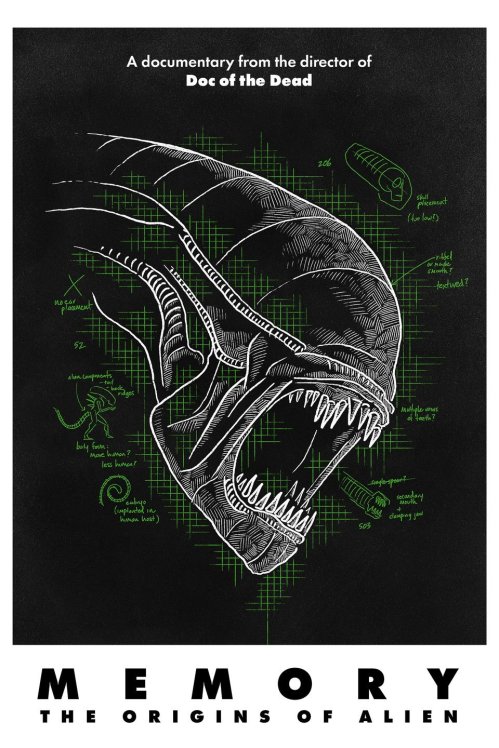
Great detail and respect are granted this monumental moment in Alexandre O. Philippe’s dizzyingly in-depth, intellectually exhaustive documentary “Memory: The Origins of Alien” — from wild talking-head theories (Hurt is literally giving birth!) to gruesome behind-the-scenes footage of this greatest of gross-outs.

alien-chestburster_001a_1196992871.jpg

One of those talking heads, author Ian Nathan, deftly parses the visceral and dramatic importance of the scene: “The chest-burster changes the complexion of the film from a kind of epic to a kind of horrible, horrible intimacy that’s claustrophobic and inward. Suddenly everybody is trapped. Suddenly the spaceship is small and confined” and the film becomes a primal survival story. Which, I say, renders “Alien” such a splendid, fearsomely realistic haunted house tale during a grisly second half that vibrates with unendurable tension and dread.

“Memory” makes a strong point that the mythos and monster in “Alien,” which was written by sci-fi fanatic Dan O’Bannon, were hardly original. “‘Alien’ didn’t come out of a creative vacuum,” we’re told. “It drew from a whole heritage of American science fiction.”

O’Bannon cherrypicked sources over the years, including comic books, H.P. Lovecraft’s horror fiction, and B-movies like “It! The Terror from Beyond Space” (1958), Howard Hawks’ “The Thing from Another World” (1951), “Planet of the Vampires” (1965) and, most extensively (and strangely), Roger Corman’s lurid “Queen of Blood” (1966). 

d7hftxdivxxvm.cloudfront.net.jpeg

But it was O’Bannon and director Ridley Scott’s mutual exposure to the lithograph “Necronomicon,” a phantasmagoria of wondrous and hideous creatures by Swiss surrealist artist H.R. Giger, that cemented the look and language of “Alien.” Scott rhapsodizes about the titular creature, sometimes known as the Xenomorph: “This is beautiful, not just threatening, and it also has very sexual connotations. It’s like a rather beautiful, humanoid bio-mechanoid insect.”

Giger himself did some artistic cherrypicking, synthesizing Egyptian mythology, dream imagery, Boschian fright-scapes, medieval dragons, Hindu goddess Kali and, key to the chest-burster, the disturbing canvasses of British artist Francis Bacon. “Giger consolidates every monster from every mythology from around the world into a single creature. It embodies the mythic Other,” USC professor Henry Jenkins says.   

Why “Alien” works so well is its commitment to the kind of gritty realism of so much superior 1970s American cinema. An Altmanesque naturalism permeates the film, and it boasts gorgeous Kubrickian photography, a crack cast of virtual unknowns, deliberate pacing and adult restraint. 

190516115737-h-r-giger-7.jpg

It is, simply, an art film. It spurned the space-western kicks of “Star Wars” and the Keane-eyed aliens of “Close Encounters” (both 1977). Suddenly we were served a new, naturalistic depiction of outer space in the sooty, clanky, eerily rain-soaked cargo ship Nostromo, a floating industrial city, a grungy “space truck,” that fatefully investigates a distress signal beamed from an alien planet. 

“Memory” is fascinating when talking about artistry and craft, but veers onto shaky ground when its commentators argue too hard that “Alien” is a product of its social and political times or, almost laughably, gaze at the film through a scrim of academic feminist theory. Says one: The movie is a “male fantasy of the kind of oppression that had been handed out to women over the century of guilt that was part of masculinity.” (Where’s the chest-burster when we need it?)

Fortunately the focus stays mostly on the allegory and mythology behind this iconic, massively influential movie, and the obsessive density of it all is both boggling and breathtaking. The film “can mean many, many, many things,” says writer William Linn, conceding, “I don’t think we can get to the bottom of ‘Alien.’”

“Memory: The Origins of ‘Alien’” hits theaters and VOD on October 4. Trailer HERE.

p16864529_v_v8_ab.jpg

Quirky kiddie queries about death, dying and other fun stuff

As people grow up, they internalize this idea that wondering about death is ‘morbid’ or ‘weird.’ They grow scared, and criticize other people’s interest in the topic to keep from having to confront death themselves. … Most people in our culture are death illiterate, which makes them more afraid.”  —  Caitlin Doughty

primary_2_2.jpg

Children, meanwhile, fueled by unfettered curiosity and innate innocence, don’t always harbor silly adult fears of death. They’re allowed to, expected to, wonder about death and dying. It’s a learning process;  it’s not “morbid” or “weird.” It’s eye-opening, mind-inflating. Asking questions about it is a step closer to not being “death illiterate.”

The quote topping this post is from Caitlin Doughty’s new book, the funny and informative “Will My Cat Eat My Eyeballs?,” whose subtitle is “Big Questions From Tiny Mortals About Death.” That means both wiggy and weighty queries from children about death, inquiries she routinely receives as a death-chick rock star: mortician, author, podcaster, “death activist” and “funeral industry rabble-rouser.” In the book Doughty answers 34 kid-friendly (well, kinda) questions about death and dying, and a bit beyond.

A total pro, her attitude is cheeky, frisky and upbeat, often with a wink. It’s hardly just kid’s stuff. She applies sweeping research and her own mortician’s know-how, a braid of science, craft, technology and, unavoidably, morbidity. It gets gleefully icky at times.

Doughty goes into gripping, grisly detail about livor mortis (“bluish color of death”), rigor mortis (“stiffness of death”), putrefaction, embalming, burial, cremation ovens, blood draining, organ donation, and, #1 on the hit parade, postmortem gas. 

And she does it with oozy, crunchy, gelatinous eloquence:

413b7oOI9KL._SX329_BO1,204,203,200_.jpg

  • “Welcome to putrefaction,” she writes. “This is when the famous green color of death comes into its own. It’s more of a greenish-brown, actually. With some turquoise. … The green colors appear first in the lower abdomen. That’s the bacteria from the colon breaking free and starting to take over. They are liquefying the cells of the organs, which means fluids are sloshing free. The stomach swells as gas starts to accumulate from the bacteria’s ‘digestive action’ (i.e., bacteria farts).”
  • “In the first ten minutes of cremation, the flames attack the body’s soft tissue — all the squishy parts, if you will. Muscles, skin, organs, and fat sizzle, shrink, and evaporate. The bones of the skull and ribs start to emerge. The top of the skull pops off and the blackened brain gets zapped away by the flames.”
  • “Oh, how to describe the smell of a decomposing human body — what poetry is needed!” Doughty gushes. “I get a sickly-sweet odor mixed with a strong rotting odor. Think: your grandma’s heavy sweet perfume sprayed over a rotting fish. Put them together in a sealed plastic bag and leave them in the blazing sun for a few days. Then open the bag and put your nose in for a big whiff.”

Now, on to questions, a sampling of the kids’ queries, which on average yield two- to three-page responses in Doughty’s book. In brief, inquiries include:

  • The jejune: Will I Poop When I Die? (“You might poop when you die. Fun, right?” Doughty giggles. True: It depends on how “full” you are when you croak. You don’t automatically doo-doo at death.)
  • The sentimental: Can I Keep My Parents’ Skulls After They Die? (No. No. And no. There are such things as “abuse of corpse” laws, our trusty authority tells us.)
  • The ludicrous: What Would Happen If You Swallowed a Bag of Popcorn Before You Died and Were Cremated? (What do you think would happen in 1,700-degree flames?)
  • The freaky: What If They Make a Mistake and Bury Me When I’m Just in a Coma? (Pretty impossible — a battery of medical tests are conducted to confirm brain death.)
  • The ghoulish: We Eat Dead Chickens, Why Not Dead People? (Guess what — some people do. They’re called cannibals. Next!) 
  • The metaphysical: Is It True People See a White Light As They’re Dying? (“Yes, they do. That glowing white light is a tunnel to angels in heaven. Thanks for your question!” the author ribs.)
  • And the vaguely vain: Will My Hair Keep Growing in My Coffin After I’m Buried? (Sorry, Rapunzel. That’s a big fat “death myth.”)

About the book’s titular question, “Will My Cat Eat My Eyeballs?” — this refers to the dreaded scenario of you dying alone in your home, your corpse left for days and your unfed pet, well, getting hungry. Doughty relishes this one. 

29insidelist-jumbo
Caitlin Doughty

“No, your cat won’t eat your eyeballs,” she writes. “Not right away, at least.” 

That’s the short answer. 

The longish answer shivers with excitement:

“Cats tend to consume human parts that are soft and exposed, like the face and neck, with special focus on the mouth and nose. Don’t rule out some chomps on the eyeballs,” Doughty says, but more likely your feline friend will dig into the lips, eyelids and tongue.

And what about Pepi the peaceful poodle, human’s best friend, your cuddle buddy? 

“Your dog will totally eat you,” Doughty assures.

Random reflections, part IV

This painting kills me. It’s titled “Brave Cone Dog” and it’s by a wry, puckish character named Brandon Bird, who makes very witty pop art. I don’t have much to say about the minimalist image, because it speaks (morosely, piteously, hilariously) for itself. I own a framed print of it, and everyday it stirs in me an emotional milkshake. 

cone_dog.jpg
“Brave Cone Dog”

This I like, from a recent book review: “Walter Benjamin wrote that a truly great sentence is one that’s been burnished to perfection, then sabotaged in some respect. Wounded or weakened just sufficiently to seduce.”

As a kid, I was a quivering hypochondriac. To wit: At age 7 I had a cramp on the left side of my belly that lasted a couple hours. Convinced it was appendicitis, I curled into a ball in my parents’ empty bed and envisioned horrors of surgery and gloom and, yes, death. The cramp subsided and I proceeded to watch TV, tear-streaked. Around age 9 I had a swollen bruise on my knee that I mistook for a malignant tumor. I crumpled on my bedroom floor in a sleeping bag, too distraught to clamber into bed, and imagined losing my leg to certain amputation. Later, I calmed and accepted that it was just a bruise and I watched TV, tear-streaked. I still often misdiagnose myself, hurling me into fleeting, fluttery hysteria. Then I watch TV, tear-streaked. Reader, WebMD is your foe.

In this week’s “By the Book” column in The New York Times, singer-author-badass Patti Smith is asked “What’s the last great book you read?” She replies:

51hC8kgrS9L._SX308_BO1,204,203,200_

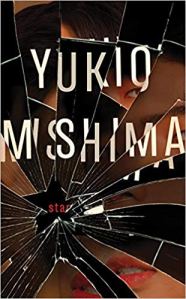
Recently I was captured by two small, addictive works. “Kingdom Cons,” by the Mexican author Yuri Herrera, floored me. … And “Star,” by Yukio Mishima, is a startlingly modern, hypervisual jewel; it could be a really interesting movie. Both books were mesmerizing, seeming to fall in my hands from an alternative sky.

As I’m doing a semi-immersion in Japanese literature and film in preparation for a fall trip to Japan, I picked up “Star,” which is about a hot movie actor in existential distress. From Smith’s zippy description, I expect glitter and diamonds.

At the cafe today, a 30-something hipster in a wool fedora, four-day stubble and ratty Chuck Taylors sans socks sat next to me, slipped on headphones and went on to loudly tap his feet and roll his head, wearing an imbecilic grin, all but dancing in his seat. I wanted to spill his kombucha. Was I wrong? And: He wore a large thumb ring.

ichi_the_killer_poster.jpg.500x715_q85_crop-smart

One of the Japanese movies I’m revisiting before I go to Japan is “Ichi the Killer,” a shock-cinema bloodbath from bad boy auteur Takashi Miike (say: Meek-a). About a kidnapped yakuza boss, his punky minion — a psychopathic sadomasochist whose specialty is baroque disfigurement — and the titular hero, a bullied weakling out for revenge, this notoriously twisted crime comedy was tonic jazz the first time I saw it. Now it mostly plays as an extreme exercise in tedious transgression: How disgusting can we get? Bloated with rape, murder, drugs, gangsters, prostitution, masturbation, self-mutilation, unthinkable torture, disembowelment and ample amputation, the film is set in the sometimes seamy nightlife district of Shinjuku in Tokyo. Which is where I’m staying. 

I‘ve owned pet rats named Phoebe, Becky, Tammy and LaShonda. A friend told me I’d inadvertently given the rats the names of receptionists at construction companies.

The other day I actually saw a guy rollerblading in the neighborhood. That is something you cannot unsee. It’s sort of like seeing someone on a unicycle.

Words I love: blithebloviate, evanescent, loquacious. Let’s add nincompoopery to the list.

Summer’s sweet cessation

When last I checked, the world was in tatters. But that’s a trifle for another day. Thing is, I have a wicked splinter in my finger and a bodacious pimple on my forehead that’s a little too Cyclopsian for shrugging off. Then there’s the boy dog, whose sphincter-sniffing flirtation with the girl cat might soon require rings, roses and rice. We remain calm. 

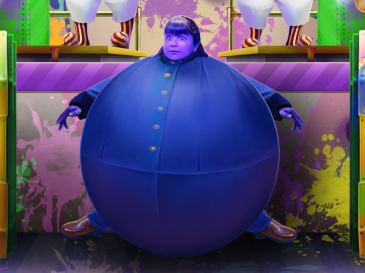
Summer subsides and the late-August slash Labor Day doldrums set in like a hard crust over the celebratory season. Things are dying down. Things are dying. I for one had no idea that Denise Nickerson, who played ravenous gum-chomper Violet Beauregarde in “Willy Wonka & the Chocolate Factory,” died in July at age 62. She and Gene Wilder — gone. Let’s hope Charlie doesn’t kick the bucket. 

db1ckkv-506dd560-6a8d-475e-8135-b8e4554650be

Speaking of blueberries — recall Violet inflates into a gigantic blueberry and must be rolled away by Oompa Loompas — that finger-staining fruit is my single breakfast comestible each day. I gobble them by the handful, a disgusting image but we’re all adults. They’re a summer fruit and so make a timely cameo in this post, which is sort of about the end of summer, the now, but we’ll see where it takes us. Already I’m rather lost.

It was a short summer, merciful, not too warm, and it moved with benign velocity. So glad it’s shuttering, as I look forward to crisp breezes, light coats, brisk walks without drenching humidity, Oscar-caliber movies, my Tokyo sojourn, obscenely short days — it’s 8 p.m. now and almost pitch-dark — and my usual litany of fall and winter joys.

At the cineplex, I dodged the onslaught of summer sequels and superheroes — brain-beating blunderbusses — for “artier” fare like Tarantino’s sophomoric garble “Once Upon a Time … in Hollywood,” a shambolic misfire, and the cathartic Australian horror-thriller “The Nightingale,” a savage, soulful gut-punch of vengeance and violence. For early-summer froth, the delirious comic excess of “Booksmart” can’t be forgotten. Fall brings promise: Joaquin Phoenix as “Joker,” “Little Women” and Scorsese’s “The Irishman.”

818-chEp3WL._SL1500_
“Destroy All Monsters”

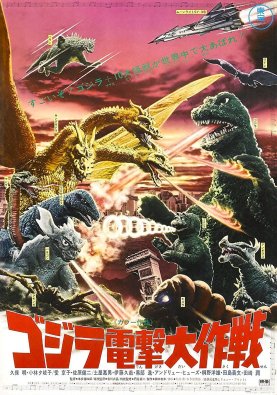
Movie mad, I always watch films from the country I’m going to visit next. So, Japan. I re-watched the 1954 version of the original “Godzilla,” which is startlingly melancholic. (The monster dies a slow, sinking death. Oh: spoiler.) In 1968’s full-color “Destroy All Monsters,” a menagerie of kaiju creatures, from Godzilla and Mothra to Gorosaurus and Rodan, unleash murderous mayhem on the world’s largest cities. Aliens are somehow involved. Silly — and spectacular. (Lest it seems I’m just watching monster movies, I’ve also re-watched Ozu’s “Floating Weeds,” Oshima’s “In the Realm of the Senses,” Kurosawa’s “The Hidden Fortress” and Suzuki’s “Branded to Kill” and “Tokyo Drifter.”) 

As I cut short my late-summer reading of Haruki Murakami’s timid, ultra-bland novel of youthful romance “Norwegian Wood” I picked up Toni Morrison’s “Sula,” which has more literary panache in its first 20 pages than Murakami’s snoozer has in 150.  

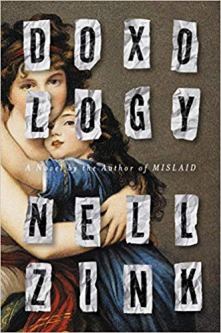
51pY6F589HL._SX329_BO1,204,203,200_.jpgAutumn looms and I have a pair of fall novels picked out: “Doxology” by Nell Zink and “The Topeka School” by virtuosic young writer Ben Lerner, whose “10:04” and “Leaving the Atocha Station” are rhapsodic in their essayistic intelligence and gliding beauty. “10:04” is one of my favorite novels of the past 10 years. I’ve read it twice. So far. 

I admit I struggled with Zink’s acclaimed 2014 fiction debut “The Wallcreeper.” We didn’t jibe. The new book has been called her best and most ambitious, “a ragged chunk of ecstatic cerebral-satirical intellection … bliss.” I am all over that.

But first, after Morrison’s promising “Sula,” it’s back to Japan and Banana Yoshimoto’s international cult hit “Kitchen,” a bittersweet novel whose “whimsy” and “simplicity” are frequently hailed as virtues, making me wary. Those words could be code for “precious.”

Now that I’ve mentioned Japan three hundred times, it might be a good place to state why I’m really exalting summer’s end — my October-November trip to Tokyo and Kyoto. Which, lucky you, you can read more about as plans unfold.

destination_tokyo.jpg
Tokyo

Yet so much is great about fall, not just a fleeting vacation. Autumn is coming fast — the calendar says Sept. 23, but we all know it starts on Labor Day — sucking summer back into the gooey abyss from whence it came. Japan, new books, new movies, new weather — all good and well. But fact is, fall is its own prize. It’s all fine, shimmery sublimity.

A fantasy fan, but no fanboy

My niece and nephew, both teens, are watching Peter Jackson’s “The Lord of the Rings: The Fellowship of the Ring” for the first time. They are in the basement, I am upstairs, web-surfing all things Tokyo. (Godzilla vs. Smaug? I’m in.)

All I hear are dragon shrieks and thunderous fire-belching that rumbles the floor and walls and surely rattles the television, making it shimmy and shake on its spindly base. (Wait. I am later told that Smaug the dragon is not in this “LOT” installment. What then was I hearing? Gollum’s hissy, phlegmy rasp? A bombardment of unbridled Tolkien imagination? Hobbit flatulence?) 

SmaugDestroyingLakeTownCropped
Smaug

I was well into adulthood when this first film in the “LOT” trilogy was released 18 years ago, and by then I wasn’t much for elves and wizards and hobbits. It’s all very childlike to me, which is also why I didn’t do backflips for “Game of Thrones,” though I mostly enjoyed that rollicking, bloody, gleefully nakedy, defiantly impenetrable series.

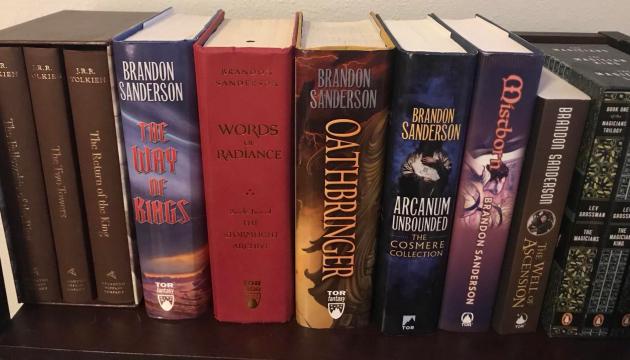
I grapple with most fantasy archetypes. I can barely do swords. Harry Potter, which arrived awfully late to the tournament of genre clichés, is a baffling bore, an embarrassing ecosystem of such contrived, feebly derivative Halloween, D&D and Renaissance Fair poppycock that my aversion to it is nigh boundless. 

Wizards, wands, witchcraft, trolls, potions, flying broomsticks, spells, sorcerers, centaurs — such are the tropes of an impoverished imagination. Such is the desperation of a starved (and benighted) readership and viewership. It is expressly for innocents, naifs, children, the like.

My niece, bless her roving, fecund mind, rabidly adored Harry Potter a few years ago. We don’t speak of it, lest one of us goes bald from mutual hair pulling. I don’t know what she thinks of the Christlike Chosen One now, and I don’t want that information. The kids watch “Lord of the Rings” as I type, and I do not know what they think of it, as they’re in the middle of Middle-earth and all. 

I hope they like it. It’s rather good; it’s just, at this late date, not my bag. Gandalf, “my Precious,” the hirsute feet, the Shire, Orcs — I’ve moved on. Yet I endorse it. And I’m not one quick to sanction fantasy flicks.

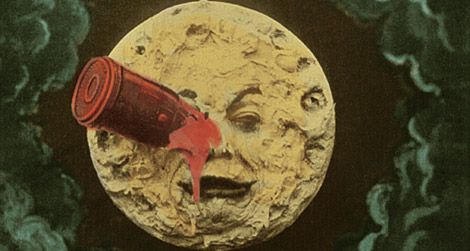
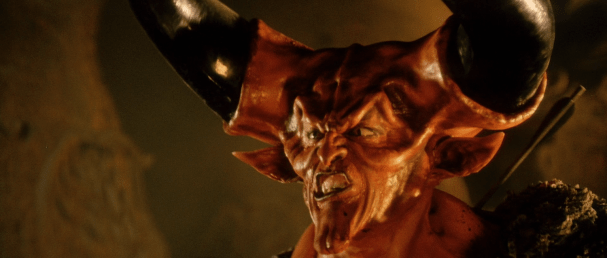
A few exceptions: “A Trip to the Moon” (1902); “King Kong” (1933); “The Wizard of Oz” (1939); “Beauty and the Beast” (1946); “Willy Wonka & the Chocolate Factory” (1971); “Legend” (1985); “Babe” (1995); “Spirited Away” (2001); “Coraline” (2009). (Please don’t ask where “Avatar” fits into this list. It doesn’t. It is banished, with prejudice.)

20110902104008The-Moon-by-Melies-small.jpg
The wondrously weird “Trip to the Moon” (1902)
1445604612599.png
Tim Curry in Ridley Scott’s underrated “Legend” (1985)

I think I need more fantasy in my life, despite my allergy to it and most things science fiction. (Exceptions: “2001: A Space Odyssey” (1968); “Solaris” (1972); “Star Wars” (1977); “Close Encounters of the Third Kind” (1977); “Alien” (1979); “Blade Runner” (1982); “The Fly” (1986); “Serenity” (2005); “District 9” (2009); “Moon” (2009); “Ex Machina” (2014).)

ex-machina-watching-recommendation-largeWidescreen573.jpg
“Ex Machina” (2014) — Ex-ceptional

Nowadays dystopian scenarios are hijacking the fantasy and sci-fi worlds — from fashionable post-apocalyptica to ever-tedious zombies — with mixed results. Film-wise, dystopian zeniths are the visionary, crazily exhilarating “Mad Max” epics. (Other highlights off the top of my head: “A Clockwork Orange” (1971); “Brazil” (1985); “RoboCop” (1987); “Children of Men” (2006).)

In fiction, fine contemporary classics — “The Handmaid’s Tale,” “The Road,” “Never Let Me Go” — chafe against new mediocrities like Emily St. John Mandel’s “Station Eleven,” which at its best reveals genre fatigue. 

I’ll take dragons over such drags. A trio of trainable dragons lit up “Game of Thrones” with awe and grandeur and strange, scaly pathos. Smaug is a juggernaut, a fearsome, fiery Middle-earth monster considered to be the last great dragon of the realm. (Yeah, I had to look that up.)

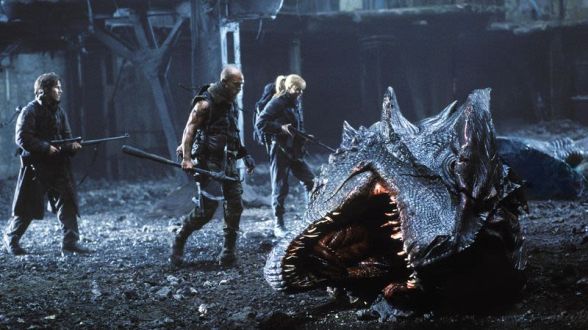
I may be the sole fan of the crunchy 2002 dragon drama “Reign of Fire,” in which Matthew McConaughey and Christian Bale combat a futuristic (totally dystopian) infestation of those winged, fire-spraying dinosaurs. The sheer force of its perverse and pummeling premise — not to mention top-drawer dragon action — dragooned me to full appreciation of this fantasy tale.

kaevxalkyk7okjv4rxol.jpg
“Reign of Fire” — more underrated film fantasy (2002)

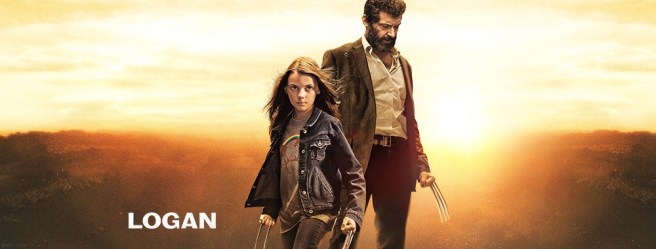
And what about comic-book superheroes? “The Dark Knight” (2008) remains an adult-geared masterpiece of mayhem and menace. One or two of the early Spider-Man movies are efficient. I like “Iron Man” (2008) and the profanely spoofy “Kick-Ass” (2010) — both are fast and funny — and, more so, the bleak, ruminative Wolverine installment “Logan” (2017). I have very little use for the rest of it.

1*EtcQU0PW6triCnwLRl2JRg.jpeg

From the basement, I hear Howard Shore’s strident, overbearing score, more earth-rattling noise, stadium-fuls of yelling, screaming and bellowing. Drama is happening in “The Lord of the Rings.”

And then: hush. The niece and nephew emerge from Lower-earth to the living room. The spectacle is over. We inquire.

Her: “It was good. I’m excited for the next part. I’m looking forward to the hobbit movies, too. This one is just really long.” 

Him: “It’s exciting and there’s tons of fighting. but it’s more than three hours. Still, you don’t get bored.”

Length, damn length. This “LOT” runs a savage three hours and 48 minutes. Fantasy always seems to run interminably long (“Avatar”: two hours, 42 minutes), even when it doesn’t (“Legend”: one hour, 34 minutes). To binge all 73 episodes of “Game of Thrones” would take three days and 16 minutes, enough time for a weekend getaway to Bermuda.

But fantasy and sci-fi are all about girth and sprawl. Poundage of detail and characters, world-building and mythologizing is their very DNA, their showoffy M.O. Glimpse any fantasy novel worth its weight in gibberish; just don’t try and lift it.

f75nvkmnrze11.jpg

Epic, capital E, is the primary aspiration. It’s all about blowing the mind, overwhelming the senses. For this skeptic, this mostly invites chronic eye-glazing. Fantasy does not stir fanaticism. This fanboy might have just become a fan-man.

Random reflections, part III

“We die — that may be the meaning of life,” said author Toni Morrison, who died Monday. “But we do language. That may be the measure of our lives.”

I‘ve tried many times to watch “The Princess Bride,” “Stand By Me” and “When Harry Met Sally,” but I’ve never been able to get through any of them. They are ham-handed. They aren’t funny. They clunk. That Rob Reiner directed all of them is strictly coincidental.

ht_meg_ryan_billy_crystal_when_harry_met_sally_jc_140711_31x13_992.jpg
The famous “orgasm” scene, which gets more embarrassing with each viewing.

I swear, Cubby the dog has a perverse crush on the female cat Tiger Lily. He gawkily flirts with her, and her eye-rolling indifference is touching. Such inter-species passion is a spectacle. I sure hope I don’t see a newborn kitten that barks.

I jot in my journal pretty much every day with purpose and the fugitive hope of substance. The author Yiyun Li writes, “How did I forget to start each and every page of my journal with the reminder that nothing matters?” My head nods vigorously.

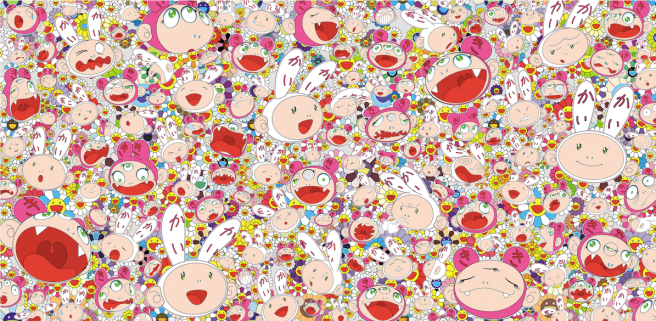
The last time I went to Japan I got hooked on the sizzling pop art of Takashi Murakami, whose work spans painting, sculpture, fashion, merchandise and animation. It’s fun and whimsical and dazzlingly colorful — and not a little geeky. His subject matter is cute (kawaii), psychedelic and satirical, with well-trod motifs: smiling flowers, mushrooms, skulls and manga culture. Murakami could be the Jeff Koons of Japan. I’m going there soon. My goal is to get Murakami’d, big time.

210522_1325221.png
My phone’s current wallpaper.

A few years ago I discovered I had an adult-onset allergy to shrimp and prawns. It’s like the second worst thing that’s ever happened to me.

41cFc108RGL._SX329_BO1,204,203,200_

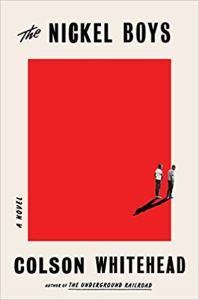
A fan of novelist Colson Whitehead, I’m deflated by his new, lavishly overrated book “The Nickel Boys.” It lacks energy, momentum and finally fizzles at the halfway mark. So I put it down (I also couldn’t get into his early novel “John Henry Days,” though I’m all about “The Intuitionist” and “The Underground Railroad”) and picked up Haruki Murakami’s “Norwegian Wood.” I’ve read one other Murakami novel, “The Wind-Up Bird Chronicle,” and I almost threw it against a wall. The edge is where I live.

Tonight we popped a bottle of Suntory Whisky Toki, “blended Japanese whisky that is both groundbreaking and timeless.” It is silky and smoky with strong, sweet vanilla notes. I think none of us is going to bed.

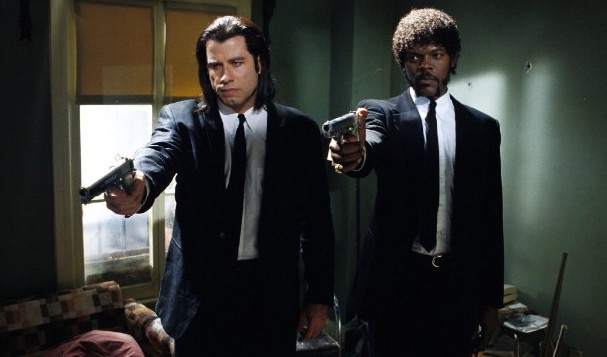
Quentin Tarantino has made movies. He has made only two masterworks, “Reservoir Dogs” and “Pulp Fiction.” That was a very long time ago. The rest of his oeuvre seesaws from juvenilia to junk. As critic David Denby wrote on the release of the imbecilic “Inglourious Basterds”: “Tarantino has become an embarrassment: his virtuosity as a maker of images has been overwhelmed by his inanity as an idiot de la cinémathèque.”

140922202605-08-pulp-fiction-story-top.jpg

Intimacy is scary. Love is scarier. Someone recently dubbed the phenomenon “the terror of loving.” I like that. Its precision is chilling.

I am typing most of this in the air, row 45, seat G, on United flight 497 to San Francisco. You might say I’m skywriting. Forget I just said that.

Summer slurps

Beating a thoroughly decomposed horse, allow me to gripe again: I really dislike summer. My reasons are a predictable plethora of plaints, especially if you’ve spent anytime around these pages: the heat; the humidity; the endless days; the enforced outdoorsy-ness; excruciating patio brunches; hot, crowded vacations; shorts and flip-flops; talk therapists fleeing most of August. The only grace note is air-conditioning. Set on blast and let me be. With a good book and a savory cocktail.

That last detail is key. Because I do admit the crappy months bring with them delicious, refreshing libations, potions with fruit and cucumber floating in them like inflatable pool toys and concoctions fragrant with aromatics and flowers and other sensory complexions. Creativity is paramount. A friend even jabs fresh cinnamon sticks in her gin and tonics. Go nuts, lady.

Campari_Americano-720x720
Americano

It’s the months (and there’s only 1 ½ left!) for bracing dry rosés; reliable, amicable gin and tonics; lip-smacky Aperol spritzes, that tingly, honeyed mix of Prosecco, Aperol and orange; and the Americano, that lightly bitter blend of Campari, sweet vermouth, seltzer and orange slice. I’m no fan of Campari or bitters — the Negroni is my nemesis — but the Americano goes down smooth, mostly.

My other picks for summer sipping are choice. In particular is the Hendrick’s Gin small batch, limited edition Midsummer Solstice, a “new flirtatiously floral incarnation” of the superlative Hendrick’s, perhaps my best gin, a near-orgasmic elixir. It’s downright poignant.

us-hero-desktop.jpg

This gin is exceptional, crisp, sharp but silky, sophisticated, as fragrant as a botanical garden. A must: Use quality tonic with it, something like Fever Tree aromatic tonic water or Q Spectacular tonic. Anything less is polluting top-shelf gin, like pouring Sunny Delight in your Dom Pérignon. And don’t forget a citrus or cucumber slice. Some juniper berries. Why not a rose petal? A banquet is being made, not just a drink.

Thing is, Hendrick’s Midsummer Solstice is going away soon — it’s a limited edition, available only for the hot season. So stock up; it’s worth it. Meanwhile, a year-round ultra-zesty gin is Brockmans, an English drink so strong with berries that my brother disses it, saying it tastes like strawberry shortcake. I don’t know what the hell he’s going on about.

It is fruity, definitely. I taste grapes. But Brockmans says its botanicals are “a refreshing influence of citrus and aromatic wild berries.” It is irrationally flavorful.

Brockmans-mood_1024x1024.jpg

Some ad copy, with apologies: “Bulgarian coriander provides an aromatic, gingery orange top note. This blends perfectly with the soft and rounded harmonies of blueberries and blackberries, supported by the bottom note of Tuscan juniper berries. Dry, bittersweet Valencian orange peel elongates the deeper tones and gives an intensely smooth finish.” (If a mixologist named Axl didn’t write that then a poet of the produce department did.)

That’s complexity, and it tastes like it. A naughty twerk on the tongue, a tingly boogie down the throat. I love this gin. No added fruit — or tonic — required. Neat or on the rocks. A nip of nirvana.

On a fizzier, less poetic note, I’m trying out White Claw Hard Seltzer, a burpy canned beverage that tastes like high-end soda water but with the subtle kick of a domestic beer. Low-budget, low-buzz bliss.

Screen_Shot_2019-07-26_at_10.17.39_AM

It goes down exactly like seltzer water with a zip of fruit tang — raspberry and black cherry; lime and ruby grapefruit. A 12-oz. can boasts 100 calories, 2g carbs and 5% alc/vol. A 12-pack runs about $14. Those figures intoxicate me.

Like the other mentioned hooch, the seltzer pings a little dent in the summertime blues. Those back-to-school TV ads are welcome, as are the fall movie trailers, like the one for Scorsese’s rousing “The Irishman.” (De Niro, Pacino, Pesci, Keitel — I’m about to have an aneurysm.) A quality quaff is practically a seasonal panacea.

About six weeks till summer skedaddles. Hit the AC and pour me a tall G&T. I can do this.