
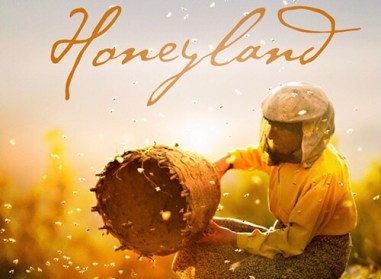
1. “Honeyland” — In this gorgeously observant documentary, weathered Hatidze lives in the rocky Macedonian mountains, where she cares for her ailing mother and tends to several beehives that produce honey for a tenuous livelihood. A large, rowdy family moves next door and decides to try beekeeping, but without expertise, they flail and almost comically get stung more than they harvest the sweet goo. Tensions arise between the neighbors, but this achingly humanistic look at an exotic if seriously impoverished way of life is mostly a portrait of Hatidze, a steely, lonely woman who has as much soul as those mountains can contain.
2. “Booksmart” — Barreling forth with raunchy vigor and unbridled zest, this coming-of-age comedy screams fun. Almost literally: There’s a lot of screaming — in surprise, horror and explosive joy. An amplified spin on school-days greats — “Dazed and Confused” to John Hughes — “Booksmart” piles on twists with a sharp, knowing eye that zooms in on the timely and topical, from female power and LGBTQs, to bullying and the corrosive effects of cliques, and, yah, the liberating if daunting pull of sexual exploration. Starring a terrific Beanie Feldstein and Kaitlyn Dever as boundary-pushing besties, who learn, in a fleeting haze, that maybe bongs are as fun as books.

3. “Pain and Glory” — Antonio Banderas, broken-in yet handsomely fit, plays an aging, ailing film director re-encountering figures from his past: his disapproving mother and a former lover, to an actor in one of his most famous movies. Pedro Almodóvar’s lavish drama, revealing the artist in peak form, brimming with soul, pinballs through time for a richly felt reflection on life, love, art and mortality.

4. “The Chambermaid” — Ghostly quiet and meticulously observant, this narratively spare but humanely complex Mexican drama follows a hotel maid on her monotonous rounds, evincing stark lines of class. What slowly unfurls is an unsparing character study that’s as hermetic as it is riveting.

5. “American Factory” — When a Chinese company takes over a closed General Motors factory in Ohio, an epic culture clash erupts in this fascinating and timely documentary. A Chinese billionaire opens a glass factory in the empty GM facility, hiring two thousand blue-collar Americans. Things seem good until they don’t, and the stark differences between high-tech China and working-class America are exposed for explosive tension and real-life drama.

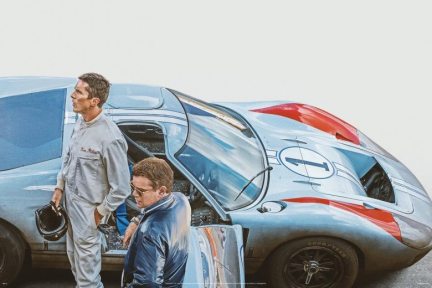
6. “Ford v Ferrari” — A gas. This based-on-a-true-story traces how the Ford company chased, literally, Ferrari in the pursuit of engineering the fastest racing car possible. Matt Damon and Christian Bale are at their charismatic peaks as driving rivals slash pals who ping off each other, willing pawns in the big contest.
7. “Non-Fiction” — Olivier Assayas’ French dramedy is a tireless, tonic gabfest that had me speed-reading the flurry of subtitles more than drinking in the faces and colors of the bustling scenes. That’s no complaint. The profusion of words — intelligent, eloquent, biting — brim with ideas, humor, pain and pathos, for an enveloping artful experience. You want to know the fork-tongued characters, led by an enchanting Juliette Binoche, because of the literary, arty cosmos in which these writers, editors and actors orbit.

8. “Parasite” — A totally implausible class fantasy set in South Korea, Bong Joon Ho’s comic-horror parable is a bit too on-the-nose meditation on wealth vs. poverty. Yet it soars with a warped originality and off-kilter atmosphere that never quite lets on where it’s going. There will be blood.

9. “The Last Black Man in San Francisco” — At once arty, elegiac, poetic and tough-minded, this is a tale, a beautiful reverie, that strikes on topics of race and class and gentrification with sparks and lyricism and primary-color Spike Lee sizzle. It’s something singular, and it slowly intoxicates with its emotional and sociological depths.

10. “Her Smell” — Elisabeth Moss’ performance in this shambolic punk-rock portrait is as athletically interior as it is exterior, spiked with physical fits and childish spasms. In my favorite performance of the year, Moss plays Becky, volatile front-woman of a female punk band she’s struggling to keep together between coke binges and flame-throwing hissy fits. The actress stirs up a cackling, hand-flinging cauldron of Courtney Love, Blanche DuBois and Gena Rowlands in “A Woman Under the Influence.” It’s all raw nerve, and Moss commits to her anti-heroine in a self-immolating blaze.

The rest (in alphabetical order):
- “Atlantics” — In Senegal, an engaged woman, Ada, is in love with another man, Suleiman, who takes to the ocean with co-workers for better job prospects. The men seem to vanish in the sea and a distraught Ada seeks signs of her lover everywhere. What begins as a linear romance morphs into an unpredictable drama of workers’ rights and supernatural mysteries. If it doesn’t wholly congeal, Mati Diop’s film is a uniquely promising debut.

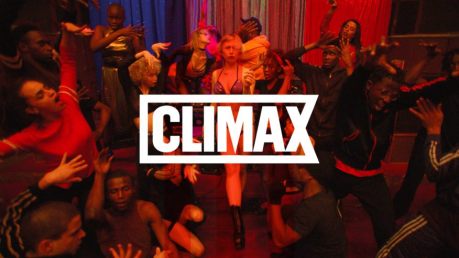
- “Climax” — With the head-spinning, hallucinogenic swirl of body (and camera) movement that is “Climax,” Gaspar Noé takes his visual and thematic tics past the edge of woozy chaos. When a talented dance troupe’s party is ruined by a bowl of LSD-spiked punch, hell uncorks. What was a glorious pageant of writhing bodies becomes a descent into a violent nightmare of screeching, thrashing individuals trying to relocate reality. It’s vintage Noé.
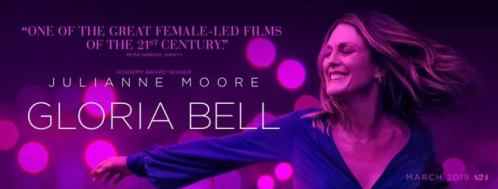
- “Gloria Bell” — A glowing Julianne Moore — is there a more radiant actress? — assumes the title role in this sweet, ebullient, slightly melancholic snapshot of a middle-aged divorced woman seeking love and connection in modern Los Angeles. Deeply heartfelt and human.
- “Los Reyes” — A near-silent documentary following the tales, and tails, of two stray dogs — one old, one young — getting by in a Chilean skate park. The movie, dispensing with music, narration and anthropomorphic cutes, is astonishingly patient, relying on the dogs’ alternately mirthful and mournful antics, quizzical gazes, the way they doze unfazed among the rackety-clackety skaters and how they find joy in chasing balls up and down the concrete.

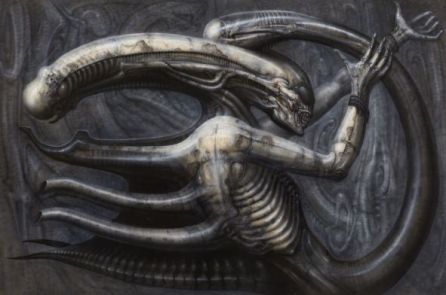
- “Memory: The Origins of ‘Alien’” — Let’s cut to the chest: Ridley Scott’s 1979 sci-fi horror masterpiece “Alien” is forever remembered for one indelible scene: the chest-burster, when a gore-slimed serpent chews its way out of the torso of a hapless John Hurt. Great detail and respect are granted the monumental moment in this dizzyingly in-depth, intellectually exhaustive documentary. But the film’s focus stays mostly on the mythology behind the influential classic, and the obsessive density of it all is both boggling and breathtaking.
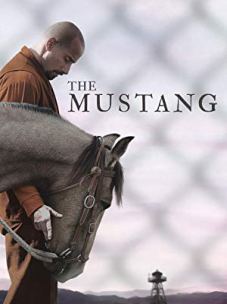
- “The Mustang” — Breaking a horse is a bitch. Triple the challenge if it’s a rearing, snorting wild desert mustang. That’s what Roman (Matthias Schoenaerts) is tasked with as a violent criminal in a Nevada prison program in which convicts break mustangs for auction, preparing them for work in law enforcement. If Laure de Clermont-Tonnerre’s feature debut falls into a formulaic groove, the film doesn’t flinch from bursts of gritty violence and chewy realism.
- “The Nightingale” — This bloody revenge thriller from Jennifer Kent (“The Babadook”) is as unflinching as it is affecting. Set in 1825, in a British penal colony in today’s Tasmania, the drama ignites when a young female convict is raped as her family is murdered. Dazed and enraged, the woman, Clare, hops a horse, hires an Aboriginal tracker and sets her sights on sweet, savage revenge. It’s a complex tale of frontier justice, love, death, friendship, betrayal, with an emotionally cathartic core that almost buffers the rattling violence.

- “Rocketman” — Parts “Tommy,” “Moulin Rouge” and “Bohemian Rhapsody,” Dexter Fletcher’s bedazzling, beguiling, Broadway-esque biopic of Elton John is vaulting rock opera, fire-hosed in glitter and gold, stars and sequins. The facts of John’s life — born Reginald Dwight, he was a timid piano prodigy who exploded to pop megastardom with lyricist and co-writer Bernie Taupin — are embroidered with lush fantasy that makes the perfect soundtrack (in spite of cornball “Crocodile Rock”) even more infectious.

(Acclaimed movies I have yet to see: “Little Women,” “Uncut Gems,” “Portrait of a Lady on Fire,” “The Lighthouse,” “Queen & Slim,” “Varda by Agnès.” One that conspicuously didn’t make the cut, Noah Baumbach’s both flat and histrionic “Marriage Story.“)
* Bonus fun — Gaseous, over-worshipped disappointments by auteur royalty:
- “The Irishman” — Scorsese’s plodding, punishingly overlong true-crime saga is historically engaging but rarely entertaining. Baggy and monochrome, the 3½-hour epic misses the color and snap of “Goodfellas,” which it badly wants to be. With geriatric turns by Pacino, Pesci and De Niro, it should be called “Oldfellas,” including the palsied vision behind the camera. Scorsese has recently griped about superhero movies repeating themselves with the same tropes and plots. At the height of hypocrisy, he cannibalizes his own oeuvre with diminishing returns.

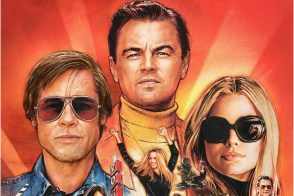
- “Once Upon a Time … in Hollywood” — A kaleidoscopic catastrophe, Tarantino’s blundering ode to ‘60s movies, music, television and celebrity is an indulgent sprawl; a brutal, unfunny mess; an embarrassing cartoon scrawled by an ego-drunk adolescent. The film is self-smitten, wearing a slap-worthy smirk, and at times, like the last half-hour, is downright despicable.
 In 2007 I interviewed actor Paul Rudd at the
  B
B
 Rightful cult classics, “John Wick” and “John Wick: Chapter 2,” starring a lank-haired, bullet-proof Keanu Reeves, are action-flick orgies, chop-socky pistol poetry of a kind unseen since the heyday of John Woo’s


