I had long worried that I was incapable of having a profound experience of art and I had trouble believing that anyone had, at least anyone I knew. I was intensely suspicious of people who claimed a poem or painting or piece of music ‘changed their life,’ especially since I had often known these people before and after their experience and could register no change. … The closest I’d come to having a profound experience of art was probably the experience of this distance, a profound experience of the absence of profundity.”
Let’s cut to the chest: Ridley Scott’s 1979 sci-fi horror masterpiece “Alien” is forever remembered for one indelible scene — a “very significant moment in film history,” genre director Gary Sherman says — the chest-burster sequence, when a gore-slimed, serpentine creature chews its way out of the torso of a hapless John Hurt while he’s having dinner, leaving him a quivering, blood-drenched corpse and unleashing the title monster to slither away and torment the rest of the spaceship’s unsettled crew for the next hour.
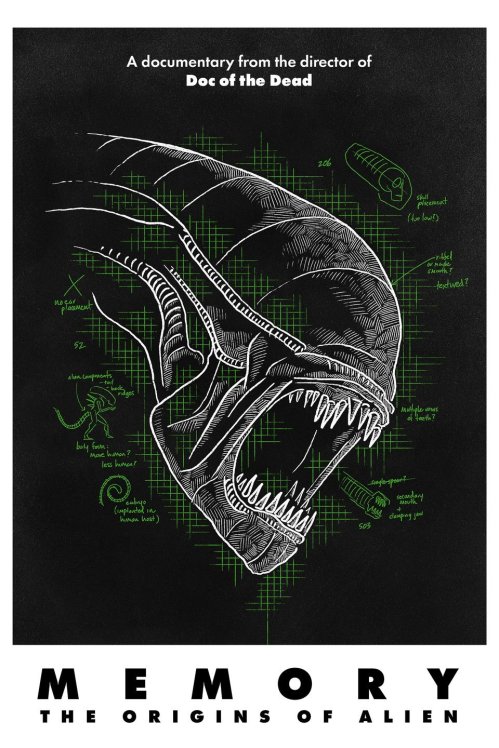
Great detail and respect are granted this monumental moment in Alexandre O. Philippe’s dizzyingly in-depth, intellectually exhaustive documentary “Memory: The Origins of Alien” — from wild talking-head theories (Hurt is literally giving birth!) to gruesome behind-the-scenes footage of this greatest of gross-outs.
One of those talking heads, author Ian Nathan, deftly parses the visceral and dramatic importance of the scene: “The chest-burster changes the complexion of the film from a kind of epic to a kind of horrible, horrible intimacy that’s claustrophobic and inward. Suddenly everybody is trapped. Suddenly the spaceship is small and confined” and the film becomes a primal survival story.Which, I say, renders “Alien” such a splendid, fearsomely realistic haunted house tale during a grisly second half that vibrates with unendurable tension and dread.
“Memory” makes a strong point that the mythos and monster in “Alien,” which was written by sci-fi fanatic Dan O’Bannon, were hardly original. “‘Alien’ didn’t come out of a creative vacuum,” we’re told. “It drew from a whole heritage of American science fiction.”
O’Bannon cherrypicked sources over the years, including comic books, H.P. Lovecraft’s horror fiction, and B-movies like “It! The Terror from Beyond Space” (1958), Howard Hawks’ “The Thing from Another World” (1951), “Planet of the Vampires” (1965) and, most extensively (and strangely), Roger Corman’s lurid “Queen of Blood” (1966).
But it was O’Bannon and director Ridley Scott’s mutual exposure to the lithograph “Necronomicon,” a phantasmagoria of wondrous and hideous creatures by Swiss surrealist artist H.R. Giger, that cemented the look and language of “Alien.” Scott rhapsodizes about the titular creature, sometimes known as the Xenomorph: “This is beautiful, not just threatening, and it also has very sexual connotations. It’s like a rather beautiful, humanoid bio-mechanoid insect.”
Giger himself did some artistic cherrypicking, synthesizing Egyptian mythology, dream imagery, Boschian fright-scapes, medieval dragons, Hindu goddess Kali and, key to the chest-burster, the disturbing canvasses of British artist Francis Bacon. “Giger consolidates every monster from every mythology from around the world into a single creature. It embodies the mythic Other,” USC professor Henry Jenkins says.
Why “Alien” works so well is its commitment to the kind of gritty realism of so much superior 1970s American cinema. An Altmanesque naturalism permeates the film, and it boasts gorgeous Kubrickian photography, a crack cast of virtual unknowns, deliberate pacing and adult restraint.
It is, simply, an art film. It spurned the space-western kicks of “Star Wars” and the Keane-eyed aliens of “Close Encounters” (both 1977). Suddenly we were served a new, naturalistic depiction of outer space in the sooty, clanky, eerily rain-soaked cargo ship Nostromo, a floating industrial city, a grungy “space truck,” that fatefully investigates a distress signal beamed from an alien planet.
“Memory” is fascinating when talking about artistry and craft, but veers onto shaky ground when its commentators argue too hard that “Alien” is a product of its social and political times or, almost laughably, gaze at the film through a scrim of academic feminist theory. Says one: The movie is a “male fantasy of the kind of oppression that had been handed out to women over the century of guilt that was part of masculinity.” (Where’s the chest-burster when we need it?)
Fortunately the focus stays mostly on the allegory and mythology behind this iconic, massively influential movie, and the obsessive density of it all is both boggling and breathtaking. The film “can mean many, many, many things,” says writer William Linn, conceding, “I don’t think we can get to the bottom of ‘Alien.’”
“Memory: The Origins of ‘Alien’” hits theaters and VOD on October 4. Trailer HERE.
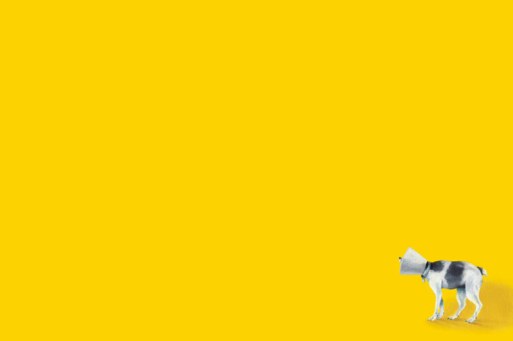
This painting kills me. It’s titled “Brave Cone Dog” and it’s by a wry, puckish character named Brandon Bird, who makes very witty pop art. I don’t have much to say about the minimalist image, because it speaks (morosely, piteously, hilariously) for itself. I own a framed print of it, and everyday it stirs in me an emotional milkshake.
“Brave Cone Dog”
This I like, from a recent book review: “Walter Benjamin wrote that a truly great sentence is one that’s been burnished to perfection, then sabotaged in some respect. Wounded or weakened just sufficiently to seduce.”
As a kid, I was a quivering hypochondriac. To wit: At age 7 I had a cramp on the left side of my belly that lasted a couple hours. Convinced it was appendicitis, I curled into a ball in my parents’ empty bed and envisioned horrors of surgery and gloom and, yes, death. The cramp subsided and I proceeded to watch TV, tear-streaked. Around age 9 I had a swollen bruise on my knee that I mistook for a malignant tumor. I crumpled on my bedroom floor in a sleeping bag, too distraught to clamber into bed, and imagined losing my leg to certain amputation. Later, I calmed and accepted that it was just a bruise and I watched TV, tear-streaked. I still often misdiagnose myself, hurling me into fleeting, fluttery hysteria. Then I watch TV, tear-streaked. Reader, WebMD is your foe.
In this week’s “By the Book” column in The New York Times, singer-author-badass Patti Smith is asked “What’s the last great book you read?” She replies:
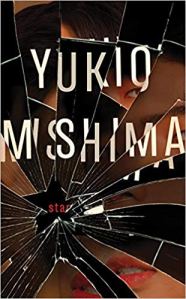
Recently I was captured by two small, addictive works. “Kingdom Cons,” by the Mexican author Yuri Herrera, floored me. … And “Star,” by Yukio Mishima, is a startlingly modern, hypervisual jewel; it could be a really interesting movie. Both books were mesmerizing, seeming to fall in my hands from an alternative sky.
As I’m doing a semi-immersion in Japanese literature and film in preparation for a fall trip to Japan, I picked up “Star,” which is about a hot movie actor in existential distress. From Smith’s zippy description, I expect glitter and diamonds.
At the cafe today, a 30-something hipster in a wool fedora, four-day stubble and ratty Chuck Taylors sans socks sat next to me, slipped on headphones and went on to loudly tap his feet and roll his head, wearing an imbecilic grin, all but dancing in his seat. I wanted to spill his kombucha. Was I wrong? And: He wore a large thumb ring.
One of the Japanese movies I’m revisiting before I go to Japan is “Ichi the Killer,” a shock-cinema bloodbath from bad boy auteur Takashi Miike (say: Meek-a). About a kidnapped yakuza boss, his punky minion — a psychopathic sadomasochist whose specialty is baroque disfigurement — and the titular hero, a bullied weakling out for revenge, this notoriously twisted crime comedy was tonic jazz the first time I saw it. Now it mostly plays as an extreme exercise in tedious transgression: How disgusting can we get? Bloated with rape, murder, drugs, gangsters, prostitution, masturbation, self-mutilation, unthinkable torture, disembowelment and ample amputation, the film is set in the sometimes seamy nightlife district of Shinjuku in Tokyo. Which is where I’m staying.
I‘ve owned pet rats named Phoebe, Becky, Tammy and LaShonda. A friend told me I’d inadvertently given the rats the names of receptionists at construction companies.
The other day I actually saw a guy rollerblading in the neighborhood. That is something you cannot unsee. It’s sort of like seeing someone on a unicycle.
Words I love: blithe, bloviate, evanescent, loquacious. Let’s add nincompoopery to the list.
When last I checked, the world was in tatters. But that’s a trifle for another day. Thing is, I have a wicked splinter in my finger and a bodacious pimple on my forehead that’s a little too Cyclopsian for shrugging off. Then there’s the boy dog, whose sphincter-sniffing flirtation with the girl cat might soon require rings, roses and rice. We remain calm.
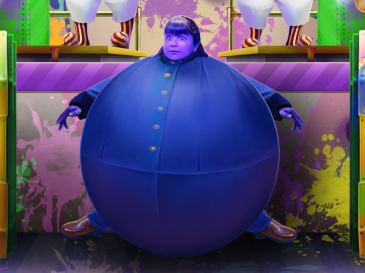
Summer subsides and the late-August slash Labor Day doldrums set in like a hard crust over the celebratory season. Things are dying down. Things are dying. I for one had no idea that Denise Nickerson, who played ravenous gum-chomper Violet Beauregarde in “Willy Wonka & the Chocolate Factory,” died in July at age 62. She and Gene Wilder — gone. Let’s hope Charlie doesn’t kick the bucket.
Speaking of blueberries — recall Violet inflates into a gigantic blueberry and must be rolled away by Oompa Loompas — that finger-staining fruit is my single breakfast comestible each day. I gobble them by the handful, a disgusting image but we’re all adults. They’re a summer fruit and so make a timely cameo in this post, which is sort of about the end of summer, the now, but we’ll see where it takes us. Already I’m rather lost.
It was a short summer, merciful, not too warm, and it moved with benign velocity. So glad it’s shuttering, as I look forward to crisp breezes, light coats, brisk walks without drenching humidity, Oscar-caliber movies, my Tokyo sojourn, obscenely short days — it’s 8 p.m. now and almost pitch-dark — and my usual litany of fall and winter joys.
At the cineplex, I dodged the onslaught of summer sequels and superheroes — brain-beating blunderbusses — for “artier” fare like Tarantino’s sophomoric garble “Once Upon a Time … in Hollywood,” a shambolic misfire, and the cathartic Australian horror-thriller “The Nightingale,” a savage, soulful gut-punch of vengeance and violence. For early-summer froth, the delirious comic excess of “Booksmart” can’t be forgotten. Fall brings promise: Joaquin Phoenix as “Joker,”“Little Women” and Scorsese’s “The Irishman.”
“Destroy All Monsters”
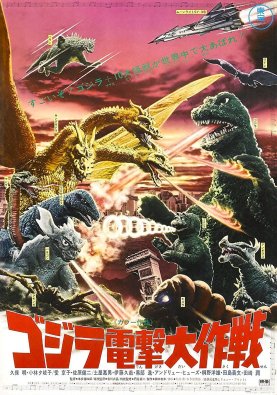
Movie mad, I always watch films from the country I’m going to visit next. So, Japan. I re-watched the 1954 version of the original “Godzilla,” which is startlingly melancholic. (The monster dies a slow, sinking death. Oh: spoiler.) In 1968’s full-color “Destroy All Monsters,” a menagerie of kaiju creatures, from Godzilla and Mothra to Gorosaurus and Rodan, unleash murderous mayhem on the world’s largest cities. Aliens are somehow involved. Silly — and spectacular. (Lest it seems I’m just watching monster movies, I’ve also re-watched Ozu’s “Floating Weeds,” Oshima’s “In the Realm of the Senses,” Kurosawa’s “The Hidden Fortress” and Suzuki’s “Branded to Kill” and “Tokyo Drifter.”)
As I cut short my late-summer reading of Haruki Murakami’s timid, ultra-bland novel of youthful romance “Norwegian Wood” I picked up Toni Morrison’s “Sula,” which has more literary panache in its first 20 pages than Murakami’s snoozer has in 150.
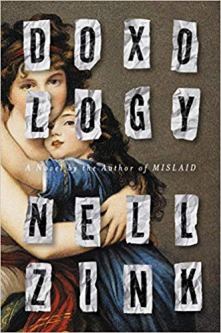
Autumn looms and I have a pair of fall novels picked out: “Doxology” by Nell Zink and “The Topeka School” by virtuosic young writer Ben Lerner, whose “10:04” and “Leaving the Atocha Station” are rhapsodic in their essayistic intelligence and gliding beauty. “10:04” is one of my favorite novels of the past 10 years. I’ve read it twice. So far.
I admit I struggled with Zink’s acclaimed 2014 fiction debut “The Wallcreeper.” We didn’t jibe. The new book has been called her best and most ambitious, “a ragged chunk of ecstatic cerebral-satirical intellection … bliss.” I am all over that.
But first, after Morrison’s promising “Sula,” it’s back to Japan and Banana Yoshimoto’s international cult hit “Kitchen,” a bittersweet novel whose “whimsy” and “simplicity” are frequently hailed as virtues, making me wary. Those words could be code for “precious.”
Now that I’ve mentioned Japan three hundred times, it might be a good place to state why I’m really exalting summer’s end — my October-November trip to Tokyo and Kyoto. Which, lucky you, you can read more about as plans unfold.
Tokyo
Yet so much is great about fall, not just a fleeting vacation. Autumn is coming fast — the calendar says Sept. 23, but we all know it starts on Labor Day — sucking summer back into the gooey abyss from whence it came. Japan, new books, new movies, new weather — all good and well. But fact is, fall is its own prize. It’s all fine, shimmery sublimity.
My niece and nephew, both teens, are watching Peter Jackson’s “The Lord of the Rings: The Fellowship of the Ring” for the first time. They are in the basement, I am upstairs, web-surfing all things Tokyo. (Godzilla vs. Smaug? I’m in.)
All I hear are dragon shrieks and thunderous fire-belching that rumbles the floor and walls and surely rattles the television, making it shimmy and shake on its spindly base. (Wait. I am later told that Smaug the dragon is not in this “LOT” installment. What then was I hearing? Gollum’s hissy, phlegmy rasp? A bombardment of unbridled Tolkien imagination? Hobbit flatulence?)
Smaug
I was well into adulthood when this first film in the “LOT” trilogy was released 18 years ago, and by then I wasn’t much for elves and wizards and hobbits. It’s all very childlike to me, which is also why I didn’t do backflips for “Game of Thrones,” though I mostly enjoyed that rollicking, bloody, gleefully nakedy, defiantly impenetrable series.
I grapple with most fantasy archetypes. I can barely do swords. Harry Potter, which arrived awfully late to the tournament of genre clichés, is a baffling bore, an embarrassing ecosystem of such contrived, feebly derivative Halloween, D&D and Renaissance Fair poppycock that my aversion to it is nigh boundless.
Wizards, wands, witchcraft, trolls, potions, flying broomsticks, spells, sorcerers, centaurs — such are the tropes of an impoverished imagination. Such is the desperation of a starved (and benighted) readership and viewership. It is expressly for innocents, naifs, children, the like.
My niece, bless her roving, fecund mind, rabidly adored Harry Potter a few years ago. We don’t speak of it, lest one of us goes bald from mutual hair pulling. I don’t know what she thinks of the Christlike Chosen One now, and I don’t want that information. The kids watch “Lord of the Rings” as I type, and I do not know what they think of it, as they’re in the middle of Middle-earth and all.
I hope they like it. It’s rather good; it’s just, at this late date, not my bag. Gandalf, “my Precious,” the hirsute feet, the Shire, Orcs — I’ve moved on. Yet I endorse it. And I’m not one quick to sanction fantasy flicks.
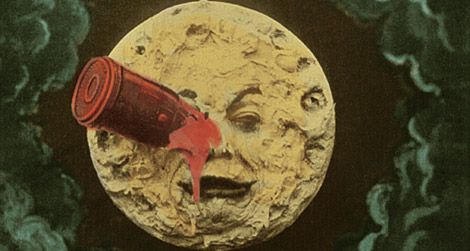
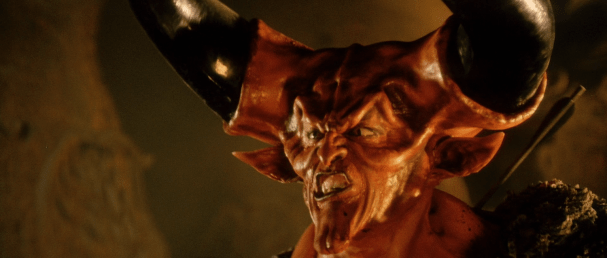
A few exceptions: “A Trip to the Moon” (1902); “King Kong” (1933); “The Wizard of Oz” (1939); “Beauty and the Beast” (1946); “Willy Wonka & the Chocolate Factory” (1971); “Legend” (1985); “Babe” (1995); “Spirited Away” (2001); “Coraline” (2009). (Please don’t ask where “Avatar” fits into this list. It doesn’t. It is banished, with prejudice.)
The wondrously weird “Trip to the Moon” (1902)Tim Curry in Ridley Scott’s underrated “Legend” (1985)
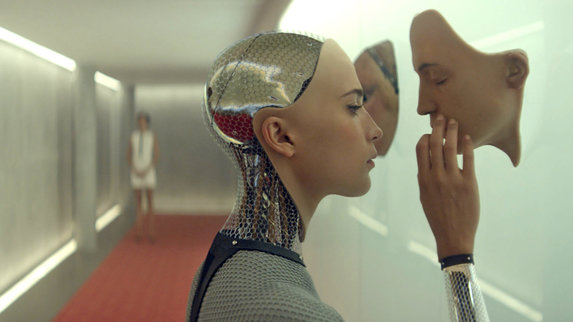
I think I need more fantasy in my life, despite my allergy to it and most things science fiction. (Exceptions: “2001: A Space Odyssey” (1968); “Solaris” (1972); “Star Wars” (1977); “Close Encounters of the Third Kind” (1977); “Alien” (1979); “Blade Runner” (1982); “The Fly” (1986); “Serenity” (2005); “District 9” (2009); “Moon” (2009); “Ex Machina” (2014).)
“Ex Machina” (2014) — Ex-ceptional
Nowadays dystopian scenarios are hijacking the fantasy and sci-fi worlds — from fashionable post-apocalyptica to ever-tedious zombies — with mixed results. Film-wise, dystopian zeniths are the visionary, crazily exhilarating “Mad Max” epics. (Other highlights off the top of my head: “A Clockwork Orange” (1971); “Brazil” (1985); “RoboCop” (1987); “Children of Men” (2006).)
In fiction, fine contemporary classics — “The Handmaid’s Tale,” “The Road,” “Never Let Me Go” — chafe against new mediocrities like Emily St. John Mandel’s “Station Eleven,” which at its best reveals genre fatigue.
I’ll take dragons over such drags. A trio of trainable dragons lit up “Game of Thrones” with awe and grandeur and strange, scaly pathos. Smaug is a juggernaut, a fearsome, fiery Middle-earth monster considered to be the last great dragon of the realm. (Yeah, I had to look that up.)
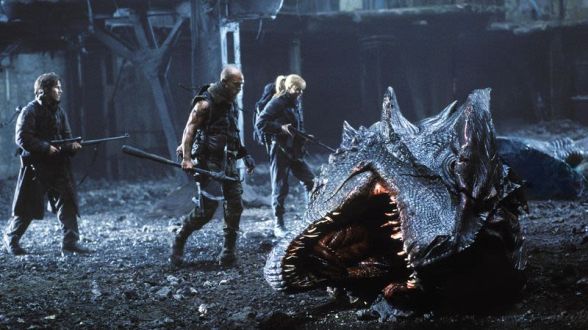
I may be the sole fan of the crunchy 2002 dragon drama “Reign of Fire,” in which Matthew McConaughey and Christian Bale combat a futuristic (totally dystopian) infestation of those winged, fire-spraying dinosaurs. The sheer force of its perverse and pummeling premise — not to mention top-drawer dragon action — dragooned me to full appreciation of this fantasy tale.
“Reign of Fire” — more underrated film fantasy (2002)
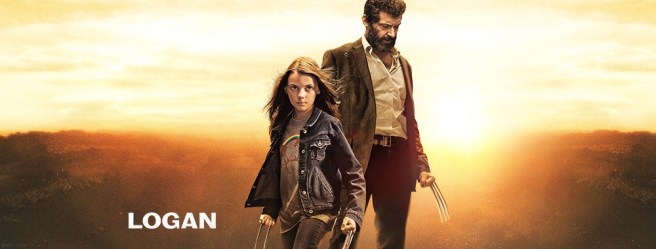
And what about comic-book superheroes? “The Dark Knight” (2008) remains an adult-geared masterpiece of mayhem and menace. One or two of the early Spider-Man movies are efficient. I like “Iron Man” (2008) and the profanely spoofy “Kick-Ass” (2010) — both are fast and funny — and, more so, the bleak, ruminative Wolverine installment “Logan” (2017). I have very little use for the rest of it.
From the basement, I hear Howard Shore’s strident, overbearing score, more earth-rattling noise, stadium-fuls of yelling, screaming and bellowing. Drama is happening in “The Lord of the Rings.”
And then: hush. The niece and nephew emerge from Lower-earth to the living room. The spectacle is over. We inquire.
Her: “It was good. I’m excited for the next part. I’m looking forward to the hobbit movies, too. This one is just really long.”
Him: “It’s exciting and there’s tons of fighting. but it’s more than three hours. Still, you don’t get bored.”
Length, damn length. This “LOT” runs a savage three hours and 48 minutes. Fantasy always seems to run interminably long (“Avatar”: two hours, 42 minutes), even when it doesn’t (“Legend”: one hour, 34 minutes). To binge all 73 episodes of “Game of Thrones” would take three days and 16 minutes, enough time for a weekend getaway to Bermuda.
But fantasy and sci-fi are all about girth and sprawl. Poundage of detail and characters, world-building and mythologizing is their very DNA, their showoffy M.O. Glimpse any fantasy novel worth its weight in gibberish; just don’t try and lift it.
Epic, capital E, is the primary aspiration. It’s all about blowing the mind, overwhelming the senses. For this skeptic, this mostly invites chronic eye-glazing. Fantasy does not stir fanaticism. This fanboy might have just become a fan-man.
“We die — that may be the meaning of life,” said author Toni Morrison, who died Monday. “But we do language. That may be the measure of our lives.”
I‘ve tried many times to watch “The Princess Bride,” “Stand By Me” and “When Harry Met Sally,” but I’ve never been able to get through any of them. They are ham-handed. They aren’t funny. They clunk. That Rob Reiner directed all of them is strictly coincidental.
The famous “orgasm” scene, which gets more embarrassing with each viewing.
I swear, Cubby the dog has a perverse crush on the female cat Tiger Lily. He gawkily flirts with her, and her eye-rolling indifference is touching. Such inter-species passion is a spectacle. I sure hope I don’t see a newborn kitten that barks.
I jot in my journal pretty much every day with purpose and the fugitive hope of substance. The author Yiyun Li writes, “How did I forget to start each and every page of my journal with the reminder that nothing matters?” My head nods vigorously.
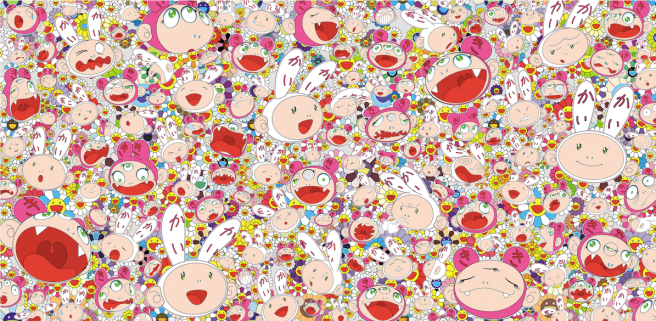
The last time I went to Japan I got hooked on the sizzling pop art of Takashi Murakami, whose work spans painting, sculpture, fashion, merchandise and animation. It’s fun and whimsical and dazzlingly colorful — and not a little geeky. His subject matter is cute (kawaii), psychedelic and satirical, with well-trod motifs: smiling flowers, mushrooms, skulls and manga culture. Murakami could be the Jeff Koons of Japan. I’m going there soon. My goal is to get Murakami’d, big time.
My phone’s current wallpaper.
A few years ago I discovered I had an adult-onset allergy to shrimp and prawns. It’s like the second worst thing that’s ever happened to me.
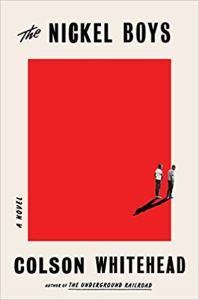
A fan of novelist Colson Whitehead, I’m deflated by his new, lavishly overrated book “The Nickel Boys.” It lacks energy, momentum and finally fizzles at the halfway mark. So I put it down (I also couldn’t get into his early novel “John Henry Days,” though I’m all about “The Intuitionist” and “The Underground Railroad”) and picked up Haruki Murakami’s “Norwegian Wood.” I’ve read one other Murakami novel, “The Wind-Up Bird Chronicle,” and I almost threw it against a wall. The edge is where I live.
Tonight we popped a bottle of Suntory Whisky Toki, “blended Japanese whisky that is both groundbreaking and timeless.” It is silky and smoky with strong, sweet vanilla notes. I think none of us is going to bed.
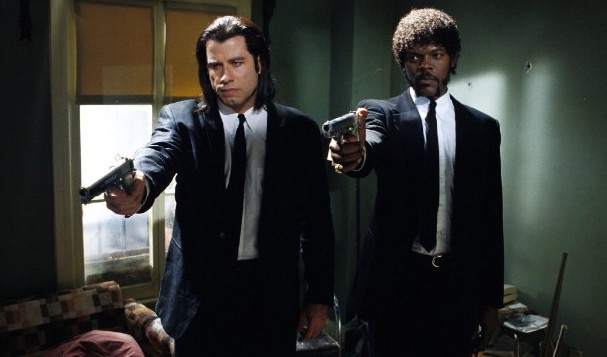
Quentin Tarantino has made 9½ movies. He has made only two masterworks, “Reservoir Dogs” and “Pulp Fiction.” That was a very long time ago. The rest of his oeuvre seesaws from juvenilia to junk. As critic David Denby wrote on the release of the imbecilic “Inglourious Basterds”: “Tarantino has become an embarrassment: his virtuosity as a maker of images has been overwhelmed by his inanity as an idiot de la cinémathèque.”
Intimacy is scary. Love is scarier. Someone recently dubbed the phenomenon “the terror of loving.” I like that. Its precision is chilling.
I am typing most of this in the air, row 45, seat G, on United flight 497 to San Francisco. You might say I’m skywriting. Forget I just said that.
I wish I played chess, even so-so. At this point, I have zero interest in learning how.
The best book I’ve read this summer is the acrid novel “Fleishman is in Trouble” by the regrettably named Taffy Brodesser-Akner. Terrifically observant, mordant and relevant, it’s dubbed a “timely exploration of marriage, divorce, and the bewildering dynamics of ambition.” I’m too lazy to describe it. But it’s superb, and superbly smart. If you’re married, or divorced, beware. It has teeth.
It’s in the news today. Never in a million years would I want to climb Mount Everest. Or any mountain for that matter. I don’t do tents. Or canteens. Or oxygen tanks. Or death.
I booked a flight to Tokyo for late October. I’m going to eat sushi and more sushi and sip sake and Japanese whiskey and absorb on a granular level Shinjuku nightlife. I may barf.
When I was 8 I saw big white beluga whales at SeaWorld. They made me kind of sick, all bulbous and albino, their big, meaty cow tongues showing when they smiled. Many years later — last week, in fact — I saw the belugas again at SeaWorld. They still make me ill.
Charismatic badass and “Blade Runner” actor Rutger Hauer has just died. So, alas, has presidential impeachment. R.I.P.
A movie my mind keeps returning to is the new documentary “Honeyland,” which is about a lone female beekeeper in the unforgiving mountains of Macedonia and her struggles with her unruly neighbors, her sick mother and the mere notion of survival. It sounds terrible. It is sublime. I could see it winning an Oscar. See trailer HERE.
My brother and I have reservations next month at Alice Waters’ legendary Berkeley, Calif., restaurant Chez Panisse, where we will dine on such succulent fare as, quote, “Sheep’s milk ricotta ravioli with chanterelle mushroom and garlic brodo” and “Sonoma County duck confit with frisée, haricots verts, fig vinaigrette, garlic crouton, and sage.” I don’t know what half that means. I don’t care. I will delight, as my wallet gently weeps.
Ipromised I would never mention my Sea-Monkeys again. I lied. There are a half-dozen survivors, swirling through the briny tank, each one as big as Moby Dick. I hope the cats are hungry.
Too many critics and other dopes are declaring season two of the amazing Amazon Prime comedy “Fleabag” superior to season one. Wrong. Season one is fresher, funnier, wiggier, better. Season two is splendid, no doubt, and you should watch it, as it’s the best comedy on TV. I’m just saying.
Speaking of TV hilarity, the lamest, most overrated “comedy” is “Bojack Horseman,” a Netflix show so consistently and embarrassingly unfunny, such a bizarre misfire, it just makes me tired. (If you find this show amusing, please leave a comment and explain.)
Some years ago, my Dad took us to an incredible slew of jazz and comedy shows. A few luminaries we saw live: Jerry Seinfeld, Bill Cosby, Robin Williams, Miles Davis, Ella Fitzgerald and Dizzy Gillespie, as well as live NBC tapings of “The Tonight Show with Johnny Carson” and, way back, “The Goldie Hawn Special” featuring then-pop idol Shaun Cassidy. The whole thing’s a head rush.
I recently bought a can of sardines. I keep looking at it, baffled and fearful.
In the bullet-peppered, body-slamming thriller “John Wick,” innumerable bad guys die stylishly gruesome deaths.
So, alas, does the dog.
The blameless Beagle puppy named Daisy is mercilessly killed before our hero’s eyes, which squint with vengeance instead of squinch with tears. John Wick (Keanu Reeves) isn’t taking this outrage sitting down — he’s not letting dead dogs lie — in the 2014 cult classic. He’s about to unleash a two-hour massacre.
Play dead. For good.
Spoiler? You bet. That’s exactly what the fine, sometimes funny and oddly practical movie- and animal-lover site Does the Dog Die? is here for — to tell you ahead of time if the damn dog dies. You want to know. I definitely want to know.
Anytime a dog, or any animal for that matter, appears on screen I tense up and just hope the creature doesn’t get shot, run over by an SUV or mauled by a demon (or, if you’re the rabbit in “Fatal Attraction,” boiled alive). Animals in movies are too often sacrificial lambs, beelines to our heartstrings or, as in Wick’s case, catalysts for revenge. (Or just workaday roadkill. Shrug.)
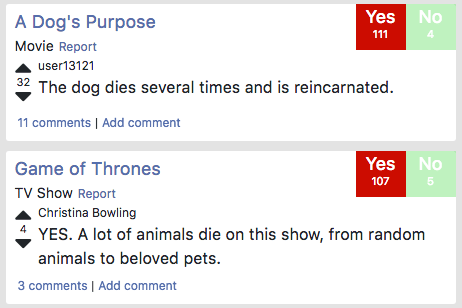
The website covers all manner of movie, TV and book animal deaths. Fed by visitor input, it’s a spoiler sanctuary revealing what animals perish or get injured and how, in often graphic terms. (Sample: “A cat accidentally gets smashed by a book. A half-human, half-dog gets his arm chopped off and punched into the ground.”) Ha, ha.
It’s humorous. It’s helpful. It’s horrific.Here’s a short screen grab to show you what entries looks like (note, it’s not the prettiest web design):
Some more reader reports about dogs dying onscreen at Does the Dog Die:
“The Babadook” — “For anyone who DOESN’T WANT TO WATCH THE DEATH OF THE DOG, don’t watch from 1:09:20 to 1:11:20.”
“I Am Legend” — “Dog is infected by a zombie-esque virus and is killed by her owner.”
“The Witch” — “Dog disemboweled in the woods.”
“The Good Place” (TV) — “A dog is kicked into the sun.”
“The Thing” — “Many dogs die on and off camera. One looks like it got doused in acid and is still moving around.”
“John Wick” — “Yes, and it’s terrible, BUT John Wick spends the rest of the movie deliberately, gloriously, and violently avenging the dog, so it feels really pro-dog overall.”
“Old Yeller” — “Yes the dog dies. He’s shot by his owner after contracting rabies.”
“Old Yeller” — he’s either shaving or he has rabies. Yep: He dies.
Does the Dog Die goes well beyond dog deaths, featuring 50 queasy-making topics, things you might want to know before flipping on the TV or entering the multiplex. Some topics and contributor comments:
Does a kid die?
“Game of Thrones” (TV) — “Season 2, Episode 1: For goodness’ sake, don’t watch this episode if you can’t stand a child being hurt. A baby is murdered.”
Is someone burned alive?
“Thor Ragnarok” — “Someone is literally melted.”
Are there clowns?
“It” — “Shockingly, there are clowns.”
Does a head get squashed?
“Venom” — “Does a head getting eaten count as squashed? I’d say yeah, but some may disagree.”
Is Santa spoiled?
“Bojack Horseman” (TV) — “In the Christmas special, Bojack’s character admits that Santa is a lie in a way that is phrased to deny the existence of God.”
Are any teeth damaged?
“Room” — “Ma has a ‘bad tooth’ which hurts her when she eats. It eventually falls out and she gives it to her son.”
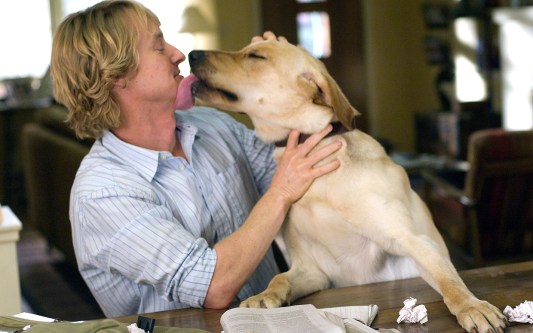
I can handle clowns, squashed heads and rotten teeth, but I hate it when the dog dies. Hate it. It’s one reason I call canine-killing movies like “Where the Red Fern Grows” and “Marley & Me” doggie-death porn. They all but fetishize the dog’s demise, milking the moment as they twist a knife in your heart, probably snickering as they do it. Sadists.
And so we have this neat site to tell us when to cover our eyes, leave the room, or skip a movie, show or book altogether. It’s not just a clever concept, it’s a public service.
Sally Rooney’s sophomore novel “Normal People” is soft, stingy with lyricism, psychologically wispy, and not altogether gripping. I like it (I do!), but it isn’t an essential read, and it certainly doesn’t deserve the drooly commotion surrounding its recent arrival. I’d give it an ambivalent B.
Rooney wrote this and her prior, similarly vaunted novel “Conversations with Friends” before she was 28, and both books betray the Irish author’s — here the grizzled elder clears his throat — youth and callow inexperience in love and literature.
In the latter instance I mean she is a plain, safe, lukewarm stylist, who, while honing a palpable personal voice, lacks the assertive confidence, the prosey musculature of a more seasoned writer. Rachel Cusk she is not.
Yet the author’s inexperience in tracing the contours of youthful relationships, both romantic and platonic, has also proven her strength, even her selling point. She understands her young characters, their collegiate insecurities and romantic gamesmanship. It has earned Rooney the title of the “first great millennial novelist” from a magazine that should know better.
“Great” is too strong a descriptive. Rooney’s feathery comedies are decidedly not great. They are good, quite good. Greatness isn’t hers yet. As one publication said of “Normal People,” it is “in some ways like the slightly less impressive follow-up album by a beloved band.” Another called it a rush job.
Still, the sycophantic likes of Vanity Fair imbibe the buzz: “The Church of Sally Rooney started to form around the release of her first novel, ‘Conversations with Friends,’ in 2017. Heralded by everyone from Sarah Jessica Parker to Zadie Smith, Rooney immediately became Someone You Need to Know About.”
It’s the hype-machine in clanking action, unctuous celebrity journalism at its finger-licking gooiest. (Church? Sarah Jessica Parker? “Someone You Need to Know About”in Gen Y caps? Certified bull-bunk.) Elsewhere, some genius crowned Rooney “Salinger for the Snapchat generation.” We can never unsee that.
“Conversations with Friends” and its hasty follow-up “Normal People” are sharp-eyed comedies of manners set in and around Dublin, lightly plotted stories about struggling twentysomethings looking for love, college scholarships, jobs and purpose. Also coming into vigorous play: literature, class frictions, social jockeying and plentiful sex.
Her dialogue is naturalistic, stripped down, never fiery or memorable, cutting or discernibly clever. The books are light on their feet, fitfully sparking to life with taut passages and startling scenes of social discomfort.
They are breezy and easy books, eons from the thorny ruminations of Philip Roth or plush poetics and thematic heft of Toni Morrison. They’re more like Anne Tyler lite.
Amid stubbornly lean prose, literary beauty is scarce. Two passages in “Normal People” poked me in the eye for their uncharacteristic flair: “The sky was extremely blue that day, delirious, like flavored ice,” Rooney almost effuses.
Only 12 pages later, she again swoons over the amazing azure of the heavens:“The sky is a thrilling chlorine-blue, stretched taut and featureless like silk.”
But she’s just playin’. Her allergy to the florid is concrete. Typical sentences, surgically removed of metaphor, run more like this: “Lorraine covers her mouth with her hand, so he can’t make out her expression: she might be surprised, or concerned, or she might be about to get sick.” That, reader, is on the more colorful end of the Rooney spectrum.
Last week “Normal People” crashed the NYT bestseller list at No. 3. Maybe it deserves it. I enjoyed it for all my nitpicking. Yet I wonder who reads Rooney with the avidity of Sarah Jessica Parker or Zadie Smith (who at Rooney’s age was already a true literary giant).
Rooney’s smart little beach reads — people boast about how they gulp her books in one sitting — are crisp divertissements. But they are lacking, in weight, import, poetry, the stuff of lasting literature. I give her a B, for now. Though the promise she shows tells me that grade may rise with each new book. We read and watch. And hope.
A girlfriend once said I have dog teeth. For real. She didn’t mean I literally have a mouthful of, say, Doberman teeth. She meant that my teeth reminded her of a dog’s. (My canines are on the long side.) Either way, it was a comment that falls under the heading “shitty.” I should have bit her. But I’m over it. In fact, I think it’s riotous, edging on genius.
Anyway, I just picked up the novel “The Story of My Teeth” by Mexican author Valeria Luiselli, whose current book “Lost Children Archive” is a literary smash, a timely drama about family and the immigration crisis on our southwestern border. I’ve read a chunk of it. It’s very good. Pick it up.
“The Story of My Teeth” is also a hailed exemplar of storytelling, making a zillion top 10 lists in 2015 and shortlisted for juicy awards. Yes, it’s about teeth. About the teeth of folks like Plato, Virginia Woolf, Petrarch and Borges that are collected by eccentric auctioneer Gustavo (Highway) Sánchez Sánchez, the story’s kooky narrator.
And it’s a lot about his teeth and his desperate goal to get his calamitously crooked choppers fixed. In this funny, fanciful book observations about people’s teeth abound.
There is for example: the man with “the slightly sinister smile of those who have paid many visits to the dentist”; Octavia Augustus’ “small, few and decayed” teeth; and the remark “Americans may have no identity, but they do have wonderful teeth.”
Teeth, teeth, teeth. And this is in just the first two dozen pages. By page 26 our homely hero Highway has hit dental pay dirt.
Like how? Like this:
At auction he buys Marilyn Monroe’s teeth. “Yes indeed, the teeth of the Hollywood diva. They were perhaps slightly yellowed, I believe because divas tend to smoke,” he explains.
Back home in Mexico, “Each of the teeth belonging to the Venus of the big screen was transplanted into my mouth by a world-class dental surgeon.”
How over the moon he is! Highway tips his hat to himself in mirrors and shop windows, awash in good fortune, elated, Monroe’s dental work now his. At long last, his rows of teeth, once tornado-whipped picket fences, are even and upright, straight and sturdy.
“My luck was without equal, my life was a poem, and I was certain that one day, someone was going to write the beautiful tale of my dental autobiography.”
And this is where I’m at in Luiselli’s toothsome feat of imagination. It’s the end of Book I — there are seven books, littered with photos and floating quotes and graphics, plus an afterward by the translator — in a slim 195 pages. I don’t know if Highway keeps Monroe’s teeth throughout the story, but I’ve read enough to enjoy a cameo by John Lennon’s molar, which fetches $32,000 at auction, rather on the low side, I thought.
But where we last left off, Highway was musing about “the beautiful tale of my dental autobiography.” Which is where I began this post — my dental autobiography, the story of my teeth. (Recall: mutt mouth.) The book aside, let’s pursue that thread. Hang tight.
Dental histories aren’t pretty. They are violent, invasive, queasy, medieval. Anxiety and discomfort are operative words, shrieking like exposed nerves. Drills, needles, pliers. Teeth are the worst.
When I was 14, the dentist noticed my gums were receding. He wanted to prop some of them up. His solution: slice chunks of skin from the roof of my mouth and use the flesh to support the falling gums. This happened. I was knocked out, but I briefly came to mid-operation and saw the surgeon’s smock and gloves smeared in blood.
I was luckier when my wisdom teeth were pulled. The dentist put me out so deeply that I woke up in a wheelchair. My mouth was swollen and filled with blood, but I was giddy.
I had braces. I have too many fillings to count and three crowns (a grisly business requiring a jackhammer). I’ve rode merry clouds of nitrous oxide and been jabbed by needles the length and girth of bratwursts.
That is the partial story of my teeth. I have crooked teeth, stained teeth, chipped teeth. I’m making my mouth sound like a massacre. It’s not. Maybe I do have dog teeth. Maybe I have teeth like Marilyn Monroe’s. Maybe I can sell them at auction. After all, some of my molars are encrusted in gold. But time is of the essence, before I get too long in the tooth.