This week’s astounding headlines

‘turro de force

Onstage, John Turturro is a frothing, frenetic vortex, spewing barbed-wire invective, spittle flying, making you cringe and laugh all at once. He’s Mickey Sabbath, retired puppeteer, devout deviant, a 60-ish sybarite of unbound lusts, a Vesuvian id raging in the night (and day and morning). I recently saw this crackling Off Broadway performance of “Sabbath’s Theater,” adapted from Philip Roth’s acclaimed, notoriously naughty novel, and while the small cast is a marvel, it’s Turturro as Sabbath who harnesses the show’s electric eros, whipping us along on a ride of pathos-kissed perversion. Everyone — he too — leaves exhausted. 

‘Home Alone’ 2023

In the “classic” Christmastime movie “Home Alone,” a little brat played by little brat Macaulay Culkin — in one of the most implausible plot twists in cinema history — is accidentally left behind when his family goes to the airport to fly to Paris for the holidays. So Culkin is all by his lonesome in the big empty house, until two bungling burglars show up … and yada-yada. This year I’m that little brat, home alone for the holidays, my friends flung around the country, and my immediate family jetting to Madrid on Christmas Day. With my parents passed, I’m left with Cubby the magic dog, a pair of impish cats, and, if I get lucky on Xmas Eve, when goodies will be gifted, a tiny tank of swirling Sea-Monkeys, my Proustian madeleine conjuring the age of Pet Rocks and the Fonz. I’m a loner at heart. I spent 10 Christmases solo in Texas, so this is actually my comfort zone. Leftovers, tipples of egg nog, a CBD gummy, a great old movie. I’m set. It might even snow. And there, the tableau is complete.

Mamet’s mad

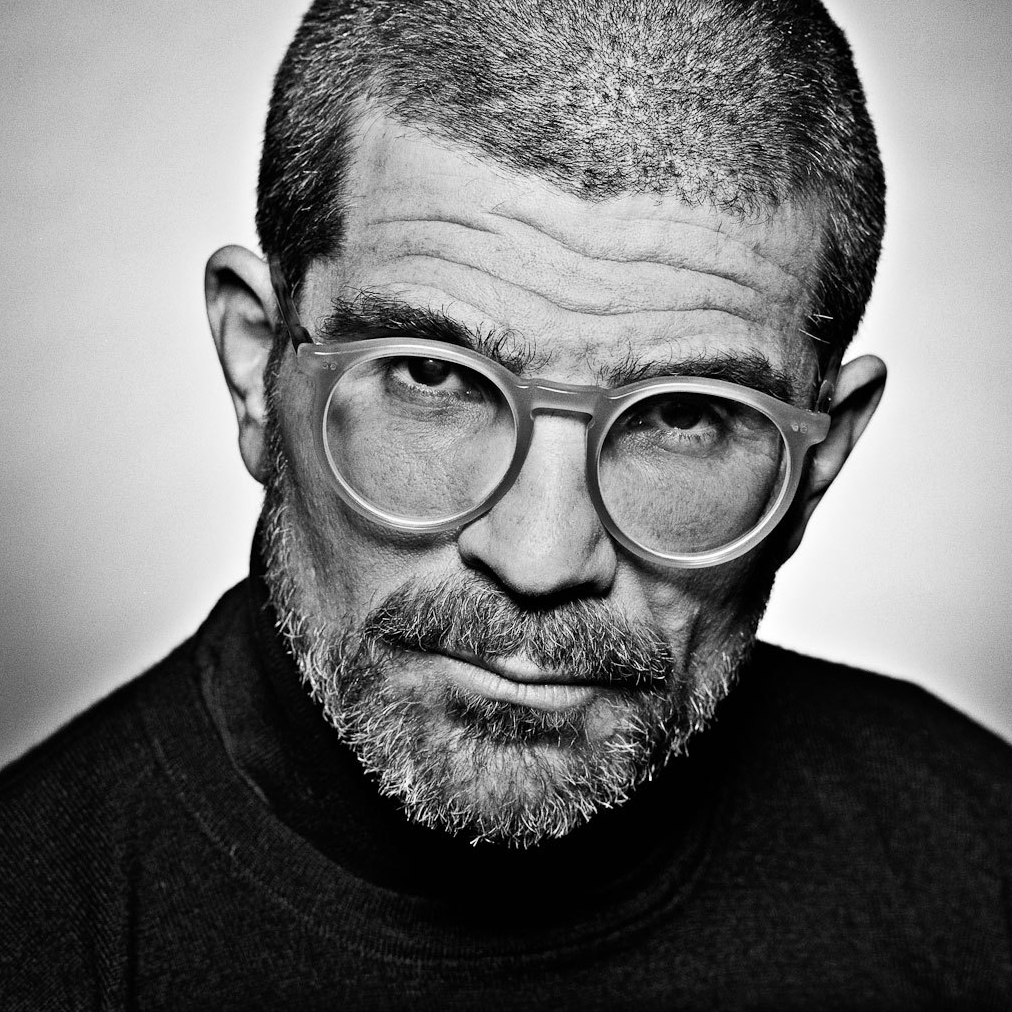
Though repulsed by his latter-day conversion to all things alt-right, I will listen to nearly anything playwright/screenwriter/director David Mamet preaches about the craft of writing. The Pulitzer Prize-winning playwright (“Glengarry Glen Ross”) has written a zillion books about writing and directing theater and film, as well as penned movies like “The Verdict,” “The Untouchables” and “Wag the Dog,” and written and directed 10 of his own movies, from “House of Games” to “Homicide.” Mamet’s been through the Hollywood wringer, and he’s pissed. His new memoir, out this week, is “Everywhere an Oink Oink: An Embittered, Dyspeptic, and Accurate Report of Forty Years in Hollywood.” I just got it, and though not quite a swashbuckling thrill through the fraught Hollywood jungle (see William Goldman for that), it’s peppered with Mamet’s signature biting commentary. Producers are venal scum (“Are none of you idiots paying attention?”). Race and gender are never off limits. Errant grumpiness is rampant (“If you put cilantro on it, Californians will eat cat shit”). And fascinating insights into arcane movie lore abound. Mamet can be astringent, but anyone who calls “School of Rock” a “wonderful” picture can’t be all bad. 

Packing my bags 

So, Sicily it is. My next journey is a return to Italy — no! To Sicily. For locals, the distinction is vital. I quote: “People from Sicily consider themselves Sicilians first and Italians second. Though Sicily is a part of Italy [the big island beneath the boot] the region has its own culture, traditions and dialect, and Sicilians are incredibly proud of their heritage.” I go in February, after the chilly holidays, before the heat sets in, and before spring religious rites flourish. The history-drenched capital Palermo is home base, with day trips to the ghoulish catacombs and the dazzling mosaics of Monreale Cathedral, plus food and culture tours and lots in between. Tips? Phone lines are open … 

Fido’s funk

It’s raining and the dog went on a walk and got damp and now he smells like a giant corn chip. He’s needed a bath for some time, and the drizzle has activated a slightly fetid doggy odor that happens to recall a processed dipping snack. Pass the Ranch?

Chick lit

“The idea of meeting someone in a library, in the aisle of a bookstore or while reading on the subway, for instance, remains stubbornly high on the list of many people’s romantic fantasies.” — from The New York Times (link below

I admit there are few things more alluring to me than an attractive woman reading a book or browsing in (or working at) a book shop or library. It’s a smashing combo, a kind of electrifying alchemy that I can’t quite explain.

For instance, in the 1946 noir “The Big Sleep,” I’ve always been partial to the bespectacled bookshop proprietress played by Dorothy Malone than to Bogart’s famous glamor squeeze Lauren Bacall — a nerdy example of my bookish bent.

My personal history of amore is lucky with literature. There was blue-eyed Guen, who brought on our first date a copy of David Mamet’s “Writing in Restaurants,” just for me. Laura, who made my knees buckle from afar, was toting the poems of Herman Hesse (we were soon a couple).

One of my biggest crushes was on the girl who worked at the hippest book store in Austin. Then there was the woman who, after a little wine, insisted we go browse the local used book store and buy each other a volume. Now we’re talking.

On the flip-side, I once invited a date to my place. She looked around at the Rothko print and various vintage movie posters, all without comment. Then she eyed my bookshelves and scoffed, “You have way too many books.” Deal-breaker!

Like movies, books are crucial to me, and a shared passion for them is just that — shared passion. It’s something in common, hot to the touch, and can be the bedrock of something more intense, meaningful and feverish.

All this was stirred up reading the above mentioned story in the Times titled “Is Reading the Hottest Thing You Can Do as a Single Person?” (Answer: yes.) 

Check it out HERE.

Dorothy Malone, bookshop owner, face to face with Bogart in “The Big Sleep”

Facing evil

Let’s not get all down about it, but I’m reading “Survival in Auschwitz,” the slim and indelible account of life in the most notorious Nazi concentration camp by Primo Levi, an “Italian citizen of Jewish race.” Published in 1947, the pages bulge with terrible and inconceivable realities, much of it learned about in any decent schooling, yet far more personal and unsparingly granular. The horrors are shattering.

So I will spare you. I’m reading the book, an autobiographical classic, because of my upcoming visit to Auschwitz, just outside of Kraków, Poland. My trip, as I’ve oft-noted, takes me to Budapest, then Kraków, where I went years ago, including the day trip to the concentration camp, which is now a haunting al fresco museum that staggers with its bleak, blunt truths. Even the gift shop (yes, gift shop) is stained with gloom.

Why do we go to such places? I know someone who said he would skip Auschwitz if he went to Kraków, a fact I find astonishing. Few places throb with such recent history and so many fresh ghosts and has shaped so much of the modern era to now. It’s living history, inescapable. To duck it, inexcusable. 

That’s just me. Genocide is vital and we should be exposed to it as a reality check and cautionary device. Visiting Auschwitz (or Duchau, which I toured in Germany) is mind-expanding. It’s not a place for morbid curiosity or ogling. It’s a place for reflection and wonder. Like any potent museum, it works intellectual muscles and, more so, wrenches emotional ones. It’s as powerful as any Holocaust memorial or, similarly, the 9/11 Memorial and Museum. Its utter humanity rumbles, and humbles.

I have a strong stomach for dark and doom. I seek out shrines to deformity and mortality, like the Mütter Museum in Philadelphia, the Museum of Forensic Medicine in Bangkok, freak shows and books about human oddities. I always make a solemn visit to Holocaust museums, be it in Amsterdam or Israel. Or, of course, Auschwitz-Birkenau. 

It’s not about luxuriating in morbidity or getting a “thrill” from death, like some sophomoric Goth, who gleans reality from graphic novels and zombie movies. It’s the opposite, being repelled by it while pondering the strength, the sheer fortitude, of the victims and acknowledging that it can’t happen again. The triteness of that statement is a reflection of its truth.

In “Survival in Auschwitz,” Primo Levi writes eloquently of struggle and endurance in the face of naked evil inside the death camp. His spirit is wounded but unbowed. Survival is paramount, and he carries on because it’s all he can do. 

He says: “Sooner or later in life, everyone discovers that perfect happiness is unrealizable, but there are few who pause to consider the antithesis: that perfect unhappiness is equally unobtainable … Our ever-sufficient knowledge of the future opposes it, and this is called, in the one instance: hope.” 

More marvelous miscellany

1.One of my least favorite things in the world, after e-scooters and ravers, is sweating. Which means I am not a happy fellow. Why? Right. Because I am sweating. And rather a lot, swamp-ass and all. Somehow I thought it’d be a swell idea to take a brisk walk in the 92-degree blech of midsummer. The light sweat I produced outside — a mere film — quickly metastasized into a profuse drenching once inside. Forty minutes later, in powerful AC, it has yet to subside. How bad is it? The dog is licking me avidly, like I’m a giant piece of beef jerky.

2.House of Terror — how kicky is that for the name of a major tourist attraction? It’s real, and it’s not a ride at your local carnival. This daunting museum is in Budapest, where I head this fall, and it isn’t about ghouls and goblins. Or, well, it sort of is. Per its description: “It contains exhibits related to the fascist and communist regimes in 20th-century Hungary and is also a memorial to the victims of these regimes, including those detained, interrogated, tortured or killed in the building.” History writ large. And horrible. I’m so there, with solemn intentions, despite the thrilling name. 

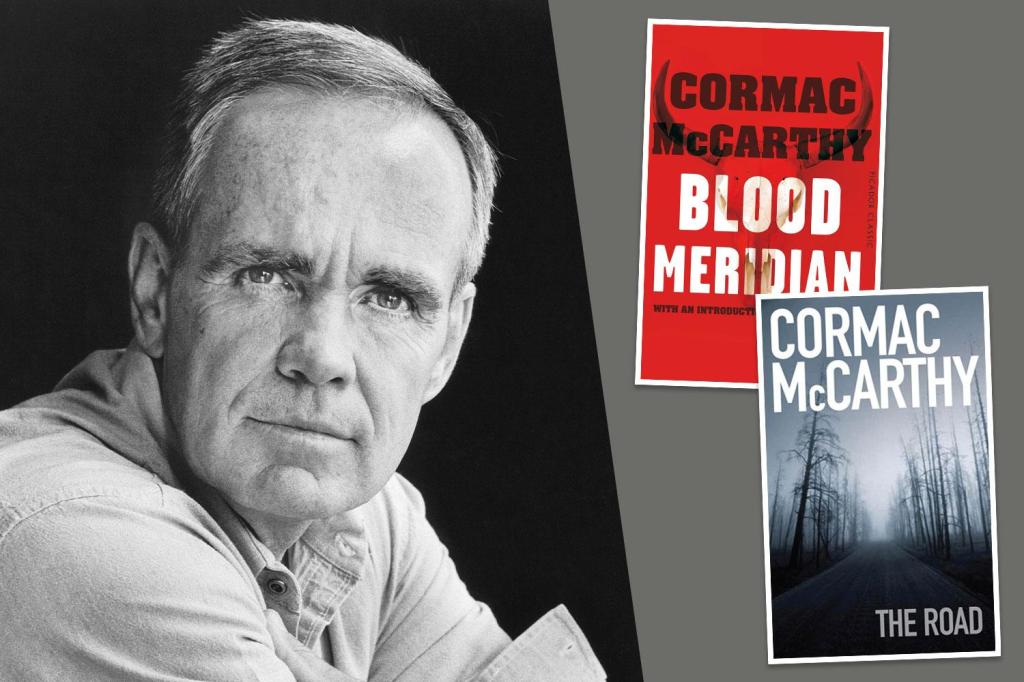
3.Just finished Paul Harding’s newish novel “This Other Eden” on the dazzling strength of his first book, the 2009 Pulitzer Prize-winning “Tinkers,” which is uniquely mesmerizing. “Eden” limns Black American history in its many facets, including, troublingly, eugenics. Harding is an uncompromising stylist, forging gorgeous, gem-cut prose that’s sometimes too infatuated with itself, yet nevertheless tells a fascinating story. Harding writes like few others — Cormac McCarthy and Faulkner come to mind — but he can stumble on his own lush verbiage. He is a flawed master.

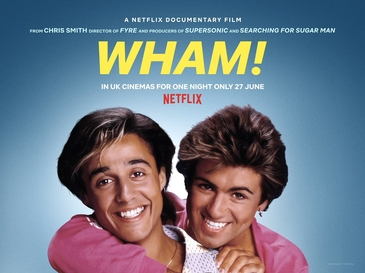
4.The new documentary about massive but short-lived Brit pop duo Wham! — aptly titled “Wham!” — is out on Netflix, and the trailer promises a bubbly, bubblegummy, bing-bang time (“Wake Me Up Before You Go-Go,” anyone?). The movie, a giddy romp directed by crack documentarian Chris Smith, isn’t, alas, as brawny as frontman George Michael’s uncrackable Aqua Net helmet. It’s strictly for googly-eyed fans who can’t be bothered with pop music history, laser-focusing on bandmates’ Michael and Andrew Ridgeley’s frolicsome BFF status and their improbable rise from cheesy teen wannabes to slick arena-fillers. Critically missing in this narrow nostalgia trip is cultural context, as if Wham! exploded in an ‘80s vacuum, with little competition and no help from juggernauts like MTV. And it doesn’t even footnote Michael’s untimely, and seismic, death as a solo artist. Wham! Bam! Thud.  

5. Speaking of the dog (see #1), Cubby was recently shorn like a poor gray sheep, which I documented here. The good news: his hair is growing back in the summer swelter. He no longer resembles a fuzzy Pringles can — he’s not so tubular — and he’s stopped nipping the parts that were so short, pink flesh was exposed. He’s returning to his bushy self, and his attitude is boinging back — a little cocky, vain with a scruffy bedhead sheen, and as fierce around the UPS folk as one can be behind a closed door. His yawps and barks still shatter glassware, but that’s OK. Pretty soon he’s going to look like Slash again and the process will start all over. Our little lamb chop.

6.Then there’s this: I was strolling in the summer heat (see #1 again) and some shitty beat-up compact sedan roared past me, easily doing 50 to 60 in a residential  25 zone. Startled (and pissed), I yelled, “Slow down!” The driver flipped me off and I reflexively returned the gesture. He barreled into oblivion. Then I thought: Smart. That’s a good way to get yourself killed. Jackass might have a gun, might want to turn around and use it. Sweating like a madman, I kept walking, ruffled, looking at the world in a slightly different shade.

How ‘Jaws’ ate me alive

Today was a two-errand day. I was picking up a modern classic potboiler at the library — the one about a ginormous great white shark that terrorizes the bejesus out of a New England beach town — and I was getting my periodic pedicure at the salon. I dubbed the day “ ‘Jaws’ and claws” to amuse myself. (Mission accomplished.)

The book I got really is “Jaws,” Peter Benchley’s 1974 blockbuster that spawned Spielberg’s famous film and a million petrified beachgoers around the world. As a kid, I lived in beachy Santa Barbara when both were released, and I fantasized about flesh-shredding teeth and ominous dorsal fins to unhealthy degrees. It terrified me, and I loved it. 

First I worshipped the movie, which I saw at age 7, then I snatched my parents’ mass market paperback of Benchley’s novel and gobbled it up at age 8. I savored those pages, slashing with vivid, violent writing that helped turn me onto reading for a lifetime. 

I still own that cracked, yellowed paperback, but it’s packed away with other mementos. So, on a whim, I hit the library up for its copy. I quickly located some of my favorite passages, ones that haunted — and excited — me as a young reader.

Just like my own copy

Can you handle it? This horrifying scene is from the opening of the book, when a young woman — recall her from the movie — takes a skinny-dip in the moon-dappled ocean. 

“The fish smelled her now, and the vibrations — erratic and sharp — signaled distress. The fish began to circle close to the surface. Its dorsal fin broke water, and its tail, thrashing back and forth, cut the glassy surface with a hiss. …

“At first, the woman thought she had snagged her leg on a rock or a piece of floating wood. There was no initial pain, only one violent tug on her right leg. She reached down to touch her foot, treading water with her left leg to keep her head up, feeling in the blackness with her left hand.  

“She could not find her foot. She reached higher on her leg. Her groping fingers found a nub of bone and tattered flesh. She knew that the warm, pulsing flow over her fingers in the chill water was her own blood. Pain and panic struck together. The woman threw her head back and screamed a guttural cry of terror.

“This time the fish attacked from below. It hurtled up under the woman, jaws agape. The great conical head struck her like a locomotive, knocking her up out of the water. The jaws snapped shut around her torso, crushing bones and flesh and organs into a jelly.” 

Now, as a young boy, this was about as stupendously visceral as prose could get. (And I omitted the rest of the violence for reasons of taste and space.) “A nub of bone and tattered flesh” — I reread that line over and over, shocked, thrilled, gobsmacked. 

Even today, these opening pages stun. Getting the book at the library, I was hoping Benchley’s eloquence would strike me again, and it did. That’s why I shared some here. 

Call him a hack or a mercenary, but you’d be wrong. Benchley’s a savvy craftsman, expert at tension and thrills, not to mention a vibrant stylist with a painterly (think Francis Bacon) flair. His humans, from Quint to Brody, pop off the page even if the world he confects for them occasionally brushes pulp.

I’m not going to reread the entire novel, which is remarkably short at 278 pages, but it was fun revisiting a book that so influenced my cultural life.

Why “Jaws,” why now? Well, I’m reading an excellent new book about the history of Hollywood and the Academy Awards called “Oscar Wars,” and I’m deep in the chapter focusing on the making of “Jaws” (as well as “Barry Lyndon,” “Dog Day Afternoon,” “One Flew Over the Cuckoo’s Nest” and “Nashville” — 1975 was a hell of a year in American film.)

The lore is notorious: Making the movie “Jaws” was a prolonged ordeal and near-disaster for all involved, including a 26-year-old Steven Spielberg, who was sure his nascent career was finished. We know how that turned out.

If the movie “Jaws” remains one of my all-time favorites — in a crowded field that includes “Heat,” “All About Eve,” “Sweet Smell of Success,” “Manhattan,” “City Lights,” “Seven Samurai,” “Duck Soup” and on and on — the novel “Jaws” is more of a sentimental gem. It’s dear to my heart for reasons that go beyond art. On a nostalgic level, it has — yes, I’ll say it — sunk its teeth in me. And it won’t let go.