Filming life in fascinating fragments

Too many worthy films flitter aimlessly in the ether, small and micro titles that never reach the local whatever-plex and go straight to DVD or get lost in streaming’s infinitely accommodating democracy (see, for one, Joe Swanberg’s hidden comic gem “Win It All” on Netflix). Sometimes the films get lucky, becoming cult revelations (“Wet Hot American Summer,” anyone?). Yet so often they go poof, vanishing into cinematic oblivion.

One of those small movies is “Cameraperson,” Kirsten Johnson’s transfixing, deeply personal free-form documentary, which is doing quite well, thank you. The 2016 film, peculiar and pretty wonderful, played minimally, and then, oh-so sneakily, debuted on DVD.
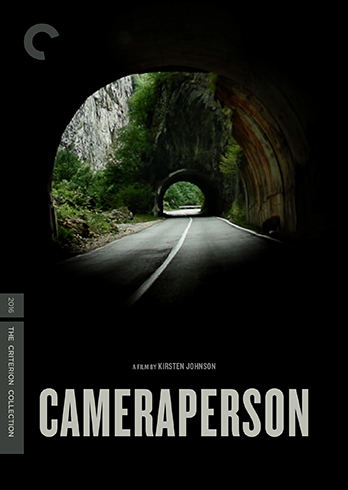
853_DVD_box_348x490_original.jpg

I don’t even remember how I heard about “Cameraperson.” It’s that kind of discovery, unique and hushed, like a hot, under-the-radar new restaurant, or a monkey’s paw. Remarkably, I located the movie at the library, just sitting there patiently, new, unsullied, waiting to be taken home like a shelter dog.

But “Cameraperson” is no mistreated mongrel. In fact, it’s laureled with widespread acclaim, earning a 99% rating at Rotten Tomatoes and shiny critical bouquets like “brilliant“ and “masterpiece.“ And none other than The Criterion Collection (which takes such good care of its superbly tasteful catalog that I bought a t-shirt) issued the DVD and Blu-Ray of the film. That’s prestige.

But what is “Cameraperson”? It’s a curio of whole-cloth originality, a globe-hopping cinematic scrapbook assembled from Johnson’s 25 years as a non-fiction cinematographer for other directors. She shot, among many docs, Michael Moore’s “Fahrenheit 9/11” and Laura Poitras’ “Citizenfour,” both of which won Oscars for best documentary.

But this is her movie, so personal that she calls it “my memoir.” It could also be called a vivid, living career diary, a collage of unvarnished outtakes from numerous docs that she handpicked and wove together with a crazy-quilt method that’s not always obvious.

Zigzagging and hopscotching from subjects and locations, a visual essay emerges. Artful connections and startling juxtapositions happen. Panoramically, with spare narration — her debt to Frederick Wiseman is palpable — Johnson captures multitudes: from a mossy-toothed shepherd strolling with his wooly charges, to bristling backstage drama at a Brooklyn boxing bout; from a fraught Nigerian maternity ward complete with yawping, slime-coated newborns, to shots of lightning in rural Missouri, punctuated by Johnson’s own camera-shaking sneezes. “These are the images that have marked me and leave me wondering still,” she says in the film’s opening note.

There is so much more.

Jumpy Liberian street scenes. Interviews with former rebel warriors who give testimonies of combat horrors. A panning shot of a Yemen prison for Al-qaeda fighters. A rickety, joyful Ferris wheel ride in Kabul. Grim visuals of Guantanamo Bay, Wounded Knee and Tahrir Square, places far removed from peace. A Christian-themed ballet performed by little girls in Colorado Springs. Far-flung centers of protest and massacre, mass rape and public executions. A visit with Johnson’s mother, who suffers from Alzheimer’s. Chirpy frolics with Johnson’s adorable twin toddlers, who are enthralled by a dead bird.

Though beauty abounds — there’s even splendor in a Bosnian martyrs’ cemetery — not all of Johnson’s shots are the master compositions you’d expect from a seasoned camera artist, and that might be the point. Many of the visuals are haphazard, shaky and seemingly random, like she’s busy setting up a shot or gathering all-important “coverage.”

You might also say the pictures are achingly authentic, quivering in the raw, glinting moment; that they are human, all too human.

cameraperson.jpg
Kirsten Johnson and friends

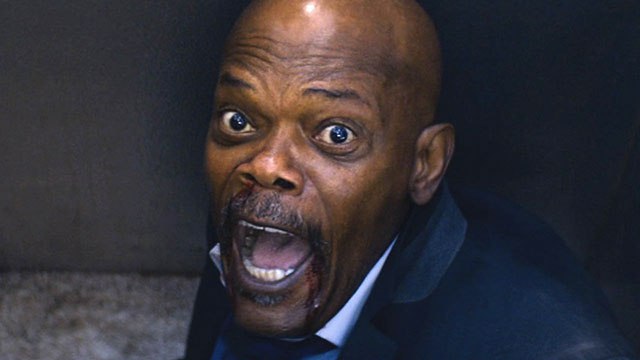
Samuel L. Jackson, film’s charismatic Old Yeller

samuel-l-jackson-freakin1.jpg

Samuel L. Jackson is a yeller. A growler. Part human, part pouncing jungle cat.

He scares the shit out of everyone.

When I interviewed him way back when for “Star Wars: Episode I — The Phantom Menace,” I noted: “Samuel L. Jackson enters a room the way you’d think Samuel L. Jackson would enter a room — with velocity, fury … ,” and there memory fails me. But fear not, because you can fill in the blanks, envisaging the long coat fluttering in a gust, his hello more of a guttural emission than a salutation.

I had to laugh.

But do we still laugh? The actor, bad, bald and raging, has a persona to maintain, and, yes, its tongue remains deeply in cheek. His is a cultivated act, swathed in black leather, engined by a scolding severity, and leavened by a scratched baritone laugh that could go either way: sinister or Santa Claus. (It’s almost always the former.)

Jackson, with a strenuous wink, even tries to intimidate us, if just a little, in his “What’s in your wallet?” Capital One commercials, some of which are humorously doctored by those who want their hero reliably profane. He prowls the screen with proprietary confidence, his spokedude’s blandishments quite uncompromising. (Use this card. Or else.)

He’s got it down: the self-parodic scowl and growl, eyes popping, mouth a lion’s maw, the apoplectic human megaphone. We’d have it no other way. He’s modern movies’ go-to badass, the man you call when, in the face of ineptitude and criminal folly, glowering gravitas and debonair menace are demanded.

That voice. The earth rumbles.

In this former film critic’s review of the 2008 thriller “Lakeview Terrace,”  in which Jackson plays a toxic cop, I wrote that Jackson’s “roiling, rhythmic voice is an instrument of interrogation and intimidation. It barks, recoils, then rears up and roars. He has a rapper’s control of tone and timbre, turning passion and ire into a kind of sociopathic backbeat.”

In my take on his 2000 “Shaft” reboot, I went on:

“Samuel L. Jackson speaks like a building storm; his words have lightning jags in them.

“When he taunts his quarry, which he does with great frequency, his throat tightens, throttling syllables. His voice kicks up a few octaves until words sing with angry strain. Expletives fly in shrapnel sprays.

“‘What’s my name? What’s . . . my . . . name?’ shouts Jackson at a preening dope dealer as his pistol forges an elaborate imprint on the pusher’s cheek.

“In his crime-dude roles, in films like ‘Pulp Fiction’ and ‘The Negotiator,’ Jackson is pure gale-force attitude and wrath-of-God fury.”

Jackson’s breakthrough role, and arguably his most popular, is Jules Winnfield in “Pulp Fiction.” Slick in a bespoke black suit, head crowned with a Medusa nest of glistening Jheri curls, and with scary Bible verses at the ready, he’s all grooving fire and brimstone, an apocalyptic preacher-man with a very large gun and a very short fuse.

Jules showcased Jackson’s range, which is more faceted than the picture painted here of an implacable, one-note Angry Man. Jackson is a genius at outrage, explosive outbursts of verbiage and violence. But his Jules also revealed he’s an expert comedian, with a gift for brilliant badinage, not to mention a penchant for brooding, sometimes profound introspection. He’s proud but protean.

Jackson doesn’t need to yell to get our attention. His seething charisma is all it takes. It’s the aura of a star, some kind of supernova, that snags us in his thrall. He’s the real deal. Just don’t piss him off.

PulpFiction.jpg
“It’s the one that says ‘Bad Mother Fucker.'”

The 10 best movies of the year, so far

What’s usually a Christmasy pastime, the year-end best-of list, is happening now, today, amidst the gruesome swelter of mid-summer. Movie best-of’s are mostly tiresome, self-aggrandizing exertions, but they seem worthwhile now because the year has already produced a trove of must-sees, pictures that are, largely, detergents to summer’s franchise flotsam.

So this one-time film critic has compiled a litany of bests, even if it’s strictly provisional. For instance, I haven’t seen — and I’m in no rush to see — “Wonder Woman,” “Spider-Man: Homecoming” and “War for the Planet of the Apes.” I’ve also, with regret, missed “Baby Driver,” “Raw,” “It Comes at Night” and “Graduation.” They’re in my crosshairs.

Meanwhile, from what I have seen, here are the top 10 films from the first half of 2017:

  1. “Maudie” — Richly idiosyncratic and unbearably poignant, Aisling Walsh’s intimate biopic about an arthritic Canadian folk artist (played by an avian Sally Hawkins, who’s so fragile she seems made of twigs) and her unlikely marriage to a brusque fishmonger (the macho Ethan Hawke excelling out of his element as a human cinder block with jelly inside). A miniature about art and love, it’s simple, slow, aching, beautiful. (More about it here.)        maudie_film_still.jpg
  2. “John Wick 2” — Oh. Yes. An explosion of Hong Kong-stylized mayhem, fueled by revenge and the ability to look impeccable while dispatching a fleet of attackers with the elastic, tentacular ease of the guy in “Oldboy” (who did it with just a hammer). Über-assassin John Wick (a simmering, sneering Keanu Reeves) is on another tear, engaging in non-stop, surgically choreographed street fighting and bullet ballets — Astaire and Rogers with knives and Glocks. Exhilaratingly bloody and pornographically suave, this exercise in arms and Armani is about as good as the first one. And, yes, Wick has another dog.john-wick-2-guns.jpg
  3. “The Wedding Plan” —  After her fiancé abruptly dumps her, 32-year-old Michal, an Orthodox Jew, decides, demands, insists that she is going, God willing, to get married in 30 days — with or without a groom. A series of comic blind dates, goosed by bumbling despair, is a showcase for Jewish rituals and mating rituals, not to mention an array of sparkling performances. An American director would muck it all up with farce and bathos, and despite the rare feel-good sop, the film, by Rama Burshtein, stays true as a serious, delightful peephole into faith, Orthodoxy and the universality of companionship. A find. wedding plan.jpg
  4. Get Out” — A scathing op-ed about American racism and race relations disguised as a bloody horror-thriller, Jordan Peele‘s ingenious what’s-it follows the relationship of Chris (Daniel Kaluuya) and Rose (Allison Williams) as it graduates to her bringing him home to meet the ‘rents. Hitch: They don’t know Chris is black. Rose assures her nervous beau that it won’t be an issue. Right. Peele keeps the boat rocking, with discombobulating tonal shifts and shocking reversals, as well as jabs of genre-apt violence. This disturbingly original movie also killed at the box office.  get-out-jordan-peele.jpg
  5. “A Quiet Passion” — A fine-grained Cynthia Nixon, alternately pinched and forthright, is 19th-century American poet Emily Dickinson in cinema bard Terence Davies‘ lushly elegant biopic of the reclusive writer, who deflects the twin tyrannies of sexism and religion with vocal mutiny and bridling impiety. Far from musty, the movie is an epigrammatic delight. Austenian, even Shakespearean, repartee festoons the crackling script about a bitter, celibate, sequestered genius who considers hers a “minor” life. “I would like some approval before I die,” she says. The world’s response is, well, heartbreaking.
    AQuietPassion_Trailer2.jpg
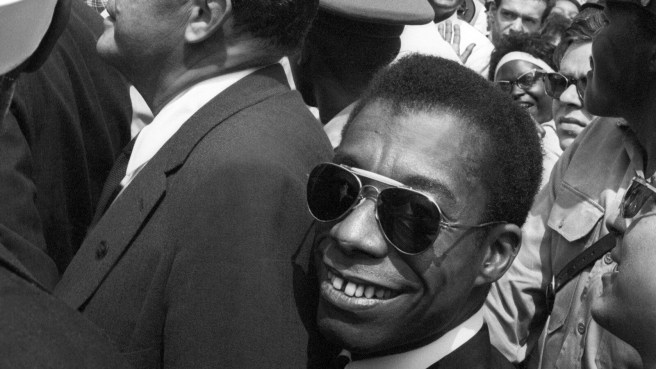
  6. “I Am Not Your Negro” — Raoul Peck’s cool, contemplative doc is based on a manuscript by James Baldwin about the lives and back-to-back assassinations of his close friends Medgar Evers, Malcolm X and Martin Luther King, Jr. (He left the manuscript behind when he died in 1987.) Read by an eerily hushed Samuel L. Jackson, the material, catalyzed by riveting archival footage, traces all that was going down in the heat of the Civil Rights movement. The movie’s timely racial resonance makes it an excellent companion piece to last year’s astonishing “O.J.: Made in America.”james.jpg
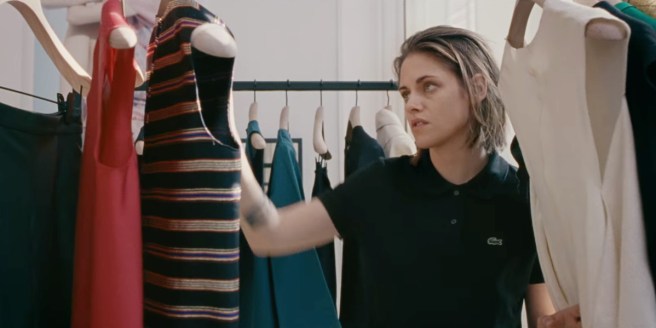
  7. Personal Shopper” — This offbeat drama is a risky mash of tones and genres, but out-there auteur Olivier Assayas is a daredevil, one of our most fascinating filmmakers, and he achieves wonders. He elevated Kristen Stewart in the entrancing “Clouds of Sils Maria,” and made the callow actress fly. Here she soars. This singular and sometimes freakily supernatural thriller about, yes, a personal shopper, boils down to: Kristen Stewart, Kristen Stewart, Kristen Stewartpersonal shopper.jpg
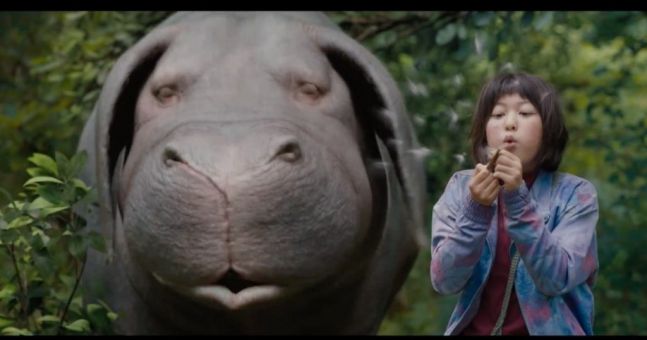
  8. “Okja” — A Netflix flick by South Korea’s Bong Joon-ho (“The Host,” “Snowpiercer”), “Okja” is a weird, witty and wild action-fantasy about a girl and her pig (think “Charlotte’s Web,” with a dash of “King Kong.”) The titular creature is a ginormous swine that looks more like a galumphing hippo. It has floppy elephant ears, nubby teeth and a tongue that flaps like a beach towel. Okja is a soulful pig, playful and protective, like a child’s canine BFF. But that’s where the joy ends. See, she is a genetically engineered “super pig,” bred by an American corporation for her delicious meat. And the company wants her, now. The spunky little girl who raised Okja for years is having none of it. Paul Dano sympathetically plays an animal liberation leader and Tilda Swinton is splendidly venal as the corp head. Jake Gyllenhaal? He’s the best human cartoon you never saw on “Pee-Wee’s Playhouse.” The candy-colored affair is a harrowing, heart-cracking moral tale, whose message is: Free the pig!
    okja-1024x544.jpg
  9. “Logan” — Logan’s the non-mutant name Wolverine goes by, so you know heading into this Marvel Comics marvel that fearsome knuckle talons will retract like 12-inch switchblades and baddie flesh will be slashed and perforated. Logan (a ruffled, ripped Hugh Jackman) is in a pissy mood, a worn and torn X-istential hero who’s had it up to here. This is all he needs: A little mutant girl who happens to be blessed (cursed?) with the same weaponized fists — a distaff Wolverine who’s also a murderous wildcat when danger strikes. (Unfortunately, she forgoes Logan’s luxurious facial fur.) Writer-director James Mangold aspires to an impressive hard-R grit and gore and an almost “John Wick”-ian body count (impaling! beheadings!) in this bruising X-Men installment. The complexion is dark, the tenor aggrieved, yet there’s no lack of the bonkers excitement that galvanized “Mad Max: Fury Road.” The story is unencumbered by fussy superhero mythos, focussed more on family and past, with a bold stroke of unexpected sadness. This one’s for the grownups.

thumbnail_25475.jpg

10.  “Dunkirk” — Certain to go down as the most fulsomely praised picture of the year, Christopher Nolan’s alternately epic and intimate WWII drama isn’t quite as singular or special as you’ve been led to believe. Pity the poor war movie, which has to transcend hoary combat clichés while delivering the bloody, kablammy goods; which has to strive for rigorous tough-mindedness while furnishing the hokey uplift of victory to swelling orchestral strains. Nolan does his best with his mostly gripping, always picturesque telling of the celebrated rescue mission of some half-million Allied troops out of Nazi-surrounded Dunkirk, but convention gets in the way and a you’ve-seen-this-all-before mood settles in. Canned heroics and schmears of sentimentality lard the third act. But Nolan finally prevails for an impeccably staged war rattler of intermittent intensity. Yet let’s not get carried away. Some are calling “Dunkirk” Nolan’s masterpiece. It’s not. Both “Memento” and “The Dark Knight,” er, blow it out of the water.

maxresdefault.jpg

  • Honorable mentions: “A Ghost Story” — One of the most wildly original films I’ve seen in ages, this elusive drama about a ghost (a touching Casey Affleck, wearing, yes, a sheet with eye holes cut in it) who haunts while mourning for his still-living wife. Shot in dreamlike ultra-long takes and nearly wordless, David Lowery’s challenging, sensitive love story is a vision, and visionary. … “The Big Sick” — Not bad, not spectacular, Kumail Nanjiani’s smile-making rom-com with a dark undertow, featuring a fine Zoe Kazan and Holly Hunter, is worth a look, and a chuckle. (More about it at the bottom of this post.)
  • Overrated: “The Beguiled” — Sofia Coppola’s uneventful snoozefest has the bounding verve of a somnambulist. Its 94-minute run time is a godsend.

My, oh, ‘Maudie’

maudie_02

Today’s movie was between Sofia Coppola’s “The Beguiled” and the no-one-knows-what-the-hell-it-is indie “Maudie,” starring the serendipitously hawkish Sally Hawkins and Ethan Hawke. For various reasons (read: two reasons, neither scintillating) I chose “Maudie,” showing at the cozy, weirdly configured arthouse cinema.

It’s a Tuesday matinée and tickets are a chest-clutchingly cheap $7. The darkened theater is, per usual, populated with nattering, dithering geriatrics, clogging the entrance and doddering up the aisle as I stand impatiently, sighingly, behind them. “Jesus,” I finally mutter as I squeeze past a stolid body. Then I think: “Christ, this movie better match its unanimously rapturous reviews.” I lean back, put a foot up.

The movie is a splendor, something immoderately special. Inchworm slow and ear-cuppingly quiet, it’s a doozie about an eccentric couple, a painter and a fishmonger, that somehow, against bounteous, brittle odds, stays together and loves one another. My eyes moistened. Hawkins, all aquiver, like an injured sparrow — devastating. Two unwell people, frail and difficult, made me conscious of death and illness and curdled personalities, misanthropy, shyness, pain. It was scary. A fine work of art, if not altogether pleasant. I will see it again. I like my movies rather agonizing.

Also pretty agonizing are other peoples’ movie lists, bests and worsts. I take them personally; I get gastric distress when I read them, always. The New York Times recently proclaimed its 25 Best Films of the 21st Century, and it’s a muscular litany of durable art: “Boyhood,” “Eternal Sunshine of the Spotless Mind,” “Moonlight,” “There Will Be Blood,” “Yi Yi” and so forth. (Although it also lauds the quizzically overestimated “Inside Llewyn Davis.” I’ve seen it twice. It’s still as vapid as drywall.)

The list tips its hat to the Dardennes brothers’ 2006 neo-realist ordeal “L’Enfant,” which I, in my professional film critic days, named one of the best films of the aughts. This in mind, I rewatched it the other day. It was about half as good as I remember it.

Loose-limbed and one-note, with a pleading social conscience worn on its tattered sleeve, “L’Enfant” is a chiseled moral tale about a poor teen couple that’s just had a baby. She loves the child while he, a tragically inept thief, turns around and sells it on the black market. He is a dim young man.

The film’s verite grit is bulldozed on and you feel dirty and battered hanging out in its fearsomely authentic demimonde. I adored it on first viewing, and many people still do. I wonder if they’ve watched it recently. You can tell the movie’s final shot is supposed to tear you apart, and I’m sure it did when I saw it 11 years ago. Not now. It’s a little pushy and mawkish and more than a mite manipulative. You can see right off that it’s going to dwell for an eternity on the couple crying together then go black — not fade, but a hard cut to black, then credits. And that’s what happens. I wasn’t buying it.

That confessed, I still like the film; I’m just seeing it through a heightened critical prism. That happens. You can be hard on a work of art but still enjoy and appreciate it. Take “The Big Sick,” the praise-spangled rom-com starring the charming and funny Kumail Nanjiani and the always swell Zoe Kazan, whose quirky luminosity lights a fire under the low-temperature affair.

It’s wry, cute, droll, vaguely touching, but it never gets there. I liked it — I’d give it a B — but not as much as I felt I was supposed to. It’s mild and soft when it should bite, cutesy when it should be real. It’s also, at close to two hours, about 30 minutes too long.

Amid the crush of hosannas for “The Big Sick” I feel like a party-pooper, the sole hater swirling alone in outer space, far from its admirers. Be thankful: In space no one can hear you grouse.

The-Big-Sick-poster-1-e1493749505435.jpg
‘The Big Sick’