A book with bite

A girlfriend once said I have dog teeth. For real. She didn’t mean I literally have a mouthful of, say, Doberman teeth. She meant that my teeth reminded her of a dog’s. (My canines are on the long side.) Either way, it was a comment that falls under the heading “shitty.” I should have bit her. But I’m over it. In fact, I think it’s riotous, edging on genius.

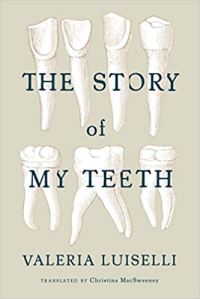
Anyway, I just picked up the novel “The Story of My Teeth” by Mexican author Valeria Luiselli, whose current book “Lost Children Archive” is a literary smash, a timely drama about family and the immigration crisis on our southwestern border. I’ve read a chunk of it. It’s very good. Pick it up. 

“The Story of My Teeth” is also a hailed exemplar of storytelling, making a zillion top 10 lists in 2015 and shortlisted for juicy awards. Yes, it’s about teeth. About the teeth of folks like Plato, Virginia Woolf, Petrarch and Borges that are collected by eccentric auctioneer Gustavo (Highway) Sánchez Sánchez, the story’s kooky narrator.
41Ohej2i9JL._SX331_BO1,204,203,200_

And it’s a lot about his teeth and his desperate goal to get his calamitously crooked choppers fixed. In this funny, fanciful book observations about people’s teeth abound. 

There is for example: the man with “the slightly sinister smile of those who have paid many visits to the dentist”; Octavia Augustus’ “small, few and decayed” teeth; and the remark “Americans may have no identity, but they do have wonderful teeth.”

Teeth, teeth, teeth. And this is in just the first two dozen pages. By page 26 our homely hero Highway has hit dental pay dirt. 

Like how? Like this:

At auction he buys Marilyn Monroe’s teeth. “Yes indeed, the teeth of the Hollywood diva. They were perhaps slightly yellowed, I believe because divas tend to smoke,” he explains. 

Back home in Mexico, “Each of the teeth belonging to the Venus of the big screen was transplanted into my mouth by a world-class dental surgeon.”

How over the moon he is! Highway tips his hat to himself in mirrors and shop windows, awash in good fortune, elated, Monroe’s dental work now his. At long last, his rows of teeth, once tornado-whipped picket fences, are even and upright, straight and sturdy.

“My luck was without equal, my life was a poem, and I was certain that one day, someone was going to write the beautiful tale of my dental autobiography.”

And this is where I’m at in Luiselli’s toothsome feat of imagination. It’s the end of Book I — there are seven books, littered with photos and floating quotes and graphics, plus an afterward by the translator — in a slim 195 pages. I don’t know if Highway keeps Monroe’s teeth throughout the story, but I’ve read enough to enjoy a cameo by John Lennon’s molar, which fetches $32,000 at auction, rather on the low side, I thought.

But where we last left off, Highway was musing about “the beautiful tale of my dental autobiography.” Which is where I began this post — my dental autobiography, the story of my teeth. (Recall: mutt mouth.) The book aside, let’s pursue that thread. Hang tight.

Dental histories aren’t pretty. They are violent, invasive, queasy, medieval. Anxiety and discomfort are operative words, shrieking like exposed nerves. Drills, needles, pliers. Teeth are the worst.

When I was 14, the dentist noticed my gums were receding. He wanted to prop some of them up. His solution: slice chunks of skin from the roof of my mouth and use the flesh to support the falling gums. This happened. I was knocked out, but I briefly came to mid-operation and saw the surgeon’s smock and gloves smeared in blood.

I was luckier when my wisdom teeth were pulled. The dentist put me out so deeply that I woke up in a wheelchair. My mouth was swollen and filled with blood, but I was giddy.

I had braces. I have too many fillings to count and three crowns (a grisly business requiring a jackhammer). I’ve rode merry clouds of nitrous oxide and been jabbed by needles the length and girth of bratwursts.

That is the partial story of my teeth. I have crooked teeth, stained teeth, chipped teeth. I’m making my mouth sound like a massacre. It’s not. Maybe I do have dog teeth. Maybe I have teeth like Marilyn Monroe’s. Maybe I can sell them at auction. After all, some of my molars are encrusted in gold. But time is of the essence, before I get too long in the tooth.

Ha.

74963e22c75560c8ca86a4f1a6f74046

Dog-doo afternoon

Warning: This post discusses poop. Specifically dog poop.

The dog’s poop is marbled with blood. (I told you.) He relieved himself on the basement’s honey-hued carpet, which now bears permanent crimson splotches, some of them in the shape of small nations and rural flyover states. It’s a fecal atlas. 

Flippancy aside, recall: poo, blood, dog. This is eyebrow-raising on one hand, panic-time on the other. Bloody dookie is nothing to snicker, or snarl, at. It’s a call-the-vet-pronto affair, especially when said doggie, Cubby, is also behaving strangely and doing this regurgitation thing in which he chews and swallows whatever he’s just hacked up. It’s coming from both ends. It’s abnormal. We fear for the furball.

IMG_0832.jpg
Cubby in healthier days.

Should I worry if my dog’s stool has blood or mucus? That’s an actual question posted at Pet Health Network, a, well, pet health network that will either assuage your nerves or trigger the trots. 

If you, like me, are a hypochondriac, then you shouldn’t even be visiting sites like this or the human version, WebMD, where I often go to learn that my tennis elbow is likely an inoperable tumor and my heartburn is assuredly a minor stroke.

(Doctors hate sites like WebMD for spawning a nation of needlessly freaked out patients. I used to carry a sheaf of so-called diagnoses that I printed from the internet when I visited my doctor. He wanted to strangle me.)

The answer to the “my dog’s stool” query has several answers, making for something of a rollercoaster ride. Causes might be: an upset stomach from eating bad food (whew); inflammation of the colon (also, probably, whew); internal parasites (some antibiotics and we’re good, right?); cancer (Jesus!); allergies (we can deal); autoimmune disorders (egads). 

Cubby the über-hound is at the vet as I type. (No matter the diagnosis, I won’t let him read this.) The sun is dipping, kicking up skies of charcoal and embers. It’s 35-degrees out, just right, and somebody has to clean up the basement carpet. If Cubby’s OK, he can do it. 

And now a text arrives from Cubby’s mom at the vet: The doc can’t tell what the problem is but the bill, counting all manner of exams, including a stomach X-ray, is a soul-shriveling $901. Almost a thousand dollars in less than an hour. I’m gobsmacked until I remember how I once spent roughly $500 on an ailing pet rat. Animals will do that — break your heart while breaking the bank.

So it appears to be wait and see for schlubby Cubby, despite the red-streaked poop, which is actually the least of the vet’s concerns. The dog has a fever of 103, says the vet, who gave Cubs an antibiotic, anti-nausea meds and fluids for dehydration. The tummy X-ray was sent to a specialist, even though the vet saw nothing unusual in it like, say, a toothbrush or an iPhone.

This non-vet will tell you the animal has been unusually lethargic, and has picked up some odd habits over the days (he’s suddenly fond of karaoke and mojitos) and has dramatically altered his cravings (he wants nachos and Popeye’s). He isn’t chewing his beloved bully stick, which is, literally, a dried bull penis. He canceled his subscription to People and has gone to watching the dreadful third season of “True Detective.”

He’s one sick pup.

Snow job

image.png

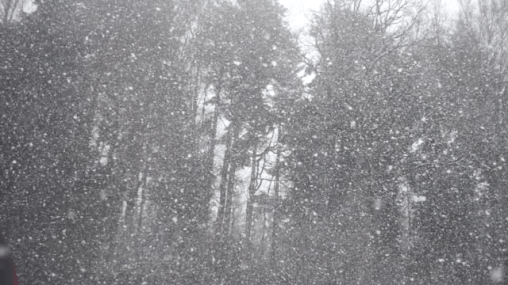
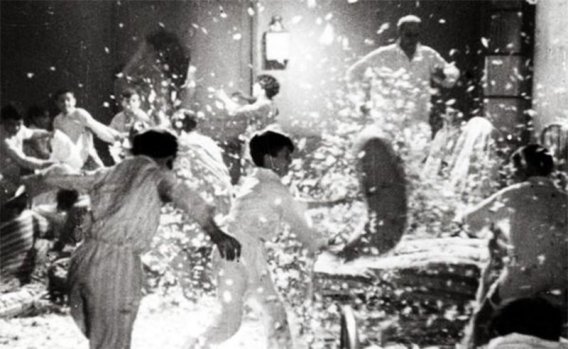
It looked like a pillow fight in a movie: downy feathers of snow twisting and drifting through the air, with little space between the fluttering flakes. A midday flurry making landfall in heaps and mounds. 

Yet it wasn’t too voluminous, this late-winter coating, and instead of pillowy tufts, the following day offers equal parts splash and crunch. Anything beautiful about the snow has thawed into a slurry swamp. Walking the dog, we slalomed around slush and brown puddles resembling polluted ponds. My sneakers got wet. 

Slush, rivers of slush.

I love winter. I like the cold. But I can do without snow, which wasn’t true during my salad days of skiing down vertiginous slopes, laughing all the way. Nowadays I’m too reserved to even toboggan, and I am not squatting in one of those saucer sleds for the certainty that I will break my collar bone in a spectacular face plant. 

Snow now means shoveling, one of the lowest forms of drudgery, right there with prisoners smashing quarry rocks in old-timey pictures like “I Am a Fugitive from a Chain Gang.” No matter how frigid it is, I sweat piggishly when shoveling snow. I hate sweating. I hate heat. Did I mention I like winter?

But the season will soon cruelly vanish and shorts, a sartorial scandal, will be all the rage. It’s probable more snow will fall before that; March often gets dumped on without mercy. If there was a hill around here, I’d rent some skis. (And probably snap a femur.) 

So this is a premature farewell to the fair season, when we abide icy irritants for the relievedly short days, chilly breezes, hot toddies, fashionable outerwear (is anything hipper than a natty scarf?) and indiscriminate cuddling. (About outerwear: I never don gloves or hats in winter. My mammalian blood takes care of the extremities, ears too.)

When another snow day comes this season, I will gripe and groan. But I will also be grateful that it’s still winter. That I can wear a parka with impunity. That I don’t have to attend barbecues and eat outdoors. That bugs and sunshine won’t assail me. And that I can, joyfully, unabashedly, freeze my ass off.

zero-for-conduct_f

I’m not eavesdropping, really …

Recently here I chatted up the new local cafe, the exquisitely hip, I’ve-been-to-India, dump-Trump joint with the jaunty name. I decided to pop into the other local cafe, that name-brand one that just reopened after long renovation. I’m there now — I write in cafes often, a living cliché — and I’m people-watching with a touch of eavesdropping. It’s not at all creepy.

I see a poised, pert, put-together brunette chirping quietly with her friend — hale, happy twentysomethings talking about job interviews and uproarious Facebook posts. She looks like she loves dinner parties and charades. She fancies a good daiquiri. Her favorite TV show is “This Is Us.” I’m just surmising, but I know I’m right.

18187449
A hypothetical cafe scene. They look ecstatic.

Elsewhere overheard: “You know, Mary, I’m not comfortable making those calls.” 

Enter: a 60-ish gent in a baggy Bill Cosby sweater, with stubble that looks like powdered sugar sprinkled on his pink pate. “I begin my teaching tomorrow. Seventy students!” he tells his companion, a flute-thin young woman with lank auburn hair who, I’m certain, is a teacher’s assistant. 

The fellow is loud and a roaring bore. He gesticulates like a madman. She sips some coffee and it goes down the wrong pipe. The ensuing coughing fit is something to behold. Napkins fly. We sympathize.

“We’re getting off track here,” an elderly woman laughs. She’s talking to a slightly younger woman at a corner table about scheduling some sort of meeting at her home. “Should we do RSVPs?” the younger woman asks. 

I soon gather they’re organizing a book club. They are perusing a list of titles. The younger woman describes a book that’s “very well-written” that sounds like a kind of real estate thriller. The authors Andre Dubus III and Michael Frayn (“He’s British”) are mentioned. “The person who selects the book is the host of the meeting,” says the younger woman.

06booknunez2-print-articlelarge-v2

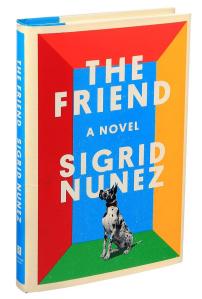
I want to chime in and suggest the novel I just finished, “The Friend,” Sigrid Nunez’s brisk, deceptively simple yet profound meditation on the writer’s life and friendships between people and dogs and people and people. It won the 2018 National Book Award. It’s lovely.

I pick the book. I’ll be the host. I’ll serve baked Alaska.

Someone just said “hypothesize” in mixed company. 

I ask the barista what she’s reading these days — we often yack about books — and she flashes her copy of the novel “The Secret History,” Donna Tartt’s 1991 cult smash. I kind of wrinkle my nose while evincing interest, and tell her I tried and failed to read Tartt’s 2014 Pulitzer-winning epic “The Goldfinch.” I read about half and put it down. The novel is divisive: You love it or loathe it.

She adores it. “What didn’t you like about it?” she asks. I thought it was cutesy, candied, implausible, whimsical and too redolent of Dickens. 

“It is Dickensian,” the barista says, and with that simple word my day is made.

Elephant adoption — it’s a real thing. Two ladies are talking about it. One explains that it costs $50 a year to adopt an African pachyderm and “each month they email you a picture and an update about your elephant.” She has an elephant. “I went to visit the orphanage in Nairobi,” she says. I suddenly want an elephant. 

“It’s my parents’ 43rd anniversary,” a 30-ish guy tells his friend. “That’s a long time to be sniffin’ someone else’s toots.” 

I missed most of the soliloquy, but a youngish man was rhapsodizing about coffee and espresso and the joys of sitting on his porch, and out of his mouth popped this phrase: “the waking beauty of life.”

Spectacular.

My compost-mortem

Sometime ago I wrote here about being cremated when I croak, and not being buried as a rotting or fluid-infused corpse in some kitschy coffin. I directed my family to roast me into fine powder and put me into salt and pepper shakers.

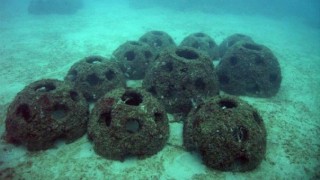
3-years-320x180.jpgThen I stumbled on another ashy option: the underwater reef ball, an eco-friendly, reef-building sphere of cement in which your ashes are placed and then sunk to the bottom of the sea. Sleep with the fishes — you bet. 
Why am I discussing this?

Because I’m cracked. As I described before: 

 “I think about this stuff with unseemly frequency. For as long as I remember, the specter of death has had its talons lanced into my gelatinous psyche. I read about it, watch movies about it, dream about it, haunt cemeteries all over the world to get close to it …

“I mull mortality, yours and mine, every single day. I’m a realist, but it’s a quivering reality. As mortician Caitlin Doughty writes, since childhood ‘sheer terror and morbid curiosity have been fighting for supremacy in my mind.’ Mine too is a bifurcated fascination, marbled and complex.”

So, yes. I have a dark streak. Onward!

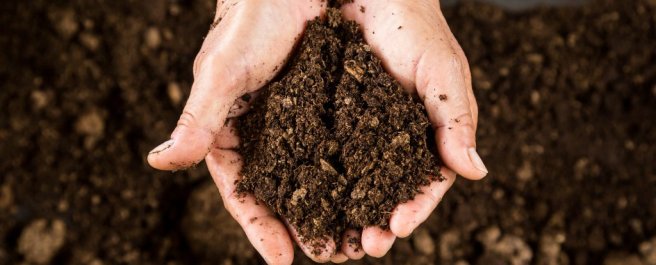
Evidently there may soon be another legal option for the disposal of my exquisite corpse: human composting. A first in the nation, Washington State is considering allowing “human remains to be disposed of and reduced to soil through composting,” or what’s called recomposition, writes The New York Times. 

Decomposing bodies would crumble and decay into soil and be dispersed to help flowers and trees thrive. “It seems really gentle,” says a 71-year-old woman who yearns to be turned into fertilizer. “Comforting and natural.” Natural indeed: A body in the ground without embalming goop in it eventually becomes soil anyway.

This sounds fantastic. “There’s no coffin, no chemicals, none of the fossil fuels needed for cremation, and no expensive cemetery plot required,” says the Times. And composting is practically a bargain. It costs about $5,000 — much less than a traditional coffin burial, if a little more than cremation.

HumanComposting_web_1024.jpg

How is it done, this conversion of a six-foot-long human body into palmfuls of coffee grounds? It doesn’t seem as simple as leaving a corpse out on the lawn to slowly putrefy in the elements like some horror show out of Lucio Fulci. (Please do click that last link.)  

No, it’s more scientific than worms and rot. There’s poetry to it. In a recent study, “six bodies were placed in a closed container, wrapped in organic materials like alfalfa, then bathed in a stream of air warmed by microbes, and periodically turned,” the Times says. “After about 30 days, the bodies essentially became soil.”

I want to become a stinking heap of soil. I want to nourish flowers and flora, be tossed in filthy fistfuls across the landscape. There go my corroded kidneys and bug-infested brain, in powder form. I’d need no coffin, no urn, no tombstone. Birds can nibble on me. Dogs can dig at me. Daisies and daffodils can bloom. Oaks, elms and pines can kiss the clouds. My new mate: mulch.

But as anyone can tell you, this is all rather counterintuitive, since I’m not an outdoorsy person by any definition. For one, I hate gardening. Pollen is my kryptonite. The sun and I are in divorce proceedings. Hiking is a personal Hades.

Yet I won’t be hiking when I’m in a wheelbarrow. I’ll be chilling. I’ll be a magic powder, literally fulfilling the biblical injunction of committing “this body to the ground; earth to earth, ashes to ashes, dust to dust.”

But that’s mystical phooey. This is about getting your hands dirty, with earth-saving, Whole Foodsy gusto. It’s death as a kind of birth, like donating your organs to save another body. It’s one final good deed before it all goes poof.

She’s depraved, debauched, despicable — and so lovable

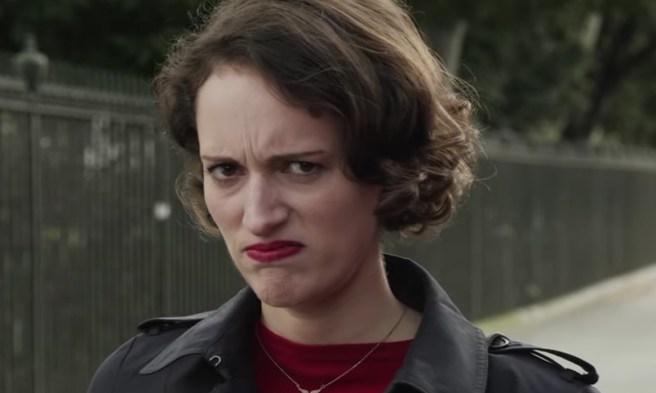
One of the piquant pleasures of the British TV comedy series “Fleabag” is how its protagonist, played by Phoebe Waller-Bridge, insistently pokes through the fourth wall with the impish gall and smug impetuosity of a naughty little girl. She winks, crinkles her nose, smirks, grimaces, makes snide comments, all of it right at the camera, meaning right at us.  

She wants us to be a part of her latest escapade, her latest squirmy moment, lest this young woman has to go it alone in her flailing, full-frontally narcissistic existence. As she says in the first episode, she has “a horrible feeling” she’s “a greedy, perverted, selfish, apathetic, cynical, depraved, morally bankrupt woman who can’t even call herself a feminist.”

Well. Now. Really. She’s not that bad. How could we love her so much, empathize with her so fully, if she was such a steaming heap of debasement? Even her self-anointed sobriquet, Fleabag, is more fitting for a scuzzy homeless tramp than the bitingly charming London cafe owner she is.

hero-landscape-screen-shot-2016-08-10-at-1.30.10-pm.jpeg
Fleabag (Phoebe Waller-Bridge), breaking the fourth wall with an uneasy reaction to the audience

Season one of Fleabag,” which premiered in 2016, is streaming on Amazon, with season two on the way. From online posts, viewers either adore or abhor Waller-Bridge’s character, which she created from her play of the same name. (Waller-Bridge stars in and writes all of the TV episodes.) “Hate the protagonist … She has no redeeming qualities and is totally unlikeable,” someone groused, and that’s enough of that.

So she’s divisive. Aren’t some of the most interesting women multifaceted? Don’t they chafe while they charm, pepper smarm with snark, own a bit of Mother Teresa mixed with, say, Sarah Silverman? “Fleabag may seem oversexed, emotionally unfiltered and self-obsessed, but that’s just the tip of the iceberg,” say notes from the “Fleabag” play.

With her floppy pageboy fit for a ’30s Hollywood starlet, natty outfits and Skittles-red lipstick, our anti-heroine exudes a glamor incongruous to her unsavory descriptives. Though she’s too surly to be screwball, she often recalls the great comedians of yore with kaleidoscopic facial expressions that match her shifting moods. Waller-Bridge plays light and dark with equal dexterity. She is a scintillating performer.

Fleabag has been called “an angry, confused young woman attempting to navigate life in London,” which is about right. Yet you can’t ignore her Olympian sex life, a tragicomic pastime that ends as these things do, with a droplet of satisfaction and a river of rue. 

With a rich, unsmiling sister, a fun, like-minded bestie and a mostly off-again boyfriend, Fleabag, who’s on the cusp of 30, is still working things out. She’s painted as a classic self-absorbed millennial, playing the field and playing out with scant regard for the collateral damage. Ever-so slowly we watch her crumble, perhaps implode. The show slyly builds to a dramatic pitch that’s truly poignant and confirms that there is little superficial about it.

“Fleabag” is TV’s best comedy, better than my other tops: the cinematic if shrilly hyperactive “The Marvelous Mrs. Maisel,” the near-perfect “Catastrophe,” the wry, wondrous “SMILF” and madly inventive “Atlanta.” (“High Maintenance” — you’ve slipped.) 

Super news: Waller-Bridge is bringing the stage version of “Fleabag” to the SoHo Playhouse in New York City for five weeks, Feb. 28 through April 7. Waller-Bridge wrote and stars, and I have a ticket.

As a one-woman show, she’ll be addressing the audience face-to-face, the fourth wall totally disassembled, the rubble kicked to the side. It should be tartly hilarious, cheeky and racy, and fantastically uncomfortable — just like the staggering series. 

7b045bb13ae2a10aa08920dc1cc35f25_750x600.jpg

A booze for we the bamboozled

A popular bumper sticker circulating when George W. Bush was president read “Bush is a Punk-Ass Chump” — a masterpiece of anti-dipshit propaganda that I proudly displayed. 

punkass

(I was in Texas Bush-country at the time, so I didn’t dare slap it on my car, lest an overzealous cop pulled me over for some imaginary misdeed. The sticker found pride of place on my fridge.)   

I’m reminded of the rascally decal by a new bottle of booze that just hit online shelves and is already sold out, dammit. It’s made by Empirical Spirits and it is called — squeamish eyes avert now — Fuck Trump and His Stupid Fucking Wall. This surely zesty libation is a “habanero spirit based on barley koji, pilsner malt and Belgian saison yeast.” I don’t know what in the hell that is, but I want it.

But, like I said, the 50cl bottles, at $68.51, are plumb sold out. You can sign up for email alerts when it’s back in stock here. 

f-trump-1-thumb-960xauto-94253.jpg

As I haven’t tried the drink, here’s more about it from Uncrate, an elegant site for the highly selective male shopper (gander at its galaxy of dizzyingly unaffordable goods here):

“It could end tomorrow, or we could be in for six more years. Either way, spirits like this bluntly-named one from Empirical might help make it all slightly more tolerable. Distilled in Copenhagen, this clear spirit is based on barley koji, pilsner malt, and Belgian saison yeast. A habanero vinegar is used to rectify the spirit, but the final product is free of a spicy kick in the face — unlike the current political reality we face each and every day.”

Cheers to that. Gulp your beverage of choice accordingly. Drink responsibly. Or in this case, go nuts. We are rather thirsty for change.

Though the FTHSFW spirit is gone for now, you still can get a T-shirt embossed with the bottle’s clinically-plain label here. You owe it to your country. Clink.

Artboard_1_copy_4_2x_df816034-0304-46e4-a4c5-fcfac6735f58_345x345@2x.png

God or godless. Either way, you’re wrong

Though I’ve only made a wee dent in the book I got today — “Seven Types of Atheism” by philosopher John Gray — I am already bitten and beguiled. On page 33 of the 170-page manifesto, I find myself putting it down often to copy a tart line or provocative passage.

Gray, without airs but with erudition, places in his crosshairs the arm wrestle between religion and atheism, that eternal, irreconcilable chasm of belief, God and godlessness. He is acridly and relentlessly critical of both.

Dense but light on its feet, slim but chubby with fact, philosophy and opinion, the book reveals a bracing entertainer who hardly balks at taking intellectual swipes at celebrity atheists slash rational humanists like Sam Harris, Richard Dawkins and other crusaders. 

Gray, says The Guardian, “is a card-carrying misanthrope for whom human life has no unique importance, and for whom history has been little more than the sound of hacking and gouging.”

That’s my kind of guy, though Gray takes things a little further than I do when it comes to faith, history and humanism. Still, his book, from 2018, is studded with eyebrow-cocking history lessons, slashing judgments and pleasing iconoclasm. A few nuggets from my early reading:

41LcPf9aHaL._SX324_BO1,204,203,200_.jpg

“There is no such thing as ‘the atheist worldview.’ Atheism simply excludes the idea that the world is the work of a creator-god, which is not found in most religions. … Nowhere does Buddhism speak of a Supreme Being, and it is in fact an atheist religion.”

“Many versions of Jesus and his life can be supported on the basis of existing evidence. Among the least plausible are those that have been presented as fact by Christian churches.”

“Christian thinkers have interpreted the rise of their religion as a sign of Jesus’ divine nature. Among the many prophets teaching at the time, why should he alone have inspired a religion that spread to the last corner of the earth? Unless you think that human events unfold under some sort of divine guidance, the metamorphosis of Jesus’ teaching into a universal faith can only have been the result of a succession of accidents. … The Christian religion is a creation of chance.”

“A free-thinking atheism would begin by questioning its prevailing faith in humanity. But there is little prospect of contemporary atheists giving up their reverence for this phantom. Without the faith that they stand at the head of an advancing species, they could hardly go on. Only by immersing themselves in such nonsense can they make sense of their lives. Without it, they face panic and despair.”

McConaughey, the mensch

Meeting celebrities is easy. Interviewing them is a breeze. They are generally polished to a professional sheen. They know how to play the game, which is patently transactional. Some are harder than others (I’m squinting at you, Paul Thomas Anderson). Matthew McConaughey? He’s a cinch.

A good ol’ boy from East Texas, with a boingy twang, squinchy blue eyes, and bounding with bonhomie, McConaughey is much like what he seems: a smart, friendly dude you might want to shoot a shot with. He’s a charismatic lava lamp, alive and aglow.

To a journalist like me in 1998 — young, a smidge green — he was the most caring, amicable guy around. I was having a face-to-face interview with the actor in a Beverly Hills hotel room during a junket for “The Newton Boys,” Richard Linkater’s ill-fated western-comedy. A Texas guy, McConaughey was fascinated that I’d recently relocated from California to Austin for a newspaper job as a film critic. 

MM-e1521147029111.jpg

He seemed genuinely interested, and we talked all things Austin and Texas, acting and movies. And from the room balcony he pointed out the groovy ‘70s-style van in the parking lot that he was driving cross-country for the hell of it. He was 27. We bonded enough that he’d remember me for years afterward. 

Like when he was walking the red carpet at the premiere of his 1999 comedy “Edtv” and he spotted me, grabbed my hand, pulled me aside and asked me how I was enjoying my new Texas hometown. He was sincere and serious, with laser eye-contact, shutting out the bustle around him. Then he smiled wide, cheeks caving into dimples, before moving on down the line. 

He didn’t have to do that. He could have said hi, answered my softball questions and walked on. But he was cool, concerned, a gentleman. He had class. 

Months later, when I ran into him at a Wendy’s on the University of Texas campus before a rare screening of Vincente Minnelli’s 1958 “Some Came Running,” McConaughey seemed a little out of his element, a tad awkward, though he still made a point of making me feel welcome and an equal. He spoke in a hushed drawl. He barely smiled. He kept things low-key. I introduced him to my girlfriend. He bought a large Coke. He sat in the middle row, we sat in the back.

The relationship between journalist and subject/source is a dicey one. They are rarely seamless. There’s a give and take, a perilous reciprocity that often leaves one party feeling burned. And so there’s this:

McConaughey was working the red carpet for the local premiere of Kevin Costner’s 1999 baseball melodrama “For the Love of the Game” at UT. He was beaming, strutting out of a black limo, in all white and all alone.  

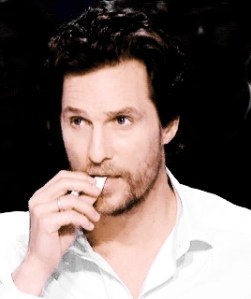
He isn’t in the movie, he was just a celeb guest at the gala. And he was chomping a hunk of gum like cud. He approached me affably, answered two questions, then sauntered into the auditorium, chased by hearty cheers. 

I report details. I like what’s called “color” in my stories. So in my piece about the screening I prefaced McConaughey’s quotes with: “He was conspicuously chewing a huge wad of gum.” Readers want to know each iota of their beloved celebrities’ behavior. This, I thought, was a telling detail — innocuous but revealing. Or so I thought.

TightInfantileBalloonfish-poster
Matthew, gum, chew.

In 2003, four years after this gum-chewing reportage, the Austin Film Society threw a 10-year anniversary bash for the release of Richard Linklater’s coming-of-age masterwork “Dazed and Confused,” which was made in Austin and co-starred a cocky, hilarious young newcomer named Matthew McConaughey. 

A red carpet press-line was formed. Here comes McConaughey, who I haven’t seen in four years. He is arm-in-arm with two young women, and chewing gum. I hurl him a question. He stops on a dime before me, and says, pointing to his mouth, “Tell them that I was ‘conspicuously chewing a huge wad of gum,’ you got that?” Dimples flashed, this time with a shit-eating grin, and he brusquely walked away with an up-yours swagger. 

Perhaps, just maybe, I had pissed him off.

Forward five years, to 2008. I hadn’t seen People Magazine’s Sexiest Man Alive (2005) since the “Dazed and Confused” screening and I was a little nervous as I was scheduled to interview him for the micro-indie comedy “Surfer, Dude” in Austin.  

He was there, in shorts and sandals, hair mussed and shaggy, mood ebullient. He greeted me with glowing teeth and cavernous dimples. He was almost ecstatic. He loved this movie. He was back. 

rgz chris sufer dude08.jpg
McConaughey during our “Surfer, Dude” interview

At the end of a very friendly chat, I screwed up the nerve to ask him about that day when he repeated back to me, “Tell them that I was ‘conspicuously chewing a huge wad of gum,’ you got that?”

He laughed heartily. “I didn’t like the use of the adverb ‘conspicuously,’” he told me, practically slapping my knee. “If you hadn’t used that word I wouldn’t have cared!” He was over it. We cracked up.

The intricate dance of writer and subject is a fragile one. Like that, it can topple in misunderstanding. It can snap on the perceived power of one simple word. But people, even movie stars with eggshell egos, are resilient, forgiving and, sometimes, like McConaughey, true mensches.

The shame of ‘showrooming’ bookshops

I am one of them. I am scum. A scoundrel. Rude, obnoxious, miserly, cheap. 

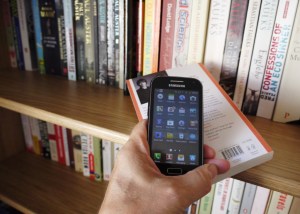
I confess: I have gone into an independent bookstore with my phone or laptop, browsed, then purchased the books I wanted on my Apple device — inside the bookstore. 

I did not carry the books to the cashier and buy them. No. With withering impudence, I hit the Amazon app, clicked twice and bought the books online, saving on average $8 per title. It was disgusting. It was exhilarating.

P1030224-1024x731

And it was wrong. No matter it was a decade ago, that cute little caper still reeks to high heaven. What I hate is that it’s probably worse than, if not equal to, what small bookshops are now dealing with: the tacky phenomenon of “showrooming,” explained here by The Guardian:

“Of all the insults that booksellers stomach, the most awful is the newest. Gone are the days when it was someone shoving a book down their pants … Now it is ‘showrooming’: when customers go to physical shops only to research purchases they will make online. This is a bugbear of the booksellers who have been engaged in a David and Goliath battle with online retailers for the past decade.”

Adds Keith Edmunds, a former bookstore owner, at Mental Floss: “They’ll come in and use their phone to take a picture of the cover and barcode and just use the bookstore as the Amazon showroom. It’s awful.”

It is awful. It’s gauche and sneaky. It gives one’s moral relativism a mighty workout.

As mentioned, I showroomed. Some 10 years ago at my local indie bookshop, I scanned the shelves for Vietnam travel guides, plucked three or four volumes, went to the bookshop cafe, cracked my laptop and bought the best titles — online, at huge discounts.

Back then, I thought this was hand-rubbingly clever, cutthroat capitalism in action: Screw you, full-priced bookstore. I found a real deal!

Even now I don’t like paying $18 for a new paperback that I’m not sure I’ll like and that I can usually get in used condition for $4 at Amazon (one penny, plus $3.99 shipping). And I admit, guiltlessly, that I shop Amazon a lot, though I’m more inclined to use the library these days, saving cash and trees.

On occasion I will haunt our local indie bookstores, used and new, but my fealty to them isn’t ironclad. I feel more spiritually crushed paying $27 for a book at the store than paying $16 for the same product online. It’s a virtue vs. Visa smackdown.

I want to support the local shops, yes, but it comes at a literal high price. I have philosophical quibbles with Amazon, even if many authors do not (word is they profit more from high-volume discount sites than full-price brick-and-mortar outfits).

What’s not cool is showrooming. If you’re going to drop cash at Amazon or Barnes & Noble, do it at home. Looking at books in a store helps you shop with accuracy, and asking staff questions about titles is invaluable. And why you’re there, you might actually buy a book from the indie shop, a move that could abet its fragile longevity.

A great tweet from the owner of Fountain Books in Richmond, VA, recently went viral:

“We had a lot of ‘showrooming’ today: people taking pictures of books and buying them from in the store and even bragging about it. This is not ok, people.

Find it here.
Buy it here.
Keep us here.”

4f.jpg
Your neighborhood bookshop. A showrooming-free zone.