Even for the most solo traveler, the human touch matters

Early on my vacation to Beirut, Lebanon, in 2008, I scribbled this in my faithful moleskin journal: “Depressed tonight, like the trip’s a mistake.”

Those are ugly, gooey words for an insatiable, solo world traveler like me, someone who practically levitates just smelling the inky pages of a new travel guide. Recently I hauled out a dusty box of journals from many journeys, randomly cracking open the Beirut book for the first time in 12 years. I was surprised at what I found, how dark it all read. 

It wasn’t exactly a revelation, but it’s a bit different from memories I shared in a long-ago blog post that described the city as “beautiful but battered, regal but raw … a lovely, melancholy place, at once desolate and disarming, friendly and not a little forlorn.”

What stands out in the journal is how damn down I am, on the city and on travel in general, and that’s the real shocker. Yet I think it all signifies those inevitable pockets of mild dejection, loneliness, confusion and fatigue experienced during any trip, even my best ones.

“I am so precariously manic as I travel,” I wrote in Beirut after a day of jumbled emotions. “Life’s complexion switches kaleidoscopically as I journey — up, down, sideways, loops and spirals.”

Yet this was different, so much intensely bleaker than the emotional yo-yos of my usual one-man voyages, be it China, Portugal, Morocco, Japan, France, etc. 

Much of it was certainly that the war-torn capital — once regarded the Paris of the Middle East for its beachside beauty and lush cosmopolitanism — felt like a tumbledown tomb, hushed and sealed off, choked in a martial pall. This despite hip bars and cafes, delicious restaurants, the prestigious American University and all the shiny men’s hair products.

I knew what I was getting into. I did my homework and sought out a place rocked by enthralling if troubled history, yet still knew how to party. (And how: the narrow, bar-lined Gemmayzeh district absolutely spills with stylish, rambunctious — and not a few douchey — revelers every night.)

Still, once there, my initial assessment was harsh: “Most of the city is a rundown wreck. Even the ‘nice parts’ are dilapidated — the Hamra district is gimcrack, mostly crumbling and derelict and spray-painted and bullet-pocked. … Beirut is an ugly city.” (I think I just lost my gig writing the Lonely Planet guide to Beirut.) 

I was slipping, hard, right into the old emotional vortex, and I was confused.

“I don’t know what is happening,” I wrote. “I suppose it’s the listlessness of the place that has robbed my zest. Something big is missing. A sucking, sinking void, parts depression, loneliness (one feeds the other), dislocation, depleted expectations.” 

Then I really laid it on: “This happens, and it’s fatal because it corrodes my desire to ever travel again, a crazy but not unfamiliar notion. ‘I’m through’ — that’s what I feel.”

The isolation I was experiencing in a cold city, despite interesting chats with taxi drivers and random conversations with locals in bars, was wearing. I’m far from extroverted or people-needy. But something dawned on me. I journaled, “I just need someone to talk to. My blood has frozen.” I was crying out, pitifully and most uncharacteristically.

Enter Lina, brilliant, warm, charitable Lina! The young local and I were forced to share a tiny table at popular loo-sized bar Torino Express on Gemmayzeh one night, and we naturally started talking. I learned she’s Christian, a teetotaler and speaks Arabic, French and English. She likes the heavy metal band Savatage.

Lina
Lina’s useful Arabic cheat-sheet

Not only did she write in my journal helpful Arabic phrases, she later drove me up Lebanon’s northern coast to lovely Byblos, showed me around and introduced me to some friends. She even invited me to her small birthday gathering at a bar the next night (I still don’t know how old she is). It wasn’t a romantic thing, it was plain, extraordinary hospitality. She was a mensch, a blast of sunlight in a dark stretch.

After even more encounters with friendly travelers and locals over 19 days — I spent a week in Beirut and 12 days in heavenly Istanbul — animated with laughs and living, I finally admitted in the journal: “Meeting people is groovy.”

On one of my last nights during the trip, I met a trio of travelers in Istanbul, an hour or so during which I may have finally figured something out about travel, and life. 

“I made people laugh tonight, honest extemporaneous guffaws, eye-squinching laughter,” I wrote in the moleskin. “That’s worth something. Real human connection. Meeting of minds, tickling of souls. What else is there?”

Love, laughs, loss

Girlfriends are great. I adore them, madly, with smashing intensity. They like me too (yo, it takes two to tango), even if they have to slalom around my prickly edges, indigo moods, slashing humor and periodic bouts of suicidal solitude. But really, no joke, I’m a blast.

Just ask some past survivors — er, lovers. One said I was “brooding and negative” (aw, thanks, honey). Another called me a “tortured artist.” And, more to the point, I was told I’m an “s.o.b.” and, shucks, an “asshole.”

Ah, romance. All flowers and firebombs.

Those Hallmark sentiments, spouted in rare snaps of high dudgeon, are the exception not the rule. I’m a good, if challenging, partner, as my exes will attest. Almost all of them remain tight friends, and at least two are undying soulmates, exceptional individuals with whom I’ve never laughed harder, shared harder, and created quirky little worlds together.

I bring this up after watching two of my favorite fractured romances, movies that either rip me up or crack me up before sending me off blubbering like an Italian widow. 

In 1961’s “Splendor in the Grass,” Natalie Wood plays a sexually repressed teenager who falls for Warren Beattie’s high school jock and, in short, goes crazy. As they go their separate ways, Wood’s psychosis intensifies. Later, supposedly cured, she visits her ex, who is now married. The ending will kick your guts out.  

Freighted with neuroses, Woody Allen courts a young, insecure Diane Keaton in 1977’s “Annie Hall,” the quintessential Allen love story, whose tagline is the very apt “a nervous romance.” With Allen’s overbearing hangups and egotism and Keaton’s skittish fragility, the couple’s frequently hilarious affair doesn’t stand a chance. Friendship will have to do. The last, lingering shot is almost unbearably wistful.

My relationships have bits of both films — possessiveness, craziness, big laughs, deep-dish neuroses, breakups and friendship. They have no boozy “Fool for Love” abuse, or bat-shit “Fatal Attraction” obsession. They are earthbound, boring to some; glorious fireworks spectaculars to those involved. 

I’m lucky to have dodged real drama, yet love isn’t always pretty. An otherwise sweet, sane woman shattered a glass on my bedroom floor in blind fury. (I told her I wouldn’t have dinner with her family on Christmas — smash!). Another one dumped her beer on me with extreme prejudice. But these are aberrant episodes in my relationship history, teensy scars I can look back on lightly. What’s a soaked, sudsy shirt between sweethearts?

I don’t want to date a deranged Natalie Wood from “Splendor in the Grass,” and I have dated a Diane Keaton from “Annie Hall,” who yielded almost too much fun to describe. But life isn’t the movies and love isn’t easy. Just ask my exes. They’ll tell you. Believe it all.

Books — visas to new vistas

I’m greedily tearing through “Interior Chinatown,” a tangy cultural satire by hot young writer Charles Yu. I’m savoring the book’s poppy humor, clever screenplay format and edifying critique of what it’s like to be Asian in America (bluntly: assimilation’s a bitch). The novel, which is also a scathing indictment of racial stereotyping in Hollywood, won this year’s National Book Award. It probably deserves it.

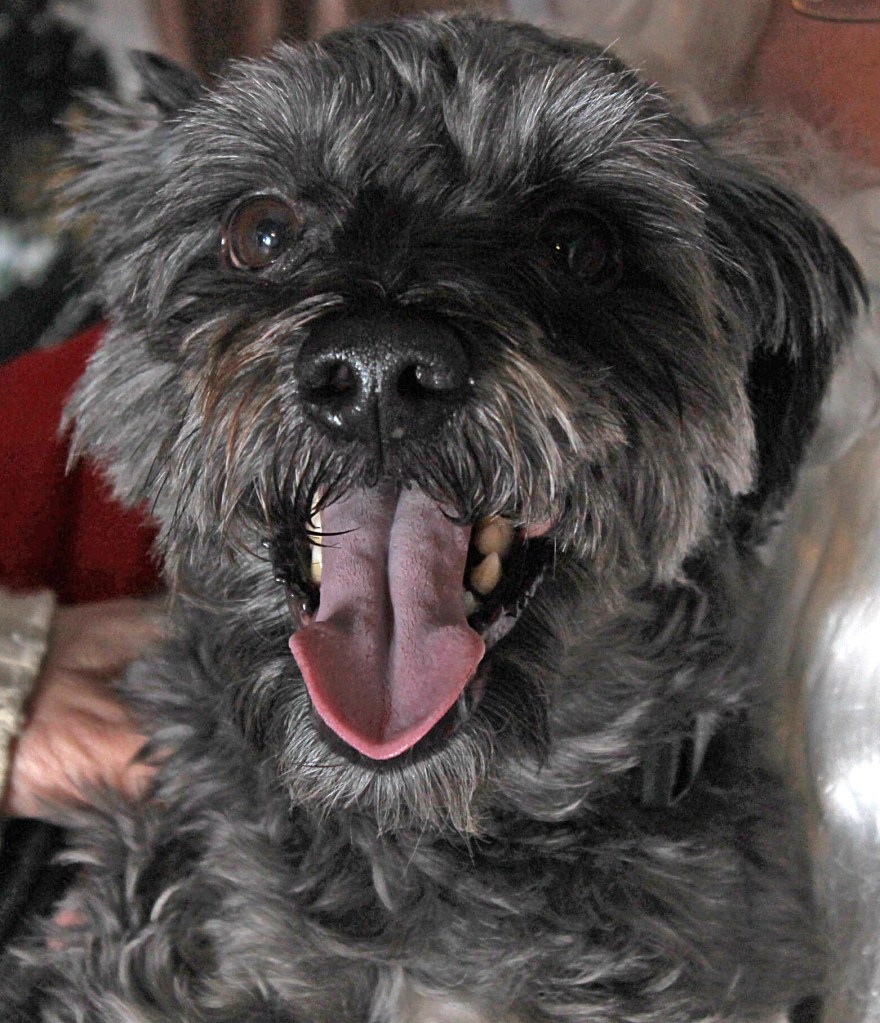
As I read, plunging into a world both comic and caustic, ordinary life churns on. I pop a mild tranquilizer (tranquility, wee), the snow melts into puddly archipelagos, the washing machine sloshes, the small gray dog curls up like a sow bug on the couch. These are not distractions, though I sometimes get sidelined by looking forward to my next book, no matter how good the current read is.

Like: 

  • “The Trouble with Being Born,” a collection of acrid aphorisms by E.M. Cioran, who calls birth “that laughable accident.” (Wait, did he write this for me personally?) 
  • I’ll revisit Virginia Woolf’s hypnotic “Mrs. Dalloway,” inspired by a recent essay extolling its literary radicalism. Not a simple read, Woolf challenges audience assumptions, and rewards them with rapture.
  • I’ll also take a second dip into “Sex and Rage,” Eve Babitz’s raffish auto-fiction, whose subtitle, “Advice to Young Ladies Eager for a Good Time,” is a brazen come-on. The book’s so saucy, such unfiltered fun, and the writing so ablaze, resisting it would be dumb self-denial.  
  • Then there’s “Geek Love” by Katherine Dunn, a rollicking freak show saga told by an albino hunchback dwarf. Echoing with the bearded lady’s cackle, this exotic family comedy has been called “a Fellini movie in ink.” Nirvana. 

It’s trite to note how reading has risen during the pandemic. That’s almost a year now of increased literary calories. And, gulp, plump we get. If you’re braving the prolix Russians, you’re assuming even more brain girth. Conversely, if your diet is J.K. Rowling, you could be anorexic. (And the knuckle-draggers who boast they don’t read? Mind rot — enjoy!)

Certain books, hence, are in high demand. I’m having a hell of time getting my mitts on Maggie O’Farrell’s award-winning historical fiction “Hamnet,” a speculative study of Shakespeare’s complex marriage, his young son’s death from the plague, and how that loss might have led the playwright to make his immortal “Hamlet.” The slavered-over tome is out of stock at (boo, hiss) Amazon and on back order at the local indie shop. All 66 copies in the county library system are checked out.

It can wait. I have the above books on queue, with a few other titles earmarked. You can never run out of choices, even if it leads you to reread a book or three, which is how you know you’ve struck a great one, like my current pleasure “Interior Chinatown,” a contender for a later revisit.

Literature is like another book, the passport. It slings you aloft, carries you to far-flung places. In these cloistered days, reading is the safest, most satisfying way to get out of your space, the claustrophobic chambers of the solitary mind. While we can barely leave home, books are effectively the new travel, transporting — and transcendent.

Uber ride, über-terror

What do you do when your Uber driver is apparently psychotic?

I had one of those rare trips from hell yesterday in a ride-share Jeep Cherokee, a 30-minute voyage of carelessness, irresponsibility and stinkiness, many near-swerves off the road, hacking coughs, phone call-making, improper mask wearing, etc. It was a real white-knuckler. I would have stunt-rolled out the door, one of my specialities, but we were on the freeway and, besides, I was on a clock.

After shambling out of the vehicle, I reported my experience to Uber, feeling like the playground tattle-tale, but about an issue of life and death. I wrote: “erratic and distracted driving, possibly intoxicated, wore a ratty old face mask that he slipped off his nose repeatedly, and filled the car with scary, raucous coughing.”

I didn’t mention the unbearable stench of Marlboro smoke and the man’s sub-hobo appearance, or that he was fidgeting like a mangy dog (or a meth-head), with barely one hand on the wheel. The only time I piped up was to exclaim “Dude!” when he about crashed into a guardrail doing 70 for the umpteenth time. Did I mention he came this close to rear-ending a shiny burgundy Honda?

A little miffed and rattled, I rated the driver two stars, which is “bad,” only because the one star “terrible” rating looked so harsh. After all, he did deliver me to my destination, though neither of us exchanged a customary “thank you.” He can only dream I tipped him for that fright ride, that possibly infectious (Covid!) and deadly ride. Now that I think about it, I should have pressed “terrible.”

When you rate a driver that low, Uber asks for a report from the aggrieved, which I noted above. They were quick to refund the $27 ride and assure me, “We are investigating this situation further to evaluate whether or not the driver will continue to have access to the Uber app” 

Oh, crap. Did I just get this driver fired? The whole thing is unpleasant and could get ugly. I don’t feel too bad for the guy — he kinda sucks — but I don’t want that much negative power. I hope they straighten it out, that he was just having a bad day, that he wasn’t driving under the influence, and that he has a super Christmas. (Also that he takes a shower, quits smoking, goes to driver’s ed and does something about those crazy jitters.) 

I’m trying not to be flip here, but it’s all out of my hands, and for all I know he destroyed me on my rating (drivers, of course, being able to rate riders, too). 

But, really, what’s he going to get me for — leaving deep fingernail marks of naked terror on the armrests?

Someone else’s tough-love rating, for reasons more innocuous than mine.

Turning the page, in literature and life

These days, I seem to only get high on the fumes — the thick, inebriating perfume — of words. I just read a fine passage in my current book and it brushed the orgasmic. To write like that, to make literary music, is the best thing, the very best thing. It matches, maybe surpasses, love.

Too much? Too loopy? Probably. But great art does that — it makes you dizzy. During the pandemic captivity, I’m reading with fiendish greed, in oceanic gulps. I’m buying with crazy zeal. And you probably can’t get that book you want at the library because I already checked it out. Terribly sorry.

More than ever, I grab the written word for solace, inspiration and spiritual nutrition. Yet while I crack mounds of books, I don’t always finish them. I am a notorious book-slammer, shunting aside titles that don’t rivet me by page 50 or so. Mediocrity won’t cut it. I’ve had enough meh, oof and blah. Especially this year.

These are grim days — both of my parents died in the past year; the Covid terror seethes; the Trump shit-show blunders on; some personal turmoil has body-slammed me; pick your catastrophe — and lots of us look to art for escape, empathy and temporary amnesia. 

Art extends beyond the written word, of course, so I’m still listening to music, watching films and TV shows and streaming all manner of streamy abundance. 

Stuff that stands out: the wise, tartly funny Pamela Adlon comedy “Better Things,” in which Adlon plays a frazzled single mother of three offbeat daughters and simply tries to, well, cope; the bizzaro “Pen15,” a cringe comedy starring two 30-something women playing seventh graders with boggling juvenile verisimilitude; and “The Crown,” that tea-time telenovela about British royalty that entrances, despite me caring less about the real Royals than I do about carbuncles.

“Pen15” (yes, these ‘girls’ are really in their thirties)

I always have to nitpick at year’s end, too. Always. If the just-fine though room temperature chess drama “The Queen’s Gambit” missed the sublime, it ably outclassed other hot streamers, like the broad, shrill “Schitt’s Creek” and the animated “BoJack Horseman,” whose mordant mopiness was mistaken for hip profundity. (Speaking of adult animation, does anybody still watch “Archer,” the subversive, devilishly clever cartoon on FX? Join me.)  

Thanks to Covid-contorted release formats, I’m behind on new movies, especially presumptive Oscar contenders. I did try to watch David Fincher’s tediously diffuse “Mank” but couldn’t finish it, and, yes, I can tick-off all of its esoteric Hollywood references. I’m skipping Spike Lee’s Vietnam fantasia “Da 5 Bloods” for two reasons: It doesn’t look very good and Lee’s track record of great films is plain disheartening. (I will also be skipping “Wonder Woman 1984,” grumbled grandpa.)

This is what kind of year it’s been: Mere weeks ago I watched and can recall almost nothing about the admired indie “First Cow” by Kelly Reichardt, one of my favorite minimalist filmmakers, except that some guys make yummy biscuits. I’m renting the scruffy period piece again to see what I’m blanking on.

Movies I’m looking forward to include the adaptation of August Wilson’s “Ma Rainey’s Black Bottom”; Frances McDormand in “Nomadland” (by the director of 2017’s extraordinary “The Rider”); the viral documentary “My Octopus Teacher,” about a grown man befriending a gorgeously slithery mollusk; and Frederick Wiseman’s typically sprawling doc “City Hall.”

“My Octopus Teacher”

And yet for all that — let’s swoop back to the start of this entry — books are my sweet spot right now. In the past few tumultuous months I’ve savored “Those Who Leave and Those Who Stay,” the ravishing third novel in Elena Ferrante’s four-part Neapolitan series; Jess Walter’s jaunty period saga “The Cold Millions”; and “Leave the World Behind,” Rumaan Alam’s quiet thriller about race, class, marriage and other thorny things.

But what’s providing the most satisfying literary kicks are titles from the New York Review Books Classics series, an eclectic spread of fiction and nonfiction from the past, each book a minimally designed paperback that bespeaks worldly elegance. Called “discoveries” by the publisher, the books are “established classics and cult favorites, literature high, low, unsuspected and unheard of.”

I now own 13 terrific novels from the series, with another  — Leonard Gardner’s gritty boxing drama “Fat City” — on the way. Today I’m reading the noirish “Nightmare Alley” by William Lindsay Gresham (midgets, mediums, mendacity). Before that was the twisty, eerily timely crime thriller “The Expendable Man” by Dorothy B. Hughes, who wrote cult classic “In a Lonely Place,” part of the series I also devoured. 

My NYRB Classics collection

What’s getting me is the power of words, the emotional and psychic heft, the sheer salve of art, and the attendant awe. I’ve always loved books and any words on paper (and screen), but I seem to love them more in the rotten times, a stretch so shitty, I haven’t touched this blog in over three months. I hadn’t the urge nor the heart. Fall, my favorite season, gone wasted. 

Maybe I’m uncoiling from a prolonged flinch. I don’t know. But this, now, during some of the very bleakest days, is where I’m at. Turning the page in another chapter.

Quote of the day: on writing

“Understood: language would end up falsifying everything, as language always does. Writers know this only too well, they know it better than anyone else, and that is why the good ones sweat and bleed over their sentences, the best ones break themselves into pieces over their sentences, because if there is any truth to be found they believe it will be found there. Those writers who believe that the way they write is more important than whatever they may write about — these are the only writers I want to read anymore, the only ones who can lift me up.” 

from “What Are You Going Through,” the brilliant brand-new novel by Sigrid Nunez

A needling issue

At long last, I got my first flu shot. The transaction — their needle, my flesh and humility — happened in a grubby drug store pharmacy. The prick was quick and slick, and I didn’t even pass out. Nice work, Maggie. 

Peg me a shiftless procrastinator, a craven needle-phobe or simply irresponsible, but I was never motivated to get a flu shot. I figured as I never get the flu, why volunteer for a small agony. This, in hindsight, was naked folly. The new nature of viral contagions changed my mind lickety-split, and almost happily I rolled up my sleeve, squinched my eyes and turned my head as the pharmacist harpooned me.

Of course when I first saw the syringe, I made an exaggerated ack sound, like I was horrified of needles, which, well, I kind of am. To wit: When I was 12, I contracted mononucleosis, which is referred to as the kissing disease by hormonal middle-school gossips. Much blood was drawn from my arm, and more than once the nurse had to pull out smelling salts before my drooping body slunk to the floor. (Smelling salts are fantastic. They’ll snap you out of a coma.)

Finishing the mono bit, news of my illness spread across campus, initially as fodder for racy rumors but ultimately becoming a badge of honor. Not only was I out of school for six weeks — a scholastic triumph — I returned a sort of hero, a tween Don Juan who not only got, but conquered, the mythic kissing disease. Thank you.

Today the flu vaccination is coursing through my body, a shield against aches and fevers and coughs and sneezes. But that’s only partly true. Because Covid-19 still lurks with no vaccine in plausible sight, no matter the president’s flatulent lies. And Covid is not just the seasonal flu, as our genius in chief crows. Remember this doozy? “When it gets a little warmer, it miraculously goes away.” (I need a large crowbar.) Or this, about the U.S. death toll so far: “It is what it is.” What a fella.

And now he’s pressuring his administration to approve a coronavirus vaccine ahead of the November election, before they have proof that it is safe and effective, reports, well, everyone. “The faster, the better,” Trump spouts.

It’s the stick-it-in-your-arms race: Trump rushes to produce a politicized vaccine while Russia does the same in order to burnish its standing in the nationalistic spotlight. Who can do it first? (Me first!) Are Trump and Putin kindergartners? Yes. Yes, they are.  

I’ll take a Covid immunization — when it’s thoroughly tested and certified by doctors and experts who do not kowtow to venal politicians. A hurried, premature Covid vaccine got a volunteer very sick this week. Yeah, I can wait. 

It’s been two days since my comparably inane flu shot, and I think I have the slightest sore spot where the needle poked me. Boo-hoo. This is serious stuff. I’ll be glad to get another flu jab next year, and I look forward to a safe Covid shot. I’ll be there, rolling up my sleeve, squeezing shut my eyes and turning my head in the other direction. Smelling salts optional. The shot itself: mandatory.

Melting ice cream dreams

I feel bad for the old ice cream truck fella, an icon of hearty Americana who once, back in “Leave it to Beaver” times, was known as the Good Humor Man, and who now is definitely not in a good humor.

Yet here he is, making the rounds at 3:30 each afternoon without fail, rumbling through the neighborhood, tinny tunes jangling from a rusted rooftop megaphone, the Pied Piper of Popsicles. Are those tear stains on his cheeks?  

These are mournful times and, unsurprisingly, the traveling ice cream business is way down, what with parks closed, or only slowly reopening, and the pandemic pandemonium roiling unabated. I hear the music and look out to see two or three tykes clamoring at the truck window instead of the bevy that used to get all Wonka-Bar crazy for the latest frozen thingamajig. 

It’s almost painful watching the face-masked driver handing out melty treats to the wan crowd. What once took a frantic 15 minutes or more is now a few-moments pause, a hiccup with the motor running. (Melting? Maybe my heart.)

Better days for the ice cream man.

What I also notice is how the truck’s musical tootling has changed over the summer. Going from upbeat circusy music, this might be the only ice cream truck whose jingle is by Beethoven, namely “Für Elise,” a strangely moody tune to play from a Day-Glo magnet for giddy children.

I suspect our fraught racial climes have affected the ice cream man’s tune. He used to play the hokey folk song “Turkey in the Straw,” which goes like this. Some argue that the song, which confectionary vehicles nationwide blare as a Pavlovian call to calories, is actually a 100-year-old minstrel ditty that’s grossly racist. Revisionists refute that. 

Not Wu-Tang’s badass RZA, who’s updating “Turkey in the Straw” with a hip-hop twist. CNN reports: “RZA came up with a new ice cream truck jingle because the old one was used in minstrel shows.” Last month, Good Humor even ordered all ice cream truck drivers to stop playing the outmoded number because of its sullied history. 

As if the nameless driver doesn’t have enough woes without the cursed and forever corny “Turkey in the Straw.” The children disperse wearing ice cream lipstick, scampering back to homebound quarantines or kicking balls in the street. I picture our quiet hero despondent, driving off with his forehead resting on the steering wheel, enduring the same few bars of Beethoven’s old melody played over and over on something between a strangled street organ and a broken music box, with that creepy carnivalesque tang.

The music echoes down the block and through the trees, an earworm for the dwindling masses, calling out: eat me

Fall reading officially begins … now

A Big New Book is being released tomorrow: Elena Ferrante’s “The Lying Life of Adults, the follow-up to her celebrated four-book Neapolitan Novels (“My Brilliant Friend,” etc.) that’s been awaited with clammy palms and mild hyperventilation around the world. They call it Ferrante Fever, the passion with which readers embrace her Naples-set, fiercely feminist fiction. In fact, so beloved and famous are her novels, of which I’ve only read two (heresy!), I will go into no more detail about their glittering renown. 

As reclusive and elusive as Sasquatch, Ferrante writes under a pseudonym and an impenetrable cloud of anonymity, so thick even her tireless English translator has never met her (him? they?) in person. The tenacity with which she preserves a faceless non-identity, shrouded in maddening mystery, makes Ferrante a sort of Banksy of literature. She’s been touted for the Nobel Prize, and we wonder how that would work — a fashionable no-show à la Bob Dylan? Does it matter?

41fHc-hEosL._SX342_BO1,204,203,200_

The publication of “The Lying Life of Adults” (which charts the thorny coming of age of a teenage girl) has been called the “literary event of the year” by those New York magazine types, and lots of slobber has soaked its impending release. 

I haven’t read the novel yet — I have a copy on hold, he panted — so I can’t say much more about it without paraphrasing the publicity notes and that will put all of us to sleep. When I finally crack it, I’ll share. 

Meanwhile, about the excellent book I just finished today … 

I have great faith in the tastes of London-based blogger Jessica, a native Ohioan who writes the funny and fascinating — and on the rare, lucky occasion, riotously scatological — Diverting Journeys. So when she recently reviewed the freak show history “The Wonders: The Extraordinary Performers Who Transformed the Victorian Age, I promptly grabbed a copy. A fellow enthusiast of the creepy and freaky — from baroque cemeteries to carnival sideshows and babies-in-jars museums — Jessica writes, “I genuinely loved this book. It was so fun to read, and was the perfect combination of cultural and medical history.” 

51Nh9MINwEL._SX331_BO1,204,203,200_Agreed. Author John Woolf weds sharp scholarship and anecdotal color about some of the most popular human oddities of the 17th to 20th centuries with accessible and mesmerizing verve. Some of the abnormalities are digestible — dude, you’re like the size of a Cabbage Patch Kid! — while others rattle: the rampant racial exploitation marring the sideshow circuit truly sickens. 

A “Wonders” sampling: the woman with a blimp-sized derriere and an XL labia; the original Siamese Twins (slaveholders, they), who both married and had like fifty children; an array of dwarfs who thrived as playthings in Europe’s royal courts; and two of my all-time favorites, Julia Pastrana, billed as the Ugliest Woman in the World, and Joseph Merrick, the eternally doomed Elephant Man. (Actually, Pastrana was also doomed. You cannot believe how she winds up.)

These are stories of amazement — you keep wondering how? and why? — and, too often, searing heartbreak. This book somehow manages not to shatter you, not by shirking facts, but by maintaining a tempered, dignified humanity that cleaves to historical reality. Shudder if you must. 

julia-pastrana-2
Julia Pastrana

Life’s an itch

This is not a pleasant post, far from mouthwatering, streaked as it is with pus, scabs and blood. If you’re looking for pixie dust and gummy bears, you’re way off, and I suggest you head to, oh, cutecatvideos.net or marthastewart.com. Giddiness awaits.

You know what eczema is? It’s not heavenly and I’ve got it hellishly. Not rampantly, but not mere diaper-rash dapples either. Mine’s mid-grade, enough for me to finally visit a dermatologist and to repeatedly try to saw my legs off with a cheese knife. The vile rashes are largely confined to my legs, with the random breakout on my arms and hands. Scaly fingers — the best!

Unsightly if not quite repulsive, the fleshly malady — “in which patches of skin become rough and inflamed, with blisters that cause itching and bleeding” (thank you, Webster, for that subtle description) — resembles a mild poison ivy rash. And it itches with fury and hellfire.

The condition is nothing new to me; I’m just electing to whine about it now, here, for your delectation. I’ve endured eczema eruptions sporadically since my wee years, when my parents slipped socks over my hands at bedtime so I wouldn’t rip open my flesh and bleed all over my “Star Wars” sheets while sleeping. 

I only bring it up because this bout is strange and strangely intense. Without dwelling on the oozy, crusty details, I’ll just say it’s a spectacular nuisance, keeping me up nights with feline scratching frenzies and poorly lit attempts to slather lotion over the seething inflammations, like putting out a blaze. Additionally, I’m ruining pairs of summer shorts, some of which have become polka-dotted with rude little blood stains. (Spray ’n Wash has some splaining to do.) 

I never dreamed I’d seek professional treatment for simple eczema. For months I’ve stubbornly tried to master the misery with over-the-counter remedies whose healing powers have proven distinctly underwhelming. There’s the Gold Bond Eczema Relief lotion and some wimpy 1% hydrocortisone creams — both mighty letdowns. The proof is in the ragged tissue under my fingernails.  

Nearly everyone, on the web and in person (including my new dermatologist), recommended I take an antihistamine for the itching, namely Benadryl. So I did. A lot. The other night, over the course of several hours, I popped eight Benadryls, a feat that might get me into the Guinness Book of World Records, or at least a spot on “Jackass.” Benadryl is a well known sedative, too, and most people I know plunge into a coma if they take more than one. But I am, alas, immune to the soporific powers of this allergy curative. A stiff Scotch will have to do.

Sometimes the big guns must be marshaled. The dermatologist meeting was quick and to the point. Besides urging me to take antihistamines, the doctor prescribed Betamethasone Dipropionate cream, described as a “strong corticosteroid,” which means, I hope, that it contains healing superpowers of uncommon righteousness. Corticosteroids come with myriad side effect warnings, from acne to glaucoma, but I’m going for it. Besides, I don’t think I’ll get acne or glaucoma on my legs.

Occasionally caused by allergic irritations, eczema mostly attacks for no good reason. As a little kid, chocolate triggered my eczema, so I had to eat that entirely lame chocolate substitute, carob. (By around 9, though, I was all about M&Ms and Reese’s. Hence a new affliction: cavities.) 

Here’s something. Last night was my first go with the powerhouse corticosteroid. I applied it as directed and went to bed. Around 4 a.m. I awoke with both hands clawing the treated regions. Itchy as ever, I took some Benadryl (for a total of seven that night), hoping it would blunt the pain and knock me out. Mission: failed. I was up all night, writhing. 

Still, I will keep at it, slathering white cream on red rashes, seeking a miracle. This is a process, it will take time, and I’m just scratching the surface.