I’ve aired it here before, and if I haven’t I will now: almost every comic book movie bores me to suicidal tendencies. They make zero narrative sense and are the most cynical kind of anti-art — soulless, silly, self-inflated money machines. They’re a cineplex pox.
That said …
A couple of weeks ago auteur Martin Scorsese volunteered his opinion about Marvel comic book movies. Here are his now notorious words, which sparked howls of defensive dialogue, mostly from comic book movie writers and directors (naturally):
“That’s not cinema. Honestly, the closest I can think of them, as well made as they are, with actors doing the best they can under the circumstances, is theme parks. It isn’t the cinema of human beings trying to convey emotional, psychological experiences to another human being.”
As one might exclaim in the cartoony Marvel universe: kapow!
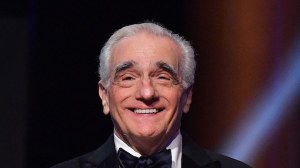
Scorsese
Then, yesterday, Francis Ford Coppola, Scorsese’s esteemed comrade in canonical ‘70s Hollywood, hurled perhaps a bigger grenade into the controversy:
“When Martin Scorsese says that the Marvel pictures are not cinema, he’s right because we expect to learn something from cinema, we expect to gain something, some enlightenment, some knowledge, some inspiration. … I don’t know that anyone gets anything out of seeing the same movie over and over again. Martin was kind when he said it’s not cinema. He didn’t say it’s despicable, which I just say it is.”
Not enough? Lauded British filmmaker Ken Loach offered his two pence this week about superhero films:
“I find them boring. They’re made as commodities … like hamburgers … It’s about making a commodity which will make profit for a big corporation — they’re a cynical exercise. They’re a market exercise and it has nothing to do with the art of cinema.”
(What superhero movies do I like, you might ask? I love “The Dark Knight,” “Logan,” “Iron Man,” “Unbreakable,” and one of the early “Spider-Man” flicks, I can’t remember which one because there’s like 12.)
The wonder of the Trump administration — the jaw-dropping, brain-exploding phantasmagoria of it — is that it doesn’t bury its rottenness under layers of counterfeit virtue or use a honeyed voice to mask the vinegar inside. The rottenness is out in the open. The sourness is right there on the surface for all to see.”
A freestyle digest of stuff — anecdotes, lists, thoughts, opinions …
In 2007 I interviewed actor Paul Rudd at the South by Southwest Film Festival in Austin, Texas. He was charming, funny and absurdly laidback. As he answered one of my questions he blurted out a lengthy, earth-rattling burp. “Whoa,” I laughed, “what flavor was that?” Rudd replied: “You know what’s weird? It wasn’t a flavor so much as an actual scent, like a potpourri, a mixture of peppermint and brisket. I went to (barbecue joint) The Salt Lick last night, and I ate brisket. I’ll tell you something: It was very different than my Nana’s brisket.”
Ben Lerner’s “10:04” is a breed of intellectual masterpiece, a novel I’ve praised here before. His 2011 debut “Leaving the Atocha Station” is also remarkable, the work of a poetic brainiac with torrents to say, crackling with life observations. His new novel, “The Topeka School,” is his most acclaimed yet — and I’m not sure why. I read fully half of it, and while the writing is pristine, the thinking impressive, I got lost in the choppy, distracting narrative thread. Unmoored, I put it down, migraine emerging. Yet I’m not through with the scandalously young Lerner. I’m taking “10:04” on my 14-hour flights to and from Japan — my third communion with that radiant auto-fiction.
My list of favorite cities has shifted just-so over time, and will likely keep doing so. For now: 1. Paris (eternally tops); 2.Istanbul; 3. Tokyo (this may change after my upcoming visit); 4. New York; 5. London; 6. San Francisco; 7. Sevilla; 8. Amsterdam.
Numero Uno
The New York Review of Books is hallowed home to academic think pieces about all things, from politics to poetry, by some of our most prodigious and stylish writers: Zadie Smith, Adam Kirsch, Marilynne Robinson, Jonathan Lethem, Rachel Cusk. Why then do I find the essays gassy, tedious, enervating, as long and dry as the Sahara? Never, not once, have I read more than a third of one. (It’s me, I know.) Rightful cult classics, “John Wick” and “John Wick: Chapter 2,” starring a lank-haired, bullet-proof Keanu Reeves, are action-flick orgies, chop-socky pistol poetry of a kind unseen since the heyday of John Woo’s “The Killer” and “Hard-Boiled.” I could barely wait for this summer’s “John Wick: Chapter 3 – Parabellum.” And then, ugh. Grindingly repetitive (though that urban horse chase is nifty), drawn out and mired in its own smug formula — with a wider narrative scope that attenuates rather than expands the affair — this one is all diminishing returns. The film runs 131 minutes. I quit it, bored, fatigued, with 40 minutes left to go. This Wick is no longer lit.
It’s still hard to reckon, a year after his death, that American novelist Philip Roth never won the Nobel Prize in Literature. Like most awards, it’s a scam, a sham. Roth was one of the greatest, dwarfing most writers who have indeed won the prize. That he received only a single Pulitzer — for 1997’s astonishing “American Pastoral” — is itself a gross dishonor. Every once in a while this pops into my head and I get all rankled.
Gusty and blustery, a wind storm howls, churning treetops like crumpled paper, flinging acorns that pelt cars and roofs, dropping like small rocks, falling leaves twirling, the house creaking, windows rattling and Cubby the dog, shaking, leaps into my lap, where he curls into a donut, glancing up with fraught brown eyes that say, simply: “Papa.” This lasts all day.
When I wrote about film in Austin, a particular local celebrity didn’t like me. That’s because I didn’t write super stuff about her — one Sandra Bullock. I thought she was a cutesy hack, all dimples and snorts, with dismal taste in roles. Knowing she told a colleague that she wanted my “head on a stick,” I won’t deny a small surge of pride.
So I’m watching the Democratic primary debate last night on CNN, and amid the candidates’ kerfuffles and catty crossfire, a moment of clarity sprung up during a commercial break. In a 30-second ad, a pouchy-eyed man, self-possessed and wearing the teensiest smirk, spoke animatedly to the camera. The man happens to be President Ronald Reagan’s son, Ron Reagan, and this, in its entirety, is what he said:
“Hi, I’m Ron Reagan, an unabashed atheist, and I’m alarmed at the intrusions of religion into our secular government. That’s why I’m asking you to support the Freedom From Religion Foundation, the nation’s largest and most effective association of atheists and agnostics, working to keep church and state separate, just like our Founding Fathers intended. Please support the Freedom From Religion Foundation. I’m Ron Reagan, lifelong atheist, not afraid of burning in hell.”
This remarkable bulletin at first registers as a jape, a mock commercial on “SNL,” especially with that wonderfully puckish parting shot. (Watch the ad HERE.)
But, thank heaven, it’s no joke. The Freedom From Religion Foundation is an honest to god (ha) society devoted to “promoting non-theism and defending the constitutional separation between religion and government,” says its website. “With more than 30,000 members, FFRF, a non-prophet non-profit, works as an effective state/church watchdog and voice for free thought (atheism, agnosticism, skepticism).”
Refused by ABC during the Sept. 12 Democratic debate, the ad last night was a hit. “Ron Reagan” was the top trending Google search after it aired. Twitter twits tweetle-deed with abandon. Though Reagan “wasn’t among the 12 candidates on the stage in Ohio, his appearance in a commercial promoting atheism clearly caught folks off guard,” said one news outlet. It was his sign-off about not fearing “burning in hell” that had people reeling, or, like me, laughing.
Speaking of hell, it’s the devil-may-care defiance, brazen irreverence and arch humor of the godless (heathens! pagans!) that endears them to skeptics and agnostics. Their highly evolved strain of enlightenment certainly doesn’t hurt the cause. These are savvy individuals who’ve weighed their stance with logic, philosophy, empirical evidence and bullet-proof common sense. Biblical fairy tales have only sowed their doubt and disgust.
Satanic Temple protesters
There are myriad groups like the Freedom From Religion Foundation — the muscular American Atheists and the mischievous Satanic Temple, profiled in the provocative new documentary “Hail, Satan,” come to mind — and FFRF is one of the largest. I appreciate what they’re doing, these Constitutionally correct freedom fighters. And if this brief blog post sounds like one big ad for them, well, that’s all right by me. Perhaps I am going to hell. I kind of don’t care.
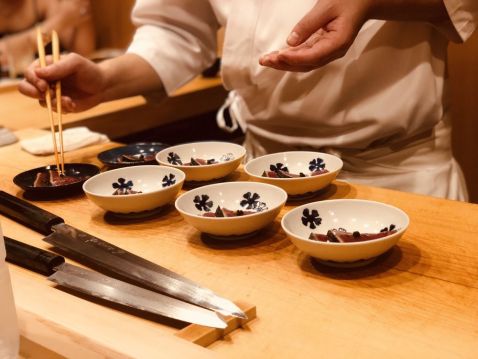
In two weeks I head to Japan, one of the best food and drink cities in the world. Last time I was there, I was green, gullible and a little lost. I ate at places I stumbled on that simply looked good — I had no reservations — and bought drinks at random bars or even from beer vending machines. This time I’m prepared. My eats itinerary is tight and structured, and I’ve wisely left a few days open for discovery. Below are eight of my top food and drink destinations in Tokyo and Kyoto:
1.Tokyo boasts more Michelin Star restaurants — 230 — than any other city, making the neon-marinated metropolis the world’s number one food destination, according to France’s revered (and feared) Michelin Guide. I can’t afford a 2-star or 3-star outing — like Sushi Jiro, whose stardom skyrocketed after the worshipful documentary “Jiro Dreams of Sushi” — nor will I subject myself to the fussy rigmarole of trying to reserve a spot at one of them, itself an Olympic event demanding backflips, secret handshakes and blood oaths. I did, however, after some patient, nimbly maneuvered reservation action, land lunch at Ginza Iwa Sushi, a 1-star Michelin destination, whose fixed-menu fee ($101) makes me blanch. One of the most popular sushi joints in Tokyo, Iwa serves a 12-course lunch and is known for its elegance, tradition and finesse. And wallet-thinning powers.
Ginza Iwa Sushi
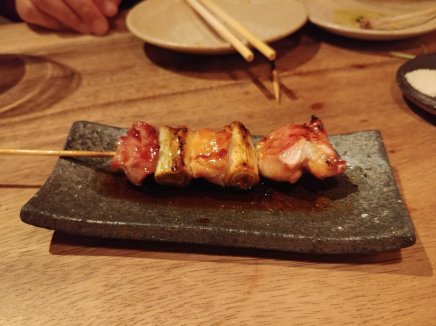
2.Though I never dream about it (unlike Jiro and his sushi) and only eat it about every three years, yakitori is one of my tongue-tingling tops. It’s primarily grilled chicken skewers, but also features eel, myriad meats and grill-happy veggies. For my yakitori fix I’m going to Sumiyakisosaitoriya Hitomi in Kyoto, an unpronounceable place so popular I had to secure a reservation through my hotel concierge months ago. It’s considered the best yakitori in Kyoto. Online reviews speak of chicken transcendence.
Yakitori at Sumiyakisosaitoriya Hitomi
3. I know, well, nothing about one of Japan’s national drinks, sake. (It’s rice wine, right?) I’m here to learn. And drink. Hence the Sake Tasting and Lecture I’ve booked at the foolishly early hour of 1:30 p.m. (on Halloween, no less). It’s set in an izakaya — a snug local bar where a variety of small dishes and snacks are served with alcoholic drinks — where pupils of the potent potable will taste eight to 10 kinds of sake under the affable tutelage of a guzzling guru named Murata. I’m actually not a big sake sipper, though I had some the other night at, what else, a sushi dinner, and it was cold, smooth, savory. Teach me, master (small bow).
4. My last time in Tokyo I visited the legendary Tsukiji Fish Market at the crack of dawn, extremely punchy from staying up all night, mildly partying before quaffing Starbucks. I was a beet-eyed mess, weaving through the warrens of stalls and stands filled with fresh-off-the-boat fish and sea creatures, snapping zesty photos, lost in the briny commotion of frenetic commerce. Rudderless, I just wandered where my soon-soaked sneakers took me. I didn’t know where to eat some of the fresh catches, which is something you definitely do at the market, and I didn’t know where to go next. I needed a guide. That’s what I’ll have with the Tsukiji Fish Market Food and Culture Walking Tour, a 3.5-hour expedition, starting at 8:30 a.m., through the largest wholesale fish and seafood market in the world, and one of the largest wholesale food markets of any kind. Sushi, sake, fried fish cake, tea and a Japanese omelette are just part of the menu. Sobriety is another part.
5.I’m in Japan, one of the supreme culinary capitals in the world, and what I’m craving, with impish urgency, is … an egg salad sandwich from 7-Eleven. This, I swear, is a thing. Convenience stores (or conbinis) are rampant across the country — there are at least50,000 — with three reigning chains: 7-Eleven, Lawson and FamilyMart. Here’s where you find whack Japanese to-go cuisine, from dried squid and deep-fried quail eggs; to insta-noodles and syrup-filled pancakes; to 9% alcohol beer and ongiri (seaweed-wrapped rice stuffed with savory fillings). And, of course, the homely, homey egg salad sandwich (tamagosando). Celeb chefs Anthony Bourdain and David Chang have sworn by their tastiness and websites are devoted to them. 7-Eleven, Lawson and FamilyMart offer variations on a simple theme, using fluffy crustless white bread and the Japanese mayonnaise Kewpie. “Japanese mayo tends to be more tart than American mayo, with a mild sweetness and robust umami that gives it a bit more flavor,” writes a blogger, who conducted an egg sandwich showdown between those at the three major conbinis. (Spoiler: 7-Eleven stuffs the most egg in its sandwiches, as seen below.)
Egg salad from FamilyMart, 7-Eleven and Lawson
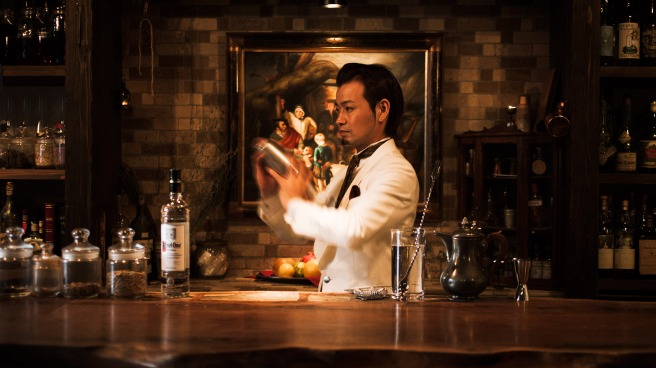
6.Hailed by many cocktail connoisseurs as one of the best bars on the planet — and easily the best in Tokyo — Bar Benfiddich, in the city’s sleepless Shinjuku district (where my hotel is, conveniently), pours classics with radical twists. Show-runner Hiroyasu Kayama has been dubbed an alchemist, whose design for the bar was a “moonshine den, dark and mysterious, with dusty 19th-century bottles and jars of arcane herbal infusions.” It is intimate. How so? Try eight seats and two tables. I’m lining up. Now.
Bar Benfiddich
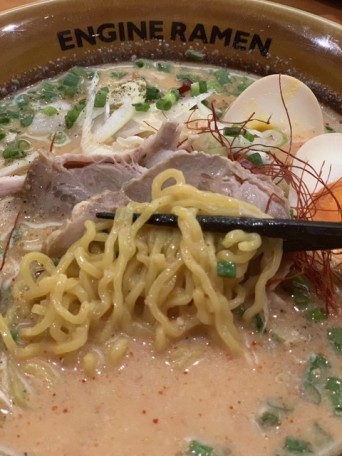
7. I lust for ramen — I’m partial to mazemen, or brothless — and it had better be excellent. I like my noodles thick and savory and chewy. The best ramen in Kyoto, they say, is Kyoto Engine Ramen. No reservations, so I’m crashing the place. I only know what I’ve read in the noodle-sphere, the bulk of it stellar, exalting the omnivorous varieties and vegan options. Ordering’s a breeze: From a vending machine you purchase a ticket with your selection on it, then slip it to the server. “The space itself is groovy and modern. Cool jazz was playing. A nice touch was the cute little Shintō shrine behind the bar,” writes a guest. I wanted more about the ramen (photos show mouthwateringly complex bowls). Then I read this: “The ramen is bomb!!!” Pow.
8.Beyond the go-to Suntory brand Bill Murray shills in “Lost in Translation,” Japan distills several top-shelf whiskies, most of which can be sipped at LiquorMuseum Pontocho in Kyoto, a seatless, stand-at-table whisky pub run by surpassingly knowledgable whisky whizzes. They serve 1,000 types of drinks at the esteemed bar. All drinks are 500 Yen (including tax), or about $4.65. And there’s no service charge. I’ll have another one, bartender-san.
I’m a nervous guy, anxious about some things (social situations, small children, cancer, Tyler Perry movies) though calm about others (air travel, clowns, death), making my anxiety pool a kind of grab-bag, a Kellogg’s Cereals Fun Pak, if you will.
Neuroses are a blast, a frothy enchantment of stomach pangs, irritable digestion, insomnia, jitters, fatigue, hypochondria, fatalism and an ambient unease that makes you want to switch skins with the nearest stable person, no matter if his name is Rupert.
Mornings are the worst. But as the day unfurls, the bad, the black, slowly burn off. By night I’m mostly calm, relaxed, hardly even thinking about brain tumors and leukemia. I assume that’s why I am steadfastly nocturnal, vampiric, stiff drink in hand.
For instance, when I wake each morning, my upcoming Japan trip sounds like a terrible idea, an exorbitant blunder and colossal miscalculation. My stomach flips; I wince. Around midday, I warm to the thought and picture an experience of Michelin-star sushi, bullet trains and megalopolis madness. By dark, optimism flowing, I’m on the computer or flipping pages plotting my incontestably epic and mystical adventures in the Far East.
They make pills for this, of course. But meds are at best serviceable. Too meager a dose scarcely soothes the nerves. Too much tends to narcotize. Things are lighter — aren’t they always when you’re napping? (Not really. My dream realm is an id-iotic hellscape of troubling memories, fraught encounters and anything that gnaws on my insecurities. Kafka would clutch his chin and nod.) Plus, you don’t know what’s what with some of those sedatives. A doctor once told me to chuck my Xanax. “That stuff is crack,” he scoffed. Oh.
I don’t think I’ve ever had a panic attack, unless that time browsing with my niece at the American Girl® doll store counts. Though I have experienced shortness of breath, racing heart and a kind of overwhelming, generalized terror of being alive. I suppose that counts, even if I’m pretty sure it wasn’t a clinically defined panic attack and merely my reaction to deliriously unfunny ventriloquist Jeff Dunham’s latest Netflix special.
Want to churn my anxiety? Make me speak in front of a group, crowd or microphone. I don’t do meetings, panels, town-halls, televised interviews or, for that matter, karaoke or charades (charades — parlor game of the dark arts). I kind of recoil singing “Happy Birthday” among friends. With pathological resistance, I avoid having my picture taken (keep your cameras to your selfie).
My low-frequency embarrassment, raking self-consciousness and broken self-esteem are congenital delights. In the words of Morrissey (indeed, Morrissey), I am infected with a ”shyness that is criminally vulgar.” None of it is fun or poignant. But what are you to do? Therapy, meditation, yoga, tequila shots, a fistful of Clonazepam. These have been tried. Futility reigns. Relief is fleeting, often downright illusory.
And yet we soldier forth. We function in spite of the topsy-turvy tummy, mild paranoia, paper-thin skin, social squirming, hyperbolic pessimism, etc. Then I think: I’m going to Japan in three weeks. That’s something. During my extensive travels, my angst all but evaporates. I am unshackled, life’s daily detritus dispersed by an existential leaf blower. For this trip, I expect elation, moderate ecstasy, radical stimulation and some of the best food I’ve ever eaten. Nothing short of sublimity.
I had long worried that I was incapable of having a profound experience of art and I had trouble believing that anyone had, at least anyone I knew. I was intensely suspicious of people who claimed a poem or painting or piece of music ‘changed their life,’ especially since I had often known these people before and after their experience and could register no change. … The closest I’d come to having a profound experience of art was probably the experience of this distance, a profound experience of the absence of profundity.”
Let’s cut to the chest: Ridley Scott’s 1979 sci-fi horror masterpiece “Alien” is forever remembered for one indelible scene — a “very significant moment in film history,” genre director Gary Sherman says — the chest-burster sequence, when a gore-slimed, serpentine creature chews its way out of the torso of a hapless John Hurt while he’s having dinner, leaving him a quivering, blood-drenched corpse and unleashing the title monster to slither away and torment the rest of the spaceship’s unsettled crew for the next hour.
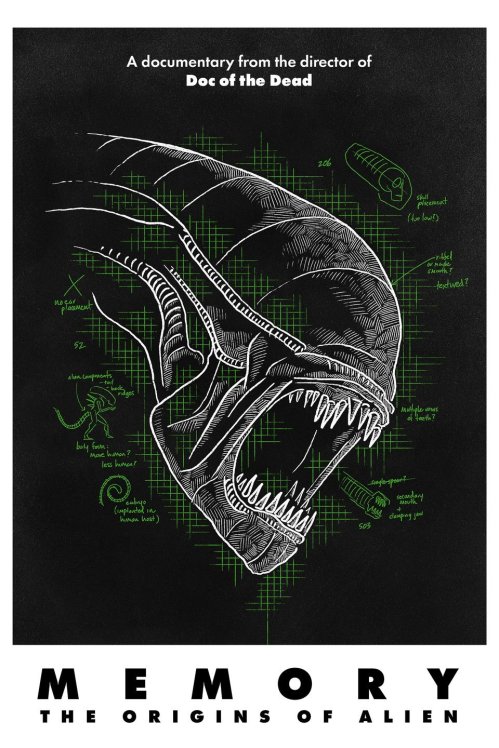
Great detail and respect are granted this monumental moment in Alexandre O. Philippe’s dizzyingly in-depth, intellectually exhaustive documentary “Memory: The Origins of Alien” — from wild talking-head theories (Hurt is literally giving birth!) to gruesome behind-the-scenes footage of this greatest of gross-outs.
One of those talking heads, author Ian Nathan, deftly parses the visceral and dramatic importance of the scene: “The chest-burster changes the complexion of the film from a kind of epic to a kind of horrible, horrible intimacy that’s claustrophobic and inward. Suddenly everybody is trapped. Suddenly the spaceship is small and confined” and the film becomes a primal survival story.Which, I say, renders “Alien” such a splendid, fearsomely realistic haunted house tale during a grisly second half that vibrates with unendurable tension and dread.
“Memory” makes a strong point that the mythos and monster in “Alien,” which was written by sci-fi fanatic Dan O’Bannon, were hardly original. “‘Alien’ didn’t come out of a creative vacuum,” we’re told. “It drew from a whole heritage of American science fiction.”
O’Bannon cherrypicked sources over the years, including comic books, H.P. Lovecraft’s horror fiction, and B-movies like “It! The Terror from Beyond Space” (1958), Howard Hawks’ “The Thing from Another World” (1951), “Planet of the Vampires” (1965) and, most extensively (and strangely), Roger Corman’s lurid “Queen of Blood” (1966).
But it was O’Bannon and director Ridley Scott’s mutual exposure to the lithograph “Necronomicon,” a phantasmagoria of wondrous and hideous creatures by Swiss surrealist artist H.R. Giger, that cemented the look and language of “Alien.” Scott rhapsodizes about the titular creature, sometimes known as the Xenomorph: “This is beautiful, not just threatening, and it also has very sexual connotations. It’s like a rather beautiful, humanoid bio-mechanoid insect.”
Giger himself did some artistic cherrypicking, synthesizing Egyptian mythology, dream imagery, Boschian fright-scapes, medieval dragons, Hindu goddess Kali and, key to the chest-burster, the disturbing canvasses of British artist Francis Bacon. “Giger consolidates every monster from every mythology from around the world into a single creature. It embodies the mythic Other,” USC professor Henry Jenkins says.
Why “Alien” works so well is its commitment to the kind of gritty realism of so much superior 1970s American cinema. An Altmanesque naturalism permeates the film, and it boasts gorgeous Kubrickian photography, a crack cast of virtual unknowns, deliberate pacing and adult restraint.
It is, simply, an art film. It spurned the space-western kicks of “Star Wars” and the Keane-eyed aliens of “Close Encounters” (both 1977). Suddenly we were served a new, naturalistic depiction of outer space in the sooty, clanky, eerily rain-soaked cargo ship Nostromo, a floating industrial city, a grungy “space truck,” that fatefully investigates a distress signal beamed from an alien planet.
“Memory” is fascinating when talking about artistry and craft, but veers onto shaky ground when its commentators argue too hard that “Alien” is a product of its social and political times or, almost laughably, gaze at the film through a scrim of academic feminist theory. Says one: The movie is a “male fantasy of the kind of oppression that had been handed out to women over the century of guilt that was part of masculinity.” (Where’s the chest-burster when we need it?)
Fortunately the focus stays mostly on the allegory and mythology behind this iconic, massively influential movie, and the obsessive density of it all is both boggling and breathtaking. The film “can mean many, many, many things,” says writer William Linn, conceding, “I don’t think we can get to the bottom of ‘Alien.’”
“Memory: The Origins of ‘Alien’” hits theaters and VOD on October 4. Trailer HERE.
As people grow up, they internalize this idea that wondering about death is ‘morbid’ or ‘weird.’ They grow scared, and criticize other people’s interest in the topic to keep from having to confront death themselves. … Most people in our culture are death illiterate, which makes them more afraid.” —Caitlin Doughty
Children, meanwhile, fueled by unfettered curiosity and innate innocence, don’t always harbor silly adult fears of death. They’re allowed to, expected to, wonder about death and dying. It’s a learning process; it’s not “morbid” or “weird.” It’s eye-opening, mind-inflating. Asking questions about it is a step closer to not being “death illiterate.”
The quote topping this post is from Caitlin Doughty’s new book, the funny and informative “Will My Cat Eat My Eyeballs?,” whose subtitle is “Big Questions From Tiny Mortals About Death.” That means both wiggy and weighty queries from children about death, inquiries she routinely receives as a death-chick rock star: mortician, author, podcaster, “death activist” and “funeral industry rabble-rouser.” In the book Doughty answers 34 kid-friendly (well, kinda) questions about death and dying, and a bit beyond.
A total pro, her attitude is cheeky, frisky and upbeat, often with a wink. It’s hardly just kid’s stuff. She applies sweeping research and her own mortician’s know-how, a braid of science, craft, technology and, unavoidably, morbidity. It gets gleefully icky at times.
Doughty goes into gripping, grisly detail about livor mortis (“bluish color of death”), rigor mortis (“stiffness of death”), putrefaction, embalming, burial, cremation ovens, blood draining, organ donation, and, #1 on the hit parade, postmortem gas.
And she does it with oozy, crunchy, gelatinous eloquence:
“Welcome to putrefaction,” she writes. “This is when the famous green color of death comes into its own. It’s more of a greenish-brown, actually. With some turquoise. … The green colors appear first in the lower abdomen. That’s the bacteria from the colon breaking free and starting to take over. They are liquefying the cells of the organs, which means fluids are sloshing free. The stomach swells as gas starts to accumulate from the bacteria’s ‘digestive action’ (i.e., bacteria farts).”
“In the first ten minutes of cremation, the flames attack the body’s soft tissue — all the squishy parts, if you will. Muscles, skin, organs, and fat sizzle, shrink, and evaporate. The bones of the skull and ribs start to emerge. The top of the skull pops off and the blackened brain gets zapped away by the flames.”
“Oh, how to describe the smell of a decomposing human body — what poetry is needed!” Doughty gushes. “I get a sickly-sweet odor mixed with a strong rotting odor. Think: your grandma’s heavy sweet perfume sprayed over a rotting fish. Put them together in a sealed plastic bag and leave them in the blazing sun for a few days. Then open the bag and put your nose in for a big whiff.”
Now, on to questions, a sampling of the kids’ queries, which on average yield two- to three-page responses in Doughty’s book. In brief, inquiries include:
The jejune: Will I Poop When I Die? (“You might poop when you die. Fun, right?” Doughty giggles. True: It depends on how “full” you are when you croak. You don’t automatically doo-doo at death.)
The sentimental: Can I Keep My Parents’ Skulls After They Die? (No. No. And no. There are such things as “abuse of corpse” laws, our trusty authority tells us.)
The ludicrous: What Would Happen If You Swallowed a Bag of Popcorn Before You Died and Were Cremated? (What do you think would happen in 1,700-degree flames?)
The freaky: What If They Make a Mistake and Bury Me When I’m Just in a Coma? (Pretty impossible — a battery of medical tests are conducted to confirm brain death.)
The ghoulish: We Eat Dead Chickens, Why Not Dead People? (Guess what — some people do. They’re called cannibals. Next!)
The metaphysical: Is It True People See a White Light As They’re Dying? (“Yes, they do. That glowing white light is a tunnel to angels in heaven. Thanks for your question!” the author ribs.)
And the vaguely vain: Will My Hair Keep Growing in My Coffin After I’m Buried? (Sorry, Rapunzel. That’s a big fat “death myth.”)
About the book’s titular question, “Will My Cat Eat My Eyeballs?” — this refers to the dreaded scenario of you dying alone in your home, your corpse left for days and your unfed pet, well, getting hungry. Doughty relishes this one.
Caitlin Doughty
“No, your cat won’t eat your eyeballs,” she writes. “Not right away, at least.”
That’s the short answer.
The longish answer shivers with excitement:
“Cats tend to consume human parts that are soft and exposed, like the face and neck, with special focus on the mouth and nose. Don’t rule out some chomps on the eyeballs,” Doughty says, but more likely your feline friend will dig into the lips, eyelids and tongue.
And what about Pepi the peaceful poodle, human’s best friend, your cuddle buddy?
Pretty much kaput, Halloween means just about nothing to me nowadays. The thrill is gone. The chill is gone. I’m not 7, dig.
Yet something about Halloween sticks, hovering like a blanket of graveyard fog. Each year I gladly inhale the occasion’s residual festive fumes, pumped in like so much giddy-making nitrous oxide. Hey, unlike zombies, I have a pulse.
Though costumes are long — and forever — doffed and I’ve retired the habit of sneaking morsels from the communal candy bowl (It’s for the kids, dammit!), I remain devoted to this perverse, very North American celebration of the gross, grim and ghoulish. (And, yeah, I lied: the Reese’s cups are mine.)
But I effectively don’t partake in the big-picture party, unless you count sometimes serving as the eve’s Doorbell Dork, doling out Snickers and Tootsie Pops, smiling like the village idiot on cue when a particular and rather mystifying catchphrase (starts with trick) is shrieked by decked-out kiddies (and a few shameless, straggling grown-ups who can only dream they’re getting a Kit-Kat from this finger-wagging candy dispenser).
It’s a festival of enforced flamboyance. Excess is enshrined. Generally sane people douse themselves in corn syrup blood. Sex is flaunted in racy micro-fashions: cats and maids and devils. It’s masks and makeup and Marvel; wigs, witches and wizards; Pokémon, pirates and pop stars (and, yes, Pop Tarts) — the palette is as infinite as it is infantilizing. The id comes out to romp.
Halloween in Sevilla, Spain, 2016 — amateur hour.
In placid suburbia, lawn dioramas have grown ambitiously disgusting. I love the sinew-chewing zombies (with staticky sound effects), life-size, yoga-posed skeletons and tombstone-cluttered cemeteries, gnarled limbs popping out of the ground. I beseech you: gross me out.
It’s a bacchanal of fantasy and horror, whimsy and steroidal imagination. It’s pop cinema — slashers to superheroes — sprung to life. And it’s uniquely, wildly American (and, I hear, Canadian).
Halloween, Beirut, 2008 — not cool.
I’ve done Halloween in London, Paris, Beirut, Ho Chi Minh City, Kathmandu and Sevilla. As the locals tried to summon the spirit, they invariably botched the holiday, blundering with gauche costumes (er, blackface in Beirut and Paris) and feebly attended parties — strictly amateur hour, training wheels required.
Except when they’re not. Except when the night has been co-opted with the verve and vision matching the western prototype. All eyes on … Japan. It’s said that Japan has only been practicing Halloween in earnest for five years. But amateurs? Hardly.
The Japanese were born pros, built for Halloween. Nothing is lost in translation. Dress up and cosplay are daily mainstream occurrences. Stroll anytime through Tokyo’s Harajuku district for teen fashion so high, so rococo, it passes as a perpetual street costume party.
Harajuku teen, Tokyo, in April 2006.
Which should make this year’s Halloween something special. I land in Tokyo on October 30, giving me less than 24 hours to steel for whatever that hyper-charged city has in store in the way of a woozy wingding.
Because there is no way I’m not wading into the most outrageous Halloween hotspots — like bustling, youthful Shibuya, where a million revelers are expected — to get the full Japanese treatment: anime and cosplay characters, J-horror ghosts and vampires, video-game avatars and the universal diet of Star Wars, Harry Potter, Power Rangers and other mega-brands. (Oddly, Where’s Waldo? seems to still be popular. I’ll look into it.)
This is what I wanna see, Halloween with kick (I’ll return with a full, bloody report):
Witches? Zombies? No idea but I’m thrilled. Nerd, nerd, nerd, nerd and nerd. That’s five nerds. God bless them.Grisly Disney: zombie versions of famous cartoon characters, including Minnie Mouse and Snow White.A gaggle of zombie fast food (flesh food?) servers. Do you want fingers with that human hamburger?



 In 2007 I interviewed actor Paul Rudd at the
  B
B
 Rightful cult classics, “John Wick” and “John Wick: Chapter 2,” starring a lank-haired, bullet-proof Keanu Reeves, are action-flick orgies, chop-socky pistol poetry of a kind unseen since the heyday of John Woo’s