The rational heresy of Sam Harris

“The problem with religion, because it’s been sheltered from criticism, is that it allows people to believe en masse what only idiots or lunatics could believe in isolation.”

“While believing strongly, without evidence, is considered a mark of madness or stupidity in any other area of our lives, faith in God still holds immense prestige in our society. Religion is the one area of our discourse where it is considered noble to pretend to be certain about things no human being could possibly be certain about.”

Sam Harris, philosopher, author (“The End of Faith”)

atheists

Running the Red Light

As we strolled by the famous Theatre Casa Rosso, Amsterdam’s mecca of live sex shows, our Red Light District tour guide, an American expat with an aptly ribald air, offered the small group a couple of tips. 

“I strongly suggest you go to a live sex show, where you see people actually having sex on stage. And I think you should try the nearby peep show, where you can watch various sex acts through a little window at a cost of 2 euros for two minutes. It’s a riot.”

IMG_1078.jpg
Red Light District canal lined with lust and live sex shows. The fabled Casa Rosso on the left.

She chuckled at her naughty proposals, but she wasn’t kidding. While others in the tour vacantly snapped photos, she took me aside and stressed what a kick the peep shows are in language I won’t share on this page. 

Of course I took the bait. I was in Amsterdam last week and, as always in my travels, I strive for an immersive experience. I’d already caught one of the live sex shows during a previous visit to the city years ago. (It was one of the least sexy spectacles I’ve ever seen.)

IMG_1086
Perhaps the oldest coffeeshop in Amsterdam, The Bulldog, where pot and hash are sold and smoked. It’s also the most touristy.

So I went for the peep show, because at 2 euros ($2.37) there’s little to lose. The peep show theater is like most of the live sex show venues on the lip of the canal — dark with black walls and a few colorful lights. I walked into a broom-closet-size booth, dropped a coin into the slot, and a small window slid open. The whole thing smelled of disinfectant.

On view was a young woman in a thong bikini writhing on the floor, occasionally shaking her tush at my window, then writhing some more. Immediately bored, a tad nauseated, I lasted about 52 seconds. It was unsexy, unsavory, underwhelming. Moral qualms weren’t at play; aesthetics were. Yet I didn’t feel burned as I left. I didn’t know what to expect, although the tour guide promised miles more than what I saw. Glad I missed it.

Next to the fierce, hands-on-hips prostitutes rapping their glass windows to get my attention, that was the extent of the “sexy” side of the Red Light I endured on this visit. I skipped the ultra-raunchy Sexmuseum Amsterdam (I did that on the last trip; one word: bestiality) and the softer Erotic Museum, and eschewed the glut of tawdry sex shops selling so much rubber, leather and latex, eye-popping erotica so loony it was comical.

IMG_1072.jpg
Red-lighted brothel windows where sex workers showoff their merchandise.

Shot through with Instagram-ready canals and curling medieval alleyways, the Red Light District is so iconic it’s practically a cliché. Pot-peddling coffeeshops, bondage and condom stores, coitus and cannabis museums — a cornucopia of no-no’s that happen to be gleefully and legally A-OK. It’s a degenerate’s playground, a voyeur’s wonderland, and an exotic otherworld for the blamelessly curious.

IMG_1097
Oude Kerk

Rinsed of its notorious junky past, the Red Light is safe, clean and aggressively touristy. It can be enigmatic, and incongruities abound: Next to the Princess Juliana Nursery School, where children of sex workers attend, are not only brothels, but also the gothic 14th-century church De Oude Kerk (The Old Church), once Catholic and now a bastion of Dutch Protestantism. It’s the oldest building in Amsterdam. Around the corner is the city’s comparatively staid Chinatown, crackling with ethnic eateries, whole cooked ducks dangling in windows.

While pot-smoky coffeeshops and party-hearty bars lace the neighborhood — see The Bulldog chain — hidden gems are nestled amid the mild mayhem. Just off a canal, tucked in a snug alley, sits the jenever (Dutch gin) tasting tavern Wynand-Fockink, a 17th-century distillery of international renown that packs ‘em into its W.C.-sized room. 

The flavored and unflavored jenevers — scores of varieties line the back wall — are poured liberally in tulip glasses for free tastings. I tried a range of five, settling on a lemon-infused concoction that was as refreshing as lemonade, but with snap. 

IMG_1087.jpg
Some of my samples at the jenever tasting at Wynand-Fockink.

Frankly, it had more bite, imagination and personality than the pallid peep show I stumbled out of moments earlier. A good stiff drink is always a powerful antidote to a spirit-sucking sex show.

The Red Light District can’t quite transcend hard-stuck stereotypes. Yet physically it’s startlingly pretty, graced with old, skinny gabled houses, tree-lined canals and cobblestone pathways. It’s one of the city’s homiest hoods. Bicycles asphyxiate streets with a collective smile, wind-blown hair and the musical clangching of tiny bells.

IMG_1071.jpg

The District bristles with fast food stalls and it’s prime for the mandatory frites, or fries, drowned in mayo. A mad confusion of tourist shops tout the gamut: T-shirts and postcards, psychedelic mushrooms, pot-infused lollipops, trip-happy Space Cakes, bongs, pipes and papers, condoms and cock rings.

You can’t help smirking at this uninhibited XXX Disneyland, which broadcasts its checkered past in blazing neon and, with equally cheeky pride, trumpets a checkered present aspiring to smutty heights. Yet if it knows no limits, it’s clear that most of its visitors do. (As you’d expect, the later it gets, the rowdier it gets.)

The District is hardly running amok (see these safety measures for sex workers), even if some imaginations do. With few exceptions, the place is shrink-wrapped, condom-coated, safe and, counterintuitively, good, clean fun. It’s naughty, but nice.


Heineken’s museum of Hell

Before I travel, I prepare like a madman, and my outstanding trip to Amsterdam last week was no exception. One night, fueled by wide-eyed, butterfly-stomach pre-travel excitement, I purchased a few advance museum tickets online: the Rijksmuseum (all majesty and splendor), the Van Gogh Museum (strong, if a tiny bit disappointing) and, in a snap of psychosis or addled hastiness, an 18 € ($21.50) ticket for the Heineken Experience, billed as a “sensational interactive tour” set in the original Heineken brewery turned museum in Amsterdam’s city center.

I grossly miscalculated.

The Heineken Experience was so massively lame, such an appalling and transparent marketing apparatus, that I was actually embarrassed to be there. You don’t go to be enlightened but to have “interesting” factoids about the Heineken family and the titular beer’s recipe recited to you by overexcited twenty-somethings wearing skinny headset microphones á la Beyoncé. If you have any idea how beer is made, the tour is old news.  

I should have known better, that a beer tour that includes two and a half “complimentary” drinks would attract mostly frat boys, their sorority cohorts and Euro trash, all of whom seemed glazed with boredom by the broad and vacuous explanations of how hops, water, barley and yeast make beer, and didn’t even seem terribly impressed by the stable of eight black horses, the so-called famous Heineken horses that stood there looking equally bored, sad that they didn’t get to also imbibe the scrumptious brew.

heinekenexperience.jpg
One of the blush-inducing “interactive” delights at the Heineken Experience.

When the informational part of the tour ends, the museum falls back hard on high-tech filler that you can’t believe, from a ride in which you become a beer bottle to laser-lighted basketball hoops; a room pumped with blaring electronic dance music and strafed with green (the brand color) lasers, to a large photo-booth room where people sit on stationary Heineken bicycles while street scenes of Paris are projected on back-screens, so it looks like you’re pedaling through the French capital. Imagine that! People were having a good old time on those bikes, smiling at their own images as if they really believed they were in Paris. And they hadn’t even drank yet.

3707_0_0_original.jpg
Selfies, unaccountably huge here.

By then I was practically jogging to the final room, the bar pouring “free” beer. I sipped my beers with the faintest scowl, while trying to pretend I wasn’t altogether repulsed. My fellow chumps were laughing, taking endless selfies, shaking to the music, which veered from nauseating EDM to friendly pop rock. 

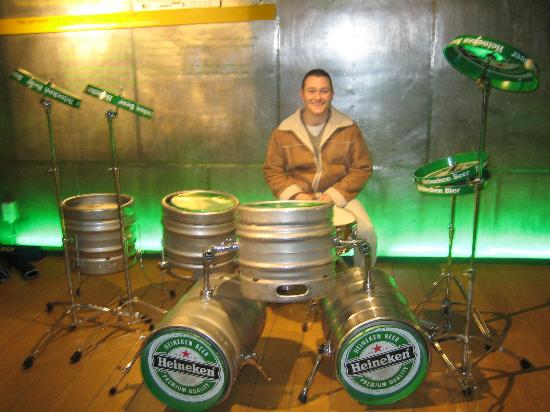
drums-at-the-heineken.jpg
A drum kit made of beer kegs! He looks elated and not at all a little confused.

All I could think was: There isn’t enough Heineken suds in this entire old brewery to numb me enough to believe this was a good idea. And then there was this: As in all museums you exit through the gift shop. But once you leave this emporium of baldly branded gear, guess what? You hit another gift shop, which is when I sighed to myself, Get me out of this Heineken hell. I felt violated, ripped off. Worse, those beers didn’t even give me a buzz. 

heineken2

A disproportionate amount of weak to bad museums litter otherwise wonderful Amsterdam — from the pot museum, prostitution museum and cheese museum, to the sex and erotic museums to the canal museum and, yes, the dopey Heineken predicament.

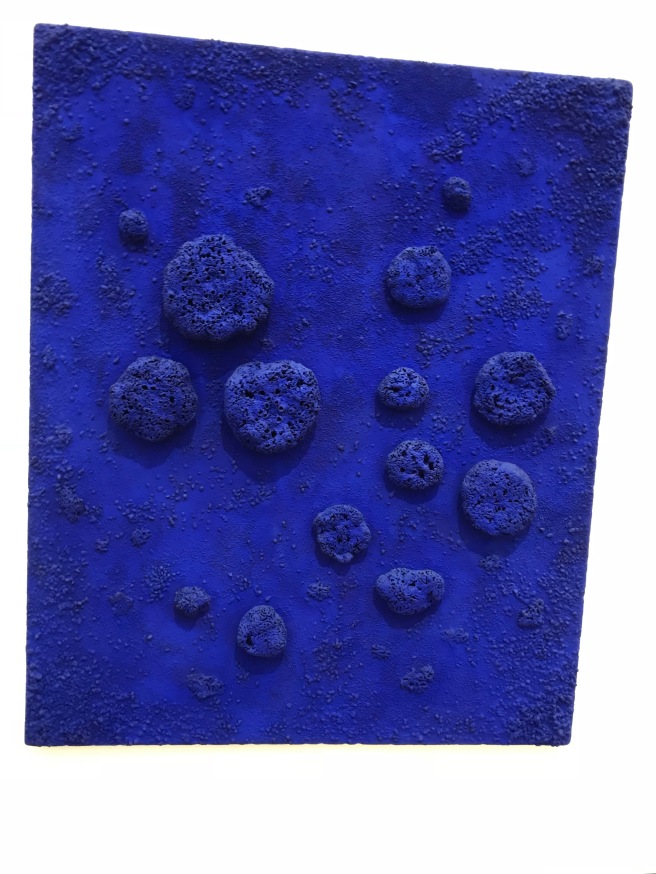
The antidote is to choose wisely. You can’t miss with the aforementioned Rijksmuseum (Rembrandts and Vermeers adorning a knockout space) and Van Gogh Museum (beautifully curated and suavely laid-out), plus the fine modern art collection at the underrated Stedelijk Museum, where everyone from Picasso to Damien Hirst are represented by canonical works. I’d gladly trade those 2½ beers for just one look at this ravishing blue doozy by Yves Klein at the Stedelijk:

IMG_1084.jpg

A darkly delightful book of the dead

For the record, family: Do not donate my body to science when I die. Let them harvest an organ or two, scoop out my eyes like melon balls, carve off a carpet swatch of skin.

Then burn me up good.

Scary to say, but my obsession with death, dying and the post-life has only rocketed since I recently re-read Mary Roach’s weirdly engrossing, and joyously gross, 2003 bestseller “Stiff: The Curious Lives of Human Cadavers.”

51AT2j73sjL._SX331_BO1,204,203,200_

The title nearly says it all: Roach’s beautifully reported book is a blunt, euphemism-free, aggressively lighthearted examination of exactly what happens to cadavers that are donated to science and research. (Cue: barfing emoji.)

Facts, history, grisly details and the author’s vivacious gallows humor make the unutterable utterly readable. Roach is smart; she pauses for philosophical reflection about what’s before her, providing a finish of deep and dignified meditation to what could have been perverted voyeurism catering to “Faces of Death” sickos. 

The breezy read features jarring chapter subtitles — “Human Crash Test Dummies and the Ghastly, Necessary Science of Impact Tolerance”; “On Human Decay and What Can Be Done About It”; “Medicinal Cannibalism and the Case of the Human Dumplings” — that are so graphic, they may be all you need to get it. For example, that first one: Yes, dead bodies are used as crash test dummies in vehicles. Splat.

Plunge into the pages and you’ll get the smells, sights and sounds of expired bodies rotting, ripping, being gutted and even crucified. (Scientists still want to know how Jesus died on the cross. Freshly dead bodies are a prime instructional aid. Pass the nails.)

The doctors and scientists Roach meets are a reticent assortment. But she intrepidly presses on. 

o-SYNTHETIC-CADAVERS-facebookSometimes a source will turn his back on her, suspect of her macabre motives.

“You want a vivid description of what’s going through my brain as I’m cutting through a liver and all these larvae are spilling out all over me and juice pops out of the intestines?” snaps a vexed forensics examiner. 

Roach responds to us, sotto voce: “I kind of did, but I kept quiet.”

“Stiff” rests on my growing, groaning shelf of superlatively morbid but essential books on mortality, like “How We Die,” “Final Exit,” “The Denial of Death” and other festive titles. I recommend them all. They will, while you’re still living, change your life.

Never done with Stephen Dunn

As sort of a literary snack, some lyrical Cheetos, I recently dipped into one of my favorite poetry books, Stephen Dunn’s “Different Hours.” It’s magnificent; so many fine poems, so many lines that quietly slash. The poems are all about wisdom and honesty and breakage, lovers and loss and burying a cat.

Stephen-Dunn
Dunn

I don’t care so much that the book won the 2000 Pulitzer Prize, though it surely deserved it. I do care that it contains this stanza:

I was burned by books early/and kept sidling up to the flame.

And I care even more that it has this bracing verse, from the final poem in the collection, “A Postmortem Guide (For my eulogist, in advance)”:

Tell them that at the end I had no need

for God, who’d become just a story

I once loved, one of many

with concealments and late-night rescues,

high sentence and pomp. The truth is

I learned to live without hope

as well as I could, almost happily,

in the despoiled and radiant now.

Those shimmering words shatter me, in a most positive fashion. (“In the despoiled and radiant now”!) The verse is frank but droll, vulnerable and confessional. It’s written with the points of melancholy stars.

Dunn, like his comrade in wry minimalism, Billy Collins, wields an unabashed colloquial touch, his plain-spokenness littered (glittered?) with joyous turns of phrase and often mischievous, tip-toeing humor.

He’s a master of subtlety, but any perceived simplicity is thoroughly deceptive. If you think Dunn’s poems are simple-minded, even pablum, you are sorely mistaken. You haven’t done the work.

The next 5 books I’ll be cracking open

Far before I’m done reading a book, I know firmly what volume I’ll be cracking next. I keep an ever-replenished list of titles. Something is always ready, waiting, like the upcoming course at dim sum. 

As I wrap up “Inseperable,” the excellent new biography of Chang and Eng, the original Siamese twins, I know what’s next. I’m taking a worn paperback of Kurt Vonnegut’s archly prophetic classic “Mother Night” (1962) on my trip to Amsterdam next week. Vonnegut’s breezy cynicism, swirled with empathy, a hesitant optimism and measured absurdism, feels just right for airplane reading.

After that, 10 books weigh down my list. But half of them get to jump the line. These are the next five books I’m plunging into:

516B2M5L8XL._SX324_BO1,204,203,200_I’ve read three of Zadie Smith’s fine novels — “Swing Time,” “On Beauty” and, the best of the bunch, “White Teeth” — so I’m revved for “NW, her acclaimed 2012 tragicomedy about a slice of London and how its human patchwork intersects and interacts. The intellectually rangy Smith has a sorcerer’s touch, conjuring crowded, complex stories that can be mesmerizing jumbles: granular, moving, funny and expansively human.

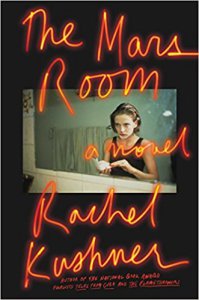
If Rachel Kushner’s wildly hailed fiction “The Flamethrowers” didn’t blow me away, it was still a fresh, propulsively entertaining epic about a young woman whose love of motorcycles, art and action hurl her on a picaresque through boho New York and radicalized Italy. In her new novel, the hotly awaited “The Mars Room, Kushner pinballs from the pitiless realities of a women’s prison to those in a San Francisco strip joint and beyond for a seedy and violent, harrowing but humorous skip through sordid demimondes. Raves wreathe the book already. “Heartbreaking and unforgettable … it deserves to be read with the same level of pathos, love and humanity with which it clearly was written,” gushes one reviewer.

41kvpzruegl-_sx329_bo1204203200_8.jpg

Our Shakespearean laureate, that lord of the Bard, Harold Bloom lasers in on one of the canon’s preeminent tragic figures in “Lear: The Great Image of Authority, a thin but typically volcanic volume that’s part of a series of portraits, including Iago, Falstaff and Cleopatra, titans all. Lear, fallen monarch, disgraced father, receives the full Bloomian treatment, a richly personal, prickly and cerebral exploration of the character and his enduring mythic stature.

Andrew Sean Greer’s “Less, winner of this year’s Pulitzer Prize for fiction, totally evaded my radar. I’m not even sure I’d heard of the novel until it cinched the award this month. I know so little about the bounding satire that I quote here from the dust jacket:

41wP7sR5mBL._SX321_BO1,204,203,200_

“Arthur Less will almost fall in love in Paris, almost fall to his death in Berlin, barely escape to a Moroccan ski chalet from a Saharan sandstorm, accidentally book himself as the (only) writer-in-residence at a Christian Retreat Center in Southern India, and encounter, on a desert island in the Arabian Sea, the last person on Earth he wants to face. Somewhere in there: he will turn fifty. Through it all, there is his first love. And there is his last.”

OK, I’m hooked.

A writer friend of mine won’t read Ottessa Moshfegh’s fiction, citing a gruesome quotient of blood and bodily fluids. I don’t know what she’s talking about because I’ve never read Moshfegh. Her stories “Homesick for Another World” have been called “eerily unsettling … almost dangerous, while also being delightful, even laugh-out-loud funny.” Characters are “unsteady” and the “grotesque and the outrageous,” a la Flannery O’Connor, “are infused with tenderness and compassion.”

51zp1zKT38L._SX328_BO1,204,203,200_

She has “a big mind, a big heart, blazing chops, and a political acuity that is needle-sharp,” crows the publisher. “The needle hits the vein before we even feel the prick.”

I think my friend is crazy. This sounds amazing.

And on things bookish, I finally discovered a well-tread site fully worth your while: Literary Hub. Brain-cracking interviews, essays, reviews, profiles — I won’t go on about it; just check it out.

Jeff Koons: self-importance as an art form

“Koons’ act, which is perhaps not even an act, is to believe that he is a natural descendant of the great artists of the past, interpreting religious iconography with a kind of contemporary twist, but aspiring to the same level of eternal fame and truth. … Nobody questions the work because Koons’ lock on the market is so thorough. It’s a form of spiritual vandalism.”

 Critic Robert Hughes on artist Jeff Koons, after Koons compared his 1988 porcelain “Michael Jackson and Bubbles” to Michelangelo’s 1498 “Pieta”

koons-michael-jackson-and-bubbles-1988  th.jpeg

Myriad miseries of the muggy months

As spring does its springy thing — budding flora, blaring sunshine, apocalyptic allergies, humping squirrels, the air lousy with tweetling birdies — I return to my annual choleric conclusion: spring sucks. 

It’s an old song I warble, a self-pitying plaint performed on banjo and harmonica. It’s almost T-shirt and shorts time, which makes me shudder the way I gladly do in the cherished chill of fall and winter. Spring, though well under way, is creeping ahead, producing mostly 60s yet dipping into the 50s when we’re extra lucky. 

Still, I’m steeling for the worst.

th.jpeg

Spring’s bonus gift: allergies. I’ve been blowing my nose in a single sustained honk since late March and my eyes won’t stop watering. I feel like I’m endlessly weeping. I am. I’m crying that summer is around the sweaty bend. (Oh, and: gesundheit.)

I prefer short cool days — dark at 6 p.m. — to long, hot days. Vampiric, nocturnal, certifiable — label me how you will. I just know it’s only going to get worse before it gets better.

Five more months of climatic distress, some of it dimly tolerable, some of it abominable. I welcome October like an old friend unseen in years, with backslaps and bear hugs, a pal who brings me a light jacket as a gift.

Yesterday I broke my second sweat of the season. Thrills were at a premium.

how-to-stop-sweating-in-the-summer-heat-sun-sweat-men-health-body-man-e1485966375156

This operatic whining is me blowing off steam about the coming steaminess and the attendant pool parties, barbecues, spring breakers, sun roofs, flip flops, humidity, bees and beaches. I’m fairly infantile about the whole thing, but really, I just don’t look good in shorts. Sneezing and sunburn — also not big on my to-do list.

My minority status is solidified. I’ve met maybe three people who spurn spring and summer in favor of the brisk breezes and long shadows of fall. People don’t often understand outliers, and I in turn can’t fathom those who relish the hot months. Besides vacation time (yet who actually wants to vacate in the 90-degree swelter?), I see few pluses.

Obviously there’s no way around the seasonal shift, unless I scurry northward. So I sally forth, declaring with a dash of grit (and gritted teeth): Spring, summer — let’s get this thing over with.

The Church, still possessed by exorcisms

The exorcists are exercising the bounds of belief. They are exercised by exorcisms.

At a weeklong conference on exorcisms in Rome last week, over 250 priests, theologians, psychologists and criminologists “rang the alarm on exploding demonic activity being fueled in part by access to the occult via the internet,” writes The Christian Post.

The Devil isn’t just in the details, he’s got wifi, and he’s online. He likely has a blog. He’s spreading porn, death and general hellfire across the wicked wide web, cackling as he types. He’s possessing people through Facebook and Instagram, known tools of Satan.

So, sure, perhaps thanks to the ubiquity of the internet, reports of demonic possession have mushroomed. In response, the Catholic Church is marshaling and grooming its troops to tackle the epidemic. 

exorcism.jpg

Hence the conference, as well as Pope Francis’s noted approval of the rococo rites, saying exorcists “manifest the Church’s love and acceptance of those who suffer because of the Devil’s works.”

Jesus — er, I mean damn. Because of the spike in requested exorcisms, “There are priests who carry out exorcisms on their mobile phones. That’s possible thanks to Jesus,” an Albanian Cardinal said at the conference, presumably with a straight face. (“That’s possible thanks to Jesus”? What about Verizon?)

Exorcisms on mobile phones? (Dial 666.) It’s hard to imagine. No crosses, rosaries or holy water? No comforting holding of hands and signs of the cross? No projectile pea-soup vomit? Do they use FaceTime, or just speaker phone? 

Most of the aspiring exorcists truly and openly believe in a physical Devil, as does Pope Francis. They believe in full-blown possession of humans by evil spirits. They might actually believe the 1973 film “The Exorcist” is a documentary. 

Demon-possessed people are known to suddenly develop supernatural strength, have radical changes in their voice and speak languages they’ve never known. They sound like superheroes.

“Most commonly they speak Latin, Hebrew and Aramaic,” says Father Pedro Barrajon. “If you show them a holy object, like a rosary or a cross or a picture of the Madonna, they go into shock and start yelling.”

That happens to me often, especially if it’s Madonna on her “True Blue” tour.

the-last-exorcism-part-2-banner.png

Figuring if actual demonic possession has occurred requires ruling out conditions like mental illness, epilepsy, schizophrenia, bipolar disorder or drug abuse.

“Not everyone who thinks they need an exorcism actually does need one,” said Bishop Thomas J. Paprocki. “It’s only used in those cases where the Devil is involved in an extraordinary sort of way in terms of actually being in possession of the person.”

I trip over that last phrase: actually being in possession of the person. Sometimes I feel satanically possessed, but it winds up being just a diabolical case of indigestion.

Yet these people, these hallowed priests and bishops (and pope!), honestly believe the Devil, that online prankster, can possess a human being and take over their mind and body, for whatever unfathomable purpose.   

Devil-Father-Amorth-Movie-Real-Exorcist-Director-William.jpg

It’s no wonder that, even within the Church, stigma and cynicism wreathe the ceremony. It remains controversial, yet, as we’ve seen, exorcism’s popularity keeps swelling.

And the Church isn’t fooling around with that puckish Devil. The Albanian Cardinal said sometimes you had to get tough with him amid the magical theater of an exorcism and actually holler hurtful commands such as, “Shut up, Satan!”

There’s that, or you could call him a big ninny.

Flippancy aside, the truth is that the notion of exorcisms is so far removed from real, actual, everyday life, it simply does not make a single speck of difference, and, frankly, means absolutely nothing. It’s a sham, hysterical hocus-pocus, sheer knowing chicanery that does what it desperately needs to do: help keep a tottering Church from buckling.