Want a reminder that you’re going to die? There’s an app for that

I don’t get people who don’t consider their mortality — the actual, undeniable fact that one day they are going to die, forever (because you are, reader, you are) — at least once or twice a day.

Surely that’s because I think about my death specifically and death as a brute phenomenon generally many times a day. This has been going on for years. Like since I was seven. I maintain a shelf of books about death, from “The Denial of Death” to “How We Die.” (My id is a vivid, hyperactive place. My therapy bills, exorbitant.)

Who needs a reminder of death? I wonder. It’s right there in the face that looks back at you in the mirror.

Who wants a reminder of death? my friends retort.

Apparently a lot of people, mostly millennials, do. They want a brief if pointed reminder that they are indeed going to buy it sometime. And they want it exactly five times a day, randomly. On their phone.

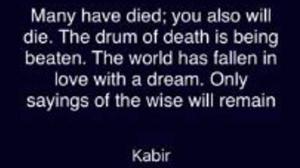
10We-CROAK1-blog427That’s what the new app WeCroak offers: quick, jarring jabs calling attention to users that, yup, death is waiting around the corner. With homilies like this from Herman Melville — “Death is only a launching into the region of the strange Untried” — the 99-cent app exists expressly to galvanize consciousness, a little existential poke to nudge you into the now. And maybe to scare the holy hell out of you.
“Each day, we’ll send you five invitations to stop and think about death,” says the WeCroak site. “It’s based on a Bhutanese folk saying that to be a happy person one must contemplate death five times daily. The invitations come at random times and at any moment, just like death.”

By turns soothing and somber, quotes are culled from the likes of Emily Dickinson, Thoreau, Charles Bukowksi, Lao Tzu and Margaret Atwood.

“The grave has no sunny corners,” goes one. (For pessimists.)

“Begin again the story of your life,” says another. (For optimists.)

methode-times-prod-web-bin-b0093bb2-e034-11e7-a1a7-d23b605d14fb

(That one, for fatalists, I think.)

We think we have control over our lives by doing the right things — exercising, eating healthfully, thinking positive, traveling, communing with art and nature, procreating.

It’s rubbish.

WeCroak’s passages are meant to put you in touch with an untapped aspect of your spirituality, to jolt you out of complacency and into perhaps uncomfortable soulfulness. In fact, hokey as it sounds, I’d say the messages are nutrient-rich food for the soul.

The benighted disagree. People have actually called the app “sick” and “disgusting.” These people are babies. They are in craven denial. No matter — they’re still going to die.

“Death never takes a wise man by surprise; he is always ready to go.” — Fontaine

I don’t know if WeCroak offers that jewel, but it should.

10we-croak2-blog4272.jpg

392x696bb.jpg

Museums of mortality — spooky, sublime

Last year I paid visits to those twin emporiums of ick and awe, the Mütter Museum in Philadelphia and the smaller but almost equally macabre Kunstkamera Museum in St. Petersburg, Russia. Festooned with bullet-riddled skulls, deformed fetuses crammed into jars, gnarled, twisted skeletons, diseased human organs, rusty surgical tools and random gangrened digits, these palaces of the perverse satisfied the ghoulishly curious. They were extravagantly ack-inducing, deliciously quiver-making. Paradise.

o-5
He’s checking his texts.

As noted earlier, I’m deliberating my next journey, and, because I went large last year, I’m thinking small this year. Which means I might go to Chicago, a 2.5-hour flight away. And which means, more importantly, the International Museum of Surgical Science, a less squishy warehouse of medical wonders than the two above, but still a marvelous assemblage of stuff that spurs contemplation about our mortal flesh and all that can go wrong with it via disease, accident and sheer shitty luck.

Highlights include a vintage iron lung machine (can I climb inside?), an exhibit about pain and anesthesia through the ages and one about the history of wound healing (“From the use of herbal ointments and therapeutic clays among prehistoric hunter-gatherers to Galen’s treatment of injured gladiators in Ancient Rome, the care of wounds is among the earliest applications of medicine”), and the museum structure itself, an elegant, historic lakeside mansion. And who could pass up the exhibit “A History of Blood Transfusion: 350 Years of Apparatus Advancement”?

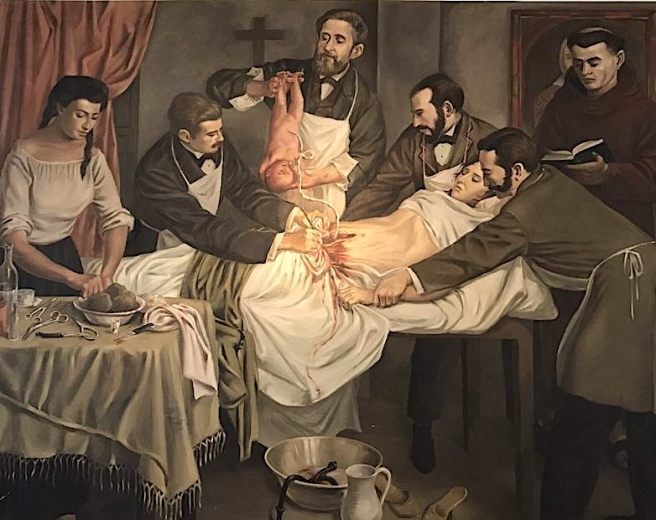
Caesarean section.jpg
Mural of early Caesarean section. Gleefully gruesome.

Reviewers note that the four-story manse is compact and, naturally, its array of freakish displays is no match for Philly’s world-class Mutter. Small is all right; I enjoy a good bite-size museum, especially one of such narrow scope. Sort of like the Russian Vodka Museum or Tokyo’s Meguro Parasitological Museum.

polio-machine
Iron lung machine. May I?

For more grim exhilarations, I pivoted my research to Chicago cemeteries — I’m always up for a calming stroll through deathly opulence — but decided to skip the offerings. Several notable cemeteries pock the area, boasting the resting holes of everyone from Al Capone to Jesse Owens, Emmett Till to John Belushi, Gene Siskel to John Hughes. I sought out film critic Roger Ebert’s grave, but he was cremated and his ashes are kept by a private party, most likely his lovely widow Chaz.

We should all be so lucky. Cremation is the way to go, although I don’t want my cremains kept by anyone but the wind and the water -— whoosh. Thoughts like these will surely visit me at the Surgical Science Museum, a place rife with death and decrepitude. But they won’t get me down. They’re wondrous in their way and, far from depressing, something of a mind-reeling, soul-stirring tonic for the living.

belushiagnes.jpg

Visual antidotes to winter’s vicious freeze

With my love of cold weather, my fervent devotion to fall and winter, to thick jackets, chapped lips and goosebumps, I’ve come to the conclusion that I am part polar bear, part moose.

I relish the big chill. I rather enjoyed the “bomb cyclone” that recently tormented the entire East Coast. Undoubtedly, the swirling mega gusts and ravaging ice storms truly unsettled. I’m actually no fan of voluminous snowfall. Slush, mush, argh. But give me some solid 30s and 40s F and I get to bundle up, thrill with the chill and, this is critical, not sweat.

Yet things are warming up, and this week the New York area will enjoy an inhumanely balmy 60 degrees — a wee too warm, but my survivalist instincts will kick in.

It is said winter lovers are a rare breed, anomalous, daft. I ask: Why don’t more people hate summer? Baffling. I loathe the warm months. It’s a me thing. Shorts and I are on rancorous terms.

I’ve traveled wide and far in positively scorching, humid, sweat-sodden climes and I thought this quintet of watery photos from said journeys might warm up the cold-adverse reader, reminding you of the great thaw to come, soon. All too soon. Splash.

IMG_1877.jpg
Boy leaping into river in Ho Chi Minh City, Vietnam.
IMG_1875.jpg
Vietnamese kid after his plunge.
IMG_0117.jpg
Girl splashing in fire hydrant, summer, Brooklyn, NY.
P1020908.jpg
Boys in Istanbul, Turkey.
P1020909.jpg
Those Turkish boys, loving it.

Getting critical about critics

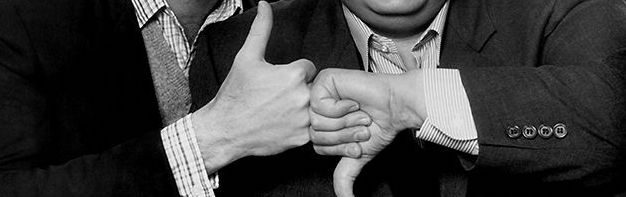
Good essay at Slate today titled “The Reviewer’s Fallacy,” which includes the subhead: “When critics aren’t critical enough.” When I read that line I let out a resounding if whispered Hallelujah!

The article, by the terrific Ben Yagoda (see his knockout book “The Sound on the Page: Style and Voice in Writing”), discusses the rankling discrepancy between the opinions of professional critics and regular consumers of books, movies and music, and wonders why so many critics exalt so much art that just plain bites.

siskel-ebert-jpg_233545.jpg

“Critics,” Yagoda writes, “have been charged with being offenders of a few specific types:

  • Over-intellectual nitpickers who blame works for not being what they were never intended to be: the ‘Daddy’s-Home-2’-isn’t-Molière syndrome.
  • Soft touches who’re in the pockets of studios and record labels. Most egregiously, ‘quote sluts’ supposedly craft money notices for the express purpose of being featured in display ads.
  • Chummy logrollers — a perception heightened in the social media age. In a 2012 Slate piece called ‘Against Enthusiasm,’ Jacob Silverman wrote, ‘if you spend time in the literary Twitter- or blogospheres, you’ll be positively besieged by amiability, by a relentless enthusiasm that might have you believing that all new books are wonderful and that every writer is every other writer’s biggest fan.’ ”

I know the types. I reviewed films at a major daily newspaper for 12 years, and, despite some very kind accolades, I wasn’t the most popular guy in town. To many readers, I was a naysayer, a contrarian, a hard-ass (and, yes, an asshole). To me, I was simply honest, discerning, discriminating. When you saw as many movies as I saw — about 10 a week — it gets easy to winnow the wheat from the chaff. Your crap-detectors become sharper, more attuned, and your patience for mediocrity and flat-out bilge shrivels and dies. You get tough. Compromise is the critic’s kryptonite.

“It can be argued that 90% of film, literature, consumer goods, etc. is crap,” Yagoda quotes sci-fi author Theodore Sturgeon as saying, promptly agreeing with him: “It’s inarguable that the majority of what comes down the pike, in any medium, is mediocre or worse.”

As a persnickety reader, finicky TV watcher and choosey filmgoer I emphatically concur with Sturgeon and Yagoda’s furrowed-brow attitude, which is one of frequent disappointment, confusion (people actually like this rot?) and exasperation. Being a Negative Nelly can be a lonely spot. For instance, I’m not crazy about the acclaimed series “Stranger Things.” The stance has made me few friends. I think even the dog is angry at me.

Critics, Yagoda argues, are often suckers. They “fall prey to a sort of hermeneutic Stockholm syndrome. They experience so much bad work that they get inured to it. They are so thankful for originality, or for a creator’s having good or arguably interesting intentions, or for technical proficiency, or for a something that’s crap but not crap in quite the usual way, that they give these things undue credit. You see this in reactions to Coen brothers films.”

Love that Coen brothers dig. Yagoda’s article is well worth a look — the link is in the opening graf of this entry — and includes trenchant quotes about softball criticism from George Orwell and Elizabeth Hardwick, who says — and  “Sweet, bland commendations fall everywhere upon the scene; a universal, if somewhat lobotomized, accommodation reigns.”

Still searching for a really good book

It pains me to stop reading a book I’m not fully enjoying, not wholly invested in, but I do it so often it’s hard to make a case for any actual suffering. So, OK then: it doesn’t really pain me to put down a book I’ve already read 100 pages of. What pains me is the time I wasted on mediocrity, which — mediocrity, that is — is about the worst thing ever.

So onto books I recently sealed shut far before they reached the final page — all of which are highly acclaimed novels, and some are even scorching hot titles of fall 2017. My credo: Never trust the bestseller list, and feel no guilt spurning award winners.

Unknown-1.jpeg

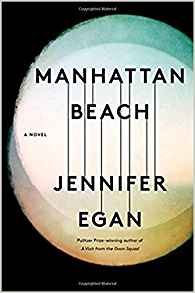
I waited long and pantingly for Jennifer Egan’s new historical epic “Manhattan Beach,” because: 1) I’m a fan of her earlier novels “Look at Me” and the Pulitzer-winning, unfortunately titled “A Visit from the Goon Squad,” and: 2) the new book marched in on a drumbeat of salivating hype.

Fail. “Manhattan Beach” isn’t bad, it’s just not great. This is Egan’s first foray into a more stately, time-tested form — the historical novel — and it’s a bit of a trudge. She’s usually more the bouncy stylist, a lot more fun, orange zest. She’s a maestro, sure, but I had to put down this eye-glazer about a third of the way in. Want a synopsis, raves, an excerpt? Go here. I can’t deal.

Two other much-exalted novels I couldn’t cozy up to due to their overarching tepidness were Celeste Ng’s family drama “Little Fires Everywhere” and Elif Batuman’s girl-goes-to-college dramedy “The Idiot.” The stories are undercut by soft, cooing voices, a bourgeois middle-brow blah, despite daintily turned phrases and surgical control. Fatally, they are short on wisdom, philosophy and epiphany. There’s no crunch.

515pYTNTrcL._SX324_BO1,204,203,200_

Slightly better is Jesmyn Ward’s National Book Award winner “Sing, Unburied, Sing,” a tough, Faulknerian, mixed-race odyssey through rural Mississippi that’s very much of this racially attuned American moment and all that. Yet I found the drama ordinary and obvious. “Sing” didn’t sing.

So I picked up — and soon put down — “The Group,” Mary McCarthy’s celebrated 1963 novel about a bevy of privileged young white women making their way in a gilded New York City (it was a huge influence on Candace Bushnell, creator of “Sex and the City”). It’s a period piece, set in the 1930s, and it feels dusty. Cluttered and clammy, the fine stylist McCarthy’s tale is a dense compendium of social mores, money, neuroses and debutante gleam. It’s claustrophobic with cattiness.

Looking for another book, I considered reading Murakami’s “Kafka On the Shore.” And then I remembered how precious and irritating his “The Wind-Up Bird Chronicle” was in its forced, flatulent fancifulness.

Unknown-2.jpeg

I soon stumbled upon a suggestion, the high-flying 1990 British satire “The Buddha of Suburbia” by Hanif Kureishi, which has been called “raunchily, scabrously brilliant.” I’ve cracked it and I am happy to report I’m enjoying its comic kineticism just fine.

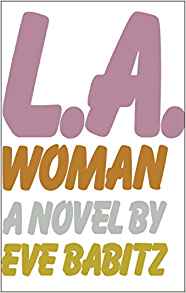
Yet I don’t think it will outclass the last book I finished, about a week ago, the short novel “LA. Woman” by Eve Babitz, my go-to gal last year for swooning fiction (I polished five of her books in 2017 with swooshing alacrity).

Soaked in sunsets and squalor, glamor and grit, “LA. Woman” traces the squiggly trajectory of a young Jim Morrison groupie through the titular city with a constant stream of poetics and epiphany. It’s funny and mean. It’s about Los Angeles. And life.

I gobbled it up in a gulp, like a gumdrop.

The strange lure of Toulouse-Lautrec’s red-haired muse

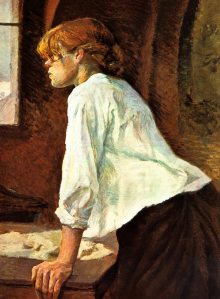
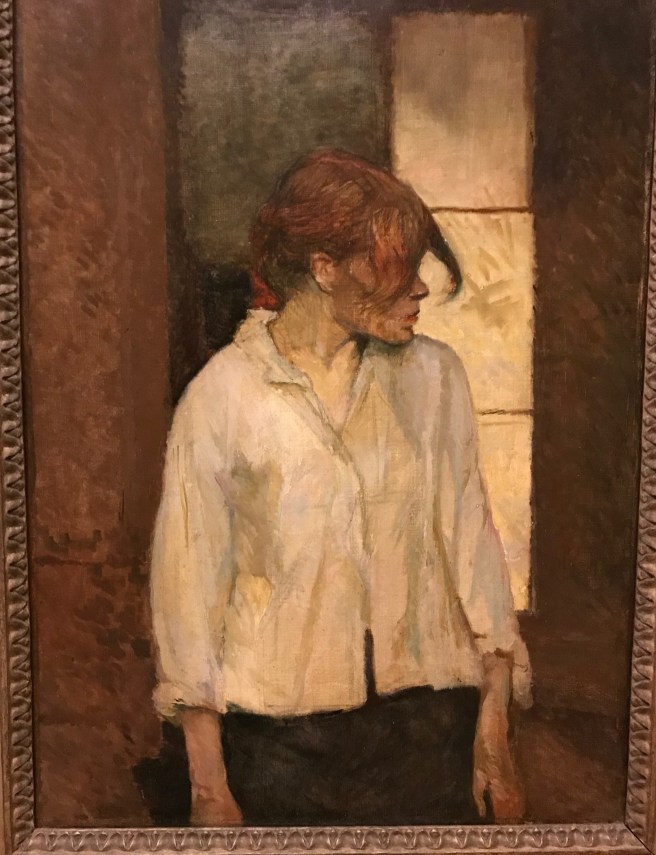
Toulouse-Lautrec, the supreme dwarf artist of late 19th-century France, created my current favorite painting, a moody, sullen portrait of a downcast prostitute titled “A Montrouge — Rosa La Rouge.” The woman, standing/slumping, face in a clenched-jaw profile as if looking stage left at nothing in particular, is the Rosa La Rouge of the title, and she is a sight to behold: beset, bedraggled, strangely beautiful.

IMG_0922.jpg
“A Montrouge — Rosa La Rouge” 1886-87 at the Barnes Foundation, Philadelphia

I recently saw the medium-sized but imposing painting in its permanent home at the Barnes Foundation in Philadelphia — my third visit in a short period of time. It might be the outstanding canvas for me at a museum so clogged, so Louvre-esque crammed, with modern masterpieces it makes your head twirl. Lautrec isn’t my favorite painter, but this is my favorite painting by him.

image.jpg
Barnes Foundation, one of a zillion art-jammed rooms.

Like so many great works of art, something ineffable defines the portrait of Rosa (Lautrec painted several pictures of her in varying poses and moods). She’s just there, her white blouse loosely buttoned, lank red hair pulled back but shagged out in front, mouth tight (is that lipstick?), eyes completely obscured. She’s like a specter, a little petulant, maybe resentful, not entirely pleased to be there. She looks almost bratty, and scandalously young.

53_Lautrec_Waescherin-30x41
Another portrait of Rosa.

She probably had good reason to cling to a sour mood. Life was surely hard — she was also a laundress — though posing for one of your johns may have been a smidge better than sleeping with him. Lautrec died of alcoholism and syphilis, which, it’s said, he contracted from Rosa.

My appreciation for “Rosa La Rouge” — the rouge is for her red hair, of course — is hardly unique. The picture is a verifiable masterstroke and it’s one of the most reproduced paintings in the Barnes gift shop (I got a nifty bookmark of lovely, enigmatic Rosa). Google it and it pops up like crazy — a repetitious gallery of Rosa in various shades of reproductive quality. (I took the picture of the painting on this page at the Barnes last month.)

But while the image is abundant, almost nothing is written about its subject. What I’ve noted here is all I know about Rosa and her life. On canvas, she’s enshrined in mystery, maybe incensed, maybe indifferent, glancing determinedly away from our enthralled gaze.

It’s OK, you don’t have to read that

Idea of the week: “Some real talk: most writing isn’t worth consuming.”

This both striking and self-evident statement was plucked from a purposely (and pleasingly) provocative essay titled “The Case Against Reading Everything,” by Jason Guriel at The Walrus. It’s a good line, because it’s irrefutably true, and because it comes from a site called … The Walrus.

books4.jpg
No way.

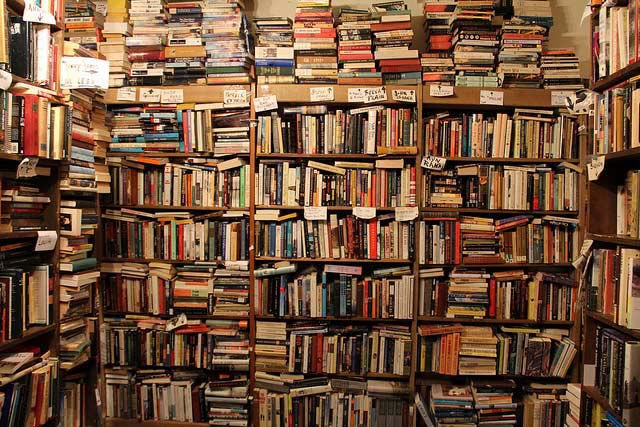
Guriel is impugning the moldy axiom that all honest writers must “read widely” — that is, indiscriminately, catholically, voraciously, hoovering the latest hardbacks, pounding down poetry, gobbling it all, from Bellow and obituaries to Cervantes and cereal boxes. It’s the old “balanced diet” theory. He’s not having it.

Neither am I. It’s an unrealistic ideal, reading it all, though I freely admit to reading obits and cereal boxes. In my twenties, I tried strenuously to read wide and far, from the gilded canon to contemporary classics, and I about hurt myself. The volume of verbiage is simply too monstrous, overwhelming and intimidating. I now embrace my blindspots (“Infinite Jest,” sci-fi, “Ulysses,” anything by J.K. Rowling) and guiltlessly shun writers I don’t feel a quick kinship with.

In college, a tough-minded journalism professor chuckled when I told him about the stacks of books taunting me and my ironclad will to conquer them. “You must be selective,” he said, and I deemed him very wise.

To this day, with impunity, I put down books that don’t regale me 110-percent, even if I’m half-way through them. Long ago, I literally dropped in the garbage John Grisham’s “The Firm” with only 50 pages out of 544 pages left. (A bratty gesture, I know, yet one unencumbered with regrets.)

It’s the quality, the intensity, not the breadth of one’s reading that counts. It’s about focus and concentration — concentrating on the works and writers that nail your sweet spot and eschewing inconsequential distractions. Says Guriel:

“The call to ‘read widely’ is a failure to make judgments. It disperses our attention across an ever-increasing black hole of mostly undeserving books. Whatever else you do, you should not be reading the many, many new releases of middling poetry and fiction that will be vying for your attention over the next year or so out of some obligation to submit your ear to a variety of voices. … Instead, shutter your ear against mediocrity. To fall in love with language, don’t fan out. Fall down a rabbit hole. Cynthia Ozick wanted to be Henry James. Nicholson Baker has a whole book about his obsession with John Updike.”

I’ve fallen down many rabbit holes, becoming a near completist of Philip Roth and, yes, Nicholson Baker. I was religious in my ardor for former San Francisco Chronicle humor columnist Jon Carroll, and marveled at New Yorker film critic Anthony Lane’s linguistic paradiddles (until, that is, he became wearisome, cutesy and gassy, a fallen hero).

Rabbit holes are thrilling. I most recently tumbled into that of L.A.-centric novelist Eve Babitz, snarfing up five of her groovily stylish books in a matter of weeks. I did what Guriel suggests, fell in love with the language, shuttered my ear against mediocrity. It was to me what reading is all about. It was like a spell — a love affair without the doom.

Overrated travel spots? You decide.

Stumbling through the web today, my eye caught a bit of click-bait I couldn’t resist. Headlined “Overrated Places That Aren’t Worth Visiting,” and located at YourDailyDish, it appealed to my love of lists, penchant for snark and discriminating view of world travel.

A pithy, withering litany of 21 so-called overrated spots, laced with a pinch of snide drollery, the dishonor roll is little more than a light-hearted provocation for easily distracted web surfers. There are surely a billion such lists out there, better, funnier, more substantive, more informative. But this one, despite some dubious grammar, boasts surprising off-the-beaten-track locales that may raise eyebrows.

The list is pure meringue that you can’t take too seriously, and you can make a sport of comparing your impressions of a place to the shamings here. I, for one, can attest that Miami, Las Vegas and contemporary art museums earn their slots. The Great Wall of China, not so much.

502963868.jpg

The list follows below. Each name is a hyperlink to its web page. (Caveat: the pages are larded with obnoxious yet easily dodged ads.)

  1. The Terraced Rice Fields in Vietnam
  2. Seasonal Waterfalls
  3. The Great Wall of China
  4. Manneken Pis in Brussels
  5. La Bocca Della Verità in Rome
  6. Four Corners Monument
  7. Plymouth Rock in Massachusetts
  8. Contemporary Art Museums
  9. The Confucian Temple of Shanghai
  10. Empire State Building, NYC
  11. Leaning Tower of Pisa
  12. Miami
  13. Niagara Falls
  14. Mount Rushmore
  15. Venice, Italy
  16. Las Vegas
  17. Statue of the Little Mermaid in Copenhagen
  18. The Hollywood Walk of Fame
  19. Champs-Elysees, Paris
  20. Cabo San Lucas, Mexico
  21. Blarney Stone, Ireland

vegas-burj-al-arab.jpg


The welcome problem of where to go next

Wanderlust is a malady, chronic and unquenchable. It’s a greedy thing. It wants, desires. It pulses with passion. A lust to wander — exactly as advertised. Lust isn’t a neutral word. It implies the untamable, the uncontainable. It’s hot to the touch.

I’m forever locked in wanderlust’s fevered clutches, craning my neck in search of the next journey somewhere far away. I need to move. I demand experience. I devour culture. I like airplanes.

This year found me bounding near — D.C., Philadelphia, Boston — and swanning far — London, Montreal, St. Petersburg, Russia. Last year was Spain, for the second time; the year before, Paris, for the fifth time. If all that hadn’t broke the bank, I’d now be giddily racking my brain and scanning maps to locate my next adventure.

Let’s do it anyway. Where next?

Obvious contenders are places I haven’t been, from Central and South America to Kenya and Iceland; from Indonesia and Ireland to Singapore and Stockholm.

But I’m picky. I won’t name names, but some places just don’t seem culturally rich enough, or they’re too mojito-on-the-beach boring, or they’re totally repellent in an I-don’t-want-to-be-beheaded way. Too hot. Too cold. Too aesthetically barren. Let’s not forget places with unconscionable alcohol bans.

Though I enjoyed insanely sweaty jaunts in Thailand, India, Egypt and Vietnam (the latter was best), I mostly spurn hot, tropical climes. I don’t do palm trees. Sand: the great deal-breaker. No matter where I go, early spring and early fall are my optimal travel times.

IMG_1889.jpg
Ho Chi Minh City, Vietnam

I go for cities, jostling, clamorous metropolises, be it Shanghai or Barcelona, Berlin or Mumbai, Tokyo or Hong Kong, Istanbul or Marrakesh. That to me is where the action is, not enveloped in frothing seawater on a Boogie Board or panting across sinuous mountain hiking trails.

Before choosing Russia for my recent fall trip, I looked hard at South Africa, but decided it was both too expensive and too outdoorsy. There is fairly cosmopolitan Cape Town, known mostly for its seaside “scenery” — cliffs and water and the like. Victoria Falls and overpriced safaris could not seal the deal. I’m not mad about seeing hyenas in their natural habitat, when all is said and done. (Why do tourist safaris seem so canned, so kind of phony?)

Some time ago I came close to buying tickets to Argentina — zesty Buenos Aires! Wine! Steaks! — and Brazil, until I peered closer at the year-round temperatures and the Brazilian proclivity for volleyball and Speedos. Only Rio’s storied favela piqued my interest in the end, so I swiftly looked elsewhere for the next journey.

I picked Istanbul for its European patina and Ottoman exoticism, and, once there, was instantly won over by its luminous culture, wonderful people, Old World beauty, dazzling mosques and cobblestone-y charms. A weekend trip to the fairy-tale cave village of Cappadocia topped a perfect two-week vacation. I have since returned to Istanbul, and will surely go back.

P1030589_1.jpg
Blue Mosque, Istanbul

But not now. I’m looking for the new, the untouched, the virgin vacation. Japan oddly beckons, but I’ve been there twice, though I’d like to dedicate more time to Kyoto; I think I rushed it. Swaths of Northern Europe — Norway, Sweden, Switzerland, Denmark — fail to excite. I’ve come close to trying Hungary, mostly for the Gothic visions of Budapest, but there doesn’t seem to be enough cultural ballast to sustain a full trip. Prague is near Hungary, but I’ve done that and wasn’t bowled over. A bit too touristy, a bit too lightweight.

I’ve been to Poland, Mexico, China, Austria, Nepal, Cambodia, Beirut and Israel. But I’ve never been to Australia, and I don’t yen to go, for many of the reasons noted above. (“Sun and fun” as an ideal does not compute.) Toronto looks … meh. Indonesia seems too balmy, if unspeakably gorgeous.

IMG_2159.jpg
Angkor Wat, Cambodia

This is a crazily superficial, obscenely first-world conundrum to be stuck in. I’ll pry myself loose when the time comes, when I’m ready for the next big trip (Chicago? Taiwan? South Korea?). Meanwhile, I gaze at my suitcase with longing, hoping to fill it soon, even if I have nowhere to go. Wrote Stephen Sondheim: “Stop worrying where you’re going … If you can know where you’re going/You’ve gone.” 

The 10 best movies of the year, so far — Part II

In July I scared up a list of the 10 best movies of 2017 up to that point. (That list is here.) Since then, the Oscar-bait season has commenced and the year is almost a wrap. I’ve caught up with some of the movies I missed earlier and saw many of the new batch, though I have yet to see raved-about titles like “Call Me By Your Name,” “Lemon,” and “The Killing of a Sacred Deer.”

For now, here’s the second installment of the best movies of the year, so far:

1. “Lady Bird” — By turns a sweeping and intimate coming-of-age dramedy of devastating charm, heart and honesty, Greta Gerwig’s feature debut stars a phenomenally nuanced, preternaturally poised Saoirse Ronan as a high school senior grappling with the usual: budding hormones, blossoming opinions, bristling anti-authoritarianism and a mother (the great Laurie Metcalf) with whom she’s at crippling odds. It’s familiar ground, but Gerwig and Ronan whip it into a consistently fascinating, funny and profoundly felt journey that’s not easily shaken. Indeed, it’s intoxicating.

lady-bird-1

2. “The Florida Project” — Ugly yet beautiful, soaked in blazing Day-Glo Floridian hues and druggy homeless miseries, Sean Baker’s affecting follow-up to his 2015 stunner “Tangerine” celebrates the anarchy of childhood as told through the impish eyes of a little girl named Moonee (jaw-dropping newcomer Brooklynn Prince). She lives in a long-stay motel with her bedraggled (and be-drugged) mom (the superb Bria Vinaite, a kind of Courtney Love doppelgänger at her mascara-running worst), where she forms a pack of fellow summer-break youngsters who raise hell to the perpetual consternation of motel manager Willem DeFoe, who’s at his fuming best. It’s funny, it’s sad, it’s illuminating and something of a tour de force, with a miraculous denouement that swells the heart with hope.

The-Florida-Project-1.jpg

3. “Three Billboards Outside Ebbing, Missouri” — A teenage girl is raped and killed and months later the case is still not cracked. The girl’s fed-up mother (a ball-busting Frances McDormand, who will get an Oscar nod) rents three blood-red billboards that accuse the local police of ineptitude in handling the case. No one is happy about it, especially the police chief (the reliably riveting Woody Harrelson) and his loose-cannon underling (crackpot genius Sam Rockwell). As Tarantino once was, writer-director Martin McDonagh (“In Bruges”) is a master at balancing dark humor and bloody crime kicks, seamlessly blending violence and whorling emotional textures. The film is streaked with a Coen-esque unpredictability that’s whiplashing and totally winning.

three-billboards-outside-ebbing-missouri.jpg

4. “Good Time” — With flickers of the young Pacino and De Niro, Robert Pattinson is revelatory as a scrappy, dirty, dangerous two-bit criminal, who’s on the lam after a comically/tragically botched bank robbery. The lo-fi film, by the gifted Safdie brothers (“Heaven Knows What”), pulls you on a thrilling run-for-your-life tumble through nocturnal Queens that’s at once loose-limbed and sweatily taut. A raw portrait of redemption and ruin, pocked with ground-level authenticity, it exhilarates as it harrows. Co-writer/co-director Benny Safdie’s performance as Pattinson’s mentally disabled brother will cleave your heart.

170809_MOV_GoodTime.jpg

5. “Jane” — There’s heartache, too, in this absorbing documentary about famed chimpanzee expert/primatologist Jane Goodall, which is composed of hitherto unseen film from her decades in the African jungle, as well as family home movies. Goodall comes off as a winsome Mother Teresa, trying to preserve her hairy pals and the planet to boot, and the footage often grazes the breathtaking (and heartbreaking). Caveat: Along with primates dying of terrible diseases, there’s a nauseating burst of internecine chimpicide on display. It’s brief, but brutal.

jane_02.jpg

6. “Wind River” — Taylor Sheridan, writer of the gritty near-masterpieces “Sicario” and  “Hell or High Water,” tackles another noirish crime drama for his fine directorial debut, which starts at a chug but gathers velocity for an uncommonly intelligent thriller about people and place. After a brutal rape and murder on a remote Native American reservation in snow-socked Wyoming, a green FBI agent (Elizabeth Olsen) is called in to take the case. She’s joined by a compassionate local wildlife officer (a soulful Jeremy Renner) and soon they are deeply, and dangerously, entangled in the crime’s harrowing complexities. Sheridan’s a superior writer — the dialogue is terse and crackly — and his instinct for mood is unerring. Somber, but bracing.

windriver.jpg

7. “Jim & Andy: The Great Beyond” — This bizarro documentary peek at the extreme idiosyncrasies of an overly committed artist — in this case the mercurial Jim Carrey — is as squirm-inducing as it is enthralling. In the 1999 Andy Kaufman biopic “Man on the Moon,” Carrey portrayed daredevil comedian/performance artist Kaufman, but he pulled a full Method stunt, refusing to step out of character after “Cut!” was yelled. Kaufman was the apotheosis of strange — inscrutable, volatile, scarily unpredictable — so Carrey’s on-set behavior as “Andy,” seen here in rare footage, rattled, roiled and enraged crew and co-stars. Director Chris Smith interviews Carrey today, and the actor explains his reckless impulses. Or at least he tries. (On Netflix)

53-14405-jim-carrey-as-andy-kaufman-1395446785.jpg

8. “Baby Driver” — As an expert getaway driver for a group of high-stakes bank robbers, Baby, as he’s called (a solemn but beat-happy Ansel Elgort), drives like a demon, churning smoke and pulling 50 mph pirouettes to the groovin’ pulse of tunes blasting in his ear buds. Director Edgar Wright has a clever concept — boy wonder drives the likes of Jon Hamm and Jamie Foxx to turned-to-11 classic rock, funk and soul — but it doesn’t quite take off for a full-bodied narrative. Still, the music’s a kick and you get the best car-chase porn this side of the “Fast and Furious” franchise.

baby-driver-1200-1200-675-675-crop-000000.jpg

9. “Obit.” — “Obits have next to nothing to do with death, and in fact absolutely everything to do with the life,” says New York Times obituary writer Margalit Fox in Vanessa Gould’s tonic and info-rich documentary about the technical, curatorial and artistic aspects of writing compelling narratives about those who’ve passed. Zooming in on the august obit desk at the Times and its stable of crack stylists, the movie traces the creative evolution of the form — today obits can be “just as rollicking and swaggering as their subjects” — shows the persnickety process of winnowing worthy subjects from lesser ones and unveils the muses behind the writers’ elegant, punchy, even humorous essays. “Maybe it’s macabre, maybe it’s a little morbid,” one writer notes about his craft. This film shows that that is simply not the case.

obit-film-tribeca.jpg

10. “Mudbound” — A sharp cast and lavish period detail invigorate this evocative and lushly filmed snapshot of a racially turbulent postwar Mississippi. Director/co-writer Dee Rees describes the relationship between a white family and a black family, which is uneasy at best, thanks to the harsh indignities of Jim Crow rule. Sometimes savage, sometimes soapy, the film aspires to an epic scope, but its made-for-TV feel, a conventional, predictable sheen, thwarts its loftier ambitions. (On Netflix)

9195866,83JZdgjU+Eh8F3dvJtFW+BrLu7Pavg3TwYHNEOCTbKk_NIjhd1uBhP7WWuU4djtCpln3LMAPC2n8k5kOmq0m2g==.jpg